clicking en 30 secondes
- Clicking is a sharp, short sound often associated with technology, such as using a computer mouse or pressing a physical button on a device.
- It is frequently used metaphorically to describe a sudden moment of understanding or when a group of people begins to work together effectively.
- In social contexts, clicking with someone means having an immediate and natural connection or rapport, making communication feel easy and enjoyable.
- The word is onomatopoeic, meaning it sounds like the noise it describes, and it can also refer to biological sounds made by animals or humans.
The word clicking is a versatile verb that primarily describes the production of a short, sharp, and distinct sound. At its most basic level, it is an onomatopoeic word—meaning the word itself sounds like the noise it describes. In the modern digital era, the most frequent use of clicking refers to the action of pressing a button on a computer mouse or a trackpad to select something on a screen. However, the term extends far beyond technology. It describes the rhythmic sound of high heels on a marble floor, the mechanical engagement of a lock turning, or the sound of a ballpoint pen being toggled. Beyond the physical realm, clicking is used metaphorically to describe a moment of sudden clarity or a harmonious social connection between individuals.
- Mechanical Action
- The physical act of two hard surfaces meeting briefly to create a sharp noise, such as a latch falling into place or a gear shifting.
- Digital Interaction
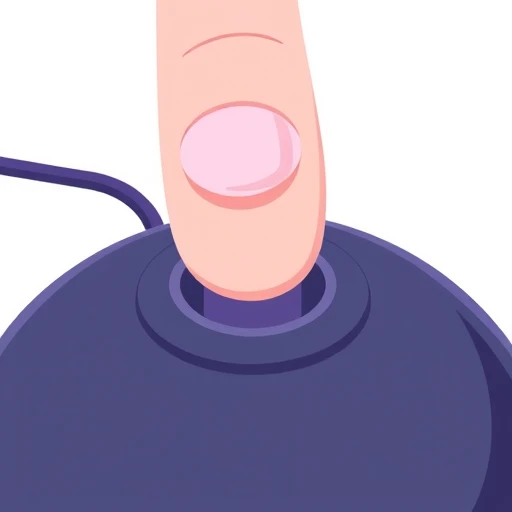
- The primary method of navigating graphical user interfaces, where a user triggers a command by pressing a physical or haptic button.
- Cognitive Realization
- The 'aha!' moment when a difficult concept suddenly becomes clear and the 'pieces' of a puzzle seem to fit together perfectly.
I spent hours trying to understand the math problem, but then everything just started clicking into place.
In social contexts, you might hear people say they are 'clicking' with someone new. This implies an immediate and effortless rapport. It suggests that the personalities, values, or communication styles of two people are so compatible that their interaction feels seamless. This usage is common in dating, networking, and team-building scenarios. Historically, the word has roots in Middle Dutch and Old French, evolving from words that imitated the sound of a sharp blow. Today, it is an essential part of our vocabulary, bridging the gap between the tactile world of machinery and the abstract world of human thought and digital navigation.
The sound of the soldiers' boots clicking against the pavement echoed through the empty square.
Furthermore, clicking can describe a biological sound. Some animals, like dolphins or bats, use clicking sounds for echolocation, sending out sharp pulses of noise to map their environment. In human speech, certain languages (particularly in Southern Africa, such as Xhosa and Zulu) utilize 'click consonants,' which are produced by the tongue creating a vacuum and then releasing it sharply. This demonstrates the incredible breadth of the word, moving from the tiny micro-switch in your mouse to the complex linguistic structures of human culture and the sophisticated biological sonar of marine mammals.
Stop clicking your tongue; it is very distracting while I am trying to read.
- Auditory Precision
- The sound is characterized by its brevity and high frequency. It is not a dull thud or a long hiss, but a sharp, instantaneous event.
Using 'clicking' correctly requires understanding its role as a present participle or a gerund. It often functions to describe an ongoing action or the specific manner in which something is happening. When describing technology, it is frequently paired with direct objects like 'links,' 'buttons,' or 'icons.' For example, 'By clicking the submit button, you agree to our terms.' Here, the word acts as the trigger for a functional process. It is active, intentional, and precise. In a more descriptive, literary sense, 'clicking' can be used to build atmosphere, focusing on the auditory environment of a scene.
The old radiator was clicking and hissing as the heat began to rise.
- Transitive Usage
- When the subject performs the action on an object: 'She is clicking the camera shutter repeatedly.'
- Intransitive Usage
- When the subject itself makes the sound: 'The clock was clicking loudly in the silent room.'
When using 'clicking' to describe social harmony, it is often used with the preposition 'with.' You don't just 'click'—you 'click with someone.' This phrasal structure is essential for conveying the mutual nature of the connection. For instance, 'I didn't expect to enjoy the meeting, but I found myself clicking with the new manager immediately.' This implies a lack of friction and a presence of shared understanding. It is a powerful way to describe chemistry without using overly formal or scientific language.
After weeks of practice, the team finally started clicking, and their performance improved drastically.
In technical writing, 'clicking' is often replaced by 'selecting' or 'activating' to sound more formal, but in user manuals and everyday conversation, 'clicking' remains the standard. It is also used in the context of 'clicking through,' which describes the process of moving through a series of web pages or a slideshow. 'He spent the afternoon clicking through old family photos on his laptop.' This suggests a repetitive, perhaps even meditative or bored, action. The versatility of 'clicking' allows it to shift from a high-stakes technical command to a casual description of a rainy afternoon's activity.
- The 'Clicking' Sound of Progress
- Often used to describe a project where all components are finally working together: 'The gears are clicking now.'
You will encounter the word 'clicking' in a vast array of environments, from the sterile halls of a modern office to the natural world. In an office setting, 'clicking' is the ambient soundtrack of productivity. It is the sound of dozens of mice and mechanical keyboards. IT professionals use it constantly: 'Try clicking the refresh icon,' or 'Is your mouse clicking properly?' It is the language of troubleshooting and digital navigation. If you are in a tech support call, you will likely hear this word several times a minute.
The constant clicking of his pen was driving his coworkers crazy during the long seminar.
In the fashion and retail world, 'clicking' refers to the sound of footwear. A protagonist in a novel might be described as 'clicking her heels' as she walks down a hallway, conveying a sense of confidence, urgency, or authority. In a workshop or garage, 'clicking' is the sound of a torque wrench reaching its limit or a socket wrench being turned. Here, the sound is a signal—it tells the mechanic that a task is complete or that a tool is engaged. In these contexts, the word is associated with precision and mechanical reliability.
In nature documentaries, narrators often use 'clicking' to describe the communication methods of various species. You might hear about the 'clicking sounds' of a sperm whale, which are among the loudest sounds produced by any animal. These clicks are used for both communication and hunting in the deep ocean. Similarly, in a medical context, a doctor might listen for a 'clicking' sound in a patient's heart or joints. A 'clicking hip' or a 'clicking heart valve' are specific diagnostic observations that indicate how physical structures are moving against one another.
- The Casino Floor
- The sound of chips being stacked or the roulette wheel clicking as it slows down.
- The Photography Studio
- The rapid clicking of a high-speed camera shutter during a fashion shoot.
One of the most frequent mistakes learners make is confusing 'clicking' with similar-sounding words like 'clinking,' 'clacking,' or 'clucking.' While they all describe sounds, the nuances are distinct. 'Clinking' is specifically for light, metallic or glass sounds (like two wine glasses touching). 'Clacking' is a heavier, more hollow sound (like wooden blocks or old typewriter keys). 'Clucking' is the sound a chicken makes. Using 'clicking' when you mean 'clinking' can lead to confusion, especially in descriptive writing where the specific texture of the sound matters.
Incorrect: We celebrated by clicking our glasses together. (Should be 'clinking')
- Clicking vs. Tapping
- Clicking usually implies a mechanical trigger or a sharp, hard sound. Tapping is often softer and can be done with a finger on a surface that doesn't necessarily 'click' (like a table).
Another common error is the misuse of the metaphorical 'clicking.' Some learners use it to mean simply 'liking' someone. However, 'clicking' implies a specific type of immediate, effortless connection. You can like someone without 'clicking' with them—perhaps you respect them but find conversation difficult. Conversely, you might 'click' with someone you've just met, even if you don't know them well enough to say you 'like' them yet. It is about the *fit* and the *rhythm* of the interaction, not just the positive sentiment.
In technical contexts, people sometimes forget that 'clicking' usually refers to the left mouse button by default. If you mean the right button, you must specify 'right-clicking.' Similarly, on mobile devices, we rarely use the word 'clicking'; instead, we use 'tapping.' Saying 'I am clicking the app on my iPhone' sounds slightly unnatural to native speakers, as there is no physical 'click' sound or mechanical button involved in the touch-screen interaction. This distinction is becoming more important as touch interfaces become the dominant form of computing.
Depending on the context, several words can serve as synonyms or more precise alternatives to 'clicking.' If you are describing a sound, you might consider 'snapping,' 'popping,' or 'ticking.' 'Ticking' is almost exclusively used for clocks or steady, rhythmic mechanical sounds. 'Snapping' suggests a sharper, higher-tension sound, like a dry twig breaking or fingers being snapped. 'Popping' is a rounder, more explosive sound. Choosing the right word depends on the material and the force involved in the action.
- Ticking
- Best for: Clocks, timers, or very light, regular mechanical movements. Example: 'The ticking of the bomb was terrifying.'
- Snapping
- Best for: Fast, sharp sounds often involving tension. Example: 'He was snapping his fingers to the beat.'
- Tapping
- Best for: Repeated light blows with a finger or a small object. Example: 'She was tapping her foot impatiently.'
When 'clicking' refers to understanding or social connection, alternatives include 'resonating,' 'harmonizing,' or 'falling into place.' 'Resonating' is more formal and suggests that an idea has a deep, emotional impact on someone. 'Harmonizing' is often used for groups working together. 'Falling into place' is a perfect idiom for when a complex situation becomes clear. For example, 'Once we hired the new designer, the whole project started falling into place.' This carries the same sense of structural alignment that 'clicking' does but sounds slightly more descriptive of the process.
The new strategy really resonated with the board members.
In the digital world, 'selecting,' 'pressing,' and 'tapping' are the main alternatives. 'Selecting' is the most formal and is used in technical documentation. 'Pressing' is used for physical buttons (like on a microwave or an elevator). 'Tapping' is the standard for touch screens. Using these specific terms can make your English sound more precise and technically accurate. For instance, 'Press the power button' is more accurate than 'Click the power button' because the power button is a physical switch, not a digital link.
How Formal Is It?
Le savais-tu ?
The use of 'clicking' in computing only began in the 1960s and 70s with the invention of the computer mouse by Douglas Engelbart. Before that, 'clicking' was mostly used for clocks and high heels.
Guide de prononciation
- Pronouncing the 'g' at the end too harshly (it should be a nasal sound).
- Confusing the vowel sound with 'e' (sounding like 'clecking').
- Not making the 'k' sound sharp enough.
- Adding an extra vowel sound between 'k' and 'ing'.
- Stress on the second syllable.
Niveau de difficulté
Easy to recognize in most texts due to its common use in tech.
Requires understanding of gerunds and metaphorical uses.
Pronunciation is straightforward for most learners.
Clear onomatopoeic sound makes it easy to identify.
Quoi apprendre ensuite
Prérequis
Apprends ensuite
Avancé
Grammaire à connaître
Gerunds as Subjects
Clicking is the best way to navigate this site.
Present Continuous for Background Actions
The heater was clicking while we talked.
Phrasal Verbs with 'Into'
The pieces are clicking into place.
Transitive vs. Intransitive
He is clicking the mouse (Transitive). The mouse is clicking (Intransitive).
Participle Phrases
Clicking his tongue, he walked away in frustration.
Exemples par niveau
I am clicking the mouse.
Je clique sur la souris.
Present continuous tense.
He is clicking his pen.
Il clique sur son stylo.
Subject + is + verb-ing.
Stop clicking that button!
Arrête de cliquer sur ce bouton !
Imperative mood.
The camera is clicking.
L'appareil photo clique.
Describing a sound.
She likes clicking on pictures.
Elle aime cliquer sur les photos.
Gerund after 'likes'.
Clicking is easy to do.
Cliquer est facile à faire.
Gerund as a subject.
Are you clicking the link?
Est-ce que tu cliques sur le lien ?
Question form.
The toy makes a clicking noise.
Le jouet fait un bruit de clic.
Adjective modifying 'noise'.
The clock was clicking in the hall.
L'horloge cliquait dans le couloir.
Past continuous for background sound.
I heard the clicking of her shoes.
J'ai entendu le cliquetis de ses chaussures.
Gerund as a noun.
Keep clicking until the page loads.
Continuez à cliquer jusqu'à ce que la page se charge.
Keep + verb-ing.
The lock is clicking into place.
La serrure s'enclenche.
Phrasal verb 'clicking into'.
He was clicking his fingers to the music.
Il claquait des doigts en suivant la musique.
Action happening alongside another.
Why is your computer clicking so much?
Pourquoi ton ordinateur fait-il autant de cliquetis ?
Present continuous question.
Clicking the 'X' will close the window.
Cliquer sur le 'X' fermera la fenêtre.
Gerund phrase as subject.
The seatbelt made a clicking sound.
La ceinture de sécurité a fait un clic.
Past tense 'made' + clicking sound.
Everything started clicking once I saw the map.
Tout a commencé à devenir clair une fois que j'ai vu la carte.
Metaphorical use for understanding.
We were clicking from the moment we met.
Le courant est passé dès que nous nous sommes rencontrés.
Metaphorical use for social connection.
She was nervously clicking her tongue.
Elle faisait claquer sa langue nerveusement.
Adverb modifying the action.
The pieces of the puzzle are finally clicking together.
Les pièces du puzzle s'assemblent enfin.
Idiomatic use for a situation resolving.
I spent the night clicking through old emails.
J'ai passé la nuit à parcourir de vieux e-mails.
Clicking through as a phrasal verb.
The radiator's clicking kept me awake.
Le cliquetis du radiateur m'a empêché de dormir.
Possessive gerund.
The team isn't clicking as well as they used to.
L'équipe ne s'entend plus aussi bien qu'avant.
Negative form for social harmony.
You can hear the clicking of the insects at night.
On peut entendre le cliquetis des insectes la nuit.
Describing natural sounds.
The marketing team is analyzing the clicking patterns of users.
L'équipe marketing analyse les habitudes de clic des utilisateurs.
Technical/Professional context.
The engine was clicking, indicating a serious problem.
Le moteur cliquetait, ce qui indiquait un problème grave.
Using a sound as a diagnostic indicator.
I could hear the clicking of the Geiger counter.
Je pouvais entendre le crépitement du compteur Geiger.
Specific technical equipment sound.
His story wasn't quite clicking with the evidence.
Son histoire ne collait pas tout à fait avec les preuves.
Metaphorical use for logical consistency.
The rapid clicking of the shutters filled the room.
Le cliquetis rapide des obturateurs remplissait la pièce.
Plural gerund used as a noun.
She was clicking her knitting needles together rhythmically.
Elle faisait s'entrechoquer ses aiguilles à tricoter en rythme.
Describing a specific manual action.
The lock made a satisfying clicking sound as it opened.
La serrure a fait un clic satisfaisant en s'ouvrant.
Adjective 'satisfying' modifying the sound.
The dolphins were clicking to communicate with each other.
Les dauphins émettaient des cliquetis pour communiquer entre eux.
Biological context.
The clicking of the heels echoed ominously in the corridor.
Le claquement des talons résonnait de manière inquiétante dans le couloir.
Literary use for atmosphere.
The pieces of the geopolitical puzzle were clicking into place.
Les pièces du puzzle géopolitique s'assemblaient.
Advanced metaphorical use.
He had a habit of clicking his teeth when deep in thought.
Il avait l'habitude de faire claquer ses dents quand il réfléchissait profondément.
Describing an idiosyncratic habit.
The clicking sounds in the recording were identified as interference.
Les cliquetis dans l'enregistrement ont été identifiés comme des interférences.
Passive voice with technical detail.
The gears were clicking, yet the machine refused to start.
Les engrenages s'enclenchaient, pourtant la machine refusait de démarrer.
Concessive clause with 'yet'.
Her mind was clicking through the possibilities at lightning speed.
Son esprit passait en revue les possibilités à la vitesse de l'éclair.
Abstract metaphorical use.
The clicking of the latch was the only sound in the dead of night.
Le clic du loquet était le seul bruit au milieu de la nuit.
Emphasis on auditory detail.
The linguist studied the clicking sounds of the Khoisan languages.
Le linguiste a étudié les clics des langues khoïsan.
Academic/Scientific context.
The clicking of the metronome was the pulse of his obsession.
Le battement du métronome était le pouls de son obsession.
Highly metaphorical/Literary.
The intricate mechanisms were clicking with a terrifying precision.
Les mécanismes complexes s'enclenchaient avec une précision terrifiante.
Evocative description.
The clicking of the keys became a symphony of digital labor.
Le cliquetis des touches est devenu une symphonie de travail numérique.
Metaphorical transformation.
The clicking of the joints was a grim reminder of his aging body.
Le craquement des articulations était un sinistre rappel de son corps vieillissant.
Existential/Physical description.
The clicking of the film projector added a nostalgic layer to the evening.
Le cliquetis du projecteur de film ajoutait une touche nostalgique à la soirée.
Atmospheric noun phrase.
There was a subtle clicking in the logic of his argument that I couldn't ignore.
Il y avait un petit quelque chose qui clochait dans la logique de son argument que je ne pouvais ignorer.
Nuanced abstract use (negative connotation here).
The clicking of the cicadas rose to a deafening crescendo.
Le stridulation des cigales a atteint un crescendo assourdissant.
Naturalistic/Scientific precision.
The clicking of the dice on the mahogany table decided his fate.
Le bruit des dés sur la table en acajou a décidé de son sort.
Dramatic narrative use.
Synonymes
Antonymes
Collocations courantes
Phrases Courantes
— Pressing a mouse button twice quickly to open a file or program.
Try double-clicking the icon on your desktop.
— Pressing the right mouse button to see a menu of options.
Right-clicking the image will allow you to save it.
— Continuing to click or type busily for a long time.
He was clicking away at his keyboard all night.
— The action of a switch being moved back and forth.
The light was clicking on and off in the wind.
— The action of taking a photograph with a camera.
She was clicking the shutter every few seconds.
— Making a sound by sliding a finger against the thumb.
He was clicking his fingers to get the waiter's attention.
— Starting to work effectively or moving into a more active state.
The campaign is finally clicking into gear.
— The most common way to describe interacting with a UI element.
Clicking the button will submit your form.
— A gesture of respect or a specific way of walking.
The soldier stood to attention, clicking his heels.
— A medical symptom often related to the jaw or eustachian tubes.
She complained of a constant clicking sound in her ear.
Souvent confondu avec
Clinking is for glass or metal (light sound). Clicking is for harder, sharper sounds.
Clacking is a louder, heavier sound than clicking.
Ticking is specifically for the regular rhythm of a clock.
Expressions idiomatiques
— When something suddenly becomes clear or starts working correctly.
After months of research, the theory finally clicked into place.
Neutral— To have an immediate friendly relationship with someone.
I really clicked with my new roommate.
Informal— To happen naturally and successfully without much effort.
Some couples just click; they don't have to work at it.
Informal— The percentage of people who click on a specific link.
Our click-through rate has increased by ten percent.
Business/Technical— Working perfectly and at full capacity (variation of 'firing on all cylinders').
The offense was clicking on all cylinders during the game.
Informal/Sports— To be very happy or to show military discipline.
He was practically clicking his heels with joy after the promotion.
Literary— To be very aware of time passing, often under pressure.
With the deadline approaching, I could feel the clicking of the clock.
Metaphorical— Symbolic of closing a deal or securing a situation.
The clicking of the latch signified the end of the negotiation.
Literary— An idiom for being cold or very nervous.
His teeth were clicking together in the freezing wind.
Neutral— Expressing disapproval or annoyance.
She was clicking her tongue at the messy room.
NeutralFacile à confondre
Similar sound and spelling.
Clucking is the sound a chicken makes. Clicking is a mechanical or social sound.
The hen was clucking, but the computer was clicking.
Rhyming word.
Kicking is a physical strike with the foot. Clicking is a sound or a finger action.
He was kicking the ball while clicking his fingers.
Rhyming word.
Licking involves the tongue on a surface. Clicking is a sharp sound.
The dog was licking the floor, ignoring the clicking clock.
Rhyming word.
Sticking means adhering to something. Clicking is a sound.
The tape was sticking to the desk where the mouse was clicking.
Similar action and rhyme.
Flicking is a quick motion with the finger. Clicking is the sound that might result.
He was flicking the switch, which made a clicking sound.
Structures de phrases
I am clicking [object].
I am clicking the button.
The [noun] is clicking.
The clock is clicking.
It started clicking for [person].
It started clicking for me.
Clicking with [person].
I am clicking with my new boss.
The clicking of [noun].
The clicking of the camera was loud.
[Noun] clicking into place.
The plan is clicking into place.
Stop clicking [body part].
Stop clicking your fingers.
A [adjective] clicking sound.
A rhythmic clicking sound filled the room.
Famille de mots
Noms
Verbes
Adjectifs
Apparenté
Comment l'utiliser
Extremely high in digital and social contexts.
-
I am clicking the glass.
→
I am clinking the glass.
Clinking is for glass/metal; clicking is for sharp, hard sounds.
-
The chicken is clicking.
→
The chicken is clucking.
Clucking is the specific sound a chicken makes.
-
I clicked with the link.
→
I clicked on the link.
Use 'on' for digital objects, 'with' for people.
-
The clock is clacking.
→
The clock is ticking.
Ticking is the standard word for the sound of a clock.
-
I am clicking my iPhone app.
→
I am tapping my iPhone app.
Tapping is used for touch screens; clicking is for physical buttons/mice.
Astuces
Digital Precision
Always use 'clicking' for mouse actions on a PC, but 'tapping' for actions on a smartphone screen.
Instant Rapport
Use 'we clicked' to describe a great first meeting. It sounds more natural than 'we liked each other immediately'.
The 'Aha' Moment
When you finally understand a difficult English rule, say 'It finally clicked!' to show your progress.
Gerund vs. Verb
Remember that 'clicking' can be the action (verb) or the sound itself (noun/gerund).
Short Vowel
Keep the 'i' short. A long 'i' will make the word sound like 'clocking' or 'cleeking'.
Synonym Choice
Use 'ticking' for clocks, 'snapping' for fingers, and 'clicking' for buttons.
Atmosphere
Use 'the clicking of...' to add a sense of rhythm or tension to your descriptive writing.
Marketing Terms
Learn 'click-through rate' (CTR) if you work in digital marketing or business.
Context Clues
If you hear 'clicking' in a medical context, it's likely referring to a joint or heart sound.
Puzzle Pieces
Use 'clicking into place' when a complicated situation is finally being resolved.
Mémorise-le
Moyen mnémotechnique
Think of a clock: 'The clock is clicking.' Both 'clock' and 'click' start with 'cl' and involve a sharp sound.
Association visuelle
Imagine a bright red button on a computer screen with a white arrow (cursor) pressing down on it, making a sharp 'CLICK' sound.
Word Web
Défi
Try to use 'clicking' in three different ways today: once for a computer, once for a sound you hear, and once for an idea you understand.
Origine du mot
The word originated in the late 16th century, likely as an imitative (onomatopoeic) word. It is related to the Middle Dutch word 'clicken' and the Old French 'cliquer,' both of which meant to make a sharp noise.
Sens originel : To make a sharp, short sound, often by striking two hard objects together.
Germanic/Romance influence.Contexte culturel
Be careful not to use 'clicking' to mimic or mock languages that use click consonants, as this can be offensive.
Commonly used in job interviews and dating to describe 'chemistry'.
Pratique dans la vie réelle
Contextes réels
Computing
- Clicking the mouse
- Clicking the link
- Double-clicking the icon
- Right-clicking for options
Socializing
- Clicking with a friend
- We just clicked
- Immediate clicking
- Not really clicking
Learning
- Everything clicked
- It finally clicked
- Clicking into place
- Wait for it to click
Mechanics
- Clicking sound in the engine
- Clicking the lock
- Gears clicking
- Clicking the wrench
Daily Life
- Clicking a pen
- Clicking heels
- Clicking your tongue
- Clicking the remote
Amorces de conversation
"Have you ever met someone and felt like you were clicking with them immediately?"
"Does the sound of someone clicking a pen drive you crazy when you're trying to work?"
"When you were learning English, what was the first grammar rule that finally started clicking for you?"
"Do you prefer a mouse that makes a loud clicking sound or a silent one?"
"Have you ever heard a strange clicking noise in your car and wondered what it was?"
Sujets d'écriture
Describe a time when a difficult concept finally clicked for you. How did it feel?
Write about a person you clicked with recently. What made the connection so easy?
List all the clicking sounds you hear in your house during a typical hour of the day.
How has the meaning of 'clicking' changed since the invention of the computer?
Do you think it's possible to 'click' with someone online as well as you can in person?
Questions fréquentes
10 questionsYes, it can be a gerund acting as a noun, as in 'The clicking of the clock is annoying.' In this case, it refers to the sound itself.
It is an idiom meaning that you suddenly understood something. For example, 'I was confused, but then it clicked!'
Not exactly. Clicking is usually sharper and mechanical. Tapping is softer and can be done on any surface.
You use it to say you get along with someone. 'I really clicked with her' means you had an immediate connection.
It is a marketing term for how many people click on an online advertisement compared to how many see it.
Yes, dolphins and bats use clicking sounds for echolocation to find their way and hunt.
It is neutral. In very formal technical writing, you might use 'selecting' or 'actuating' instead.
It is pressing the mouse button twice very fast, usually to open a file on a computer.
Usually, it is a nervous habit or a way to fidget when they are bored or thinking.
These are languages, mostly in Africa, that use clicking sounds made with the tongue as consonants.
Teste-toi 200 questions
Write a sentence about clicking a mouse.
Well written! Good try! Check the sample answer below.
Describe the sound of a clicking clock.
Well written! Good try! Check the sample answer below.
Write a sentence using 'clicking his pen'.
Well written! Good try! Check the sample answer below.
How do you open a link? (Use 'clicking').
Well written! Good try! Check the sample answer below.
Describe the sound of heels on a floor.
Well written! Good try! Check the sample answer below.
Write about a time you clicked with a new friend.
Well written! Good try! Check the sample answer below.
Explain what happens when a puzzle piece clicks into place.
Well written! Good try! Check the sample answer below.
Use 'clicking' to describe someone who is nervous.
Well written! Good try! Check the sample answer below.
Describe a moment when a difficult lesson finally clicked.
Well written! Good try! Check the sample answer below.
Write a short paragraph about a clicking engine.
Well written! Good try! Check the sample answer below.
Explain the term 'click-through rate' in your own words.
Well written! Good try! Check the sample answer below.
Describe the atmosphere of a room with many clicking cameras.
Well written! Good try! Check the sample answer below.
Write a sentence about clicking teeth in the cold.
Well written! Good try! Check the sample answer below.
Describe the sound of a Geiger counter clicking.
Well written! Good try! Check the sample answer below.
Write a literary sentence about heels clicking in a dark hallway.
Well written! Good try! Check the sample answer below.
Use 'clicking into place' to describe a political situation.
Well written! Good try! Check the sample answer below.
Discuss the importance of clicking sounds in certain languages.
Well written! Good try! Check the sample answer below.
Write a metaphor about a 'symphony of clicking keys'.
Well written! Good try! Check the sample answer below.
Describe the existential feeling of clicking joints.
Well written! Good try! Check the sample answer below.
Write about a 'clicking in the logic' of a complex theory.
Well written! Good try! Check the sample answer below.
Say: 'I am clicking the mouse.'
Read this aloud:
Tu as dit :
Speech recognition is not supported in your browser. Try Chrome or Edge.
Say: 'The clock is clicking.'
Read this aloud:
Tu as dit :
Speech recognition is not supported in your browser. Try Chrome or Edge.
Say: 'Stop clicking your pen.'
Read this aloud:
Tu as dit :
Speech recognition is not supported in your browser. Try Chrome or Edge.
Describe what you do with a mouse in three words.
Read this aloud:
Tu as dit :
Speech recognition is not supported in your browser. Try Chrome or Edge.
Tell me about a sound that clicks in your house.
Read this aloud:
Tu as dit :
Speech recognition is not supported in your browser. Try Chrome or Edge.
Explain a time you clicked with someone.
Read this aloud:
Tu as dit :
Speech recognition is not supported in your browser. Try Chrome or Edge.
Use 'it clicked' in a sentence about learning English.
Read this aloud:
Tu as dit :
Speech recognition is not supported in your browser. Try Chrome or Edge.
Describe the sound of high heels clicking.
Read this aloud:
Tu as dit :
Speech recognition is not supported in your browser. Try Chrome or Edge.
How do you feel when someone is clicking their tongue at you?
Read this aloud:
Tu as dit :
Speech recognition is not supported in your browser. Try Chrome or Edge.
Explain the concept of 'clicking into place'.
Read this aloud:
Tu as dit :
Speech recognition is not supported in your browser. Try Chrome or Edge.
Discuss why a marketing team cares about clicking.
Read this aloud:
Tu as dit :
Speech recognition is not supported in your browser. Try Chrome or Edge.
Describe the sound of a clicking engine.
Read this aloud:
Tu as dit :
Speech recognition is not supported in your browser. Try Chrome or Edge.
Talk about the clicking sound of a camera shutter.
Read this aloud:
Tu as dit :
Speech recognition is not supported in your browser. Try Chrome or Edge.
Explain how dolphins use clicking sounds.
Read this aloud:
Tu as dit :
Speech recognition is not supported in your browser. Try Chrome or Edge.
Describe a scene using 'clicking heels' to build tension.
Read this aloud:
Tu as dit :
Speech recognition is not supported in your browser. Try Chrome or Edge.
Discuss the linguistic importance of click consonants.
Read this aloud:
Tu as dit :
Speech recognition is not supported in your browser. Try Chrome or Edge.
Use 'clicking through possibilities' in a business context.
Read this aloud:
Tu as dit :
Speech recognition is not supported in your browser. Try Chrome or Edge.
Describe the 'symphony of clicking keys' in a modern office.
Read this aloud:
Tu as dit :
Speech recognition is not supported in your browser. Try Chrome or Edge.
Discuss the metaphor of 'clicking joints' in literature.
Read this aloud:
Tu as dit :
Speech recognition is not supported in your browser. Try Chrome or Edge.
Explain the phrase 'a clicking in the logic'.
Read this aloud:
Tu as dit :
Speech recognition is not supported in your browser. Try Chrome or Edge.
Listen for the word 'clicking' in this sentence: 'The clicking mouse was broken.'
Identify the sound: (Sound of a pen clicking). Is it clicking or thumping?
Listen: 'She is clicking the link.' What is she clicking?
Listen: 'The clock's clicking is rhythmic.' What is the adjective?
Listen: 'He was clicking his fingers.' Which body part is used?
Listen: 'We really clicked at the party.' Where did they click?
Listen: 'It finally clicked for me.' What happened?
Listen: 'Stop clicking your tongue.' What is the speaker feeling?
Listen: 'The click-through rate is high.' Is this good or bad for an ad?
Listen: 'The engine started clicking.' What should the driver do?
Listen: 'The Geiger counter was clicking rapidly.' Is it safe?
Listen: 'The clicking of heels echoed.' Where is the sound?
Listen: 'Click consonants are unique.' What is unique?
Listen: 'The metronome's clicking was the pulse.' What is the metaphor?
Listen: 'The clicking of joints reminded him of age.' What is the theme?
/ 200 correct
Perfect score!
Summary
Clicking is more than just a computer action; it is a versatile term for sharp sounds, sudden logical clarity ('it clicked'), and instant social chemistry ('we clicked'). For example: 'The solution finally clicked in my mind.'
- Clicking is a sharp, short sound often associated with technology, such as using a computer mouse or pressing a physical button on a device.
- It is frequently used metaphorically to describe a sudden moment of understanding or when a group of people begins to work together effectively.
- In social contexts, clicking with someone means having an immediate and natural connection or rapport, making communication feel easy and enjoyable.
- The word is onomatopoeic, meaning it sounds like the noise it describes, and it can also refer to biological sounds made by animals or humans.
Digital Precision
Always use 'clicking' for mouse actions on a PC, but 'tapping' for actions on a smartphone screen.
Instant Rapport
Use 'we clicked' to describe a great first meeting. It sounds more natural than 'we liked each other immediately'.
The 'Aha' Moment
When you finally understand a difficult English rule, say 'It finally clicked!' to show your progress.
Gerund vs. Verb
Remember that 'clicking' can be the action (verb) or the sound itself (noun/gerund).