









hurricane en 30 secondes
- A hurricane is a massive tropical storm with winds over 74 mph that forms over warm ocean waters and brings heavy rain and flooding.
- These storms are categorized from 1 to 5 on the Saffir-Simpson scale based on their wind speed and potential for causing significant damage.
- The center of a hurricane is called the eye, which is surprisingly calm, while the surrounding eyewall contains the storm's most violent weather.
- Preparation is key during hurricane season, which involves tracking the storm's path, securing property, and following evacuation orders from local authorities.
A hurricane is one of nature's most powerful and awe-inspiring weather events. At its core, a hurricane is a massive, rotating system of clouds and thunderstorms that originates over warm tropical or subtropical waters. The word itself carries a weight of intensity, signifying not just a simple rainstorm, but a catastrophic event characterized by sustained winds of at least 74 miles per hour (119 kilometers per hour). These storms are fueled by the heat from the ocean, acting like a giant engine that converts thermal energy into mechanical energy. When you hear the word hurricane, it usually implies a significant threat to coastal regions, involving not just wind, but also storm surges, which are rising sea levels that can flood entire cities. People use this term most frequently during the 'hurricane season,' which in the Atlantic occurs from June to November. During this time, meteorologists and news anchors use the word to warn the public about potential landfalls. It is a word that triggers preparation: boarding up windows, buying extra water, and studying evacuation routes. Beyond the physical storm, the word is used to describe the sheer scale of the event. A hurricane is not localized like a tornado; it can be hundreds of miles wide, affecting multiple states or countries simultaneously. The structure of a hurricane is also unique, featuring a calm center known as the 'eye,' surrounded by the 'eyewall,' where the most intense winds occur. Understanding the word hurricane requires understanding this balance between the calm center and the surrounding chaos.
- Meteorological Definition
- A tropical cyclone with sustained winds of 74 mph or higher, typically occurring in the North Atlantic, central North Pacific, and eastern North Pacific.
- Saffir-Simpson Scale
- A 1 to 5 rating based on a hurricane's sustained wind speed, used to estimate potential property damage.
The National Hurricane Center issued a warning as the hurricane gained strength over the Gulf of Mexico.
The term is also used metaphorically in literature and daily speech to describe a situation that is chaotic, fast-moving, and destructive. For instance, one might say their life felt like a hurricane after a series of rapid changes. However, its primary use remains scientific and protective. The naming of hurricanes—using a predetermined list of names—is a practice that helps the public track specific storms and stay informed. This humanizing of the storm through names like 'Katrina' or 'Ian' makes the word hurricane a central part of cultural history and collective memory in affected regions. When a hurricane makes landfall, it is a transformative event that changes the landscape and the lives of those in its path. The word encompasses the preparation, the event itself, and the long recovery process that follows. It is a word of power, caution, and resilience.
Residents were told to evacuate before the hurricane made landfall on Tuesday morning.
- Storm Surge
- The abnormal rise in seawater level during a hurricane, caused by the storm's winds pushing water onshore.
The hurricane hunters fly planes directly into the storm to gather critical data.
After the hurricane passed, the community came together to rebuild the damaged homes.
- Landfall
- The moment when the center of a hurricane moves from the ocean over the land.
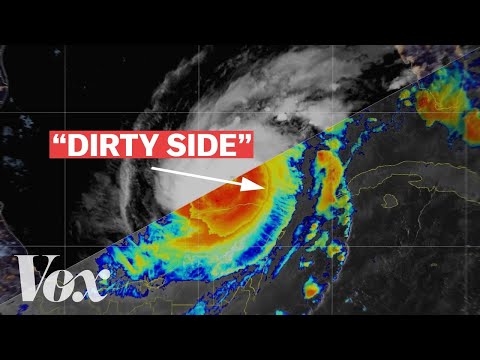
Satellite images showed the hurricane spinning across the Atlantic Ocean.
Using the word 'hurricane' correctly involves understanding its grammatical role as a countable noun and its specific collocations. Because it is a distinct event, you will almost always use an article ('a' or 'the') or a pluralizing 's'. For example, 'A hurricane is forming' or 'The hurricanes this year were very strong.' When describing the action of a hurricane, we use specific verbs. A hurricane 'forms' or 'develops' over the ocean. It 'strengthens' or 'intensifies' as it moves over warm water. When it reaches land, we say it 'makes landfall' or 'strikes' a coast. If it loses power, it 'weakens' or 'dissipates.' These verbs help convey the lifecycle of the storm. Adjectives are also crucial for providing detail. You might describe a hurricane as 'devastating,' 'catastrophic,' 'massive,' or 'powerful.' In more technical contexts, you would use categories: 'a Category 5 hurricane.' This tells the listener exactly how dangerous the storm is based on wind speed. The word is often paired with 'season,' as in 'hurricane season,' to refer to the time of year when these storms are most likely to occur. Another common structure is 'hurricane-force winds,' which uses the word as an adjective to describe winds that are as strong as those found in a hurricane, even if a full hurricane isn't present.
- Common Verb Pairings
- To track a hurricane, to prepare for a hurricane, to survive a hurricane, to evacuate from a hurricane.
The city was in the direct path of the hurricane.
In terms of prepositions, we often say 'during the hurricane' to describe events happening while the storm is active, or 'after the hurricane' for the recovery period. You might live 'in a hurricane zone' or be 'hit by a hurricane.' It's also important to note the difference between 'hurricane' and 'storm.' While all hurricanes are storms, not all storms are hurricanes. Using 'hurricane' specifically denotes a tropical cyclone of high intensity. In academic or journalistic writing, you might see the phrase 'hurricane-related damage' to describe the consequences of the event. When speaking to children, you might simplify the usage: 'The hurricane brings lots of wind and rain.' In contrast, a scientist might say, 'The hurricane's barometric pressure dropped significantly.' Regardless of the level of complexity, the word always centers on the idea of a large, rotating, and powerful weather system. Using it correctly helps ensure that the severity of the weather is communicated effectively, which is vital for safety and clarity.
Scientists are studying how climate change affects hurricane intensity.
- Adjective Usage
- Major hurricane (Category 3 or higher), tropical hurricane, seasonal hurricane.
We need to buy supplies before the hurricane arrives.
The hurricane warning was extended to the neighboring counties.
- Prepositional Phrases
- In the eye of the hurricane, during the hurricane, after the hurricane.
The hurricane destroyed the old pier.
The word 'hurricane' is most prevalent in the media, specifically in weather reports and news broadcasts. During the months of June through November, it becomes a daily staple for people living in the Southeastern United States, the Caribbean, and the Gulf Coast. Meteorologists on channels like The Weather Channel or local news stations use the word constantly to provide updates on storm tracks, wind speeds, and pressure levels. You will hear phrases like 'hurricane watch' (meaning a hurricane is possible) and 'hurricane warning' (meaning a hurricane is expected). Beyond the news, the word is frequently heard in government announcements. Organizations like FEMA (Federal Emergency Management Agency) or the NOAA (National Oceanic and Atmospheric Administration) use the word in official capacities to issue safety guidelines and coordinate relief efforts. In educational settings, students learn about hurricanes in science classes when studying meteorology, the water cycle, and the Earth's climate. History classes also touch upon the word when discussing major historical disasters, such as the Great Galveston Hurricane of 1900 or Hurricane Katrina in 2005. These events are often used as case studies for urban planning and disaster response.
- News Media
- Constant coverage during the summer and fall months in coastal regions.
- Scientific Research
- Used in papers discussing climate change, ocean temperatures, and atmospheric pressure.
Turn on the radio to hear the latest hurricane update.
In popular culture, 'hurricane' appears in movie titles, songs, and books. It is often used as a metaphor for intense emotion or uncontrollable circumstances. For example, Bob Dylan's famous song 'Hurricane' uses the word as a nickname for boxer Rubin Carter, but the title also evokes the storm of controversy surrounding his case. In literature, hurricanes often serve as a dramatic backdrop or a turning point in a story, such as in Zora Neale Hurston's 'Their Eyes Were Watching God.' You might also hear the word in casual conversation among people living in 'hurricane alley.' They might discuss their 'hurricane kits' or share stories of 'weathering the hurricane.' In these communities, the word is not just a scientific term but a part of their identity and seasonal rhythm. Even in non-coastal areas, the word is heard when discussing the global economy, as hurricanes can disrupt oil production in the Gulf or affect insurance rates worldwide. It is a word that connects local weather to global consequences.
The documentary explored the aftermath of the hurricane.
- Emergency Management
- Used in evacuation orders and public safety announcements.
The hurricane season is particularly active this year.
They are boarding up the windows in anticipation of the hurricane.
- Casual Conversation
- Discussing preparation, past experiences, and weather concerns.
The hurricane was the main topic of the morning news.
One of the most common mistakes people make is confusing a 'hurricane' with a 'tornado.' While both involve strong winds and rotation, they are very different phenomena. A hurricane is massive, often hundreds of miles wide, and forms over warm ocean water, lasting for days or even weeks. A tornado, on the other hand, is much smaller (usually less than a mile wide), forms over land from a single thunderstorm, and lasts only minutes. Using the word 'hurricane' to describe a small, localized windstorm is technically incorrect and can lead to confusion about the scale of the threat. Another frequent error is the regional naming confusion. Many people don't realize that a 'hurricane,' a 'typhoon,' and a 'cyclone' are scientifically the same thing. The difference is purely geographical: 'hurricane' is used in the Atlantic and Northeast Pacific, 'typhoon' in the Northwest Pacific, and 'cyclone' in the South Pacific and Indian Ocean. Using 'typhoon' to describe a storm in Florida would be considered a mistake in a local context.
- Hurricane vs. Tornado
- Size: Hundreds of miles vs. less than a mile. Duration: Days vs. minutes. Origin: Ocean vs. Land.
Don't call it a hurricane if it's just a regular thunderstorm.
Grammatically, learners often struggle with the countability of the word. You cannot say 'There is much hurricane today.' Instead, you must say 'There is a hurricane today' or 'There is a lot of hurricane activity.' Another common mistake is misusing the phrase 'make landfall.' Landfall refers specifically to the moment the center (the eye) of the storm crosses the coastline. People often say a hurricane 'made landfall' as soon as the first rain bands arrive, but this is technically inaccurate. Similarly, the 'eye' of the hurricane is often misunderstood. Some people think the eye is the most dangerous part, but it is actually the calmest. The most dangerous part is the 'eyewall' immediately surrounding the eye. Misunderstanding this can lead to people going outside during the calm eye, thinking the storm is over, only to be caught in the eyewall as it passes. Finally, spelling can be tricky; remember the 'u' after the 'h' and the double 'r'. It is not 'herricane' or 'huricane.'
It is a common mistake to think the hurricane is over when the eye passes.
- Regional Names
- Atlantic/NE Pacific = Hurricane. NW Pacific = Typhoon. Indian Ocean/S Pacific = Cyclone.
The news report corrected the term from 'storm' to hurricane as the winds intensified.
The hurricane didn't just bring wind; it brought a massive storm surge.
- Grammar Tip
- Always use 'a' or 'the' with hurricane because it is a countable noun.
The hurricane's path was unpredictable.
When discussing hurricanes, there are several related terms that can be used depending on the context and the intensity of the storm. The most scientifically accurate alternative is 'tropical cyclone.' This is the umbrella term for all such systems, including tropical depressions, tropical storms, and hurricanes. A 'tropical storm' is a direct precursor to a hurricane, with winds between 39 and 73 mph. If you want to sound more poetic or literary, you might use the word 'tempest.' While 'tempest' is often used to describe any violent windstorm, it carries a classical, dramatic weight often found in Shakespearean plays. Another alternative is 'gale,' which refers specifically to very strong winds, typically between 32 and 63 mph. While a gale is weaker than a hurricane, the two are often mentioned together in weather reports. In some contexts, 'whirlwind' might be used, though this more commonly refers to a tornado or a small dust devil. For a storm of extreme and unusual power, the term 'superstorm' has become popular in recent years, especially after events like Superstorm Sandy, which combined hurricane characteristics with other weather systems.
- Tropical Cyclone
- The general scientific term for a rotating, organized system of clouds and thunderstorms.
- Typhoon
- The name used for a hurricane that forms in the Northwest Pacific Ocean.
The hurricane was downgraded to a tropical storm after it hit land.
Comparing 'hurricane' to 'cyclone' and 'typhoon' is essential for global communication. If you are in Australia or India, you would use 'cyclone.' If you are in Japan or the Philippines, you would use 'typhoon.' These words are interchangeable in terms of the physical phenomenon they describe. In a more casual sense, you might just say 'big storm' or 'major weather event,' but these lack the specific technical meaning of 'hurricane.' For example, a 'nor'easter' is a type of storm that affects the U.S. East Coast with strong winds and heavy snow, but it is not a hurricane because it forms in cold air, not warm tropical air. Understanding these nuances helps you choose the right word for the right situation. Using 'hurricane' specifically alerts people to a tropical system with dangerous wind speeds, whereas 'storm' might not convey the same level of urgency. In summary, while many words describe wind and rain, 'hurricane' is the most precise term for a powerful tropical system in the Atlantic and Northeast Pacific.
The sailors prepared for the coming hurricane by securing the boat.
- Tempest
- A literary and dramatic word for a violent windstorm.
The hurricane was so large it could be seen from space.
The hurricane's energy comes from the warm ocean water.
- Gale
- A very strong wind, often used in nautical contexts.
The hurricane season officially ends in November.
How Formal Is It?
Le savais-tu ?
The word was first recorded in English in the mid-16th century, often spelled in various ways like 'hurricano' before settling on the modern spelling.
Guide de prononciation
- Pronouncing it as 'her-ri-cane' with a very long 'e' sound.
- Missing the double 'r' sound.
- Pronouncing the 'cane' as 'can'.
- Putting the stress on the second or third syllable.
- Confusing the pronunciation with 'hurry'.
Niveau de difficulté
The word is common in news and weather reports, making it easy to recognize.
The double 'r' and the 'ane' ending can be tricky for new learners.
The pronunciation is straightforward once the stress is learned.
It is a distinct-sounding word that is usually emphasized in speech.
Quoi apprendre ensuite
Prérequis
Apprends ensuite
Avancé
Grammaire à connaître
Countable Nouns
There were three hurricanes last year.
Compound Adjectives
The town faced hurricane-force winds.
Articles with Natural Phenomena
The hurricane (specific) vs A hurricane (general).
Passive Voice in News
The city was hit by a hurricane.
Zero Article with Seasons
Hurricane season starts in June (but 'The hurricane season of 2005').
Exemples par niveau
The hurricane has a lot of wind.
L'ouragan a beaucoup de vent.
Use 'a lot of' with wind.
Is the hurricane coming today?
L'ouragan arrive-t-il aujourd'hui ?
Question form with 'is'.
A hurricane is a big storm.
Un ouragan est une grosse tempête.
Use 'a' before hurricane.
We stay inside during the hurricane.
Nous restons à l'intérieur pendant l'ouragan.
Preposition 'during'.
The hurricane brings much rain.
L'ouragan apporte beaucoup de pluie.
Verb 'brings' with third person singular.
I see the hurricane on TV.
Je vois l'ouragan à la télé.
Direct object 'the hurricane'.
The hurricane is very scary.
L'ouragan est très effrayant.
Adjective 'scary' describes the hurricane.
The hurricane name is Ian.
Le nom de l'ouragan est Ian.
Possessive structure.
The hurricane moved across the ocean.
L'ouragan s'est déplacé à travers l'océan.
Past tense 'moved'.
They are preparing for the hurricane.
Ils se préparent pour l'ouragan.
Present continuous 'are preparing'.
The hurricane winds are very strong.
Les vents de l'ouragan sont très forts.
Noun as adjective 'hurricane winds'.
We need to leave before the hurricane arrives.
Nous devons partir avant que l'ouragan n'arrive.
Conjunction 'before'.
The hurricane destroyed many trees.
L'ouragan a détruit de nombreux arbres.
Past tense 'destroyed'.
There was a hurricane warning yesterday.
Il y avait une alerte à l'ouragan hier.
There was + singular noun.
The eye of the hurricane is calm.
L'œil de l'ouragan est calme.
Prepositional phrase 'of the hurricane'.
How many hurricanes happen every year?
Combien d'ouragans se produisent chaque année ?
Plural 'hurricanes'.
The hurricane intensified into a Category 3 storm.
L'ouragan s'est intensifié en une tempête de catégorie 3.
Verb 'intensified' with 'into'.
Emergency services are ready for the hurricane's impact.
Les services d'urgence sont prêts pour l'impact de l'ouragan.
Possessive 'hurricane's'.
The hurricane caused a massive storm surge along the coast.
L'ouragan a provoqué une onde de tempête massive le long de la côte.
Compound noun 'storm surge'.
Meteorologists are tracking the hurricane's path carefully.
Les météorologues suivent attentivement la trajectoire de l'ouragan.
Present continuous 'are tracking'.
The hurricane season officially begins in June.
La saison des ouragans commence officiellement en juin.
Adverb 'officially'.
Many homes were flooded after the hurricane passed.
De nombreuses maisons ont été inondées après le passage de l'ouragan.
Passive voice 'were flooded'.
You should have a hurricane kit ready at all times.
Vous devriez avoir un kit d'ouragan prêt à tout moment.
Modal 'should'.
The hurricane was downgraded to a tropical storm.
L'ouragan a été rétrogradé en tempête tropicale.
Passive voice 'was downgraded'.
The hurricane made landfall late Sunday evening.
L'ouragan a touché terre tard dimanche soir.
Idiomatic phrase 'made landfall'.
Sustained winds within the hurricane reached 120 mph.
Les vents soutenus à l'intérieur de l'ouragan ont atteint 120 mph.
Adjective 'sustained'.
The hurricane's rapid intensification caught many by surprise.
L'intensification rapide de l'ouragan en a surpris plus d'un.
Noun phrase 'rapid intensification'.
Climate change may be contributing to more severe hurricanes.
Le changement climatique pourrait contribuer à des ouragans plus violents.
Modal 'may' + 'be contributing'.
The hurricane disrupted power lines across the entire state.
L'ouragan a perturbé les lignes électriques dans tout l'État.
Verb 'disrupted'.
Evacuation orders were issued as the hurricane approached.
Des ordres d'évacuation ont été émis à l'approche de l'ouragan.
Passive voice 'were issued'.
The hurricane's eyewall contains the most violent weather.
Le mur de l'œil de l'ouragan contient les conditions météorologiques les plus violentes.
Scientific term 'eyewall'.
The economic cost of the hurricane is estimated in the billions.
Le coût économique de l'ouragan est estimé à des milliards.
Passive voice 'is estimated'.
The hurricane acted as a catalyst for major policy changes.
L'ouragan a servi de catalyseur à d'importants changements politiques.
Metaphorical use of 'catalyst'.
Vertical wind shear can inhibit the formation of a hurricane.
Le cisaillement vertical du vent peut inhiber la formation d'un ouragan.
Technical term 'wind shear'.
The hurricane's legacy is one of resilience and community spirit.
L'héritage de l'ouragan est celui de la résilience et de l'esprit communautaire.
Abstract noun 'legacy'.
Insurers are reassessing risk in the wake of the hurricane.
Les assureurs réévaluent les risques à la suite de l'ouragan.
Idiom 'in the wake of'.
The hurricane's barometric pressure was the lowest on record.
La pression barométrique de l'ouragan était la plus basse jamais enregistrée.
Technical term 'barometric pressure'.
The hurricane decimated the local agricultural sector.
L'ouragan a décimé le secteur agricole local.
Strong verb 'decimated'.
Coastal restoration is vital to mitigate hurricane damage.
La restauration côtière est vitale pour atténuer les dommages causés par les ouragans.
Infinitive 'to mitigate'.
The hurricane's path was influenced by a high-pressure ridge.
La trajectoire de l'ouragan a été influencée par une crête de haute pression.
Passive voice 'was influenced'.
The hurricane's cyclogenesis was meticulously documented by researchers.
La cyclogenèse de l'ouragan a été méticuleusement documentée par les chercheurs.
Technical term 'cyclogenesis'.
The hurricane served as a stark reminder of our vulnerability to nature.
L'ouragan a servi de rappel brutal de notre vulnérabilité face à la nature.
Adjective 'stark'.
The hurricane's outflow jets were visible in high-resolution imagery.
Les jets d'écoulement de l'ouragan étaient visibles sur l'imagerie haute résolution.
Technical term 'outflow jets'.
The hurricane's impact was exacerbated by poor urban planning.
L'impact de l'ouragan a été exacerbé par une mauvaise planification urbaine.
Verb 'exacerbated'.
The hurricane's narrative in the media shifted from fear to recovery.
Le récit de l'ouragan dans les médias est passé de la peur à la reconstruction.
Noun 'narrative'.
The hurricane's energy dissipation over land was slower than anticipated.
La dissipation de l'énergie de l'ouragan sur terre a été plus lente que prévu.
Noun phrase 'energy dissipation'.
The hurricane's storm surge inundated the low-lying wetlands.
L'onde de tempête de l'ouragan a inondé les zones humides de basse altitude.
Verb 'inundated'.
The hurricane's presence loomed over the coastal town like a specter.
La présence de l'ouragan planait sur la ville côtière comme un spectre.
Simile 'like a specter'.
Collocations courantes
Phrases Courantes
— An announcement that hurricane conditions are possible in a specified area.
The city is currently under a hurricane watch.
— An announcement that hurricane conditions are expected in a specified area.
A hurricane warning means you should take action immediately.
— The most powerful type of hurricane with winds over 157 mph.
A Category 5 hurricane can destroy even well-built homes.
— Designed to withstand the winds and rain of a hurricane.
They installed hurricane-proof glass in their new house.
— Protective coverings for windows to prevent damage during a storm.
We spent the afternoon putting up the hurricane shutters.
— A social gathering held by people who stay in their homes during a hurricane.
Some locals still hold hurricane parties despite the danger.
— A collection of basic items a household needs in the event of a hurricane.
Make sure your hurricane kit has fresh batteries.
— The process of leaving an area threatened by a hurricane.
The hurricane evacuation caused long traffic jams on the highway.
— The organization that monitors and predicts hurricanes.
The National Hurricane Center provides the most accurate data.
— The intensity of a storm's winds.
The storm reached hurricane strength over the warm Caribbean waters.
Souvent confondu avec
A tornado is much smaller, forms over land, and lasts for a very short time compared to a hurricane.
A typhoon is the exact same weather phenomenon but occurs in the Northwest Pacific Ocean.
A cyclone is the general term for these storms, but specifically used in the Indian and South Pacific Oceans.
Expressions idiomatiques
— The center of a problem or a very difficult situation.
The politician found himself in the eye of the storm after the scandal.
General— To successfully deal with a difficult period or problem.
The company managed to weather the storm during the economic recession.
General— A lot of unnecessary anger or worry about a small, unimportant matter.
Their argument was just a storm in a teacup; they are friends again now.
Informal— To prepare for a difficult situation or a period of trouble.
The economy is slowing down, so we need to batten down the hatches.
General— To be extremely successful in a particular place or among a group of people.
The new singer took the music world by storm.
General— A quiet period before a time of great activity or trouble.
The office was quiet, but it was just the calm before the storm of the busy season.
General— A particularly bad situation caused by a combination of unfavorable circumstances.
The high costs and low demand created a perfect storm for the business.
General— To suffer the serious consequences of your own past actions.
If you ignore the warnings, you will reap the whirlwind later.
Literary— To make someone feel less confident or determined.
The criticism really took the wind out of his sails.
General— A relationship characterized by frequent arguments and conflict.
They had a stormy relationship for years before finally breaking up.
GeneralFacile à confondre
Both involve strong, rotating winds.
Hurricanes are huge (hundreds of miles) and form over water; tornadoes are small (usually less than a mile) and form over land.
The hurricane lasted for days, while the tornado passed in minutes.
They are the same type of storm.
The only difference is the location: Atlantic/East Pacific is a hurricane, West Pacific is a typhoon.
In Florida, it's a hurricane; in Japan, it's a typhoon.
It is the scientific name for hurricanes.
In common speech, 'cyclone' is used in the Indian Ocean, while 'hurricane' is used in the Atlantic.
The cyclone hit India, while the hurricane hit Mexico.
It happens during a hurricane.
A hurricane is the whole storm; a storm surge is specifically the rising water that floods the coast.
The hurricane's winds were strong, but the storm surge caused the most flooding.
It is a weaker version of a hurricane.
A tropical storm has winds between 39-73 mph; once winds hit 74 mph, it becomes a hurricane.
The tropical storm strengthened and became a hurricane overnight.
Structures de phrases
The hurricane is [adjective].
The hurricane is big.
A hurricane has [noun].
A hurricane has strong winds.
The hurricane is expected to [verb].
The hurricane is expected to arrive tomorrow.
Due to the hurricane, [clause].
Due to the hurricane, the schools are closed.
The hurricane's impact was [adverb] [adjective].
The hurricane's impact was significantly underestimated.
In the aftermath of the hurricane, [clause].
In the aftermath of the hurricane, the city's infrastructure underwent a total overhaul.
If a hurricane comes, we will [verb].
If a hurricane comes, we will evacuate.
The hurricane made landfall as a [category].
The hurricane made landfall as a Category 4.
Famille de mots
Noms
Adjectifs
Apparenté
Comment l'utiliser
Common during specific seasons and in specific geographic regions.
-
Using 'hurricane' for a tornado.
→
The tornado touched down in the field.
Tornadoes are small and form over land; hurricanes are huge and form over water. Don't mix them up!
-
Saying 'The hurricane made a lot of damages.'
→
The hurricane caused a lot of damage.
'Damage' is usually uncountable when referring to harm done to property. Use 'caused' instead of 'made.'
-
Spelling it 'huricane'.
→
The hurricane is very strong.
Always remember the double 'r' in the middle of the word.
-
Confusing 'hurricane watch' and 'hurricane warning'.
→
A warning means the hurricane is definitely coming.
A 'watch' means it's possible; a 'warning' means it's expected within 36 hours. A warning is more urgent.
-
Going outside during the eye of the hurricane.
→
Stay inside until the entire storm has passed.
The eye is calm, but the other side of the storm (the eyewall) will arrive shortly with very high winds.
Astuces
Always Have a Plan
Before hurricane season starts, know your evacuation zone and have a designated meeting place for your family. Being prepared reduces panic when a storm is actually approaching.
Learn the Categories
Understanding the difference between Category 1 and Category 5 will help you understand the severity of the news reports. Each level represents a significant jump in potential destruction.
Countable vs. Uncountable
Remember that 'hurricane' is countable. You can have 'a hurricane' or 'many hurricanes.' Don't use it like 'weather,' which is uncountable.
Watch for 'Landfall'
When listening to weather reports, the word 'landfall' is the most important one. It tells you exactly when the most dangerous part of the storm will reach the coast.
The Double R Rule
Think of the two 'r's in hurricane as the two arms of a spinning storm. This will help you remember to include both when writing the word.
Regional Awareness
If you are traveling, remember that the word changes based on the ocean. Knowing 'typhoon' and 'cyclone' will keep you safe in other parts of the world.
The Hurricane Kit
Your kit should include at least three days of water and non-perishable food. Don't forget a battery-powered radio, as power often goes out during these storms.
Stay Away from Windows
During a hurricane, stay in an interior room without windows. Even if they are boarded up, high winds can send debris through the glass.
Follow the Pressure
In weather reports, a 'dropping' barometric pressure usually means the hurricane is getting stronger. It's a key indicator for meteorologists.
Community Support
After a hurricane, checking on neighbors and helping with cleanup is a vital part of the recovery process. Community resilience is as important as physical preparation.
Mémorise-le
Moyen mnémotechnique
Think of 'Hurry' and 'Cane'. A hurricane makes you 'hurry' to find your walking 'cane' so you can get to safety!
Association visuelle
Imagine a giant white cinnamon roll spinning in the ocean. The hole in the middle is the 'eye'.
Word Web
Défi
Try to use the word 'hurricane' in three different sentences today: one about the weather, one about safety, and one as a metaphor.
Origine du mot
The word 'hurricane' comes from the Spanish word 'huracán,' which was adapted from the Taino (an indigenous people of the Caribbean) word 'hurakán.'
Sens originel : In Taino mythology, Hurakán was the god of the storm and wind.
Arawakan (Taino) via Spanish to English.Contexte culturel
Be sensitive when discussing hurricanes with people who have lost homes or loved ones to these storms; they are traumatic events, not just interesting weather.
In the US, hurricanes are a major focus of national news every autumn, often leading to debates about climate change and government response.
Pratique dans la vie réelle
Contextes réels
Weather Forecast
- Hurricane warning
- Track the storm
- Sustained winds
- Projected path
Emergency Preparation
- Evacuation order
- Board up windows
- Emergency supplies
- Stay indoors
News Reporting
- Make landfall
- Catastrophic damage
- State of emergency
- Relief efforts
Casual Conversation
- Hurricane season
- Weather the storm
- Lost power
- Clean up
Scientific Discussion
- Tropical cyclone
- Low pressure system
- Warm sea temperatures
- Rapid intensification
Amorces de conversation
"Have you ever experienced a hurricane or a very big storm?"
"What do you usually do to prepare for bad weather?"
"Do you think hurricanes are becoming more frequent because of climate change?"
"What is the most memorable weather event you have ever seen on the news?"
"If a hurricane was coming, what three things would you take with you?"
Sujets d'écriture
Describe what it would feel like to be inside a house during a powerful hurricane.
Write about a time when you had to help someone after a difficult event or storm.
Do you think humans can ever truly control or predict the power of nature?
Imagine you are a meteorologist. Write a warning to the public about an approaching hurricane.
Reflect on the metaphor 'the eye of the storm.' When have you felt like you were in the middle of a chaotic situation?
Questions fréquentes
10 questionsA hurricane is a large, powerful tropical storm with winds of at least 74 mph. It forms over warm ocean water and brings heavy rain and wind. Hurricanes are known for their circular shape and the calm 'eye' in the center.
Hurricanes form when warm, moist air over the ocean rises upward. This creates an area of low pressure below. Air from surrounding areas with higher pressure pushes in, gets warm and moist, and rises too. As the warm air continues to rise, the surrounding air swirls in to take its place, creating a rotating system.
The eye is the center of the hurricane. It is a circular area, usually 20 to 40 miles wide, where the weather is surprisingly calm. The sky might even be clear in the eye, but it is surrounded by the eyewall, which has the strongest winds.
There is no scientific difference between a hurricane and a typhoon. They are both tropical cyclones. The only difference is where they occur. In the Atlantic and Northeast Pacific, they are called hurricanes. In the Northwest Pacific, they are called typhoons.
Hurricanes are named by the World Meteorological Organization. They use a predetermined list of names that are used in alphabetical order. There are six lists of names that are rotated every six years. If a storm is particularly deadly or costly, its name is retired and replaced.
A storm surge is a rise in sea level that occurs during a hurricane. The strong winds of the storm push the ocean water toward the shore, which can cause massive flooding in coastal areas. This is often the most dangerous part of a hurricane.
In the Atlantic, hurricane season runs from June 1st to November 30th. This is when the ocean waters are warm enough to fuel the formation of these massive storms. Most hurricanes occur in August, September, and October.
Preparation involves creating an emergency kit with water, food, and medicine. You should also have a plan for evacuation, board up your windows, and stay informed by listening to local weather reports. Always follow the instructions of local authorities.
Hurricanes get their energy from warm ocean water. Once they move over land, they lose their primary fuel source. Additionally, the friction of the land's surface (trees, buildings, hills) helps to slow down the winds and break up the storm's structure.
The Saffir-Simpson scale is a 1 to 5 rating based on a hurricane's sustained wind speed. Category 1 has the lowest winds (74-95 mph), while Category 5 has the highest (157 mph or higher). This scale helps people understand the potential damage a storm might cause.
Teste-toi 191 questions
Describe what you would put in a hurricane emergency kit.
Well written! Good try! Check the sample answer below.
Write a short news report about a hurricane making landfall.
Well written! Good try! Check the sample answer below.
Explain the difference between a hurricane and a tornado.
Well written! Good try! Check the sample answer below.
Discuss the potential impacts of climate change on hurricane intensity.
Well written! Good try! Check the sample answer below.
Write a story about a family preparing for an approaching storm.
Well written! Good try! Check the sample answer below.
How do hurricanes affect the economy of coastal cities?
Well written! Good try! Check the sample answer below.
Describe the physical structure of a hurricane.
Well written! Good try! Check the sample answer below.
What are the most important safety rules during a hurricane?
Well written! Good try! Check the sample answer below.
Write a poem using the word 'hurricane' as a metaphor.
Well written! Good try! Check the sample answer below.
Explain why hurricanes are named.
Well written! Good try! Check the sample answer below.
What is a storm surge and why is it dangerous?
Well written! Good try! Check the sample answer below.
Describe the aftermath of a major hurricane.
Well written! Good try! Check the sample answer below.
How do meteorologists track hurricanes?
Well written! Good try! Check the sample answer below.
Write a letter to a friend explaining why you had to evacuate.
Well written! Good try! Check the sample answer below.
Compare the terms hurricane, typhoon, and cyclone.
Well written! Good try! Check the sample answer below.
What role does the ocean play in hurricane formation?
Well written! Good try! Check the sample answer below.
Describe the experience of being in the eye of a hurricane.
Well written! Good try! Check the sample answer below.
How can cities better prepare for hurricane-related flooding?
Well written! Good try! Check the sample answer below.
What are the psychological effects of surviving a major storm?
Well written! Good try! Check the sample answer below.
Write a dialogue between two people discussing a hurricane warning.
Well written! Good try! Check the sample answer below.
Explain what a hurricane is to a five-year-old.
Read this aloud:
Tu as dit :
Speech recognition is not supported in your browser. Try Chrome or Edge.
Tell a story about a time you experienced very bad weather.
Read this aloud:
Tu as dit :
Speech recognition is not supported in your browser. Try Chrome or Edge.
Describe the steps you would take to prepare for a hurricane.
Read this aloud:
Tu as dit :
Speech recognition is not supported in your browser. Try Chrome or Edge.
Discuss the pros and cons of living in a hurricane-prone area.
Read this aloud:
Tu as dit :
Speech recognition is not supported in your browser. Try Chrome or Edge.
Give a short presentation on how hurricanes form.
Read this aloud:
Tu as dit :
Speech recognition is not supported in your browser. Try Chrome or Edge.
Debate whether cities should be rebuilt in areas frequently hit by hurricanes.
Read this aloud:
Tu as dit :
Speech recognition is not supported in your browser. Try Chrome or Edge.
Describe the physical appearance of a hurricane from a satellite view.
Read this aloud:
Tu as dit :
Speech recognition is not supported in your browser. Try Chrome or Edge.
Explain the Saffir-Simpson scale in your own words.
Read this aloud:
Tu as dit :
Speech recognition is not supported in your browser. Try Chrome or Edge.
Role-play a news reporter giving a live update during a storm.
Read this aloud:
Tu as dit :
Speech recognition is not supported in your browser. Try Chrome or Edge.
What would you say to someone who refuses to evacuate?
Read this aloud:
Tu as dit :
Speech recognition is not supported in your browser. Try Chrome or Edge.
Discuss the impact of hurricanes on the environment.
Read this aloud:
Tu as dit :
Speech recognition is not supported in your browser. Try Chrome or Edge.
How has technology changed the way we deal with hurricanes?
Read this aloud:
Tu as dit :
Speech recognition is not supported in your browser. Try Chrome or Edge.
Describe the 'eye' of the hurricane and why it is confusing.
Read this aloud:
Tu as dit :
Speech recognition is not supported in your browser. Try Chrome or Edge.
Talk about a famous hurricane you have heard about.
Read this aloud:
Tu as dit :
Speech recognition is not supported in your browser. Try Chrome or Edge.
What are the most important items in a hurricane kit?
Read this aloud:
Tu as dit :
Speech recognition is not supported in your browser. Try Chrome or Edge.
How do hurricanes affect travel and transportation?
Read this aloud:
Tu as dit :
Speech recognition is not supported in your browser. Try Chrome or Edge.
Explain the difference between a 'watch' and a 'warning'.
Read this aloud:
Tu as dit :
Speech recognition is not supported in your browser. Try Chrome or Edge.
Discuss the role of the government in hurricane recovery.
Read this aloud:
Tu as dit :
Speech recognition is not supported in your browser. Try Chrome or Edge.
What is the most frightening thing about a hurricane?
Read this aloud:
Tu as dit :
Speech recognition is not supported in your browser. Try Chrome or Edge.
Describe the sound of a hurricane.
Read this aloud:
Tu as dit :
Speech recognition is not supported in your browser. Try Chrome or Edge.
Listen to a weather report and identify the hurricane's category.
Listen for the names of the cities mentioned in the evacuation order.
Identify the wind speeds mentioned in the scientific report.
Listen to a survivor's story and list three things they lost.
Listen for the date and time the hurricane is expected to make landfall.
Identify the difference between the 'eye' and the 'eyewall' in the description.
Listen to a list of emergency supplies and check them off.
Identify the tone of the news anchor (urgent, calm, concerned).
Listen for the origin of the word 'hurricane' in the podcast.
Identify the specific prepositions used to describe the storm's movement.
Listen to the instructions for boarding up windows.
Identify the economic figures mentioned in the recovery report.
Listen for the names of the retired hurricanes.
Identify the meteorological terms used by the expert.
Listen to the sound of the wind and estimate its strength.
/ 191 correct
Perfect score!
Summary
A hurricane is a powerful, rotating tropical storm that poses a severe threat to coastal areas due to high winds, heavy rain, and storm surges. Example: 'The coastal town prepared for the hurricane by boarding up windows and evacuating residents.'
- A hurricane is a massive tropical storm with winds over 74 mph that forms over warm ocean waters and brings heavy rain and flooding.
- These storms are categorized from 1 to 5 on the Saffir-Simpson scale based on their wind speed and potential for causing significant damage.
- The center of a hurricane is called the eye, which is surprisingly calm, while the surrounding eyewall contains the storm's most violent weather.
- Preparation is key during hurricane season, which involves tracking the storm's path, securing property, and following evacuation orders from local authorities.
Always Have a Plan
Before hurricane season starts, know your evacuation zone and have a designated meeting place for your family. Being prepared reduces panic when a storm is actually approaching.
Learn the Categories
Understanding the difference between Category 1 and Category 5 will help you understand the severity of the news reports. Each level represents a significant jump in potential destruction.
Countable vs. Uncountable
Remember that 'hurricane' is countable. You can have 'a hurricane' or 'many hurricanes.' Don't use it like 'weather,' which is uncountable.
Watch for 'Landfall'
When listening to weather reports, the word 'landfall' is the most important one. It tells you exactly when the most dangerous part of the storm will reach the coast.
Exemple
The hurricane is coming, so we must stay inside our house.
Contenu associé
Voir dans les vidéos
Plus de mots sur Weather
snowflakes
B1Les flocons de neige sont des cristaux de glace qui tombent du ciel.
mild
A1Le temps est doux aujourd'hui. C'est très agréable.
chill
A1Un frisson est une sensation de froid désagréable.
warmer
A2Il fait plus chaud aujourd'hui qu'hier.
thunderstorm
B1Un orage est une perturbation atmosphérique avec de la foudre et du tonnerre.
temperatures
B1Les températures en été peuvent être très étouffantes dans le sud de la France.
tornado
A1Une tornade est une tempête de vent violente et tourbillonnante qui peut causer d'énormes dégâts.
twilight
A1Le crépuscule est la lumière douce qui reste dans le ciel après le coucher du soleil.
snowy
A1Il a fait un temps enneigé pendant toutes les vacances de Noël.
dusk
A1Le crépuscule est le moment de la journée juste avant qu'il ne fasse complètement nuit.

