









tiny en 30 secondes
- Extremely small in size.
- Used for physical objects.
- Used for abstract amounts.
- Cannot be modified by 'very'.
The word tiny is an adjective (sometimes functioning as a noun in phrases like 'the tiny') that describes something extremely small in size, amount, or degree. When you use this word, you are emphasizing that the object is not just small, but exceptionally so, often to the point of being microscopic, negligible, or simply adorable depending on the context. Understanding the nuances of this word is crucial for mastering English at all levels, from basic descriptions to advanced academic writing where precision matters. The concept of being very small is universal, but the specific application of this vocabulary word carries a distinct emotional and descriptive weight that sets it apart from synonyms like 'little' or 'small'.
- Physical Size
- Refers to objects that take up very little physical space, such as a grain of sand or a small insect.
The baby held onto her mother's finger with a tiny hand.
Furthermore, the application extends beyond just physical dimensions. It can describe abstract concepts such as amounts of money, levels of probability, or fragments of time. For instance, a 'tiny amount' of salt can change a recipe, and a 'tiny fraction' of a second can determine the winner of a race. This versatility makes it a highly frequent word in both spoken and written English.
- Abstract Amounts
- Used to describe non-physical things like a tiny bit of hope, a tiny mistake, or a tiny detail.
There is only a tiny chance that it will rain tomorrow.
When learning this word, it is also helpful to visualize the scale. If 'large' is a mountain and 'small' is a boulder, then 'tiny' is a pebble. This scale of magnitude is essential for expressive communication. Writers often use it to evoke sympathy, emphasize insignificance, or highlight incredible detail in a vast world.
- Emotional Resonance
- Often evokes feelings of endearment (a tiny kitten) or frustration (a tiny error causing a big problem).
She found a tiny kitten hiding under the porch.
Just a tiny adjustment to the engine made it run perfectly.
He wrote the note in tiny letters so no one else could read it.
In conclusion, mastering this vocabulary item enriches your descriptive capabilities, allowing you to paint clearer, more vivid pictures in the minds of your listeners and readers. It is a foundational word that you will encounter daily across all forms of media and conversation.
Using the word tiny correctly involves understanding its grammatical role and its collocations. Primarily functioning as an adjective, it directly modifies nouns. You will frequently see it placed immediately before the noun it describes, such as 'a tiny house' or 'a tiny problem'. It can also be used as a subject complement after linking verbs like 'is', 'looks', or 'seems', as in 'The insect is tiny'. Because it is an extreme adjective (non-gradable), it has specific rules regarding modifiers. You cannot use standard grading adverbs like 'very' or 'a bit' with it. Instead, you must use absolute adverbs like 'absolutely', 'completely', or 'utterly' to add emphasis.
- Attributive Use
- Placed directly before the noun: 'She lives in a tiny apartment.'
They built a tiny model of the Eiffel Tower.
Another common usage pattern involves pairing it with words that denote parts, fractions, or amounts. Phrases like 'a tiny fraction', 'a tiny minority', or 'a tiny percentage' are standard in both academic and journalistic writing. These collocations help to emphasize the insignificance or smallness of a portion relative to the whole.
- Predicative Use
- Placed after a linking verb: 'The text on this screen is tiny.'
Even though the seed is tiny, it grows into a massive tree.
In creative writing, it is often used to establish contrast. A 'tiny voice' in a 'massive cavern' creates a strong auditory and visual juxtaposition. Similarly, a 'tiny detail' might be the key to solving a 'huge mystery'. This contrast is a powerful rhetorical device.
- Collocations with Amounts
- Frequently used with words like bit, piece, fraction, and amount.
Add just a tiny pinch of salt to the batter.
Only a tiny minority of people voted against the new law.
She felt a tiny bit of guilt for eating the last cookie.
By paying attention to these usage patterns, learners can elevate their English from basic to natural-sounding. Remember that while 'small' is factual, 'tiny' adds a layer of perspective and emphasis that makes your communication much more dynamic and expressive.
The word tiny is ubiquitous in the English language, appearing across a wide spectrum of contexts from casual daily conversations to formal scientific literature. In everyday life, you will hear it used to describe physical objects, especially when expressing endearment or frustration. Parents often talk about their babies' 'tiny hands' or 'tiny toes', using the word to convey affection and vulnerability. Conversely, someone might complain about the 'tiny print' on a contract or a 'tiny screw' they dropped while assembling furniture, where the word highlights a source of annoyance.
- Everyday Conversation
- Used frequently to describe everyday objects, inconveniences, or cute things.
I can't read this; the font is absolutely tiny.
In the media, particularly in news reporting, it is often employed to describe statistics or probabilities. Journalists might report on a 'tiny fraction' of the budget or a 'tiny risk' associated with a new medical procedure. This usage helps to contextualize numbers for the general public, making complex data more digestible by emphasizing the minimal nature of the figure in question.
- News and Media
- Used to minimize statistics, such as a 'tiny percentage' or 'tiny minority'.
The company experienced a tiny dip in profits this quarter.
Furthermore, in the realm of science and technology, while more precise terms exist, 'tiny' is still used in educational materials to explain concepts to laypeople. Documentaries might describe 'tiny organisms' in a drop of water or 'tiny particles' in the atmosphere. It bridges the gap between complex scientific jargon and accessible language.
- Science Education
- Used to describe microscopic entities in a way that is easy to understand.
The microscope revealed thousands of tiny cells moving around.
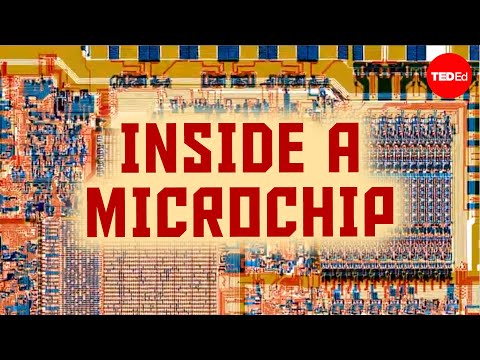
A microchip contains millions of tiny transistors.
She noticed a tiny crack in the foundation of the building.
Ultimately, whether you are reading a novel, watching the news, or chatting with a friend, you are bound to encounter this word. Its ability to convey extreme smallness with a single, simple word makes it an indispensable tool in the English speaker's vocabulary arsenal.
While tiny is a relatively simple word to understand, English learners often make specific grammatical and stylistic mistakes when using it. The most prevalent error is treating it as a gradable adjective. Because it inherently means 'very small', adding the adverb 'very' before it is redundant and grammatically incorrect in standard English. Saying 'very tiny' is a classic hallmark of a non-native speaker or informal, colloquial speech. Instead, learners should use absolute modifiers like 'absolutely', 'completely', or 'utterly' if they wish to add further emphasis.
- Redundancy Error
- Using 'very' with extreme adjectives creates an unnatural redundancy.
Incorrect: The bug was very tiny. Correct: The bug was absolutely tiny.
Another common mistake involves comparative and superlative forms. While 'tinier' and 'tiniest' are grammatically correct and widely used, some learners mistakenly use 'more tiny' or 'most tiny'. English morphological rules dictate that two-syllable adjectives ending in 'y' typically change the 'y' to 'i' and add '-er' or '-est'. Therefore, 'tinier' is the correct comparative form, and 'tiniest' is the correct superlative form.
- Comparative/Superlative Error
- Using 'more/most' instead of the correct '-ier/-iest' suffixes.
Incorrect: This is the most tiny dog. Correct: This is the tiniest dog.
Furthermore, learners sometimes confuse 'tiny' with words that describe a short duration of time or a young age. While you can say 'a tiny amount of time', you cannot say 'a tiny time'. Similarly, while a baby is tiny, you wouldn't say 'when I was tiny' to mean 'when I was young' (though it is sometimes used informally, 'when I was little' is much more standard). Precision in collocation is key.
- Collocation Error
- Applying the word to inappropriate nouns like 'time' directly.
Incorrect: We have a tiny time left. Correct: We have very little time left.
He made a tiny mistake, but it cost him the game.
She lives in the tiniest apartment I have ever seen.
By being aware of these common pitfalls—avoiding 'very', using correct comparative forms, and ensuring proper collocations—learners can use this vocabulary word with the confidence and accuracy of a native speaker.
The English language is rich with synonyms for tiny, each carrying its own slight variation in meaning, register, and context. Understanding these alternatives allows for more precise and varied expression. The most direct synonyms are 'small' and 'little', but these lack the extreme emphasis. When you need to convey that something is exceptionally small, words like 'minuscule', 'microscopic', 'miniature', and 'petite' come into play. 'Minuscule' is excellent for formal writing, often used to describe amounts, errors, or handwriting. It carries a sophisticated tone.
- Minuscule
- Extremely small, often used in formal or academic contexts.
The risk of infection is minuscule if you wash your hands.
'Microscopic' takes the concept of smallness to a literal extreme, meaning something is so small it can only be seen with a microscope. However, it is frequently used metaphorically in everyday speech to exaggerate how small something is, such as a 'microscopic portion of food'. 'Miniature', on the other hand, refers to a small-scale replica of something that is usually much larger, like a 'miniature poodle' or a 'miniature train'.
- Miniature
- A smaller version or scale model of something.
He collects miniature cars and displays them on a shelf.
For describing people, particularly women, 'petite' is the preferred term. It describes someone who is attractively small and dainty. Using 'tiny' to describe an adult can sometimes sound patronizing or overly informal, whereas 'petite' is a standard fashion and descriptive term. Additionally, words like 'minute' (pronounced my-NOOT) are used in formal contexts to describe incredibly small details or amounts.
- Petite
- Used to describe a woman who is short and has a small, trim figure.
The clothing store has a special section for petite women.
The contract contained minute details that required careful reading.
Bacteria are microscopic organisms that exist everywhere.
Choosing the right synonym depends entirely on the context—whether you are describing a person, a replica, a scientific fact, or an abstract amount. Mastering these distinctions is a hallmark of advanced English proficiency.
How Formal Is It?
Niveau de difficulté
Grammaire à connaître
Extreme Adjectives
Comparative and Superlative Adjectives
Adverbial Modifiers
Order of Adjectives
Noun Phrases
Exemples par niveau
The bug is tiny.
Very small insect
Used as a simple predicate adjective.
I have a tiny dog.
Small pet
Used as an attributive adjective before a noun.
Look at the tiny baby!
Small infant
Used to express endearment.
The toy is tiny.
Small plaything
Simple descriptive sentence.
She lives in a tiny house.
Small home
Modifying a place.
He has a tiny car.
Small vehicle
Describing a physical object.
The bird is tiny.
Small animal
Basic subject-verb-adjective structure.
I see a tiny star.
Small light in sky
Describing something far away.
My bedroom is tinier than yours.
Smaller room
Comparative form 'tinier'.
That is the tiniest cat I know.
Smallest feline
Superlative form 'tiniest'.
I only want a tiny piece of cake.
Small portion
Used with 'piece of'.
There is a tiny problem with my phone.
Small issue
Used with an abstract noun 'problem'.
She made a tiny mistake on the test.
Small error
Collocation 'tiny mistake'.
The shoes are too tiny for me.
Too small footwear
Used with 'too' to indicate insufficiency.
He found a tiny box in the garden.
Small container
Describing a discovered object.
Just a tiny bit of sugar, please.
Small amount
Common phrase 'a tiny bit'.
The text is absolutely tiny; I need glasses.
Very small writing
Used with the absolute modifier 'absolutely'.
Only a tiny fraction of the students failed.
Small percentage
Collocation 'tiny fraction'.
It requires a tiny amount of effort.
Small exertion
Collocation 'tiny amount'.
The island is a tiny dot on the map.
Small location
Metaphorical use 'tiny dot'.
She felt a tiny bit sad about leaving.
Slightly sad
Used as an adverbial phrase 'a tiny bit'.
They live in a tiny, cramped apartment in the city.
Small flat
Paired with another adjective 'cramped'.
A tiny detail changed the whole story.
Small fact
Used with 'detail' to show importance of small things.
The chances of winning are tiny.
Small probability
Describing probability.
Despite its tiny size, the device is incredibly powerful.
Small dimensions
Contrast using 'despite'.
He made a tiny adjustment to the engine, and it worked perfectly.
Small change
Collocation 'tiny adjustment'.
A tiny minority of voters opposed the new legislation.
Small group
Collocation 'tiny minority'.
The difference between the two colors is tiny.
Small distinction
Describing a subtle difference.
She has a tiny role in the upcoming movie.
Small part
Describing significance or screen time.
I'm just a tiny bit concerned about the weather forecast.
Slightly worried
Downplaying an emotion.
The tiny house movement advocates for living simply.
Small living space
Part of a specific cultural phrase.
He scrutinized every tiny flaw in the diamond.
Small imperfection
Emphasizing thoroughness.
The impact of the policy change was tiny compared to what was expected.
Negligible effect
Used in comparative analysis.
She managed to survive on a tiny stipend during her studies.
Small allowance
Describing financial constraints.
The artist is known for his intricate, tiny sculptures.
Miniature art
Describing artistic style.
There's a tiny window of opportunity to secure the deal.
Brief timeframe
Metaphorical use regarding time.
The risk, though tiny, must be accounted for in the risk assessment.
Minimal danger
Used in formal evaluation.
He felt a tiny prick of conscience before lying.
Slight guilt
Metaphorical description of emotion.
The tiny, incremental changes eventually led to a massive transformation.
Small steps
Juxtaposition with 'massive'.
They discovered a tiny, previously unknown species of frog in the rainforest.
Small animal
Scientific context.
The discrepancy in the accounting records was tiny, yet it unraveled a massive fraud.
Minute difference
Used to highlight irony or unexpected consequences.
He dismissed her concerns as a tiny, inconsequential matter.
Trivial issue
Used to belittle or minimize.
The infinitesimal, tiny particles are invisible to the naked eye.
Microscopic specks
Used redundantly for extreme poetic emphasis.
She clung to a tiny shred of hope amidst the overwhelming despair.
Small amount of optimism
Highly evocative metaphorical usage.
The tiny nuances in her performance elevated it from good to legendary.
Subtle details
Describing artistic subtlety.
A tiny, almost imperceptible nod was all the confirmation he needed.
Slight movement
Describing non-verbal communication.
The legislation passed by a tiny, razor-thin margin.
Narrow victory
Collocation emphasizing closeness.
In the grand scheme of the universe, our planet is but a tiny speck.
Insignificant dot
Philosophical or existential context.
Collocations courantes
Phrases Courantes
Souvent confondu avec
Expressions idiomatiques
Facile à confondre
Structures de phrases
Comment l'utiliser
Carries a stronger emotional weight than 'small', often implying vulnerability or insignificance.
Neutral, suitable for all contexts, though 'minuscule' is preferred in highly formal writing.
High frequency word.
- Saying 'very tiny' instead of 'absolutely tiny'.
- Spelling the comparative as 'tinyer' instead of 'tinier'.
- Using 'more tiny' instead of 'tinier'.
- Using 'tiny' to describe a short duration of time directly (e.g., 'a tiny time').
- Confusing the pronunciation with 'teeny'.
Astuces
Extreme Adjective
Remember that 'tiny' is an extreme adjective. Do not use 'very' with it.
Comparative Spelling
Drop the 'y' and add 'ier' for 'tinier'.
Long 'I' Sound
The first syllable is pronounced like the word 'tie'.
Collocations
Use 'tiny' with words like 'fraction', 'minority', and 'amount'.
Softening Criticism
Use 'a tiny bit' to soften a negative statement, e.g., 'It's a tiny bit loud'.
Avoid Redundancy
Don't write 'small and tiny'. Just choose one.
Synonyms
Learn 'minuscule' for formal writing instead of 'tiny'.
Tiny Houses
Research the 'tiny house movement' to understand this common cultural reference.
Emphasis
Listen for the vocal emphasis native speakers put on the first syllable of 'tiny'.
Visual Association
Picture an ant to remember the meaning of 'tiny'.
Mémorise-le
Moyen mnémotechnique
Think of a TIE on your KNEE. A tie on a knee would be a very TINY tie!
Origine du mot
Late Middle English
Contexte culturel
Often used colloquially in the phrase 'a tiny bit' to mean 'slightly'.
The 'tiny house' movement is particularly prominent in the US.
Similar usage to the UK and US.
Pratique dans la vie réelle
Contextes réels
Amorces de conversation
“Have you ever considered living in a tiny house?”
“What is a tiny detail that annoys you?”
“Can you think of a tiny mistake that caused a big problem?”
“Do you prefer tiny dogs or large dogs?”
“What is a tiny habit that changed your life?”
Sujets d'écriture
Describe a time when a tiny detail made a huge difference.
Write about the tiniest object you own and why it is special.
If you had to live in a tiny house, what would you keep?
Describe a tiny moment of joy you experienced today.
Write a story from the perspective of a tiny insect.
Questions fréquentes
10 questionsGrammatically, no. 'Tiny' is an extreme adjective, meaning it already contains the idea of 'very'. You should use 'absolutely tiny' or 'completely tiny' instead. However, you might hear native speakers say 'very tiny' in casual, informal conversation.
'Small' is the general opposite of big. 'Tiny' means extremely small. If a normal dog is medium, a Chihuahua is small, but a newborn mouse is tiny.
Usually, no. It is almost always an adjective. However, in rare, poetic contexts, you might see it used as a noun phrase like 'the tiny' to refer to small creatures, but this is uncommon.
The comparative form is 'tinier'. You drop the 'y' and add 'ier'.
The superlative form is 'tiniest'. You drop the 'y' and add 'iest'.
Yes, especially babies or small children. For adults, it can be used, but 'petite' is often preferred for women to sound more polite and descriptive of their figure.
It means 'a very small amount' or 'slightly'. For example, 'I am a tiny bit tired' means 'I am slightly tired'.
It is neutral and can be used in both formal and informal contexts. However, in highly academic writing, 'minuscule' or 'negligible' might be preferred.
A 'tiny house' refers to a specific type of very small home, usually under 400 square feet, often built on a trailer. It is part of a social movement advocating for simpler living.
You can say 'a tiny amount of time' or 'a tiny fraction of a second', but you generally do not say 'a tiny time'.
Teste-toi 180 questions
/ 180 correct
Perfect score!
Summary
'Tiny' means extremely small and is an absolute adjective, so you should say 'absolutely tiny' instead of 'very tiny'.
- Extremely small in size.
- Used for physical objects.
- Used for abstract amounts.
- Cannot be modified by 'very'.
Extreme Adjective
Remember that 'tiny' is an extreme adjective. Do not use 'very' with it.
Comparative Spelling
Drop the 'y' and add 'ier' for 'tinier'.
Long 'I' Sound
The first syllable is pronounced like the word 'tie'.
Collocations
Use 'tiny' with words like 'fraction', 'minority', and 'amount'.
Exemple
The bird ate a tiny piece of bread from the ground.
Contenu associé

Apprendre en contexte
Ce mot dans d'autres langues
Expressions liées
Plus de mots sur Descriptions
excellent
A1Excellent signifie quelque chose de très haute qualité. C'est un cran au-dessus de 'très bien'.
attractive
A1Agréable à regarder; séduisant. Une offre ou une idée qui est très intéressante et avantageuse.
quick
A1La chair vive et sensible située sous l'ongle.
tall
A1Grand : Décrivant quelque chose ou quelqu'un qui a une hauteur supérieure à la moyenne.
ugly
A1Quelque chose qui est désagréable à regarder.
damaged
A1La voiture a été gravement endommagée lors de l'accident de la route. Son image publique est endommagée par ces fausses rumeurs.
immediate
A1L'action immédiate du gouvernement a calmé la situation.
solid
A1Un solide est une substance qui conserve sa forme et son volume. La glace est un exemple de solide.
complete
A1L'état de ce qui est achevé ou entier.
pretty
A1Un objet décoratif ou une personne attrayante. 'Elle a acheté des jolies choses (pretties) pour le salon.'
