Christmas Markets in Germany
Germany is famous for Christmas markets. These markets are very old. They start in November. Every city has a big market.
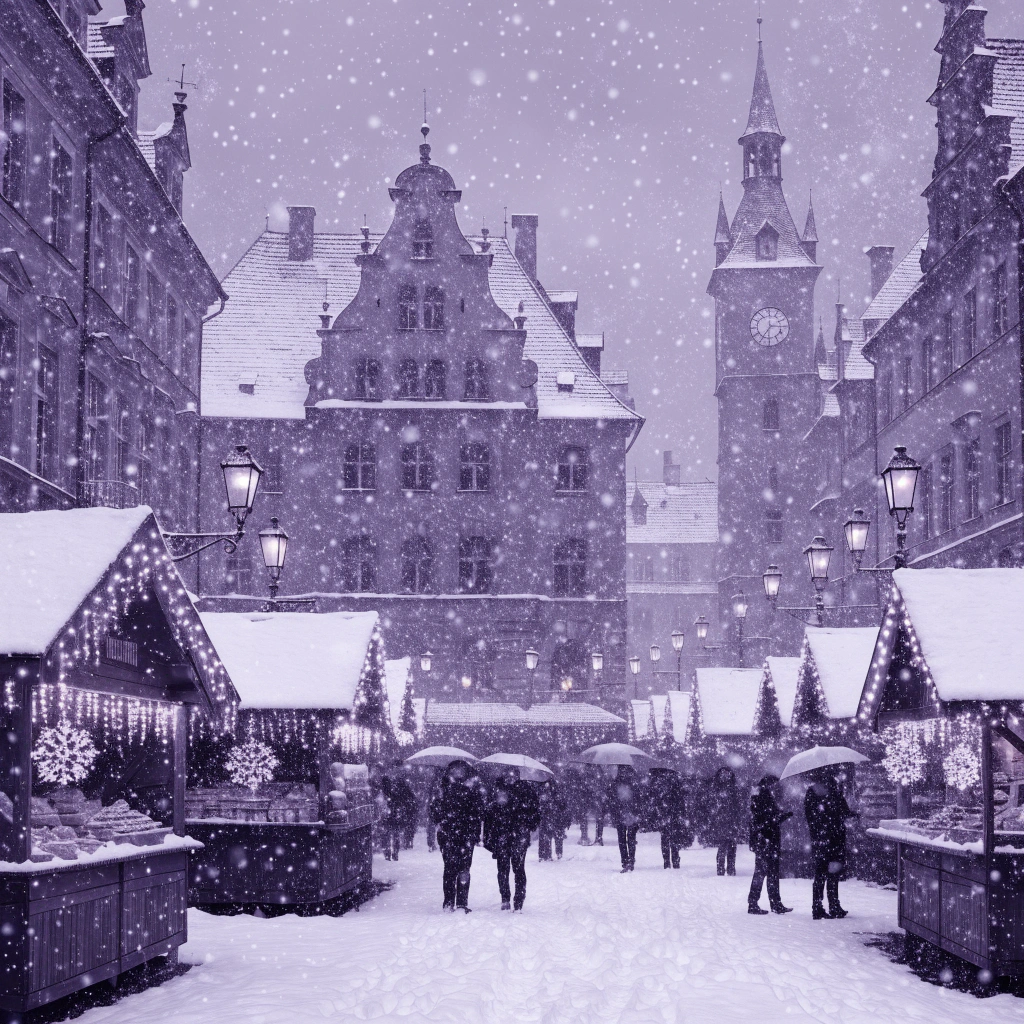
People go to the market with friends. It is cold, but the lights are beautiful. You can see many small wooden houses. They sell food and gifts.
You can buy hot drinks and sweet bread. Children like the music and the toys. It is a very happy time in Germany.
Grammar Spotlight
Pattern: Present Simple of 'To Be'
"Germany is famous for Christmas markets."
We use 'is' with singular subjects like Germany to describe facts. This is the most common way to talk about states in the present.
Pattern: Modal Verb 'Can'
"You can buy hot drinks and sweet bread."
We use 'can' followed by a base verb to show possibility. It does not change its form for different subjects.
Test Your Understanding
10 questions · A1 Beginner · 1 free preview
Test what you learned from this article. Answer all questions to earn XP!
When do the markets start?
Want to finish the quiz?
9 more questions are waiting for you. Sign up free to unlock the full quiz and earn XP!
Sign Up FreeAlready have an account? Sign In
Question Breakdown
When do the markets start?
Your answer:
Correct answer: In November
The markets have small wooden houses.
Your answer:
Correct answer: True
What does 'beautiful' mean?
Your answer:
Correct answer: Very pretty
You can see many small wooden _____.
Your answer:
Correct answer: houses
Christmas Markets in Germany
German Christmas markets are very famous around the world. These markets started a long time ago in the Middle Ages. Today, almost every town in Germany has a market. They usually begin in the last week of November and stay open until Christmas.
People visit the markets because they want to buy beautiful gifts. You can find handmade toys, warm clothes, and decorations for your home. The food is also delicious. Many people drink hot mulled wine and eat traditional gingerbread. The air smells like cinnamon and sugar.
The atmosphere is better than a normal shopping mall. There are many bright lights and traditional music. Some markets are bigger than others, but they are all very special. People meet their friends there to talk and enjoy the winter season together. It is a wonderful tradition for everyone.
Grammar Spotlight
Pattern: Past Simple
"These markets started a long time ago in the Middle Ages."
We use the past simple to talk about things that finished in the past. For regular verbs, we usually add '-ed' to the end of the verb.
Pattern: Comparatives
"The atmosphere is better than a normal shopping mall."
We use comparatives to compare two things. For the irregular word 'good', we use 'better' followed by 'than'.
Test Your Understanding
11 questions · A2 Elementary · 1 free preview
Test what you learned from this article. Answer all questions to earn XP!
When do German Christmas markets usually begin?
Want to finish the quiz?
10 more questions are waiting for you. Sign up free to unlock the full quiz and earn XP!
Sign Up FreeAlready have an account? Sign In
Question Breakdown
When do German Christmas markets usually begin?
Your answer:
Correct answer: In the last week of November
Almost every town in Germany has a Christmas market.
Your answer:
Correct answer: True
What does 'delicious' mean?
Your answer:
Correct answer: Tasting very good
The air smells like _____ and sugar.
Your answer:
Correct answer: cinnamon
Why do people visit the markets?
Your answer:
Correct answer: To buy gifts and see friends
The Magic of German Christmas Markets
German Christmas markets, known as 'Weihnachtsmärkte', have been a central part of winter traditions for centuries. These festive markets, which first appeared in the late Middle Ages, were originally used by local people to buy food and essential supplies for the cold season. Since then, they have evolved into wonderful community gatherings that attract millions of tourists from all over the world every year.
Today, almost every town in Germany hosts at least one market. These markets are usually opened in the last week of November and continue until Christmas Eve. Visitors can walk through rows of charming wooden stalls where handmade gifts, wooden toys, and glass ornaments are sold by local craftsmen. The air is thick with the sweet smell of roasted nuts and gingerbread, which are very popular snacks during this snowy season.
One of the most famous traditions is drinking 'Glühwein', a delicious hot spiced wine. It is often served in decorative ceramic mugs that can be kept by visitors as souvenirs of their trip. While the adults enjoy their warm drinks and conversation, children are entertained by colorful carousels and traditional holiday music. In larger metropolises like Berlin and Hamburg, dozens of different markets are organized, each offering its own unique theme and historical style.
Although many markets have become more modern and commercial, they still keep their magical traditional charm. The bright, beautiful lights and the warm social atmosphere help people to forget the long, dark winter evenings. It is a special time when friends and families meet to celebrate together, creating wonderful memories that will last a lifetime. For many people, winter in Germany would not be the same without the joy of these markets.
Grammar Spotlight
Pattern: Passive Voice
"These markets are usually opened in the last week of November."
The passive voice is used when the action is more important than the person doing it. It is formed using 'be' + past participle.
Pattern: Relative Clauses
"These festive markets, which first appeared in the late Middle Ages, were originally used by local people."
Relative clauses start with 'which', 'who', or 'that' to give more information about a noun. They help combine two sentences into one complex sentence.
Test Your Understanding
11 questions · B1 Intermediate · 1 free preview
Test what you learned from this article. Answer all questions to earn XP!
What was the original purpose of the Christmas markets in the Middle Ages?
Want to finish the quiz?
10 more questions are waiting for you. Sign up free to unlock the full quiz and earn XP!
Sign Up FreeAlready have an account? Sign In
Question Breakdown
What was the original purpose of the Christmas markets in the Middle Ages?
Your answer:
Correct answer: To buy food and supplies for winter
Christmas markets in Germany usually start in late December.
Your answer:
Correct answer: False
What does the word 'ornaments' mean in the text?
Your answer:
Correct answer: Decorative objects
The air is thick with the sweet _____ of roasted nuts and gingerbread.
Your answer:
Correct answer: smell
What is 'Glühwein'?
Your answer:
Correct answer: A hot spiced wine
The Evolution of the German Christmas Market: A Cultural Legacy
German Christmas markets, known as 'Weihnachtsmärkte', represent one of the country’s most enduring traditions, tracing their origins back to the late Middle Ages. While they initially served a practical function as venues for citizens to procure essential winter supplies, these gatherings have undergone a significant evolution over the centuries. Today, they have transformed into elaborate festive events that attract millions of tourists annually, blending historical charm with modern commercial interests.
The atmosphere of a traditional market is defined by a unique sensory experience. As one wanders through the wooden stalls, the air is frequently filled with the aroma of roasted chestnuts and spiced wine, known locally as 'Glühwein'. However, it is not merely the food that defines these spaces. Many markets pride themselves on the preservation of local craftsmanship. Artisans often demonstrate traditional woodcarving or glassblowing techniques, offering products that contrast sharply with mass-produced goods found in contemporary shopping malls. Consequently, these markets serve as a vital link to Germany's artisanal heritage.
Regional diversity is another characteristic that merits analysis. While metropolises like Berlin or Hamburg host numerous markets ranging from the classic to the avant-garde, smaller towns often provide a more intimate and authentic environment. For instance, the Striezelmarkt in Dresden is celebrated for being one of the oldest in the world, maintaining a legacy that dates back to 1434. Each region incorporates its own local folklore and culinary specialties, ensuring that no two markets are identical.
Nevertheless, the modern Christmas market is not without its challenges. The increasing commercialization of these events has led to debates regarding their cultural integrity. Some critics argue that the influx of international tourists might dilute the traditional essence of the festivities. Despite these concerns, the social value of the markets remains undeniable. They provide a communal space where people can gather during the darkest months of the year, fostering a sense of belonging and collective joy.
In conclusion, the German Christmas market is much more than a seasonal shopping destination. It is a complex cultural phenomenon that balances historical preservation with the demands of modern tourism. By providing a platform for traditional crafts and communal interaction, these markets continue to be a cornerstone of German winter identity.
Grammar Spotlight
Pattern: Passive Voice
"The atmosphere of a traditional market is defined by a unique sensory experience."
The passive voice is used here to focus on the 'atmosphere' rather than the specific person defining it. It is formed using the verb 'to be' plus the past participle.
Pattern: Present Perfect for Historical Continuity
"These gatherings have undergone a significant evolution over the centuries."
The present perfect (have + past participle) is used to describe an action that started in the past and has continuing effects or relevance in the present.
Pattern: Contrastive Conjunctions
"While they initially served a practical function... these gatherings have undergone a significant evolution."
The word 'while' is used at the beginning of a clause to introduce a contrast between the historical purpose and the modern state of the markets.
Test Your Understanding
11 questions · B2 Upper Intermediate · 1 free preview
Test what you learned from this article. Answer all questions to earn XP!
What was the primary purpose of Christmas markets during the late Middle Ages?
Want to finish the quiz?
10 more questions are waiting for you. Sign up free to unlock the full quiz and earn XP!
Sign Up FreeAlready have an account? Sign In
Question Breakdown
What was the primary purpose of Christmas markets during the late Middle Ages?
Your answer:
Correct answer: To provide a venue for buying essential winter supplies
Every Christmas market in Germany is identical in terms of its culinary specialties and folklore.
Your answer:
Correct answer: False
What does 'authentic' mean in the context of the article?
Your answer:
Correct answer: Genuine and traditional
The air in the market is frequently filled with the _____ of roasted chestnuts.
Your answer:
Correct answer: aroma
Why is the Striezelmarkt in Dresden specifically mentioned?
Your answer:
Correct answer: It is one of the oldest Christmas markets in the world.
The Paradox of the German Christmas Market: Between Medieval Pragmatism and Modern Consumerism
As the days shorten and a crisp autumnal chill permeates the air, the German landscape undergoes a profound and systematic transformation. Seldom does the modern traveller encounter a phenomenon so steeped in historical resonance yet so vulnerable to the pressures of global tourism as the Weihnachtsmärkte. These seasonal markets, which now serve as the quintessential emblem of German winter, trace their lineage back to the late Middle Ages, specifically the 14th century. Originally conceived not as festive spectacles, but as pragmatic necessities, these gatherings allowed citizens to stockpile essential provisions and hardy textiles against the biting winter. The evolution from a utilitarian trade hub to a cultural cornerstone reflects broader shifts in European societal structures.
It is the juxtaposition of these medieval roots with the glittering facade of contemporary commerce that creates a complex cultural tapestry. What defines the modern market is an almost ephemeral atmosphere—a sensory overload where the olfactory allure of Glühwein and roasted almonds mingles with the visual splendour of timbered stalls. However, beneath the surface of this festive fervour lies a nuanced tension. The proliferation of mass-produced trinkets and standardized catering often threatens to overshadow the artisanal integrity that once defined these spaces. Critics frequently point to the commodification of tradition, arguing that the soul of the market is being sacrificed at the altar of economic gain and 'Disneyfication.'
Furthermore, the regional diversity of these markets provides a fascinating case study in local identity. While the Striezelmarkt in Dresden boasts a history of nearly six centuries, the maritime-themed markets of the northern ports offer a distinctively different aesthetic. This regionalism serves as a bulwark against the homogenizing effects of globalization. The preservation of local dialects, regional culinary specialities, and specific folk music within the market boundaries ensures that the experience remains anchored in a specific sense of place. It is this localism that prevents the markets from becoming mere carbon copies of one another.
Yet, to view the Christmas market solely through the lens of commercialism or regionalism would be a reductionist oversight. For many, the markets represent a vital vestige of community cohesion. In an increasingly digital and fragmented age, the physical act of gathering under a canopy of fairy lights provides an indelible sense of belonging. It is within this sensory sanctuary that the stresses of urban life are momentarily suspended. The preservation of cultural identity through these markets is not merely a nostalgic exercise; it is a dynamic process of adaptation.
The architectural impact of these markets on German town squares is equally significant. For four weeks, the rigid geometry of the urban environment is softened by the organic layout of wooden huts, creating a temporary 'city within a city.' This spatial reconfiguration encourages a different pace of life—one dictated by wandering rather than commuting. Whether one views them as commercial traps or cultural havens, the impact of these markets on the German psyche is undeniable. They remain a testament to the human desire for warmth and connection amidst the darkest months of the year. Ultimately, the German Christmas market survives because it successfully bridges the gap between the pragmatic survivalism of the past and the complex emotional needs of the modern era.
Grammar Spotlight
Pattern: Inversion with negative/restrictive adverbs
"Seldom does the modern traveller encounter a phenomenon so steeped in historical resonance yet so vulnerable to the pressures of global tourism as the Weihnachtsmärkte."
When using restrictive words like 'seldom' or 'rarely' at the start of a sentence for emphasis, the auxiliary verb comes before the subject. This structure is common in formal C1 writing to add rhetorical weight.
Pattern: Cleft Sentences
"It is the juxtaposition of these medieval roots with the glittering facade of contemporary commerce that creates a complex cultural tapestry."
Cleft sentences use the structure 'It is/was + [focused part] + that/who...' to emphasize a specific piece of information. Here, it highlights the exact cause of the cultural complexity.
Pattern: Nominalisation
"The preservation of local dialects, regional culinary specialities, and specific folk music within the market boundaries ensures that the experience remains anchored in a specific sense of place."
Nominalisation involves turning verbs or adjectives into nouns (e.g., 'preserve' to 'preservation'). This technique makes writing more concise, formal, and abstract, which is a hallmark of C1 academic and analytical prose.
Test Your Understanding
12 questions · C1 Advanced · 1 free preview
Test what you learned from this article. Answer all questions to earn XP!
What was the primary purpose of Christmas markets in the late Middle Ages?
Want to finish the quiz?
11 more questions are waiting for you. Sign up free to unlock the full quiz and earn XP!
Sign Up FreeAlready have an account? Sign In
Question Breakdown
What was the primary purpose of Christmas markets in the late Middle Ages?
Your answer:
Correct answer: To allow citizens to stockpile essential winter supplies
The author suggests that regional diversity helps prevent Christmas markets from becoming identical to one another.
Your answer:
Correct answer: True
What does the word 'ephemeral' mean in the context of the article?
Your answer:
Correct answer: Lasting for a very short period of time
The _______ of mass-produced trinkets often threatens to overshadow the artisanal integrity that once defined these spaces.
Your answer:
Correct answer: proliferation
Which term is used in the text to describe the excessive commercialization of the markets?
Your answer:
Correct answer: Disneyfication
The article argues that the Christmas market should be viewed strictly as a commercial trap.
Your answer:
Correct answer: False
The German Weihnachtsmarkt: A Socio-Cultural Palimpsest of Tradition and Modernity
The German Weihnachtsmarkt, far from being a static relic of the past, functions as a dynamic socio-cultural palimpsest, where layers of medieval mercantilism, Romantic-era nostalgia, and contemporary consumerism overlap and occasionally collide. To walk through the Dresden Striezelmarkt—the oldest recorded market of its kind, having been granted its charter in 1434—is to engage with a lineage of trade that predates the very concept of the nation-state. Originally conceived as a pragmatic necessity to ensure the populace had access to meat and durable goods before the onset of the harsh Germanic winter, these gatherings have undergone a profound metamorphosis. They have transitioned from the utilitarian to the ethereal, becoming an evocative stage upon which the German identity is annually performed and contested.
The sensory architecture of the market is perhaps its most compelling attribute. Were one to traverse the cobblestone paths of a medieval plaza during the advent season, the sensory assault would be immediate and profound. The air, thick with the saccharine scent of roasted almonds and the piquant notes of cloves, acts as a conduit for collective memory. This olfactory cornucopia is further augmented by the visual splendor of the 'Weihnachtspyramide'—towering carousels of light and shadow that represent a vestigial link to the mining traditions of the Ore Mountains. These structures, with their rotating tiers of carved figurines, aestheticize the labor of the past, transforming it into a spectacle for the modern gaze.
Furthermore, the sociological significance of the 'Glühwein' culture cannot be overstated. In the biting chill of a December evening, the act of clutching a ceramic mug of spiced wine serves as a catalyst for a specific form of social cohesion known as Gemütlichkeit. This concept, though often oversimplified as mere coziness, encapsulates a profound sense of psychological security and communal belonging. In the space of the market, social hierarchies are momentarily flattened; the high-ranking executive and the manual laborer stand shoulder-to-shoulder, united by the shared experience of the cold and the warmth of the beverage. This juxtaposition of the individual and the collective reinforces the market’s role as a vital 'third space' in urban sociology.
However, the evanescence of these markets—their tendency to appear as if by magic in late November only to vanish abruptly following the Epiphany—invites a more critical analysis. There exists a pervasive sentiment among scholars that the commodification of the Weihnachtsmarkt has reached a tipping point. The hegemony of mass-produced plastic ornaments and the homogenization of culinary offerings across different regions threaten to erode the local 'Heimat' (homeland) sentiment that once defined these spaces. Critics argue that the market has been subsumed by a purely mercantile logic, where tradition is merely a brand used to facilitate the extraction of capital from tourists.
Yet, to dismiss the Weihnachtsmarkt as a mere commercial subterfuge would be to ignore the resilience of its underlying spirit. Even amidst the kitsch, there remains an ontological search for meaning and a desire to reconnect with the rhythms of the natural year. The market serves as a liminal zone, a temporal bridge between the darkness of the winter solstice and the promised return of the light. By synthesizing the sensory with the spiritual, the German Christmas market continues to offer a respite from the relentless pace of digital life. It remains a testament to the enduring power of shared ritual, a place where the ephemeral beauty of the season is celebrated with a fervor that is as ancient as it is contemporary.
Grammar Spotlight
Pattern: Inverted Conditionals (Subjunctive)
"Were one to traverse the cobblestone paths of a medieval plaza during the advent season, the sensory assault would be immediate and profound."
This structure replaces 'If one were to...' by inverting the verb and subject. It is used in formal, academic, or literary English to express a hypothetical situation with a high degree of stylistic sophistication.
Pattern: Negative Inversion for Emphasis
"Scarcely had the first frosts of November settled upon the eaves when the timbered stalls began their annual metamorphosis."
When a sentence starts with a negative or restrictive adverb like 'scarcely', 'hardly', or 'never', the subject and auxiliary verb are inverted. This creates a dramatic, literary effect often found in C2 level prose.
Pattern: Gerund Phrases for Synthesizing Ideas
"By synthesizing the sensory with the spiritual, the German Christmas market continues to offer a respite from the relentless pace of digital life."
The use of 'By + [gerund]' at the start of a sentence allows the writer to explain the method or means by which an action is achieved. It helps in creating complex, cohesive sentences that link abstract concepts.
Test Your Understanding
12 questions · C2 Mastery · 1 free preview
Test what you learned from this article. Answer all questions to earn XP!
According to the text, what was the original pragmatic purpose of the German Christmas markets?
Want to finish the quiz?
11 more questions are waiting for you. Sign up free to unlock the full quiz and earn XP!
Sign Up FreeAlready have an account? Sign In
Question Breakdown
According to the text, what was the original pragmatic purpose of the German Christmas markets?
Your answer:
Correct answer: To provide access to meat and durable goods for winter
The author suggests that 'Gemütlichkeit' is a simple concept that translates easily to 'coziness'.
Your answer:
Correct answer: False
Which word describes the quality of being fleeting or vanishing quickly?
Your answer:
Correct answer: Evanescence
The air, thick with the _____ scent of roasted almonds, acts as a conduit for collective memory.
Your answer:
Correct answer: saccharine
What does the 'Weihnachtspyramide' represent in the context of the article?
Your answer:
Correct answer: A vestigial link to the mining traditions of the Ore Mountains
The text argues that social hierarchies are temporarily flattened during the ritual of drinking Glühwein.
Your answer:
Correct answer: True
