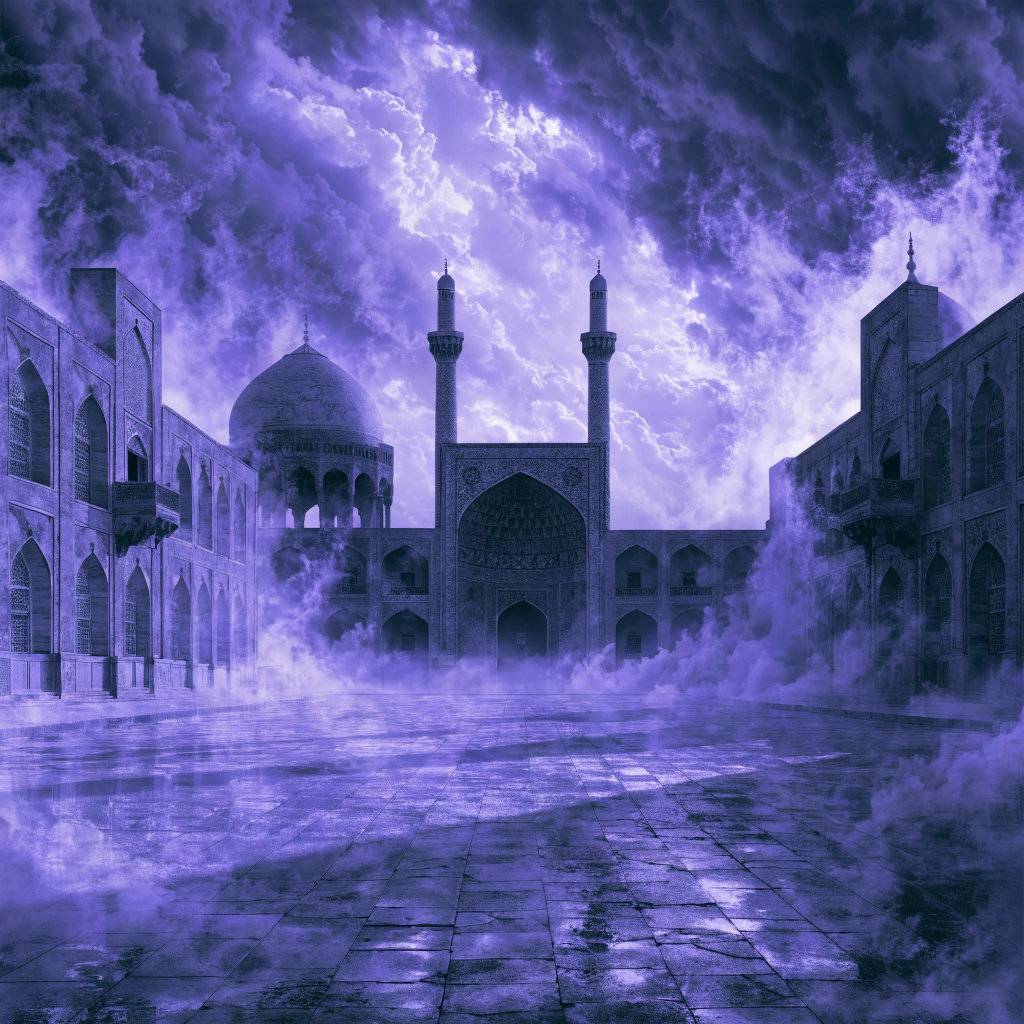
A Beautiful Square in Iran
Naqsh-e Jahan Square is a very big and beautiful place. It is in the city of Isfahan, Iran. It is one of the largest squares in the world. Many people visit this place every day.
The square has many famous buildings. There are beautiful mosques and a big palace. The square is very old, but it is still very clean. People like to walk here.
There are many shops around the square. You can buy traditional gifts and food. In the evening, the lights are very pretty. It is a great place to see with friends.
文法スポットライト
パターン: Present Simple 'To Be'
"Naqsh-e Jahan Square is a very big and beautiful place."
We use 'is' with singular subjects to describe a person, place, or thing. In this sentence, it describes the size and appearance of the square.
パターン: There is / There are
"There are beautiful mosques and a big palace."
We use 'there are' for plural nouns to show that things exist in a specific location. It is followed by a plural subject like 'mosques'.
理解度をチェック
10 問 · A1 初級 · 無料プレビュー 1回
この記事で学んだことをテストしよう。全問正解してXPを獲得!
Where is Naqsh-e Jahan Square located?
問題の内訳
Where is Naqsh-e Jahan Square located?
あなたの回答:
正解: Isfahan
The square is very small.
あなたの回答:
正解: 間違い
What does 'famous' mean?
あなたの回答:
正解: Known by many people
You can buy traditional _____ and food.
あなたの回答:
正解: gifts
「世界のイメージ」ナクシェ・ジャハーン広場
イランのイスファハンには、とても大きな広場があります。この広場の名前は「ナクシェ・ジャハーン広場」です。この広場は「世界のイメージ」という意味があります。
昔、1598年から1629年の間に、シャハ・アッバース1世がこの広場を作りました。彼はイスファハンを美しい都にしたかったので、この広場を街の中心にしました。広場の長さは560メートル、幅は160メートルもあります。とても広いですね。
この広場は、世界でもっとも大きい広場の一つです。ここは、ただ広いだけではありません。広場の周りには、美しいモスクや宮殿があります。人々はここで買い物をしたり、散歩をしたりしました。今も多くの人が訪れて、その歴史と美しさを楽しんでいます。
文法スポットライト
パターン: 〜たので
"彼はイスファハンを美しい都にしたかったので、この広場を街の中心にしました。"
この文型は、前の文が理由で、後ろの文が結果であることを示します。動詞の「た形」や、い形容詞の「かった形」、な形容詞・名詞の「だった形」に接続します。例えば、「雨が降ったので、傘を持っていきました。」のように使います。
パターン: 〜たり、〜たりします
"人々はここで買い物をしたり、散歩をしたりしました。"
この文型は、いくつかの行動や活動を例として挙げるときに使います。すべての行動を言うのではなく、「〜のようなことをする」というニュアンスです。動詞の「た形」に「り」をつけ、最後に「します」や「しました」などをつけます。
理解度をチェック
11 問 · A2 初級 · 無料プレビュー 1回
この記事で学んだことをテストしよう。全問正解してXPを獲得!
ナクシェ・ジャハーン広場はどこにありますか?
問題の内訳
ナクシェ・ジャハーン広場はどこにありますか?
あなたの回答:
正解: イスファハン
広場の名前「ナクシェ・ジャハーン」は「世界のイメージ」という意味です。
あなたの回答:
正解: 正しい
「都」の意味は何ですか?
あなたの回答:
正解: 首都
シャハ・アッバース1世は、イスファハンを美しい( )にしたかった。
あなたの回答:
正解: 都
広場の周りには何がありますか?
あなたの回答:
正解: モスクや宮殿
The Beauty of Naqsh-e Jahan Square: The Image of the World
Naqsh-e Jahan Square is a magnificent place located in the heart of Isfahan, Iran. It is often called 'the Image of the World' because of its incredible beauty and impressive size. This historic site has been visited by millions of people who want to see its amazing architecture. It was built between 1598 and 1629 by Shah Abbas I, who wanted to create a capital city that would be famous across the globe.
The square is famous for being one of the largest public spaces on Earth. It is 560 meters long and 160 meters wide, which makes it much bigger than many other historical squares. The area was designed to connect the government, the religious center, and the economy of the city. Around the square, you can find four impressive buildings that show the power of the Persian Empire.
On the south side, the Masjed-e Shah mosque stands with its beautiful blue tiles. On the east, there is the Sheikh Lotfollah Mosque, which was built specifically for the royal family. The Ali Qapu Palace, where the king used to watch polo matches, is located on the west. Finally, the entrance to the Grand Bazaar is on the north side, where traditional goods have been sold for centuries.
Today, Naqsh-e Jahan Square is a peaceful place where families enjoy picnics and tourists take photos. It has been listed as a UNESCO World Heritage site because of its historical importance. If you ever visit Iran, you must spend time in this square, which has remained a symbol of Persian culture for hundreds of years.
文法スポットライト
パターン: Passive Voice
"The area was designed to connect the government, the religious center, and the economy of the city."
The passive voice is used when the action is more important than who performed it. It is formed using 'to be' + past participle.
パターン: Present Perfect
"This historic site has been visited by millions of people who want to see its amazing architecture."
The present perfect connects the past to the present. It is formed with 'have/has' + past participle and shows an action that happened at an unspecified time.
理解度をチェック
11 問 · B1 中級 · 無料プレビュー 1回
この記事で学んだことをテストしよう。全問正解してXPを獲得!
Why is the square called 'the Image of the World'?
問題の内訳
Why is the square called 'the Image of the World'?
あなたの回答:
正解: Because of its beauty and size
The square is one of the smallest public spaces on Earth.
あなたの回答:
正解: 間違い
What does 'symbol' mean?
あなたの回答:
正解: A thing that represents something else
The square has been listed as a _____ World Heritage site.
あなたの回答:
正解: UNESCO
Who ordered the construction of the square?
あなたの回答:
正解: Shah Abbas I
The Image of the World: Exploring Naqsh-e Jahan Square
Often referred to as 'the Image of the World,' Naqsh-e Jahan Square stands as a remarkable testament to the architectural brilliance of the Safavid era. Commissioned by Shah Abbas I in the late 16th century, the square was designed to serve as the heart of his new capital, Isfahan. By integrating political, religious, and economic power into a single urban space, the Shah managed to create a site that remains unparalleled in its symmetry and scale. Stretching over 500 meters in length, it is one of the largest public squares globally, reflecting the ambitious vision of its creators.
The square is enclosed by two-story arcades, which house the traditional bazaar. However, it is the four monumental structures situated at its cardinal points that truly capture the imagination. To the south lies the Masjed-e Shah, an exquisite example of Islamic architecture adorned with intricate tilework. Opposite this, the Ali Qapu Palace stands as a grand gateway to the royal gardens, offering a vantage point from which the Shah once watched polo matches and royal parades. To the east and west, the Sheikh Lotfollah Mosque and the gateway to the Great Bazaar complete this harmonious ensemble.
Furthermore, the square's vast dimensions highlight the sophisticated nature of Persian urban planning. It was not merely a marketplace; it was a stage for public ceremonies and a hub for international trade. Consequently, Isfahan became a cosmopolitan city where travelers from the Silk Road would converge. The square acted as a bridge between the common people in the bazaar and the royal authority in the palace.
Despite the passage of centuries, the square has retained its original charm. While it has undergone several restoration projects, the core aesthetic remains intact. Today, it is recognized as a UNESCO World Heritage site, attracting scholars and tourists who seek to understand the fusion of Persian culture and history. Had the Safavid architects not prioritized such meticulous design, the square might not have survived the political upheavals of subsequent eras. In conclusion, Naqsh-e Jahan is more than just a historical monument; it is a living space that continues to define the identity of Isfahan. Its enduring legacy serves as a reminder of a period when art and governance were seamlessly intertwined.
文法スポットライト
パターン: Passive Voice
"The square was designed to serve as the heart of his new capital, Isfahan."
The passive voice is used here to focus on the square (the object) rather than the architect. It is formed using 'was/were' followed by the past participle.
パターン: Participle Clauses
"By integrating political, religious, and economic power into a single urban space, the Shah managed to create a site that remains unparalleled."
The '-ing' clause at the beginning describes how the main action was achieved. It helps to combine ideas and show a method or reason.
パターン: Third Conditional (Inverted)
"Had the Safavid architects not prioritized such meticulous design, the square might not have survived the political upheavals of subsequent eras."
This is a formal way of saying 'If the architects had not...'. It describes a hypothetical past situation and its imaginary result.
理解度をチェック
11 問 · B2 中上級 · 無料プレビュー 1回
この記事で学んだことをテストしよう。全問正解してXPを獲得!
What was the primary purpose of constructing Naqsh-e Jahan Square according to the text?
問題の内訳
What was the primary purpose of constructing Naqsh-e Jahan Square according to the text?
あなたの回答:
正解: To serve as the heart of the new capital city
The square is currently ignored by international heritage organizations.
あなたの回答:
正解: 間違い
What does the word 'intricate' mean in the context of the article?
あなたの回答:
正解: Highly detailed and complex
Because it attracted travelers from the Silk Road, Isfahan is described as a _____ city.
あなたの回答:
正解: cosmopolitan
The Ali Qapu Palace was used by the Shah to observe events in the square.
あなたの回答:
正解: 正しい
The Architectural Zenith of Safavid Ambition: A Critical Appraisal of Naqsh-e Jahan
The relocation of the Safavid capital from Qazvin to Isfahan in 1598 was not merely a strategic maneuver to escape Ottoman incursions, but a profound statement of imperial intent. At the heart of this transformation lay Naqsh-e Jahan Square, an architectural marvel that served as the ideological nexus of the empire. Seldom does one encounter a space where the realms of commerce, religion, and political authority are so seamlessly intertwined. This vast expanse, often dubbed 'the Image of the World,' was designed to project an image of absolute sovereignty and cultural grandeur to both local subjects and foreign emissaries.
It was through this deliberate urban planning that Shah Abbas I sought to centralize power. By situating the Ali Qapu Palace, the Shah Mosque, the Sheikh Lotfollah Mosque, and the Grand Bazaar around a single perimeter, the monarch facilitated a complex interplay between the disparate pillars of Safavid society. The square’s dimensions—stretching 560 meters in length—were commensurate with the monarch’s desire to rival the most ostentatious cities of the era. However, the square was not solely a monument to ego; it functioned as a vibrant social hub, hosting polo matches and public festivities that reinforced the bond between the ruler and the ruled.
From a critical perspective, the construction of Naqsh-e Jahan can be viewed as an exercise in the subjugation of urban space to royal will. The sheer scale of the project necessitated a total reconfiguration of Isfahan’s existing fabric, reflecting a transition toward a more bureaucratic and centralized form of governance. The architectural language employed—characterized by intricate tilework and symmetrical geometry—epitomize the aesthetic heights of the Persian Golden Age. Each structure bordering the square was not an isolated entity but part of a cohesive narrative of divine and temporal authority.
Today, the square remains a poignant vestige of a bygone era, yet its relevance persists. Despite the passage of centuries and the inevitable decay of imperial structures, the resilience of Naqsh-e Jahan as a public space is undeniable. It continues to serve as a communal lung for Isfahan, bridging the gap between historical reverence and contemporary life. To walk across its stones is to witness the enduring legacy of a vision that sought to encapsulate the entire world within a single, magnificent quadrangle.
文法スポットライト
パターン: Inversion
"Seldom does one encounter a space where the realms of commerce, religion, and political authority are so seamlessly intertwined."
Inversion is used here by placing the negative adverb 'Seldom' at the beginning of the sentence, followed by the auxiliary verb 'does'. This structure adds rhetorical emphasis and is common in formal C1-level writing.
パターン: Cleft Sentences
"It was through this deliberate urban planning that Shah Abbas I sought to centralize power."
An 'It-cleft' sentence is used to focus on a specific part of the sentence (the urban planning). It emphasizes the cause or method behind the action described in the second half of the sentence.
パターン: Nominalisation
"The relocation of the Safavid capital from Qazvin to Isfahan in 1598 was not merely a strategic maneuver..."
Nominalisation involves turning verbs (relocate) into nouns (relocation). This makes the writing more concise, abstract, and formal, which is a hallmark of advanced English academic prose.
理解度をチェック
12 問 · C1 上級 · 無料プレビュー 1回
この記事で学んだことをテストしよう。全問正解してXPを獲得!
What was the primary ideological purpose of Naqsh-e Jahan Square according to the text?
問題の内訳
What was the primary ideological purpose of Naqsh-e Jahan Square according to the text?
あなたの回答:
正解: To project imperial sovereignty and integrate different social pillars.
The square's design intentionally avoided traditional Persian aesthetic heights.
あなたの回答:
正解: 間違い
What does 'Epitomize' mean?
あなたの回答:
正解: To be a perfect example of something.
The square's dimensions were _____ with the monarch’s desire to rival other great cities.
あなたの回答:
正解: commensurate
How does the author characterize the construction of the square in a critical sense?
あなたの回答:
正解: As an exercise in the subjugation of urban space to royal will.
Despite its age, the square still functions as a communal space for the people of Isfahan.
あなたの回答:
正解: 正しい
The Geometric Sovereignty of Naqsh-e Jahan: A Safavid Microcosm
Seldom does a public space encapsulate the entirety of a civilization’s ontological framework with such surgical precision as Naqsh-e Jahan Square in Isfahan. Conceived by Shah Abbas I at the turn of the 17th century, this vast rectangular expanse was not merely an exercise in urban expansion but a quintessential manifestation of Safavid hegemony. By relocating the capital from Qazvin to Isfahan, the Shah sought to forge a new administrative and commercial zenith that would rival the contemporary splendors of the Ottoman and Mughal empires. The square, measuring an imposing 560 meters by 160 meters, functions as a confluence where the disparate threads of imperial power—theocratic, commercial, and monarchical—interweave into a seamless tapestry of stone and tile.
Were one to scrutinize the rhythmic repetition of the double-storied arcades that circumscribe the square, the deliberate attempt to harmonize commercial vitality with aesthetic grandeur would become manifest. This architectural juxtaposition is most evident in the placement of the four primary structures that anchor the cardinal points. To the south lies the Masjed-e Shah, a bastion of religious authority whose blue-tiled dome reaches toward the heavens, asserting the divine legitimacy of the Safavid dynasty. Paradoxically, the eastern side houses the Sheikh Lotfollah Mosque, a private sanctuary of such intricate beauty that it lacks both minarets and a courtyard, serving as a more intimate, spiritual counterpoint to the public majesty of the Shah’s mosque. It is imperative that the observer acknowledge the square’s didactic function in reinforcing the Safavid social hierarchy through these spatial relationships.
Opposite the Sheikh Lotfollah Mosque stands the Ali Qapu Palace, the seat of administrative sovereignty. From its elevated veranda, the Shah would overlook the ephemeral spectacles of polo matches and military parades, a literal and figurative representation of the royal gaze. This vantage point allowed the monarch to monitor the pulse of the city while remaining physically detached from the egalitarian bustle of the square below. The integration of the Imperial Bazaar at the northern end completes this triad, ensuring that the lifeblood of the empire—mercantilism—was inextricably linked to the crown and the clergy. Notwithstanding the passage of centuries, the square remains a testament to a period where urban planning was utilized as a sophisticated instrument of statecraft.
It might be argued that the true genius of Naqsh-e Jahan lies in its ability to remain relevant across vastly different socio-political eras. While the polo goals still stand as silent sentinels of a bygone aristocratic pastime, the square has evolved into a vibrant public sphere where modern Iranians congregate. Yet, lest the visitor be overwhelmed by the sheer scale of the site, one must appreciate the subtle nuances of the Safavid aesthetic: the way the light reflects off the haft-rangi tiles or the cooling presence of the central fountains. In its current incarnation as a UNESCO World Heritage site, Naqsh-e Jahan continues to serve as the ‘Image of the World,’ a title that reflects its historical ambition to contain the cosmos within its four walls.
文法スポットライト
パターン: Inversion after negative/restrictive expressions
"Seldom does a public space encapsulate the entirety of a civilization’s ontological framework with such surgical precision as Naqsh-e Jahan Square."
When sentences begin with restrictive adverbs like 'seldom', 'rarely', or 'never', the auxiliary verb is placed before the subject. This structure is used for rhetorical emphasis in formal or academic writing.
パターン: Present Subjunctive for necessity/importance
"It is imperative that the observer acknowledge the square’s didactic function in reinforcing the Safavid social hierarchy."
The subjunctive mood is used after adjectives of importance (imperative, essential, vital). The base form of the verb (acknowledge) is used regardless of the subject's person or number.
パターン: Conditional Inversion (Were)
"Were one to scrutinize the rhythmic repetition of the double-storied arcades, the deliberate attempt to harmonize commercial vitality with aesthetic grandeur would become manifest."
In formal English, 'if' can be omitted in second conditional sentences by inverting 'were' and the subject. This elevates the register of the prose and is common in scholarly analysis.
理解度をチェック
12 問 · C2 マスター · 無料プレビュー 1回
この記事で学んだことをテストしよう。全問正解してXPを獲得!
What was the primary political motivation for Shah Abbas I to construct Naqsh-e Jahan Square?
問題の内訳
What was the primary political motivation for Shah Abbas I to construct Naqsh-e Jahan Square?
あなたの回答:
正解: To establish a new capital that could compete with other contemporary empires
The Sheikh Lotfollah Mosque was designed as a public space for congregational prayers.
あなたの回答:
正解: 間違い
What does the word 'zenith' refer to in the context of the article?
あなたの回答:
正解: The highest point of success or power
The square was intended to be a _____ where religious, commercial, and royal powers met.
あなたの回答:
正解: confluence
Which structure served as the vantage point from which the Shah observed public spectacles?
あなたの回答:
正解: Ali Qapu Palace
The article suggests that the square's design was an intentional tool of statecraft.
あなたの回答:
正解: 正しい

