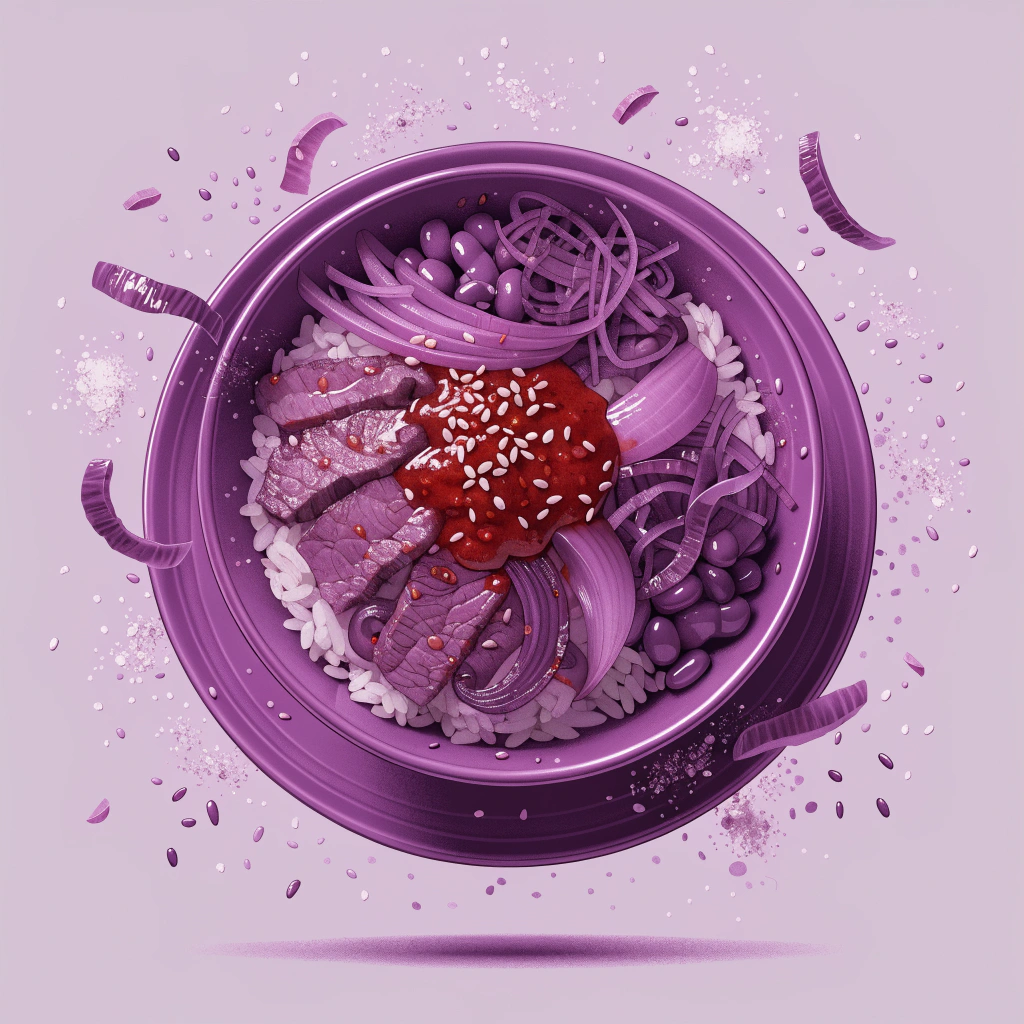
韓国の食べ物:ビビンバ
これはビビンバです。ビビンバは韓国の食べ物です。 ご飯と野菜があります。肉や卵もあります。 とてもおいしいです。色々な色があります。 赤、白、緑、黄色、黒です。 ビビンバはヘルシーな食べ物です。 韓国で有名です。日本でも食べられます。 全部混ぜて食べます。とても楽しいです。
文法スポットライト
パターン: NはNです (Noun wa Noun desu)
"ビビンバは韓国の食べ物です。"
これは、物や人が何であるかを説明する時によく使います。「は」はテーマを示し、「です」は丁寧な言い方です。
パターン: Nがあります (Noun ga arimasu)
"ご飯と野菜があります。"
これは、物があることを示す時に使います。「が」は主語を示し、「あります」は物が存在することを意味します。
理解度をチェック
10 問 · A1 初級 · 無料プレビュー 1回
この記事で学んだことをテストしよう。全問正解してXPを獲得!
ビビンバはどこの国の食べ物ですか?
問題の内訳
ビビンバはどこの国の食べ物ですか?
あなたの回答:
正解: 韓国
ビビンバは肉がありません。
あなたの回答:
正解: 間違い
「おいしい」の意味は何ですか?
あなたの回答:
正解: 味がとてもいい
ビビンバは色々な色があります。例えば、赤、白、緑、黄色、___です。
あなたの回答:
正解: 黒
韓国の美味しい料理:ビビンバ
「ビビンバ」は、韓国のとても有名な伝統料理です。この料理の名前は「混ぜご飯」という意味があります。ビビンバは、白い温かいご飯の上に、いろいろな野菜、肉(牛肉が多いです)、そして目玉焼きをきれいにのせて作ります。一番大切なのは、赤いコチュジャンという少し辛い味噌のようなソースです。
ビビンバは、見た目がとても美しいです。緑の野菜、黄色の卵、白いご飯、赤いコチュジャンなど、たくさんの明るい色があります。韓国には「五色(オバンセク)」という考え方があり、ビビンバはこの五つの色を大切にしています。だから、目で見て楽しむこともできます。
この料理は、栄養のバランスもとても良いです。たくさんの新鮮な野菜を食べることができますから、体にも良いです。食べる時は、スプーンでご飯と全ての具材をよく混ぜてください。混ぜてから食べると、すべての味が一緒になって、本当に美味しいです。辛いものが好きな人は、コチュジャンをもっとたくさん加えても良いでしょう。もし韓国に行く機会があったら、ぜひ本場のビビンバを試してみてください。
文法スポットライト
パターン: ~という意味があります
"この料理の名前は「混ぜご飯」という意味があります。"
この文法は、言葉や名前がどんな意味を持っているかを説明するときに使います。「AはBという意味があります」で、「AはBという意味です」と同じように使えます。
パターン: ~ことができます
"たくさんの新鮮な野菜を食べることができますから、体にも良いです。"
この文法は、何かをする能力があることや、それが可能であることを表します。動詞の辞書形に「ことができます」を付けます。例えば、「日本語を話すことができます」のように使います。
理解度をチェック
11 問 · A2 初級 · 無料プレビュー 1回
この記事で学んだことをテストしよう。全問正解してXPを獲得!
ビビンバの名前の意味は何ですか?
問題の内訳
ビビンバの名前の意味は何ですか?
あなたの回答:
正解: 混ぜご飯
ビビンバは、白いご飯の上に肉や野菜をのせます。
あなたの回答:
正解: 正しい
「辛い」はどんな意味ですか?
あなたの回答:
正解: スパイシー
ビビンバは、食べる前に全ての具材をよく______ます。
あなたの回答:
正解: 混ぜ
ビビンバの赤いソースの名前は何ですか?
あなたの回答:
正解: コチュジャン
韓国の美味しい彩り:ビビンバについて
韓国料理には、世界中で愛されているものがたくさんありますね。その中でも特に人気があり、見た目も美しい料理の一つが「ビビンバ」です。ビビンバは、韓国語で「混ぜご飯」という意味で、温かいご飯の上に様々な具材が乗せられている、韓国の伝統的な料理です。世界中で多くの人々に親しまれてきました。
この料理の大きな特徴は、その彩りの豊かさにあります。緑のほうれん草、黄色の卵、赤のコチュジャン、黒いキノコ、そして白いご飯。これらは韓国の伝統的な「五方色(オバンセク)」という考え方に基づいています。たくさんの種類のナムル(野菜の和え物)や、肉、卵などがバランス良く使われています。ナムルは、野菜をごま油や醤油で和えたもので、それぞれに異なる風味があります。栄養バランスもとても良いので、健康を気にする人にもおすすめです。
ビビンバの食べ方はとてもシンプルです。まず、出てきたビビンバをスプーンでよく混ぜます。コチュジャンという辛い味噌を好みで加えて、全体を混ぜ合わせます。一口食べると、野菜のシャキシャキした食感、ご飯の温かさ、そしてコチュジャンのピリ辛い味が口の中に広がり、とても美味しいですよ。混ぜることで、それぞれの具材の味が一つになり、深みのある味わいが楽しめます。
最近では、熱い石の器で提供される「石焼きビビンバ」も人気があります。石の器が熱いので、ご飯がおこげになって、香ばしさが楽しめます。まだビビンバを食べたことがない人は、ぜひ一度試してみてください。きっと韓国の食文化の魅力に触れることができるでしょう。この素晴らしい料理を通して、韓国の文化をより深く感じられるはずです。
文法スポットライト
パターン: 受身形(〜られます/されます)
"世界中で多くの人々に親しまれてきました。"
この文法は、誰かが何かをするのではなく、何かが誰かによって行われる、という状況を表します。動詞の「ます形」から「〜られます」または「〜されます」に変えて作ります。
パターン: 名詞を修飾する文(〜名詞)
"温かいご飯の上に様々な具材が乗せられている、韓国の伝統的な料理です。"
この文法は、名詞を詳しく説明するときに使います。動詞や形容詞の文を、説明したい名詞の前に置きます。この例では、「料理」がどんな料理かを説明しています。
理解度をチェック
11 問 · B1 中級 · 無料プレビュー 1回
この記事で学んだことをテストしよう。全問正解してXPを獲得!
ビビンバは韓国語でどんな意味ですか?
問題の内訳
ビビンバは韓国語でどんな意味ですか?
あなたの回答:
正解: 混ぜご飯
ビビンバは健康に良い料理ではありません。
あなたの回答:
正解: 間違い
「具材」とはどういう意味ですか?
あなたの回答:
正解: 料理の材料
ビビンバには、韓国の伝統的な「五方色(オバンセク)」という考え方が____います。
あなたの回答:
正解: 基づいて
石焼きビビンバが人気がある理由は何ですか?
あなたの回答:
正解: ご飯がおこげになるから
ビビンバ:韓国の食卓を彩る「混ぜご飯」の哲学
韓国料理の中でも、その鮮やかな色彩と豊かな栄養バランスで世界中の人々を魅了しているのが「ビビンバ」です。直訳すると「混ぜご飯」を意味するこの料理は、単なる食事以上の深い文化的、哲学的な背景を持っています。
ビビンバは、温かいご飯の上に、ナムルと呼ばれる様々な野菜の和え物、肉(牛肉が多い)、卵、そして辛味の効いたコチュジャンが美しく盛り付けられた一品です。食べる直前にこれら全ての具材を混ぜ合わせることで、それぞれの味が調和し、奥深い風味を生み出します。その見た目の華やかさだけでなく、一口ごとに異なる食感と味わいが楽しめる点が、多くの人々を惹きつける理由でしょう。
この料理の根底には、韓国の伝統的な色彩思想である「五方色(ごぼうしょく)」があります。五方色とは、陰陽五行説に基づき、青、赤、黄、白、黒の五つの色が宇宙の全てを構成するという考え方です。ビビンバにおいては、緑(青)の野菜、赤色のコチュジャンや人参、黄色の卵、白色のご飯や大根、黒色のきのこや海苔といった具合に、これらの色が巧みに取り入れられています。これにより、視覚的な美しさが追求されるだけでなく、五つの色が持つそれぞれ異なる栄養素がバランス良く摂取できるよう工夫されているのです。これは、食を通じて心身の健康と調和を保とうとする韓国の食文化の象徴とも言えるでしょう。
また、ビビンバは残り物の活用から生まれたとも言われており、冷蔵庫にある様々な食材を無駄なく美味しくいただく知恵が詰まっています。現代では、ヘルシー志向の高まりとともに、その栄養価の高さと彩りの豊かさが再評価され、健康的な食事を求める人々にとって欠かせない選択肢の一つとなっています。
このように、ビビンバは長い歴史の中で多様な形に進化しながらも、その本質である「混ぜ合わせる」という行為を通じて、韓国の食文化の奥深さと、五方色に象徴される調和の精神を現代に伝えているのです。
文法スポットライト
パターン: ~だけでなく~も
"その見た目の華やかさだけでなく、一口ごとに異なる食感と味わいが楽しめる点が、多くの人々を惹きつける理由でしょう。"
この表現は、「AだけでなくBも」の形で、AとBの両方に当てはまることを強調する際に使われます。AとBは名詞、動詞、形容詞など様々な品詞が入ります。
パターン: ~とも言われている
"ビビンバは残り物の活用から生まれたとも言われており、冷蔵庫にある様々な食材を無駄なく美味しくいただく知恵が詰まっています。"
この表現は、ある事柄が一般的にそう言われている、あるいはそう信じられているという伝聞や一般的な見解を述べる際に使われます。話し手の意見ではなく、世間の見方を示すのに適しています。
パターン: ~を通じて
"このように、ビビンバは長い歴史の中で多様な形に進化しながらも、その本質である「混ぜ合わせる」という行為を通じて、韓国の食文化の奥深さと、五方色に象徴される調和の精神を現代に伝えているのです。"
「Aを通じてB」の形で、「Aという手段や経験を通してBという結果や変化がもたらされる」という意味を表します。Aには期間や媒体、行為などが入ります。
理解度をチェック
11 問 · B2 中上級 · 無料プレビュー 1回
この記事で学んだことをテストしよう。全問正解してXPを獲得!
記事によると、ビビンバが多くの人を惹きつける主な理由は何ですか?
問題の内訳
記事によると、ビビンバが多くの人を惹きつける主な理由は何ですか?
あなたの回答:
正解: 見た目の美しさと様々な食感や味が楽しめるから
「五方色」は、ビビンバの栄養バランスとは関係なく、単に見た目を良くするための考え方である。
あなたの回答:
正解: 間違い
記事中の「根底」という言葉に最も近い意味を持つのはどれですか?
あなたの回答:
正解: 基礎
ビビンバの名前は「混ぜ_____」という意味です。
あなたの回答:
正解: ご飯
記事で触れられている、ビビンバの「五方色」に含まれる色として間違っているものはどれですか?
あなたの回答:
正解: 紫色
The Gastronomic Alchemy of Bibimbap: A Symphony of Symbolism and Satiety
The global proliferation of Korean cuisine has facilitated a deeper understanding of the peninsula's rich cultural heritage, yet few dishes encapsulate the Korean spirit as profoundly as bibimbap. Often celebrated as the quintessence of nutritional balance and aesthetic appeal, this "mixed rice" dish is far more than a mere amalgamation of leftovers. It is a meticulously curated experience, rooted in the ancient philosophy of Obangsaek—the five traditional colors representing the cardinal directions and the fundamental elements of life. Through the lens of this philosophy, we see that the dish is designed not just for the palate, but for the holistic well-being of the consumer.
Rarely does a dish demand such meticulous preparation of individual components. Each vegetable, or namul, must be sautéed or seasoned separately to preserve its distinct flavor profile and textural integrity. White represents the West and the lungs; black signifies the North and the kidneys; green denotes the East and the liver; red symbolizes the South and the heart; and yellow stands for the center and the stomach. It is within these vibrant hues that the philosophy of harmony resides, suggesting that a balanced diet is indispensable for maintaining internal equilibrium. This meticulous orchestration of ingredients ensures that every bite provides a spectrum of vitamins and minerals, adhering to the traditional Korean belief that food is medicine.
What makes bibimbap truly unique is the inherent dichotomy between its initial presentation and its eventual consumption. Upon being served, the dish is a masterpiece of visual order, with each ingredient placed with surgical precision. However, the ritual of eating necessitates the vigorous mixing of the rice, vegetables, and gochujang into a unified whole. This transition from aesthetic perfection to chaotic harmony is a metaphor for the Korean social fabric—the blending of diverse individuals into a singular, cohesive community. The gochujang, a fermented chili paste, acts as a catalyst, bridging the disparate flavors of the namul and the rice into a rich, umami-laden profile.
Furthermore, the regional prestige of Jeonju Bibimbap cannot be overlooked. In this historic city, the dish is elevated to an art form, often utilizing rice cooked in beef brisket broth for a deeper flavor profile. The inclusion of raw beef or specific local sprouts demonstrates how regional geography influences culinary identity. This regionalism underscores the fact that bibimbap is not a monolithic entity but a versatile canvas for local expression. The burgeoning popularity of the Dolsot Bibimbap variant adds a tactile dimension; served in a sizzling stone pot, the rice at the bottom undergoes a transformation, becoming a crunchy, golden crust known as nurungji.
In the contemporary gastronomic landscape, bibimbap stands as a testament to the enduring relevance of traditional wisdom. While modern dietary trends often focus on the ephemeral appeal of fusion, bibimbap remains anchored in a legacy of wellness. The satiety provided by this dish is not merely physical; it is a profound connection to a history that values the synergy of nature and nutrition. As the world continues to embrace the flavors of Seoul, bibimbap remains the definitive icon of Korean culinary ingenuity.
文法スポットライト
パターン: Negative Inversion
"Rarely does a dish demand such meticulous preparation of individual components."
When we start a sentence with a negative or restrictive adverb like 'rarely', the auxiliary verb comes before the subject. This is used in formal English to add emphasis or dramatic effect.
パターン: Cleft Sentence
"It is within these vibrant hues that the philosophy of harmony resides."
Cleft sentences use 'It is/was... that' to focus on a specific part of the sentence. Here, it emphasizes the location (the colors) as the place where the philosophy is found.
パターン: Nominalisation
"The global proliferation of Korean cuisine has facilitated a deeper understanding..."
Nominalisation turns verbs or adjectives into nouns (proliferate -> proliferation). This is a hallmark of C1 academic writing, making the text more concise and objective.
理解度をチェック
12 問 · C1 上級 · 無料プレビュー 1回
この記事で学んだことをテストしよう。全問正解してXPを獲得!
What does the 'Obangsaek' philosophy represent in the context of bibimbap?
問題の内訳
What does the 'Obangsaek' philosophy represent in the context of bibimbap?
あなたの回答:
正解: The five traditional colors linked to elements and directions
The article suggests that the visual perfection of bibimbap should be preserved while eating.
あなたの回答:
正解: 間違い
What is the meaning of 'quintessence'?
あなたの回答:
正解: The most perfect example of something
The feeling of being full and satisfied after the meal is referred to as _____.
あなたの回答:
正解: satiety
How does the Dolsot variant change the texture of the rice?
あなたの回答:
正解: It creates a crunchy crust called nurungji
Gochujang acts as a catalyst to combine the different flavors of the dish.
あなたの回答:
正解: 正しい
The Gastronomic Semiotics of Bibimbap: A Study in Culinary Equilibrium and Cultural Convergence
Rarely does a single dish encapsulate the metaphysical architecture of a nation as succinctly as Bibimbap. While its literal translation—'mixed rice'—might suggest a rudimentary culinary assembly, such a reductionist view ignores the profound epistemological roots and meticulous craftsmanship that define this Korean staple. Bibimbap represents the quintessence of Korean aesthetic philosophy, specifically the concept of 'Obangsaek,' which dictates a symbiotic relationship between five cardinal colors, elements, and internal organs. To consume Bibimbap is not merely to partake in sustenance; it is to engage with a variegated microcosm of the universe itself.
The visual allure of the dish is predicated on the deliberate juxtaposition of colors: white (representing the lungs and the West), black (the kidneys and the North), green (the liver and the East), red (the heart and the South), and yellow (the stomach and the Center). Each component, known as 'namul,' is prepared with such meticulous attention to detail that the integrity of each individual flavor is preserved until the final moment of consumption. It is essential that the diner perceive the bowl not as a static entity, but as a dynamic interplay of elements where the whole is significantly greater than the sum of its parts. This convergence of ingredients is facilitated by 'gochujang,' a fermented chili paste that acts as a unifying catalyst, bridging the disparate textures and flavors into a coherent, albeit complex, whole.
From a socio-historical perspective, Bibimbap embodies an egalitarian spirit that belies its sophisticated presentation. Although its presence on royal tables during the Joseon dynasty is well-documented, its origins are equally rooted in the communal practices of agrarian society. Legend suggests that on the eve of the Lunar New Year, families would combine all remaining side dishes with rice to start the year with a clean slate—a practice that reflects a pragmatic yet philosophical approach to resourcefulness. Having navigated the intricate socio-historical shifts of the Korean peninsula, the dish has emerged as a symbol of national identity, transcending class boundaries to become a universal cultural signifier.
In the contemporary era, Bibimbap has been reinterpreted through the lens of modern dietetics, often lauded as a nutritional panacea. Its balance of complex carbohydrates, lean proteins, and fiber-rich vegetables aligns perfectly with the current global shift toward plant-forward consumption. However, to analyze the dish solely through its macronutrient profile would be to overlook its role in Korea's 'soft power' projection. As Hallyu (the Korean Wave) continues its global expansion, Bibimbap serves as a primary vehicle for cultural semiotics, representing a society that values harmony, health, and historical continuity.
Ultimately, the enduring appeal of Bibimbap lies in its inherent flexibility. Whether served in a traditional brass bowl or a sizzling 'dolsot' (stone pot), it remains a testament to the Korean capacity for synthesis. It is a dish that demands active participation from the diner, who must vigorously mix the ingredients to achieve the desired flavor profile. This act of mixing is, in itself, a metaphor for the societal harmony that Korea strives to maintain amidst the rapid pace of globalization. Through this lens, Bibimbap is not just a meal; it is a profound expression of cultural resilience and philosophical depth.
文法スポットライト
パターン: Inverted Word Order for Emphasis
"Rarely does a single dish encapsulate the metaphysical architecture of a nation as succinctly as Bibimbap."
When using negative or restrictive adverbs like 'rarely' or 'seldom' at the start of a sentence for emphasis, the auxiliary verb is placed before the subject.
パターン: Subjunctive Mood
"It is essential that the diner perceive the bowl not as a static entity, but as a dynamic interplay of elements."
The subjunctive is used after adjectives of necessity (essential, vital, imperative). Note the use of the base form 'perceive' without the third-person 's'.
パターン: Perfect Participle Clause
"Having navigated the intricate socio-historical shifts of the Korean peninsula, the dish has emerged as a symbol of national identity."
A perfect participle clause (Having + past participle) shows that one action was completed before the action in the main clause began, often used to provide background context.
理解度をチェック
12 問 · C2 マスター · 無料プレビュー 1回
この記事で学んだことをテストしよう。全問正解してXPを獲得!
What does the 'Obangsaek' philosophy primarily involve in the context of Bibimbap?
問題の内訳
What does the 'Obangsaek' philosophy primarily involve in the context of Bibimbap?
あなたの回答:
正解: A symbolic relationship between five colors, elements, and organs
The article suggests that Bibimbap's historical origins are solely restricted to royal banquets.
あなたの回答:
正解: 間違い
Which word describes a belief in human equality?
あなたの回答:
正解: Egalitarian
The fermented chili paste known as gochujang acts as a unifying _____ for the dish.
あなたの回答:
正解: catalyst
What is the metaphorical significance of the diner mixing the ingredients themselves?
あなたの回答:
正解: It serves as a metaphor for societal harmony amidst globalization
In the Obangsaek system, the color red is associated with the heart and the South.
あなたの回答:
正解: 正しい

