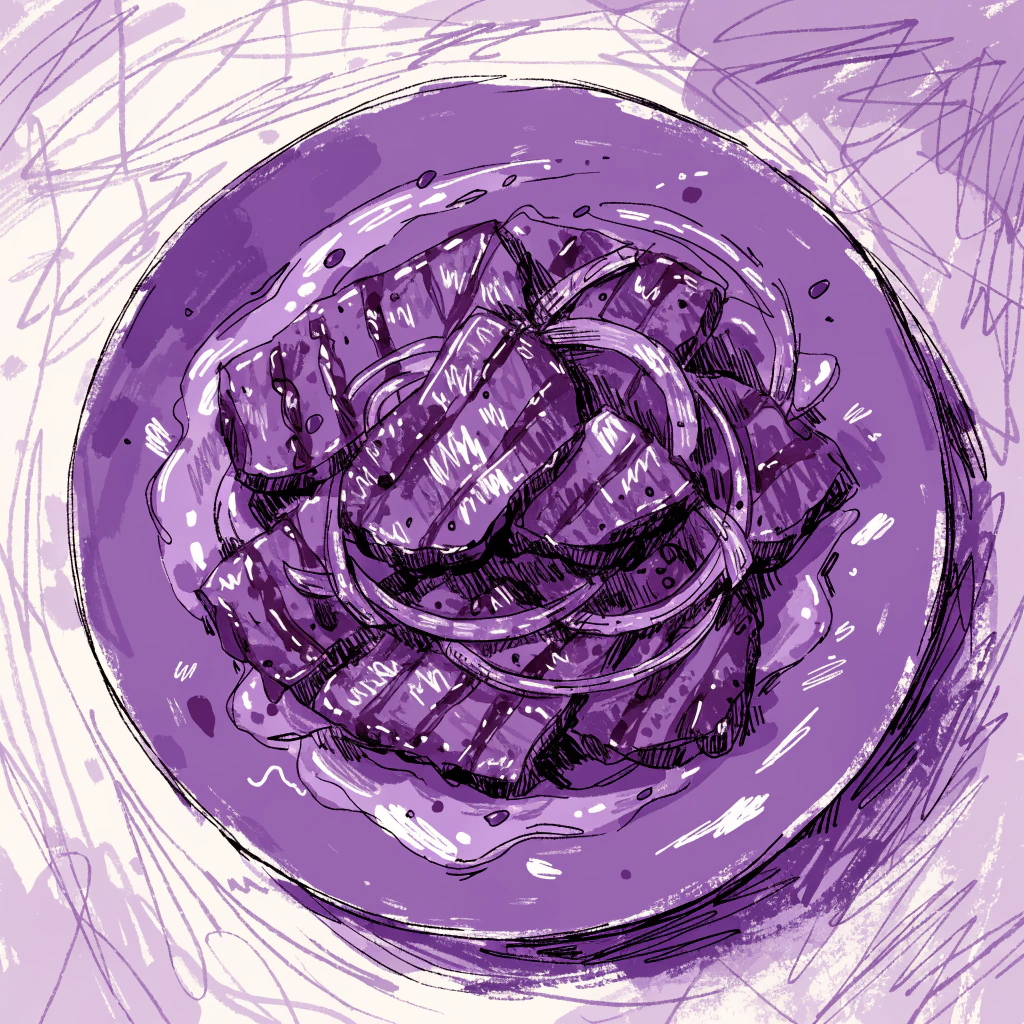
Bulgogi: A Popular Food from Korea
Bulgogi is a very popular food from South Korea. It is famous and delicious. Many people call it "fire meat." It is a favorite dish for people around the world.
The dish uses thin slices of beef. The meat is sweet and salty because of a special sauce. People cook the beef on a grill or in a pan. It smells very good.
Many Korean families eat bulgogi at home. They also eat it for special parties and birthdays. It is a great meal for everyone to share.
文法スポットライト
パターン: Present Simple 'be'
"Bulgogi is a very popular food from South Korea."
We use 'is' with singular subjects like Bulgogi to talk about facts. It connects the subject to a description.
パターン: Present Simple (Regular Verbs)
"Many Korean families eat bulgogi at home."
We use the base form of the verb (eat) for plural subjects like 'families'. This describes a regular habit or general truth.
理解度をチェック
10 問 · A1 初級 · 無料プレビュー 1回
この記事で学んだことをテストしよう。全問正解してXPを獲得!
Where is Bulgogi from?
問題の内訳
Where is Bulgogi from?
あなたの回答:
正解: South Korea
People call Bulgogi 'fire meat'.
あなたの回答:
正解: 正しい
What is beef?
あなたの回答:
正解: Meat from a cow
The meat is sweet and _____ because of a special sauce.
あなたの回答:
正解: salty
Bulgogi: The Famous Fire Meat of Korea
Bulgogi is a famous dish from South Korea. Many people call it "fire meat" because it is cooked over heat. It is one of the most popular foods in the country. This dish is very old. It started more than a thousand years ago during the Goguryeo era. In the past, people called it "Maekjeok." They put meat on sticks and cooked it.
Today, Bulgogi is different but still delicious. Cooks use thin slices of high-quality beef. They mix the meat with a special sauce. This sauce is sweet and savory because it has soy sauce, sugar, and pear juice. After the meat stays in the sauce for some time, it becomes very soft.
People usually grill the beef or cook it in a pan. Bulgogi is better when you eat it with friends or family. Many Koreans eat it at big parties or celebrations. They often wrap the meat in fresh lettuce leaves with rice and spicy sauce. It is a healthy and tasty meal for everyone.
文法スポットライト
パターン: Past Simple
"It started more than a thousand years ago during the Goguryeo era."
We use the past simple to talk about finished actions in the past. For regular verbs, we usually add '-ed' to the end of the verb.
パターン: Comparatives
"Bulgogi is better when you eat it with friends or family."
We use comparatives to compare two things or situations. 'Better' is the irregular comparative form of the adjective 'good'.
理解度をチェック
11 問 · A2 初級 · 無料プレビュー 1回
この記事で学んだことをテストしよう。全問正解してXPを獲得!
What does the name Bulgogi mean in English?
問題の内訳
What does the name Bulgogi mean in English?
あなたの回答:
正解: Fire meat
Bulgogi is a very new dish in South Korea.
あなたの回答:
正解: 間違い
What does 'savory' mean?
あなたの回答:
正解: A taste that is salty or spicy
People usually _____ the beef or cook it in a pan.
あなたの回答:
正解: grill
Why is the Bulgogi sauce sweet?
あなたの回答:
正解: Because it has sugar and pear juice
Bulgogi: The Delicious History of Korean Fire Meat
Bulgogi, which is often called 'Korean fire meat,' has become one of the most famous dishes in South Korea. If you are new to Korean food, this dish is a perfect starting point because it is delicious and easy to eat. It is made from thinly sliced beef, usually ribeye or sirloin, which has been marinated in a special sauce. This sauce is typically a mix of soy sauce, sugar, sesame oil, and garlic, creating a flavor that is both sweet and savory.
The history of Bulgogi is very long. It has been enjoyed by people for over a thousand years, starting in the Goguryeo era. In the past, it was known as 'Maekjeok.' At that time, the meat was skewered and grilled over a fire. Today, the cooking methods have changed, and the beef is often stir-fried in a pan or cooked on a modern grill at the center of the table.
In South Korea, Bulgogi is frequently served at special celebrations and family gatherings. It is often eaten with rice and various side dishes called 'banchan.' Many people also like to wrap the meat in lettuce leaves with a bit of spicy paste. This healthy way of eating has helped Bulgogi become popular all over the world.
Because it is so versatile, Bulgogi is now found in many different forms, such as Bulgogi burgers or even Bulgogi pizza. However, the traditional version remains a favorite for many families who want to enjoy a classic meal together. It has definitely earned its place as a staple of Korean culinary culture.
文法スポットライト
パターン: Passive Voice
"It is made from thinly sliced beef, usually ribeye or sirloin, which has been marinated in a special sauce."
The passive voice is used here to focus on the dish (the object) rather than who is cooking it. It is formed using 'be' + the past participle.
パターン: Present Perfect
"It has been enjoyed by people for over a thousand years, starting in the Goguryeo era."
The present perfect describes an action that started in the past and continues to be true now. It is formed using 'have/has' + past participle.
理解度をチェック
11 問 · B1 中級 · 無料プレビュー 1回
この記事で学んだことをテストしよう。全問正解してXPを獲得!
What is the meaning of the name 'Bulgogi'?
問題の内訳
What is the meaning of the name 'Bulgogi'?
あなたの回答:
正解: Korean fire meat
Bulgogi was originally known as 'Maekjeok' in the past.
あなたの回答:
正解: 正しい
What does 'versatile' mean in the context of the article?
あなたの回答:
正解: Can be used in many forms
The beef is often stir-fried in a pan or cooked on a modern _____.
あなたの回答:
正解: grill
What are 'banchan'?
あなたの回答:
正解: Side dishes
The Cultural Evolution and Global Resonance of Bulgogi
Bulgogi, which literally translates to 'fire meat,' represents far more than just a popular dish in South Korean cuisine; it is a profound cultural symbol that reflects the nation's history and social values. While many international food enthusiasts are familiar with its modern iteration—thinly sliced beef cooked on a grill—the origins of this delicacy can be traced back over a thousand years to the Goguryeo era. During this period, a dish known as 'Maekjeok' was developed, consisting of skewered meat that was seasoned before being roasted. Over centuries, this primitive cooking method underwent a sophisticated evolution, eventually transforming into the refined dish that is celebrated today.
The preparation of Bulgogi is an intricate process that requires a delicate balance of flavors. High-quality cuts of beef, such as ribeye or sirloin, are meticulously sliced to ensure they absorb the marinade effectively. This marinade is a complex blend of soy sauce, sugar, sesame oil, and garlic. Furthermore, traditional recipes often incorporate grated Korean pear, which contains enzymes that serve to tenderize the meat, resulting in a texture that is both soft and succulent. This combination of savory and sweet profiles has allowed Bulgogi to maintain its status as a staple of the Korean diet, appearing at both casual family dinners and prestigious banquets.
From a sociological perspective, Bulgogi serves as a medium for communal bonding. In South Korea, dining is frequently a shared experience, and the act of grilling meat at the center of the table fosters a sense of unity among participants. If a traveler were to visit a traditional Korean household, they would likely be served this dish during a significant celebration, such as a wedding or a milestone birthday. This tradition highlights the prestigious nature of beef in Korean history, as it was once a luxury reserved for the elite and the ruling classes.
In recent decades, Bulgogi has achieved remarkable global recognition, transcending cultural boundaries to become a favorite in international gastronomy. Its accessibility and palatable flavor profile make it an ideal introductory dish for those exploring Korean heritage for the first time. Nevertheless, despite its global adaptation, the core essence of Bulgogi remains rooted in Korean identity. As the dish continues to evolve in modern kitchens around the world, it remains a testament to the enduring legacy of Korean culinary artistry and its ability to adapt to contemporary tastes without losing its historical soul.
文法スポットライト
パターン: Non-defining Relative Clauses
"Bulgogi, which literally translates to 'fire meat,' represents far more than just a popular dish..."
These clauses add extra information about a noun but are not essential to the sentence's meaning. They are always separated by commas.
パターン: Passive Voice
"High-quality cuts of beef, such as ribeye or sirloin, are meticulously sliced..."
The passive voice is used here to focus on the action (slicing) and the object (beef) rather than the person performing the action, which is common in formal writing.
パターン: Second Conditional
"If a traveler were to visit a traditional Korean household, they would likely be served this dish..."
This structure uses 'if + past subjunctive (were to)' to talk about a hypothetical or unlikely situation in the present or future.
理解度をチェック
11 問 · B2 中上級 · 無料プレビュー 1回
この記事で学んだことをテストしよう。全問正解してXPを獲得!
What was the original name of the dish that preceded modern Bulgogi?
問題の内訳
What was the original name of the dish that preceded modern Bulgogi?
あなたの回答:
正解: Maekjeok
Beef has always been an affordable, everyday meat for all classes in Korean history.
あなたの回答:
正解: 間違い
Which word describes a food that is a main or essential part of a diet?
あなたの回答:
正解: Staple
Korean pear is often added to the marinade because it helps to _____ the beef.
あなたの回答:
正解: tenderize
According to the article, what is a sociological function of Bulgogi in Korea?
あなたの回答:
正解: It fosters communal bonding and unity.
韓国料理の真髄:プルコギが織りなす歴史と文化の饗宴
韓国料理と聞いて、多くの人々がまず思い浮かべるであろう料理の一つに「プルコギ」が挙げられます。その甘辛い味付けと柔らかな肉質は、世界中の食通たちを魅了し続けてやみません。しかし、この一見シンプルな料理が、単なる一品料理に留まらず、千年以上もの時を遡る歴史と、韓国文化の深い精神性を体現していることを、どれほどの人が認識しているでしょうか。
プルコギの起源は、高句麗時代にまで遡ると言われています。当時は「メクジョク(貊炙)」と呼ばれ、串に刺した肉を焼いて食すという、素朴ながらも生命力溢れる調理法であったとされます。その後、時代と共に宮廷料理へと昇華し、貴族や王族の間で愛される逸品へと変貌を遂げていきました。現代のプルコギへと繋がる礎が、この長い歴史の中で脈々と築き上げられてきたのです。薄切り肉を甘辛いタレに漬け込み、焼いて食すという、その調理法の多様性と奥深さこそが、プルコギが今日のような国民食となるに至った大きな要因に他なりません。
プルコギの特徴は、何と言ってもその独特な味付けにあります。醤油をベースに砂糖、ニンニク、ごま油、梨やリンゴなどの果物を加えた特製のタレは、肉の旨味を最大限に引き出すとともに、食欲をそそる芳醇な香りを生み出します。このタレに漬け込まれた牛肉は、炭火でじっくりと焼かれることで、表面は香ばしく、中はジューシーに仕上がります。家庭ではフライパンで炒めたり、鍋料理として供されたりすることもあり、その柔軟な調理法は、多忙な現代人の食卓にも無理なく溶け込んでいます。
プルコギが単なる美味しい料理であるという認識を越え、韓国の人々にとって特別な意味を持つのは、それが家族や友人との団らんの場に常に寄り添ってきたからでしょう。祝い事や大切な集まりには、必ずと言っていいほどプルコギが食卓に並び、人々の笑顔と会話の中心となってきました。それは、共に食卓を囲む喜び、分かち合う幸福感、そして何よりも故郷への郷愁を呼び起こす、文化的アイコンとしての役割を担っているのです。
現代においても、プルコギは進化を続けています。伝統的な牛肉のプルコギに加え、豚肉を用いた「テジプルコギ」や、辛味を効かせたバリエーションも登場し、人々の多様な嗜好に応えています。海外においても、その普遍的な美味しさは広く受け入れられ、韓国料理の代名詞として世界中で愛されています。プルコギは、単なる肉料理ではなく、韓国の歴史、文化、そして人々の温かい心を凝縮した、まさに「食の芸術」と呼ぶに相応しい存在と言えるでしょう。その一口から、私たちは韓国の豊かな食文化を存分に味わうことができるのです。
文法スポットライト
パターン: 〜に至る (ni itaru)
"その調理法の多様性と奥深さこそが、プルコギが今日のような国民食となるに至った大きな要因に他なりません。"
「〜に至る」は、「〜という結果や段階に到達する」という意味を表す表現です。特に、時間の経過や多くの段階を経て、ある状態になったことを強調する際に用いられます。フォーマルな文脈でよく使われます。
パターン: 〜に他ならない (ni hoka naranai)
"その調理法の多様性と奥深さこそが、プルコギが今日のような国民食となるに至った大きな要因に他なりません。"
「〜に他ならない」は、「まさに〜である」「〜以外の何物でもない」という意味で、断定や強調を表す表現です。話し手の強い確信や結論を述べる際に使われ、論理的な結論を示すのに適しています。
パターン: 〜と相まって (to aimatte)
"醤油をベースに砂糖、ニンニク、ごま油、梨やリンゴなどの果物を加えた特製のタレは、肉の旨味を最大限に引き出すとともに、食欲をそそる芳醇な香りを生み出します。"
「〜と相まって」は、「〜と一緒になって、さらに良い(あるいは悪い)効果を生み出す」という意味の表現です。二つ以上の要素が組み合わさって、ある結果をもたらす状況を説明する際に用いられます。主に良い結果について使われることが多いです。
理解度をチェック
12 問 · C1 上級 · 無料プレビュー 1回
この記事で学んだことをテストしよう。全問正解してXPを獲得!
プルコギの起源とされる「メクジョク」は、高句麗時代にどのような調理法で食されていたと説明されていますか?
問題の内訳
プルコギの起源とされる「メクジョク」は、高句麗時代にどのような調理法で食されていたと説明されていますか?
あなたの回答:
正解: 串に刺した肉を焼いていた
プルコギのタレには、肉の旨味を引き出すために梨やリンゴなどの果物が使われている。
あなたの回答:
正解: 正しい
「真髄」とは何を意味しますか?
あなたの回答:
正解: 物事の本質や最も重要な部分
プルコギが単なる美味しい料理であるという認識を越え、韓国の人々にとって特別な意味を持つのは、それが家族や友人との___の場に常に寄り添ってきたからでしょう。
あなたの回答:
正解: 団らん
現代のプルコギは、どのような進化を遂げていると記事で述べられていますか?
あなたの回答:
正解: 豚肉を使ったものや辛味を効かせたバリエーションがある
プルコギは、世界中で韓国料理の代名詞として広く受け入れられている。
あなたの回答:
正解: 正しい
The Gastronomic Semiotics of Bulgogi: From Ancient Maekjeok to Modernity
Few culinary artifacts encapsulate the historical trajectory of the Korean peninsula as poignantly as Bulgogi. Often reduced to the simplistic moniker of 'Korean fire meat' within Western discourse, the dish represents a sophisticated confluence of agricultural evolution, royal court tradition, and the post-war democratization of protein. To examine Bulgogi is to peer through a gastronomic lens at the very fabric of Korean identity. Seldom has a dish so effectively bridged the chasm between the aristocratic and the egalitarian, evolving from a ceremonial delicacy into a global icon of contemporary South Korean culture.
The nomenclature itself—a compound of 'bul' (fire) and 'gogi' (meat)—belies a lineage that stretches back over a millennium to the Goguryeo era. Historians posit that its earliest iteration, Maekjeok, involved skewered meat seasoned with fermented soybean paste. Were one to traverse the centuries to the Joseon Dynasty, one would observe the emergence of Neobiani, a refined variant prepared specifically for the monarchy. It is within these hallowed halls of power that the marinade achieved its quintessential balance, utilizing pear juice not merely for sweetness, but as a proteolytic enzyme to tenderize the beef. This scholarly approach to meat preparation suggests that the Joseon elite viewed cooking as an intellectual pursuit as much as a sensory one.
The juxtaposition of sweet and savory in Bulgogi is not merely a matter of palate preference but an alchemical achievement. The marinade, typically comprising soy sauce, sugar, sesame oil, and garlic, undergoes the Maillard reaction upon contact with heat, creating a complex profile of umami and caramelization. This chemical transformation is what renders the thinly sliced ribeye so succulent. Furthermore, the inclusion of Asian pear serves a dual purpose: its subtle acidity acts as a catalyst for protein breakdown, ensuring that even the leanest cuts achieve an ephemeral tenderness. It might be argued that the marinade acts as a preservative of tradition, maintaining a flavor profile that has survived the tumultuous shifts of Korean history.
While Bulgogi was once a luxury reserved for the upper echelons of society, its transition to a staple of the Korean household is a testament to the nation's economic metamorphosis. In the mid-20th century, as beef became more accessible, the dish underwent an egalitarian shift. No longer confined to royal banquets, it became a symbol of familial celebration and communal dining. The interactive nature of the meal—often grilled at the table—fosters a sense of collective participation that is pre-eminent in Korean social structures. It is this communal aspect that prevents the dish from becoming a mere commodity; instead, it remains a ritual of social cohesion.
In the contemporary global landscape, Bulgogi serves as a primary conduit for South Korea’s 'soft power.' As the Korean Wave, or Hallyu, continues its inexorable expansion, this dish has transcended its geographical origins to become a global phenomenon. Yet, despite its ubiquity in international urban centers, it retains a vestige of its ancient soul. Whether served in a Michelin-starred establishment or a humble street-side stall, Bulgogi remains an evocative reminder of Korea's ability to synthesize tradition with modernity. It stands as a culinary monument, proving that even the most ancient traditions can adapt, thrive, and ultimately captivate the global imagination. One might conclude that Bulgogi is not merely food; it is a narrative of resilience and refinement, served one succulent slice at a time.
文法スポットライト
パターン: Negative Inversion
"Seldom has a dish so effectively bridged the chasm between the aristocratic and the egalitarian..."
When negative or restrictive adverbs (like 'seldom') start a sentence, the auxiliary verb is placed before the subject for dramatic emphasis. This is a common feature of high-level formal writing.
パターン: Mixed Conditionals (Subjunctive Mood)
"Were one to traverse the centuries to the Joseon Dynasty, one would observe the emergence of Neobiani..."
The use of 'Were one to' is a formal way of expressing a hypothetical situation in the present or future. It replaces 'If one were to' to achieve a more scholarly tone.
パターン: Academic Hedging
"It might be argued that the marinade acts as a preservative of tradition..."
Hedging involves using modal verbs and passive constructions to avoid making overly direct claims, allowing for nuance and academic caution.
理解度をチェック
12 問 · C2 マスター · 無料プレビュー 1回
この記事で学んだことをテストしよう。全問正解してXPを獲得!
According to the article, what role did pear juice play in the royal Joseon version of Bulgogi?
問題の内訳
According to the article, what role did pear juice play in the royal Joseon version of Bulgogi?
あなたの回答:
正解: It served as a chemical agent to soften the meat fibers.
The term 'Bulgogi' is a single, ancient word that has remained unchanged since the Goguryeo era.
あなたの回答:
正解: 間違い
What does 'ephemeral' mean in the context of the beef's tenderness?
あなたの回答:
正解: Short-lived or fleeting
The article suggests that the transition of Bulgogi from the elite to the masses was a result of an _____ shift.
あなたの回答:
正解: egalitarian
What does the 'Maillard reaction' contribute to the dish?
あなたの回答:
正解: It creates a complex flavor profile through heat and chemicals.
The author views Bulgogi as a tool of South Korean 'soft power' on the global stage.
あなたの回答:
正解: 正しい
プルコギ:韓国 の 食べ物
こんにちは。 これは プルコギ です。 プルコギ は 韓国 の 食べ物 です。 肉 です。 とても おいしい です。 日本 の 人 も 好き です。 プルコギ は 有名 です。 韓国 の 食卓 に あります。 家族 の 食べ物 です。 みんな 好き です。
文法スポットライト
パターン: Noun です
"これは プルコギ です。"
これは もの の なまえ を いいます。「Noun です」は 「それは Noun です」の いみ です。ていねい な いいかた です。
理解度をチェック
9 問 · A0 プレビギナー · 無料プレビュー 1回
この記事で学んだことをテストしよう。全問正解してXPを獲得!
プルコギ は どこ の 食べ物 ですか。
問題の内訳
プルコギ は どこ の 食べ物 ですか。
あなたの回答:
正解: 韓国
プルコギ は 肉 です。
あなたの回答:
正解: 正しい
プルコギ は とても _____ です。
あなたの回答:
正解: おいしい

