dictators 30秒で
- Dictators are absolute rulers who hold total power over a nation, often seizing it through non-democratic means like military coups or revolutions.
- They typically suppress political opposition, control the media, and restrict civil liberties to maintain their grip on authority without public consent.
- The term carries a strong negative connotation and is associated with oppression, human rights abuses, and the lack of democratic checks and balances.
- While historically originating in Rome as a temporary emergency measure, modern dictators are seen as permanent autocrats who dismantle democratic institutions.
The term dictators refers to political leaders who possess absolute, unrestricted power over a state or nation. Unlike democratic leaders, who are bound by constitutions, laws, and the will of the electorate, dictators typically operate outside these constraints. The essence of a dictator lies in the concentration of power within a single individual or a very small, elite group. This power is often seized through non-democratic means, such as a military coup, a revolution, or the subversion of existing legal frameworks. Once in power, dictators maintain their position through various mechanisms of control, including the suppression of political opposition, the restriction of civil liberties, and the use of state-controlled media to disseminate propaganda. Historically, the concept of a dictator originated in the Roman Republic, where a 'dictator' was a temporary magistrate granted extraordinary powers during a national emergency. However, in modern usage, the term has taken on a deeply negative connotation, associated with oppression, human rights abuses, and the lack of political pluralism.
- Political Context
- In political science, dictators are often categorized under authoritarian or totalitarian regimes. Authoritarian dictators focus on maintaining political control and may allow some social or economic freedoms as long as their power is not challenged. Totalitarian dictators, however, seek to control every aspect of public and private life, often through an all-encompassing ideology.
History books are filled with the rise and fall of various dictators who shaped the 20th century.
People use the word 'dictators' most frequently when discussing history, international relations, and human rights. It is a term that carries significant emotional and moral weight. When a leader is labeled a dictator, it is usually a critique of their legitimacy and their methods of governance. In contemporary discourse, the word is often used to describe leaders who dismantle democratic institutions, such as the free press, independent judiciaries, and fair election processes. The transition from a democratic leader to a dictator is a common theme in political analysis, often referred to as 'democratic backsliding.' Furthermore, the word is sometimes used metaphorically in non-political contexts. For instance, a boss who demands absolute obedience without considering the input of their employees might be jokingly or critically referred to as a 'dictator.' Similarly, in the world of fashion or art, individuals who exert a dominant influence over trends might be called 'fashion dictators.' However, these metaphorical uses are secondary to the primary political definition.
The international community often imposes sanctions on countries led by dictators to encourage democratic reform.
- Historical Evolution
- The 20th century is often called the 'age of dictators' due to the emergence of figures like Hitler, Stalin, and Mussolini. These leaders utilized modern technology and mass communication to maintain their grip on power in ways that were previously impossible.
Many dictators use a cult of personality to ensure the loyalty of their citizens.
The lifespan of dictatorships varies greatly. Some dictators rule for decades, creating a sense of stability through fear, while others are quickly overthrown by popular uprisings or internal coups. The study of how dictators stay in power involves analyzing their control over the military, the economy, and the flow of information. Dictators often create a 'cult of personality,' where they are presented as heroic, infallible figures who are essential to the nation's survival. This psychological manipulation is a key tool in preventing dissent. In the modern era, the rise of digital surveillance has provided dictators with new tools to monitor and suppress their populations, leading to concerns about 'digital authoritarianism.' Understanding the nature of dictators is crucial for anyone interested in the preservation of democracy and the protection of global human rights.
The transition to democracy is often difficult for nations that have been ruled by dictators for long periods.
- Societal Impact
- Under the rule of dictators, the social fabric of a country often changes. Trust between citizens may erode as the state encourages people to report on one another to identify 'enemies of the state.'
Protesters often risk their lives to demand the removal of dictators.
Using the word dictators correctly requires an understanding of its grammatical role as a plural noun and its specific semantic field. It is most commonly used as the subject or object of sentences describing political actions, historical events, or social conditions. Because the word carries a strong negative connotation, it is frequently paired with adjectives that emphasize the harshness of their rule, such as 'ruthless,' 'brutal,' 'notorious,' or 'oppressive.' When writing about dictators, it is important to provide context that justifies the use of the term, as it is a serious accusation in modern political discourse.
- Common Adjective Pairings
- Dictators are often described as 'ruthless,' 'bloodthirsty,' 'authoritarian,' or 'deposed.' These adjectives help to paint a clearer picture of the specific nature of their rule or their current status.
The rise of dictators is often preceded by economic instability and social unrest.
In formal writing, 'dictators' is often used in the plural to discuss general trends in political science. For example, one might write, 'The strategies employed by dictators to maintain power often include the co-optation of the military.' In this sentence, 'dictators' serves as a general category. In more specific historical accounts, the word might be used to group specific individuals: 'The 1970s saw the emergence of several dictators in South America.' Here, the word is used to categorize a set of leaders based on their shared characteristics of governance. It is also common to see the word used in the possessive form, 'dictators' rule' or 'dictators' policies,' to describe the specific actions taken by these leaders.
International law seeks to hold dictators accountable for crimes against humanity.
- Verb Collocations
- Common verbs associated with dictators include 'overthrow,' 'depose,' 'denounce,' 'resist,' and 'install.' These verbs describe the actions taken against or in favor of such leaders.
Throughout history, many dictators have been overthrown by their own people.
When using the word in a metaphorical sense, the tone is usually lighter but still critical. For example, 'My dance instructor is a total dictator when it comes to footwork.' In this case, the word is used to describe someone who is very strict and demands perfect compliance. While this usage is common in informal speech, it should be avoided in formal political or historical writing unless you are explicitly drawing a comparison. Another important aspect of using 'dictators' in sentences is the use of prepositions. You might speak of 'the rule of dictators,' 'resistance against dictators,' or 'the fall of dictators.' These prepositional phrases help to define the relationship between the dictators and the events surrounding them.
The documentary explored how dictators use fear to silence their critics.
- Prepositional Usage
- Use 'under' to describe living in a country ruled by them: 'Life under dictators is often characterized by fear.' Use 'against' for opposition: 'The revolution was directed against the dictators.'
The museum features an exhibit on the lives of famous dictators throughout the ages.
The word dictators is a staple of news broadcasts, political documentaries, and academic lectures. If you watch international news channels like the BBC, Al Jazeera, or CNN, you will frequently hear this word used in reports about political instability, civil wars, or human rights violations in various parts of the world. News anchors and correspondents use the term to categorize leaders who have seized power illegally or who are accused of governing through violence and intimidation. In these contexts, the word is often used to frame the conflict as a struggle between democratic forces and autocratic rule. You will also hear it in political speeches, where leaders of democratic nations might denounce 'dictators' as a way to reaffirm their commitment to democratic values and international law.
- News Media
- In news reporting, 'dictators' is often used as a shorthand to describe leaders who do not allow free elections or who suppress the media. It is a powerful term that immediately signals the nature of the regime being discussed.
'The international community must stand united against dictators who threaten global peace,' the president declared.
In educational settings, particularly in history and political science classes, 'dictators' is a central concept. Teachers and professors use the word to describe the leaders of the various regimes that defined the 20th century. Students learn about the 'rise of dictators' in the interwar period and the 'fall of dictators' during the waves of democratization in the late 20th century. Documentaries on platforms like Netflix or the History Channel often use the word in their titles or narration to attract viewers interested in the darker aspects of human history. These programs often delve into the psychology of dictators, exploring how they gained power and the impact they had on their societies. Hearing the word in these contexts provides a deeper understanding of its historical significance and the patterns of behavior associated with absolute rule.
The professor's lecture focused on the economic policies implemented by various dictators in the 1930s.
- Podcasts and Debates
- Political podcasts and debate shows frequently use the term when discussing the state of global democracy. It is often used to compare current leaders to historical figures.
The podcast episode discussed the common traits shared by modern dictators in the digital age.
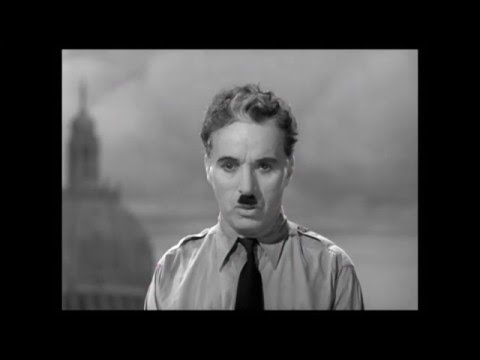
In literature and film, 'dictators' are common antagonists. Dystopian novels like George Orwell's '1984' or movies like 'The Great Dictator' use the concept to explore themes of power, control, and resistance. In these fictional worlds, the 'dictator' is often a symbol of ultimate authority and the loss of individual freedom. Hearing or reading the word in these creative works helps to reinforce its cultural meaning and the fears associated with it. Furthermore, in casual conversation, you might hear the word used as a hyperbole. If a friend is being particularly bossy about where to go for dinner, someone might say, 'Stop being such a dictator!' This usage is informal and usually meant as a joke, but it still draws on the core meaning of the word as someone who demands total control.
Many dystopian films portray a future where the world is ruled by a council of dictators.
- International Organizations
- Reports from the United Nations or Amnesty International often use the word 'dictators' when documenting human rights abuses and calling for international intervention.
The human rights report highlighted the systematic torture used by several dictators to maintain control.
One of the most common mistakes when using the word dictators is confusing it with other types of non-democratic leaders, such as 'monarchs' or 'tyrants.' While there is overlap, the terms are not perfectly synonymous. A monarch inherits their power through a royal bloodline and may be limited by a constitution (as in a constitutional monarchy). A dictator, however, usually seizes power and does not rely on traditional or hereditary legitimacy. A 'tyrant' is a more ancient term that specifically implies a cruel and oppressive ruler, whereas 'dictator' focuses more on the absolute nature of the power held, though most dictators are indeed tyrannical. Using these terms interchangeably can lead to inaccuracies in historical or political analysis.
- Dictator vs. Monarch
- A monarch's power is based on tradition and inheritance. A dictator's power is based on force, charisma, or the subversion of legal systems. Not all monarchs are dictators, and most dictators are not monarchs.
It is a mistake to call all kings dictators, as many modern kings have very limited political power.
Another frequent error is the misspelling of the word. Some learners might write 'dictaters' or 'dictatours.' The correct spelling ends in '-ors.' Additionally, there is often confusion regarding the plural and singular forms. 'Dictators' is the plural, referring to more than one leader. If you are talking about a single person, you must use 'dictator.' Grammatically, this affects the verb agreement. For example, 'The dictators are coming' is correct, while 'The dictators is coming' is not. Furthermore, some people use the word too loosely to describe any leader they dislike. While it is common in political rhetoric to call an opponent a 'dictator,' in a formal or academic context, the term should only be used when the leader actually meets the criteria of holding absolute, non-democratic power.
The student lost points for misspelling dictators throughout her history essay.
- Overuse in Rhetoric
- Calling a democratically elected leader a 'dictator' just because you disagree with their policies is considered hyperbole and can weaken your argument in a serious debate.
Critics argued that calling the prime minister one of the world's dictators was an extreme exaggeration.
There is also a subtle mistake involving the word 'dictatorship.' Sometimes people use 'dictators' when they should use 'dictatorship.' For example, 'The country is a dictators' is incorrect. You should say, 'The country is a dictatorship' or 'The country is ruled by dictators.' 'Dictators' refers to the people, while 'dictatorship' refers to the system. Finally, be careful with the pronunciation. The stress should be on the first syllable. Placing the stress on the second syllable (dic-TA-tors) is a common error for non-native speakers and can make the word harder to understand. Mastering these nuances will help you use the word more accurately and effectively in both spoken and written English.
The lecture explained the difference between the lives of dictators and the systems of dictatorship they create.
- Pronunciation Error
- Avoid saying 'dic-TAY-tors.' The 'a' sound is unstressed and should be pronounced quickly, like a schwa or a short 'a'.
Correct pronunciation is key when discussing the impact of dictators in a public forum.
While dictators is the most common term for absolute rulers, there are several alternatives that can provide more specific nuances depending on the context. 'Autocrats' is a very close synonym often used in political science. An autocrat is a ruler who has absolute power, but the term 'autocracy' can also refer to the system itself. 'Despots' is another alternative, but it carries a stronger connotation of cruelty and the exercise of power in an arbitrary or oppressive way. If you want to emphasize the harshness of the rule, 'tyrants' is the best choice. This word has a long history dating back to Ancient Greece and is almost always used to describe a ruler who is both absolute and unjust.
- Autocrats vs. Dictators
- 'Autocrat' is often seen as a more formal or academic term. 'Dictator' is more common in general usage and news reporting. Both imply absolute power.
The political analyst used the term 'autocrats' to describe the rising number of dictators in the region.
In some regions, particularly in Latin America, the term 'caudillos' is used to describe military or political leaders who rule with absolute authority. This term often implies a charismatic leader who has a strong personal following. In modern journalism, the word 'strongmen' is frequently used as a synonym for dictators. A 'strongman' is a leader who rules by force and often presents themselves as the only person capable of maintaining order in a chaotic society. While 'dictator' is a more formal political term, 'strongman' is more descriptive of the leader's persona and style of governance. Another related term is 'oppressors,' which focuses on the act of keeping people down through the use of authority or force. While not all oppressors are dictators, almost all dictators are oppressors.
The news report referred to the country's dictators as military strongmen who refused to step down.
- Despots vs. Tyrants
- A 'despot' is often associated with an absolute ruler in a non-European context (historically), while 'tyrant' is the classic Western term for a cruel ruler.
The people rose up to overthrow the dictators and their tyrannical regime.
For a more neutral or technical term, you might use 'absolute rulers' or 'authoritarian leaders.' These terms describe the nature of the power without necessarily invoking the negative emotional response that 'dictators' does. In academic writing, 'totalitarians' is used to describe a specific type of dictator who seeks to control every aspect of life through a state ideology. Understanding these distinctions allows you to choose the word that best fits the specific situation you are describing. For example, if you are writing a historical paper about the Roman Republic, you would use 'dictator' in its original, more neutral sense. If you are writing a passionate editorial about human rights, 'tyrants' or 'oppressors' might be more appropriate. By expanding your vocabulary beyond just 'dictators,' you can communicate more complex ideas about power and governance.
The transition from absolute rulers to elected officials is a key part of the history of many dictators.
- Totalitarians
- This term is used for dictators who want total control over thoughts and actions, often using a single political party and extensive propaganda.
The study compared the methods used by 20th-century dictators to those of ancient despots.
How Formal Is It?
豆知識
The original Roman dictators were actually seen as heroes! Cincinnatus is the most famous example; he took power to save Rome and then immediately gave it back once the war was over.
発音ガイド
- Pronouncing the '-ors' as '-ers' (dictaters).
- Putting the stress on the last syllable.
- Using a long 'i' sound at the beginning (like 'dye-ctators').
- Forgetting the 't' sound in the middle.
- Pronouncing the 'a' like the 'a' in 'cat' instead of 'cake'.
難易度
The word itself is common, but the contexts (politics, history) can be complex.
Requires careful spelling and understanding of political nuances.
Pronunciation is key, especially the stress on the second syllable.
Easily recognizable in news and documentaries.
次に学ぶべきこと
前提知識
次に学ぶ
上級
知っておくべき文法
Plural Noun Agreement
The dictators *are* (not is) in control.
Possessive Plural
The dictators' (not dictator's) palaces were huge.
Articles with Generalizations
Dictators (no article) often use fear.
Relative Clauses
Dictators who suppress the press often fail in the long run.
Passive Voice in History
Many dictators were overthrown during the Arab Spring.
レベル別の例文
The world has seen many bad dictators.
Le monde a connu de nombreux dictateurs malveillants.
Plural noun 'dictators' used as the object of the sentence.
Dictators do not like it when people vote.
Les dictateurs n'aiment pas quand les gens votent.
Subject 'Dictators' followed by the negative 'do not like'.
Some dictators are very famous in history.
Certains dictateurs sont très célèbres dans l'histoire.
Adjective 'famous' describes the noun 'dictators'.
We read about dictators in school.
Nous lisons sur les dictateurs à l'école.
Preposition 'about' followed by the noun 'dictators'.
Dictators often have big armies.
Les dictateurs ont souvent de grandes armées.
Adverb 'often' used to show frequency.
Many people are afraid of dictators.
Beaucoup de gens ont peur des dictateurs.
Adjective 'afraid' followed by the preposition 'of'.
Dictators want to have all the power.
Les dictateurs veulent avoir tout le pouvoir.
Verb 'want' followed by an infinitive 'to have'.
Life is hard under dictators.
La vie est dure sous les dictateurs.
Preposition 'under' indicates living within their rule.
Dictators usually take control of the news.
Les dictateurs prennent généralement le contrôle des informations.
Verb phrase 'take control of' used with the noun 'news'.
The people wanted to remove the dictators.
Le peuple voulait destituer les dictateurs.
Infinitive 'to remove' acts as the object of 'wanted'.
Dictators do not follow the same laws as us.
Les dictateurs ne suivent pas les mêmes lois que nous.
Comparison 'the same... as' used with 'laws'.
In the past, many dictators ruled for a long time.
Par le passé, de nombreux dictateurs ont régné pendant longtemps.
Past tense verb 'ruled' used with a time expression.
Dictators often tell lies to their citizens.
Les dictateurs mentent souvent à leurs citoyens.
Noun 'citizens' is the indirect object of 'tell'.
The army helped the dictators stay in power.
L'armée a aidé les dictateurs à rester au pouvoir.
Verb 'helped' followed by object and bare infinitive 'stay'.
Dictators do not allow other political parties.
Les dictateurs n'autorisent pas d'autres partis politiques.
Negative 'do not allow' shows restriction.
Most dictators are not chosen by the people.
La plupart des dictateurs ne sont pas choisis par le peuple.
Passive voice 'are not chosen' emphasizes the lack of choice.
Dictators often suppress any form of political opposition.
Les dictateurs répriment souvent toute forme d'opposition politique.
Verb 'suppress' is a common academic term used with 'dictators'.
The rise of dictators can lead to international conflict.
La montée des dictateurs peut mener à des conflits internationaux.
Modal verb 'can' expresses possibility.
Many dictators use propaganda to maintain their image.
De nombreux dictateurs utilisent la propagande pour maintenir leur image.
Noun 'propaganda' is a key concept related to dictators.
Dictators typically hold absolute power over their countries.
Les dictateurs détiennent généralement un pouvoir absolu sur leur pays.
Adverb 'typically' describes the usual state of affairs.
History shows that dictators rarely give up power voluntarily.
L'histoire montre que les dictateurs abandonnent rarement le pouvoir volontairement.
Adverb 'rarely' and 'voluntarily' modify the verb phrase.
The international community often denounces brutal dictators.
La communauté internationale dénonce souvent les dictateurs brutaux.
Adjective 'brutal' provides a strong negative description.
Dictators often restrict the civil liberties of their citizens.
Les dictateurs restreignent souvent les libertés civiles de leurs citoyens.
Noun phrase 'civil liberties' is a key B1 vocabulary item.
Several dictators were deposed during the revolution.
Plusieurs dictateurs ont été destitués pendant la révolution.
Passive voice 'were deposed' indicates they were removed from power.
Dictators frequently cultivate a cult of personality to ensure loyalty.
Les dictateurs cultivent fréquemment un culte de la personnalité pour assurer la loyauté.
Verb 'cultivate' and phrase 'cult of personality' are advanced collocations.
The transition from democracy to rule by dictators is often gradual.
La transition de la démocratie au règne des dictateurs est souvent graduelle.
Prepositional phrase 'rule by dictators' acts as a noun phrase.
Dictators rely on a network of informants to identify dissenters.
Les dictateurs s'appuient sur un réseau d'informateurs pour identifier les dissidents.
Phrasal verb 'rely on' followed by a complex object.
Sanctions are often used to pressure dictators into making reforms.
Des sanctions sont souvent utilisées pour faire pression sur les dictateurs afin qu'ils fassent des réformes.
Verb 'pressure' followed by object and 'into' + -ing form.
Dictators often manipulate elections to create an illusion of legitimacy.
Les dictateurs manipulent souvent les élections pour créer une illusion de légitimité.
Infinitive of purpose 'to create' explains why they manipulate.
The fall of notorious dictators is usually met with public celebration.
La chute de dictateurs notoires est généralement accueillie par des célébrations publiques.
Adjective 'notorious' means famous for something bad.
Dictators may use economic crises as a pretext to seize power.
Les dictateurs peuvent utiliser les crises économiques comme prétexte pour s'emparer du pouvoir.
Noun 'pretext' means a false reason given to hide the real one.
Modern dictators have adapted to the digital age by using online surveillance.
Les dictateurs modernes se sont adaptés à l'ère numérique en utilisant la surveillance en ligne.
Present perfect 'have adapted' shows a completed action with current relevance.
The psychological profile of dictators often reveals a deep-seated need for control.
Le profil psychologique des dictateurs révèle souvent un besoin de contrôle profondément ancré.
Compound noun 'psychological profile' and adjective 'deep-seated'.
Dictators often exploit nationalist sentiments to consolidate their authority.
Les dictateurs exploitent souvent les sentiments nationalistes pour consolider leur autorité.
Verb 'exploit' and 'consolidate' are high-level academic verbs.
The study of dictators requires an analysis of the institutional failures that allowed them to rise.
L'étude des dictateurs nécessite une analyse des défaillances institutionnelles qui ont permis leur ascension.
Relative clause 'that allowed them to rise' modifies 'institutional failures'.
Dictators frequently employ 'divide and rule' tactics to prevent a unified opposition.
Les dictateurs emploient fréquemment des tactiques de 'diviser pour régner' pour empêcher une opposition unifiée.
Idiomatic political phrase 'divide and rule' used as an adjective.
The rhetoric used by dictators is often designed to dehumanize their political enemies.
La rhétorique utilisée par les dictateurs est souvent conçue pour déshumaniser leurs ennemis politiques.
Passive voice 'is often designed' followed by an infinitive.
Dictators often maintain power by co-opting potential rivals into the government.
Les dictateurs maintiennent souvent le pouvoir en cooptant des rivaux potentiels au sein du gouvernement.
Gerund 'co-opting' follows the preposition 'by'.
The legacy of dictators can haunt a nation's political culture for generations.
L'héritage des dictateurs peut hanter la culture politique d'une nation pendant des générations.
Verb 'haunt' used metaphorically to show lasting negative impact.
Dictators are often skilled at manipulating international law to their advantage.
Les dictateurs sont souvent habiles à manipuler le droit international à leur avantage.
Adjective 'skilled' followed by the preposition 'at' and a gerund.
The inherent instability of regimes led by dictators often stems from the lack of a clear succession plan.
L'instabilité inhérente des régimes dirigés par des dictateurs découle souvent de l'absence d'un plan de succession clair.
Phrasal verb 'stems from' indicates the origin or cause.
Dictators often engage in 'performative democracy' to appease international observers while maintaining total control.
Les dictateurs s'engagent souvent dans une 'démocratie performative' pour apaiser les observateurs internationaux tout en maintenant un contrôle total.
Complex noun phrase 'performative democracy' and participle clause 'while maintaining'.
The erosion of the rule of law is a prerequisite for the emergence of modern dictators.
L'érosion de l'état de droit est une condition préalable à l'émergence des dictateurs modernes.
Noun 'prerequisite' shows a necessary condition.
Dictators frequently leverage state-owned enterprises to enrich themselves and their inner circle.
Les dictateurs exploitent fréquemment les entreprises d'État pour s'enrichir, eux et leur cercle restreint.
Verb 'leverage' used in a sophisticated economic context.
The discourse surrounding dictators often overlooks the role of external actors in sustaining their rule.
Le discours entourant les dictateurs néglige souvent le rôle des acteurs externes dans le maintien de leur règne.
Verb 'overlooks' means to fail to notice or consider.
Dictators often utilize sophisticated algorithmic surveillance to preemptively stifle dissent.
Les dictateurs utilisent souvent une surveillance algorithmique sophistiquée pour étouffer préventivement la dissidence.
Adverb 'preemptively' and verb 'stifle' are high-level vocabulary.
The paradox of dictators is that their absolute power often leads to absolute isolation from reality.
Le paradoxe des dictateurs est que leur pouvoir absolu mène souvent à un isolement absolu de la réalité.
Noun 'paradox' introduces a seemingly contradictory situation.
Dictators may cloak their authoritarianism in the language of 'sovereignty' and 'national security.'
Les dictateurs peuvent masquer leur autoritarisme sous le langage de la 'souveraineté' et de la 'sécurité nationale'.
Verb 'cloak' used metaphorically to mean hide or disguise.
よく使う組み合わせ
よく使うフレーズ
— A system of government where absolute power is held by one or more dictators. It implies a lack of democratic participation.
The nation suffered for years under the rule by dictators.
— A historical period, usually the 20th century, characterized by the prevalence of dictatorial regimes. It is often used in history books.
Historians often refer to the 1930s as the age of dictators.
— A theoretical concept of an absolute ruler who uses their power for the benefit of the people. It is a highly debated and controversial term.
Some argue that developing nations need benevolent dictators to ensure rapid growth.
— To remove dictators from power, often through force or a popular uprising. It suggests a sudden and dramatic change.
The rebels' primary goal was to topple the dictators and establish a republic.
— Dictators who are controlled by a more powerful foreign government or outside force. They lack true independence.
The invaders installed puppet dictators to manage the occupied territory.
— The common strategies and tactics used by dictators to gain and maintain power. It often includes propaganda and suppression.
Many modern leaders seem to be following the playbook of dictators from the past.
— The act of leaving one's country to escape the oppression or danger posed by dictatorial rule. It is common in refugee contexts.
Thousands of refugees are fleeing from dictators in search of safety.
— To publicly criticize or condemn dictators for their actions or policies. It is a common diplomatic action.
The UN resolution was written to denounce dictators who violate human rights.
— The illegal or immoral acts committed by dictators, such as torture, murder, or corruption. It is used in legal and historical contexts.
The court spent years investigating the horrific crimes of dictators.
— The assistance, often financial or military, given to dictators by other countries or groups. It is a controversial topic in foreign policy.
The government faced criticism for its continued support for dictators abroad.
よく混同される語
Monarchs inherit power and may be limited by law; dictators seize power and have no limits.
Tyrants are specifically cruel and oppressive; a dictator is defined by absolute power, though usually cruel.
Presidents are usually elected and limited by terms; dictators are not.
慣用句と表現
— To govern in a very harsh and strict way, allowing no opposition. This is the classic description of how dictators rule.
The dictators ruled the country with an iron fist for over thirty years.
informal/journalistic— Used when it is clear that something bad is going to happen, such as the fall of a dictator. It implies an inevitable end.
As the protests grew, the dictators knew the writing was on the wall for their regime.
informal— A famous saying suggesting that when a person has total power, they will inevitably become corrupt. This is often applied to dictators.
The history of these dictators proves that absolute power corrupts absolutely.
formal/literary— To do exactly what someone else wants you to do, often out of fear or lack of choice. This describes the citizens under dictators.
In that country, everyone must dance to the dictators' tune or face the consequences.
informal— To maintain very strict control over something or someone. Dictators do this to the media and the military.
The dictators kept a tight rein on all information entering or leaving the country.
informal— Used to say that people will be severely punished or lose their jobs because of a mistake. Dictators often use this threat.
The dictators warned that if the project failed, heads would roll in the ministry.
informal— Someone who behaves as if the rules and laws do not apply to them. This perfectly describes the behavior of dictators.
The dictators acted as a law unto themselves, ignoring all international treaties.
informal— To destroy someone's hope, courage, or enthusiasm. Dictators do this to prevent people from wanting to rebel.
The long years of oppression by the dictators were designed to crush the spirit of the people.
literary— To be the person who is really in control of a situation, even if someone else appears to be. Used for those behind puppet dictators.
While the general was the face of the government, the dictators in the background were pulling the strings.
informal— To stop people from complaining or expressing their disagreement, often through force or threats. A primary goal of dictators.
The dictators used the secret police to silence the critics and maintain their power.
journalistic間違えやすい
Both words look similar and relate to the same topic.
Dictators are the people; dictatorship is the system of government.
The dictators established a brutal dictatorship.
They share the same root 'dictate'.
Dictation is the act of saying words for someone else to write down.
The teacher gave the students a dictation test.
They are very close synonyms.
Autocrat is more formal/academic; dictator is more common in general speech.
The professor discussed the rise of autocrats in the 21st century.
Both refer to absolute rulers.
Despot implies a more arbitrary and cruel exercise of power.
The people suffered under the whims of the local despots.
Both refer to non-democratic leaders.
Totalitarians seek to control every aspect of life, not just political power.
Totalitarians use ideology to reshape society completely.
文型パターン
Dictators are [adjective].
Dictators are bad.
Dictators have [noun].
Dictators have all the power.
Dictators use [noun] to [verb].
Dictators use the army to stay in power.
The rise of dictators is often caused by [noun].
The rise of dictators is often caused by economic problems.
Dictators exploit [noun] in order to [verb].
Dictators exploit nationalist feelings in order to gain support.
The paradox of dictators lies in [noun phrase].
The paradox of dictators lies in their simultaneous power and insecurity.
People live under dictators.
Many people live under dictators in that part of the world.
Dictators suppress [noun].
Dictators suppress the freedom of the press.
語族
名詞
動詞
形容詞
関連
使い方
Common in news, history, and political science.
-
The country is a dictators.
→
The country is a dictatorship.
You must use the noun for the system (dictatorship) when describing a country, not the noun for the people (dictators).
-
The dictators is very mean.
→
The dictators are very mean.
Dictators is plural, so it requires a plural verb like 'are'.
-
He is a dictater.
→
He is a dictator.
The word ends in '-or', not '-er'. This is a common spelling error.
-
All kings are dictators.
→
Some kings act like dictators, but they are different.
Monarchy and dictatorship are different political systems, though they can look similar.
-
The dictator's rules were harsh.
→
The dictators' rules were harsh.
If you are talking about more than one dictator, the apostrophe goes after the 's'.
ヒント
Use Synonyms
To avoid repeating 'dictators' too often, use words like 'autocrats' or 'strongmen' depending on the context. This makes your writing more professional.
Watch Verb Agreement
Always remember that 'dictators' is plural. Use 'are,' 'were,' or 'have' instead of 'is,' 'was,' or 'has.' For example: 'The dictators have seized power.'
Historical Context
When talking about the 20th century, 'dictators' is a very common word. Use it when discussing World War II or the Cold War.
Stress the Second Syllable
In British English, the stress is on 'TAY': dik-TAY-tors. In American English, it's often on 'DIC': DIC-tay-tors. Pick one and be consistent.
Ends in -ors
Remember that many words for people's roles end in '-or' (like actor, doctor, governor). Dictators is the same.
Be Precise
Don't call every leader you dislike a 'dictator.' Use the word only for those who actually have absolute, unchecked power.
Look for Adjectives
Notice the words used with 'dictators' in news articles. You'll often see 'brutal,' 'ruthless,' or 'notorious.'
News Shorthand
Journalists use 'dictators' as a quick way to describe a non-democratic leader. It tells you a lot about the story's perspective.
Metaphorical Use
You can use 'dictator' to describe a bossy friend, but only in a joking way. In serious talks, keep it political.
Word Family
Learn 'dictatorship' (the system) and 'dictatorial' (the behavior) at the same time to boost your vocabulary quickly.
暗記しよう
記憶術
Think of someone who 'DICTATES' every single word and action to their people. They are the DICTATORS.
視覚的連想
Imagine a giant hand holding a small country in a tight grip, with the word 'DICTATORS' written across the knuckles.
Word Web
チャレンジ
Try to find three news articles today that mention 'dictators' or 'authoritarian leaders' and see how the word is used.
語源
Derived from the Latin word 'dictator,' which comes from 'dictare,' meaning 'to say often, prescribe, or dictate.'
元の意味: In the Roman Republic, a 'dictator' was a temporary magistrate with absolute power, appointed during a time of crisis.
It belongs to the Indo-European family, specifically the Italic branch, entering English via Old French.文化的な背景
Be careful when applying this label to current living leaders in a formal setting, as it is a very strong accusation.
In English-speaking countries, the term is almost exclusively negative and is a powerful tool for political criticism.
実生活で練習する
実際の使用場面
History Class
- The rise of dictators
- Historical dictators
- Fall of the dictators
- Dictators in the 20th century
News Reports
- Brutal dictators
- Deposed dictators
- Sanctions against dictators
- Dictators' human rights records
Political Science
- The dictator's dilemma
- Authoritarian dictators
- Totalitarian dictators
- Succession of dictators
Human Rights Activism
- Fighting against dictators
- Victims of dictators
- Crimes committed by dictators
- Resistance to dictators
Casual Conversation (Metaphorical)
- Being a total dictator
- Acting like dictators
- Stop being a dictator
- A fashion dictator
会話のきっかけ
"Do you think there are more dictators in the world today than there were fifty years ago?"
"Why do you think some people are attracted to the idea of strong dictators during times of crisis?"
"What are the most common ways that dictators are finally removed from power?"
"Can a country ever truly recover from the long-term rule of brutal dictators?"
"Is it ever right for other countries to intervene and remove dictators from power?"
日記のテーマ
Imagine you are living in a country ruled by dictators. Describe a typical day and how you feel about the lack of freedom.
Write an essay comparing the methods used by historical dictators to the methods used by modern ones in the digital age.
Reflect on why the term 'dictator' is such a powerful and negative word in our society today.
If you were a leader, how would you ensure that you never became one of those dictators you read about in history?
Discuss the role of the media in either supporting or bringing down dictators.
よくある質問
10 問This is a controversial topic. The concept of a 'benevolent dictator' exists, describing a leader with absolute power who uses it for the country's benefit. However, most political scientists argue that without checks and balances, even well-meaning dictators eventually become oppressive or corrupt. History shows very few examples of dictators who successfully improved their countries without causing significant harm to human rights.
Dictators typically lose power through a few common ways: a popular uprising or revolution (like the Arab Spring), a military coup by their own generals, losing a war against another country, or dying of natural causes. In some rare cases, they may be pressured into holding elections and losing, but this is uncommon as they usually manipulate the results.
The main difference is legitimacy and inheritance. A king (monarch) usually inherits their title through a royal family and their power is often based on tradition or religion. In modern times, many kings have very little actual power. A dictator, however, usually takes power by force or political maneuvering and does not have a traditional or hereditary right to rule.
People follow dictators for several reasons: fear of punishment, the influence of propaganda that makes the leader seem like a hero, economic stability that the dictator might provide, or nationalist pride. Sometimes, people prefer a 'strong' leader during a crisis because they believe a democracy is too slow or weak to solve problems.
In modern English, yes, it is almost always used as a negative label. It implies a lack of freedom and the use of force. However, in ancient Rome, it was a neutral title for a temporary leader during an emergency. Today, calling someone a 'dictator' is a serious insult in political life.
A cult of personality is when a dictator uses mass media and propaganda to create an idealized, heroic, and worshipful image of themselves. They want the citizens to love and admire them as if they were a god or a father figure. This makes it harder for people to criticize or rebel against them.
In theory, no. A dictator is 'above the law,' meaning they can change the laws whenever they want or simply ignore them. They often dismantle the independent court system so that no judge can rule against them. This lack of 'rule of law' is a defining feature of a dictatorship.
Yes, sometimes a small group of people, like a military council (junta), rules a country with absolute power. In this case, you would refer to them as 'the dictators' or 'the military rulers.' However, usually, one person emerges as the clear leader of the group.
The 'Dictator's Dilemma' is a theory that absolute rulers can never truly know what their people think. Because the dictator punishes anyone who disagrees with them, people only tell the dictator what they want to hear. This means the dictator often makes bad decisions because they are working with false information.
The plural is spelled 'dictators.' It follows the standard rule of adding an 's' to the singular 'dictator.' Be careful not to spell it 'dictaters' or 'dictatours,' which are common mistakes.
自分をテスト 200 問
Describe what life might be like in a country ruled by dictators.
Well written! Good try! Check the sample answer below.
Compare a democratic leader to a dictator in three sentences.
Well written! Good try! Check the sample answer below.
Write a short paragraph about a historical dictator you know.
Well written! Good try! Check the sample answer below.
Explain why dictators use propaganda to maintain their power.
Well written! Good try! Check the sample answer below.
Discuss the impact of dictators on a country's economy.
Well written! Good try! Check the sample answer below.
Write a letter to a fictional dictator demanding more freedom.
Well written! Good try! Check the sample answer below.
Explain the meaning of the idiom 'rule with an iron fist'.
Well written! Good try! Check the sample answer below.
How does digital technology help modern dictators stay in power?
Well written! Good try! Check the sample answer below.
What are the common signs that a leader is becoming a dictator?
Well written! Good try! Check the sample answer below.
Describe the fall of a famous dictator from history.
Well written! Good try! Check the sample answer below.
Why is it important for students to learn about dictators?
Well written! Good try! Check the sample answer below.
Discuss the role of the international community in dealing with dictators.
Well written! Good try! Check the sample answer below.
Write a poem about the desire for freedom from dictators.
Well written! Good try! Check the sample answer below.
Explain the difference between a monarch and a dictator.
Well written! Good try! Check the sample answer below.
What is a 'cult of personality' and how is it created?
Well written! Good try! Check the sample answer below.
How do dictators use fear to control their citizens?
Well written! Good try! Check the sample answer below.
Discuss the 'Dictator's Dilemma' in your own words.
Well written! Good try! Check the sample answer below.
Write a news headline about the fall of a group of dictators.
Well written! Good try! Check the sample answer below.
What are the challenges of building a democracy after dictators leave?
Well written! Good try! Check the sample answer below.
Reflect on the saying 'absolute power corrupts absolutely'.
Well written! Good try! Check the sample answer below.
Talk for one minute about why dictators are generally seen as bad leaders.
Read this aloud:
あなたの回答:
Speech recognition is not supported in your browser. Try Chrome or Edge.
Discuss with a partner: Can a dictator ever be good for a country's economy?
Read this aloud:
あなたの回答:
Speech recognition is not supported in your browser. Try Chrome or Edge.
Describe a famous historical dictator and what they are known for.
Read this aloud:
あなたの回答:
Speech recognition is not supported in your browser. Try Chrome or Edge.
Explain the concept of 'checks and balances' and why dictators hate them.
Read this aloud:
あなたの回答:
Speech recognition is not supported in your browser. Try Chrome or Edge.
Debate: Should the international community intervene to remove brutal dictators?
Read this aloud:
あなたの回答:
Speech recognition is not supported in your browser. Try Chrome or Edge.
How would you explain the word 'dictators' to a ten-year-old child?
Read this aloud:
あなたの回答:
Speech recognition is not supported in your browser. Try Chrome or Edge.
Talk about a movie or book you've seen that features a dictator.
Read this aloud:
あなたの回答:
Speech recognition is not supported in your browser. Try Chrome or Edge.
What are the dangers of a 'cult of personality' in modern politics?
Read this aloud:
あなたの回答:
Speech recognition is not supported in your browser. Try Chrome or Edge.
Describe the feeling of living in a country where you cannot speak freely.
Read this aloud:
あなたの回答:
Speech recognition is not supported in your browser. Try Chrome or Edge.
How do modern dictators use the internet differently than 20th-century dictators used radio?
Read this aloud:
あなたの回答:
Speech recognition is not supported in your browser. Try Chrome or Edge.
Talk about the importance of a free press in preventing the rise of dictators.
Read this aloud:
あなたの回答:
Speech recognition is not supported in your browser. Try Chrome or Edge.
What would you do if you were a citizen in a country where a dictator just took power?
Read this aloud:
あなたの回答:
Speech recognition is not supported in your browser. Try Chrome or Edge.
Discuss the role of the military in supporting or overthrowing dictators.
Read this aloud:
あなたの回答:
Speech recognition is not supported in your browser. Try Chrome or Edge.
Explain the idiom 'the writing is on the wall' in the context of a failing regime.
Read this aloud:
あなたの回答:
Speech recognition is not supported in your browser. Try Chrome or Edge.
How can education help prevent people from following dictators?
Read this aloud:
あなたの回答:
Speech recognition is not supported in your browser. Try Chrome or Edge.
Talk about the difference between a president and a dictator.
Read this aloud:
あなたの回答:
Speech recognition is not supported in your browser. Try Chrome or Edge.
What are the psychological traits that many dictators seem to share?
Read this aloud:
あなたの回答:
Speech recognition is not supported in your browser. Try Chrome or Edge.
Discuss the impact of sanctions on the ordinary people living under dictators.
Read this aloud:
あなたの回答:
Speech recognition is not supported in your browser. Try Chrome or Edge.
How do dictators use national pride to stay in power?
Read this aloud:
あなたの回答:
Speech recognition is not supported in your browser. Try Chrome or Edge.
Describe a protest movement that successfully removed a group of dictators.
Read this aloud:
あなたの回答:
Speech recognition is not supported in your browser. Try Chrome or Edge.
Listen to a news clip and identify which country is being described as ruled by dictators.
Listen to a history lecture and write down three names of famous dictators mentioned.
Listen to a debate about intervention and summarize the main argument against removing dictators.
Listen to a description of a propaganda poster and identify the 'heroic' traits of the dictator.
Listen to a survivor's story and describe how they escaped the rule of the dictators.
Listen to a podcast about the 'Dictator's Handbook' and list two rules for staying in power.
Listen to a speech and decide if the speaker sounds like a democratic leader or a dictator.
Listen to a list of vocabulary words and circle the ones that are synonyms for dictators.
Listen to a documentary snippet about the fall of the Berlin Wall and the end of certain dictators.
Listen to an analysis of social media use by modern dictators and identify one specific platform mentioned.
Listen to a teacher explaining the word 'dictators' and write down the simple definition they give.
Listen to a news report on an election and identify the signs that the dictators are manipulating the results.
Listen to a discussion on 'benevolent dictators' and identify the speaker's personal opinion.
Listen to a poem about freedom and identify the word 'dictators' when it is spoken.
Listen to a lecture on Roman history and explain the original role of a dictator.
The dictators is ruling the country with fear.
He was a famous dictater in the 1970s.
The country is a dictators.
Dictators often allows no freedom of speech.
The dictators's palaces were very expensive.
We are studying the rise of dictatours.
The people wanted to overthrow the brutal dictator's.
Many dictators use propaganda for control people.
The dictators were deposed of during the revolution.
Life under dictators are very difficult.
/ 200 correct
Perfect score!
Summary
The word 'dictators' describes leaders with absolute, unchecked power who rule through force and suppression rather than democratic mandate. For example, 'The history of the 20th century was marked by the rise of several brutal dictators who reshaped global politics.'
- Dictators are absolute rulers who hold total power over a nation, often seizing it through non-democratic means like military coups or revolutions.
- They typically suppress political opposition, control the media, and restrict civil liberties to maintain their grip on authority without public consent.
- The term carries a strong negative connotation and is associated with oppression, human rights abuses, and the lack of democratic checks and balances.
- While historically originating in Rome as a temporary emergency measure, modern dictators are seen as permanent autocrats who dismantle democratic institutions.
Use Synonyms
To avoid repeating 'dictators' too often, use words like 'autocrats' or 'strongmen' depending on the context. This makes your writing more professional.
Watch Verb Agreement
Always remember that 'dictators' is plural. Use 'are,' 'were,' or 'have' instead of 'is,' 'was,' or 'has.' For example: 'The dictators have seized power.'
Historical Context
When talking about the 20th century, 'dictators' is a very common word. Use it when discussing World War II or the Cold War.
Stress the Second Syllable
In British English, the stress is on 'TAY': dik-TAY-tors. In American English, it's often on 'DIC': DIC-tay-tors. Pick one and be consistent.