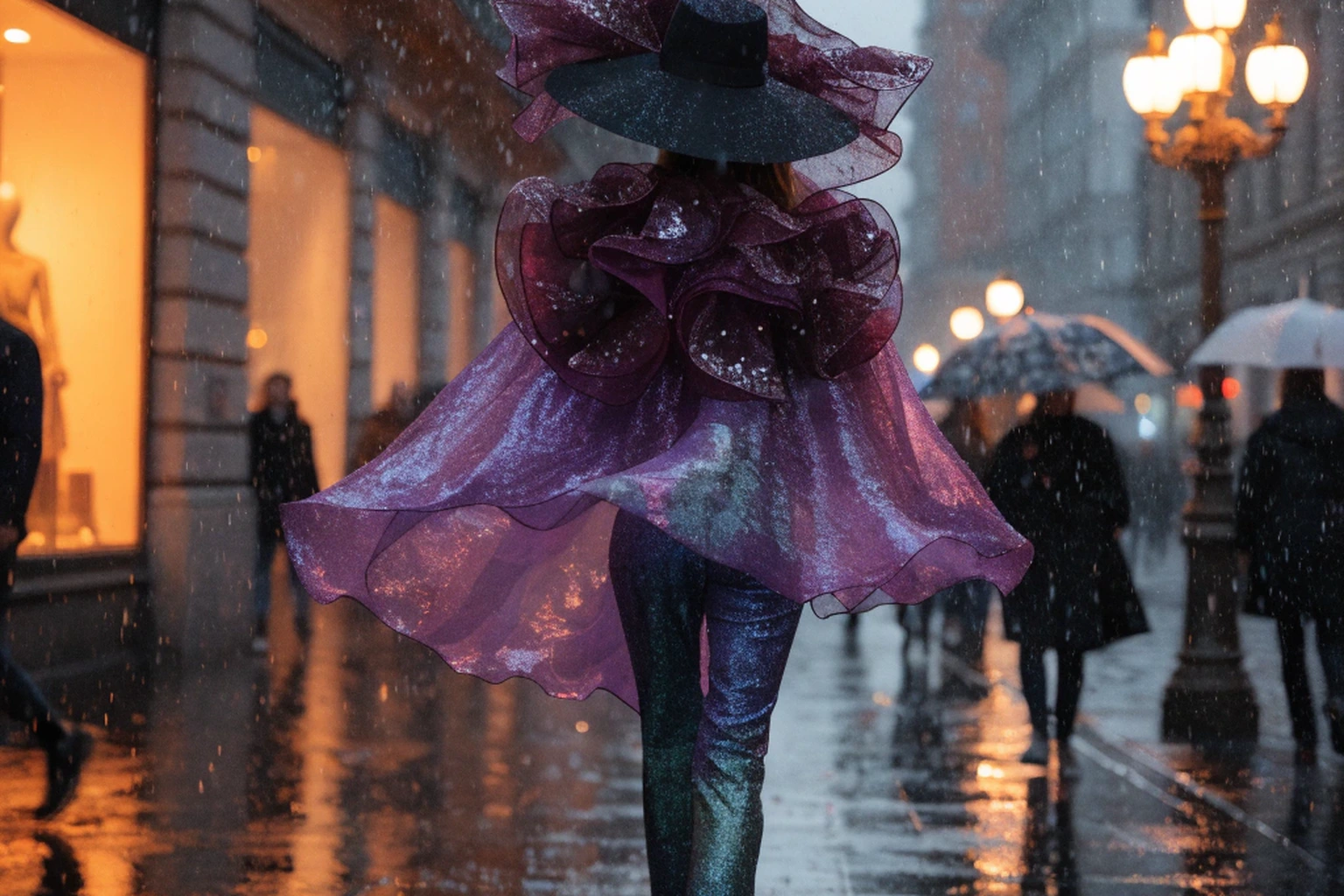
이탈리아의 패션과 품질
이탈리아는 패션으로 정말 유명합니다. '메이드 인 이탈리아'는 아주 좋은 품질을 의미합니다. 전 세계 사람들은 이탈리아 옷과 가방을 좋아합니다.
이탈리아에는 유명한 패션 브랜드가 아주 많습니다. 구찌, 프라다, 아르마니가 대표적입니다. 이 브랜드의 옷들은 아주 예쁘고 고급스럽습니다. 디자이너들은 옷을 아주 정성껏 만듭니다. 그래서 품질이 아주 높습니다.
밀라노는 이탈리아 패션의 중심 도시입니다. 매년 이곳에서 큰 패션쇼가 열립니다. 많은 관광객이 밀라노에 옵니다. 이탈리아 패션은 세계에서 가장 인기가 많습니다.
문법 스포트라이트
패턴: 은/는
"이탈리아는 패션으로 정말 유명합니다."
문장의 주제를 나타낼 때 사용합니다. 명사 뒤에 붙어서 그 대상에 대해 설명할 때 씁니다.
패턴: -에
"많은 관광객이 밀라노에 옵니다."
장소나 방향을 나타낼 때 사용합니다. 가다, 오다와 같은 움직임 동사와 함께 자주 씁니다.
이해도를 테스트하세요
10 질문 · A1 초급 · 무료 미리보기 1회
이 기사에서 배운 내용을 테스트하세요. 모든 질문에 답하여 XP를 획득하세요!
'메이드 인 이탈리아'는 무엇을 의미합니까?
문제별 결과
'메이드 인 이탈리아'는 무엇을 의미합니까?
내 답변:
정답: 좋은 품질
밀라노는 패션의 중심 도시입니까?
내 답변:
정답: 참
'옷'은 영어로 무엇입 + 니까?
내 답변:
정답: Clothes
_____는 패션으로 정말 유명합니다.
내 답변:
정답: 이탈리아
이탈리아 패션: 왜 그렇게 특별할까요?
이탈리아는 패션으로 아주 유명한 나라입니다. 전 세계 사람들은 '메이드 인 이탈리아'라는 말을 잘 알고 있습니다. 이 말은 좋은 품질, 우아한 디자인 그리고 특별한 장인정신을 의미합니다. 이것은 단순한 패션 산업이 아닙니다. 이탈리아의 중요한 문화와 역사입니다.
이탈리아 패션은 아주 긴 역사를 가지고 있습니다. 옛날 르네상스 시대부터 이탈리아의 피렌체와 베네치아 같은 도시들은 패션의 중심지였습니다. 그 도시 사람들은 아름다운 옷과 특별한 물건을 만들었습니다. 이탈리아 장인들은 손으로 아주 멋진 제품을 만드는 기술이 있습니다. 그들은 작은 부분까지도 중요하게 생각했습니다.
그래서 '메이드 인 이탈리아' 제품은 전 세계에서 매우 인기가 많습니다. 이탈리아는 가방, 신발, 옷 그리고 액세서리 같은 많은 패션 제품을 만듭니다. 사람들은 이탈리아 제품을 아주 좋아합니다. 왜냐하면 품질이 좋고 디자인도 아름답기 때문입니다. 이 패션 산업은 이탈리아 경제에 아주 중요한 역할을 합니다. 이탈리아는 이 패션으로 세계에서 유명합니다.
문법 스포트라이트
패턴: ~고 (and)
"품질이 좋고 디자인도 아름답기 때문입니다."
두 개 이상의 사실이나 행동을 연결할 때 사용합니다. 주로 동사나 형용사 뒤에 붙어서 앞 문장과 뒤 문장이 이어지는 내용을 나타냅니다. '그리고'와 비슷한 의미로 사용될 수 있습니다.
패턴: ~었습니다/았습니다 (past tense)
"피렌체와 베네치아 같은 도시들은 패션의 중심지였습니다."
어떤 일이 과거에 일어났거나 과거에 끝났음을 나타내는 표현입니다. 동사나 형용사의 어간 뒤에 붙어 과거 시제를 만듭니다. 어간의 마지막 모음에 따라 '았습니다' 또는 '었습니다'를 선택하여 사용합니다.
이해도를 테스트하세요
11 질문 · A2 초등급 · 무료 미리보기 1회
이 기사에서 배운 내용을 테스트하세요. 모든 질문에 답하여 XP를 획득하세요!
이탈리아 패션은 무엇으로 유명합니까?
문제별 결과
이탈리아 패션은 무엇으로 유명합니까?
내 답변:
정답: '메이드 인 이탈리아'
'메이드 인 이탈리아'는 품질이 좋지 않다는 의미입니다.
내 답변:
정답: 거짓
"장인정신"은 무슨 뜻입니까?
내 답변:
정답: 손으로 물건을 잘 만들고 노력하는 마음
이탈리아 패션은 아주 긴 ______를 가지고 있습니다.
내 답변:
정답: 역사
옛날에 패션의 중심지였던 이탈리아 도시는 어디입니까?
내 답변:
정답: 피렌체와 베네치아
The Quality of Style: Made in Italy
Italy is famous for its delicious food and beautiful art, but its fashion industry is perhaps its most stylish achievement. The "Made in Italy" label has become a global symbol of high quality and elegance. When people see this label, they know they are buying something special. This reputation is not new; it is the result of centuries of hard work and creativity.
The story of Italian fashion began a long time ago. Cities like Florence, Milan, and Venice have been centers of trade and culture for hundreds of years. In the 20th century, Italy became recognized officially as a fashion leader. Milan, which is located in the north, is now one of the "Big Four" fashion capitals of the world, alongside Paris, London, and New York. Twice a year, famous designers, models, and journalists travel there for Fashion Week.
What makes Italian fashion so unique? It is the craftsmanship. Many luxury goods are produced by small, family-run businesses rather than huge factories. These artisans use techniques that have existed for generations. High-quality materials, such as soft leather and fine silk, are selected with great care. A bag or a pair of shoes is not just made; it is crafted like a piece of art.
Recently, the industry has faced new challenges. Fast fashion is cheap and quick, but "Made in Italy" focuses on slow, lasting beauty. Also, many Italian brands have started to think about the environment. They are using sustainable materials to reduce waste. Despite these changes, the spirit of Italian fashion remains strong. It continues to combine tradition with modern style, proving that quality never goes out of fashion.
문법 스포트라이트
패턴: Present Perfect
"The "Made in Italy" label has become a global symbol of high quality and elegance."
We use the Present Perfect (have/has + past participle) to talk about actions that started in the past and continue to the present, or have a result in the present. Here, it shows that the label became famous in the past and is still famous now.
패턴: Passive Voice
"Many luxury goods are produced by small, family-run businesses rather than huge factories."
The Passive Voice (be + past participle) is used when we want to focus on the object or the action, rather than who did it. In this sentence, the focus is on the 'luxury goods' being produced, not just the people producing them.
이해도를 테스트하세요
11 질문 · B1 중급 · 무료 미리보기 1회
이 기사에서 배운 내용을 테스트하세요. 모든 질문에 답하여 XP를 획득하세요!
According to the article, why is the 'Made in Italy' label special?
문제별 결과
According to the article, why is the 'Made in Italy' label special?
내 답변:
정답: It represents high quality and history.
Most Italian luxury goods are made in massive industrial factories.
내 답변:
정답: 거짓
What does the word 'artisans' mean in the text?
내 답변:
정답: Skilled workers who make things by hand
Milan is one of the 'Big Four' fashion _____ of the world.
내 답변:
정답: capitals
How are Italian brands responding to environmental concerns?
내 답변:
정답: They are using sustainable materials.
"메이드 인 이태리" 명품 패션 산업: 단순한 경제를 넘어선 문화적 유산
이탈리아의 패션 산업은 단순한 경제 부문을 훨씬 뛰어넘어, 전 세계적인 문화 현상일 뿐만 아니라 국가 정체성의 핵심적인 부분입니다. '메이드 인 이태리(Made in Italy)' 라벨은 품질, 우아함, 그리고 비할 데 없는 장인정신을 나타내는 전 세계적인 약어가 되었으며, 다른 어떤 나라도 쉽게 주장할 수 없는 탁월함의 기준을 제시합니다. 이러한 명성은 우연히 얻어진 것이 아니라, 르네상스 시대로 거슬러 올라가는 수 세기 동안의 역사에 뿌리를 두고 있습니다. 당시 피렌체와 베네치아 같은 이탈리아 도시 국가들은 유럽 무역의 중심지였고, 섬유, 염색, 그리고 의류 제작 기술이 크게 발전했습니다.
이탈리아 패션의 독특함은 바로 '장인정신(artigianato)'에서 비롯됩니다. 대량 생산보다는 소규모 공방과 가족 기업들이 수십 년, 심지어 수 세대에 걸쳐 전수되어 온 전통 기술과 지식을 바탕으로 제품을 만듭니다. 이러한 방식은 각 제품에 영혼과 이야기를 불어넣으며, 단순한 상품이 아닌 예술 작품으로 승화시킵니다. 최고급 가죽, 실크, 캐시미어 등 엄선된 재료만을 사용하여 제작하는 고집은 제품의 내구성과 아름다움을 보장하며, 이는 소비자들이 '메이드 인 이태리' 제품에 기꺼이 높은 비용을 지불하는 이유가 됩니다.
오늘날 이탈리아 패션은 구찌, 프라다, 베르사체, 아르마니와 같은 세계적인 브랜드를 통해 그 명성을 이어가고 있습니다. 이들 브랜드는 전통적인 장인정신을 현대적인 디자인과 혁신적인 마케팅 전략과 결합하여 전 세계 소비자들의 마음을 사로잡습니다. 밀라노 패션 위크는 파리, 뉴욕, 런던과 함께 세계 4대 패션 위크 중 하나로서, 매년 전 세계 패션계의 이목을 집중시키며 이탈리아 패션의 영향력을 과시합니다.
하지만 '메이드 인 이태리'의 가치는 단지 명품 브랜드에만 국한되지 않습니다. 중소기업들이 생산하는 고품질의 의류, 신발, 액세서리 또한 이 라벨의 명성을 높이는 데 크게 기여합니다. 이들 기업은 거대 브랜드의 그림자에 가려져 있지만, 숙련된 장인들이 땀 흘려 만들어낸 제품들은 이탈리아 경제의 중요한 축을 담당하고 있습니다. 이탈리아 정부와 패션 협회는 이러한 장인정신과 전통을 보존하고 발전시키기 위해 다양한 지원 정책을 펼치고 있습니다.
결론적으로, '메이드 인 이태리' 패션 산업은 단순한 경제적 가치를 넘어선 이탈리아 문화의 정수이며, 과거와 현재가 조화를 이루는 살아있는 유산입니다. 이는 오랜 역사와 뛰어난 장인정신, 그리고 끊임없는 혁신이 결합된 결과물로, 앞으로도 전 세계 패션 시장에서 그 독보적인 위치를 굳건히 지켜나갈 것입니다.
문법 스포트라이트
패턴: -뿐만 아니라
"이탈리아의 패션 산업은 단순한 경제 부문을 훨씬 뛰어넘어, 전 세계적인 문화 현상일 뿐만 아니라 국가 정체성의 핵심적인 부분입니다."
이 표현은 앞 문장의 내용 외에 뒤 문장의 내용도 추가된다는 것을 나타냅니다. 명사 뒤에는 '뿐만 아니라', 동사나 형용사 뒤에는 '동사/형용사-ㄹ/을 뿐만 아니라' 형태로 사용됩니다.
패턴: -게 되다
"'메이드 인 이태리' 라벨은 품질, 우아함, 그리고 비할 데 없는 장인정신을 나타내는 전 세계적인 약어가 되었으며"
이 문법은 어떤 상황이나 결과가 자연스럽게 또는 외부적인 요인에 의해 발생했음을 나타낼 때 사용됩니다. 동사 어간 뒤에 '-게 되다'를 붙여 만듭니다.
패턴: -에 뿌리를 두다
"이러한 명성은 우연히 얻어진 것이 아니라, 르네상스 시대로 거슬러 올라가는 수 세기 동안의 역사에 뿌리를 두고 있습니다."
이 표현은 어떤 현상이나 사물의 기원이나 근본적인 원인이 특정 대상이나 역사적 사실에 있음을 나타낼 때 사용됩니다. 명사 뒤에 '에 뿌리를 두다'를 붙여 사용합니다.
이해도를 테스트하세요
11 질문 · B2 중상급 · 무료 미리보기 1회
이 기사에서 배운 내용을 테스트하세요. 모든 질문에 답하여 XP를 획득하세요!
이탈리아 패션 산업이 국가 정체성의 핵심적인 부분인 주된 이유는 무엇입니까?
문제별 결과
이탈리아 패션 산업이 국가 정체성의 핵심적인 부분인 주된 이유는 무엇입니까?
내 답변:
정답: '메이드 인 이태리' 라벨이 전 세계적인 품질의 상징이 되었기 때문이다.
'메이드 인 이태리'의 명성은 대량 생산 방식에서 비롯되었다.
내 답변:
정답: 거짓
다음 중 '정체성'의 의미와 가장 가까운 것은 무엇입니까?
내 답변:
정답: 존재의 본질을 깨닫는 성질
이탈리아 패션의 독특함은 바로 '_______'에서 비롯됩니다.
내 답변:
정답: 장인정신
다음 중 이탈리아 패션 산업의 역사적 뿌리와 관련이 없는 것은 무엇입니까?
내 답변:
정답: 20세기 초반의 산업 혁명
The Enduring Legacy of 'Made in Italy': A Tapestry of Craftsmanship and Innovation
Rarely has a national label achieved such global resonance as 'Made in Italy'. It serves not merely as an indication of origin, but as a hallmark of unparalleled quality, elegance, and artisanal excellence. While the global fashion industry often chases the ephemeral trends of fast fashion, the Italian approach remains steadfastly rooted in a deep appreciation for longevity and beauty. It is this seamless fusion of heritage and modernity that distinguishes Italian fashion from its international counterparts.
The genesis of this prestige can be traced back to the Renaissance, a period when Italian city-states like Florence, Venice, and Milan became hubs of artistic and cultural flourishing. Had the merchants and guilds of that era not established such rigorous standards for textile production and leatherwork, the modern Italian luxury sector might never have attained its current dominance. Today, this legacy is sustained by a unique industrial structure characterized not by massive conglomerates, but by the proliferation of small and medium-sized family enterprises. These workshops, often clustered in specialized districts—silk in Como, wool in Prato, and leather in Tuscany—ensure that the meticulous attention to detail is passed down through generations.
What truly sets the 'Made in Italy' brand apart is the concept of 'bello e ben fatto'—beautiful and well-made. This philosophy asserts that aesthetics cannot be divorced from quality. The creation of a luxury handbag or a bespoke suit is not viewed as a manufacturing process, but rather as an act of artistic expression. Consequently, the consumer is purchasing not just a product, but a narrative of craftsmanship. However, maintaining this standard is no trivial feat. The high cost of labor and raw materials in Italy poses a significant challenge in a market flooded with cheaper alternatives. Yet, it is precisely this refusal to compromise that solidifies the brand’s reputation. By prioritizing exclusive materials and impeccable finishing, Italian designers command a premium that discerning clients are willing to pay.
Furthermore, the industry is currently undergoing a significant transformation regarding sustainability. No longer is luxury defined solely by opulence; it now encompasses ethical responsibility. Innovative strides are being taken to reduce the environmental footprint of fashion, from the use of organic fibers to the implementation of circular economy models. The integration of green technologies into traditional manufacturing processes demonstrates that tradition need not be an obstacle to progress. On the contrary, the slow-fashion ethos inherent in Italian craftsmanship aligns perfectly with the modern demand for sustainable consumption.
Ultimately, the 'Made in Italy' phenomenon is a testament to the enduring power of culture in economic life. It represents a resistance to the homogenization of global taste, offering instead a celebration of distinctiveness and flair. As the industry looks to the future, its success will depend on its ability to navigate the digital age without losing the human touch that defines it. Only by continuing to honor its storied past while boldly embracing innovation can Italy hope to retain its crown as the undisputed capital of global luxury.
문법 스포트라이트
패턴: Negative Inversion
"Rarely has a national label achieved such global resonance as 'Made in Italy'."
This pattern places a negative adverbial (Rarely) at the beginning of the sentence for emphasis. The subject and auxiliary verb are inverted ('has a national label' instead of 'a national label has').
패턴: Cleft Sentences
"It is this seamless fusion of heritage and modernity that distinguishes Italian fashion."
Cleft sentences (starting with 'It is' or 'It was') are used to focus attention on a specific part of the sentence. Here, it emphasizes 'this seamless fusion' as the key distinguishing factor.
패턴: Inverted Conditional (Third Conditional)
"Had the merchants and guilds of that era not established such rigorous standards... the modern Italian luxury sector might never have attained its current dominance."
This structure expresses a hypothetical past situation. By omitting 'If' and inverting the subject and auxiliary ('Had the merchants...' instead of 'If the merchants had...'), the tone becomes more formal and literary.
이해도를 테스트하세요
12 질문 · C1 고급 · 무료 미리보기 1회
이 기사에서 배운 내용을 테스트하세요. 모든 질문에 답하여 XP를 획득하세요!
According to the article, what primarily characterizes the industrial structure of Italian fashion?
문제별 결과
According to the article, what primarily characterizes the industrial structure of Italian fashion?
내 답변:
정답: A network of small and medium-sized family businesses
The article suggests that Italian fashion prioritizes aesthetics over the quality of construction.
내 답변:
정답: 거짓
Which word is closest in meaning to 'ephemeral'?
내 답변:
정답: Short-lived
The concept of 'bello e ben fatto' implies that aesthetics cannot be divorced from _____.
내 답변:
정답: quality
What historical period is identified as the origin of Italy's reputation for quality?
내 답변:
정답: The Renaissance
Select the synonym for 'impeccable'.
내 답변:
정답: Flawless
The 'Made in Italy' Paradigm: A Synthesis of Heritage and Haute Couture
The phrase "Made in Italy" transcends a mere indication of geographical origin; it functions as a global signifier of sophisticated elegance, meticulous craftsmanship, and sartorial excellence. Nowhere else in the world is the convergence of cultural heritage and industrial output so inextricably linked. The brand equity associated with this label is not a serendipitous occurrence but rather the result of centuries of refinement, dating back to the Renaissance guilds of Florence and Venice. In that era, the pursuit of beauty was considered a civic duty, and the patronage of the arts by families such as the Medici fostered an environment where aesthetics and commerce were wedded. It is this historical depth that imbues Italian fashion with a gravity that fleeting trends cannot replicate, grounding the industry in a legacy of humanism where the garment is an extension of the individual.
Seldom does one encounter a manufacturing sector that retains such an aura of exclusivity while commanding a significant share of the global market. The Italian fashion industry stands as a formidable anomaly in the modern economic landscape. While much of the world has succumbed to the pressures of mass production and the ephemeral nature of "fast fashion," Italian luxury houses have steadfastly adhered to the philosophy of *bello e ben fatto*—beautiful and well-made. This commitment to quality is the epitome of the Italian approach, prioritizing longevity and material integrity over cost-efficiency. It serves as a bulwark against the disposability of modern consumerism, offering products that are intended to age gracefully rather than become obsolete.
Central to this success is the unique structure of the Italian economy, which relies heavily on distinct industrial districts (*distretti industriali*). Unlike other nations dominated by vast conglomerates, Italy's backbone consists of small and medium-sized enterprises (SMEs), often family-run, that specialize in specific stages of production—be it leather tanning in Tuscany, silk weaving in Como, or wool processing in Biella. This decentralization fosters a competitive yet collaborative environment where specialized knowledge is passed down through generations. Within these clusters, social capital is as vital as financial capital; trust and reputation are the currencies of trade. It is imperative that this artisan tradition be preserved, for it constitutes the intrinsic value of the final product. Without the tacit knowledge of the master craftsman—the manual dexterity that machines cannot duplicate—the luxury item becomes devoid of its soul.
However, the industry is not without its challenges. The juxtaposition of ancient techniques with modern technological demands creates a complex dynamic. Today's fashion houses must navigate the treacherous waters of digitalization and sustainability. There is a growing demand for transparency regarding the provenance of raw materials. Consumers, particularly the younger demographic, are increasingly scrutinizing the environmental impact of their purchases. Consequently, Italian brands are investing heavily in green technologies, striving to prove that luxury and sustainability are not mutually exclusive but can coexist in harmony. Furthermore, the pressure to reduce "time-to-market" challenges the slow, deliberate pace required for true artisanal work, forcing companies to find innovative logistical solutions.
Furthermore, the "Made in Italy" brand faces the threat of counterfeit goods and the dilution of its prestige through globalization. The ubiquity of the brand makes it a prime target for imitation. Despite these hurdles, the sector has demonstrated remarkable resilience. The aesthetic sensibility that permeates Italian culture—from architecture to gastronomy—ensures that fashion remains a vital expression of national identity. It acts as a form of soft power, projecting an image of allure and sophistication onto the world stage, thereby fueling tourism and interest in Italian culture as a whole.
Ultimately, the enduring appeal of Italian fashion lies in its ability to innovate without discarding its past. It serves as a paragon of how tradition can fuel modernity. As the world becomes increasingly homogenized, the distinct character of Italian design stands out as a testament to human creativity. It is not merely about clothing; it is about a lifestyle, a way of perceiving the world through a lens of beauty. Whether it is a bespoke suit or a handcrafted leather bag, the object carries with it the weight of history and the promise of excellence.
문법 스포트라이트
패턴: Negative Inversion
"Seldom does one encounter a manufacturing sector that retains such an aura of exclusivity while commanding a significant share of the global market."
This pattern places a negative adverb (Seldom) at the beginning of the sentence for emphasis. When this happens, the auxiliary verb (does) and the subject (one) are inverted (switched places), adding a formal and dramatic tone.
패턴: Mandative Subjunctive
"It is imperative that this artisan tradition be preserved, for it constitutes the intrinsic value of the final product."
The subjunctive mood is used here after an adjective expressing urgency (imperative). The verb 'be' is in its base form, regardless of the subject, to express necessity or importance.
패턴: Participle Clauses
"The brand equity associated with this label is not a serendipitous occurrence but rather the result of centuries of refinement, dating back to the Renaissance guilds of Florence..."
The phrase 'dating back to...' is a participle clause acting as an adjective. It modifies 'centuries of refinement' efficiently, avoiding the need for a longer relative clause like 'which date back to'.
이해도를 테스트하세요
12 질문 · C2 마스터 · 무료 미리보기 1회
이 기사에서 배운 내용을 테스트하세요. 모든 질문에 답하여 XP를 획득하세요!
According to the article, what primarily distinguishes the Italian fashion industry's economic structure from other nations?
문제별 결과
According to the article, what primarily distinguishes the Italian fashion industry's economic structure from other nations?
내 답변:
정답: A reliance on decentralized networks of small and medium-sized enterprises
The article suggests that Italian fashion houses have largely abandoned the 'bello e ben fatto' philosophy in favor of fast fashion trends.
내 답변:
정답: 거짓
Which word is an antonym for 'lasting for a long time' in the context of fashion trends?
내 답변:
정답: Ephemeral
The text states that consumers are increasingly demanding transparency regarding the __________ of raw materials.
내 답변:
정답: provenance
What role does the 'Made in Italy' label play in international relations, as implied by the text?
내 답변:
정답: It functions as a form of soft power.
The article mentions that the pursuit of beauty in the Renaissance was considered a civic __________.
내 답변:
정답: duty

