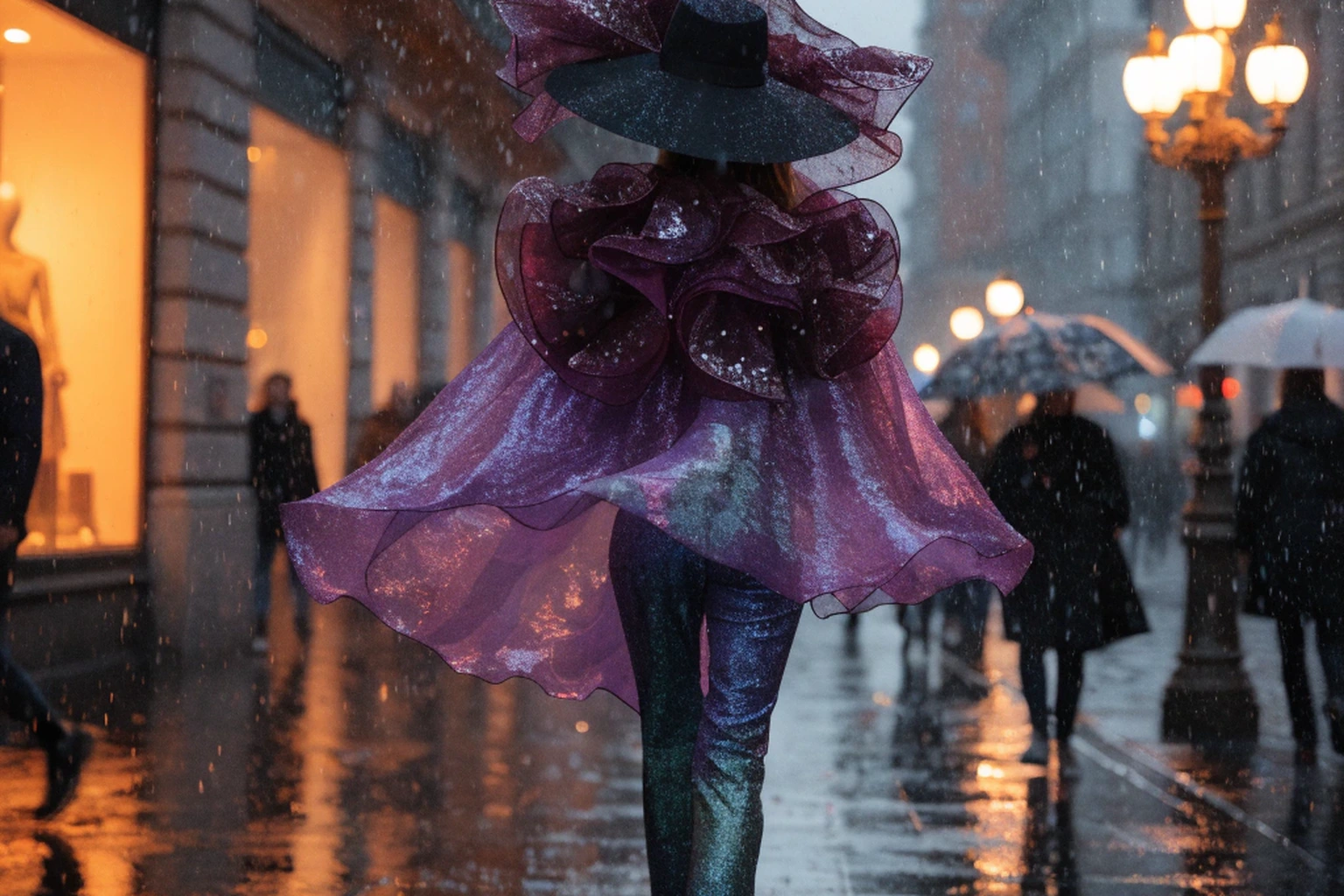
Italian Fashion: Made in Italy
Italy is a country in Europe. It is famous for its fashion. Many good clothes come from Italy. These clothes are 'Made in Italy'.
'Made in Italy' means the clothes have very good quality. The clothes are beautiful and strong. People all over the world like Italian clothes. They are special.
Milan and Florence are famous cities for fashion in Italy. People go there to see and buy new clothes. They wear Italian clothes for work and parties. It is a big industry.
نکته دستوری
الگو: Present Simple 'be' (is/are)
"Italy is a country in Europe."
We use 'is' and 'are' to describe things or state facts in the present. We use 'is' for one thing (a country) and 'are' for more than one thing (clothes).
الگو: Regular Plural Nouns (-s)
"Many good clothes come from Italy."
To talk about more than one noun, we often add '-s' to the end of the word. For example, 'city' becomes 'cities' and 'clothe' becomes 'clothes'.
درک خود را بسنجید
10 سوال · A1 مبتدی · 1 پیشنمایش رایگان
آنچه از این مقاله آموختید را بسنجید. به همه سؤالات پاسخ دهید و XP کسب کنید!
What does 'Made in Italy' mean?
آیا میخواهید آزمون را تمام کنید؟
9 سؤال دیگر منتظر شماست. ثبتنام رایگان کنید تا آزمون کامل را باز کنید و XP کسب کنید!
ثبتنام رایگانقبلاً ثبتنام کردی؟ ورود
جزئیات سؤالات
What does 'Made in Italy' mean?
پاسخ شما:
پاسخ درست: The clothes have good quality
Milan and Florence are famous cities for food.
پاسخ شما:
پاسخ درست: نادرست
What does 'famous' mean?
پاسخ شما:
پاسخ درست: Known by many people
People go there to see and _____ new clothes.
پاسخ شما:
پاسخ درست: buy
Made in Italy: Fashion and History
Italy is famous for beautiful clothes, shoes, and bags. People all over the world love the label "Made in Italy". When you see this label, you know the product is very good. This fashion story started hundreds of years ago. In the past, cities like Florence and Venice were centers for art. Today, they are important places for fashion, too.
Italian fashion is special because of the high quality. Skilled artisans make many luxury things by hand. They use the best leather and soft fabrics. These workers learned their skills from their parents and grandparents. Machines are faster, but handmade products are more beautiful. It takes a long time to make a perfect bag or dress.
Fashion is also very important for money and jobs in Italy. Every year, many people visit Milan for Fashion Week. They watch shows and buy expensive clothes. "Made in Italy" is more than just a name on a shirt. It is a symbol of style, history, and excellent work. Everyone wants to wear a piece of Italian luxury.
نکته دستوری
الگو: Comparatives
"Machines are faster, but handmade products are more beautiful."
We use comparatives to compare two things. For short adjectives, we add '-er' (fast -> faster). For long adjectives, we use 'more' before the word (beautiful -> more beautiful).
الگو: Past Simple
"This fashion story started hundreds of years ago."
We use the Past Simple tense to talk about actions that finished in the past. For regular verbs, we usually add '-ed' to the end of the verb (start -> started).
درک خود را بسنجید
11 سوال · A2 مقدماتی · 1 پیشنمایش رایگان
آنچه از این مقاله آموختید را بسنجید. به همه سؤالات پاسخ دهید و XP کسب کنید!
What does the 'Made in Italy' label mean?
آیا میخواهید آزمون را تمام کنید؟
10 سؤال دیگر منتظر شماست. ثبتنام رایگان کنید تا آزمون کامل را باز کنید و XP کسب کنید!
ثبتنام رایگانقبلاً ثبتنام کردی؟ ورود
جزئیات سؤالات
What does the 'Made in Italy' label mean?
پاسخ شما:
پاسخ درست: The product is very good quality
Florence and Venice are important places for fashion today.
پاسخ شما:
پاسخ درست: درست
What does 'leather' mean?
پاسخ شما:
پاسخ درست: Material made from animal skin
Skilled _____ make many luxury things by hand.
پاسخ شما:
پاسخ درست: artisans
Why is Italian fashion special?
پاسخ شما:
پاسخ درست: It has high quality and history
«ساخت ایتالیا»: نماد جهانی مد، کیفیت و هنر
صنعت مد ایتالیا فراتر از یک بخش اقتصادی ساده است؛ این صنعت یک پدیده فرهنگی جهانی و ستون اصلی هویت این کشور محسوب میشود. برچسب «ساخت ایتالیا» (Made in Italy) در سراسر جهان به معنای کیفیت بالا، ظرافت و صنایع دستی بینظیر شناخته شده است. این برچسب نشاندهنده استانداردی از برتری است که کمتر کشوری میتواند ادعای آن را داشته باشد. این اعتبار و شهرت اتفاقی نیست.
ریشههای این صنعت به قرنها تاریخ بازمیگردد. از دوران رنسانس، شهرهای ایتالیایی مانند فلورانس و ونیز مراکز اصلی هنر، طراحی و تولید بودهاند. در آن زمان، استادکاران ایتالیایی لباسها و پارچههایی با کیفیت استثنایی تولید میکردند که در اروپا بسیار مورد توجه قرار میگرفت. این سنت غنی از مهارت و خلاقیت تا به امروز حفظ شده است.
امروزه، برندهای معروف ایتالیایی مانند گوچی، پرادا، ورساچه و آرمانی در سراسر دنیا شناخته شدهاند و محصولات آنها در فروشگاههای لوکس عرضه میشود. این برندها نه تنها لباسهای لوکس، بلکه کیف، کفش و جواهرات نیز تولید میکنند. هر محصولی که با برچسب «ساخت ایتالیا» عرضه میشود، داستانی از دقت، سنت و نوآوری را با خود دارد. کارخانههای کوچک و کارگاههای خانوادگی نیز نقش مهمی در حفظ این کیفیت و سنت ایفا میکنند؛ آنها اغلب تکنیکهای قدیمی را با طراحیهای مدرن ترکیب کردهاند.
صنعت مد ایتالیا توانسته است جایگاه ویژهای در بازار جهانی به دست آورد. این صنعت نه تنها برای اقتصاد ایتالیا اهمیت زیادی دارد، بلکه به عنوان یک سفیر فرهنگی نیز عمل میکند و زیبایی و خلاقیت ایتالیایی را به دنیا معرفی میکند. بسیاری از طراحان جوان نیز با الهام از این میراث غنی، به دنبال خلق آثار جدیدی هستند که سنت و مدرنیته را در هم میآمیزند. به همین دلیل است که «ساخت ایتالیا» بیش از یک برچسب، یک فلسفه و یک سبک زندگی است که تحسین جهانی را برانگیخته است.
نکته دستوری
الگو: ماضی نقلی (Present Perfect)
"این سنت غنی از مهارت و خلاقیت تا به امروز حفظ شده است."
ماضی نقلی برای بیان کاری استفاده میشود که در گذشته شروع شده و اثر آن تا زمان حال ادامه دارد یا در گذشته انجام شده و نتیجه آن در حال حاضر مهم است. ساختار آن 'بن ماضی + ه + است/اند/ای/اید/ایم' میباشد.
الگو: فعل مجهول (Passive Voice)
"محصولات آنها در فروشگاههای لوکس عرضه میشود."
فعل مجهول زمانی استفاده میشود که فاعل جمله (انجامدهنده کار) مشخص نیست یا اهمیت کمتری نسبت به مفعول (کسی یا چیزی که کار روی آن انجام شده) دارد. ساختار آن 'مفعول + بن ماضی فعل اصلی + شدن (صرف شده)' است.
درک خود را بسنجید
11 سوال · B1 متوسط · 1 پیشنمایش رایگان
آنچه از این مقاله آموختید را بسنجید. به همه سؤالات پاسخ دهید و XP کسب کنید!
برچسب «ساخت ایتالیا» در سراسر جهان به چه معناست؟
آیا میخواهید آزمون را تمام کنید؟
10 سؤال دیگر منتظر شماست. ثبتنام رایگان کنید تا آزمون کامل را باز کنید و XP کسب کنید!
ثبتنام رایگانقبلاً ثبتنام کردی؟ ورود
جزئیات سؤالات
برچسب «ساخت ایتالیا» در سراسر جهان به چه معناست؟
پاسخ شما:
پاسخ درست: کیفیت بالا، ظرافت و صنایع دستی بینظیر
صنعت مد ایتالیا فقط یک بخش اقتصادی ساده است و اهمیت فرهنگی ندارد.
پاسخ شما:
پاسخ درست: نادرست
«شهرت» به چه معناست؟
پاسخ شما:
پاسخ درست: چیزی که مردم درباره یک شخص یا یک چیز فکر میکنند و میگویند.
ریشههای این صنعت به قرنها تاریخ بازمیگردد. از دوران ____، شهرهای ایتالیایی مانند فلورانس و ونیز مراکز اصلی هنر، طراحی و تولید بودهاند.
پاسخ شما:
پاسخ درست: رنسانس
چه چیزهایی در حفظ کیفیت و سنت مد ایتالیا نقش مهمی دارند؟
پاسخ شما:
پاسخ درست: کارخانههای کوچک و کارگاههای خانوادگی
The Global Prestige of 'Made in Italy': More Than Just a Label
The 'Made in Italy' label represents far more than a simple geographical origin; it is a global phenomenon that embodies quality, elegance, and unparalleled craftsmanship. For decades, this designation has been a cornerstone of the Italian economy, distinguishing its products from mass-produced alternatives found in other parts of the world. The roots of this prestige can be traced back to the Renaissance, when Italian city-states like Florence and Venice established themselves as centers of artistic excellence and luxury trade. This historical foundation provided the necessary expertise for the modern fashion industry to flourish.
In the contemporary era, the luxury fashion industry has evolved significantly, yet it remains deeply connected to its cultural heritage. While many nations have shifted toward high-volume, automated production to minimize costs, Italian fashion houses continue to prioritize meticulous artisanal techniques. These skills, which have been passed down through generations of families, ensure that every garment or leather accessory meets a standard of excellence that is remarkably difficult to replicate. Consequently, the industry has successfully maintained its prestige despite the intense pressures of a globalized and highly competitive market.
However, the sector is currently navigating several complex challenges. The rise of fast fashion and the increasing prevalence of counterfeit goods have forced Italian brands to reconsider their long-term strategies. To remain competitive, many companies are now focusing on sustainability and digital transformation, recognizing that modern consumers value ethical production as much as aesthetic beauty. If the industry had not adapted to these shifting modern demands, it might have lost its global relevance. Furthermore, the industry, which contributes significantly to Italy's national GDP, must now balance traditional hand-made methods with innovative, eco-friendly practices to appeal to a new generation of environmentally conscious consumers.
Moreover, the 'Made in Italy' brand is not just about the final product; it is about the narrative of authenticity. This narrative is reinforced by strict regulations that define what can truly be labeled as Italian-made. These legal frameworks help protect the reputation of local artisans against the threat of low-quality imitations. By combining historical artistry with forward-thinking environmental strategies, Italy ensures that its luxury fashion industry continues to lead the global market. As long as this commitment to meticulous quality remains the primary focus, the label will continue to be a benchmark for excellence and a vital part of Italy’s national identity.
نکته دستوری
الگو: The Third Conditional
"If the industry had not adapted to these shifting modern demands, it might have lost its global relevance."
This is used to discuss a hypothetical situation in the past and its imaginary result. It is formed using 'if + past perfect' and 'would/might + have + past participle'.
الگو: Non-defining Relative Clauses
"Furthermore, the industry, which contributes significantly to Italy's national GDP, must now balance traditional hand-made methods with innovative practices."
These clauses provide extra information about a noun that is not essential for identifying it. They are always separated from the rest of the sentence by commas.
الگو: The Passive Voice (Present Perfect)
"These skills, which have been passed down through generations of families, ensure that every garment meets a standard of excellence."
This structure focuses on the action or the object rather than the person performing the action. It is formed with 'have/has + been + past participle'.
درک خود را بسنجید
11 سوال · B2 بالاتر از متوسط · 1 پیشنمایش رایگان
آنچه از این مقاله آموختید را بسنجید. به همه سؤالات پاسخ دهید و XP کسب کنید!
What is the primary focus of the article regarding the 'Made in Italy' label?
آیا میخواهید آزمون را تمام کنید؟
10 سؤال دیگر منتظر شماست. ثبتنام رایگان کنید تا آزمون کامل را باز کنید و XP کسب کنید!
ثبتنام رایگانقبلاً ثبتنام کردی؟ ورود
جزئیات سؤالات
What is the primary focus of the article regarding the 'Made in Italy' label?
پاسخ شما:
پاسخ درست: The global prestige, historical roots, and modern challenges of the industry
Italian fashion houses have mostly replaced artisanal techniques with automated production to reduce costs.
پاسخ شما:
پاسخ درست: نادرست
What does 'counterfeit' mean in the context of the article?
پاسخ شما:
پاسخ درست: A fake or imitation product designed to deceive
The 'Made in Italy' label has been a _____ of the Italian economy for many decades.
پاسخ شما:
پاسخ درست: cornerstone
Why does the text mention the Renaissance?
پاسخ شما:
پاسخ درست: To identify the historical origins of Italy's reputation for luxury and excellence
The Enduring Legacy of 'Made in Italy': A Tapestry of Craftsmanship and Innovation
Rarely has a national label achieved such global resonance as 'Made in Italy'. It serves not merely as an indication of origin, but as a hallmark of unparalleled quality, elegance, and artisanal excellence. While the global fashion industry often chases the ephemeral trends of fast fashion, the Italian approach remains steadfastly rooted in a deep appreciation for longevity and beauty. It is this seamless fusion of heritage and modernity that distinguishes Italian fashion from its international counterparts.
The genesis of this prestige can be traced back to the Renaissance, a period when Italian city-states like Florence, Venice, and Milan became hubs of artistic and cultural flourishing. Had the merchants and guilds of that era not established such rigorous standards for textile production and leatherwork, the modern Italian luxury sector might never have attained its current dominance. Today, this legacy is sustained by a unique industrial structure characterized not by massive conglomerates, but by the proliferation of small and medium-sized family enterprises. These workshops, often clustered in specialized districts—silk in Como, wool in Prato, and leather in Tuscany—ensure that the meticulous attention to detail is passed down through generations.
What truly sets the 'Made in Italy' brand apart is the concept of 'bello e ben fatto'—beautiful and well-made. This philosophy asserts that aesthetics cannot be divorced from quality. The creation of a luxury handbag or a bespoke suit is not viewed as a manufacturing process, but rather as an act of artistic expression. Consequently, the consumer is purchasing not just a product, but a narrative of craftsmanship. However, maintaining this standard is no trivial feat. The high cost of labor and raw materials in Italy poses a significant challenge in a market flooded with cheaper alternatives. Yet, it is precisely this refusal to compromise that solidifies the brand’s reputation. By prioritizing exclusive materials and impeccable finishing, Italian designers command a premium that discerning clients are willing to pay.
Furthermore, the industry is currently undergoing a significant transformation regarding sustainability. No longer is luxury defined solely by opulence; it now encompasses ethical responsibility. Innovative strides are being taken to reduce the environmental footprint of fashion, from the use of organic fibers to the implementation of circular economy models. The integration of green technologies into traditional manufacturing processes demonstrates that tradition need not be an obstacle to progress. On the contrary, the slow-fashion ethos inherent in Italian craftsmanship aligns perfectly with the modern demand for sustainable consumption.
Ultimately, the 'Made in Italy' phenomenon is a testament to the enduring power of culture in economic life. It represents a resistance to the homogenization of global taste, offering instead a celebration of distinctiveness and flair. As the industry looks to the future, its success will depend on its ability to navigate the digital age without losing the human touch that defines it. Only by continuing to honor its storied past while boldly embracing innovation can Italy hope to retain its crown as the undisputed capital of global luxury.
نکته دستوری
الگو: Negative Inversion
"Rarely has a national label achieved such global resonance as 'Made in Italy'."
This pattern places a negative adverbial (Rarely) at the beginning of the sentence for emphasis. The subject and auxiliary verb are inverted ('has a national label' instead of 'a national label has').
الگو: Cleft Sentences
"It is this seamless fusion of heritage and modernity that distinguishes Italian fashion."
Cleft sentences (starting with 'It is' or 'It was') are used to focus attention on a specific part of the sentence. Here, it emphasizes 'this seamless fusion' as the key distinguishing factor.
الگو: Inverted Conditional (Third Conditional)
"Had the merchants and guilds of that era not established such rigorous standards... the modern Italian luxury sector might never have attained its current dominance."
This structure expresses a hypothetical past situation. By omitting 'If' and inverting the subject and auxiliary ('Had the merchants...' instead of 'If the merchants had...'), the tone becomes more formal and literary.
درک خود را بسنجید
12 سوال · C1 پیشرفته · 1 پیشنمایش رایگان
آنچه از این مقاله آموختید را بسنجید. به همه سؤالات پاسخ دهید و XP کسب کنید!
According to the article, what primarily characterizes the industrial structure of Italian fashion?
آیا میخواهید آزمون را تمام کنید؟
11 سؤال دیگر منتظر شماست. ثبتنام رایگان کنید تا آزمون کامل را باز کنید و XP کسب کنید!
ثبتنام رایگانقبلاً ثبتنام کردی؟ ورود
جزئیات سؤالات
According to the article, what primarily characterizes the industrial structure of Italian fashion?
پاسخ شما:
پاسخ درست: A network of small and medium-sized family businesses
The article suggests that Italian fashion prioritizes aesthetics over the quality of construction.
پاسخ شما:
پاسخ درست: نادرست
Which word is closest in meaning to 'ephemeral'?
پاسخ شما:
پاسخ درست: Short-lived
The concept of 'bello e ben fatto' implies that aesthetics cannot be divorced from _____.
پاسخ شما:
پاسخ درست: quality
What historical period is identified as the origin of Italy's reputation for quality?
پاسخ شما:
پاسخ درست: The Renaissance
Select the synonym for 'impeccable'.
پاسخ شما:
پاسخ درست: Flawless
The 'Made in Italy' Paradigm: A Synthesis of Heritage and Haute Couture
The phrase "Made in Italy" transcends a mere indication of geographical origin; it functions as a global signifier of sophisticated elegance, meticulous craftsmanship, and sartorial excellence. Nowhere else in the world is the convergence of cultural heritage and industrial output so inextricably linked. The brand equity associated with this label is not a serendipitous occurrence but rather the result of centuries of refinement, dating back to the Renaissance guilds of Florence and Venice. In that era, the pursuit of beauty was considered a civic duty, and the patronage of the arts by families such as the Medici fostered an environment where aesthetics and commerce were wedded. It is this historical depth that imbues Italian fashion with a gravity that fleeting trends cannot replicate, grounding the industry in a legacy of humanism where the garment is an extension of the individual.
Seldom does one encounter a manufacturing sector that retains such an aura of exclusivity while commanding a significant share of the global market. The Italian fashion industry stands as a formidable anomaly in the modern economic landscape. While much of the world has succumbed to the pressures of mass production and the ephemeral nature of "fast fashion," Italian luxury houses have steadfastly adhered to the philosophy of *bello e ben fatto*—beautiful and well-made. This commitment to quality is the epitome of the Italian approach, prioritizing longevity and material integrity over cost-efficiency. It serves as a bulwark against the disposability of modern consumerism, offering products that are intended to age gracefully rather than become obsolete.
Central to this success is the unique structure of the Italian economy, which relies heavily on distinct industrial districts (*distretti industriali*). Unlike other nations dominated by vast conglomerates, Italy's backbone consists of small and medium-sized enterprises (SMEs), often family-run, that specialize in specific stages of production—be it leather tanning in Tuscany, silk weaving in Como, or wool processing in Biella. This decentralization fosters a competitive yet collaborative environment where specialized knowledge is passed down through generations. Within these clusters, social capital is as vital as financial capital; trust and reputation are the currencies of trade. It is imperative that this artisan tradition be preserved, for it constitutes the intrinsic value of the final product. Without the tacit knowledge of the master craftsman—the manual dexterity that machines cannot duplicate—the luxury item becomes devoid of its soul.
However, the industry is not without its challenges. The juxtaposition of ancient techniques with modern technological demands creates a complex dynamic. Today's fashion houses must navigate the treacherous waters of digitalization and sustainability. There is a growing demand for transparency regarding the provenance of raw materials. Consumers, particularly the younger demographic, are increasingly scrutinizing the environmental impact of their purchases. Consequently, Italian brands are investing heavily in green technologies, striving to prove that luxury and sustainability are not mutually exclusive but can coexist in harmony. Furthermore, the pressure to reduce "time-to-market" challenges the slow, deliberate pace required for true artisanal work, forcing companies to find innovative logistical solutions.
Furthermore, the "Made in Italy" brand faces the threat of counterfeit goods and the dilution of its prestige through globalization. The ubiquity of the brand makes it a prime target for imitation. Despite these hurdles, the sector has demonstrated remarkable resilience. The aesthetic sensibility that permeates Italian culture—from architecture to gastronomy—ensures that fashion remains a vital expression of national identity. It acts as a form of soft power, projecting an image of allure and sophistication onto the world stage, thereby fueling tourism and interest in Italian culture as a whole.
Ultimately, the enduring appeal of Italian fashion lies in its ability to innovate without discarding its past. It serves as a paragon of how tradition can fuel modernity. As the world becomes increasingly homogenized, the distinct character of Italian design stands out as a testament to human creativity. It is not merely about clothing; it is about a lifestyle, a way of perceiving the world through a lens of beauty. Whether it is a bespoke suit or a handcrafted leather bag, the object carries with it the weight of history and the promise of excellence.
نکته دستوری
الگو: Negative Inversion
"Seldom does one encounter a manufacturing sector that retains such an aura of exclusivity while commanding a significant share of the global market."
This pattern places a negative adverb (Seldom) at the beginning of the sentence for emphasis. When this happens, the auxiliary verb (does) and the subject (one) are inverted (switched places), adding a formal and dramatic tone.
الگو: Mandative Subjunctive
"It is imperative that this artisan tradition be preserved, for it constitutes the intrinsic value of the final product."
The subjunctive mood is used here after an adjective expressing urgency (imperative). The verb 'be' is in its base form, regardless of the subject, to express necessity or importance.
الگو: Participle Clauses
"The brand equity associated with this label is not a serendipitous occurrence but rather the result of centuries of refinement, dating back to the Renaissance guilds of Florence..."
The phrase 'dating back to...' is a participle clause acting as an adjective. It modifies 'centuries of refinement' efficiently, avoiding the need for a longer relative clause like 'which date back to'.
درک خود را بسنجید
12 سوال · C2 تسلط · 1 پیشنمایش رایگان
آنچه از این مقاله آموختید را بسنجید. به همه سؤالات پاسخ دهید و XP کسب کنید!
According to the article, what primarily distinguishes the Italian fashion industry's economic structure from other nations?
آیا میخواهید آزمون را تمام کنید؟
11 سؤال دیگر منتظر شماست. ثبتنام رایگان کنید تا آزمون کامل را باز کنید و XP کسب کنید!
ثبتنام رایگانقبلاً ثبتنام کردی؟ ورود
جزئیات سؤالات
According to the article, what primarily distinguishes the Italian fashion industry's economic structure from other nations?
پاسخ شما:
پاسخ درست: A reliance on decentralized networks of small and medium-sized enterprises
The article suggests that Italian fashion houses have largely abandoned the 'bello e ben fatto' philosophy in favor of fast fashion trends.
پاسخ شما:
پاسخ درست: نادرست
Which word is an antonym for 'lasting for a long time' in the context of fashion trends?
پاسخ شما:
پاسخ درست: Ephemeral
The text states that consumers are increasingly demanding transparency regarding the __________ of raw materials.
پاسخ شما:
پاسخ درست: provenance
What role does the 'Made in Italy' label play in international relations, as implied by the text?
پاسخ شما:
پاسخ درست: It functions as a form of soft power.
The article mentions that the pursuit of beauty in the Renaissance was considered a civic __________.
پاسخ شما:
پاسخ درست: duty

