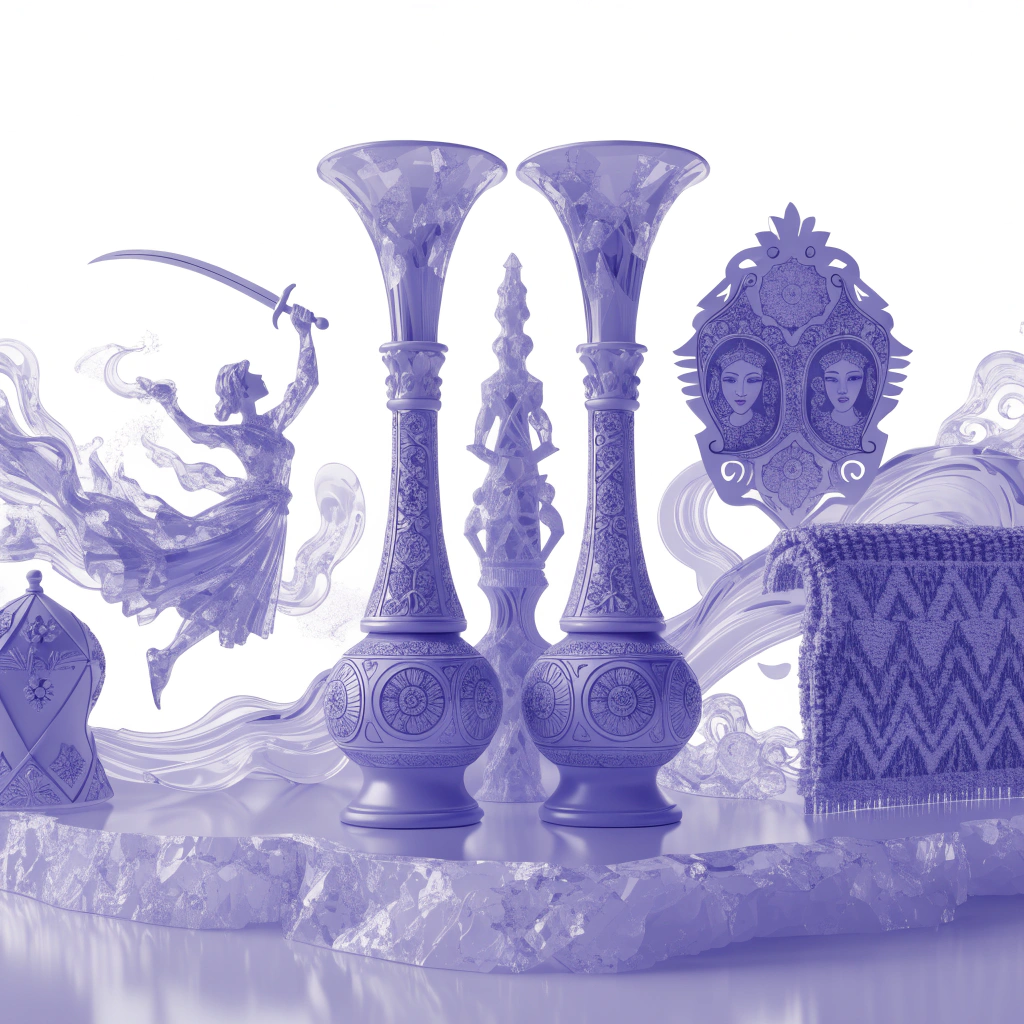
Al-Mizmar: A Traditional Saudi Dance
Al-Mizmar is a famous dance from Saudi Arabia. People in the Hijaz region love this tradition. They dance at weddings and during Eid. It is a big celebration.
In Al-Mizmar, men stand in a large circle. They use long sticks and dance to the rhythm. There are big drums and loud chanting. It is very energetic and happy.
Al-Mizmar is an important part of Saudi culture. It is special because it brings friends and family together. Today, many people still enjoy this beautiful art form in Jeddah and Mecca.
문법 스포트라이트
패턴: Present Simple (to be)
"Al-Mizmar is a famous dance from Saudi Arabia."
We use 'is' with singular subjects like 'Al-Mizmar' to state facts. This is the most common way to describe things in English.
패턴: Present Simple (Action Verbs)
"They use long sticks and dance to the rhythm."
For plural subjects like 'they', we use the base form of the verb. We use this to talk about regular habits or traditions.
이해도를 테스트하세요
10 질문 · A1 초급 · 무료 미리보기 1회
이 기사에서 배운 내용을 테스트하세요. 모든 질문에 답하여 XP를 획득하세요!
Where is Al-Mizmar from?
문제별 결과
Where is Al-Mizmar from?
내 답변:
정답: The Hijaz region
People use long sticks in the Al-Mizmar dance.
내 답변:
정답: 참
What is a 'wedding'?
내 답변:
정답: A party for a marriage
In Al-Mizmar, men stand in a large _____.
내 답변:
정답: circle
Al-Mizmar: A Traditional Dance of Saudi Arabia
Al-Mizmar is a famous and traditional dance from the Hijaz region in western Saudi Arabia. You can see this performance in big cities like Jeddah, Mecca, and Medina. People usually perform Al-Mizmar at weddings and during Eid holidays. It is a very energetic and happy celebration.
In the performance, men stand in two long lines. They use large sticks and move to the sound of drums. Although "Mizmar" is the name of a woodwind instrument, the dance is more about the drums and the singing. The performers wear traditional white clothes and move together in a circle.
Al-Mizmar is more popular today than in the past because many young people want to learn it. In 2016, UNESCO said that Al-Mizmar is an important part of world culture. It is a great way for people to show their history and feel proud of their traditions. It is louder and more exciting than other dances.
문법 스포트라이트
패턴: Comparatives (more + adjective + than)
"Al-Mizmar is more popular today than in the past."
Use 'more' before long adjectives and 'than' after them to compare two things. This shows how something has changed or how it is different from another thing.
패턴: Past Simple
"In 2016, UNESCO said that Al-Mizmar is an important part of world culture."
The past simple is used for actions that started and finished in the past. For irregular verbs like 'say', the form changes to 'said'.
이해도를 테스트하세요
11 질문 · A2 초등급 · 무료 미리보기 1회
이 기사에서 배운 내용을 테스트하세요. 모든 질문에 답하여 XP를 획득하세요!
Where can you see Al-Mizmar performances?
문제별 결과
Where can you see Al-Mizmar performances?
내 답변:
정답: In Hijaz cities like Jeddah and Mecca
Al-Mizmar is a very quiet and slow dance.
내 답변:
정답: 거짓
What is an instrument?
내 답변:
정답: An object used to make music
In the performance, men use large _____ to dance.
내 답변:
정답: sticks
When do people usually perform Al-Mizmar?
내 답변:
정답: At weddings and Eid holidays
Al-Mizmar: The Heartbeat of Hijazi Tradition
Al-Mizmar is a vibrant and energetic traditional performance that has been part of Saudi Arabian culture for centuries. It originates from the Hijaz region, which includes historic cities like Mecca, Medina, Jeddah, and Yanbu. Although the word 'mizmar' often refers to a woodwind instrument in other Arabic contexts, this specific performance is actually centered on drumming, chanting, and a rhythmic stick dance.
The performance is usually led by a group of men who stand in two rows. They clap their hands and sing traditional songs while drummers provide a powerful rhythm. In the middle, dancers use long sticks to perform coordinated movements that represent strength and unity. The sticks, which are called 'shawn', are moved gracefully to the beat of the drums. This art form has been passed down through generations, and it remains a symbol of pride for many families in western Saudi Arabia.
Al-Mizmar is traditionally performed during celebratory events, such as weddings and religious holidays like Eid. It is also common at large social gatherings where community members come together to celebrate. Because of its historical importance, Al-Mizmar was officially recognized by UNESCO as an Intangible Cultural Heritage of Humanity in 2016.
In recent years, the performance has been showcased at international festivals to share Saudi heritage with the world. It is a beautiful example of how traditional arts can survive in the modern era. People who watch Al-Mizmar are often amazed by the energy and the deep sense of community that the dancers demonstrate. It is not just a dance; it is a celebration of identity and history.
문법 스포트라이트
패턴: Present Perfect
"Al-Mizmar is a vibrant and energetic traditional performance that has been part of Saudi Arabian culture for centuries."
The present perfect (has + past participle) is used here to describe an action or state that started in the past and continues to the present.
패턴: Passive Voice
"Al-Mizmar was officially recognized by UNESCO as an Intangible Cultural Heritage of Humanity in 2016."
The passive voice (was + past participle) is used when the focus is on the action or the thing being acted upon, rather than the person performing the action.
이해도를 테스트하세요
11 질문 · B1 중급 · 무료 미리보기 1회
이 기사에서 배운 내용을 테스트하세요. 모든 질문에 답하여 XP를 획득하세요!
Which region of Saudi Arabia does Al-Mizmar originate from?
문제별 결과
Which region of Saudi Arabia does Al-Mizmar originate from?
내 답변:
정답: Hijaz
In the Hijazi context, Al-Mizmar is primarily a performance involving woodwind instruments.
내 답변:
정답: 거짓
What does 'heritage' mean?
내 답변:
정답: Cultural traditions passed down through time
Al-Mizmar was officially _____ by UNESCO in 2016.
내 답변:
정답: recognized
When is Al-Mizmar traditionally performed?
내 답변:
정답: At weddings and religious holidays like Eid
Al-Mizmar: The Rhythmic Pulse of the Hijaz
In the western reaches of Saudi Arabia, specifically within the historic cities of Mecca, Medina, Jeddah, and Yanbu, there exists a cultural manifestation that transcends mere entertainment. Known as Al-Mizmar, this traditional performance encompasses drumming, chanting, and a rhythmic stick dance that has defined the social fabric of the Hijaz for centuries. Although the term 'mizmar' typically refers to a woodwind instrument in Arabic, in the context of this specific Hijazi tradition, it predominantly describes the energetic dance performed by men during festive occasions.
The performance is characterized by an intricate display of skill and coordination. A group of men, usually dressed in traditional white thobes and turbans, gather in a large circle. At the center, a fire is often lit, around which the dancers move with bamboo sticks known as 'shouna.' The rhythm is provided by a variety of drums, most notably the 'mirwas' and 'naqrazan.' As the drumming intensifies, participants chant 'Tawshih,' which are poetic verses that often praise the Prophet Muhammad or celebrate themes of bravery and hospitality. This rhythmic resonance creates an atmosphere of shared joy and collective identity.
Al-Mizmar is not merely a display of physical prowess; it is a symbol of solidarity. Historically, it was a way for tribes and families to demonstrate their unity and resolve conflicts. Today, it remains a staple at weddings, national holidays, and religious celebrations such as Eid. The art form has been recognized by UNESCO as an intangible cultural heritage of humanity, ensuring that its legacy is preserved for future generations.
Scholars have been observing how Al-Mizmar has been evolving over time, yet it maintains its core essence. While modern musical influences have occasionally been integrated, the traditional drumming patterns remain the heartbeat of the performance. By participating in Al-Mizmar, younger generations continue to unify their past with the present, ensuring that this vibrant Hijazi tradition continues to flourish in the 21st century.
문법 스포트라이트
패턴: Relative Clauses
"...a rhythmic stick dance that has defined the social fabric of the Hijaz for centuries."
A relative clause provides essential or extra information about a noun. Here, 'that' introduces a defining relative clause to specify which stick dance is being discussed.
패턴: Passive Voice
"The performance is characterized by an intricate display of skill and coordination."
The passive voice is used to focus on the action or the subject being acted upon rather than who is performing the action. It is formed using the verb 'to be' and the past participle.
패턴: Present Perfect Continuous
"Scholars have been observing how Al-Mizmar has been evolving over time..."
This tense describes an action that started in the past and is still continuing. It emphasizes the duration and the ongoing nature of the observation and evolution.
이해도를 테스트하세요
11 질문 · B2 중상급 · 무료 미리보기 1회
이 기사에서 배운 내용을 테스트하세요. 모든 질문에 답하여 XP를 획득하세요!
Where is Al-Mizmar traditionally performed?
문제별 결과
Where is Al-Mizmar traditionally performed?
내 답변:
정답: Hijaz Region
In the context of the Hijazi tradition, Al-Mizmar always refers to a woodwind instrument.
내 답변:
정답: 거짓
What does 'solidarity' mean?
내 답변:
정답: Agreement and support between group members
The art form has been recognized by _____ as an intangible cultural heritage of humanity.
내 답변:
정답: UNESCO
What are 'shouna' in the context of the Al-Mizmar dance?
내 답변:
정답: Bamboo sticks
The Rhythmic Resonance of Al-Mizmar: A Tapestry of Hijazi Identity
Rarely does one encounter a cultural phenomenon as intrinsically woven into the socio-historical fabric of the Hijaz as Al-Mizmar. While the term itself might ostensibly suggest a focus on the woodwind instrument common elsewhere in the Arab world, in the context of Jeddah, Mecca, and Medina, it signifies a multifaceted performance of drumming, chanting, and rhythmic stick-work. It is this unique nomenclature that often puzzles the uninitiated, yet for the locals, the sound of the drums evokes an immediate sense of communal solidarity. The performance is not merely a display of physical prowess but a sophisticated manifestation of social history, traditionally serving as a rite of passage and a celebratory staple at weddings and religious festivities.
Central to the aesthetic of Al-Mizmar is the rhythmic cadence provided by the 'mirwas' and 'touba' drums. The auditory landscape created by these instruments serves as the foundation upon which the dancers, wielding bamboo sticks known as 'al-mitrag', engage in a mock-battle that is more about grace and coordination than actual conflict. It is the rhythmic interplay between the drummers and the dancers that serves as the heartbeat of the performance, requiring a nuanced understanding of timing and mutual respect. The participants, often arranged in two facing lines or a circle, engage in a call-and-response chant that reinforces the collective identity of the group.
The categorization of Al-Mizmar as a UNESCO Intangible Cultural Heritage reflects a global recognition of its historical depth and its role in fostering social cohesion. In an era where globalization threatens to homogenize local traditions, the preservation of such an evocative art form becomes a matter of cultural sovereignty. Al-Mizmar transcends generational divides, with elders passing down the intricate footwork and vocal nuances to the youth, ensuring that the spirit of the Hijaz remains vibrant. Never before has the cultural landscape of the region been so meticulously documented, yet the true essence of Al-Mizmar can only be grasped through the visceral experience of the live performance.
Furthermore, the dance serves as a platform for an egalitarian expression of camaraderie. Regardless of social standing, the 'tous'—the performance circle—welcomes all who respect the discipline of the art. This inclusivity is underpinned by the shared history of the Hijazi cities, which have long been melting pots of diverse influences. Consequently, Al-Mizmar is not a static relic of the past but a living, breathing entity that continues to adapt. The modernization of Saudi Arabia has not eclipsed these traditions; rather, it has provided new stages for their display, from national festivals to international cultural exchanges. Ultimately, Al-Mizmar stands as a testament to the resilience of Hijazi heritage, proving that the most profound expressions of identity are often found in the rhythmic strike of a drum and the synchronized movement of a community.
문법 스포트라이트
패턴: Negative Inversion
"Rarely does one encounter a cultural phenomenon as intrinsically woven into the socio-historical fabric of the Hijaz as Al-Mizmar."
Inversion is used for emphasis by placing a negative or restrictive adverb at the start of the sentence, followed by the auxiliary verb and then the subject.
패턴: Cleft Sentence
"It is the rhythmic interplay between the drummers and the dancers that serves as the heartbeat of the performance."
Cleft sentences use 'It is/was... that' to focus on a specific part of the sentence, highlighting the 'rhythmic interplay' as the most important element.
패턴: Nominalisation
"The categorization of Al-Mizmar as a UNESCO Intangible Cultural Heritage reflects a global recognition of its historical depth."
Nominalisation turns verbs (categorize, recognize) into nouns (categorization, recognition) to create a more formal, academic, and dense tone suitable for C1 writing.
이해도를 테스트하세요
12 질문 · C1 고급 · 무료 미리보기 1회
이 기사에서 배운 내용을 테스트하세요. 모든 질문에 답하여 XP를 획득하세요!
What is a common source of confusion regarding the name 'Al-Mizmar'?
문제별 결과
What is a common source of confusion regarding the name 'Al-Mizmar'?
내 답변:
정답: It usually denotes a woodwind instrument elsewhere.
The 'al-mitrag' are bamboo sticks used for actual combat during the performance.
내 답변:
정답: 거짓
What does 'evocative' mean in the context of the article?
내 답변:
정답: Bringing strong images or memories to mind.
The dance serves as a platform for an egalitarian expression of _____.
내 답변:
정답: camaraderie
According to the text, how has modernization affected Al-Mizmar?
내 답변:
정답: It has provided new venues and stages for the performance.
The performance includes a call-and-response chant.
내 답변:
정답: 참
The Al-Mizmar: A Rhythmic Cartography of Hijazi Identity and Social Cohesion
The Al-Mizmar performance, a quintessential expression of the Hijaz region in western Saudi Arabia, serves as a profound testament to the socio-cultural tapestry of cities such as Mecca, Medina, Jeddah, and Yanbu. While the eponymous woodwind instrument—the mizmar—is synonymous with various folk traditions across the Levant and North Africa, its role in the Hijazi context is curiously peripheral, if not entirely absent. Instead, the performance is a percussion-heavy spectacle, defined by the rhythmic resonance of the 'tows' drums and the coordinated choreography of a stick dance. To the uninitiated observer, it might appear merely as a celebratory display; yet, for the practitioner, it represents an intricate liturgy of communal values, chivalry, and historical resilience.
Central to the Al-Mizmar is the concept of 'muru’ah'—a traditional notion of manliness and virtue. The practitioners, often clad in the white 'thobe' and 'ghutra', brandish long bamboo sticks, known as 'mizmars', weaving through a circle of fire or a central clearing. This choreography is not a haphazard flailing of limbs but a calculated dialogue between participants, wherein each movement underscores a shared understanding of space and hierarchy. Were one to scrutinize the rhythmic structure, one would find it remarkably complex, relying on a call-and-response mechanism that bridges the gap between the individual and the collective. The chanting, frequently steeped in poetic verses that extol the virtues of the Prophet or celebrate local lineage, acts as a linguistic glue, binding the disparate elements of the performance into a cohesive whole.
Historically, Al-Mizmar was a mechanism for conflict resolution and social bonding. In an era where tribal affiliations dictated the social order, the performance provided a neutral ground—a ritualized space where grievances could be sublimated through the rhythmic clashing of sticks. Not only does it function as a celebratory rite during weddings and Eids, but it also serves as a pedagogical tool, passing down ancestral lore to younger generations. The nomenclature may be misleading, but the essence of the dance remains an immutable vestige of Hijazi heritage.
In recent years, the Al-Mizmar has undergone a process of institutionalization, culminating in its 2016 inscription on the UNESCO Representative List of the Intangible Cultural Heritage of Humanity. This recognition has sparked a scholarly discourse regarding the preservation of such traditions in the face of rapid modernization. It is imperative that the state and local communities collaborate to ensure that the Al-Mizmar does not become a mere museum piece, devoid of its visceral energy. Some critics argue that the formalization of the dance might dilute its organic nature; however, it is arguably this very institutional support that provides the necessary infrastructure for its survival.
Furthermore, the Al-Mizmar's egalitarian nature is noteworthy. While it originated within specific urban and tribal milieus, it has evolved into a symbol of a broader Hijazi identity that transcends socioeconomic boundaries. The cacophony of the drums, the smell of burning wood, and the rhythmic chanting create an ephemeral atmosphere that is both ancient and contemporary. It remains a vibrant, living tradition, reflecting the dynamism of a society that is simultaneously rooted in its past and hurtling toward a globalized future. Lest the nuances of this art form be lost to the annals of history, a concerted effort in documentation and practice must be maintained, ensuring that the rhythmic heartbeat of the Hijaz continues to resonate for centuries to come.
문법 스포트라이트
패턴: Mixed Conditionals and Inversion
"Were one to scrutinize the rhythmic structure, one would find it remarkably complex..."
This is a formal alternative to 'If one were to scrutinize'. The inversion of the subject and auxiliary verb creates a more scholarly and hypothetical tone, typical of C2 academic writing.
패턴: Negative Inversion
"Not only does it function as a celebratory rite during weddings and Eids, but it also serves as a pedagogical tool..."
When a sentence starts with a negative or restrictive adverbial like 'Not only', the auxiliary verb comes before the subject. This structure is used for emphasis.
패턴: Subjunctive Mood for Necessity
"It is imperative that the state and local communities collaborate to ensure..."
The present subjunctive (base form 'collaborate') is used after adjectives of necessity like 'imperative', 'essential', or 'crucial' to express a requirement or strong suggestion.
이해도를 테스트하세요
12 질문 · C2 마스터 · 무료 미리보기 1회
이 기사에서 배운 내용을 테스트하세요. 모든 질문에 답하여 XP를 획득하세요!
What is the primary paradox regarding the Al-Mizmar performance mentioned in the text?
문제별 결과
What is the primary paradox regarding the Al-Mizmar performance mentioned in the text?
내 답변:
정답: Its name refers to a woodwind instrument that is largely absent from the actual performance.
The Al-Mizmar was historically used as a method to resolve tribal conflicts.
내 답변:
정답: 참
Which word describes a trace of something that is no longer fully present?
내 답변:
정답: Vestige
The concept of _____ is central to the dance, representing traditional virtues of manliness.
내 답변:
정답: muru’ah
According to the article, what did the 2016 UNESCO inscription signify?
내 답변:
정답: The institutionalization and international recognition of the dance as cultural heritage.
The article suggests that the Al-Mizmar is an elitist art form limited to upper-class urbanites.
내 답변:
정답: 거짓

