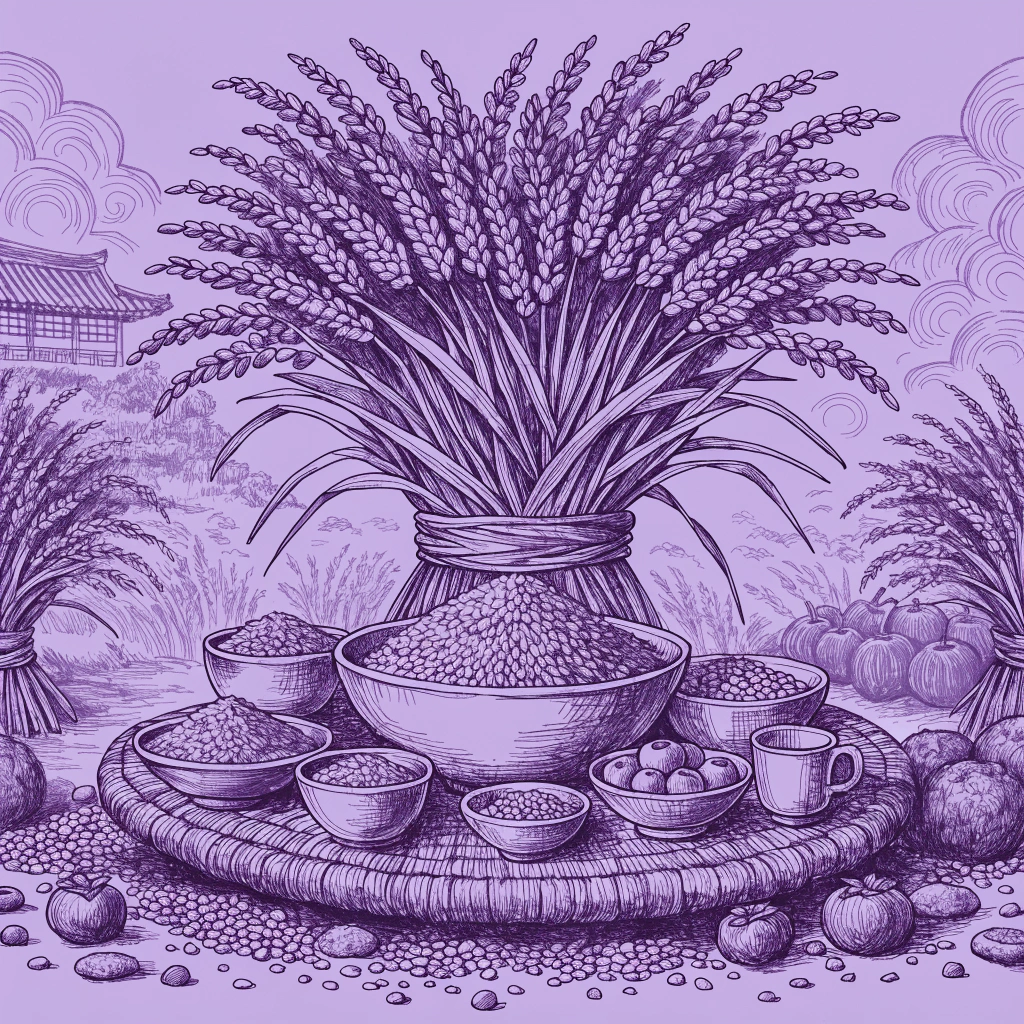
한국의 명절: 추석
안녕하세요! 오늘은 한국의 큰 명절, 추석에 대해 이야기해요. 추석은 가족이 함께 모이는 날입니다. 한국 사람들은 추석에 고향 집으로 갑니다. 가족들은 할머니, 할아버지도 만납니다. 모두 함께 맛있는 음식을 먹습니다. 송편은 추석에 먹는 특별한 음식입니다. 우리는 맛있는 음식을 먹고, 즐거운 이야기도 합니다. 추석은 가을에 있습니다. 우리는 한 해 동안 감사한 마음을 전합니다. 추석은 정말 행복한 시간입니다.
문법 스포트라이트
패턴: -은/는 (Topic Marker)
"추석은 가족이 함께 모이는 날입니다."
이 문법은 문장에서 무엇에 대해 이야기하는지 알려줍니다. 받침이 없으면 '-는', 받침이 있으면 '-은'을 씁니다.
패턴: -ㅂ니다/-습니다 (Formal ending)
"가족들은 맛있는 음식을 함께 먹습니다."
이 문법은 문장을 정중하게 끝낼 때 사용합니다. 동사나 형용사의 어간에 붙습니다. 받침이 없으면 '-ㅂ니다', 받침이 있으면 '-습니다'를 씁니다.
이해도를 테스트하세요
10 질문 · A1 초급 · 무료 미리보기 1회
이 기사에서 배운 내용을 테스트하세요. 모든 질문에 답하여 XP를 획득하세요!
추석에 가족들은 무엇을 합니까?
문제별 결과
추석에 가족들은 무엇을 합니까?
내 답변:
정답: 함께 모입니다
송편은 추석에 먹는 특별한 음식입니다.
내 답변:
정답: 참
'고향'은 무슨 뜻입니까?
내 답변:
정답: 내가 태어난 곳
추석은 (____)에 있습니다.
내 답변:
정답: 가을
Chuseok: The Big Harvest Festival in Korea
Chuseok is a very important holiday in South Korea. People often call it "Korean Thanksgiving." It happens in autumn when the moon is big and round. During this time, families travel to their hometowns to see each other. The roads are very busy because everyone wants to be with their parents and relatives.
Long ago, people started Chuseok to say thank you for the harvest. Today, families still follow old traditions. They perform "Charye," which is a special ceremony for their ancestors. They also visit the graves of their family members to clean them and show respect. This tradition is called "Beolcho."
Food is better during Chuseok because there are many special dishes. People eat "Songpyeon," which are small rice cakes. These cakes are sweeter than normal rice cakes. Families also play traditional games and look at the full moon together. It is a happy and busy time for everyone in the country.
문법 스포트라이트
패턴: Comparatives
"These cakes are sweeter than normal rice cakes."
We use 'adjective + er + than' to compare two things. For short adjectives like 'sweet', we add 'er' to show one thing has more of a quality than the other.
패턴: Past Simple
"Long ago, people started Chuseok to say thank you for the harvest."
We use the past simple to talk about finished actions in the past. For regular verbs like 'start', we add 'ed' to the end of the word.
이해도를 테스트하세요
11 질문 · A2 초등급 · 무료 미리보기 1회
이 기사에서 배운 내용을 테스트하세요. 모든 질문에 답하여 XP를 획득하세요!
When does Chuseok happen?
문제별 결과
When does Chuseok happen?
내 답변:
정답: In the autumn
Families visit the graves of their ancestors during Chuseok.
내 답변:
정답: 참
What does 'harvest' mean?
내 답변:
정답: Collecting food from fields
People eat ______, which are small rice cakes.
내 답변:
정답: Songpyeon
Why are the roads busy during Chuseok?
내 답변:
정답: Because families are traveling to their hometowns
한국의 큰 명절, 추석 이야기
추석은 한국에서 설날과 함께 가장 중요한 전통 명절 중 하나입니다. 매년 음력 8월 15일, 보름달이 뜨는 날에 지내며, 보통 며칠간의 연휴가 주어집니다. 이 시기는 농부들이 한 해 동안 열심히 일하여 곡식과 과일을 수확한 후입니다. 그래서 추석은 온 가족이 함께 모여 조상님께 감사를 표하고, 풍성한 수확을 축하하는 날입니다. 고향을 방문하는 사람들이 많아서 고속도로가 매우 복잡해지기도 합니다.
추석의 기원은 아주 오래되었습니다. 신라 시대의 '가배'라는 직물 짜기 대회나 고대 사회의 수확 의식에서 시작되었다고 여겨집니다. 추석의 대표적인 풍습으로는 차례, 성묘, 벌초가 있습니다. 차례는 추석 아침에 조상님께 새로 수확한 음식으로 차례상을 차리고 감사하는 의식입니다. 조상님들은 이 음식을 드시고 후손들에게 복을 주신다고 믿기 때문에, 정성껏 준비됩니다.
성묘는 가족들이 조상님의 묘를 찾아뵙는 것입니다. 묘를 깨끗하게 하고 절을 올리며 가족의 안녕을 기원합니다. 성묘를 가기 전에 묘 주변의 풀을 깎아 단정하게 하는 것을 벌초라고 합니다. 이 모든 풍습은 조상에 대한 존경과 가족의 화목을 중요하게 생각하는 한국 사람들의 마음을 보여줍니다. 추석에는 특별히 송편과 같은 맛있는 전통 음식을 함께 만들어 먹습니다. 햅쌀로 만든 송편은 추석의 대표 음식이며, 가족들이 둘러앉아 함께 만드는 과정 자체가 즐거운 추억이 됩니다. 온 가족이 모여 이야기를 나누고 전통 놀이를 하며 즐거운 시간을 보냅니다. 바쁜 일상 속에서도 가족의 소중함을 다시 한번 느끼는 의미 있는 명절입니다.
문법 스포트라이트
패턴: ~다고 여겨지다 (Passive Voice)
"신라 시대의 '가배'라는 직물 짜기 대회나 고대 사회의 수확 의식에서 시작되었다고 여겨집니다."
이 문법은 어떤 사실이나 의견이 다른 사람들에게 그렇게 생각되거나 받아들여질 때 사용합니다. 동사 뒤에 '-다고 여겨지다' 형태로 씁니다. '여겨지다'는 '생각되다'와 비슷한 의미로 쓰입니다.
패턴: ~는 것 (Nominalization)
"묘 주변의 풀을 깎아 단정하게 하는 것을 벌초라고 합니다."
동사나 형용사를 명사처럼 만들 때 사용하는 표현입니다. '동사/형용사 + -는 것' 형태로 쓰며, 특정 행동이나 상태를 가리키거나 설명할 때 유용합니다. 주어나 목적어로 사용될 수 있습니다.
이해도를 테스트하세요
11 질문 · B1 중급 · 무료 미리보기 1회
이 기사에서 배운 내용을 테스트하세요. 모든 질문에 답하여 XP를 획득하세요!
추석은 언제 지내는 명절입니까?
문제별 결과
추석은 언제 지내는 명절입니까?
내 답변:
정답: 음력 8월 15일
추석에는 조상님께 감사를 표하고 수확을 축하합니다.
내 답변:
정답: 참
'벌초'의 의미는 무엇입니까?
내 답변:
정답: 조상님의 묘 주변 풀을 깎는 일
추석은 한국에서 설날과 함께 가장 중요한 전통 ____ 중 하나입니다.
내 답변:
정답: 명절
추석의 대표적인 풍습이 아닌 것은 무엇입니까?
내 답변:
정답: 김장
한국의 추석: 풍요로운 수확과 감사의 전통
추석은 설날과 더불어 한국의 가장 중요한 명절 중 하나로, 한가위라고도 불립니다. 음력 8월 15일, 보름달이 뜨는 가을에 찾아오는 추석은 수확의 계절에 조상들께 감사를 표하고 가족의 화합을 다지는 의미 있는 시간입니다. 농경 사회였던 과거부터 사람들은 한 해 동안 수고하여 얻은 곡식과 과일을 조상과 이웃과 나누며 풍요를 기원했습니다.
추석의 기원은 매우 오래되었습니다. 고대 사회의 수확 감사 의례에서 비롯되었을 것으로 추정되며, 신라 시대의 '가배'라는 직물 짜기 대회에서 유래했다는 설도 있습니다. 가배는 왕이 두 편으로 나누어 직물 짜기 시합을 시키고, 진 편이 이긴 편에게 음식을 대접하며 잔치를 벌이던 풍습이었습니다. 이러한 고대의 풍습은 오늘날의 추석 명절로 발전하여 현재까지 이어지고 있습니다.
추석의 주요 전통 의례로는 크게 세 가지를 들 수 있습니다. 첫째, ‘차례’는 추석 아침에 햇곡식과 햇과일로 정성껏 차린 음식을 조상님께 올리는 제사입니다. 이는 조상에 대한 존경과 감사의 마음을 표현하는 중요한 의례입니다. 둘째, ‘성묘’는 가족들이 함께 조상의 묘를 찾아가 돌보는 행위입니다. 묘 주변의 풀을 베어 깨끗이 하는 ‘벌초’ 또한 성묘의 중요한 부분입니다. 이처럼 성묘와 벌초를 통해 후손들은 조상의 은덕을 기리고 가족의 유대감을 강화합니다.
현대에 이르러 추석은 더욱 풍성한 가족 행사로 자리매김했습니다. 온 가족이 모여 송편을 빚고, 함께 식사를 하며 담소를 나눕니다. 특히, 추석을 맞아 고향을 방문하는 ‘귀성객’들로 인해 고속도로는 긴 행렬을 이루며, 이는 추석의 또 다른 풍경이 되었습니다. 도시 생활에 지친 이들에게 추석은 고향의 정취를 느끼고 가족과 소중한 추억을 만드는 기회가 됩니다.
이처럼 추석은 단순한 휴일이 아니라, 조상에 대한 감사와 가족 사랑을 되새기며 공동체의 가치를 확인하는 중요한 문화적 의미를 지닙니다. 급변하는 사회 속에서도 변함없이 이어지는 추석의 전통은 한국인의 정체성을 형성하는 데 큰 역할을 하고 있습니다. 앞으로도 추석은 세대를 이어 한국인의 삶 속에 깊이 뿌리내린 소중한 명절로 남을 것입니다.
문법 스포트라이트
패턴: -음에 따라
"농경 사회였던 과거부터 사람들은 한 해 동안 수고하여 얻은 곡식과 과일을 조상과 이웃과 나누며 풍요를 기원했습니다."
이 문법은 앞 절의 상황이나 조건이 변화하거나 진행됨에 따라 뒤 절의 내용도 함께 변화하거나 진행될 때 사용합니다. 동사나 형용사 어간 뒤에 붙어 '—에 따라서'와 같은 의미를 나타내며, 인과 관계나 동시적인 변화를 표현할 때 주로 쓰입니다.
패턴: -고자
"추석은 수확의 계절에 조상들께 감사를 표하고 가족의 화합을 다지는 의미 있는 시간입니다."
이 문법은 어떤 행동을 하려는 의도나 목적을 나타낼 때 사용합니다. 동사 어간 뒤에 붙어 '-하기 위하여' 또는 '-하려고'와 비슷한 의미로 쓰이며, 주로 글에서 공식적이거나 계획적인 목적을 설명할 때 자주 사용됩니다.
패턴: -을 뿐만 아니라
"추석은 단순한 휴일이 아니라, 조상에 대한 감사와 가족 사랑을 되새기며 공동체의 가치를 확인하는 중요한 문화적 의미를 지닙니다."
이 문법은 앞 내용 외에 뒤의 내용까지 더해진다는 의미를 나타냅니다. '뿐만 아니라'는 '그것뿐만 아니라' 또는 '그것 외에도'라는 뜻으로, 동사, 형용사 뒤에 '-을/ㄹ 뿐만 아니라' 형태로 사용되어 두 가지 이상의 사실을 나열할 때 쓰입니다.
이해도를 테스트하세요
11 질문 · B2 중상급 · 무료 미리보기 1회
이 기사에서 배운 내용을 테스트하세요. 모든 질문에 답하여 XP를 획득하세요!
추석의 가장 중요한 의미로 볼 수 없는 것은 무엇입니까?
문제별 결과
추석의 가장 중요한 의미로 볼 수 없는 것은 무엇입니까?
내 답변:
정답: 새로운 농사 기술을 배우는 시간
추석은 음력 8월 15일, 보름달이 뜨는 가을에 찾아오는 명절입니다.
내 답변:
정답: 참
'성묘'의 정확한 의미는 무엇입니까?
내 답변:
정답: 조상의 묘를 찾아가 돌보는 행위
추석 아침에 햇곡식과 햇과일로 정성껏 차린 음식을 조상님께 올리는 제사를 ____라고 합니다.
내 답변:
정답: 차례
신라 시대의 '가배'는 어떤 풍습이었습니까?
내 답변:
정답: 두 편으로 나누어 직물 짜기 시합을 벌이는 풍습
The Cultural Resonance of Chuseok: Navigating Tradition in a Modernizing Korea
As the autumnal equinox approaches, South Korea undergoes a profound transformation. The frenetic pace of metropolitan life yields to a collective migration of millions, an exodus driven by the cultural gravity of Chuseok. Often simplified as 'Korean Thanksgiving,' this festival is a complex synthesis of agrarian gratitude and ancestral veneration. It is not merely a break from the corporate grind; it is a temporal bridge connecting the hyper-modern present with the vestiges of a shamanistic past.
The origins of Chuseok are steeped in the annals of the Silla Kingdom, where weaving competitions known as Gabae fostered community spirit. Yet, the holiday’s contemporary manifestation centers on three core rituals: Charye, Seongmyo, and Beolcho. Charye involves the meticulous preparation of a sacrificial table, an offering to the spirits of the deceased. Through the performance of these rites, families affirm their lineage and continuity. Never before has the preservation of such traditions felt so poignant as in today’s fragmented society.
However, the celebration is not without its internal contradictions. The dichotomy between traditional expectations and modern lifestyles has sparked significant debate. For many, the holiday represents an arduous commitment, involving hours of gridlocked traffic and the heavy burden of domestic labor, which historically fell disproportionately on women. It is this perceived lack of an egalitarian structure that has led younger generations to seek a redefinition of the holiday. Some opt for overseas travel, while others prefer quiet solitude, eschewing the collective propensity for large family gatherings.
Despite these shifts, the cultural resonance of Chuseok remains undeniable. The act of Seongmyo—visiting ancestral graves—serves as a physical manifestation of filial piety. The meticulous grooming of the burial sites, or Beolcho, is seen as a duty that transcends mere maintenance; it is an act of remembrance. While the ephemeral nature of modern trends often threatens to erode historical identity, Chuseok stands as a testament to the enduring power of heritage. Ultimately, the evolution of Chuseok reflects a broader societal synthesis, where the ancient and the avant-garde coexist in a delicate, albeit sometimes tense, equilibrium.
문법 스포트라이트
패턴: Negative Inversion
"Never before has the preservation of such traditions felt so poignant as in today’s fragmented society."
This structure is used for emphasis by placing a negative adverbial at the beginning of the sentence, followed by the auxiliary verb before the subject.
패턴: Cleft Sentences
"It is this perceived lack of an egalitarian structure that has led younger generations to seek a redefinition of the holiday."
A cleft sentence focuses on a specific part of the sentence (the subject here) to emphasize it, typically starting with 'It is/was'.
패턴: Nominalisation
"The meticulous grooming of the burial sites, or Beolcho, is seen as a duty..."
Nominalisation turns verbs or adjectives into nouns (grooming, maintenance, remembrance) to create a more formal, academic, and objective tone.
이해도를 테스트하세요
12 질문 · C1 고급 · 무료 미리보기 1회
이 기사에서 배운 내용을 테스트하세요. 모든 질문에 답하여 XP를 획득하세요!
What does the author suggest about the modern perception of Chuseok among younger generations?
문제별 결과
What does the author suggest about the modern perception of Chuseok among younger generations?
내 답변:
정답: They are increasingly seeking to redefine or avoid traditional obligations.
The Gabae weaving competitions were a feature of the Silla Kingdom's harvest celebrations.
내 답변:
정답: 참
What does 'vestiges' mean in the context of the article?
내 답변:
정답: Remaining traces of the past
The ritual of visiting ancestral graves to show filial piety is known as _____.
내 답변:
정답: Seongmyo
Which term is used to describe the division between traditional expectations and modern lifestyles?
내 답변:
정답: Dichotomy
The article argues that Chuseok is losing its cultural resonance entirely.
내 답변:
정답: 거짓
The Sociocultural Tapestry of Chuseok: Ancestral Veneration in the Modern Korean Epoch
Rarely does a contemporary society exhibit such a profound adherence to ancestral mandates as does South Korea during the autumnal equinox. Chuseok, colloquially termed 'Korean Thanksgiving,' represents more than a mere harvest festival; it is a complex nexus of Confucian ethics, shamanistic remnants, and the inexorable shift from an agrarian past to a hyper-technological present. Were one to scrutinize the historical underpinnings of this three-day hiatus, one would find its genesis in the 'Gabae' weaving competitions of the Silla Kingdom, a period characterized by a burgeoning national identity that sought to harmonize communal labor with spiritual gratitude. This historical provenance is not merely academic; it informs the very fabric of modern Korean identity, providing a sense of continuity amidst the rapid flux of globalization.
Central to the observance is the ritual of 'Charye,' an intricate ceremony offered to deceased ancestors. This practice underscores the concept of filial piety, which remains the bedrock of Korean social cohesion. It is imperative that the ritual table be set with meticulous precision, for the arrangement of the 'Songpyeon'—crescent-shaped rice cakes—and other offerings is dictated by ancient geomantic principles and regional traditions. The meticulous nature of these preparations suggests that the efficacy of the ritual is tied to the sincerity of the participants. Furthermore, the practices of 'Seongmyo'—the visitation of ancestral graves—and 'Beolcho'—the clearing of weeds from the burial sites—serve as physical manifestations of the link between the living and the dead. In the silence of the hillside graveyards, the noise of the metropolis is momentarily eclipsed by a solemn, syncretic reverence.
However, the contemporary manifestation of Chuseok is not without its internal tensions. As the populace gravitates toward urban centers, the logistical nightmare of the mass exodus from Seoul often precipitates what is known as 'holiday syndrome.' This phenomenon encapsulates the physical and psychological toll of domestic labor and the societal pressure to maintain traditional appearances. One might posit that the holiday’s survival is contingent upon its ability to adapt to egalitarian shifts, particularly regarding the gendered division of labor during these festivities. In many households, the traditional hegemony of male-led rites is being subtly challenged by a younger generation that seeks a more equitable distribution of the burdensome culinary tasks. It is suggested that for Chuseok to remain relevant, it must undergo a metamorphosis that balances ancient piety with modern sensibilities.
Despite these pressures, the quintessence of Chuseok remains its emphasis on commensality—the act of eating together. The sharing of the harvest bounty is a symbolic reaffirmation of communal bonds in an era where digital isolation is increasingly pervasive. The cyclical return to the family hearth provides a necessary, albeit fleeting, sense of belonging. It is through this commensality that the ephemeral nature of the harvest is transformed into a lasting social glue. Thus, Chuseok persists not merely as a relic of a bygone era, but as a dynamic, evolving testament to the enduring power of family and the collective memory of a nation that refuses to let its past be entirely subsumed by the future.
문법 스포트라이트
패턴: Negative Inversion
"Rarely does a contemporary society exhibit such a profound adherence to ancestral mandates as does South Korea during the autumnal equinox."
Inversion is used after negative or restrictive adverbs like 'rarely' to add emphasis. The auxiliary verb 'does' precedes the subject 'a contemporary society' to create a formal, scholarly tone.
패턴: Inverted Conditional (Subjunctive)
"Were one to scrutinize the historical underpinnings of this three-day hiatus, one would find its genesis in the 'Gabae' weaving competitions."
This is a formal alternative to 'If one were to...'. It uses the subjunctive 'were' in an inverted structure to express a hypothetical or scholarly condition in the present or future.
패턴: Subjunctive with Adjectives of Importance
"It is imperative that the ritual table be set with meticulous precision."
After adjectives like 'imperative,' 'essential,' or 'crucial,' the subjunctive mood (base form of the verb 'be') is used to express necessity or importance.
이해도를 테스트하세요
12 질문 · C2 마스터 · 무료 미리보기 1회
이 기사에서 배운 내용을 테스트하세요. 모든 질문에 답하여 XP를 획득하세요!
What does the author suggest about the historical 'Gabae' weaving competitions?
문제별 결과
What does the author suggest about the historical 'Gabae' weaving competitions?
내 답변:
정답: They formed a basis for national identity and communal gratitude.
The author argues that Chuseok is a static tradition that has remained unchanged by globalization.
내 답변:
정답: 거짓
Which word describes the practice of eating together to strengthen social bonds?
내 답변:
정답: Commensality
The concept of _____ piety is described as the bedrock of Korean social cohesion.
내 답변:
정답: filial
What is the 'holiday syndrome' mentioned in the text?
내 답변:
정답: The stress and labor associated with maintaining traditional holiday expectations.
The text suggests that younger generations are challenging traditional gender roles in holiday preparations.
내 답변:
정답: 참
즐거운 추석 이야기
안녕하세요. 이것은 한국의 큰 명절, 추석 이야기입니다. 추석은 아주 중요한 날입니다. 많은 가족이 함께 모입니다. 집에서 맛있는 음식을 먹습니다. 송편을 먹어요. 과일도 많아요. 이야기도 합니다. 웃음도 많아요. 가족과 함께하는 시간은 정말 좋습니다. 모두가 행복합니다. 추석은 즐거운 명절입니다. 감사합니다.
문법 스포트라이트
패턴: 명사 + 입니다 (Noun + imnida)
"추석은 한국의 큰 명절입니다."
명사 뒤에 붙어서 '무엇이다'라고 말할 때 사용합니다. 아주 기본적인 표현입니다. 예: '저는 학생입니다.'
이해도를 테스트하세요
9 질문 · A0 프리비기너 · 무료 미리보기 1회
이 기사에서 배운 내용을 테스트하세요. 모든 질문에 답하여 XP를 획득하세요!
추석은 무엇입니까?
문제별 결과
추석은 무엇입니까?
내 답변:
정답: 한국 명절
추석에 가족이 함께 모입니까?
내 답변:
정답: 참
가족이 맛있는 _____을/를 먹습니다.
내 답변:
정답: 음식

