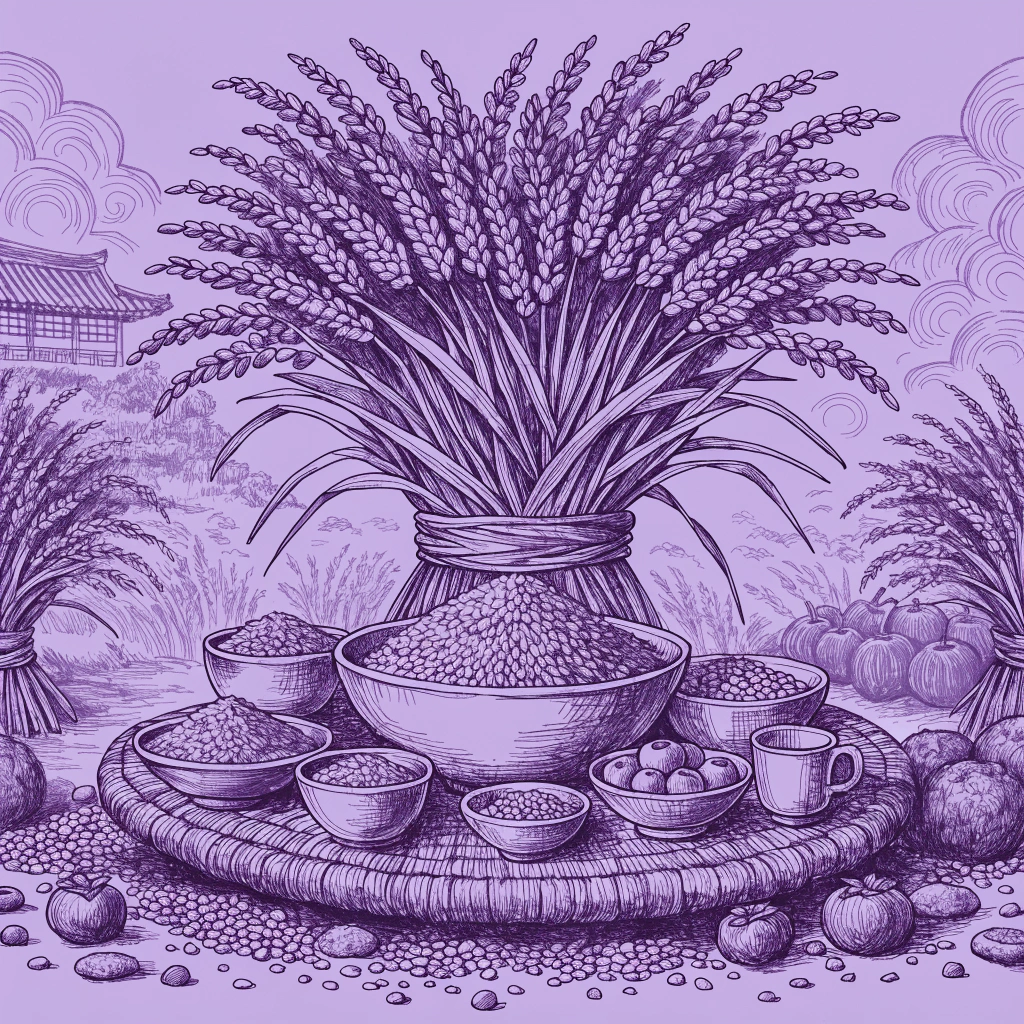
Chuseok: A Special Holiday in Korea
Chuseok is a big holiday in South Korea. People call it Korean Thanksgiving. It is in the autumn when the moon is big and round. Families meet and eat together. Many people travel to their hometowns to see their parents.
They eat special food. The most famous food is Songpyeon. These are small rice cakes. They are sweet and very tasty. Families also visit the graves of their grandparents. They clean the area and show respect. Chuseok is a very happy and important time for everyone in Korea.
文法スポットライト
パターン: Present Simple (to be)
"Chuseok is a big holiday in South Korea."
We use 'is' with singular subjects to describe facts or states. In this sentence, it describes what Chuseok is.
パターン: Present Simple (plural verbs)
"Families meet and eat together."
When the subject is plural (Families), we use the base form of the verb (meet, eat). We do not add 's' to the verb.
理解度をチェック
10 問 · A1 初級 · 無料プレビュー 1回
この記事で学んだことをテストしよう。全問正解してXPを獲得!
Where do people celebrate Chuseok?
問題の内訳
Where do people celebrate Chuseok?
あなたの回答:
正解: South Korea
People eat rice cakes called Songpyeon during Chuseok.
あなたの回答:
正解: 正しい
What does 'autumn' mean?
あなたの回答:
正解: The season between summer and winter
Many people travel to their _____ to see their parents.
あなたの回答:
正解: hometowns
Chuseok: The Big Harvest Festival in Korea
Chuseok is a very important holiday in South Korea. People often call it "Korean Thanksgiving." It happens in autumn when the moon is big and round. During this time, families travel to their hometowns to see each other. The roads are very busy because everyone wants to be with their parents and relatives.
Long ago, people started Chuseok to say thank you for the harvest. Today, families still follow old traditions. They perform "Charye," which is a special ceremony for their ancestors. They also visit the graves of their family members to clean them and show respect. This tradition is called "Beolcho."
Food is better during Chuseok because there are many special dishes. People eat "Songpyeon," which are small rice cakes. These cakes are sweeter than normal rice cakes. Families also play traditional games and look at the full moon together. It is a happy and busy time for everyone in the country.
文法スポットライト
パターン: Comparatives
"These cakes are sweeter than normal rice cakes."
We use 'adjective + er + than' to compare two things. For short adjectives like 'sweet', we add 'er' to show one thing has more of a quality than the other.
パターン: Past Simple
"Long ago, people started Chuseok to say thank you for the harvest."
We use the past simple to talk about finished actions in the past. For regular verbs like 'start', we add 'ed' to the end of the word.
理解度をチェック
11 問 · A2 初級 · 無料プレビュー 1回
この記事で学んだことをテストしよう。全問正解してXPを獲得!
When does Chuseok happen?
問題の内訳
When does Chuseok happen?
あなたの回答:
正解: In the autumn
Families visit the graves of their ancestors during Chuseok.
あなたの回答:
正解: 正しい
What does 'harvest' mean?
あなたの回答:
正解: Collecting food from fields
People eat ______, which are small rice cakes.
あなたの回答:
正解: Songpyeon
Why are the roads busy during Chuseok?
あなたの回答:
正解: Because families are traveling to their hometowns
韓国の秋の感謝祭:チュソクについて知ろう!
韓国には、家族や親戚が集まる大切な祝日が二つあります。その一つが、旧暦の8月15日に行われる「チュソク」です。チュソクは、日本のお盆やアメリカの感謝祭に似た、韓国で最も重要な伝統的な祝日の一つとして知られています。この日は、秋の収穫を祝い、祖先に感謝を伝えるための特別な時です。
チュソクの時期になると、多くの韓国人が故郷へ帰省します。そのため、高速道路はとても混雑します。家族が集まると、みんなで一緒に様々な伝統的な行事を行います。例えば、「チャレ」という祖先への感謝を捧げる儀式があります。これは、新しく収穫された穀物や果物を供え物として用意し、家族が順番にお辞儀をするものです。また、「ソンミョ」と「ボルチョ」も大切な習慣です。ソンミョは家族みんなで先祖のお墓を訪れることで、ボルチョはお墓の周りの草をきれいにすることです。これらの行事を通じて、家族の絆が深められています。
チュソクには、特別な食べ物もたくさんあります。その中でも特に有名なのが「ソンピョン」です。ソンピョンは、米粉で作られた小さなお餅で、中にはごまや豆、栗などが入っています。家族みんなでソンピョンを作る時間は、チュソクの楽しい思い出の一つです。この祝日は、昔から続く伝統を守り、家族の大切さを再確認する貴重な機会となっています。
文法スポットライト
パターン: 受身形(〜られます/〜されます)
"チュソクは、韓国で最も重要な伝統的な祝日の一つとして知られています。"
動詞の受身形は、「〜られる」「〜される」の形で、主語が何かを「される」ことを表します。この例では「知られています」のように、広く認識されている状態を説明するのに使われます。動詞のグループによって形が変わります。
パターン: 名詞を修飾する文(関係節)
"家族や親戚が集まる大切な祝日が二つあります。"
動詞の普通形やイ形容詞、ナ形容詞、名詞+だの普通形が、その後に続く名詞を詳しく説明する働きをします。この例では「家族や親戚が集まる」という文が「大切な祝日」という名詞を修飾し、どのような祝日かを具体的に示しています。
理解度をチェック
11 問 · B1 中級 · 無料プレビュー 1回
この記事で学んだことをテストしよう。全問正解してXPを獲得!
チュソクは、主にどのような目的で行われる祝日ですか?
問題の内訳
チュソクは、主にどのような目的で行われる祝日ですか?
あなたの回答:
正解: 秋の収穫を祝い、祖先に感謝するため
チュソクの時期には、多くの人が故郷へ帰省するため、高速道路が混雑します。
あなたの回答:
正解: 正しい
「ソンピョン」とは何ですか?
あなたの回答:
正解: チュソクの時に食べる、米粉で作られた小さなお餅
「チャレ」は、新しく収穫された穀物や果物を供え物として用意し、家族が順番に_____をする儀式です。
あなたの回答:
正解: お辞儀
記事によると、チュソクは日本のお盆と何に似ていますか?
あなたの回答:
正解: 感謝祭の祝い方
韓国の伝統行事「秋夕(チュソク)」に迫る:豊かな収穫を祝う家族の絆
韓国には、旧正月である「ソルラル」と並び、国民にとって最も重要な伝統的な祝日の一つとして「秋夕(チュソク)」があります。毎年、陰暦の8月15日、つまり満月の夜に当たるこの日は、家族が集まり、その年の豊かな収穫に感謝を捧げる大切な時期とされています。日本のお盆やアメリカの感謝祭に似た側面を持つ秋夕は、単なる休日以上の深い文化的意味合いを持つのです。
秋夕の起源は古く、新羅時代にまで遡ると言われています。当時は「嘉俳(カベ)」と呼ばれる織物競争が行われ、勝者には食料が与えられたという記録が残されています。また、古代のシャーマニズム的な収穫祭に由来するという説もあり、自然の恵みに感謝する精神が根底にあることが伺えます。このような歴史的背景が、現代の秋夕の習慣に色濃く反映されているのです。
秋夕の主要な伝統は、主に三つに分けられます。一つ目は「茶礼(チャレ)」と呼ばれる先祖供養の儀式です。これは、家族が正装し、新しく収穫した穀物や果物、そして特別な料理を供え、先祖に感謝と敬意を表するものです。二つ目は「省墓(ソンミョ)」で、家族全員で先祖の墓を訪れ、墓を清掃します。そして三つ目は「伐草(ボルチョ)」で、墓周辺の雑草を刈り取り、手入れをする作業を指します。これらの習慣を通じて、韓国の人々は祖先とのつながりを再確認し、家族の絆を深めます。
秋夕に欠かせない食べ物としては、「ソンピョン(松餅)」が挙げられます。これは、新米を粉にして作られる半月型の餅で、中に小豆や栗、ゴマなどの餡が詰められています。家族が一緒にソンピョンを作ることは、秋夕の重要な風習の一つであり、その形や味に家族の願いが込められます。その他にも、新しく収穫されたばかりの新鮮な果物や野菜、伝統的な肉料理などが食卓を彩ります。
また、秋夕には様々な伝統的な遊びも楽しまれます。例えば、「カンガンスルレ」と呼ばれる女性たちが手をつないで歌いながら踊る円舞や、男性たちが力比べをする「シルム(韓国相撲)」などが有名です。これらの活動は、共同体の結びつきを強め、祝祭の雰囲気を盛り上げます。
このように、秋夕は単なる祝日ではなく、家族の集まり、祖先への敬意、豊かな収穫への感謝、そして共同体の絆を象徴する、韓国文化の根幹をなす行事です。現代社会においても、その精神は大切に受け継がれており、韓国の人々にとって一年で最も心温まる時期の一つと言えるでしょう。
文法スポットライト
パターン: 〜と並び(と ならび)
"韓国には、旧正月である「ソルラル」と並び、国民にとって最も重要な伝統的な祝日の一つとして「秋夕(チュソク)」があります。"
「Aと並びB」は、「Aと同じくらい重要であるB」や「Aと並んでBも同様である」という意味を表す表現です。AとBが同等の立場や重要性を持つことを示します。
パターン: 〜にまで遡る(に まで さかのぼる)
"秋夕の起源は古く、新羅時代にまで遡ると言われています。"
「〜にまで遡る」は、ある事柄の起源や歴史が、非常に古い時代や特定の時点までたどれることを強調する際に使われます。「〜まで」で限界点を示し、「遡る」で過去へ戻る動きを表します。
パターン: 〜を象徴する(を しょうちょうする)
"秋夕は単なる祝日ではなく、家族の集まり、祖先への敬意、豊かな収穫への感謝、そして共同体の絆を象徴する、韓国文化の根幹をなす行事です。"
「AはBを象徴する」は、AがBの抽象的な概念や意味を具体的に表していることを示す表現です。AがBの代表的なものやシンボルであることを意味します。
理解度をチェック
11 問 · B2 中上級 · 無料プレビュー 1回
この記事で学んだことをテストしよう。全問正解してXPを獲得!
秋夕は、韓国でどの祝日と並んで最も重要だとされていますか?
問題の内訳
秋夕は、韓国でどの祝日と並んで最も重要だとされていますか?
あなたの回答:
正解: ソルラル
秋夕は、毎年陰暦の8月15日、満月の夜に当たります。
あなたの回答:
正解: 正しい
「先祖供養の儀式」を意味する秋夕の伝統は何ですか?
あなたの回答:
正解: 茶礼(チャレ)
秋夕に家族が一緒に作る半月型の餅は、「_____」と呼ばれます。
あなたの回答:
正解: ソンピョン
秋夕の起源の一つとして、新羅時代に何が行われていたと記事に書かれていますか?
あなたの回答:
正解: 織物競争
The Cultural Resonance of Chuseok: Navigating Tradition in a Modernizing Korea
As the autumnal equinox approaches, South Korea undergoes a profound transformation. The frenetic pace of metropolitan life yields to a collective migration of millions, an exodus driven by the cultural gravity of Chuseok. Often simplified as 'Korean Thanksgiving,' this festival is a complex synthesis of agrarian gratitude and ancestral veneration. It is not merely a break from the corporate grind; it is a temporal bridge connecting the hyper-modern present with the vestiges of a shamanistic past.
The origins of Chuseok are steeped in the annals of the Silla Kingdom, where weaving competitions known as Gabae fostered community spirit. Yet, the holiday’s contemporary manifestation centers on three core rituals: Charye, Seongmyo, and Beolcho. Charye involves the meticulous preparation of a sacrificial table, an offering to the spirits of the deceased. Through the performance of these rites, families affirm their lineage and continuity. Never before has the preservation of such traditions felt so poignant as in today’s fragmented society.
However, the celebration is not without its internal contradictions. The dichotomy between traditional expectations and modern lifestyles has sparked significant debate. For many, the holiday represents an arduous commitment, involving hours of gridlocked traffic and the heavy burden of domestic labor, which historically fell disproportionately on women. It is this perceived lack of an egalitarian structure that has led younger generations to seek a redefinition of the holiday. Some opt for overseas travel, while others prefer quiet solitude, eschewing the collective propensity for large family gatherings.
Despite these shifts, the cultural resonance of Chuseok remains undeniable. The act of Seongmyo—visiting ancestral graves—serves as a physical manifestation of filial piety. The meticulous grooming of the burial sites, or Beolcho, is seen as a duty that transcends mere maintenance; it is an act of remembrance. While the ephemeral nature of modern trends often threatens to erode historical identity, Chuseok stands as a testament to the enduring power of heritage. Ultimately, the evolution of Chuseok reflects a broader societal synthesis, where the ancient and the avant-garde coexist in a delicate, albeit sometimes tense, equilibrium.
文法スポットライト
パターン: Negative Inversion
"Never before has the preservation of such traditions felt so poignant as in today’s fragmented society."
This structure is used for emphasis by placing a negative adverbial at the beginning of the sentence, followed by the auxiliary verb before the subject.
パターン: Cleft Sentences
"It is this perceived lack of an egalitarian structure that has led younger generations to seek a redefinition of the holiday."
A cleft sentence focuses on a specific part of the sentence (the subject here) to emphasize it, typically starting with 'It is/was'.
パターン: Nominalisation
"The meticulous grooming of the burial sites, or Beolcho, is seen as a duty..."
Nominalisation turns verbs or adjectives into nouns (grooming, maintenance, remembrance) to create a more formal, academic, and objective tone.
理解度をチェック
12 問 · C1 上級 · 無料プレビュー 1回
この記事で学んだことをテストしよう。全問正解してXPを獲得!
What does the author suggest about the modern perception of Chuseok among younger generations?
問題の内訳
What does the author suggest about the modern perception of Chuseok among younger generations?
あなたの回答:
正解: They are increasingly seeking to redefine or avoid traditional obligations.
The Gabae weaving competitions were a feature of the Silla Kingdom's harvest celebrations.
あなたの回答:
正解: 正しい
What does 'vestiges' mean in the context of the article?
あなたの回答:
正解: Remaining traces of the past
The ritual of visiting ancestral graves to show filial piety is known as _____.
あなたの回答:
正解: Seongmyo
Which term is used to describe the division between traditional expectations and modern lifestyles?
あなたの回答:
正解: Dichotomy
The article argues that Chuseok is losing its cultural resonance entirely.
あなたの回答:
正解: 間違い
The Sociocultural Tapestry of Chuseok: Ancestral Veneration in the Modern Korean Epoch
Rarely does a contemporary society exhibit such a profound adherence to ancestral mandates as does South Korea during the autumnal equinox. Chuseok, colloquially termed 'Korean Thanksgiving,' represents more than a mere harvest festival; it is a complex nexus of Confucian ethics, shamanistic remnants, and the inexorable shift from an agrarian past to a hyper-technological present. Were one to scrutinize the historical underpinnings of this three-day hiatus, one would find its genesis in the 'Gabae' weaving competitions of the Silla Kingdom, a period characterized by a burgeoning national identity that sought to harmonize communal labor with spiritual gratitude. This historical provenance is not merely academic; it informs the very fabric of modern Korean identity, providing a sense of continuity amidst the rapid flux of globalization.
Central to the observance is the ritual of 'Charye,' an intricate ceremony offered to deceased ancestors. This practice underscores the concept of filial piety, which remains the bedrock of Korean social cohesion. It is imperative that the ritual table be set with meticulous precision, for the arrangement of the 'Songpyeon'—crescent-shaped rice cakes—and other offerings is dictated by ancient geomantic principles and regional traditions. The meticulous nature of these preparations suggests that the efficacy of the ritual is tied to the sincerity of the participants. Furthermore, the practices of 'Seongmyo'—the visitation of ancestral graves—and 'Beolcho'—the clearing of weeds from the burial sites—serve as physical manifestations of the link between the living and the dead. In the silence of the hillside graveyards, the noise of the metropolis is momentarily eclipsed by a solemn, syncretic reverence.
However, the contemporary manifestation of Chuseok is not without its internal tensions. As the populace gravitates toward urban centers, the logistical nightmare of the mass exodus from Seoul often precipitates what is known as 'holiday syndrome.' This phenomenon encapsulates the physical and psychological toll of domestic labor and the societal pressure to maintain traditional appearances. One might posit that the holiday’s survival is contingent upon its ability to adapt to egalitarian shifts, particularly regarding the gendered division of labor during these festivities. In many households, the traditional hegemony of male-led rites is being subtly challenged by a younger generation that seeks a more equitable distribution of the burdensome culinary tasks. It is suggested that for Chuseok to remain relevant, it must undergo a metamorphosis that balances ancient piety with modern sensibilities.
Despite these pressures, the quintessence of Chuseok remains its emphasis on commensality—the act of eating together. The sharing of the harvest bounty is a symbolic reaffirmation of communal bonds in an era where digital isolation is increasingly pervasive. The cyclical return to the family hearth provides a necessary, albeit fleeting, sense of belonging. It is through this commensality that the ephemeral nature of the harvest is transformed into a lasting social glue. Thus, Chuseok persists not merely as a relic of a bygone era, but as a dynamic, evolving testament to the enduring power of family and the collective memory of a nation that refuses to let its past be entirely subsumed by the future.
文法スポットライト
パターン: Negative Inversion
"Rarely does a contemporary society exhibit such a profound adherence to ancestral mandates as does South Korea during the autumnal equinox."
Inversion is used after negative or restrictive adverbs like 'rarely' to add emphasis. The auxiliary verb 'does' precedes the subject 'a contemporary society' to create a formal, scholarly tone.
パターン: Inverted Conditional (Subjunctive)
"Were one to scrutinize the historical underpinnings of this three-day hiatus, one would find its genesis in the 'Gabae' weaving competitions."
This is a formal alternative to 'If one were to...'. It uses the subjunctive 'were' in an inverted structure to express a hypothetical or scholarly condition in the present or future.
パターン: Subjunctive with Adjectives of Importance
"It is imperative that the ritual table be set with meticulous precision."
After adjectives like 'imperative,' 'essential,' or 'crucial,' the subjunctive mood (base form of the verb 'be') is used to express necessity or importance.
理解度をチェック
12 問 · C2 マスター · 無料プレビュー 1回
この記事で学んだことをテストしよう。全問正解してXPを獲得!
What does the author suggest about the historical 'Gabae' weaving competitions?
問題の内訳
What does the author suggest about the historical 'Gabae' weaving competitions?
あなたの回答:
正解: They formed a basis for national identity and communal gratitude.
The author argues that Chuseok is a static tradition that has remained unchanged by globalization.
あなたの回答:
正解: 間違い
Which word describes the practice of eating together to strengthen social bonds?
あなたの回答:
正解: Commensality
The concept of _____ piety is described as the bedrock of Korean social cohesion.
あなたの回答:
正解: filial
What is the 'holiday syndrome' mentioned in the text?
あなたの回答:
正解: The stress and labor associated with maintaining traditional holiday expectations.
The text suggests that younger generations are challenging traditional gender roles in holiday preparations.
あなたの回答:
正解: 正しい

