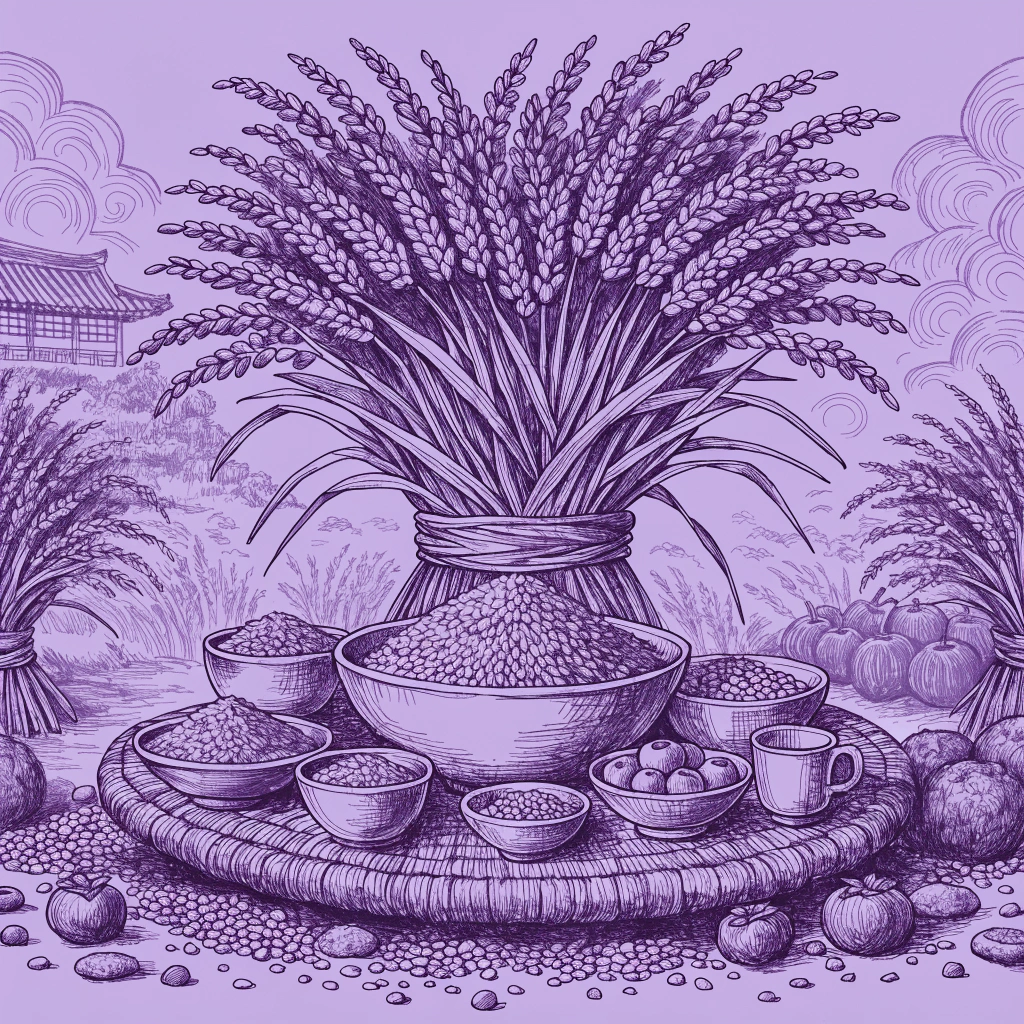
چوسوک: جشن شکرگزاری در کره جنوبی
«چوسوک» یک تعطیلات بسیار مهم در کشور کره جنوبی است. این تعطیلات مانند جشن شکرگزاری است. در این روز، خانوادهها با هم جمع میشوند. آنها برای برداشت خوب محصولات کشاورزی شکر میکنند. مردم غذای سنتی و خاص میخورند. آنها به دیدار بزرگان خانواده میروند. بچهها با هم بازی میکنند و میخندند. این یک زمان شاد و خاص برای همه است. چوسوک در فصل پاییز است. مردم در این روز لباسهای زیبا میپوشند. این تعطیلات یک جشن بزرگ و سنتی است. مردم از این روز لذت میبرند.
نکته دستوری
الگو: فعل «است» (To be - singular)
"«چوسوک» یک تعطیلات بسیار مهم در کشور کره جنوبی **است**."
فعل «است» به معنی «هست» است. ما از «است» برای صحبت کردن در مورد چیزی یا کسی استفاده میکنیم. برای مثال، «این سیب قرمز است.»
الگو: حال ساده (Simple Present Tense)
"خانوادهها با هم جمع **میشوند**."
ما از حال ساده برای صحبت کردن درباره کارهای روزمره یا کارهایی که همیشه اتفاق میافتند، استفاده میکنیم. برای ساختن آن، «می-» را قبل از ریشه فعل میآوریم و شناسه را به آن اضافه میکنیم.
درک خود را بسنجید
10 سوال · A1 مبتدی · 1 پیشنمایش رایگان
آنچه از این مقاله آموختید را بسنجید. به همه سؤالات پاسخ دهید و XP کسب کنید!
«چوسوک» کجاست؟
آیا میخواهید آزمون را تمام کنید؟
9 سؤال دیگر منتظر شماست. ثبتنام رایگان کنید تا آزمون کامل را باز کنید و XP کسب کنید!
ثبتنام رایگانقبلاً ثبتنام کردی؟ ورود
جزئیات سؤالات
«چوسوک» کجاست؟
پاسخ شما:
پاسخ درست: کره جنوبی
خانوادهها در چوسوک با هم جمع نمیشوند.
پاسخ شما:
پاسخ درست: نادرست
«شکر» یعنی چه؟
پاسخ شما:
پاسخ درست: تشکر
چوسوک در فصل ______ است.
پاسخ شما:
پاسخ درست: پاییز
چوسوک: جشن شکرگزاری در کره جنوبی
چوسوک یک جشن بسیار مهم در کره جنوبی است. مردم آن را «شکرگزاری کرهای» مینامند. این جشن یکی از دو تعطیلات بزرگ سال در این کشور است؛ دیگری «سئولال» نام دارد. چوسوک همیشه در روز ماه کامل پاییزی برگزار میشود. این زمان برای خانوادهها مهم است تا برای برداشت خوب محصول سال از طبیعت تشکر کنند. خانوادهها از شهرهای بزرگ به روستاهای خود برمیگردند تا با هم باشند.
ریشه چوسوک خیلی قدیمی است. بعضیها میگویند این جشن از مراسمهای کشاورزی باستانی شروع شد. در زمان پادشاهی شیلا، مردم مسابقات بافندگی داشتند که به این جشن مربوط بود. در چوسوک، سه سنت اصلی وجود دارد. اول، «چاریه» است که در آن خانوادهها به اجداد خود احترام میگذارند و غذاهای سنتی درست میکنند. دوم، «سونگمیو» است که خانوادهها به آرامگاه اجداد میروند. سوم، «بولچو» است که مردم اطراف آرامگاه را تمیز میکنند. در این روز، مردم غذاهای خوشمزه مانند «سونگپئون» میخورند و اوقات خوبی را با هم میگذرانند.
نکته دستوری
الگو: ماضی ساده (Simple Past Tense)
"ریشه چوسوک خیلی قدیمی است. بعضیها میگویند این جشن از مراسمهای کشاورزی باستانی شروع شد."
ماضی ساده برای بیان کاری استفاده میشود که در گذشته تمام شده است. برای ساختن آن، بُن گذشته فعل را به کار میبریم. مثلاً، «شروع شد» یعنی «آن شروع شد».
الگو: کلمه ربط «که» (Conjunction 'ke')
"در زمان پادشاهی شیلا، مردم مسابقات بافندگی داشتند که به این جشن مربوط بود."
«که» یک کلمه ربطی است که دو جمله را به هم وصل میکند. این کلمه به ما کمک میکند تا اطلاعات بیشتری درباره یک چیز بدهیم. مثلاً، «مسابقاتی که مربوط بود» یعنی مسابقاتی که ارتباط داشت.
درک خود را بسنجید
11 سوال · A2 مقدماتی · 1 پیشنمایش رایگان
آنچه از این مقاله آموختید را بسنجید. به همه سؤالات پاسخ دهید و XP کسب کنید!
هدف اصلی جشن چوسوک چیست؟
آیا میخواهید آزمون را تمام کنید؟
10 سؤال دیگر منتظر شماست. ثبتنام رایگان کنید تا آزمون کامل را باز کنید و XP کسب کنید!
ثبتنام رایگانقبلاً ثبتنام کردی؟ ورود
جزئیات سؤالات
هدف اصلی جشن چوسوک چیست؟
پاسخ شما:
پاسخ درست: تشکر از برداشت محصول
چوسوک تنها جشن مهم در کره جنوبی است.
پاسخ شما:
پاسخ درست: نادرست
«برداشت» در فارسی به چه معناست؟
پاسخ شما:
پاسخ درست: جمع کردن محصول
چوسوک همیشه در روز _________ کامل پاییزی برگزار میشود.
پاسخ شما:
پاسخ درست: ماه
کدام سنت در چوسوک شامل رفتن به آرامگاه اجداد است؟
پاسخ شما:
پاسخ درست: سونگمیو
Chuseok: The Heart of Korean Culture
Chuseok is a traditional harvest festival that is celebrated in South Korea. It is often called "Korean Thanksgiving" because it is a special time when families give thanks for the year’s bounty. This holiday has been observed for hundreds of years, and it remains a very important part of Korean life today. It usually falls on the day of the largest full moon of the year.
During the three-day holiday, millions of people travel to their hometowns to meet their relatives. This mass migration is often called "the great move" because the highways are always crowded. Once families have gathered, they perform a special ceremony called Charye. During this ritual, traditional food is prepared with great care and offered to ancestors to show respect. Rice cakes called Songpyeon, which are shaped like half-moons, are the most famous food eaten during this time. These delicious snacks are usually filled with sweet ingredients like honey, nuts, or beans.
Another important tradition is Beolcho. This is the practice of cleaning the graves of ancestors. The grass around the graves, which grows tall during the summer, must be cut before the holiday begins. This task shows that the family has not forgotten their history. Families also perform Seongmyo, which involves bowing at the graves to honor the deceased. These traditions have been passed down through generations.
In the evenings, people often look at the bright full moon and make wishes for the future. Although modern life in cities like Seoul is very busy, Chuseok has remained a vital time for reflection and connection. Traditional games, such as circle dances, are still performed in some villages. It is a beautiful celebration that successfully connects the ancient past with the modern present.
نکته دستوری
الگو: Present Perfect
"This holiday has been observed for hundreds of years..."
The present perfect is used to describe an action that started in the past and continues to the present. It is formed using 'has/have' plus the past participle.
الگو: Passive Voice
"During this ritual, traditional food is prepared with great care..."
The passive voice is used when the focus is on the action or the object rather than the person doing it. It is formed with 'be' + past participle.
درک خود را بسنجید
11 سوال · B1 متوسط · 1 پیشنمایش رایگان
آنچه از این مقاله آموختید را بسنجید. به همه سؤالات پاسخ دهید و XP کسب کنید!
Why is Chuseok often called 'Korean Thanksgiving'?
آیا میخواهید آزمون را تمام کنید؟
10 سؤال دیگر منتظر شماست. ثبتنام رایگان کنید تا آزمون کامل را باز کنید و XP کسب کنید!
ثبتنام رایگانقبلاً ثبتنام کردی؟ ورود
جزئیات سؤالات
Why is Chuseok often called 'Korean Thanksgiving'?
پاسخ شما:
پاسخ درست: Because families give thanks for the year's bounty
Songpyeon rice cakes are shaped like a full moon.
پاسخ شما:
پاسخ درست: نادرست
What does 'ancestors' mean?
پاسخ شما:
پاسخ درست: Family members from the past
The grass around the _____ must be cut before the holiday begins.
پاسخ شما:
پاسخ درست: graves
What is 'the great move'?
پاسخ شما:
پاسخ درست: Millions of people traveling to their hometowns
Chuseok: The Cultural Significance of Korea’s Harvest Festival
Chuseok, often referred to as 'Korean Thanksgiving' by international observers, stands as one of the most significant traditional holidays in South Korea. Occurring on the 15th day of the 8th month of the lunar calendar, it coincides with the full harvest moon. While it serves as a period of rest, its primary purpose is to commemorate the agricultural bounty and to honor ancestral spirits. In contemporary society, this holiday represents a vital link between Korea’s rapid modernization and its deeply rooted Confucian values.
The historical foundations of Chuseok are thought to date back to the Silla Kingdom. Scholars suggest that the holiday may have originated from 'Gabae,' a month-long weaving competition between two teams. At the end of the month, the team that had woven more cloth was treated to a feast by the losers. Over centuries, these agrarian festivities evolved into a formalized period of ancestral worship. This transition reflects how South Korean society has consistently prioritized family solidarity and communal harmony over individual pursuits.
Three primary traditions define the Chuseok experience: Charye, Seongmyo, and Beolcho. Charye consists of elaborate memorial services held at home. This involves a meticulously prepared table of food which is offered to the spirits of the deceased to seek their continued protection and prosperity. Following this, families engage in Seongmyo, the act of visiting ancestral grave sites. This is accompanied by Beolcho, where family members clear weeds that have grown around the graves during the summer. These rituals are not merely symbolic; they are viewed as a practical duty to maintain the continuity of the family lineage.
The culinary highlight of Chuseok is undoubtedly 'Songpyeon,' small crescent-shaped rice cakes stuffed with sweet ingredients like sesame seeds or chestnuts. The process of making these together is as important as the consumption itself, fostering a sense of togetherness. However, the modern celebration of Chuseok is not without its challenges. The 'Great Migration' sees millions of people travelling from urban centers like Seoul to their provincial hometowns, resulting in massive traffic congestion. Despite the exhaustion associated with travel and the labor-intensive preparation of food, Chuseok remains an essential cultural pillar, reinforcing the social fabric of the nation.
نکته دستوری
الگو: Passive Voice
"Chuseok is often referred to as 'Korean Thanksgiving' by international observers."
The passive voice is used here to focus on the holiday itself rather than who is doing the referring. It is formed using the verb 'to be' and the past participle of the main verb.
الگو: Relative Clauses
"This involves a meticulously prepared table of food which is offered to the spirits of the deceased."
The relative pronoun 'which' introduces a clause that provides essential information about the 'table of food'. This helps connect ideas smoothly in formal writing.
الگو: Present Perfect
"The team that had woven more cloth was treated to a feast."
While this example uses the Past Perfect ('had woven'), the article uses various perfect aspects to indicate actions completed relative to another point in time, emphasizing the sequence of historical events.
درک خود را بسنجید
11 سوال · B2 بالاتر از متوسط · 1 پیشنمایش رایگان
آنچه از این مقاله آموختید را بسنجید. به همه سؤالات پاسخ دهید و XP کسب کنید!
What was the original nature of the 'Gabae' tradition in the Silla Kingdom?
آیا میخواهید آزمون را تمام کنید؟
10 سؤال دیگر منتظر شماست. ثبتنام رایگان کنید تا آزمون کامل را باز کنید و XP کسب کنید!
ثبتنام رایگانقبلاً ثبتنام کردی؟ ورود
جزئیات سؤالات
What was the original nature of the 'Gabae' tradition in the Silla Kingdom?
پاسخ شما:
پاسخ درست: A weaving competition
Chuseok is celebrated on the same date every year on the Gregorian calendar.
پاسخ شما:
پاسخ درست: نادرست
Which word describes the act of showing respect to an event or person through a ceremony?
پاسخ شما:
پاسخ درست: Commemorate
The act of clearing weeds from ancestral graves is known as _____.
پاسخ شما:
پاسخ درست: Beolcho
What does the 'Great Migration' refer to in the context of the article?
پاسخ شما:
پاسخ درست: The massive travel of people to their hometowns during the holiday
The Cultural Resonance of Chuseok: Navigating Tradition in a Modernizing Korea
As the autumnal equinox approaches, South Korea undergoes a profound transformation. The frenetic pace of metropolitan life yields to a collective migration of millions, an exodus driven by the cultural gravity of Chuseok. Often simplified as 'Korean Thanksgiving,' this festival is a complex synthesis of agrarian gratitude and ancestral veneration. It is not merely a break from the corporate grind; it is a temporal bridge connecting the hyper-modern present with the vestiges of a shamanistic past.
The origins of Chuseok are steeped in the annals of the Silla Kingdom, where weaving competitions known as Gabae fostered community spirit. Yet, the holiday’s contemporary manifestation centers on three core rituals: Charye, Seongmyo, and Beolcho. Charye involves the meticulous preparation of a sacrificial table, an offering to the spirits of the deceased. Through the performance of these rites, families affirm their lineage and continuity. Never before has the preservation of such traditions felt so poignant as in today’s fragmented society.
However, the celebration is not without its internal contradictions. The dichotomy between traditional expectations and modern lifestyles has sparked significant debate. For many, the holiday represents an arduous commitment, involving hours of gridlocked traffic and the heavy burden of domestic labor, which historically fell disproportionately on women. It is this perceived lack of an egalitarian structure that has led younger generations to seek a redefinition of the holiday. Some opt for overseas travel, while others prefer quiet solitude, eschewing the collective propensity for large family gatherings.
Despite these shifts, the cultural resonance of Chuseok remains undeniable. The act of Seongmyo—visiting ancestral graves—serves as a physical manifestation of filial piety. The meticulous grooming of the burial sites, or Beolcho, is seen as a duty that transcends mere maintenance; it is an act of remembrance. While the ephemeral nature of modern trends often threatens to erode historical identity, Chuseok stands as a testament to the enduring power of heritage. Ultimately, the evolution of Chuseok reflects a broader societal synthesis, where the ancient and the avant-garde coexist in a delicate, albeit sometimes tense, equilibrium.
نکته دستوری
الگو: Negative Inversion
"Never before has the preservation of such traditions felt so poignant as in today’s fragmented society."
This structure is used for emphasis by placing a negative adverbial at the beginning of the sentence, followed by the auxiliary verb before the subject.
الگو: Cleft Sentences
"It is this perceived lack of an egalitarian structure that has led younger generations to seek a redefinition of the holiday."
A cleft sentence focuses on a specific part of the sentence (the subject here) to emphasize it, typically starting with 'It is/was'.
الگو: Nominalisation
"The meticulous grooming of the burial sites, or Beolcho, is seen as a duty..."
Nominalisation turns verbs or adjectives into nouns (grooming, maintenance, remembrance) to create a more formal, academic, and objective tone.
درک خود را بسنجید
12 سوال · C1 پیشرفته · 1 پیشنمایش رایگان
آنچه از این مقاله آموختید را بسنجید. به همه سؤالات پاسخ دهید و XP کسب کنید!
What does the author suggest about the modern perception of Chuseok among younger generations?
آیا میخواهید آزمون را تمام کنید؟
11 سؤال دیگر منتظر شماست. ثبتنام رایگان کنید تا آزمون کامل را باز کنید و XP کسب کنید!
ثبتنام رایگانقبلاً ثبتنام کردی؟ ورود
جزئیات سؤالات
What does the author suggest about the modern perception of Chuseok among younger generations?
پاسخ شما:
پاسخ درست: They are increasingly seeking to redefine or avoid traditional obligations.
The Gabae weaving competitions were a feature of the Silla Kingdom's harvest celebrations.
پاسخ شما:
پاسخ درست: درست
What does 'vestiges' mean in the context of the article?
پاسخ شما:
پاسخ درست: Remaining traces of the past
The ritual of visiting ancestral graves to show filial piety is known as _____.
پاسخ شما:
پاسخ درست: Seongmyo
Which term is used to describe the division between traditional expectations and modern lifestyles?
پاسخ شما:
پاسخ درست: Dichotomy
The article argues that Chuseok is losing its cultural resonance entirely.
پاسخ شما:
پاسخ درست: نادرست
The Sociocultural Tapestry of Chuseok: Ancestral Veneration in the Modern Korean Epoch
Rarely does a contemporary society exhibit such a profound adherence to ancestral mandates as does South Korea during the autumnal equinox. Chuseok, colloquially termed 'Korean Thanksgiving,' represents more than a mere harvest festival; it is a complex nexus of Confucian ethics, shamanistic remnants, and the inexorable shift from an agrarian past to a hyper-technological present. Were one to scrutinize the historical underpinnings of this three-day hiatus, one would find its genesis in the 'Gabae' weaving competitions of the Silla Kingdom, a period characterized by a burgeoning national identity that sought to harmonize communal labor with spiritual gratitude. This historical provenance is not merely academic; it informs the very fabric of modern Korean identity, providing a sense of continuity amidst the rapid flux of globalization.
Central to the observance is the ritual of 'Charye,' an intricate ceremony offered to deceased ancestors. This practice underscores the concept of filial piety, which remains the bedrock of Korean social cohesion. It is imperative that the ritual table be set with meticulous precision, for the arrangement of the 'Songpyeon'—crescent-shaped rice cakes—and other offerings is dictated by ancient geomantic principles and regional traditions. The meticulous nature of these preparations suggests that the efficacy of the ritual is tied to the sincerity of the participants. Furthermore, the practices of 'Seongmyo'—the visitation of ancestral graves—and 'Beolcho'—the clearing of weeds from the burial sites—serve as physical manifestations of the link between the living and the dead. In the silence of the hillside graveyards, the noise of the metropolis is momentarily eclipsed by a solemn, syncretic reverence.
However, the contemporary manifestation of Chuseok is not without its internal tensions. As the populace gravitates toward urban centers, the logistical nightmare of the mass exodus from Seoul often precipitates what is known as 'holiday syndrome.' This phenomenon encapsulates the physical and psychological toll of domestic labor and the societal pressure to maintain traditional appearances. One might posit that the holiday’s survival is contingent upon its ability to adapt to egalitarian shifts, particularly regarding the gendered division of labor during these festivities. In many households, the traditional hegemony of male-led rites is being subtly challenged by a younger generation that seeks a more equitable distribution of the burdensome culinary tasks. It is suggested that for Chuseok to remain relevant, it must undergo a metamorphosis that balances ancient piety with modern sensibilities.
Despite these pressures, the quintessence of Chuseok remains its emphasis on commensality—the act of eating together. The sharing of the harvest bounty is a symbolic reaffirmation of communal bonds in an era where digital isolation is increasingly pervasive. The cyclical return to the family hearth provides a necessary, albeit fleeting, sense of belonging. It is through this commensality that the ephemeral nature of the harvest is transformed into a lasting social glue. Thus, Chuseok persists not merely as a relic of a bygone era, but as a dynamic, evolving testament to the enduring power of family and the collective memory of a nation that refuses to let its past be entirely subsumed by the future.
نکته دستوری
الگو: Negative Inversion
"Rarely does a contemporary society exhibit such a profound adherence to ancestral mandates as does South Korea during the autumnal equinox."
Inversion is used after negative or restrictive adverbs like 'rarely' to add emphasis. The auxiliary verb 'does' precedes the subject 'a contemporary society' to create a formal, scholarly tone.
الگو: Inverted Conditional (Subjunctive)
"Were one to scrutinize the historical underpinnings of this three-day hiatus, one would find its genesis in the 'Gabae' weaving competitions."
This is a formal alternative to 'If one were to...'. It uses the subjunctive 'were' in an inverted structure to express a hypothetical or scholarly condition in the present or future.
الگو: Subjunctive with Adjectives of Importance
"It is imperative that the ritual table be set with meticulous precision."
After adjectives like 'imperative,' 'essential,' or 'crucial,' the subjunctive mood (base form of the verb 'be') is used to express necessity or importance.
درک خود را بسنجید
12 سوال · C2 تسلط · 1 پیشنمایش رایگان
آنچه از این مقاله آموختید را بسنجید. به همه سؤالات پاسخ دهید و XP کسب کنید!
What does the author suggest about the historical 'Gabae' weaving competitions?
آیا میخواهید آزمون را تمام کنید؟
11 سؤال دیگر منتظر شماست. ثبتنام رایگان کنید تا آزمون کامل را باز کنید و XP کسب کنید!
ثبتنام رایگانقبلاً ثبتنام کردی؟ ورود
جزئیات سؤالات
What does the author suggest about the historical 'Gabae' weaving competitions?
پاسخ شما:
پاسخ درست: They formed a basis for national identity and communal gratitude.
The author argues that Chuseok is a static tradition that has remained unchanged by globalization.
پاسخ شما:
پاسخ درست: نادرست
Which word describes the practice of eating together to strengthen social bonds?
پاسخ شما:
پاسخ درست: Commensality
The concept of _____ piety is described as the bedrock of Korean social cohesion.
پاسخ شما:
پاسخ درست: filial
What is the 'holiday syndrome' mentioned in the text?
پاسخ شما:
پاسخ درست: The stress and labor associated with maintaining traditional holiday expectations.
The text suggests that younger generations are challenging traditional gender roles in holiday preparations.
پاسخ شما:
پاسخ درست: درست

