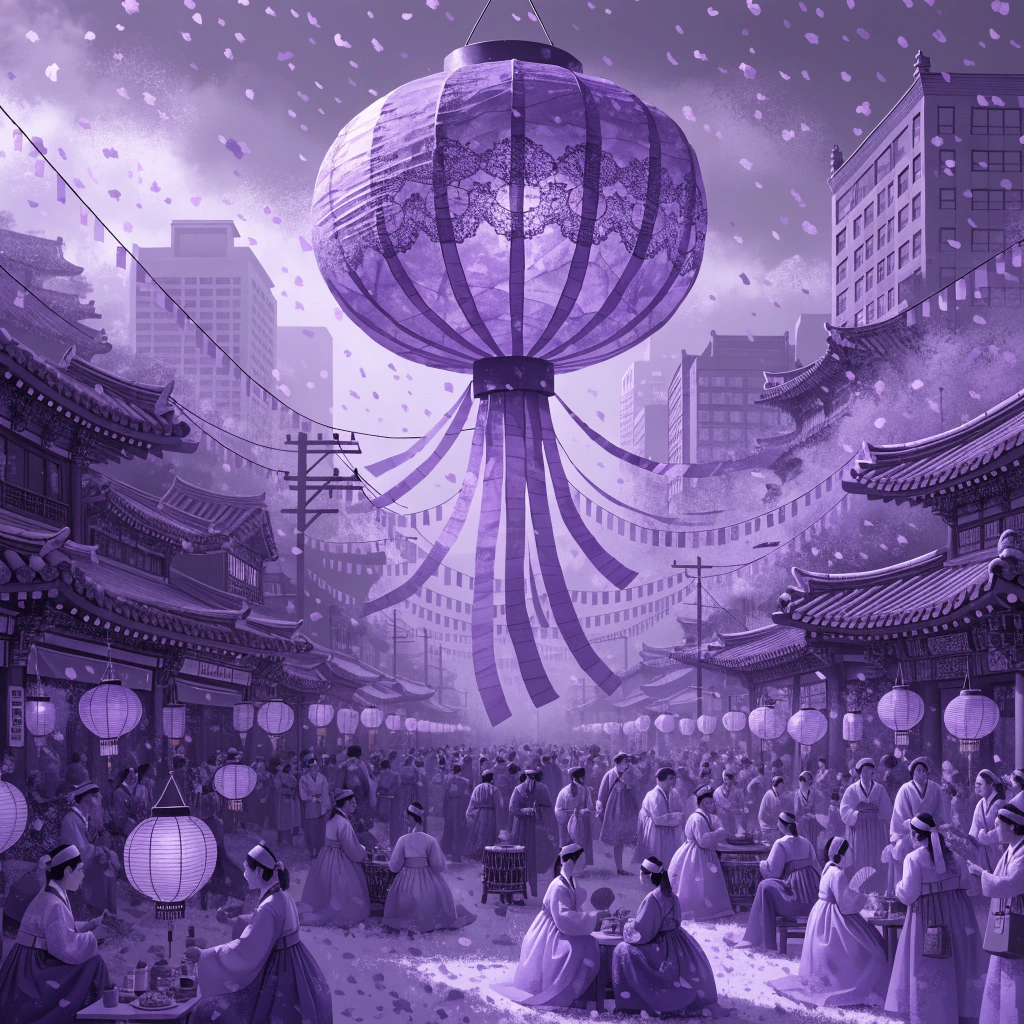
Seollal: The Korean New Year
Seollal is the Lunar New Year in South Korea. It is a very important holiday. Many people travel to their hometowns. They visit their families and friends. It is a happy time for everyone.
Families eat special food together. They eat 'Tteokguk.' It is a soup with rice cakes. People wear traditional clothes. These clothes are 'Hanbok.' They are very beautiful and colorful.
Children bow to their parents and grandparents. This is 'Sebae.' The older people give money to the children. They say 'Happy New Year!' Everyone starts a new year with hope.
نکته دستوری
الگو: Present Simple: To Be
"Seollal is the Lunar New Year in South Korea."
We use 'is' with singular nouns like 'Seollal' to state facts. It connects the subject to a description or definition.
الگو: Present Simple: Plural Verbs
"Families eat special food together."
With plural subjects like 'families', we use the base form of the verb without adding '-s'. This describes a common habit or tradition.
درک خود را بسنجید
10 سوال · A1 مبتدی · 1 پیشنمایش رایگان
آنچه از این مقاله آموختید را بسنجید. به همه سؤالات پاسخ دهید و XP کسب کنید!
Where do many people travel during Seollal?
آیا میخواهید آزمون را تمام کنید؟
9 سؤال دیگر منتظر شماست. ثبتنام رایگان کنید تا آزمون کامل را باز کنید و XP کسب کنید!
ثبتنام رایگانقبلاً ثبتنام کردی؟ ورود
جزئیات سؤالات
Where do many people travel during Seollal?
پاسخ شما:
پاسخ درست: To their hometowns
People wear traditional clothes called Hanbok.
پاسخ شما:
پاسخ درست: درست
What does 'beautiful' mean?
پاسخ شما:
پاسخ درست: Very nice to look at
Families eat special _____ together.
پاسخ شما:
پاسخ درست: food
Seollal: The Lunar New Year in South Korea
Seollal is the most important holiday in South Korea. It is the Lunar New Year celebration. Most families meet and celebrate together because they love their traditions. During this time, many people leave big cities like Seoul to visit their hometowns. The streets in Seoul become very quiet, but the villages are full of life.
People wear traditional clothes called "Hanbok." These clothes are more colorful than normal clothes. On the morning of Seollal, children show respect to their parents and grandparents with a special bow called "Sebae." After the bow, the elders give the children money in beautiful envelopes. This is the children's favorite part of the holiday!
The most famous food is "Tteokguk." It is a delicious soup with sliced rice cakes. Koreans believe that you become one year older after you eat a bowl of this soup. Families also play traditional board games like "Yut Nori." This game is more exciting than modern video games because everyone plays together. Seollal is a time for hope and new beginnings.
نکته دستوری
الگو: صفات تفضیلی با 'more'
"These clothes are more colorful than normal clothes."
ما از 'more' قبل از صفاتی که دو یا چند بخش دارند برای مقایسه دو چیز استفاده میکنیم. این نشان میدهد که یک چیز کیفیت بیشتری نسبت به دیگری دارد.
الگو: حروف ربط (because)
"Most families meet and celebrate together because they love their traditions."
ما از 'because' برای توضیح دلیل یک کار استفاده میکنیم. این کلمه در یک جمله نتیجه را به علت آن وصل میکند.
درک خود را بسنجید
11 سوال · A2 مقدماتی · 1 پیشنمایش رایگان
آنچه از این مقاله آموختید را بسنجید. به همه سؤالات پاسخ دهید و XP کسب کنید!
چرا بسیاری از مردم در طول سئولال شهرهای بزرگی مثل سئول را ترک میکنند؟
آیا میخواهید آزمون را تمام کنید؟
10 سؤال دیگر منتظر شماست. ثبتنام رایگان کنید تا آزمون کامل را باز کنید و XP کسب کنید!
ثبتنام رایگانقبلاً ثبتنام کردی؟ ورود
جزئیات سؤالات
چرا بسیاری از مردم در طول سئولال شهرهای بزرگی مثل سئول را ترک میکنند؟
پاسخ شما:
پاسخ درست: برای بازدید از زادگاهشان
هانبوک نام لباس سنتی کرهای است.
پاسخ شما:
پاسخ درست: درست
'تکگوک' (Tteokguk) چیست؟
پاسخ شما:
پاسخ درست: یک سوپ خوشمزه با کیک برنج
بعد از تعظیم، بزرگترها به بچهها در پاکتهای زیبا _____ میدهند.
پاسخ شما:
پاسخ درست: money
کرهایها معتقدند بعد از خوردن تکگوک چه اتفاقی میافتد؟
پاسخ شما:
پاسخ درست: یک سال بزرگتر میشوید
Seollal: Celebrating the Korean Lunar New Year
Seollal is the most important holiday in South Korea, marking the first day of the lunar calendar. Families have celebrated this tradition for centuries, and it remains a time for renewal and hope. Although Korea has changed a lot, these ancient customs are still very popular today.
During the holiday, millions of people travel to their hometowns to visit their parents and grandparents. This massive movement of people, which is often called the 'great exodus,' makes the streets of major cities like Seoul unusually quiet. Most shops are closed because everyone has gone home to be with their loved ones.
The core of the celebration is a ritual called 'Sebae.' Children, who wear traditional clothes called Hanbok, bow to their elders to show deep respect. In return, they receive 'Sebaet-don,' which is a gift of money for the New Year. Families also eat 'Tteokguk,' a special soup made with sliced rice cakes. It is believed that eating a bowl of this soup officially makes you one year older and brings good luck for the future.
Ancestors are also honored during Seollal through a ceremony called 'Charye.' During this ritual, delicious food is offered to the spirits of family members who have passed away. Afterward, families enjoy playing traditional games together, such as 'Yutnori.' Seollal has been preserved as a vital part of Korean identity, ensuring that the history of the nation continues to live in the modern world.
نکته دستوری
الگو: زمان حال کامل (ماضی نقلی)
"Families have celebrated this tradition for centuries."
زمان حال کامل با «have/has» و قسمت سوم فعل ساخته میشه. اینجا برای توصیف کاری استفاده شده که در گذشته شروع شده و هنوز هم در زمان حال مهمه.
الگو: حالت مجهول
"Ancestors are also honored during Seollal through a ceremony called 'Charye'."
حالت مجهول از فعل «be» و قسمت سوم فعل استفاده میکنه. زمانی از این حالت استفاده میکنیم که خودِ کار یا کسی که کار روش انجام شده، مهمتر از کسی باشه که اون کار رو انجام داده.
درک خود را بسنجید
11 سوال · B1 متوسط · 1 پیشنمایش رایگان
آنچه از این مقاله آموختید را بسنجید. به همه سؤالات پاسخ دهید و XP کسب کنید!
دلیل اصلی سفر میلیونها کرهای در طول تعطیلات «سئولال» چیه؟
آیا میخواهید آزمون را تمام کنید؟
10 سؤال دیگر منتظر شماست. ثبتنام رایگان کنید تا آزمون کامل را باز کنید و XP کسب کنید!
ثبتنام رایگانقبلاً ثبتنام کردی؟ ورود
جزئیات سؤالات
دلیل اصلی سفر میلیونها کرهای در طول تعطیلات «سئولال» چیه؟
پاسخ شما:
پاسخ درست: دیدن پدر و مادر و پدربزرگ و مادربزرگ در شهر زادگاهشون
خیابانهای سئول در طول تعطیلات سئولال خیلی شلوغ و پرجمعیت میشن.
پاسخ شما:
پاسخ درست: نادرست
کلمه «ritual» در متن این مقاله به چه معناست؟
پاسخ شما:
پاسخ درست: مراسمی که به روش خاصی انجام میشه
کودکان با پوشیدن لباسهای سنتی به اسم _____ به بزرگترهاشون احترام میذارن.
پاسخ شما:
پاسخ درست: Hanbok
اسم سوپ کیک برنجی که در طول این تعطیلات خورده میشه چیه؟
پاسخ شما:
پاسخ درست: تِوکگوک
Seollal: More Than Just a Celebration of the Lunar New Year
Seollal, the Korean Lunar New Year, represents a profound intersection of ancient tradition and modern societal values. While many global celebrations focus primarily on public festivities and fireworks, Seollal is fundamentally rooted in the Confucian principles of filial piety and ancestral respect. Historical records suggest that the holiday’s origins trace back as far as the Silla Kingdom, though it was during the Joseon Dynasty that the specific rituals we observe today became firmly established. Today, it stands as a three-day period of reflection, reconnection, and cultural pride.
In contemporary South Korea, the arrival of Seollal triggers a nationwide phenomenon often referred to as 'the great migration.' Despite the convenience of modern technology and the option to connect via video calls, millions of citizens choose to endure hours of grueling traffic congestion to return to their ancestral hometowns. This massive exodus illustrates a persistent commitment to family reunification, which remains the cornerstone of Korean identity. For many urban dwellers, the journey is not merely a physical relocation but a symbolic return to their roots, offering a temporary escape from the relentless pace of city life.
The holiday typically commences with 'Charye', a solemn ceremony where a variety of meticulously prepared foods are offered to ancestors. This ritual is followed by 'Sebae', the practice of younger family members performing a deep traditional bow to their elders. In exchange for this gesture of respect, the younger generation receives 'Sebaet-don', or New Year’s money, which is often accompanied by heartfelt words of wisdom and blessings for the coming year. Central to the culinary experience is 'Tteokguk', a soup made with thinly sliced white rice cakes. The white color of the rice cakes symbolizes purity and a clean start, while their shape—resembling old coins—represents a wish for future prosperity. Consumption of this dish is traditionally believed to grant the individual an additional year of age.
However, Seollal is not without its modern challenges and debates. As South Korea continues to evolve into a hyper-digitalized and individualistic society, some argue that the intensive labor and financial preparation required for traditional rites places an undue burden on younger generations, particularly women. Consequently, some families have begun to simplify these rituals or opt for overseas travel instead. Nevertheless, the holiday persists as a vital mechanism for cultural preservation. It provides a rare opportunity for intergenerational dialogue, allowing individuals to evaluate their personal progress while honoring the legacy of those who came before them. Ultimately, Seollal serves as a testament to the resilience of Korean culture, proving that even in a rapidly changing world, the traditional ties that bind families together remain remarkably unbreakable.
نکته دستوری
الگو: The Passive Voice
"a variety of meticulously prepared foods are offered to ancestors."
The passive voice is used here to focus on the action (the offering of food) rather than the people performing the action. It is formed using the verb 'to be' and the past participle.
الگو: Non-defining Relative Clauses
"This massive exodus illustrates a persistent commitment to family reunification, which remains the cornerstone of Korean identity."
This clause adds extra, non-essential information about 'family reunification'. It is separated by a comma and uses 'which' to introduce the descriptive detail.
الگو: Concessive Clauses with 'While'
"While many global celebrations focus primarily on public festivities and fireworks, Seollal is fundamentally rooted in the Confucian principles of filial piety and ancestral respect."
The conjunction 'while' is used at the beginning of the sentence to show a contrast between two ideas. It highlights that Seollal has a different focus compared to other celebrations.
درک خود را بسنجید
11 سوال · B2 بالاتر از متوسط · 1 پیشنمایش رایگان
آنچه از این مقاله آموختید را بسنجید. به همه سؤالات پاسخ دهید و XP کسب کنید!
What is the primary difference between Seollal and many other global celebrations mentioned in the text?
آیا میخواهید آزمون را تمام کنید؟
10 سؤال دیگر منتظر شماست. ثبتنام رایگان کنید تا آزمون کامل را باز کنید و XP کسب کنید!
ثبتنام رایگانقبلاً ثبتنام کردی؟ ورود
جزئیات سؤالات
What is the primary difference between Seollal and many other global celebrations mentioned in the text?
پاسخ شما:
پاسخ درست: It is fundamentally rooted in Confucian principles of respect.
The term 'the great migration' refers to people moving from the countryside into major cities like Seoul during the holiday.
پاسخ شما:
پاسخ درست: نادرست
What does 'exodus' mean in the context of the article?
پاسخ شما:
پاسخ درست: A mass departure of people from one place.
Eating Tteokguk is traditionally believed to grant the individual an additional year of _____.
پاسخ شما:
پاسخ درست: age
Why are the rice cakes in Tteokguk shaped like thin circles?
پاسخ شما:
پاسخ درست: To resemble old coins and symbolize prosperity.
The Rhythms of Renewal: Deconstructing the Sociocultural Fabric of Seollal
Never is the juxtaposition between Korea’s frenetic modernity and its deep-rooted heritage more striking than during Seollal, the Lunar New Year. Seldom does a holiday permeate the national psyche as profoundly as this three-day celebration, which effectively brings the nation’s bustling metropolises to a near-total standstill. It is the collective migration of millions from high-tech urban centers to rural ancestral hometowns—a phenomenon colloquially described as a 'great exodus'—that underscores the enduring importance of familial lineage in contemporary Korean society.
The historical trajectory of Seollal is both long and varied, with records tracing its origins back to the Silla Kingdom. However, the survival of the holiday was never guaranteed. During the period of Japanese colonial rule in the early 20th century, Seollal was systematically suppressed in favor of the Gregorian New Year. Consequently, its subsequent restoration and official recognition in the late 1980s served as a pivotal moment of cultural reclamation. The preservation of these customs represents more than mere sentimentality; it is a deliberate, collective effort to perpetuate a distinct national identity through the performance of ancestral rites that were once threatened with erasure.
At the heart of the celebration lies 'Charye,' a solemn ceremony involving the presentation of a variety of foods to the spirits of one's ancestors. The meticulous arrangement of the ritual table, which follows strict rules regarding the placement of fruits, meats, and grains, reflects a Confucian devotion that has weathered centuries of social upheaval and rapid industrialization. Following the completion of these rites, the younger generation performs 'Sebae'—a deep, formal bow to their elders that touches the floor. This act of reverence is not merely a symbolic gesture of respect; it is practically reciprocated with 'sebaetdon,' or New Year's money, and the sharing of wisdom-filled blessings known as 'deokdam.'
Culinary traditions are equally integral to the Seollal experience, with 'tteokguk'—a clear soup containing thinly sliced rice cakes—serving as the centerpiece. Consuming a bowl of this soup is widely regarded as a mandatory rite of passage for every Korean citizen. In accordance with traditional Korean folklore, one does not simply turn a year older on the anniversary of their birth, but rather through the shared consumption of tteokguk on Seollal morning. The pristine white color of the rice cakes symbolizes a clean slate and purity, while their coin-like shape is thought to invite prosperity.
However, the contemporary manifestation of Seollal is not without its internal contradictions and sociological tensions. In recent years, a nuanced critical analysis of the holiday has emerged, focusing on the undue burden placed on women, who have historically borne the brunt of the exhaustive culinary preparations. This domestic labor has become a catalyst for a palpable shift toward more egalitarian celebrations. Many modern families are now opting for catered meals, simplified rituals, or even skipping the traditional trip altogether in favor of overseas travel. What the younger generation increasingly seeks is a delicate balance between honoring their heritage and maintaining the personal autonomy necessitated by modern life.
Ultimately, the enduring relevance of Seollal lies in its remarkable capacity for adaptation. While the outward expressions of the holiday may evolve to accommodate the fast-paced lifestyle of the 21st century, the underlying impetus remains unchanged: a fundamental desire for renewal and the fortification of familial bonds. As South Korea continues its trajectory as a global cultural powerhouse, Seollal stands as a vital vestige of a shared history, offering a rare moment of contemplative silence and connection amidst the relentless noise of a hyper-connected world.
نکته دستوری
الگو: Negative Inversion
"Never is the juxtaposition between Korea’s frenetic modernity and its deep-rooted heritage more striking than during Seollal."
This structure places a negative adverbial at the beginning of the sentence for emphasis, followed by an inverted verb-subject order. It is common in formal C1 writing to highlight rarity or intensity.
الگو: It-Cleft Sentence
"It is the collective migration of millions from high-tech urban centers to rural ancestral hometowns... that underscores the enduring importance of familial lineage."
Cleft sentences are used to focus on a specific part of the sentence (the migration). By starting with 'It is...', the writer emphasizes the subject of the clause as the primary cause or factor.
الگو: Nominalisation
"The preservation of these customs represents more than mere sentimentality."
Nominalisation involves turning verbs (preserve) or adjectives into nouns (preservation). This creates a more abstract, academic, and professional tone typical of advanced English.
درک خود را بسنجید
12 سوال · C1 پیشرفته · 1 پیشنمایش رایگان
آنچه از این مقاله آموختید را بسنجید. به همه سؤالات پاسخ دهید و XP کسب کنید!
What does the 'great exodus' during Seollal primarily signify in the context of the article?
آیا میخواهید آزمون را تمام کنید؟
11 سؤال دیگر منتظر شماست. ثبتنام رایگان کنید تا آزمون کامل را باز کنید و XP کسب کنید!
ثبتنام رایگانقبلاً ثبتنام کردی؟ ورود
جزئیات سؤالات
What does the 'great exodus' during Seollal primarily signify in the context of the article?
پاسخ شما:
پاسخ درست: The physical manifestation of the importance of family lineage.
Seollal has been continuously and officially celebrated in South Korea without interruption since the Silla Kingdom.
پاسخ شما:
پاسخ درست: نادرست
Which word describes a state of fast, energetic, and uncontrolled activity?
پاسخ شما:
پاسخ درست: Frenetic
The pristine white color of the rice cakes in tteokguk is a symbol of _____ and a clean slate.
پاسخ شما:
پاسخ درست: purity
According to the article, why is tteokguk considered a 'rite of passage'?
پاسخ شما:
پاسخ درست: Eating it is the traditional way one officially gains a year of age.
The article suggests that modern Seollal celebrations are shifting toward more equal distribution of labor among family members.
پاسخ شما:
پاسخ درست: درست
The Ontological Resonance of Seollal: Ancestral Veneration and the Temporal Pulse of Modern Korea
In the hyper-kinetic landscape of contemporary South Korea, where silicon and steel often obscure the vestiges of antiquity, Seollal emerges not merely as a holiday, but as a profound temporal anchor. Were one to traverse the bustling thoroughfares of Seoul during this lunar transition, the juxtaposition of silence and ancestral reverence would be palpable. This is the Korean Lunar New Year—a period of collective introspection and filial duty that transcends the ephemeral nature of modern existence. The holiday serves as a sociocultural bridge, connecting the dizzying pace of the present with the venerable echoes of a dynastic past.
Historically, the provenance of Seollal is inextricably linked to the agrarian rhythms of the Silla Kingdom, though its nomenclature and specific rites were substantially refined through the Joseon dynasty’s Neo-Confucian framework. Central to its modern observance is Charye, a meticulously choreographed ritual of ancestral remembrance. It is here that the confluence of the living and the departed is most poignant; offerings of food and incense serve as a symbolic conduit, reaffirming the continuity of the lineage across the threshold of death. This emphasis on heredity underscores a societal ethos where the individual is viewed primarily through the lens of historical precedence and familial obligation.
Perhaps the most ubiquitous image of Seollal is Sebae, the deep, ceremonial bow performed by the younger generation for their elders. Not only does this physical manifestation of respect facilitate familial cohesion, but it also reinforces the ideological scaffolding of Korean social hierarchy. Through this ritual, the 'Sebaetdon' (gift money) is bestowed, yet it would be a reductive analysis to view this exchange purely through a transactional lens. Rather, it represents the cyclical transfer of wisdom and ancestral blessing, a foundational tenet of the Korean family unit that remains remarkably resilient in the face of rapid globalization.
Gastronomy, too, serves as a quintessential marker of this seasonal shift. The consumption of Tteokguk, a sliced rice cake soup, is more than a mere culinary preference; it is a ritualized metric of aging within the Korean consciousness. To consume the clear broth and white rice cakes is to figuratively 'gain a year,' a concept that highlights a collective perception of time that differs fundamentally from the individualized milestones common in Western paradigms. The stark whiteness of the rice cakes symbolizes a tabula rasa, a clean slate upon which the aspirations and moral resolutions for the coming year are inscribed.
The 'great migration' that precedes Seollal—a massive exodus from urban centers to ancestral hometowns—reveals the logistical complexity and emotional weight of this tradition. It is a testament to the enduring power of kinship that millions navigate gridlocked expressways to reach the familial hearth. Furthermore, one cannot overlook the sociological friction inherent in such ancient observances within a post-industrial framework. The phenomenon colloquially termed 'holiday syndrome' encapsulates the psychosomatic stress experienced by many who bear the logistical brunt of the festivities. It could be argued that this tension acts as a catalyst for the gradual metamorphosis of Seollal, moving away from rigid structures toward more egalitarian modes of celebration.
Ultimately, Seollal serves as a poignant reminder that even in an age of digital saturation, the human need for ritualized belonging remains undiminished. It is a time when the cacophony of the present is silenced by the whispers of the past. As long as the moon dictates this seasonal return, the Korean nation will continue to find its identity refreshed in the crucible of family, tradition, and the hopeful anticipation of the dawn. The holiday stands as a bastion of cultural continuity, proving that even the most forward-looking societies must occasionally glance backward to understand their trajectory.
نکته دستوری
الگو: وارونگی با قیدهای منفی/محدودکننده (Inversion)
"Not only does this physical manifestation of respect facilitate familial cohesion, but it also reinforces the ideological scaffolding of Korean social hierarchy."
وقتی 'not only' اول جمله میآید، فعل کمکی 'does' قبل از فاعل 'this physical manifestation' قرار میگیرد. این ساختار تأکید ایجاد میکند و در نوشتههای رسمی و علمی رایج است.
الگو: شرطی نوع اول معکوس (التزامی)
"Were one to traverse the bustling thoroughfares of Seoul during this lunar transition, the juxtaposition of silence and ancestral reverence would be palpable."
اینجا از 'were' به جای 'if' استفاده شده تا یک موقعیت فرضی را به شکل خیلی رسمی بیان کند. این کار با پرهیز از ساختار رایجتر 'If someone were to...' لحنی علمی به متن میدهد.
الگو: مجهول با احتیاط علمی (Hedging)
"It could be argued that this tension acts as a catalyst for the gradual metamorphosis of Seollal."
استفاده از 'It could be argued' به نویسنده اجازه میدهد بدون ادعای قطعی، نظریهای را مطرح کند. ترکیبش با ساختار مجهول، یک فاصله عینی و تحلیلی را حفظ میکند.
درک خود را بسنجید
12 سوال · C2 تسلط · 1 پیشنمایش رایگان
آنچه از این مقاله آموختید را بسنجید. به همه سؤالات پاسخ دهید و XP کسب کنید!
طبق مقاله، 'مهاجرت بزرگ' چه چیزی را درباره جامعه مدرن کره نشان میدهد؟
آیا میخواهید آزمون را تمام کنید؟
11 سؤال دیگر منتظر شماست. ثبتنام رایگان کنید تا آزمون کامل را باز کنید و XP کسب کنید!
ثبتنام رایگانقبلاً ثبتنام کردی؟ ورود
جزئیات سؤالات
طبق مقاله، 'مهاجرت بزرگ' چه چیزی را درباره جامعه مدرن کره نشان میدهد؟
پاسخ شما:
پاسخ درست: قدرت پایدار پیوندهای خویشاوندی و خانوادگی
متن پیشنهاد میکند که خوردن 'تتوکگوک' (Tteokguk) اساساً یک ترجیح شخصی است و معنی جمعی ندارد.
پاسخ شما:
پاسخ درست: نادرست
کلمه 'ephemeral' در متن مقاله چه معنیای دارد؟
پاسخ شما:
پاسخ درست: کوتاهمدت و ناپایدار
خروج انبوه مردم از شهرها به زادگاهشان گواهی بر قدرت _____ است.
پاسخ شما:
پاسخ درست: kinship
کارکرد اصلی 'Charye' که در متن ذکر شده چیست؟
پاسخ شما:
پاسخ درست: آیین طراحیشده برای یادبود نیاکان
'سندرم تعطیلات' به استرس جسمی و روحی مرتبط با تدارکات تعطیلات اشاره دارد.
پاسخ شما:
پاسخ درست: درست

