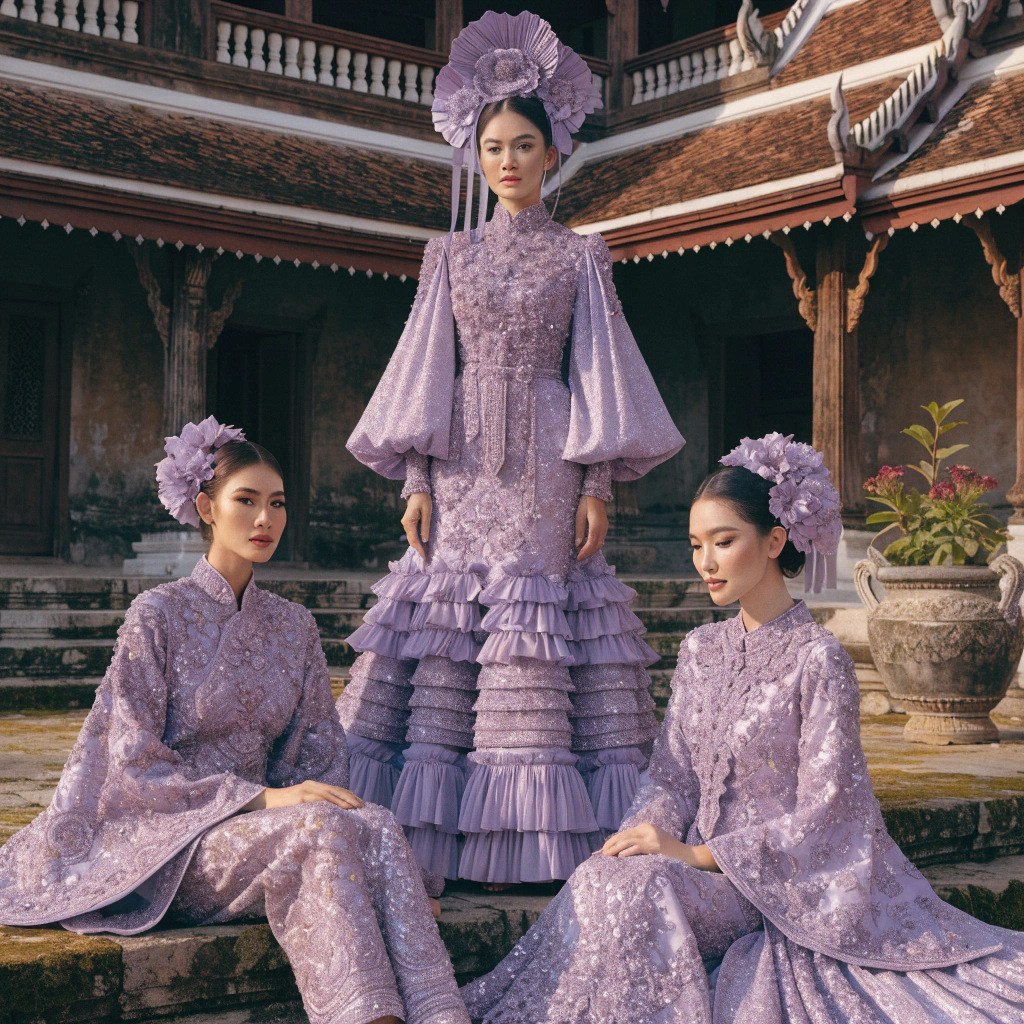
태국의 아름다운 옷, "츗 타이"
태국은 아름다운 나라입니다. 태국에는 특별한 옷이 있습니다. 이 옷은 "츗 타이"라고 부릅니다. "츗 타이"는 "태국 옷"이라는 뜻입니다.
"츗 타이"는 태국의 전통 의상입니다. 이 옷은 아주 예쁩니다. 태국 사람들은 중요한 날에 이 옷을 입습니다. 예를 들어, 축제나 결혼식에 입습니다. 이 옷은 태국의 역사와 문화를 보여줍니다.
옛날에 시리킷 왕비는 이 옷을 만들었습니다. 왕비는 태국의 아름다움을 세계에 보여주고 싶었습니다. 그래서 "츗 타이"는 태국의 자랑스러운 상징이 되었습니다. 많은 사람들이 "츗 타이"를 입고 좋아합니다.
문법 스포트라이트
패턴: -입니다/-ㅂ니다
"태국은 아름다운 나라입니다."
이 문법은 문장을 끝낼 때 사용합니다. 명사 뒤에는 '-입니다'를 쓰고, 동사나 형용사 뒤에는 '-ㅂ니다' 또는 '-습니다'를 씁니다. 아주 공손하게 말할 때 사용합니다.
패턴: -는/-은 (주제 조사)
"태국은 아름다운 나라입니다. / 이 옷은 아주 예쁩니다."
이 문법은 문장에서 무엇에 대해 이야기하는지 알려줍니다. 앞 단어에 받침이 없으면 '-는'을 쓰고, 받침이 있으면 '-은'을 씁니다.
이해도를 테스트하세요
10 질문 · A1 초급 · 무료 미리보기 1회
이 기사에서 배운 내용을 테스트하세요. 모든 질문에 답하여 XP를 획득하세요!
"츗 타이"는 무엇입니까?
문제별 결과
"츗 타이"는 무엇입니까?
내 답변:
정답: 태국의 옷
태국 사람들은 매일 "츗 타이"를 입습니다.
내 답변:
정답: 거짓
"왕비"는 무슨 뜻입니까?
내 답변:
정답: Queen
"츗 타이"는 태국의 ______ 의상입니다.
내 답변:
정답: 전통
Chut Thai: The Beautiful Clothes of Thailand
Long ago, people in Thailand wore many different styles of clothes. In the 1960s, Queen Sirikit noticed that Thailand did not have a formal national dress for women. She wanted something special for international visits. She worked with designers and historians to create eight official styles. Today, we call these clothes 'Chut Thai.' It simply means 'Thai Outfit.'
Chut Thai is more elegant than casual clothes. Women usually wear a long skirt called a 'pha nung' and a beautiful top. Sometimes they wear a 'sabai.' This is a long piece of silk that goes over one shoulder. Men often wear a 'suea phraratchathan.' This is a formal shirt with a high collar.
Thai people wear Chut Thai for weddings and festivals because it is an important part of their history. These clothes are more colorful and expensive than modern clothes. Thais are very proud of Chut Thai because it shows their beautiful culture to the world. It is a famous symbol of Thai grace.
문법 스포트라이트
패턴: Past Simple
"She worked with designers and historians to create eight official styles."
We use the past simple to talk about finished actions in the past. For regular verbs like 'work', we add '-ed' to the end of the verb.
패턴: Comparatives (Long Adjectives)
"Chut Thai is more elegant than casual clothes."
To compare two things with long adjectives (2+ syllables), we use 'more' + adjective + 'than'. It shows that one thing has more of a quality than the other.
이해도를 테스트하세요
11 질문 · A2 초등급 · 무료 미리보기 1회
이 기사에서 배운 내용을 테스트하세요. 모든 질문에 답하여 XP를 획득하세요!
Who wanted to create a formal national dress for Thailand?
문제별 결과
Who wanted to create a formal national dress for Thailand?
내 답변:
정답: Queen Sirikit
The name 'Chut Thai' means 'Thai Outfit' in English.
내 답변:
정답: 참
What does the word 'symbol' mean?
내 답변:
정답: A sign that represents an idea
Thai people often wear these clothes for _____ and festivals.
내 답변:
정답: weddings
What is a 'sabai'?
내 답변:
정답: A long piece of silk over the shoulder
Chut Thai: The Elegance of National Fashion
Chut Thai, which literally means 'Thai Outfit,' is the beautiful national dress of Thailand. For many years, it has been a symbol of the country’s rich culture and history. Although Thai people have worn traditional clothes for centuries, the formal styles that we recognize today were created in the middle of the 20th century.
In the 1960s, Queen Sirikit realized that Thailand did not have a formal national costume for women to wear during international visits. Because of this, she worked with historians and designers to develop several official styles. These outfits were designed to look elegant while keeping traditional Thai elements. Since then, these clothes have been worn by royalty and citizens alike on special occasions.
The outfits are often made from high-quality Thai silk, which is famous for its bright colors and unique patterns. A popular style for women includes the 'Pha Sin,' a long wrap-around skirt, and a 'Sabai,' which is a piece of fabric that is worn over one shoulder. These garments are often decorated with gold or silver threads.
Today, Chut Thai is still very popular. It is frequently seen at weddings, religious ceremonies, and national festivals. Recently, more young people have started wearing these traditional clothes to celebrate their heritage. Chut Thai has become more than just fashion; it is a way for Thai people to show their identity to the world.
문법 스포트라이트
패턴: Relative Clauses
"Chut Thai, which literally means 'Thai Outfit,' is the beautiful national dress of Thailand."
Relative clauses start with words like 'which' or 'who' to give more information about a noun. In this sentence, 'which literally means...' adds extra information about Chut Thai.
패턴: Passive Voice
"These outfits were designed to look elegant while keeping traditional Thai elements."
The passive voice (be + past participle) is used when the person who did the action is less important than the action itself. Here, the focus is on the outfits being created.
이해도를 테스트하세요
11 질문 · B1 중급 · 무료 미리보기 1회
이 기사에서 배운 내용을 테스트하세요. 모든 질문에 답하여 XP를 획득하세요!
Who helped develop the modern official Chut Thai styles?
문제별 결과
Who helped develop the modern official Chut Thai styles?
내 답변:
정답: Queen Sirikit and historians
Chut Thai is only worn by members of the royal family today.
내 답변:
정답: 거짓
What does 'heritage' mean?
내 답변:
정답: Traditions and culture from the past
Chut Thai is frequently seen at _____ and religious ceremonies.
내 답변:
정답: weddings
What is the 'Sabai' in a Chut Thai outfit?
내 답변:
정답: A fabric worn over one shoulder
Chut Thai: The Evolution of Thailand's National Identity through Fashion
Chut Thai, which translates literally to "Thai Outfit," represents far more than mere clothing; it is the pinnacle of the nation’s aesthetic elegance and cultural heritage. Although the history of Thai textiles stretches back through the ancient Dvaravati and Ayutthaya periods, the specific styles recognized as the national dress today were largely codified in the mid-20th century. This formalization was driven by a need to project a unified cultural identity on the global stage.
In the 1960s, Queen Sirikit observed that Thailand lacked a formal national costume for women to wear during international state visits. Consequently, she collaborated with historians and designers to develop a series of outfits that would reflect both tradition and modernity. Queen Sirikit's dedication to reviving Thai silk was not merely about fashion; it was a socio-economic project aimed at providing supplementary income for rural weavers. By wearing these garments during her travels abroad, she effectively became the primary ambassador for Thai craftsmanship. This initiative resulted in the creation of eight distinct styles, collectively known as "Chut Thai Phra Ratcha Niyom."
The craftsmanship involved in producing Chut Thai is remarkably sophisticated. Most outfits are constructed from hand-woven Thai silk, often featuring intricate patterns created through the "Mudmee" or "Yok" techniques. The "Yok" technique, for instance, involves raising certain warp threads to create a raised pattern, often using gold or silver threads to add a sense of luxury. The "Sabai," a shawl-like garment that wraps around the chest and drapes over one shoulder, is perhaps the most iconic element. The meticulous attention to detail in the embroidery and the selection of vibrant colors highlight the artistic prowess of Thai weavers.
While these outfits were originally intended for formal diplomatic functions, their influence has permeated various aspects of contemporary Thai society. Today, Chut Thai is frequently worn at weddings, religious ceremonies, and national festivals. Furthermore, there has been a resurgence of interest among the younger generation, who often incorporate traditional elements into modern fashion to express their cultural pride.
Ultimately, Chut Thai serves as a bridge between Thailand's storied past and its dynamic present. By preserving traditional weaving techniques while adapting to modern sensibilities, the nation ensures that its fashion remains a living testament to its unique identity. It is not merely a costume, but a sophisticated expression of Thai values and craftsmanship that continues to captivate the world.
문법 스포트라이트
패턴: Passive Voice
"the specific styles recognized as the national dress today were largely codified in the mid-20th century."
The passive voice is used here to emphasize the action (codifying the styles) rather than the specific people who did it. It is formed using the verb 'to be' plus the past participle.
패턴: Non-defining Relative Clauses
"The 'Sabai,' a shawl-like garment that wraps around the chest and drapes over one shoulder, is perhaps the most iconic element."
This pattern adds extra, non-essential information about a noun. It is separated from the rest of the sentence by commas.
패턴: Present Perfect Simple
"their influence has permeated various aspects of contemporary Thai society."
This tense is used to describe an action that started in the past and has a result or impact that continues into the present. It is formed with 'have/has' and the past participle.
이해도를 테스트하세요
11 질문 · B2 중상급 · 무료 미리보기 1회
이 기사에서 배운 내용을 테스트하세요. 모든 질문에 답하여 XP를 획득하세요!
What was the primary reason for the formalization of Chut Thai in the 1960s?
문제별 결과
What was the primary reason for the formalization of Chut Thai in the 1960s?
내 답변:
정답: To provide a formal national dress for international visits
Queen Sirikit collaborated with historians to develop the national outfits.
내 답변:
정답: 참
What does 'meticulous' mean?
내 답변:
정답: Very careful and precise
Today, Chut Thai is frequently worn at _____ and national festivals.
내 답변:
정답: weddings
What is the 'Sabai' in Thai fashion?
내 답변:
정답: A shawl-like garment
태국 국복 '츳타이'에 깃든 우아함과 민족적 정체성
태국어로 ‘태국 의상’을 의미하는 ‘츳타이(Chut Thai)’는 단순한 옷차림을 넘어, 태국 고유의 미학과 장인정신이 집약된 국가적 상징으로 자리매김하고 있습니다. 드바라바티(Dvaravati)와 아유타야(Ayutthaya) 시대에 걸쳐 면면히 이어져 온 태국 복식의 깊은 역사를 지니고 있음에도 불구하고, 오늘날 우리가 ‘국민 의상’으로 인식하는 츳타이의 구체적인 양식은 20세기 중반, 특히 1960년대에 이르러 비로소 체계적으로 정립되었습니다.
이러한 정립 과정에서 가장 핵심적인 역할을 한 인물은 다름 아닌 시리킷(Sirikit) 왕비입니다. 당시 태국은 국제적인 국빈 방문이나 공식 행사에서 자국을 대표할 만한 여성 국복이 부재하다는 점을 간과할 수 없는 상황이었습니다. 이에 시리킷 왕비는 태국의 찬란한 역사와 문화적 유산을 현대적 감각으로 승화시키면서도, 실용성과 우아함을 겸비한 새로운 국복의 필요성을 절감했습니다. 이러한 통찰에 입각하여, 왕비는 당대 최고의 디자이너들과 역사학자들을 소집하여 광범위한 연구와 고증 작업을 지휘했던바, 이는 태국 복식 문화의 획기적인 전환점이 되었습니다.
그 결과, 현재 8가지 주요 스타일로 분류되는 츳타이가 탄생했습니다. 예를 들어, ‘츳타이 차크리(Chut Thai Chakri)’는 가장 격식 있는 형태로, 상의와 함께 어깨에 걸쳐 입는 사바이(Sabai)와 허리 부분을 주름 잡아 몸에 감는 파눙(Pha Nung)으로 구성되어 있습니다. 주로 야회복이나 공식적인 국가 행사에 착용되며, 섬세한 금실 자수와 화려한 보석 장식이 특징입니다. 반면, ‘츳타이 르안톤(Chut Thai Ruean Ton)’은 면이나 실크로 만든 비교적 간소한 상하의 세트로, 일상생활에서도 부담 없이 착용할 수 있도록 디자인되었으나, 역시 품격을 잃지 않아 준공식적인 자리에도 적합합니다. ‘츳타이 시왈라이(Chut Thai Siwalai)’는 차크리보다 더욱 격식을 갖춘 형태로, 긴 소매 블라우스와 발목까지 내려오는 치마로 이루어져 있으며, 주로 왕실 행사나 매우 중요한 의례에 착용됩니다.
츳타이는 단순히 아름다운 의상을 넘어섭니다. 이는 태국인의 정체성을 집약하고, 그들의 역사와 전통을 현재와 미래로 이어주는 살아있는 유산에 다름 아닙니다. 각 스타일은 태국의 다양한 지역적 특성과 역사적 배경을 반영하며, 착용하는 이에게 자긍심을 부여합니다. 또한, 츳타이를 제작하는 과정에서 요구되는 정교한 직조 기술과 염색 기법, 자수 등은 태국 전통 공예의 우수성을 전 세계에 알리는 매개체가 됩니다. 시대의 흐름과 함께 복식 문화 또한 끊임없이 변모하기 마련이지만, 츳타이는 그 본연의 가치를 굳건히 지키면서도 현대적 미감을 수용하며 발전해 나가고 있습니다. 이처럼 츳타이는 태국 국민에게는 민족적 자긍심의 원천이자 공동체의식을 함양하는 수단이며, 외부인에게는 태국 문화의 정수를 경험하게 하는 매력적인 창구로 기능하고 있습니다.
문법 스포트라이트
패턴: ~는바
"왕비는 당대 최고의 디자이너들과 역사학자들을 소집하여 광범위한 연구와 고증 작업을 지휘했던바, 이는 태국 복식 문화의 획기적인 전환점이 되었습니다."
이 패턴은 앞선 내용이 뒤따르는 내용의 근거나 이유, 또는 배경이 됨을 나타낼 때 사용됩니다. 주로 글말에서 쓰이며, '그러므로', '그리하여'와 유사한 의미로 쓰일 수 있습니다. 동사 뒤에 '~는바' 형태로 붙습니다.
패턴: ~에 다름 아니다
"이는 태국인의 정체성을 집약하고, 그들의 역사와 전통을 현재와 미래로 이어주는 살아있는 유산에 다름 아닙니다."
이 패턴은 앞선 내용이 뒤따르는 내용과 본질적으로 같거나 다를 바 없음을 강조할 때 사용됩니다. 'A는 B에 다름 아니다'는 'A는 B와 마찬가지다', 'A는 곧 B다'와 같은 강한 긍정의 의미를 전달합니다. 명사 뒤에 '에 다름 아니다' 형태로 붙습니다.
패턴: ~기 마련이다
"시대의 흐름과 함께 복식 문화 또한 끊임없이 변모하기 마련이지만, 츳타이는 그 본연의 가치를 굳건히 지키면서도 현대적 미감을 수용하며 발전해 나가고 있습니다."
이 패턴은 어떤 상황이나 현상이 자연스럽거나 당연하게 그렇게 될 것임을 나타냅니다. '결국 그렇게 될 수밖에 없다', '그것은 당연한 이치이다'와 같은 의미를 내포합니다. 동사나 형용사 어간 뒤에 '~기 마련이다' 형태로 붙습니다.
이해도를 테스트하세요
12 질문 · C1 고급 · 무료 미리보기 1회
이 기사에서 배운 내용을 테스트하세요. 모든 질문에 답하여 XP를 획득하세요!
츳타이의 구체적인 양식이 체계적으로 정립된 시기는 언제입니까?
문제별 결과
츳타이의 구체적인 양식이 체계적으로 정립된 시기는 언제입니까?
내 답변:
정답: 20세기 중반, 특히 1960년대
시리킷 왕비는 태국 국복 정립 과정에서 아무런 역할도 하지 않았습니다.
내 답변:
정답: 거짓
'정립되다'의 의미로 가장 적절한 것은 무엇입니까?
내 답변:
정답: 원리나 체계가 올바르게 세워지다
츳타이의 정립 과정에서 시리킷 왕비는 당대 최고의 디자이너들과 역사학자들을 소집하여 광범위한 연구와 _____ 작업을 지휘했습니다.
내 답변:
정답: 고증
다음 중 '츳타이 차크리'에 대한 설명으로 올바르지 않은 것은 무엇입니까?
내 답변:
정답: 주로 일상생활에서 부담 없이 착용된다.
츳타이는 단순히 아름다운 의상을 넘어, 태국인의 정체성과 역사, 전통을 이어주는 살아있는 유산으로 평가됩니다.
내 답변:
정답: 참
Sartorial Sovereignty: The Ontological Synthesis of Chut Thai
The concept of 'Chut Thai' is frequently misconstrued by the casual observer as an immutable relic of antiquity, yet its contemporary manifestation is a masterclass in the deliberate construction of national identity. Far from being a mere vestigial remnant of the Dvaravati or Ayutthaya epochs, the Chut Thai Phra Ratchaniyom—the royal favor outfits—represents a sophisticated ontological synthesis of historical motifs and modern exigencies. This sartorial paradigm was crystallized in the mid-20th century, primarily through the visionary agency of Queen Sirikit. Observing that Thailand lacked a formal, unified national costume suitable for the rigors of international diplomacy during her 1960 state visits, Her Majesty, in collaboration with esteemed historians and couturiers, embarked upon a project to codify a series of ensembles that would articulate Thai heritage within a globalized context.
Were one to scrutinize the intricate weaving techniques of Thai silk, one would discern the subtle interplay between regional idiosyncrasies and a centralized aesthetic vision. The eight distinct styles of Chut Thai—ranging from the informal Thai Ruean Ton to the regal Thai Boromphiman—serve as a complex semiotic system, conveying status, occasion, and cultural fidelity. This codification did not merely preserve the past; it reinvented it, ensuring that the ephemeral nature of fashion was anchored by the enduring weight of tradition. The use of the pha nung, a wrap-around cloth, and the sabai, a breast cloth or shawl, evokes a bygone elegance, yet the structural integrity and tailoring reflect a contemporary sensibility that demands both functionality and grace. These garments are not static; they are a living discourse between the weaver’s loom and the world stage.
Moreover, the proliferation of Chut Thai in the modern era invites a scholarly analysis of 'invented traditions.' As articulated by the historian Eric Hobsbawm, such traditions often emerge during periods of rapid social transformation to provide a sense of continuity and legitimacy. In the Thai context, Chut Thai serves as a bulwark against the homogenizing forces of Western fashion. It is not merely a costume but a manifestation of sovereignty, a visual declaration that Thailand possesses an aesthetic lineage capable of commanding respect on the world stage. Seldom has a garment been so inextricably linked to the preservation of a nation’s soul, functioning as both a protective shield and a diplomatic bridge.
The craftsmanship involved in producing these garments—often utilizing hand-woven silk and gold thread, known as khit—underscores a commitment to artisanal excellence that transcends mere ornamentation. The tactile quality of the fabric, combined with the symbolic weight of the patterns, creates a sensory experience that reinforces the wearer’s connection to their heritage. It is imperative that this legacy be viewed not through a lens of static nostalgia, but as a dynamic, evolving discourse. Should the global community continue to disregard the nuances of indigenous craftsmanship, the world risks losing the rich tapestry of cultural diversity that Chut Thai so eloquently represents. Ultimately, the elegance of Chut Thai lies in its ability to navigate the tension between the parochial and the universal, standing as a testament to the enduring power of aesthetic sovereignty and the resilience of a nation's visual identity.
문법 스포트라이트
패턴: Subjunctive Mood with 'Were'
"Were one to scrutinize the intricate weaving techniques of Thai silk, one would discern the subtle interplay between regional idiosyncrasies and a centralized aesthetic vision."
This is a formal, hypothetical conditional structure. 'Were' replaces 'If one were to' to emphasize the speculative nature of the statement, common in C2 academic prose.
패턴: Negative Inversion
"Seldom has a garment been so inextricably linked to the preservation of a nation’s soul, functioning as both a protective shield and a diplomatic bridge."
Inversion occurs when a negative or restrictive adverb (like 'seldom') starts the sentence, requiring the auxiliary verb to come before the subject for rhetorical emphasis.
패턴: Conditional with 'Should'
"Should the global community continue to disregard the nuances of indigenous craftsmanship, the world risks losing the rich tapestry of cultural diversity."
This structure is used to express a possible future situation in a formal way, acting as a more sophisticated version of 'If the global community should continue'.
이해도를 테스트하세요
12 질문 · C2 마스터 · 무료 미리보기 1회
이 기사에서 배운 내용을 테스트하세요. 모든 질문에 답하여 XP를 획득하세요!
According to the article, what was the primary catalyst for the codification of Chut Thai in the 1960s?
문제별 결과
According to the article, what was the primary catalyst for the codification of Chut Thai in the 1960s?
내 답변:
정답: The need for a formal national costume for international state visits
The article suggests that Chut Thai is an unchanging, ancient costume that has remained identical for centuries.
내 답변:
정답: 거짓
What does the word 'ephemeral' mean in the context of the article?
내 답변:
정답: Short-lived and fleeting
In the Thai context, Chut Thai serves as a _____ against the homogenizing forces of Western fashion.
내 답변:
정답: bulwark
Which historian's concept is used to analyze the emergence of Chut Thai?
내 답변:
정답: Eric Hobsbawm
The 'semiotic system' mentioned refers to how the different styles of Chut Thai convey status and occasion.
내 답변:
정답: 참

