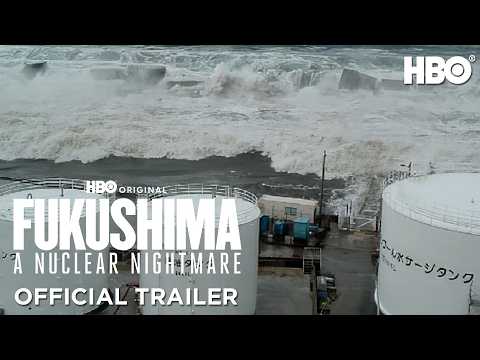
catastrophe 30초 만에
- A catastrophe is a sudden, large-scale disaster that causes significant damage or suffering, often used to describe natural, economic, or personal failures.
- The word originates from Greek drama, referring to the final resolution of a tragedy, and now applies to any major overturning of order.
- Commonly used in news and formal writing, it can also be used hyperbolically in casual speech to describe minor but embarrassing mistakes.
- Key synonyms include disaster, calamity, and fiasco, but catastrophe specifically emphasizes the suddenness and totality of the ruin or failure.
The word catastrophe represents one of the most intense descriptors for failure, destruction, or misfortune in the English language. At its core, it refers to an event that causes sudden and great damage or suffering. However, its application spans a wide spectrum, from the literal devastation of natural disasters to the figurative ruin of a personal reputation or a failed business venture. When you use this word, you are signaling that the situation is beyond a mere 'problem' or 'mistake'; it is a fundamental breakdown of order or safety. Historically, the term is rooted in the world of drama, specifically Greek tragedy, where it denoted the final resolution or 'overturning' of the plot. Today, while we rarely use it to discuss theater, that sense of a final, irreversible downward turn remains. People use it in news reports to describe earthquakes, floods, or economic crashes, but you will also hear it in hyperbolic everyday speech when someone describes a poorly planned party or a fashion choice as a 'total catastrophe.' Understanding the weight of this word is crucial for CEFR B2 learners because it helps distinguish between levels of severity in descriptive writing and professional communication.
- Literal Usage
- Refers to physical destruction, such as the aftermath of a hurricane or a massive industrial accident that results in loss of life and property.
The sudden collapse of the dam was a catastrophe for the small villages located downstream.
- Figurative Usage
- Describes a non-physical failure, such as a financial policy that leads to a national recession or a public relations disaster for a major corporation.
The merger was an absolute catastrophe, resulting in the loss of thousands of jobs and a plummeting stock price.
In academic and scientific contexts, 'catastrophe' might refer to specific theories, such as 'catastrophism' in geology or 'catastrophe theory' in mathematics, which deals with sudden changes arising from small variations in conditions. This versatility makes it a high-value word for students. Whether you are discussing the impact of climate change or analyzing the downfall of a character in a novel, this word provides the necessary emotional and descriptive weight. It suggests a point of no return, a moment where the previous state of affairs has been completely upended. When writing, consider the scale of the event; if the damage is localized and easily fixed, 'mishap' or 'setback' might be better. If the damage is widespread, irreversible, or deeply tragic, 'catastrophe' is the appropriate choice. It evokes a sense of shock and urgency, often prompting a need for immediate intervention or deep mourning. By mastering this word, you move beyond basic vocabulary and start to express complex human experiences and global events with precision and impact.
Environmentalists warn that failing to reduce carbon emissions will lead to a global ecological catastrophe.
- Hyperbolic Usage
- Used for dramatic effect to describe minor inconveniences, common in informal storytelling.
My hair was a total catastrophe this morning because I ran out of gel.
The opening night of the play was a catastrophe after the lead actor forgot all his lines.
Using 'catastrophe' correctly involves understanding its grammatical role as a countable noun and its common collocations. It is almost always preceded by an article ('a' or 'the') or a possessive pronoun ('his', 'their'). Because it is a strong word, it is frequently paired with intensifiers like 'absolute,' 'total,' 'unmitigated,' or 'complete.' These adjectives serve to emphasize the scale of the disaster. In formal writing, you will often see it used as the subject or object of a sentence to describe large-scale events. For example, 'The catastrophe led to a change in government policy.' Here, it acts as the catalyst for action. In more descriptive passages, it might be used to describe the state of a situation: 'The kitchen was a catastrophe after the children tried to bake a cake.' This demonstrates the word's flexibility across different registers of English.
- Collocation: Natural Catastrophe
- Refers specifically to environmental disasters like earthquakes or tsunamis.
Scientists are working to predict the next natural catastrophe to save lives.
- Collocation: Economic Catastrophe
- Used in financial contexts to describe market crashes or systemic failures.
The bank's failure triggered an economic catastrophe that lasted for a decade.
When constructing sentences, pay attention to the prepositions that follow 'catastrophe.' You might speak of a 'catastrophe for' a specific group of people or a 'catastrophe in' a certain region. For example, 'The war was a catastrophe for the civilian population.' This structure highlights who is suffering. Alternatively, you can use it to describe a situation that is 'on the brink of catastrophe,' suggesting that a disaster is imminent but hasn't happened yet. This is a common phrase in political and environmental journalism. The plural form, 'catastrophes,' is used when discussing multiple events or a history of disasters. 'The region has been plagued by a series of natural catastrophes over the last century.' By varying the adjectives and prepositions you use with 'catastrophe,' you can convey a wide range of meanings and intensities, making your English sound more natural and sophisticated.
The peace talks ended in catastrophe when both sides refused to compromise.
- Collocation: Avoid Catastrophe
- Commonly used to describe preventative measures.
Quick thinking by the pilot helped avoid a major aviation catastrophe.
The loss of the data was a catastrophe for the research team.
You will encounter the word 'catastrophe' in a variety of real-world settings, ranging from high-stakes journalism to casual storytelling. In the news, it is a staple for reporting on humanitarian crises, environmental disasters, and major political upheavals. Headlines like 'Global Leaders Meet to Avert Climate Catastrophe' or 'Economic Catastrophe Looms as Markets Tumble' are common. In these contexts, the word is chosen for its ability to grab attention and convey the gravity of the situation. It creates a sense of urgency that 'problem' or 'issue' simply cannot match. If you watch documentaries about history or nature, you will frequently hear narrators use 'catastrophe' to describe events like the extinction of the dinosaurs or the sinking of the Titanic. It helps frame these events as pivotal, tragic moments in time.
- In the News
- Used to emphasize the scale of a disaster and the need for immediate aid or action.
The news anchor described the oil spill as an environmental catastrophe of unprecedented proportions.
- In Literature and Film
- Used to describe the climax of a tragedy or a world-ending event in science fiction.
In the movie, the scientists struggle to stop a cosmic catastrophe from destroying Earth.
In professional environments, 'catastrophe' might be used during post-mortem meetings after a project fails spectacularly. A manager might say, 'The launch was a catastrophe because we didn't test the software properly.' Here, it serves as a blunt assessment of performance. In social settings, the word takes on a more flexible, often humorous role. Friends might use it to describe a disastrous date or a terrible meal. 'The dinner party was a catastrophe; the oven broke, and we ended up eating cereal.' This hyperbolic use is very common in British and American English, where exaggeration is a frequent tool for humor. However, even in these casual settings, the word retains its core meaning of things going 'wrong' in a big way. By paying attention to the context—whether it's a serious news report or a funny story—you can learn to gauge the appropriate level of intensity for the word. It is a word that bridges the gap between the tragic and the everyday, making it an essential part of a B2 learner's vocabulary.
The financial analyst warned that the housing bubble would lead to a national catastrophe.
- In Everyday Conversation
- Often used to describe social failures or minor personal disasters with a hint of drama.
My attempt at DIY furniture was a catastrophe; the table has five legs of different lengths.
The flood was a catastrophe that displaced thousands of families.
One of the most common mistakes learners make with 'catastrophe' is related to its spelling and pronunciation. The 'ph' is pronounced as an 'f' sound, and the final 'e' is not silent; it is pronounced as a short 'ee' sound (/kəˈtæstrəfi/). Many students mistakenly pronounce it as 'cat-a-stroaf,' similar to 'apostrophe' (which also has the 'ee' sound at the end). Spelling-wise, the 'o' and 'e' placement can be tricky. Remember it as 'cat' + 'a' + 'strophe.' Another frequent error is using the word for minor issues. If you describe a broken pencil as a 'catastrophe,' you might confuse your listener unless you are clearly being ironic. It is important to match the word to the scale of the event. In professional writing, overusing 'catastrophe' can make your tone seem overly dramatic or alarmist, so use it sparingly and only when the situation truly warrants it.
- Pronunciation Error
- Pronouncing the final 'e' as silent instead of /i/.
Correct: /kəˈtæstrəfi/. Incorrect: /kəˈtæstroʊf/.
- Overuse/Misuse
- Using 'catastrophe' for minor inconveniences in formal contexts.
Instead of 'The printer jam was a catastrophe,' use 'The printer jam was a minor inconvenience.'
Confusion with similar-sounding words like 'apostrophe' or 'catastrophic' is also common. While 'apostrophe' shares a similar ending, its meaning is entirely different (a punctuation mark). 'Catastrophic' is the adjective form and is used to modify nouns: 'catastrophic failure,' 'catastrophic injury.' Some learners also confuse 'catastrophe' with 'disaster.' While they are often interchangeable, 'catastrophe' often implies a more sudden, total, and irreversible change, whereas 'disaster' can sometimes refer to a more localized or manageable event. Finally, be careful with the pluralization. While 'catastrophes' is the correct plural, some learners try to use 'catastrophies' (replacing the 'e' with 'ies'), which is incorrect. Stick to the standard 's' for pluralization. By avoiding these common pitfalls, you will be able to use 'catastrophe' with the precision and authority of a native speaker.
The spelling of catastrophe is often confused with its adjective form, catastrophic.
- Spelling Tip
- Think of the word 'strophe' (a stanza in poetry) to help remember the ending.
The earthquake was not just a disaster; it was a catastrophe that changed the landscape forever.
Failing the exam felt like a catastrophe at the time, but I eventually realized it was just a setback.
While 'catastrophe' is a powerful word, English offers several alternatives that carry slightly different nuances. 'Disaster' is the most common synonym and is used in almost all the same contexts. However, 'catastrophe' often feels more dramatic or formal. 'Calamity' is another synonym, but it sounds more old-fashioned and is often used to describe a personal or localized misfortune rather than a global event. 'Debacle' and 'fiasco' are excellent alternatives when describing a failure that is embarrassing or disorganized, such as a poorly executed plan or a social event that goes wrong. These words focus more on the 'messiness' of the failure rather than the destruction it causes. For instance, 'The product launch was a total fiasco' implies it was poorly managed, whereas 'The product launch was a catastrophe' might imply it bankrupt the company.
- Catastrophe vs. Disaster
- Catastrophe often implies a sudden, total overturning of the status quo; disaster is more general.
The hurricane was a natural disaster, but the lack of government response turned it into a catastrophe.
- Catastrophe vs. Fiasco
- A fiasco is an embarrassing failure; a catastrophe is a destructive one.
The wedding was a fiasco when the cake fell over, but it wasn't a catastrophe.
In more technical or academic settings, you might use 'adversity' to describe difficult conditions or 'upheaval' to describe a sudden, violent change in a social or political system. 'Apocalypse' is a very strong alternative, usually reserved for events that threaten the end of the world or a civilization. On the milder side, 'mishap' or 'setback' are used for minor problems. Choosing the right word depends on the level of intensity you want to convey. If you want to emphasize the suddenness and totality of a failure, 'catastrophe' is your best bet. If you want to highlight the embarrassment of a failure, 'fiasco' works better. By expanding your vocabulary with these synonyms, you can tailor your language to fit the specific emotional and factual needs of your writing or speech. This nuance is what separates a B2 learner from an advanced C1 or C2 speaker.
The stock market crash was a financial catastrophe for millions of investors.
- Catastrophe vs. Tragedy
- A tragedy focuses on the emotional pain; a catastrophe focuses on the event's destructive impact.
The loss of the ancient library was a cultural catastrophe.
The power outage was a catastrophe for the hospital, which relied on electricity for life-support systems.
How Formal Is It?
재미있는 사실
The word didn't start being used to describe natural disasters like earthquakes until the mid-18th century. Before that, it was almost exclusively a literary term.
발음 가이드
- Pronouncing it as 'cat-a-stroaf' (rhyming with loaf).
- Putting the stress on the first syllable.
- Making the final 'e' silent.
- Pronouncing the 'ph' as a 'p' instead of an 'f'.
- Confusing it with the pronunciation of 'apostrophe' (though they actually rhyme).
난이도
Common in news and literature, easily recognized by context.
Requires correct spelling and understanding of formal collocations.
Pronunciation of the final 'e' is a common hurdle for learners.
Clear pronunciation in formal speech, but can be fast in news reports.
다음에 무엇을 배울까
선수 학습
다음에 배울 것
고급
알아야 할 문법
Countable Nouns
There were several catastrophes in the region last year.
Adjective Formation
The damage from the storm was catastrophic.
Prepositional Phrases
It was a catastrophe for the entire family.
Intensifiers with Strong Nouns
The event was an absolute catastrophe.
Gerunds as Subjects
Averting a catastrophe requires careful planning.
수준별 예문
The big fire was a catastrophe for the town.
La grande incendie était une catastrophe pour la ville.
Uses 'a catastrophe' as a noun phrase.
The storm was a catastrophe.
La tempête était une catastrophe.
Simple subject-verb-complement structure.
It was a catastrophe when the bridge broke.
C'était une catastrophe quand le pont s'est cassé.
Uses 'it was' to introduce the situation.
The flood was a real catastrophe.
L'inondation était une vraie catastrophe.
Adds the adjective 'real' for emphasis.
Losing my bag was a catastrophe.
Perdre mon sac était une catastrophe.
Gerund 'Losing' as the subject.
The accident was a catastrophe.
L'accident était une catastrophe.
Simple noun usage.
The party was a catastrophe because it rained.
La fête était une catastrophe parce qu'il a plu.
Uses 'because' to explain the reason.
The earthquake was a catastrophe.
Le tremblement de terre était une catastrophe.
Standard disaster description.
The oil spill was an environmental catastrophe.
La marée noire était une catastrophe environnementale.
Uses 'environmental' as a modifying adjective.
The team's loss was a catastrophe for the fans.
La défaite de l'équipe était une catastrophe pour les fans.
Uses the preposition 'for' to show who is affected.
My first day at work was a total catastrophe.
Mon premier jour au travail était une catastrophe totale.
Uses 'total' as an intensifier.
The drought was a catastrophe for the farmers.
La sécheresse était une catastrophe pour les agriculteurs.
Specific context of agriculture.
The plane crash was a terrible catastrophe.
Le crash d'avion était une terrible catastrophe.
Adds 'terrible' for emotional weight.
The computer virus caused a catastrophe at the office.
Le virus informatique a causé une catastrophe au bureau.
Uses the verb 'caused' with the noun.
The sinking of the ship was a major catastrophe.
Le naufrage du navire était une catastrophe majeure.
Uses 'major' to indicate scale.
The forest fire was a catastrophe for the animals.
Le feu de forêt était une catastrophe pour les animaux.
Highlights the impact on wildlife.
The economic catastrophe left many people without jobs.
La catastrophe économique a laissé beaucoup de gens sans emploi.
Uses 'economic' to specify the type of disaster.
It would be a catastrophe if the negotiations failed.
Ce serait une catastrophe si les négociations échouaient.
Uses the conditional 'would be' for a hypothetical situation.
The company faced a catastrophe after the scandal.
L'entreprise a fait face à une catastrophe après le scandale.
Uses the verb 'faced' to show the company's situation.
The loss of the data was a catastrophe for the research project.
La perte des données était une catastrophe pour le projet de recherche.
Noun phrase 'loss of the data' as the subject.
The war was a human catastrophe of immense proportions.
La guerre était une catastrophe humaine d'immenses proportions.
Uses 'of immense proportions' to emphasize scale.
The failure of the dam was a catastrophe that could have been avoided.
La rupture du barrage était une catastrophe qui aurait pu être évitée.
Uses a relative clause 'that could have been avoided'.
The sudden drop in sales was a catastrophe for the small business.
La chute soudaine des ventes était une catastrophe pour la petite entreprise.
Specific business context.
The earthquake was the worst catastrophe in the country's history.
Le tremblement de terre était la pire catastrophe de l'histoire du pays.
Uses the superlative 'the worst'.
The government is trying to avert a national catastrophe.
Le gouvernement essaie d'éviter une catastrophe nationale.
Uses the verb 'avert' (to prevent).
The environmental catastrophe has led to the extinction of several species.
La catastrophe environnementale a conduit à l'extinction de plusieurs espèces.
Present perfect tense to show ongoing impact.
The merger turned out to be a financial catastrophe for the investors.
La fusion s'est avérée être une catastrophe financière pour les investisseurs.
Phrasal verb 'turned out to be'.
The lack of preparation was a recipe for catastrophe.
Le manque de préparation était une recette pour la catastrophe.
Uses the idiom 'recipe for catastrophe'.
The city is still recovering from the catastrophe of the Great Fire.
La ville se remet encore de la catastrophe du Grand Incendie.
Uses 'recovering from' with the noun.
The scientist warned that a cosmic catastrophe was imminent.
Le scientifique a averti qu'une catastrophe cosmique était imminente.
Reported speech with 'warned that'.
The play's opening night was an unmitigated catastrophe.
La soirée d'ouverture de la pièce était une catastrophe absolue.
Uses 'unmitigated' (total/complete) as an intensifier.
The collapse of the peace talks was a catastrophe for the region.
L'effondrement des pourparlers de paix était une catastrophe pour la région.
Political context.
The philosopher argued that the modern era is heading toward a moral catastrophe.
Le philosophe a soutenu que l'ère moderne se dirige vers une catastrophe morale.
Abstract usage in a philosophical context.
The sudden shift in the tectonic plates resulted in a seismic catastrophe.
Le déplacement soudain des plaques tectoniques a entraîné une catastrophe sismique.
Technical scientific language.
In Greek tragedy, the catastrophe is the final overturning of the protagonist's fortune.
Dans la tragédie grecque, la catastrophe est le renversement final de la fortune du protagoniste.
Literary/Historical definition.
The policy was a catastrophe, exacerbated by poor communication and lack of funding.
La politique était une catastrophe, exacerbée par une mauvaise communication et un manque de financement.
Uses the past participle 'exacerbated' to add detail.
The digital age has brought about a catastrophe for traditional print media.
L'ère numérique a provoqué une catastrophe pour les médias imprimés traditionnels.
Phrasal verb 'brought about'.
The failure of the cooling system led to a nuclear catastrophe.
La défaillance du système de refroidissement a conduit à une catastrophe nucléaire.
High-stakes technical context.
Critics described the film's production as a logistical catastrophe.
Les critiques ont décrit la production du film comme une catastrophe logistique.
Uses 'logistical' to specify the type of failure.
The extinction event was a biological catastrophe that reshaped life on Earth.
L'événement d'extinction était une catastrophe biologique qui a remodelé la vie sur Terre.
Scientific/Historical context.
The systemic failure of the global financial markets was a catastrophe of unprecedented scale.
La défaillance systémique des marchés financiers mondiaux était une catastrophe d'une ampleur sans précédent.
Sophisticated academic phrasing.
One must distinguish between a mere setback and a structural catastrophe that necessitates a total overhaul.
Il faut distinguer un simple revers d'une catastrophe structurelle qui nécessite une refonte totale.
Uses 'distinguish between' and 'necessitates'.
The poet lamented the cultural catastrophe of losing one's native tongue.
Le poète a déploré la catastrophe culturelle de la perte de sa langue maternelle.
Abstract and emotional usage.
The rapid onset of the pandemic was a public health catastrophe that tested the limits of global cooperation.
Le début rapide de la pandémie était une catastrophe de santé publique qui a testé les limites de la coopération mondiale.
Complex sentence with multiple clauses.
His political career ended in a catastrophe of his own making.
Sa carrière politique s'est terminée par une catastrophe de sa propre initiative.
Idiomatic expression 'of his own making'.
The library's destruction was an intellectual catastrophe from which the scholarly world never fully recovered.
La destruction de la bibliothèque était une catastrophe intellectuelle dont le monde érudit ne s'est jamais complètement remis.
Uses a relative clause starting with a preposition 'from which'.
The failure to address the rising sea levels is a slow-motion catastrophe for coastal cities.
L'échec à traiter la montée du niveau de la mer est une catastrophe au ralenti pour les villes côtières.
Metaphorical 'slow-motion catastrophe'.
The coup was a democratic catastrophe that plunged the nation into decades of authoritarian rule.
Le coup d'État était une catastrophe démocratique qui a plongé la nation dans des décennies de régime autoritaire.
Strong political language.
동의어
반의어
자주 쓰는 조합
자주 쓰는 구문
— Something that is completely failed or destroyed. It emphasizes the absolute nature of the disaster.
The wedding was a total catastrophe after the tent blew away.
— A disaster that was successfully prevented. It highlights the success of preventative measures.
Thanks to the fire alarm, we averted a catastrophe.
— A disaster that seems likely to happen soon. It creates a sense of dread or anticipation.
The scientists warned of a looming ecological catastrophe.
— A failure that is complete and has no positive aspects. It is a very formal and strong phrase.
The new law proved to be an unmitigated catastrophe.
— Used to describe the moment a disaster happens. It suggests a sudden and violent event.
Catastrophe struck when the engine failed mid-flight.
— Often used ironically to describe a small problem that feels big at the moment.
Spilling coffee on my white shirt was a minor catastrophe.
— A disaster that affects the entire world. Often used in discussions about climate or nuclear war.
Many fear a global catastrophe if tensions continue to rise.
— A sudden and severe loss of money or economic stability.
The stock market crash was a financial catastrophe for many.
— A disaster that is about to happen. Similar to 'looming' but often more immediate.
The dark clouds were a sign of the impending catastrophe.
— A failure that affects the structure or well-being of a society.
The breakdown of the healthcare system was a social catastrophe.
자주 혼동되는 단어
They rhyme and look similar, but an apostrophe is a punctuation mark.
This is the adjective form. You cannot say 'The event was catastrophe' without an article.
A cataclysm is even more violent and large-scale, often referring to a geological event.
관용어 및 표현
— A situation or set of circumstances that is very likely to result in a disaster.
Poor training and old equipment are a recipe for catastrophe.
neutral— Very close to experiencing a major disaster or failure.
The company is on the brink of catastrophe due to its debts.
neutral— To act in a way that is likely to cause a disaster; to take unnecessary risks.
By ignoring the safety rules, they are courting catastrophe.
formal— To mean that a disaster will definitely happen as a result of something.
A further increase in interest rates could spell catastrophe for homeowners.
neutral— Similar to 'court catastrophe'; to behave in a way that makes a disaster likely.
Leaving the door unlocked is inviting catastrophe.
neutral— To prevent a disaster from happening, at least for a while.
The emergency loan helped stave off catastrophe for the airline.
formal— A situation that is so dangerous or poorly managed that a disaster is inevitable.
That old bridge is a catastrophe waiting to happen.
informal— To take dangerous risks that could lead to a disaster.
The government is flirting with catastrophe by cutting the police budget.
neutral— To slowly move closer to a disastrous situation.
The negotiations are edging toward catastrophe as both sides refuse to talk.
neutral— Used to describe something that was created as a result of a disaster.
The new safety laws were born of catastrophe after the factory fire.
formal혼동하기 쉬운
They have very similar meanings.
Catastrophe is often more formal and implies a more sudden, total 'overturning' of a situation.
The flood was a disaster, but the lack of aid made it a catastrophe.
Both describe failures.
A fiasco is specifically an embarrassing or ridiculous failure of a plan.
The fashion show was a fiasco when the lights went out.
Both are formal words for disaster.
Calamity often refers to a more personal or localized deep distress.
The death of the king was a national calamity.
Both describe sudden failures.
A debacle usually implies a disorganized and humiliating retreat or collapse.
The election was a debacle for the ruling party.
Both involve suffering.
Tragedy focuses on the emotional loss and sadness; catastrophe focuses on the event's destructive power.
The sinking of the ship was a catastrophe for the company and a tragedy for the families.
문장 패턴
The [event] was a catastrophe.
The fire was a catastrophe.
It was a catastrophe for [someone].
It was a catastrophe for the farmers.
[Something] caused a catastrophe.
The storm caused a catastrophe.
A [adjective] catastrophe is [adjective].
A natural catastrophe is imminent.
To avert a [adjective] catastrophe...
To avert a financial catastrophe, the bank lowered rates.
The [noun] of [noun] resulted in a catastrophe.
The failure of the dam resulted in a catastrophe.
Described as a [adjective] catastrophe...
Described as a logistical catastrophe, the event was cancelled.
A catastrophe of [adjective] proportions.
It was a catastrophe of biblical proportions.
어휘 가족
명사
동사
형용사
관련
사용법
Common in news, literature, and formal reports.
-
The event was catastrophe.
→
The event was a catastrophe.
Catastrophe is a countable noun and requires an article.
-
Pronouncing it as 'cat-a-stroaf'.
→
Pronouncing it as 'ka-tas-tru-fee'.
The final 'e' is not silent in this word.
-
Using 'catastrophe' for a broken pencil.
→
Using 'mishap' or 'minor problem'.
Catastrophe implies a much larger scale of disaster.
-
Spelling it 'catastrophie'.
→
Spelling it 'catastrophe'.
The singular ends in 'e', and the plural is 'catastrophes'.
-
Saying 'a catastrophic' as a noun.
→
Saying 'a catastrophe'.
'Catastrophic' is an adjective, not a noun.
팁
Choose the Right Scale
Only use 'catastrophe' for events that are truly significant or destructive. For smaller issues, use 'mishap' or 'setback'.
Don't Forget the 'E'
Always pronounce the final 'e' as an 'ee' sound. This is the most common mistake for English learners.
Use Intensifiers
Words like 'total', 'absolute', and 'unmitigated' pair perfectly with 'catastrophe' to add emphasis.
Learn the Adjective
Make sure you also learn 'catastrophic', as it is used just as frequently as the noun form.
News and Media
Pay attention to how news anchors use the word; it often signals the most serious stories of the day.
Recipe for Success
Learn the phrase 'recipe for catastrophe' to describe dangerous situations in a natural-sounding way.
Countable Noun
Remember that 'catastrophe' needs an article (a/the) or a possessive (my/his) before it.
Ph and E
Remember the 'ph' for the 'f' sound and the 'e' at the end. Think of 'strophe' to help you.
Dramatic Roots
Knowing the word's origins in Greek tragedy can help you understand its use in literary analysis.
Be Mindful
Avoid using the word jokingly if you are in a situation where real suffering has occurred.
암기하기
기억법
Think of a 'CAT' that 'A'te a 'STROPHE' (a line of poetry) and it caused a 'catastrophe' in the library!
시각적 연상
Imagine a giant globe being turned upside down (overturned) by a giant hand. This represents the Greek root 'overturning'.
Word Web
챌린지
Try to use 'catastrophe' and its adjective form 'catastrophic' in the same paragraph about a historical event.
어원
The word comes from the Greek word 'katastrophē', which means 'an overturning'. It is composed of 'kata' (down) and 'strephein' (to turn).
원래 의미: In ancient Greece, it specifically referred to the sudden turn of events at the end of a dramatic tragedy.
Indo-European (via Greek and Latin).문화적 맥락
Be careful when using the word hyperbolically around people who have experienced real disasters, as it might seem insensitive.
Commonly used in both serious news and dramatic personal storytelling.
실생활에서 연습하기
실제 사용 상황
Natural Disasters
- natural catastrophe
- environmental catastrophe
- ecological catastrophe
- catastrophe-hit area
Finance and Economics
- economic catastrophe
- financial catastrophe
- fiscal catastrophe
- market catastrophe
Personal Failure
- personal catastrophe
- total catastrophe
- absolute catastrophe
- unmitigated catastrophe
Politics and Diplomacy
- national catastrophe
- humanitarian catastrophe
- political catastrophe
- avert a catastrophe
Literature and Arts
- dramatic catastrophe
- tragic catastrophe
- cultural catastrophe
- logistical catastrophe
대화 시작하기
"What do you think is the biggest environmental catastrophe facing the world today?"
"Have you ever had a cooking catastrophe where everything went wrong?"
"How can governments better prepare to avert a national catastrophe?"
"Do you think the word 'catastrophe' is overused in the news lately?"
"Can you describe a time when a small mistake led to a major catastrophe?"
일기 주제
Write about a time you experienced a personal catastrophe and how you recovered from it.
Discuss a historical catastrophe and its long-term impact on the world.
Imagine a future where a global catastrophe has occurred. Describe the world 50 years later.
Should we use the word 'catastrophe' for minor events, or should it be reserved for serious disasters?
Analyze a book or movie where the 'catastrophe' (in the dramatic sense) changed the protagonist's life.
자주 묻는 질문
10 질문Yes, 'catastrophe' is inherently negative. It describes events that cause damage, suffering, or failure. Even when used hyperbolically or jokingly, it refers to something going wrong.
While often used as synonyms, 'catastrophe' is slightly more formal and often implies a more sudden and total 'overturning' of a situation. 'Disaster' is the more common, everyday term.
The final 'e' is pronounced as a short 'ee' sound (/i/). It rhymes with 'apostrophe' and 'philosophy'. Do not leave the 'e' silent.
In formal writing, no. In casual conversation, you can use it hyperbolically (as an exaggeration) for minor things, like a bad haircut, to be funny or dramatic.
The adjective form is 'catastrophic'. For example, 'The storm caused catastrophic damage to the city.'
Yes, it is countable. You can say 'one catastrophe' or 'many catastrophes'. Example: 'The country has suffered many natural catastrophes.'
It is an idiom meaning a situation that is very likely to end in a disaster. For example, 'Old planes and tired pilots are a recipe for catastrophe.'
It comes from the Greek word 'katastrophē', meaning 'an overturning'. It was originally used in Greek theater to describe the end of a tragedy.
It is a mathematical theory that studies how small changes in certain conditions can lead to sudden and dramatic shifts in a system's behavior.
No, 'catastrophe' is only a noun. However, there is a related verb 'catastrophize', which means to imagine the worst possible outcome of a situation.
셀프 테스트 200 질문
Write a sentence using 'catastrophe' to describe a natural disaster.
Well written! Good try! Check the sample answer below.
Use the idiom 'recipe for catastrophe' in a sentence about a business.
Well written! Good try! Check the sample answer below.
Explain the difference between a 'disaster' and a 'catastrophe' in your own words.
Well written! Good try! Check the sample answer below.
Write a short paragraph about a historical catastrophe.
Well written! Good try! Check the sample answer below.
Use the word 'catastrophic' to describe the impact of a storm.
Well written! Good try! Check the sample answer below.
Write a sentence using 'avert a catastrophe'.
Well written! Good try! Check the sample answer below.
Describe a personal 'catastrophe' (using hyperbole) that happened to you recently.
Well written! Good try! Check the sample answer below.
Write a sentence using 'unmitigated catastrophe'.
Well written! Good try! Check the sample answer below.
Use 'catastrophe' in a sentence about a failed project.
Well written! Good try! Check the sample answer below.
Write a sentence using 'looming catastrophe'.
Well written! Good try! Check the sample answer below.
Explain the origin of the word 'catastrophe'.
Well written! Good try! Check the sample answer below.
Write a sentence using 'personal catastrophe'.
Well written! Good try! Check the sample answer below.
Use 'catastrophe' in a sentence about a war.
Well written! Good try! Check the sample answer below.
Write a sentence using 'catastrophize'.
Well written! Good try! Check the sample answer below.
Describe a 'logistical catastrophe' you have witnessed.
Well written! Good try! Check the sample answer below.
Write a sentence using 'on the brink of catastrophe'.
Well written! Good try! Check the sample answer below.
Use 'catastrophe' in a sentence about a cooking mistake.
Well written! Good try! Check the sample answer below.
Write a sentence using 'fiscal catastrophe'.
Well written! Good try! Check the sample answer below.
Explain why 'catastrophe' is a strong word.
Well written! Good try! Check the sample answer below.
Write a sentence using 'catastrophe' and 'tragedy' together.
Well written! Good try! Check the sample answer below.
Pronounce the word 'catastrophe' clearly, emphasizing the second syllable.
Read this aloud:
당신의 답변:
Speech recognition is not supported in your browser. Try Chrome or Edge.
Describe a 'natural catastrophe' you have heard about in the news.
Read this aloud:
당신의 답변:
Speech recognition is not supported in your browser. Try Chrome or Edge.
Use 'catastrophe' in a sentence about a failed party.
Read this aloud:
당신의 답변:
Speech recognition is not supported in your browser. Try Chrome or Edge.
Explain the idiom 'recipe for catastrophe' to a friend.
Read this aloud:
당신의 답변:
Speech recognition is not supported in your browser. Try Chrome or Edge.
Discuss why climate change is often called a 'looming catastrophe'.
Read this aloud:
당신의 답변:
Speech recognition is not supported in your browser. Try Chrome or Edge.
How would you use 'catastrophe' in a formal business meeting?
Read this aloud:
당신의 답변:
Speech recognition is not supported in your browser. Try Chrome or Edge.
Tell a short story about a 'cooking catastrophe'.
Read this aloud:
당신의 답변:
Speech recognition is not supported in your browser. Try Chrome or Edge.
What is the difference in pronunciation between 'catastrophe' and 'apostrophe'?
Read this aloud:
당신의 답변:
Speech recognition is not supported in your browser. Try Chrome or Edge.
Describe an 'environmental catastrophe' and its effects.
Read this aloud:
당신의 답변:
Speech recognition is not supported in your browser. Try Chrome or Edge.
Use 'catastrophic' in a sentence about a car accident.
Read this aloud:
당신의 답변:
Speech recognition is not supported in your browser. Try Chrome or Edge.
Why do people use 'catastrophe' hyperbolically?
Read this aloud:
당신의 답변:
Speech recognition is not supported in your browser. Try Chrome or Edge.
How can a government 'avert a catastrophe'?
Read this aloud:
당신의 답변:
Speech recognition is not supported in your browser. Try Chrome or Edge.
Discuss a 'humanitarian catastrophe' currently in the news.
Read this aloud:
당신의 답변:
Speech recognition is not supported in your browser. Try Chrome or Edge.
What does 'catastrophize' mean in a conversation about mental health?
Read this aloud:
당신의 답변:
Speech recognition is not supported in your browser. Try Chrome or Edge.
Use 'unmitigated catastrophe' in a sentence about a movie.
Read this aloud:
당신의 답변:
Speech recognition is not supported in your browser. Try Chrome or Edge.
Describe a 'logistical catastrophe' at an event.
Read this aloud:
당신의 답변:
Speech recognition is not supported in your browser. Try Chrome or Edge.
Explain the phrase 'on the brink of catastrophe'.
Read this aloud:
당신의 답변:
Speech recognition is not supported in your browser. Try Chrome or Edge.
How does the word 'catastrophe' make you feel when you hear it?
Read this aloud:
당신의 답변:
Speech recognition is not supported in your browser. Try Chrome or Edge.
Use 'catastrophe' to describe a historical event.
Read this aloud:
당신의 답변:
Speech recognition is not supported in your browser. Try Chrome or Edge.
Why is 'catastrophe' a better word than 'problem' for a disaster?
Read this aloud:
당신의 답변:
Speech recognition is not supported in your browser. Try Chrome or Edge.
Listen for the word 'catastrophe' in a news clip and summarize the event.
Identify the speaker's tone when they say 'It was a total catastrophe!'
What adjective did the speaker use before 'catastrophe'?
Does the speaker pronounce the final 'e' in catastrophe?
In the sentence 'We averted a catastrophe', did the disaster happen?
Listen for the word 'catastrophic'. What noun does it modify?
What is the main topic of a podcast titled 'Averting Catastrophe'?
How many times did the speaker use the word 'catastrophe'?
Did the speaker use 'catastrophe' literally or as a joke?
What group of people was the catastrophe 'for', according to the speaker?
Identify the synonym used by the speaker after saying 'catastrophe'.
What caused the catastrophe in the story you just heard?
Was the catastrophe 'looming' or 'past' in the speaker's description?
What was the 'recipe for catastrophe' mentioned in the talk?
Did the speaker mention the Greek origin of the word?
/ 200 correct
Perfect score!
Summary
The word 'catastrophe' is a powerful noun used to describe events of extreme destruction or total failure. It is essential for expressing the gravity of a situation, whether literal (like an earthquake) or figurative (like a failed business deal). Example: 'The hurricane was a catastrophe for the coastal community.'
- A catastrophe is a sudden, large-scale disaster that causes significant damage or suffering, often used to describe natural, economic, or personal failures.
- The word originates from Greek drama, referring to the final resolution of a tragedy, and now applies to any major overturning of order.
- Commonly used in news and formal writing, it can also be used hyperbolically in casual speech to describe minor but embarrassing mistakes.
- Key synonyms include disaster, calamity, and fiasco, but catastrophe specifically emphasizes the suddenness and totality of the ruin or failure.
Choose the Right Scale
Only use 'catastrophe' for events that are truly significant or destructive. For smaller issues, use 'mishap' or 'setback'.
Don't Forget the 'E'
Always pronounce the final 'e' as an 'ee' sound. This is the most common mistake for English learners.
Use Intensifiers
Words like 'total', 'absolute', and 'unmitigated' pair perfectly with 'catastrophe' to add emphasis.
Learn the Adjective
Make sure you also learn 'catastrophic', as it is used just as frequently as the noun form.