fairy 30초 만에
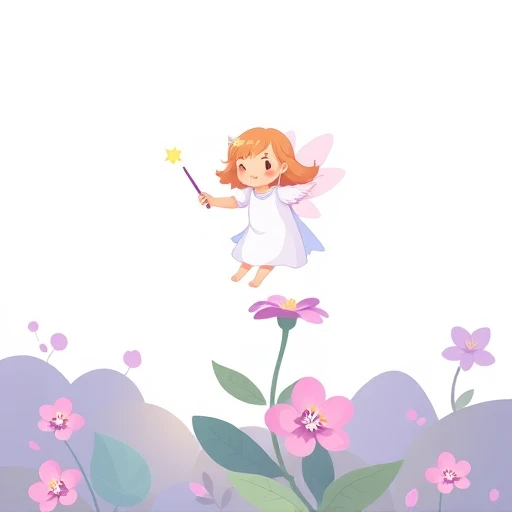
- A mythical, small, winged creature with magical powers found in folklore.
- Commonly appears in children's stories and 'fairy tales' like Cinderella.
- Used in everyday terms like 'fairy lights' and 'tooth fairy'.
- Symbolizes magic, nature, whimsy, and sometimes mischievous behavior.
The word fairy represents one of the most enduring and multifaceted concepts in human folklore and literature. At its core, a fairy is a mythical being, typically portrayed as a small, human-like creature possessing magical powers. However, the definition of a fairy has shifted dramatically over centuries, moving from the powerful, human-sized, and often dangerous 'fae' of Celtic and Old French legends to the tiny, winged, and benevolent sprites found in modern children's stories. In contemporary English, when someone mentions a fairy, they are usually referring to a character from a story that can fly, cast spells, and lives in a magical realm, often hidden within nature. People use this word most frequently in the context of storytelling, childhood development, and fantasy media. It is a staple of the 'fairy tale' genre, which includes classics like Cinderella and Sleeping Beauty, where a 'fairy godmother' might appear to change the protagonist's fate. Beyond literature, the term is used in everyday life to describe certain cultural traditions, such as the 'tooth fairy,' a legendary figure who rewards children for losing their primary teeth. In a metaphorical sense, 'fairy' can describe something that is ethereal, delicate, or unusually light and graceful. However, it is important to note that the word has also been used historically as a derogatory slang term, though in modern standard English, its primary association remains firmly rooted in the realm of fantasy and magic.
- Mythological Origin
- Derived from the Old French 'faerie', which referred to the land or the state of the 'fae' (fay), beings who were believed to influence human destiny.
The child looked up at the old oak tree, convinced that a tiny fairy lived among the glowing moss.
The usage of 'fairy' also extends into the botanical and natural world, where certain plants or mushrooms are named after these creatures, such as 'fairy rings'—circles of mushrooms that were once believed to be the dancing grounds of magical beings. In the 19th century, the 'Cottingley Fairies' photographs famously sparked a global debate about the existence of these creatures, demonstrating how deeply the concept is embedded in the human psyche. Today, the word is ubiquitous in gaming, film, and art. From the mischievous Puck in Shakespeare's 'A Midsummer Night's Dream' to the iconic Tinker Bell in Disney's 'Peter Pan', the fairy continues to evolve. It serves as a symbol of the unseen wonders of nature and the power of imagination. When using the word, speakers often evoke a sense of whimsy or nostalgia. In academic circles, the study of fairies falls under folklore and comparative mythology, where researchers analyze how these stories reflect the fears and desires of the societies that created them. The transition from the 'Hidden People' of Iceland to the 'Pixies' of Cornwall shows the regional diversity of the term. Whether used to describe a character in a high-fantasy novel or a decorative ornament on a Christmas tree, 'fairy' remains a vibrant and essential part of the English lexicon, bridging the gap between reality and the supernatural.
- Modern Connotation
- Usually implies a small, winged, female-coded being associated with nature, magic, and benevolence, though 'dark fairies' are common in modern subversions.
She dressed as a fairy for the carnival, complete with glittery wings and a magic wand.
In professional writing, particularly in literary criticism, 'fairy' is used to categorize specific motifs. For example, the 'fairy tale' structure is a recognized narrative form with specific rules and tropes. In the world of fashion, the 'fairycore' aesthetic has recently gained popularity, emphasizing soft colors, natural elements, and a dreamlike quality. This demonstrates that the word is not just a noun for a creature, but an adjective for a specific style and feeling. Furthermore, the word appears in compound forms like 'fairy-tale ending,' which describes a perfect or idealized conclusion to a situation, often implying that such a result is as unlikely as magic itself. Despite its ancient roots, the word 'fairy' shows no signs of disappearing, as it continues to adapt to new media and cultural shifts, remaining a key term for anyone exploring the depths of English language and culture.
Using the word fairy correctly involves understanding its grammatical role as a countable noun and its common associations. Most frequently, it acts as the subject or object of a sentence describing magical actions. For instance, 'The fairy waved her wand' or 'I saw a fairy in the garden.' Because fairies are often perceived as small, they are frequently paired with adjectives like 'tiny,' 'delicate,' 'miniature,' or 'ethereal.' When describing their movement, verbs like 'flutter,' 'dart,' 'glide,' and 'hover' are common choices, reflecting their bird-like or insect-like flight. In more complex sentence structures, 'fairy' often appears in possessive forms, such as 'the fairy's wings' or 'the fairies' kingdom,' requiring careful placement of the apostrophe depending on whether you are referring to one or many.
- Subject-Verb Agreement
- 'The fairy flies' (singular) vs. 'The fairies fly' (plural). Note the spelling change from -y to -ies in the plural form.
According to the legend, a fairy will grant three wishes to anyone who rescues it from a spider's web.
The word is also a frequent component of compound nouns and attributive constructions. In the phrase 'fairy lights,' the word 'fairy' functions as an adjective modifying 'lights,' describing small, decorative electric bulbs. Similarly, in 'fairy cake' (a British term for a small cupcake), it describes the size and dainty nature of the dessert. When using 'fairy' in a figurative sense, it is often part of a simile or metaphor. For example, 'She moved as silently as a fairy' or 'The morning dew made the garden look like a fairy realm.' In these cases, the word is used to evoke a specific atmosphere of beauty and mystery. In academic or formal writing about folklore, you might encounter the word in phrases like 'fairy lore' or 'the fairy faith,' referring to the body of beliefs surrounding these beings.
- Common Collocations
- Fairy tale, fairy godmother, fairy lights, fairy ring, tooth fairy, fairy dust.
The old book was filled with intricate illustrations of every fairy mentioned in the local myths.
When writing dialogue, 'fairy' can be used as a term of endearment or a descriptive label, though this is less common in modern speech. In fantasy role-playing games (RPGs), 'fairy' might be a character class or race, leading to sentences like 'I chose to play as a fairy because of their high magic stats.' It's also important to distinguish between 'fairy' and similar words like 'elf' or 'pixie.' While often used interchangeably in casual conversation, in specific mythologies, a fairy might have wings while an elf does not. Using the word 'fairy' effectively requires an awareness of these subtle distinctions and the rich imagery the word carries. Whether you are writing a creative story, describing a holiday decoration, or discussing cultural history, 'fairy' provides a precise way to reference the magical and the miniature.
You are likely to encounter the word fairy in a wide variety of settings, ranging from domestic environments to global entertainment platforms. One of the most common places is in the home, particularly in conversations between parents and children. The 'tooth fairy' is a nearly universal concept in English-speaking households, where parents explain the disappearance of a lost tooth by attributing it to this magical visitor. In this context, the word is associated with wonder, reward, and the preservation of childhood innocence. Similarly, bedtime stories are a primary source of the word, as 'fairy tales' are read aloud to millions of children every night. These stories, from 'The Blue Fairy' in Pinocchio to the various fairies in 'Peter Pan,' cement the word's meaning early in life.
- In Popular Media
- Movies like 'Maleficent', 'Tinker Bell', and 'Pan's Labyrinth' use the word to define their magical inhabitants and world-building.
The movie trailer promised a dark reimagining of the classic fairy mythos.
In the world of entertainment and pop culture, 'fairy' is a frequent term in movies, television shows, and video games. Disney has perhaps done more than any other entity to standardize the modern visual of a fairy. In theme parks like Disneyland, you will hear the word constantly in relation to character meet-and-greets and parades. In the gaming world, titles like 'The Legend of Zelda' feature fairies as essential gameplay elements that provide healing or guidance. Furthermore, during festive seasons like Christmas, the word is heard in retail environments and homes in reference to 'fairy lights' or the 'fairy on top of the tree.' These usages are so common that the magical origin of the word is often secondary to its practical application as a name for a decoration.
- In Gardening and Nature
- Hobbyists often talk about 'fairy gardens'—miniature landscapes created in containers or small garden plots.
We spent the afternoon stringing fairy lights across the patio for the summer party.
You will also hear the word in more specialized contexts. In literature and art history, scholars discuss the 'Fairy Painting' movement of the Victorian era. In environmental circles, the term might come up when discussing 'fairy shrimps' or 'fairy wrens,' showing how biologists use the word to describe small, delicate species. In social settings, you might hear the idiom 'away with the fairies,' used to describe someone who is daydreaming or not paying attention. This variety of contexts—from the nursery to the biology lab to the cinema—highlights how 'fairy' is a word that has successfully migrated from ancient oral tradition into every corner of modern life. Whether it's a child hoping for a visit from the tooth fairy or a designer choosing fairy lights for a wedding, the word is a constant presence in the English-speaking world.
One of the most frequent mistakes learners make with the word fairy involves its pluralization and spelling. Because it ends in a consonant followed by 'y', the plural is formed by changing the 'y' to 'i' and adding 'es', resulting in 'fairies'. Many people mistakenly write 'fairys', which is incorrect. Another common spelling error is confusing 'fairy' with 'ferry' (a boat that carries passengers across water). While they sound somewhat similar, their meanings and spellings are entirely different. Using 'ferry' when you mean a magical creature can lead to confusing sentences like 'The ferry gave me a wish,' which would imply a boat is talking to you.
- Spelling Confusion
- Fairy (Magical creature) vs. Ferry (Boat). Pronunciation is similar but 'fairy' has an /eə/ sound while 'ferry' has an /e/ sound in many accents.
Incorrect: I love reading fairys tales. Correct: I love reading fairy tales.
Another mistake involves the misuse of the term 'fairy tale.' Some learners use it to describe any story with magic, but technically, a fairy tale is a specific subgenre of folklore. More importantly, in a figurative sense, calling something a 'fairy tale' can be a mistake if you don't realize it often implies the thing is a lie or impossible. For example, saying 'His business plan is a fairy tale' is an insult, meaning the plan is unrealistic. If you meant to say the plan is wonderful, you should use a different word. Additionally, learners often confuse 'fairy' with other mythical beings like 'elves,' 'gnomes,' or 'pixies.' While they are all magical, they have distinct characteristics in folklore. Calling a large, bearded gnome a 'fairy' would be considered inaccurate by fans of the genre.
- Plural Possession
- Fairies' (plural possessive) is often confused with Fairy's (singular possessive). Example: 'The fairies' wings' (many fairies) vs 'The fairy's wings' (one fairy).
Don't confuse fairy (noun) with fiery (adjective meaning like fire).
Finally, there is the issue of 'fairy' vs. 'faerie.' While 'faerie' is a valid spelling, it is usually reserved for high-fantasy literature or to denote a more archaic, serious, or dangerous type of magical being. Using 'faerie' in a casual text about Christmas lights might seem overly dramatic or pretentious. Similarly, 'fay' is an even more archaic version. For most everyday purposes, 'fairy' is the correct and most natural choice. By paying attention to these spelling nuances, pluralization rules, and figurative meanings, you can avoid common pitfalls and use the word with confidence in any situation.
While fairy is the most common term for a small magical being, several other words offer different shades of meaning or belong to specific cultural traditions. Understanding these alternatives can help you be more precise in your descriptions. For example, pixie often refers to a specific type of fairy from Southwestern English folklore, usually depicted as being particularly mischievous, having pointed ears, and often lacking wings in older traditions. Sprite is a more general term that can refer to any ethereal being, often associated with a specific element like water (water sprite) or air. It carries a connotation of being light and elusive.
- Fairy vs. Elf
- Fairies are typically smaller and have wings. Elves (in modern fantasy like Tolkien) are human-sized, immortal, and do not have wings. However, 'Christmas elves' are small, showing how these terms overlap.
Instead of calling it a fairy, the author described the creature as a woodland nymph.
Another related term is nymph, which comes from Greek mythology. Nymphs are usually tied to specific natural features like trees (dryads) or rivers (naiads) and are typically portrayed as beautiful young women rather than tiny winged creatures. Brownie and hobgoblin refer to household spirits who perform chores in exchange for food, a very different role than the typical forest-dwelling fairy. If you want to sound more formal or archaic, you might use fay or faerie. These terms often imply a more powerful, mysterious, and potentially dangerous nature, closer to the original Celtic myths where the 'Aos Sí' (people of the mounds) were respected and feared.
- Comparison Table
-
- Fairy: General term, often winged, magical.
- Pixie: Mischievous, pointed ears, specific to UK folklore.
- Sprite: Small, energetic, often elemental.
- Imp: Small, demonic, mischievous, often ugly.
The sylph vanished into the clouds, leaving only a faint shimmer behind.
In a more metaphorical sense, if you are looking for alternatives to 'fairy-tale' (meaning perfect), you could use 'idealized,' 'storybook,' or 'dreamlike.' If you are using 'fairy' to mean small, you might use 'diminutive' or 'petite.' Understanding these synonyms and related terms allows you to choose the word that best fits the tone and context of your writing. Whether you need the whimsical charm of a 'pixie,' the elemental power of a 'sprite,' or the classical beauty of a 'nymph,' the English language provides a rich palette of words to describe the magical beings that inhabit our stories and imaginations.
How Formal Is It?
재미있는 사실
In the Middle Ages, the 'faerie' was a place you visited, not a creature you met. You would go 'into faerie' to meet the 'fays'.
발음 가이드
- Pronouncing it like 'ferry' (boat) too closely in some accents.
- Adding an extra syllable at the end.
- Mispronouncing the 'ai' as a long 'a' like 'fay-ry'.
- Mumbling the final 'y' sound.
- Confusing the vowel sound with 'fire'.
난이도
The word is common and easy to recognize in most texts.
The plural spelling 'fairies' can be tricky for beginners.
Pronunciation is straightforward but watch out for 'ferry' confusion.
Easily understood in context, though idioms might be confusing.
다음에 무엇을 배울까
선수 학습
다음에 배울 것
고급
알아야 할 문법
Pluralization of -y nouns
Fairy -> Fairies (Change y to i and add es).
Compound Nouns
Fairy + Tale = Fairy tale (A specific type of story).
Possessive Apostrophes
The fairy's wand (one) vs. The fairies' wands (many).
Adjective Suffixes
Fairy + -like = Fairy-like (Resembling a fairy).
Articles with Countable Nouns
I saw *a* fairy (not 'I saw fairy').
수준별 예문
The fairy is very small.
La fée est très petite.
Simple subject-verb-adjective structure.
Does the fairy have wings?
Est-ce que la fée a des ailes ?
Question form using 'does'.
I see a fairy in the book.
Je vois une fée dans le livre.
Use of the indefinite article 'a'.
The fairy is blue.
La fée est bleue.
Describing color.
A fairy can do magic.
Une fée peut faire de la magie.
Use of the modal verb 'can'.
The tooth fairy came last night.
La fée des dents est venue hier soir.
Common noun phrase 'tooth fairy'.
She wants to be a fairy.
Elle veut être une fée.
Verb 'want' followed by 'to be'.
The fairy lives in a flower.
La fée vit dans une fleur.
Present simple for a general fact.
My mother told me a fairy tale before bed.
Ma mère m'a raconté un conte de fées avant de dormir.
Compound noun 'fairy tale'.
We put fairy lights on the tree.
Nous avons mis des guirlandes lumineuses sur l'arbre.
Plural compound noun 'fairy lights'.
There are many fairies in this story.
Il y a beaucoup de fées dans cette histoire.
Plural form 'fairies'.
The fairy's wings are very pretty.
Les ailes de la fée sont très jolies.
Singular possessive 'fairy's'.
She wore a fairy costume to the party.
Elle a porté un costume de fée à la fête.
Noun used as an adjective.
Fairies are usually very kind in books.
Les fées sont généralement très gentilles dans les livres.
Generalizing with plural nouns.
The little fairy flew into the garden.
La petite fée a volé dans le jardin.
Past simple of 'fly'.
He doesn't believe in fairies anymore.
Il ne croit plus aux fées.
Negative form with 'believe in'.
The protagonist was saved by a fairy godmother.
Le protagoniste a été sauvé par une marraine la fée.
Passive voice construction.
It was like a fairy tale come true.
C'était comme un conte de fées devenu réalité.
Idiomatic expression.
A fairy ring appeared in the grass overnight.
Un cercle de fées est apparu dans l'herbe pendant la nuit.
Specific folklore term 'fairy ring'.
She has a fairy-like grace when she dances.
Elle a une grâce féerique quand elle danse.
Adjective 'fairy-like'.
The author explores the darker side of fairy lore.
L'auteur explore le côté plus sombre de la tradition des fées.
Abstract noun 'lore'.
Stop daydreaming; you're away with the fairies!
Arrête de rêvasser ; tu es dans la lune !
Idiomatic phrase.
The garden was decorated with delicate fairy ornaments.
Le jardin était décoré de délicats ornements de fées.
Descriptive adjectives.
Many cultures have stories about fairies and spirits.
De nombreuses cultures ont des histoires sur les fées et les esprits.
Linking related nouns.
The Victorian era saw a surge in fairy-themed art.
L'époque victorienne a connu un essor de l'art sur le thème des fées.
Compound adjective 'fairy-themed'.
He dismissed the explanation as a mere fairy tale.
Il a rejeté l'explication comme étant un simple conte de fées.
Figurative use meaning 'untrue'.
The ethereal glow of the fairies illuminated the cave.
La lueur éthérée des fées illuminait la grotte.
Advanced vocabulary 'ethereal'.
The film subverts the traditional image of the fairy.
Le film détourne l'image traditionnelle de la fée.
Academic verb 'subverts'.
Fairies were once thought to be fallen angels.
On pensait autrefois que les fées étaient des anges déchus.
Passive reporting verb.
The forest was thick with legends of the 'hidden fairy folk'.
La forêt était pleine de légendes sur le 'peuple caché des fées'.
Specific collective noun 'folk'.
Her style is very 'fairycore', with lots of lace and flowers.
Son style est très 'fairycore', avec beaucoup de dentelle et de fleurs.
Modern cultural term.
The fairies' mischievous nature caused trouble for the villagers.
La nature espiègle des fées a causé des ennuis aux villageois.
Plural possessive 'fairies''.
The poet used the fairy as a metaphor for fleeting inspiration.
Le poète a utilisé la fée comme métaphore de l'inspiration éphémère.
Literary analysis context.
There is a distinct lack of whimsy in modern fairy adaptations.
Il y a un manque distinct de fantaisie dans les adaptations modernes de fées.
Advanced noun 'whimsy'.
The Cottingley Fairies incident remains a fascinating case of collective delusion.
L'incident des fées de Cottingley reste un cas fascinant de délire collectif.
Historical reference.
She spoke with a fairy-like lilt in her voice.
Elle parlait avec une cadence féerique dans la voix.
Describing sound metaphorically.
The intricate lace patterns resembled a fairy's web.
Les motifs de dentelle complexes ressemblaient à une toile de fée.
Comparative imagery.
Folklore suggests that fairies are bound by strict, often strange, laws.
Le folklore suggère que les fées sont liées par des lois strictes, souvent étranges.
Complex sentence structure.
The transition from 'fay' to 'fairy' reflects a shift in linguistic aesthetics.
La transition de 'fay' à 'fairy' reflète un changement dans l'esthétique linguistique.
Linguistic analysis.
The landscape possessed a haunting, fairy-haunted quality.
Le paysage possédait une qualité obsédante, hantée par les fées.
Compound adjective 'fairy-haunted'.
The scholarly discourse on fairy-lore often intersects with psychoanalytic theory.
Le discours savant sur la tradition des fées recoupe souvent la théorie psychanalytique.
Highly formal academic register.
One must navigate the liminal spaces where the human and fairy realms overlap.
Il faut naviguer dans les espaces liminaux où les domaines humain et féerique se chevauchent.
Use of 'liminal' and 'realms'.
The author's prose is imbued with a delicate, almost fairy-spun fragility.
La prose de l'auteur est imprégnée d'une fragilité délicate, presque filée par les fées.
Metaphorical compound adjective.
To dismiss these myths as mere fairy tales is to ignore their profound cultural utility.
Rejeter ces mythes comme de simples contes de fées, c'est ignorer leur profonde utilité culturelle.
Infinitive phrase as subject.
The painting captures the capricious and often predatory nature of the Seelie Court fairies.
Le tableau capture la nature capricieuse et souvent prédatrice des fées de la Cour Seelie.
Specific mythological reference.
The etymological trajectory of 'fairy' reveals a fascinating confluence of Romance and Germanic influences.
La trajectoire étymologique de 'fairy' révèle une confluence fascinante d'influences romanes et germaniques.
Technical linguistic terminology.
The shimmering light on the water had a preternatural, fairy-like quality that defied description.
La lumière scintillante sur l'eau avait une qualité surnaturelle, féerique, qui défiait toute description.
Advanced adjective 'preternatural'.
In the tapestry of European folklore, the fairy remains a thread of enduring mystery.
Dans la tapisserie du folklore européen, la fée reste un fil d'un mystère durable.
Extended metaphor.
자주 쓰는 조합
자주 쓰는 구문
— To be daydreaming or not paying attention to reality.
I'm sorry, I didn't hear you; I was away with the fairies.
— A perfect, happy conclusion that seems unlikely in real life.
Not every romance has a fairy-tale ending.
— To have a sense of wonder or to believe in the impossible.
You're never too old to believe in fairies.
— An exceptionally beautiful and perfect wedding ceremony.
The royal couple had a true fairy-tale wedding.
— Describing someone who is very light, graceful, or small.
She moved across the stage like a fairy.
— A person who unexpectedly helps or protects someone.
The mentor was a fairy godmother figure to the young artist.
— A castle that looks like it belongs in a magical story.
Neuschwanstein is the ultimate fairy-tale castle.
— A love story that is perfect and magical.
They shared a fairy-tale romance that lasted fifty years.
— An incredible and rapid success that seems like magic.
The startup's growth was a fairy-tale success.
— An idealized or imaginary place where everything is perfect.
She lives in a bit of a fairy-tale world.
자주 혼동되는 단어
A boat. Sounds similar but unrelated.
Meaning full of fire or intense. Different spelling and meaning.
Extreme anger. Different pronunciation and meaning.
관용어 및 표현
— Distracted, daydreaming, or slightly eccentric.
He's a bit away with the fairies today.
Informal— A happy ending that is almost too good to be true.
Life isn't always a fairy-tale ending.
Neutral— A mythical being who gives money for teeth; often used to refer to unexpected money.
Did the tooth fairy leave this twenty dollar bill?
Neutral— A generous benefactor.
The foundation acted as a fairy godmother to the struggling school.
Neutral— Something that is unrealistic or purely imaginary.
His claims about the treasure are just fairy-tale stuff.
Informal— Extremely light and delicate.
The fabric felt like a fairy's touch against her skin.
Literary— Something that appears valuable but turns out to be worthless.
The quick profits turned out to be fairy gold.
Literary/Archaic— A life that seems perfect and without problems.
She seems to lead a fairy-tale life on social media.
Neutral— Something that happens perfectly and effortlessly.
The team worked some fairy-tale magic to finish the project.
Informal— A person who performs brave and perfect deeds.
He was hailed as a fairy-tale hero after the rescue.
Neutral혼동하기 쉬운
Both are small magical beings.
Pixies are specifically from British folklore and are more mischievous.
The pixie stole my thimble, but the fairy blessed the garden.
Both are mythical humanoids.
Elves are often human-sized and don't have wings in modern fantasy.
Legolas is an elf, but Tinker Bell is a fairy.
Both are small and magical.
Sprite is a broader term often used for elemental spirits.
The water sprite lived in the fountain.
Both are mythical and small.
Gnomes live underground and are usually old men with beards.
The gnome was digging, while the fairy was flying.
Both are small and magical.
Imps are usually ugly and a bit evil or demonic.
The little imp caused a lot of trouble.
문장 패턴
The [Noun] is a [Adjective] fairy.
The girl is a small fairy.
I like [Adjective] fairy tales.
I like old fairy tales.
It was like a fairy tale [Verb Phrase].
It was like a fairy tale come true.
The [Noun] was decorated with [Noun Phrase].
The room was decorated with fairy lights.
The author uses the fairy as a [Noun] for [Abstract Noun].
The author uses the fairy as a symbol for innocence.
To [Verb] the [Noun] as a mere fairy tale is to [Verb].
To dismiss the myth as a mere fairy tale is to miss its point.
She has a [Adjective]-like grace.
She has a fairy-like grace.
Do you believe in [Plural Noun]?
Do you believe in fairies?
어휘 가족
명사
형용사
관련
사용법
Common in children's literature, fantasy, and holiday contexts.
-
I saw two fairys.
→
I saw two fairies.
The plural of nouns ending in consonant + y is -ies.
-
I took the fairy to cross the river.
→
I took the ferry to cross the river.
A ferry is a boat; a fairy is a magical creature.
-
It was a fairy story ending.
→
It was a fairy-tale ending.
The standard idiom for a perfect ending is 'fairy-tale ending'.
-
The fairys wand was broken.
→
The fairy's wand was broken.
Use an apostrophe for possession: fairy's (singular).
-
She is away with the fairy.
→
She is away with the fairies.
The idiom is always plural: 'away with the fairies'.
팁
The -ies Rule
Always remember to change the 'y' to 'i' when making 'fairy' plural: fairies.
Compound Power
Learn 'fairy tale' and 'fairy lights' together as they are the most common uses.
Cultural Awareness
The tooth fairy is a great conversation starter with English speakers.
Using 'Faerie'
Use the spelling 'faerie' if you are writing a serious fantasy story.
Daydreaming
Use 'away with the fairies' to describe a friend who isn't listening.
Countable Noun
Don't forget the article: 'I saw *a* fairy' is correct.
Rhyme Time
Remember it rhymes with 'dairy' and 'hairy' to get the sound right.
Shakespeare Connection
Read 'A Midsummer Night's Dream' to see a classic use of fairies.
Fairy-tale Ending
Use this phrase to describe a perfect but unlikely situation.
Fairy Rings
Look for circles of mushrooms to practice using the term 'fairy ring'.
암기하기
기억법
Think of a 'Fair' 'Y' (Young) person with wings. A Fairy is a Fair Young magical being.
시각적 연상
Imagine a tiny glowing light fluttering around a flower, leaving a trail of glitter.
Word Web
챌린지
Try to write a three-sentence story using the words 'fairy', 'forest', and 'wish' without using the word 'magic'.
어원
The word comes from Middle English 'fairie', which was borrowed from Old French 'faerie'. This Old French word was derived from 'fae', meaning a 'fay' or magical being. The root is the Latin 'fata', meaning 'the Fates', who were the goddesses of destiny.
원래 의미: Originally, 'faerie' referred to the state of being magical, the land of the fays, or magic itself, rather than an individual creature.
Indo-European > Italic > Romance > French > English.문화적 맥락
Be aware that 'fairy' was used as a slur for gay men in the 20th century. Use it only in magical or decorative contexts.
In the UK and US, the 'Tooth Fairy' is a major cultural milestone for children. Fairy tales are the foundation of early literacy.
실생활에서 연습하기
실제 사용 상황
Bedtime Stories
- Once upon a time
- Fairy godmother
- Magic wand
- Happy ever after
Christmas Decorations
- Fairy lights
- Tree topper
- Twinkling lights
- Festive glow
Childhood Milestones
- Tooth fairy
- Lost tooth
- Under the pillow
- Coin reward
Fantasy Gaming
- Fairy companion
- Healing fairy
- Magic dust
- Fairy realm
Gardening
- Fairy garden
- Fairy ring
- Miniature plants
- Whimsical decor
대화 시작하기
"Did you believe in the tooth fairy when you were a child?"
"What is your favorite fairy tale from your country?"
"Do you think modern movies have changed how we see fairies?"
"Have you ever seen a 'fairy ring' of mushrooms in a forest?"
"If you had a fairy godmother, what would you wish for?"
일기 주제
Write about a time you felt like you were in a fairy tale.
Describe what a secret fairy kingdom in your backyard might look like.
If you were a fairy, what kind of magic would you want to have?
Compare the fairies in modern movies to the ones in old legends.
Write a story about a fairy who loses their wings and has to find them.
자주 묻는 질문
10 질문Fairies are mythical creatures from folklore and stories; there is no scientific evidence that they exist in the real world.
In modern stories, yes, but in older folklore, fairies were often human-sized and did not have wings.
A pixie is a specific type of fairy known for being mischievous and having pointed ears, whereas 'fairy' is a general term.
It is an idiom meaning someone is daydreaming, not paying attention, or acting a bit strange.
Because the small, twinkling bulbs look like tiny magical beings or 'fairy' magic in the dark.
A natural circle of mushrooms in the grass, which folklore says was created by fairies dancing.
Yes, 'faerie' is an older spelling often used in fantasy books to sound more serious or magical.
Tinker Bell from Peter Pan is arguably the most famous fairy in modern culture.
In stories, they are often said to eat nectar, honey, or 'fairy food' that can be dangerous for humans to eat.
Yes, although they are often portrayed as female, male fairies exist in many myths and stories.
셀프 테스트 182 질문
Write a short sentence about a fairy in a garden.
Well written! Good try! Check the sample answer below.
Explain what a 'fairy godmother' does.
Well written! Good try! Check the sample answer below.
Describe a room decorated with fairy lights.
Well written! Good try! Check the sample answer below.
Write a sentence using the idiom 'away with the fairies'.
Well written! Good try! Check the sample answer below.
Compare a fairy to an elf in two sentences.
Well written! Good try! Check the sample answer below.
Write a brief story opening for a fairy tale.
Well written! Good try! Check the sample answer below.
Describe the appearance of a fairy using three adjectives.
Well written! Good try! Check the sample answer below.
What is a 'fairy-tale ending'? Give an example.
Well written! Good try! Check the sample answer below.
Write a sentence using the plural form 'fairies'.
Well written! Good try! Check the sample answer below.
Use the word 'fairy' as an adjective to describe a person's movement.
Well written! Good try! Check the sample answer below.
Explain the 'tooth fairy' tradition to someone who doesn't know it.
Well written! Good try! Check the sample answer below.
Write a sentence about a 'fairy ring'.
Well written! Good try! Check the sample answer below.
Describe a 'fairy-tale castle'.
Well written! Good try! Check the sample answer below.
Write a sentence using the word 'faerie'.
Well written! Good try! Check the sample answer below.
What does 'fairy dust' do in stories?
Well written! Good try! Check the sample answer below.
Write a sentence about a 'fairy cake'.
Well written! Good try! Check the sample answer below.
Use the word 'fairy' in a formal sentence about folklore.
Well written! Good try! Check the sample answer below.
Write a sentence about a 'fairy-tale romance'.
Well written! Good try! Check the sample answer below.
Describe a fairy's home.
Well written! Good try! Check the sample answer below.
Write a sentence using 'fairy' and 'magic'.
Well written! Good try! Check the sample answer below.
Pronounce the word 'fairy' clearly.
Read this aloud:
당신의 답변:
Speech recognition is not supported in your browser. Try Chrome or Edge.
Tell a one-sentence story about a fairy.
Read this aloud:
당신의 답변:
Speech recognition is not supported in your browser. Try Chrome or Edge.
Use 'fairy lights' in a sentence about a party.
Read this aloud:
당신의 답변:
Speech recognition is not supported in your browser. Try Chrome or Edge.
Explain the idiom 'away with the fairies'.
Read this aloud:
당신의 답변:
Speech recognition is not supported in your browser. Try Chrome or Edge.
Describe a fairy's wings.
Read this aloud:
당신의 답변:
Speech recognition is not supported in your browser. Try Chrome or Edge.
What is your favorite fairy tale?
Read this aloud:
당신의 답변:
Speech recognition is not supported in your browser. Try Chrome or Edge.
Say 'The tooth fairy came last night' three times fast.
Read this aloud:
당신의 답변:
Speech recognition is not supported in your browser. Try Chrome or Edge.
Use 'fairy-tale ending' in a sentence about a movie.
Read this aloud:
당신의 답변:
Speech recognition is not supported in your browser. Try Chrome or Edge.
Discuss if you think fairies are always good.
Read this aloud:
당신의 답변:
Speech recognition is not supported in your browser. Try Chrome or Edge.
Describe a 'fairy ring'.
Read this aloud:
당신의 답변:
Speech recognition is not supported in your browser. Try Chrome or Edge.
Pronounce 'fairies' and 'ferries' to show the difference.
Read this aloud:
당신의 답변:
Speech recognition is not supported in your browser. Try Chrome or Edge.
What would you wish for if you met a fairy?
Read this aloud:
당신의 답변:
Speech recognition is not supported in your browser. Try Chrome or Edge.
Use 'fairy godmother' metaphorically.
Read this aloud:
당신의 답변:
Speech recognition is not supported in your browser. Try Chrome or Edge.
Describe a 'fairy-tale castle'.
Read this aloud:
당신의 답변:
Speech recognition is not supported in your browser. Try Chrome or Edge.
Talk about 'fairy dust'.
Read this aloud:
당신의 답변:
Speech recognition is not supported in your browser. Try Chrome or Edge.
Use 'fairy-like' to describe a dance.
Read this aloud:
당신의 답변:
Speech recognition is not supported in your browser. Try Chrome or Edge.
Explain the 'tooth fairy' to a child.
Read this aloud:
당신의 답변:
Speech recognition is not supported in your browser. Try Chrome or Edge.
Say 'fairy tale' five times.
Read this aloud:
당신의 답변:
Speech recognition is not supported in your browser. Try Chrome or Edge.
Describe a 'fairy garden'.
Read this aloud:
당신의 답변:
Speech recognition is not supported in your browser. Try Chrome or Edge.
What is 'fairy lore'?
Read this aloud:
당신의 답변:
Speech recognition is not supported in your browser. Try Chrome or Edge.
Listen and write the word: 'The fairy flew away.'
Is the speaker talking about a boat or a creature? 'The fairy gave me a wish.'
Listen for the plural: 'There are many fairies here.'
Identify the phrase: 'We need more fairy lights.'
What did the fairy do? 'The fairy waved her wand.'
Listen for the idiom: 'He's away with the fairies.'
What kind of story is it? 'It's a classic fairy tale.'
Who is coming? 'The tooth fairy is coming tonight.'
Identify the adjective: 'She has a fairy-like grace.'
What is the subject? 'Fairies are small magical beings.'
Listen and spell: 'Faerie'.
What is the ending like? 'It was a fairy-tale ending.'
What did they find? 'They found a fairy ring.'
Who is the helper? 'She is my fairy godmother.'
What is the powder called? 'Sprinkle some fairy dust.'
/ 182 correct
Perfect score!
Summary
The word 'fairy' bridges the gap between ancient folklore and modern imagination, representing a small, magical being that continues to influence literature, language, and culture. Example: 'The fairy tale had a happy ending.'
- A mythical, small, winged creature with magical powers found in folklore.
- Commonly appears in children's stories and 'fairy tales' like Cinderella.
- Used in everyday terms like 'fairy lights' and 'tooth fairy'.
- Symbolizes magic, nature, whimsy, and sometimes mischievous behavior.
The -ies Rule
Always remember to change the 'y' to 'i' when making 'fairy' plural: fairies.
Compound Power
Learn 'fairy tale' and 'fairy lights' together as they are the most common uses.
Cultural Awareness
The tooth fairy is a great conversation starter with English speakers.
Using 'Faerie'
Use the spelling 'faerie' if you are writing a serious fantasy story.