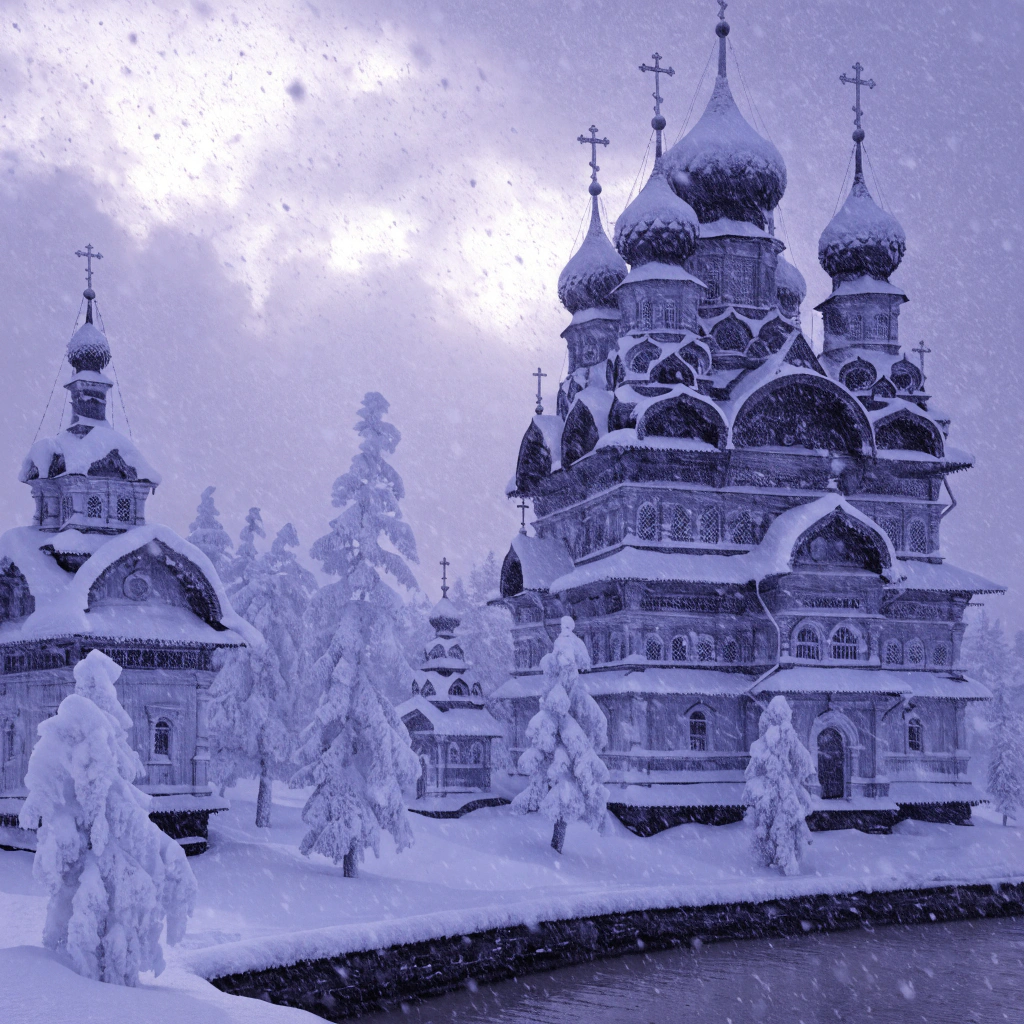
A Beautiful Wooden Place in Russia
Kizhi Pogost is a beautiful place in Russia. It is on a small island in a big lake. The place has two old churches and a tall tower.
The buildings are made of wood. There are no metal nails in the wood. The biggest church is very famous. It has twenty-two domes. The domes look like silver in the sun.
Many people visit the island. They see the tall trees and the blue water. It is a quiet and special place. It looks like a fairytale.
Grammar Spotlight
Pattern: Present Simple (to be)
"Kizhi Pogost is a beautiful place in Russia."
We use 'is' for singular subjects to describe facts or states. It helps us give information about a place.
Pattern: There are
"There are no metal nails in the wood."
We use 'there are' to say that things exist. We use it with plural nouns like 'nails'.
Test Your Understanding
10 questions · A1 Beginner · 1 free preview
Test what you learned from this article. Answer all questions to earn XP!
Where is Kizhi Pogost?
Want to finish the quiz?
9 more questions are waiting for you. Sign up free to unlock the full quiz and earn XP!
Sign Up FreeAlready have an account? Sign In
Question Breakdown
Where is Kizhi Pogost?
Your answer:
Correct answer: In Russia
The buildings are made of stone.
Your answer:
Correct answer: False
What does 'island' mean?
Your answer:
Correct answer: Land with water around it
There are no metal _____ in the wood.
Your answer:
Correct answer: nails
The Wooden Wonders of Kizhi Island
Kizhi Pogost is a beautiful place in Russia. It is on a small island in Lake Onega. This place is famous because it has amazing buildings made of wood. The buildings look like they are from a fairytale. The island is very green and the water is blue. It is a peaceful place to walk.
The most important building is the Church of the Transfiguration. It was built in 1714. It is special because it has 22 silver domes. There is also another smaller church and a tall clock tower. A long wooden wall is around all the buildings.
Carpenters built these structures more than 300 years ago. They were very clever because they did not use any nails! They only used wood. Today, Kizhi Pogost is a very popular place for tourists. It is more beautiful than many modern buildings. People go there to see the history and the northern nature.
Grammar Spotlight
Pattern: Past Simple (Passive)
"It was built in 1714."
We use 'was' or 'were' with the past participle to talk about an action in the past when the person who did it is not the main focus. Here, the focus is on the church, not the workers.
Pattern: Comparatives
"It is more beautiful than many modern buildings."
To compare two things with long adjectives like 'beautiful', we use 'more' + adjective + 'than'. This shows one thing has more of a quality than the other.
Test Your Understanding
11 questions · A2 Elementary · 1 free preview
Test what you learned from this article. Answer all questions to earn XP!
Where is Kizhi Pogost located?
Want to finish the quiz?
10 more questions are waiting for you. Sign up free to unlock the full quiz and earn XP!
Sign Up FreeAlready have an account? Sign In
Question Breakdown
Where is Kizhi Pogost located?
Your answer:
Correct answer: On a small island
The buildings at Kizhi Pogost are made of stone.
Your answer:
Correct answer: False
What does the word 'domes' mean?
Your answer:
Correct answer: Round roofs
The carpenters were clever because they did not use any _____.
Your answer:
Correct answer: nails
How many domes does the Church of the Transfiguration have?
Your answer:
Correct answer: 22
The Wooden Wonders of Kizhi Island
Have you ever seen a church made entirely of wood? On a remote island in Lake Onega, Russia, there is a place called Kizhi Pogost. This amazing site has been famous for centuries because of its unique architecture. The ensemble includes two large wooden churches and a bell tower, which are surrounded by a traditional wooden fence.
The most impressive building is the Church of the Transfiguration. It has been built with 22 silver-colored domes that shine beautifully in the sun. According to local legends, the main structure was constructed using only an axe and no nails at all. This incredible work of art shows the skill of the Russian carpenters who lived in the 18th century. The wood used for the domes is aspen, which changes color over time, giving the church its famous silver glow.
The second church, the Church of the Intercession, was built so that people could pray during the cold northern winters. It is smaller than the main church but equally beautiful. Between these two churches stands an octagonal clock tower, which was added later to complete the group. These structures have survived many harsh winters and remain standing today.
Currently, Kizhi Pogost is protected as a UNESCO World Heritage site. It has been carefully restored by experts who want to keep the traditional building techniques alive for future generations. Visitors who travel to this distant island are often surprised by how the buildings seem to grow naturally from the green landscape. It is a peaceful place where history and nature come together perfectly. If you are interested in history and architecture, this fairytale-like location is a destination that should not be missed.
Grammar Spotlight
Pattern: Passive Voice (Past Simple)
"the main structure was constructed using only an axe and no nails at all."
The passive voice is used when the action is more important than the person who did it. Form it with 'was/were' + the past participle of the verb.
Pattern: Non-defining Relative Clauses
"an octagonal clock tower, which was added later to complete the group."
These clauses give extra information about a noun. They are separated by commas and use 'which' for objects or 'who' for people.
Test Your Understanding
11 questions · B1 Intermediate · 1 free preview
Test what you learned from this article. Answer all questions to earn XP!
Where is Kizhi Pogost located?
Want to finish the quiz?
10 more questions are waiting for you. Sign up free to unlock the full quiz and earn XP!
Sign Up FreeAlready have an account? Sign In
Question Breakdown
Where is Kizhi Pogost located?
Your answer:
Correct answer: On an island in Lake Onega
The Church of the Transfiguration has 20 silver domes.
Your answer:
Correct answer: False
What does 'architecture' mean?
Your answer:
Correct answer: The design and construction of buildings
Legend says the church was built without using any _____ at all.
Your answer:
Correct answer: nails
Why was the Church of the Intercession built?
Your answer:
Correct answer: For people to pray during winter
The Timber Marvels of Lake Onega: Exploring Kizhi Pogost
Situated amidst the tranquil waters of Lake Onega in the Republic of Karelia, Kizhi Island hosts one of Russia’s most extraordinary cultural treasures: the Kizhi Pogost. This architectural ensemble, which dates back to the 18th century, represents the pinnacle of Russian woodcraft. For centuries, these structures have stood as a testament to the ingenuity of local craftsmen who achieved unprecedented architectural feats using only the most basic of tools.
The centerpiece of the site is the Church of the Transfiguration. This magnificent structure is adorned with twenty-two silver-colored domes, which are covered in thousands of aspen shingles. These shingles are designed to reflect the light, causing the building to take on different vibrant hues depending on the time of day and the weather. The structures were the result of meticulous craftsmanship by local carpenters using interlocking timber logs, allegedly without the use of a single nail for the primary support system. This organic method of construction allowed the wood to breathe and expand, which is vital in a region where temperatures fluctuate dramatically.
Adjacent to the main church stands the Church of the Intercession and an octagonal bell tower. Together, they form a harmonious silhouette against the northern sky. Although the climate of Northern Russia is notoriously harsh, the timber has demonstrated remarkable resilience against the elements. Furthermore, the preservation of such delicate wooden architecture is a continuous challenge, yet it remains an essential endeavor for maintaining global heritage.
In 1990, the Kizhi Pogost was rightfully designated as a UNESCO World Heritage site. It serves not only as a place of worship but also as a museum of traditional construction techniques. Visitors who make the journey to this remote location are often struck by the seamless integration of the buildings into the natural landscape. Ultimately, the site remains a powerful symbol of human creativity and a reminder of a time when man and nature existed in a more balanced, organic relationship. This remote island continues to inspire architects and historians alike, proving that traditional methods can produce beauty that transcends time.
Grammar Spotlight
Pattern: Non-defining Relative Clauses
"This architectural ensemble, which dates back to the 18th century, represents the pinnacle of Russian woodcraft."
These clauses provide extra information that is not essential to the main meaning of the sentence. They are always separated by commas and use 'which' for objects or 'who' for people.
Pattern: Passive Voice (Past Simple)
"In 1990, the Kizhi Pogost was rightfully designated as a UNESCO World Heritage site."
The passive voice is used to focus on the action or the object receiving the action rather than the person performing it. It is formed using 'was/were' + the past participle.
Pattern: Concessive Clauses with 'Although'
"Although the climate of Northern Russia is notoriously harsh, the timber has demonstrated remarkable resilience against the elements."
These clauses are used to express a contrast or an unexpected result. 'Although' is followed by a subject and a verb to show that something is true despite another fact.
Test Your Understanding
11 questions · B2 Upper Intermediate · 1 free preview
Test what you learned from this article. Answer all questions to earn XP!
What is unique about the construction of the primary structures at Kizhi Pogost?
Want to finish the quiz?
10 more questions are waiting for you. Sign up free to unlock the full quiz and earn XP!
Sign Up FreeAlready have an account? Sign In
Question Breakdown
What is unique about the construction of the primary structures at Kizhi Pogost?
Your answer:
Correct answer: They were assembled using interlocking logs without nails.
The silver color of the domes comes from the specific type of metal used to cover them.
Your answer:
Correct answer: False
Which word describes something that has never been done or seen before?
Your answer:
Correct answer: Unprecedented
The resilience of the wood is a _____ to the high level of skill possessed by the original builders.
Your answer:
Correct answer: testament
Why is the organic method of construction considered vital for the site?
Your answer:
Correct answer: It allows the wood to expand and breathe in changing temperatures.
The Ethereal Splendor of Kizhi Pogost: A Masterclass in Vernacular Timber Architecture
Nestled amidst the crystalline expanses of Lake Onega in the Republic of Karelia, the Kizhi Pogost stands as a profound testament to the architectural ingenuity of the Russian North. Far from being a mere collection of ecclesiastical structures, this ensemble represents the absolute pinnacle of vernacular timber construction. It is through the meticulous preservation of these 18th-century edifices that we gain insight into a bygone era where the spiritual and the material were inextricably linked. Only by traversing the remote reaches of Karelia can the observer truly appreciate the ethereal quality of the Church of the Transfiguration, whose twenty-two silver-hued domes appear to fluctuate in tone with the shifting northern light.
The sheer audacity of the construction remains a point of scholarly fascination. What defines the Pogost is not merely its aesthetic allure, but the structural complexity achieved without a single iron nail in the primary framework. It was the master carpenters' profound understanding of wood as a living medium that allowed for such longevity. Such was their skill that the interlocking logs have withstood the abrasive humidity of the lake for centuries. Furthermore, the octagonal bell tower and the Church of the Intercession complement the central spire, creating a rhythmic harmony that resonates with the surrounding landscape. The nominalization of complex engineering concepts into traditional folk art is what elevates this site from a local curiosity to a global heritage icon.
However, the survival of the Pogost has not been without its tribulations. The inherent vulnerability of wood to the elements necessitates a continuous, almost obsessive cycle of restoration. Recent decades have seen a shift towards more intrusive conservation methods, sparking heated debate among heritage experts. While some argue for the necessity of internal metal skeletons to prevent catastrophic collapse, purists maintain that the integrity of the site is compromised by such modern interventions. This tension highlights the broader challenge of heritage management: balancing the preservation of physical form with the sanctity of traditional craftsmanship.
Ultimately, the Kizhi Pogost transcends its role as a historical relic. It serves as a poignant reminder of human resilience and the desire to create beauty in the most inhospitable of environments. The juxtaposition of the weathered timber against the vast, often turbulent waters of Onega evokes a sense of sublime isolation. To behold the Pogost is to witness the triumph of human spirit over the constraints of nature, a narrative etched into every beam and shingle of this wooden marvel.
Grammar Spotlight
Pattern: Inversion with Negative/Restrictive Adverbs
"Only by traversing the remote reaches of Karelia can the observer truly appreciate the ethereal quality of the Church of the Transfiguration."
When a sentence starts with 'Only by...', the auxiliary verb ('can') is placed before the subject ('the observer') to create emphasis and a more formal tone.
Pattern: Cleft Sentences
"It was the master carpenters' profound understanding of wood as a living medium that allowed for such longevity."
This structure uses 'It was... that' to focus on a specific piece of information (the carpenters' understanding) as the primary cause of an outcome.
Pattern: Nominalisation
"The juxtaposition of the weathered timber against the vast, often turbulent waters of Onega evokes a sense of sublime isolation."
By using the noun 'juxtaposition' instead of the verb 'juxtaposing', the sentence becomes more abstract, formal, and typical of C1 academic writing.
Test Your Understanding
12 questions · C1 Advanced · 1 free preview
Test what you learned from this article. Answer all questions to earn XP!
What is unique about the primary structural framework of the Kizhi Pogost?
Want to finish the quiz?
11 more questions are waiting for you. Sign up free to unlock the full quiz and earn XP!
Sign Up FreeAlready have an account? Sign In
Question Breakdown
What is unique about the primary structural framework of the Kizhi Pogost?
Your answer:
Correct answer: It was constructed without the use of iron nails.
The Church of the Transfiguration features twenty-two domes that change their appearance based on the light.
Your answer:
Correct answer: True
What does 'vernacular' refer to in the context of the article?
Your answer:
Correct answer: Traditional, local building styles
The Kizhi Pogost stands as a profound _____ to the architectural ingenuity of the Russian North.
Your answer:
Correct answer: testament
What is the main source of debate among heritage experts regarding the Pogost?
Your answer:
Correct answer: The use of intrusive modern conservation methods.
The article suggests that the environment of Lake Onega is mild and easy to build in.
Your answer:
Correct answer: False
Architectural Ontologies: The Vernacular Sublimity of the Kizhi Pogost
Rising with a spectral elegance from the crystalline expanse of Lake Onega, the Kizhi Pogost represents the zenith of Russian wooden vernacular architecture. This architectural ensemble, situated within the remote reaches of the Republic of Karelia, transcends mere construction; it is a profound ontological statement regarding the symbiosis between human ingenuity and the unforgiving boreal landscape. At the heart of this UNESCO World Heritage site lies the Church of the Transfiguration, a structure so intricate that it defies the conventional logic of 18th-century carpentry. Were one to scrutinize the assembly of its twenty-two silver-hued domes, one would discover a complex interplay of aspen shingles and interlocking logs, traditionally purported to have been constructed without the aid of a single iron nail. While such folklore may be hyperbolic, the structural integrity achieved through purely organic joinery remains an unparalleled feat of engineering.
The Pogost, a term originally denoting a communal administrative and religious center, serves as a testament to the socio-cultural cohesion of the medieval Russian north. Not only does the ensemble serve as a testament to religious fervor, but it also exemplifies the communal resilience required to inhabit such a marginal environment. The Church of the Intercession, slightly more modest in its aesthetic though no less significant, complements the Transfiguration by providing a heated space for liturgical services during the arduous winter months. This dual-church system reflects a pragmatic approach to the temporal vicissitudes of the subarctic climate, ensuring that spiritual life remained uninterrupted by the seasonal extremes that define the region. The octagonal bell tower further anchors the site, providing a vertical counterpoint to the horizontal vastness of the lake, creating a visual confluence that feels both grounded and ethereal.
However, the preservation of such a site is fraught with challenges, as wood is an inherently ephemeral medium. The Kizhi Pogost has survived centuries of exposure to moisture, rot, and structural shifts, largely due to the meticulous conservation efforts of modern specialists. These experts employ a technique known as anastylosis, where original materials are preserved and supplemented only when strictly necessary to maintain the monument's historical veracity. It is arguably the case that the very vulnerability of the wood adds to the site's aesthetic power; it is a vestige of a bygone era that requires constant vigilance to survive. Should the preservation efforts falter, the world would lose a singular window into a world where the boundaries between the natural and the man-made were far more porous than they are today.
A sojourn to Kizhi Island offers more than just a glimpse into the past; it provides a meditative space to contemplate the nature of cultural heritage in an increasingly digitized world. The tactile reality of the rough-hewn logs and the scent of aged pine offer a sensory experience that cannot be subsumed by virtual representations. As the sun sets over Lake Onega, casting a golden hue over the silver domes, the Kizhi Pogost remains a lighthouse of human creativity, standing defiant against the inexorable march of time. It is a place where the liturgical and the mundane intersect, reminding us that even the most fragile materials can achieve a form of immortality when shaped by the hand of a master craftsman.
Grammar Spotlight
Pattern: Inversion with Negative/Restrictive Adverbials
"Not only does the ensemble serve as a testament to religious fervor, but it also exemplifies the communal resilience..."
When 'not only' starts a sentence, the subject and auxiliary verb are inverted. This emphasizes the dual nature of the statement and is characteristic of formal C2 writing.
Pattern: Subjunctive Conditional (Were/Should Inversion)
"Were one to scrutinize the assembly of its twenty-two silver-hued domes, one would discover a complex interplay..."
This structure replaces 'If one were to...' for a more formal, literary tone. It expresses a hypothetical situation in the present or future.
Pattern: Hedging and Academic Modality
"It is arguably the case that the very vulnerability of the wood adds to the site's aesthetic power."
Using 'It is arguably the case that' allows the author to present an interpretation without claiming it as an absolute fact, a key feature of scholarly C2 prose.
Test Your Understanding
12 questions · C2 Mastery · 1 free preview
Test what you learned from this article. Answer all questions to earn XP!
What does the author suggest about the folklore regarding the construction of the Church of the Transfiguration?
Want to finish the quiz?
11 more questions are waiting for you. Sign up free to unlock the full quiz and earn XP!
Sign Up FreeAlready have an account? Sign In
Question Breakdown
What does the author suggest about the folklore regarding the construction of the Church of the Transfiguration?
Your answer:
Correct answer: It may be an exaggeration of the actual engineering methods.
The Church of the Intercession was primarily used during the summer months due to its lack of heating.
Your answer:
Correct answer: False
What is the meaning of the word 'Ephemeral' as used in the text?
Your answer:
Correct answer: Short-lived or transitory
The author describes the Kizhi Pogost as the _____ of Russian wooden vernacular architecture.
Your answer:
Correct answer: zenith
What is 'anastylosis' according to the passage?
Your answer:
Correct answer: A conservation technique where original materials are preserved.
The term 'Pogost' originally referred only to a type of church dome.
Your answer:
Correct answer: False
