









vélo 30초 만에
- Vélo is the standard French word for bicycle, used in almost all contexts.
- It is a masculine noun (le vélo) and is a shortening of 'vélocipède'.
- Commonly used with the verb 'faire' (faire du vélo) for the activity.
- Central to French culture, especially regarding sports and urban ecology.
The word vélo is perhaps one of the most iconic nouns in the French language, representing not just a mode of transport but a fundamental pillar of French culture. Etymologically, it is an apocope (a shortening) of the word vélocipède, which combines the Latin velox (swift) and pes (foot). In modern usage, it refers to a bicycle. While the formal term bicyclette exists, vélo is the preferred term in almost all daily conversations, whether you are talking about a professional racing bike or a rusty commuter cycle.
- Grammatical Gender
- It is a masculine noun: le vélo. This is crucial for adjective agreement, such as un beau vélo or mon vieux vélo.
- Semantic Range
- It covers everything from the physical object to the activity of cycling itself (faire du vélo).
"La vie, c'est comme une bicyclette, il faut avancer pour ne pas perdre l'équilibre." — Albert Einstein. (Note: Even Einstein's famous quote uses the synonym bicyclette, but a Frenchman would likely say vélo in casual retelling.)
In the urban landscape, vélo is synonymous with freedom and ecology. With the rise of 'vélo-partage' (bike-sharing) systems like Vélib' in Paris, the word has integrated into verbs and compound nouns that define modern city living.
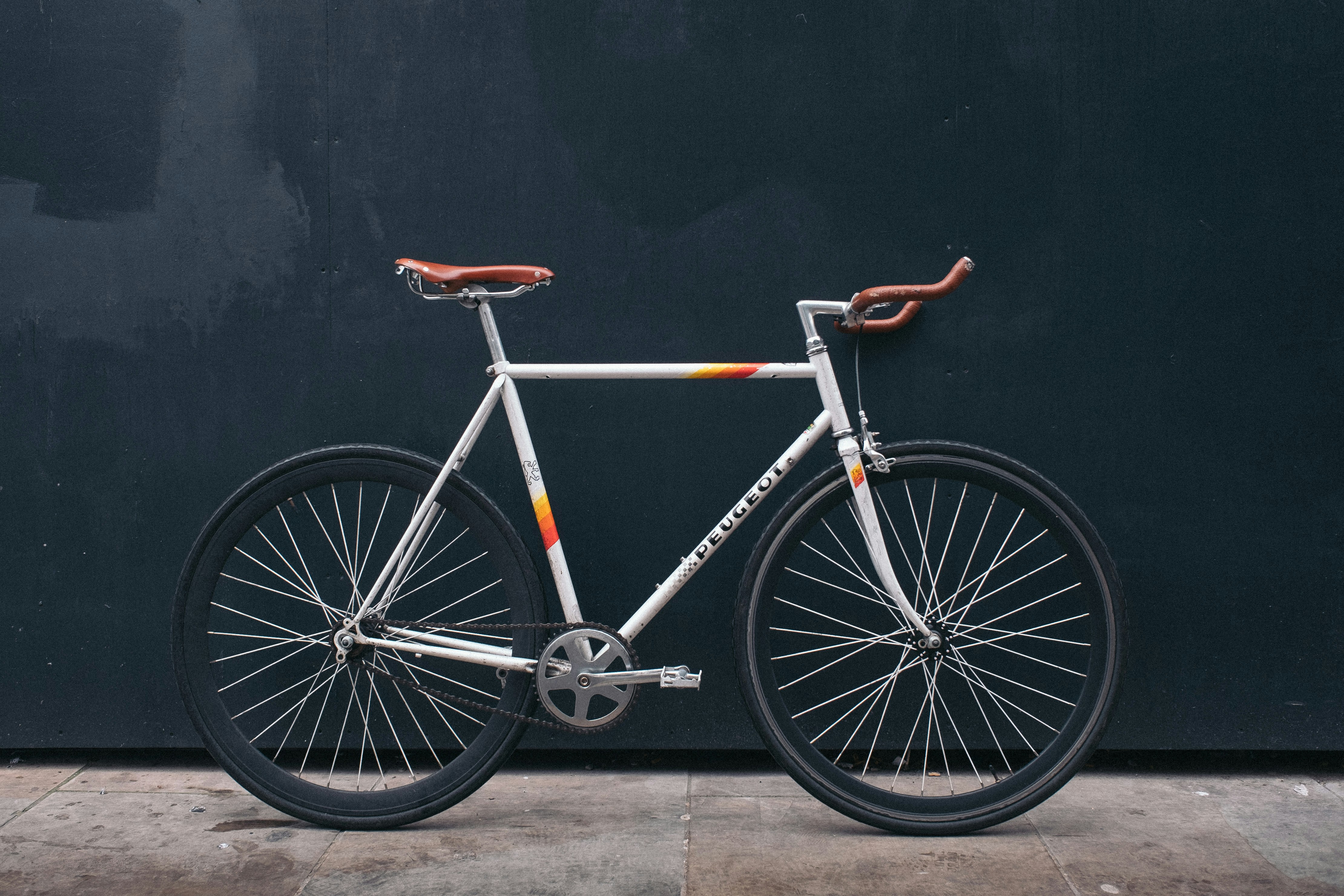
Using vélo correctly involves mastering the prepositions and associated verbs. The most common verb used is faire.
Faire du vélo: To go cycling or to ride a bike as an activity.Aller à vélo: To go somewhere by bike (emphasizing the destination).Monter à vélo: To get on a bike.
- Preposition Debate
- Purists insist on à vélo because you sit on it. However, en vélo is extremely common in spoken French, following the pattern of en voiture or en train.
"Je vais au travail à vélo tous les matins."
You will hear vélo in various registers. In sports broadcasting, especially during July, the word dominates the airwaves during the Tour de France. In politics, it's central to discussions about pistes cyclables (cycle lanes) and mobilité douce (soft mobility).
The most frequent error for English speakers is the gender. Since 'bicycle' is neutral in English, learners often say la vélo. Remember: LE vélo.
- Wrong
- Je prends la vélo.
- Right
- Je prends le vélo.
Another mistake is using 'rouler' without a preposition. You don't 'rouler un vélo' (that would mean rolling it like a ball); you roulez à vélo.
While vélo is the catch-all term, French has specific words for different types of cycles:
- VTT (Vélo Tout Terrain) — Mountain bike.
- VTC (Vélo Tout Chemin) — Hybrid bike.
- Vélo de course — Road/racing bike.
- Vélo électrique (or VAE) — E-bike.
How Formal Is It?
난이도
알아야 할 문법
Masculine vs Feminine nouns
Prepositions of transport (à vs en)
Partitive articles (faire DU vélo)
Adjective agreement
Pluralization of nouns ending in -o
수준별 예문
J'ai un vélo rouge.
I have a red bike.
Note the masculine 'un' and the position of the color 'rouge' after the noun.
Tu fais du vélo ?
Do you cycle?
Uses 'faire du' for activities.
Le vélo est dans le garage.
The bike is in the garage.
Definite article 'le'.
C'est mon vélo.
It is my bike.
Possessive adjective 'mon' (masculine).
Je vais à l'école à vélo.
I go to school by bike.
Preposition 'à' for transport where you sit on top.
Regarde le petit vélo !
Look at the little bike!
Adjective 'petit' comes before the noun.
Il n'y a pas de vélo ici.
There is no bike here.
Negative 'pas de' replaces 'un'.
Nous aimons le vélo.
We like cycling.
Verb 'aimer' followed by the definite article.
Je dois réparer mon vélo ce weekend.
I have to fix my bike this weekend.
Modal verb 'devoir' + infinitive.
Il y a beaucoup de vélos à Paris.
There are many bikes in Paris.
Plural 'vélos' with 'beaucoup de'.
Mon vélo est plus rapide que le tien.
My bike is faster than yours.
Comparative 'plus... que'.
On a loué des vélos pour la journée.
We rented bikes for the day.
Passé composé with 'avoir'.
Fais attention, il y a un vélo derrière toi !
Watch out, there is a bike behind you!
Preposition of place 'derrière'.
Le vélo de Marie est cassé.
Marie's bike is broken.
Possession using 'de'.
Je préfère le vélo à la voiture.
I prefer the bike to the car.
Verb 'préférer' comparing two nouns.
Il fait du vélo tous les matins avant le travail.
He cycles every morning before work.
Frequency expression 'tous les matins'.
Si le temps est beau, nous irons faire du vélo en forêt.
If the weather is nice, we will go cycling in the forest.
Hypothetical 'si' clause (present + future).
C'est un vélo qui coûte très cher car il est en carbone.
It's a bike that costs a lot because it's made of carbon.
Relative pronoun 'qui'.
Je me sers de mon vélo pour éviter les embouteillages.
I use my bike to avoid traffic jams.
Pronominal verb 'se servir de'.
Bien que j'aie un vélo, je prends souvent le métro.
Although I have a bike, I often take the metro.
Subjunctive after 'bien que'.
Il faudrait créer plus de pistes pour les vélos.
More lanes should be created for bikes.
Conditional 'il faudrait'.
Depuis que j'ai ce vélo, je me sens en meilleure forme.
Since I've had this bike, I feel in better shape.
Conjunction 'depuis que'.
Peux-tu m'aider à gonfler les pneus de mon vélo ?
Can you help me pump up my bike tires?
Verb 'aider' + à + infinitive.
C'est le vélo le plus léger que j'aie jamais porté.
It's the lightest bike I've ever carried.
Superlative with subjunctive 'aie'.
Le vélo en ville est devenu un véritable enjeu politique.
Cycling in the city has become a real political issue.
Noun used as a subject for a complex abstract concept.
Les cyclistes réclament un meilleur partage de la chaussée.
Cyclists are demanding a better sharing of the roadway.
Specific vocabulary: 'chaussée', 'réclamer'.
Il a parcouru toute la France à vélo l'été dernier.
He traveled across all of France by bike last summer.
Verb 'parcourir' in passé composé.
Le port du casque à vélo n'est obligatoire que pour les enfants.
Wearing a helmet on a bike is only mandatory for children.
Restrictive 'ne... que'.
On assiste à une explosion des ventes de vélos électriques.
We are witnessing an explosion in e-bike sales.
Expression 'assister à'.
Ce vélo est équipé d'un système de freinage hydraulique.
This bike is equipped with a hydraulic braking system.
Passive construction 'est équipé de'.
Il s'est mis au vélo pour des raisons de santé.
He took up cycling for health reasons.
Pronominal 'se mettre à' (to start an activity).
Rien ne vaut une balade à vélo pour se vider la tête.
Nothing beats a bike ride to clear one's head.
Idiom 'rien ne vaut' (nothing beats).
L'essor du vélo témoigne d'une mutation profonde de nos modes de vie.
The rise of the bicycle bears witness to a profound change in our lifestyles.
High-level verb 'témoigner de'.
Il manie son vélo avec une dextérité impressionnante.
He handles his bike with impressive dexterity.
Specific noun 'dextérité'.
La bicyclette, ou vélo, fut un vecteur d'émancipation féminine.
The bicycle was a vector of female emancipation.
Passé simple 'fut'.
Le vélo s'inscrit dans une démarche de développement durable.
Cycling is part of a sustainable development approach.
Pronominal 's'inscrire dans'.
Malgré la pluie battante, il n'a pas renoncé à son trajet à vélo.
Despite the pouring rain, he did not give up his bike commute.
Concession with 'malgré'.
L'infrastructure urbaine doit s'adapter à la recrudescence des vélos.
Urban infrastructure must adapt to the resurgence of bikes.
Formal term 'recrudescence'.
Le vélo est le prolongement naturel du corps du cycliste.
The bike is the natural extension of the cyclist's body.
Metaphorical usage.
On ne saurait occulter les risques liés à la pratique du vélo en ville.
One cannot overlook the risks associated with urban cycling.
Formal 'ne saurait' + infinitive.
L'esthétique épurée de ce vélo de collection confine à l'œuvre d'art.
The sleek aesthetics of this vintage bike border on a work of art.
Verb 'confiner à' (to border on).
Le vélo transcende sa simple fonction utilitaire pour devenir un objet de culte.
The bicycle transcends its simple utilitarian function to become a cult object.
Abstract philosophical subject.
L'avènement du vélo a bouleversé les rapports sociaux au XIXe siècle.
The advent of the bicycle disrupted social relations in the 19th century.
Noun 'avènement'.
Il pédale avec une telle abnégation qu'il semble faire fi de la douleur.
He pedals with such self-sacrifice that he seems to ignore the pain.
Idiom 'faire fi de' (to disregard).
Le vélo incarne cette quête de frugalité heureuse prônée par certains.
The bike embodies this quest for 'happy frugality' advocated by some.
Complex socio-philosophical terminology.
La vélocipédie, ancêtre du vélo moderne, connut des débuts laborieux.
Velocipedy, the ancestor of the modern bike, had laborious beginnings.
Archaic term 'vélocipédie'.
Sous l'égide de la municipalité, le vélo a reconquis le centre-ville.
Under the aegis of the municipality, the bike has reclaimed the city center.
Formal expression 'sous l'égide de'.
Le vélo, par sa simplicité mécanique, défie l'obsolescence programmée.
The bicycle, through its mechanical simplicity, defies planned obsolescence.
Technical/Economic term 'obsolescence programmée'.
자주 쓰는 조합
자주 쓰는 구문
자주 혼동되는 단어
관용어 및 표현
혼동하기 쉬운
More formal/old-fashioned than vélo.
Refers to the sport/industry, not the object.
Motorcycle (has an engine).
문장 패턴
어휘 가족
명사
동사
형용사
사용법
Vélo is more common than bicyclette.
In Quebec, 'bicycle' is sometimes used, but 'vélo' remains standard.
- Saying 'la vélo' (it's masculine).
- Using 'en vélo' in a formal exam (use 'à vélo').
- Confusing 'vélo' with 'moto' (motorcycle).
- Saying 'faire le vélo' instead of 'faire du vélo'.
- Pronouncing the 'o' like the English 'oo'.
팁
Gender Tip
Most nouns ending in -o in French are masculine (vélo, auto, stylo, kilo).
VTT vs VTC
VTT is for mountains/mud; VTC is for paths/roads (hybrid).
Tour de France
Watching this race is a great way to hear the word 'vélo' in many contexts.
Casual French
Use 'ma bécane' to talk about your bike with friends.
Prepositions
Stick to 'à vélo' in exams to avoid losing points.
Antivol
Always mention your 'antivol' (bike lock) in France; bike theft is common.
Cyclisme
The sport is 'le cyclisme', the person is 'un cycliste'.
Vélib
If you are in Paris, you don't 'take a bike', you 'take a Vélib'.
Pneu
Learn 'gonfler les pneus' (pump the tires) early on.
Enfourcher
A fancy verb for 'getting on' a bike is 'enfourcher'.
암기하기
어원
French
문화적 맥락
Bicycles were used by students to navigate barricades.
The famous bike-sharing system in Paris.
The ultimate cycling race, held every July.
A nickname for the bicycle, allegedly from Queen Wilhelmina of the Netherlands.
실생활에서 연습하기
실제 사용 상황
대화 시작하기
"Tu fais souvent du vélo ?"
"Tu préfères le vélo ou la voiture ?"
"Quel est ton type de vélo préféré ?"
"Est-ce qu'il y a des pistes cyclables dans ta ville ?"
"Tu as déjà regardé le Tour de France ?"
일기 주제
Décrivez votre premier vélo.
Pourquoi le vélo est-il bon pour la planète ?
Racontez une balade à vélo mémorable.
Le vélo est-il dangereux en ville ?
Imaginez le vélo du futur.
자주 묻는 질문
10 질문Grammatically 'à vélo' is correct because you are on top of it. However, 'en vélo' is very common in everyday speech.
It is masculine: le vélo.
It stands for 'Vélo Tout Terrain', which means a mountain bike.
No, we use 'faire du vélo' for activities/sports.
It is a poetic nickname for the bicycle in France.
The verb is 'pédaler'.
Yes, it is short for 'vélocipède'.
It is a dedicated bike lane on a road.
It is mandatory for children under 12, and highly recommended for adults.
Un vélo électrique or un VAE (Vélo à Assistance Électrique).
셀프 테스트 180 질문
/ 180 correct
Perfect score!
Summary
Mastering 'vélo' involves knowing it's masculine, using 'à vélo' for transport, and 'faire du vélo' for the hobby. It is the most natural way to say 'bike' in France.
- Vélo is the standard French word for bicycle, used in almost all contexts.
- It is a masculine noun (le vélo) and is a shortening of 'vélocipède'.
- Commonly used with the verb 'faire' (faire du vélo) for the activity.
- Central to French culture, especially regarding sports and urban ecology.
Gender Tip
Most nouns ending in -o in French are masculine (vélo, auto, stylo, kilo).
VTT vs VTC
VTT is for mountains/mud; VTC is for paths/roads (hybrid).
Tour de France
Watching this race is a great way to hear the word 'vélo' in many contexts.
Casual French
Use 'ma bécane' to talk about your bike with friends.
예시
J'aime faire du vélo le week-end.
관련 콘텐츠
관련 표현
travel 관련 단어
à bord de
B1배, 비행기 또는 기타 차량에 탑승한 상태.
à destination de
B1~행의, ~를 목적지로 하는.
à l'étranger
A2해외에서 또는 해외로.
à pied
A2차나 자전거를 타지 않고 발로 걸어서 이동하는 것.
à quel prix
B1'어느 가격에' 또는 '어떤 대가로'를 의미하며, 금전적 금액 또는 필요한 희생에 대해 묻습니다.
à vélo
B1자전거를 타고 이동하는 것. 교통 수단으로 자전거를 이용함.
aboutissement
B1긴 여정이나 프로젝트의 최종 지점.
accès
A2이 건물은 장애인 접근(accès)이 가능합니다.
accès à bord
B1버스, 기차, 비행기 등 차량에 탑승하는 행위. / 승객이 교통수단에 탑승하도록 허가받는 순간.
accès internet
B1인터넷 접속.

