afghan in 30 Seconds
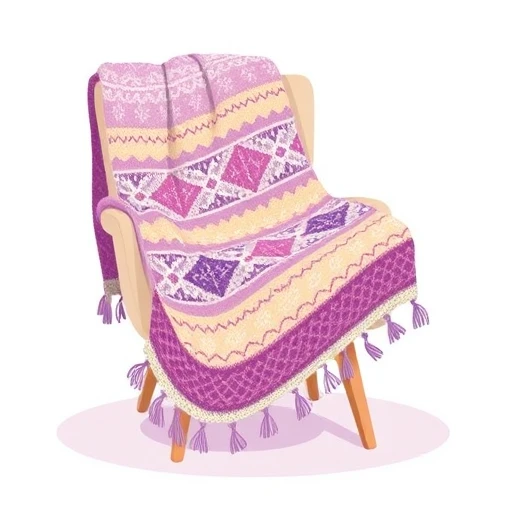
- An afghan is a handmade blanket, typically knitted or crocheted, known for its warmth and decorative patterns like granny squares.
- The word also refers to a person from Afghanistan; it should always be capitalized when used in this demographic sense.
- It is the name of a dog breed, the Afghan Hound, which is famous for its long, silky hair and elegant stature.
- Be careful not to confuse 'Afghan' (the person) with 'Afghani' (the currency used in the country of Afghanistan).
The word afghan is a versatile noun in the English language that carries three distinct primary meanings, each rooted in a different domain: textiles, geography, and zoology. Most commonly in a domestic or crafting context, an afghan refers to a knitted or crocheted blanket or wrap. These are typically handmade and are characterized by their intricate patterns, often composed of individual 'granny squares' joined together, or worked in one continuous piece with zig-zag (chevron) or geometric motifs. The term emerged in the 19th century, inspired by the colorful, patterned textiles imported from the region of Afghanistan, which captivated Western consumers with their vibrant aesthetics and warmth. In this sense, the word is often written with a lowercase 'a', though capitalization varies depending on style guides.
- Textile Context
- A decorative and functional throw blanket, usually handmade from wool or synthetic yarn, used to provide warmth on a sofa or bed.
Beyond the living room, Afghan (capitalized) refers to a person who is a citizen or inhabitant of Afghanistan, or someone of Afghan descent. This usage is strictly a proper noun and should always be capitalized to show respect for the nationality and culture. It is important to distinguish 'Afghan' (the person) from 'Afghani' (the currency), a common point of confusion for many English learners. The Afghan people have a rich history spanning millennia, and the term encompasses a diverse array of ethnic groups including Pashtuns, Tajiks, Hazaras, and Uzbeks.
During the cold winter months, my grandmother would always sit by the fireplace with a colorful afghan draped over her knees while she read.
The third common usage refers to the Afghan hound, often simply called an 'Afghan'. This is a breed of dog known for its distinctive thick, fine, silky coat and its tail with a ring curl at the end. Originally bred for hunting in the cold mountains of Afghanistan, these dogs are celebrated for their elegance, speed, and somewhat aloof temperament. In the world of dog shows and kennel clubs, the Afghan is a prestigious breed, often associated with luxury and high-maintenance grooming requirements due to its long, flowing hair.
- Demographic Context
- A native or inhabitant of Afghanistan; a member of the Pashtun people or any ethnic group within the nation.
The Afghan delegation arrived at the international summit to discuss regional trade agreements.
In contemporary usage, the textile meaning is perhaps the most frequent in casual, domestic English. You will hear it in craft stores, during hobbyist conversations about knitting or crochet, and in descriptions of home decor. The term evokes a sense of coziness, tradition, and 'handmade' charm. It is distinct from a 'quilt' (which is sewn from fabric layers) or a 'duvet' (a large bag filled with feathers or synthetic fibers). An afghan is specifically defined by its construction—loops of yarn creating a breathable yet warm fabric.
- Canine Context
- A tall, slender breed of sighthound with a very long, silky coat, originally used for hunting in Afghanistan.
At the Westminster Dog Show, the Afghan turned heads with its graceful gait and shimmering coat.
She spent the entire autumn crocheting a multi-colored afghan as a wedding gift for her best friend.
The Afghan hound is often described as 'cat-like' because of its independent and reserved personality.
Using the word afghan correctly requires an understanding of its three distinct meanings and the grammatical rules that apply to each. When referring to the blanket, the word functions as a common noun. It can be modified by adjectives describing its color, material, or method of creation. For example, 'a wool afghan,' 'a crocheted afghan,' or 'a vintage afghan.' In this context, it is usually lowercase. However, some older texts or specific brand names might capitalize it. It is treated as a countable noun: 'I have one afghan on my bed and two more in the closet.'
- Sentence Structure: Blanket
- [Adjective] + afghan + [Verb]. Example: 'The blue afghan looks perfect on the sofa.'
When referring to a person from Afghanistan, Afghan is a proper noun and must always be capitalized. It can be used as a singular noun ('He is an Afghan'), a plural noun ('The Afghans have a long tradition of hospitality'), or as a collective noun ('The Afghan people'). It is also frequently used as an adjective ('Afghan cuisine,' 'Afghan history,' 'Afghan rug'). A common grammatical error is using 'Afghani' to describe a person; remember that 'Afghani' is the unit of money used in Afghanistan, while 'Afghan' is the person.
The Afghan student shared stories about the beautiful mountains of Kabul during the cultural exchange program.
In the canine world, 'Afghan' is often used as a shorthand for the 'Afghan hound.' In formal writing, it is better to use the full name of the breed, but in casual conversation among dog enthusiasts, 'the Afghan' is perfectly acceptable. Like the nationality, this should be capitalized because it is derived from a proper place name. You might say, 'The Afghan is a sighthound,' or 'We saw three Afghans at the park today.' Note that the plural is 'Afghans.'
- Sentence Structure: Nationality
- [Proper Noun] + [Verb]. Example: 'Many Afghans live in the diaspora across Europe and North America.'
In descriptive writing, an afghan (blanket) is often used to create an atmosphere of comfort or nostalgia. Authors might describe the 'musty scent of an old afghan' or the 'vivid zig-zags of a handmade afghan.' Because it is a specific type of blanket, using the word 'afghan' instead of just 'blanket' provides more precise imagery for the reader, suggesting a specific texture and aesthetic. It implies a level of craftsmanship and domesticity that a generic 'throw' or 'comforter' does not.
After the hike, we warmed our feet under a heavy afghan while sipping hot cocoa.
- Sentence Structure: Dog Breed
- The + Afghan + [Verb]. Example: 'The Afghan requires daily brushing to keep its coat from matting.'
She decided to enter her Afghan in the agility competition, despite the breed's reputation for being stubborn.
The local museum featured an exhibit on Afghan textiles, showcasing the intricate embroidery of the region.
The word afghan appears in several distinct environments, and the meaning is usually clear from the setting. In a domestic or family setting, you will hear it most often in the living room or bedroom. Grandparents or parents might say, 'Grab the afghan from the back of the chair if you're cold.' In this context, it is a word associated with home, warmth, and family heirlooms. It is also a staple term in the 'maker' community—people who knit, crochet, or engage in fiber arts. You will find thousands of 'afghan patterns' on websites like Ravelry or in magazines like *Interweave Knits*.
- Hobbyist Circles
- Used frequently in knitting and crochet groups. Phrases like 'working on an afghan' or 'joining afghan squares' are common.
In the realm of international news and politics, Afghan is a daily term. News anchors and journalists use it to describe the citizens, government, and military of Afghanistan. You will hear phrases like 'the Afghan government,' 'Afghan refugees,' or 'Afghan peace talks.' In these serious contexts, the word carries significant geopolitical weight. It is crucial for listeners to recognize that 'Afghan' refers to the people, while 'Afghanistan' is the country. You might also hear it in discussions about 'Afghan rugs,' which are world-renowned for their quality and traditional craftsmanship.
The news report highlighted the resilience of Afghan women who are fighting for their right to education.
Another specific place you will hear this word is at dog shows or among pet owners. The 'Afghan Hound' is a very recognizable breed, and owners often refer to them simply as 'Afghans.' If you are at a kennel club event, you might hear someone say, 'The Afghan in ring four has a stunning coat.' Because the breed is so distinctive—tall, thin, and long-haired—the word 'Afghan' in a pet context immediately brings a specific image to mind. It is a word used by specialists and enthusiasts who appreciate the breed's unique history as a mountain hunter.
- Interior Design
- Used by decorators to describe a specific 'bohemian' or 'rustic' look. 'Adding a crocheted afghan can soften the lines of a modern sofa.'
The interior designer suggested a neutral-toned afghan to add texture to the minimalist living room.
Finally, you may encounter the word in historical or anthropological contexts. Scholars discussing the 'Silk Road' or Central Asian history will use 'Afghan' to describe the various tribes and dynasties that have inhabited the region. In this academic sense, the word is used with precision to distinguish between different ethnic and linguistic groups. Whether you are watching a documentary on the BBC or reading a history book, the word 'Afghan' is the standard term for the people of this historically pivotal nation.
Historians study the Afghan resistance against various empires throughout the 19th and 20th centuries.
The thrift store was full of vintage items, including a perfectly preserved afghan from the 1970s.
One of the most frequent mistakes English learners (and even some native speakers) make is confusing the words Afghan and Afghani. It is a common error to refer to a person from Afghanistan as an 'Afghani.' However, in English, 'Afghani' is the name of the national currency of Afghanistan. To refer to a person, the correct term is 'Afghan.' For example, you should say, 'My friend is an Afghan,' not 'My friend is an Afghani.' Similarly, use 'Afghan' as an adjective for things related to the country: 'Afghan food,' 'Afghan culture,' or 'the Afghan landscape.'
- Afghan vs. Afghani
- Afghan = Person / Adjective for the country. Afghani = Currency (money).
Another common mistake involves capitalization. As mentioned previously, when you are referring to the people of Afghanistan or the Afghan Hound dog breed, the word must be capitalized because it is derived from a proper noun (the name of a country). When referring to the blanket, capitalization is optional but usually lowercase is preferred in modern usage. Failing to capitalize 'Afghan' when referring to a person can be seen as grammatically incorrect or even disrespectful in formal writing.
Incorrect: He paid for the meal with five afghans. Correct: He paid for the meal with five afghanis.
There is also occasional confusion between an afghan and other types of blankets. An afghan is specifically a knitted or crocheted item. Calling a thick, quilted comforter or a thin fleece throw an 'afghan' is technically incorrect. While most people will understand you are talking about a blanket, using the term correctly shows a better grasp of textile vocabulary. If it's not made of yarn with visible loops or stitches, it's probably not an afghan.
- Misuse of Breed Name
- Don't confuse the 'Afghan Hound' with other long-haired dogs like the Saluki or the Borzoi. While they are all sighthounds, the Afghan is unique.
Incorrect: I am learning to knit an afghani. Correct: I am learning to knit an afghan.
Lastly, avoid using 'Afghan' as a generic term for anyone from Central Asia or the Middle East. Afghanistan has a very specific identity, and referring to someone from a neighboring country (like Iran or Pakistan) as an 'Afghan' is a factual error. Precision in nationality is important for clear and respectful communication.
The Afghan carpet is known for its deep red colors and octagonal 'gul' patterns, which are distinct from Persian designs.
When writing about the dog, always use the full term Afghan Hound in the first mention to avoid any ambiguity.
Depending on which meaning of afghan you are using, there are several synonyms or related words you might choose to vary your vocabulary. If you are talking about the blanket, the most common alternatives are 'throw,' 'blanket,' 'lap robe,' or 'bedspread.' However, each of these has a slightly different nuance. A 'throw' is usually smaller and intended for decoration or light warmth on a chair. A 'blanket' is a generic term for any large piece of fabric used for warmth. An 'afghan' specifically implies a knitted or crocheted texture.
- Textile Comparisons
- Afghan: Knitted/crocheted, often colorful and patterned.
- Quilt: Sewn from layers of fabric with padding in between.
- Duvet: A soft quilt filled with down or synthetic fiber, usually used with a cover.
- Throw: A small, decorative blanket.
When referring to the people of Afghanistan, there aren't many direct synonyms for the noun Afghan, as it is a specific nationality. However, you might use more specific ethnic terms if they are appropriate to the context, such as 'Pashtun,' 'Tajik,' or 'Hazara.' In a broader regional sense, you might hear 'Central Asian,' but this is much less specific and covers many other countries. It is always best to use 'Afghan' when referring to citizens of the country to ensure accuracy.
Instead of a heavy quilt, she chose a lightweight afghan for the summer evenings.
For the dog breed, 'Afghan Hound' is the formal name. Related breeds (other sighthounds) include the 'Saluki,' 'Greyhound,' 'Borzoi,' and 'Whippet.' While these dogs share a similar body shape—lean, long-legged, and built for speed—the Afghan is easily distinguished by its exceptionally long hair. If you are writing about dogs, using these specific breed names is much better than using a general term like 'hound' or 'dog.'
- Contextual Alternatives
- For warmth: Wrap, shawl, stole.
- For the person: Citizen of Afghanistan, Kabulite (if from the capital).
- For the dog: Sighthound, long-haired hound.
The Afghan rug in the hallway was a gift from his travels through Central Asia.
In the world of fashion, an 'Afghan coat' is a specific item—a sheepskin coat with the fleece on the inside and embroidery on the outside. Alternatives might be 'shearling coat' or 'embroidered coat,' but 'Afghan coat' refers to a very specific 1960s-70s style. Understanding these nuances helps you choose the most evocative and accurate word for your writing or conversation.
The Afghan hound's coat requires hours of grooming to maintain its silky texture.
He wrapped the afghan around his shoulders like a shawl as he stepped out onto the porch.
How Formal Is It?
Fun Fact
The blanket was named 'afghan' because the colorful, geometric patterns made by Western knitters were thought to resemble the beautiful carpets and textiles coming from Afghanistan at the time.
Pronunciation Guide
- Pronouncing it as 'af-gan-ee' when you mean the person.
- Misplacing the stress on the second syllable.
- Failing to pronounce the 'f' clearly.
- Confusing the 'gh' sound with a 'j' sound.
- Pronouncing it like 'often' (a common mistake for very young children).
Difficulty Rating
Easy to read, but context is needed to distinguish meanings.
Capitalization and spelling (gh) can be tricky.
Pronunciation is straightforward.
Must distinguish between 'Afghan' and 'Afghani' in fast speech.
What to Learn Next
Prerequisites
Learn Next
Advanced
Grammar to Know
Capitalization of Nationalities
Always capitalize 'Afghan' when referring to people.
Indefinite Article 'An'
Use 'an' before 'afghan' because it starts with a vowel sound.
Proper Adjectives
In 'Afghan food', 'Afghan' is a proper adjective.
Countable Nouns
You can have 'three afghans'.
Compound Nouns
'Afghan hound' acts as a single unit.
Examples by Level
I have a red afghan on my bed.
J'ai une couverture afghane rouge sur mon lit.
Common noun, singular.
My friend is an Afghan.
Mon ami est un Afghan.
Proper noun, singular.
The Afghan dog has long hair.
Le chien afghan a de longs poils.
Adjective modifying 'dog'.
Is this afghan warm?
Cette couverture est-elle chaude ?
Interrogative sentence.
He is from Kabul; he is Afghan.
Il vient de Kaboul ; il est afghan.
Proper adjective.
I like your colorful afghan.
J'aime ta couverture colorée.
Direct object.
The Afghan is a tall dog.
L'Afghan est un grand chien.
Proper noun used for the breed.
She made an afghan for the baby.
Elle a fait une couverture pour le bébé.
Indefinite article 'an' before 'afghan'.
My grandmother is knitting a blue afghan.
Ma grand-mère tricote une couverture bleue.
Present continuous tense.
Many Afghans live in this city.
Beaucoup d'Afghans vivent dans cette ville.
Plural proper noun.
The Afghan hound runs very fast.
Le lévrier afghan court très vite.
Third person singular.
I bought an afghan at the market.
J'ai acheté une couverture au marché.
Past simple tense.
She is an Afghan citizen.
Elle est citoyenne afghane.
Proper adjective.
Do you prefer a quilt or an afghan?
Préfères-tu une courtepointe ou une couverture ?
Comparison.
The Afghan's coat is very soft.
Le pelage de l'Afghan est très doux.
Possessive form.
He wrapped the afghan around his shoulders.
Il a enroulé la couverture autour de ses épaules.
Prepositional phrase.
The sofa was covered with a beautiful handmade afghan.
Le canapé était recouvert d'une belle couverture faite à la main.
Passive voice.
He is an Afghan who moved here three years ago.
C'est un Afghan qui a déménagé ici il y a trois ans.
Relative clause.
The Afghan hound is known for its elegant appearance.
Le lévrier afghan est connu pour son apparence élégante.
Adjective phrase.
I'm looking for a pattern to crochet a new afghan.
Je cherche un modèle pour crocheter une nouvelle couverture.
Infinitive of purpose.
The Afghan government signed a new treaty.
Le gouvernement afghan a signé un nouveau traité.
Proper adjective.
She inherited a vintage afghan from her aunt.
Elle a hérité d'une couverture vintage de sa tante.
Past simple.
Afghans are proud of their cultural heritage.
Les Afghans sont fiers de leur héritage culturel.
Plural subject.
The Afghan's long hair requires a lot of grooming.
Les longs poils de l'Afghan nécessitent beaucoup de toilettage.
Gerund as subject.
The living room felt much cozier with the addition of a wool afghan.
Le salon semblait beaucoup plus confortable avec l'ajout d'une couverture en laine.
Comparative adjective.
The Afghan delegation expressed their concerns at the UN.
La délégation afghane a exprimé ses préoccupations à l'ONU.
Collective noun.
An Afghan hound's personality is often described as independent.
La personnalité d'un lévrier afghan est souvent décrite comme indépendante.
Possessive with 's.
She spent months meticulously crocheting each square of the afghan.
Elle a passé des mois à crocheter méticuleusement chaque carré de la couverture.
Adverbial modification.
The conflict has displaced thousands of Afghans.
Le conflit a déplacé des milliers d'Afghans.
Present perfect tense.
The term 'afghan' for a blanket dates back to the 1800s.
Le terme 'afghan' pour une couverture remonte aux années 1800.
Noun phrase as subject.
The Afghan's silky coat shimmered in the sunlight.
Le pelage soyeux de l'Afghan brillait au soleil.
Descriptive imagery.
He studied Afghan history to better understand the current situation.
Il a étudié l'histoire afghane pour mieux comprendre la situation actuelle.
Proper adjective.
The intricate patterns of the afghan mirrored the traditional designs of the region.
Les motifs complexes de la couverture reflétaient les dessins traditionnels de la région.
Metaphorical usage.
The Afghan diaspora has made significant contributions to global literature.
La diaspora afghane a apporté des contributions significatives à la littérature mondiale.
Complex noun phrase.
The Afghan hound is a sighthound, meaning it hunts by sight rather than scent.
Le lévrier afghan est un lévrier, ce qui signifie qu'il chasse à vue plutôt qu'à l'odorat.
Defining relative clause.
The artisan used natural dyes to create the vibrant colors of the afghan.
L'artisan a utilisé des teintures naturelles pour créer les couleurs éclatantes de la couverture.
Agentive noun 'artisan'.
The Afghan people have endured decades of geopolitical instability.
Le peuple afghan a enduré des décennies d'instabilité géopolitique.
Perfect aspect.
The term 'afghan' is often used interchangeably with 'throw' in casual parlance.
Le terme 'afghan' est souvent utilisé de manière interchangeable avec 'jeté' dans le langage courant.
Passive voice with adverb.
The Afghan's aloof temperament can make it a challenging breed for novice owners.
Le tempérament distant de l'Afghan peut en faire une race difficile pour les propriétaires novices.
Gerund phrase.
She curated an exhibition of Afghan carpets and textiles.
Elle a organisé une exposition de tapis et de textiles afghans.
Proper adjective.
The etymology of 'afghan' as a textile term reveals a 19th-century penchant for Orientalism.
L'étymologie d' 'afghan' en tant que terme textile révèle un penchant du XIXe siècle pour l'orientalisme.
Abstract noun phrase.
The Afghan state faces multifaceted challenges in the 21st century.
L'État afghan est confronté à des défis multiformes au XXIe siècle.
Proper adjective.
The Afghan hound's dolichocephalic skull is a hallmark of the breed's morphology.
Le crâne dolichocéphale du lévrier afghan est une caractéristique de la morphologie de la race.
Technical vocabulary.
The afghan, once a symbol of counter-culture, has been reclaimed by modern interior design.
La couverture afghane, autrefois symbole de contre-culture, a été réappropriée par le design d'intérieur moderne.
Appositive phrase.
Scholars debate the linguistic roots of the word 'Afghan' in ancient Persian texts.
Les chercheurs débattent des racines linguistiques du mot 'Afghan' dans les textes persans anciens.
Present simple for academic truth.
The Afghan's gait is described as smooth and springy, almost as if it were floating.
L'allure de l'Afghan est décrite comme fluide et souple, presque comme s'il flottait.
Subjunctive mood 'as if it were'.
The resilience of the Afghan spirit is a recurring theme in contemporary war reporting.
La résilience de l'esprit afghan est un thème récurrent dans les reportages de guerre contemporains.
Abstract concept.
The meticulously crafted afghan served as a poignant reminder of her grandmother's patience.
La couverture méticuleusement confectionnée servait de rappel poignant de la patience de sa grand-mère.
Participial adjective.
Synonyms
Antonyms
Common Collocations
Common Phrases
— A blanket made of small, square crocheted pieces joined together.
My aunt made me a classic granny square afghan.
— A person from Afghanistan who has been forced to leave their country.
The charity helps Afghan refugees settle in their new homes.
— The traditional food and cooking styles of Afghanistan.
We had delicious Afghan cuisine at the new restaurant downtown.
— A sheepskin coat, often embroidered, popular in the 1960s.
He wore a vintage Afghan coat to the music festival.
— The geographic boundary of Afghanistan.
Trade often happens across the Afghan border.
— A hand-woven rug from Afghanistan, usually with geometric patterns.
The Afghan carpet was the centerpiece of the room.
— A young dog of the Afghan hound breed.
The Afghan hound puppy was incredibly fluffy.
— The chronological record of events in Afghanistan.
He is writing a book about 19th-century Afghan history.
— The political administration of Afghanistan.
The Afghan government announced a new policy.
— Refers to various conflicts that have taken place in Afghanistan.
The documentary focused on the aftermath of the Afghan war.
Often Confused With
Afghani is the currency; Afghan is the person.
Afghanistan is the country; Afghan is the person.
A quilt is sewn; an afghan is knitted or crocheted.
Idioms & Expressions
Easily Confused
Similar sound and origin.
Afghani is money. Afghan is a person or a blanket.
I have 100 Afghanis in my wallet, and my friend is an Afghan.
Both are blankets.
Quilts are made of fabric layers; afghans are made of yarn.
The quilt has flower patterns, but the afghan is crocheted.
Both are small blankets.
A throw can be any material; an afghan is specifically yarn-based.
I bought a fleece throw and a wool afghan.
Both are similar dog breeds.
The Saluki has shorter hair on its body than the Afghan hound.
The Afghan has a much longer coat than the Saluki.
General vs. specific.
Blanket is the category; afghan is a specific type.
Every afghan is a blanket, but not every blanket is an afghan.
Sentence Patterns
I have an [color] afghan.
I have a blue afghan.
She is [nationality].
She is Afghan.
The [noun] is covered with an afghan.
The couch is covered with an afghan.
Being an Afghan, he [action].
Being an Afghan, he knows a lot about Kabul.
The [adjective] nature of the afghan [verb].
The handcrafted nature of the afghan added warmth to the room.
The term 'afghan' encapsulates [concept].
The term 'afghan' encapsulates both textile history and national identity.
I am [verb-ing] an afghan.
I am crocheting an afghan.
The Afghan hound is [adjective].
The Afghan hound is remarkably fast.
Word Family
Nouns
Adjectives
Related
How to Use It
Common in domestic and news contexts.
-
Calling a person an 'Afghani'.
→
Calling a person an 'Afghan'.
Afghani is the currency of Afghanistan.
-
Using a lowercase 'a' for the nationality.
→
Using an uppercase 'A' for 'Afghan'.
Nationalities are proper nouns in English.
-
Spelling it 'Afgan'.
→
Spelling it 'Afghan'.
The 'gh' is the standard English spelling.
-
Calling a fleece blanket an 'afghan'.
→
Calling it a 'fleece blanket' or 'throw'.
Afghans must be knitted or crocheted.
-
Confusing the dog with a Greyhound.
→
Identifying it as an Afghan Hound.
They are different breeds with different coat types.
Tips
Capitalization
Always capitalize 'Afghan' for people. It's a proper noun.
Precision
Use 'afghan' instead of 'blanket' to sound more descriptive.
Currency
Remember: Afghani = Money. Afghan = Person.
Texture
An afghan is always knitted or crocheted, never woven like a sheet.
Breed Name
The full name is 'Afghan Hound', but 'Afghan' is okay in casual talk.
The 'GH'
Don't forget the 'h' after the 'g' in Afghan.
Home Decor
Afghans add a 'handmade' feel to a room's aesthetic.
Context
If you hear 'afghan' in a news report, it's almost always about people.
Pronunciation
Keep the 'a' sounds short, like in 'cat'.
Origins
The word links 19th-century fashion to Central Asian history.
Memorize It
Mnemonic
Think of a 'Fan' in 'Af-ghan'. Imagine a person from Afghanistan holding a colorful blanket while fanning themselves.
Visual Association
Picture a tall, elegant dog (the Afghan Hound) wrapped in a colorful, knitted blanket (the afghan).
Word Web
Challenge
Try to use the word 'afghan' in three different sentences today, using a different meaning each time.
Word Origin
The word comes from the Persian 'Afghān', which was the name for the Pashtun people. It entered English in the 1800s.
Original meaning: A person belonging to the Pashtun ethnic group.
Indo-European (via Persian).Cultural Context
Always use 'Afghan' for people. Never use 'Afghani' for a person, as it is the currency and can be seen as ignorant.
In the US and UK, afghans are often seen as 'granny' items, but they have seen a resurgence in modern 'boho' interior design.
Practice in Real Life
Real-World Contexts
Home Decor
- crocheted afghan
- throw afghan
- sofa afghan
- vintage afghan
International News
- Afghan government
- Afghan people
- Afghan crisis
- Afghan history
Pets/Animals
- Afghan hound
- show Afghan
- long-haired Afghan
- Afghan breed
Hobbies
- afghan pattern
- afghan hook
- afghan square
- knitting an afghan
Geography
- Afghan border
- Afghan mountains
- Afghan cities
- Afghan climate
Conversation Starters
"Do you have any handmade afghans in your home?"
"Have you ever seen an Afghan hound in person? They have such long hair!"
"What do you know about Afghan culture or food?"
"Do you prefer a knitted afghan or a sewn quilt?"
"I'm thinking of learning to crochet an afghan; do you think it's difficult?"
Journal Prompts
Describe a cozy evening at home. Mention an afghan and how it feels.
Write about a time you met someone from a different country, like an Afghan person.
If you could design your own afghan, what colors and patterns would you use?
Research the Afghan hound and write a paragraph about why it looks the way it does.
Explain the difference between an Afghan (person) and an Afghani (money) to a friend.
Frequently Asked Questions
10 questionsNo. Capitalize it when referring to a person from Afghanistan or the dog breed. You can use lowercase when referring to the blanket.
No, that is incorrect. 'Afghani' is the currency. You should call a person an 'Afghan'.
An afghan is specifically knitted or crocheted from yarn. A throw is a general term for any small decorative blanket.
No, they can be made of cotton, acrylic, or any other type of yarn.
It was named in the 19th century because the patterns were thought to look like textiles from Afghanistan.
Most handmade afghans should be hand-washed or washed on a delicate cycle to avoid damaging the yarn.
They are beautiful but can be independent and require a lot of grooming, so they aren't for everyone.
They are small, square crocheted pieces that are often sewn together to make an afghan.
The main languages are Dari and Pashto.
Yes, 'Afghan' is a gender-neutral term for any citizen of Afghanistan.
Test Yourself 180 questions
Describe an afghan you might find in a cozy living room. Use at least three adjectives.
Well written! Good try! Check the sample answer below.
Explain the difference between 'Afghan' and 'Afghani'.
Well written! Good try! Check the sample answer below.
Write a short story about a person who inherits an old afghan from their grandmother.
Well written! Good try! Check the sample answer below.
Describe the appearance and personality of an Afghan hound.
Well written! Good try! Check the sample answer below.
Write a dialogue between two people discussing a news report about Afghanistan.
Well written! Good try! Check the sample answer below.
Why do you think handmade items like afghans are still popular today?
Well written! Good try! Check the sample answer below.
Write a set of instructions on how to care for a wool afghan.
Well written! Good try! Check the sample answer below.
Compare an afghan to a quilt. How are they different?
Well written! Good try! Check the sample answer below.
Describe the cultural significance of Afghan rugs.
Well written! Good try! Check the sample answer below.
Write a poem about a cold night and a warm afghan.
Well written! Good try! Check the sample answer below.
Research and write a paragraph about the history of the Afghan hound.
Well written! Good try! Check the sample answer below.
Imagine you are an interior designer. How would you use an afghan in a modern room?
Well written! Good try! Check the sample answer below.
Write a letter to a friend from Afghanistan, asking about their culture.
Well written! Good try! Check the sample answer below.
What are the challenges of owning an Afghan hound? List at least three.
Well written! Good try! Check the sample answer below.
Write a descriptive paragraph about a 'granny square' afghan.
Well written! Good try! Check the sample answer below.
Discuss the etymology of the word 'afghan'.
Well written! Good try! Check the sample answer below.
Write a news headline using the word 'Afghan'.
Well written! Good try! Check the sample answer below.
Describe the colors of the Afghan flag.
Well written! Good try! Check the sample answer below.
Write a short paragraph about Afghan cuisine.
Well written! Good try! Check the sample answer below.
Why is it important to use the correct demonym for people?
Well written! Good try! Check the sample answer below.
Tell a partner about a blanket you have at home. Is it an afghan?
Read this aloud:
You said:
Speech recognition is not supported in your browser. Try Chrome or Edge.
Describe an Afghan hound to someone who has never seen one.
Read this aloud:
You said:
Speech recognition is not supported in your browser. Try Chrome or Edge.
Discuss why handmade gifts like afghans are special.
Read this aloud:
You said:
Speech recognition is not supported in your browser. Try Chrome or Edge.
Explain the difference between 'Afghan' and 'Afghani' out loud.
Read this aloud:
You said:
Speech recognition is not supported in your browser. Try Chrome or Edge.
What do you know about the country of Afghanistan? Share three facts.
Read this aloud:
You said:
Speech recognition is not supported in your browser. Try Chrome or Edge.
Role-play: You are at a dog show. Talk about the Afghan hound in the ring.
Read this aloud:
You said:
Speech recognition is not supported in your browser. Try Chrome or Edge.
Talk about a time you felt very cozy. Mention an afghan or blanket.
Read this aloud:
You said:
Speech recognition is not supported in your browser. Try Chrome or Edge.
Discuss the pros and cons of having a dog with long hair like an Afghan.
Read this aloud:
You said:
Speech recognition is not supported in your browser. Try Chrome or Edge.
If you were to crochet an afghan, what colors would you pick and why?
Read this aloud:
You said:
Speech recognition is not supported in your browser. Try Chrome or Edge.
How does the meaning of 'afghan' change depending on the context?
Read this aloud:
You said:
Speech recognition is not supported in your browser. Try Chrome or Edge.
Talk about a traditional craft from your own country.
Read this aloud:
You said:
Speech recognition is not supported in your browser. Try Chrome or Edge.
Describe the texture of a knitted afghan using sensory words.
Read this aloud:
You said:
Speech recognition is not supported in your browser. Try Chrome or Edge.
Discuss the importance of respecting national identities and demonyms.
Read this aloud:
You said:
Speech recognition is not supported in your browser. Try Chrome or Edge.
What is the most beautiful dog breed in your opinion? Is it the Afghan?
Read this aloud:
You said:
Speech recognition is not supported in your browser. Try Chrome or Edge.
Tell a story about a cold winter day.
Read this aloud:
You said:
Speech recognition is not supported in your browser. Try Chrome or Edge.
Explain why 'afghan' is a polysemous word.
Read this aloud:
You said:
Speech recognition is not supported in your browser. Try Chrome or Edge.
Discuss the history of the Silk Road and Afghanistan's role in it.
Read this aloud:
You said:
Speech recognition is not supported in your browser. Try Chrome or Edge.
Describe your favorite spot in your house to relax with a blanket.
Read this aloud:
You said:
Speech recognition is not supported in your browser. Try Chrome or Edge.
Talk about the challenges of learning English vocabulary with multiple meanings.
Read this aloud:
You said:
Speech recognition is not supported in your browser. Try Chrome or Edge.
Give a short presentation on the Afghan hound.
Read this aloud:
You said:
Speech recognition is not supported in your browser. Try Chrome or Edge.
Listen to the description: 'It's a large, colorful, knitted item on the back of the sofa.' What is it?
Listen to the news clip: 'The Afghan president met with foreign leaders.' Who is being discussed?
Listen to the dog owner: 'My Afghan needs brushing every single day.' What kind of pet do they have?
Listen to the traveler: 'I exchanged my dollars for Afghanis at the airport.' What did they get?
Listen to the crafter: 'I'm almost finished with the final row of my afghan.' What are they doing?
Listen to the historian: 'The Afghan tribes have a complex social structure.' What are they talking about?
Listen to the interior designer: 'This room needs a textured afghan to feel complete.' What are they suggesting?
Listen to the child: 'Look at that dog! It has hair like a person!' What breed might it be?
Listen to the weather report: 'The Afghan mountains are expecting heavy snow.' Where is it snowing?
Listen to the shopkeeper: 'This is a genuine Afghan rug, hand-knotted.' What is for sale?
Listen to the dialogue: 'Is that an afghan?' 'No, it's a quilt.' What is the difference?
Listen to the pronunciation: /'æfɡæn/. Is the stress on the first or second syllable?
Listen to the story: 'The old afghan smelled like lavender and dust.' What does the blanket smell like?
Listen to the announcement: 'The Afghan flight has been delayed.' What flight is it?
Listen to the groomer: 'The Afghan's coat is prone to matting.' What is the problem with the dog's hair?
My friend is an Afghani.
Afghani is the currency, not the person.
I am knitting a beautiful Afghan.
When referring to a blanket, lowercase 'a' is usually preferred.
The afgan hound is very fast.
Spelling: Afghan. Capitalization: Proper noun.
/ 180 correct
Perfect score!
Summary
The word 'afghan' is most commonly used to describe a cozy, handmade blanket. However, it is also a proper noun for a person from Afghanistan and a specific breed of dog. Always capitalize 'Afghan' when referring to people or the dog breed to ensure grammatical correctness and cultural respect.
- An afghan is a handmade blanket, typically knitted or crocheted, known for its warmth and decorative patterns like granny squares.
- The word also refers to a person from Afghanistan; it should always be capitalized when used in this demographic sense.
- It is the name of a dog breed, the Afghan Hound, which is famous for its long, silky hair and elegant stature.
- Be careful not to confuse 'Afghan' (the person) with 'Afghani' (the currency used in the country of Afghanistan).
Capitalization
Always capitalize 'Afghan' for people. It's a proper noun.
Precision
Use 'afghan' instead of 'blanket' to sound more descriptive.
Currency
Remember: Afghani = Money. Afghan = Person.
Texture
An afghan is always knitted or crocheted, never woven like a sheet.