brad in 30 Seconds
- A brad is a small, thin nail (usually 18-gauge) used for delicate woodworking like trim and molding to prevent splitting.
- The word 'Brad' is a common masculine name, frequently serving as a shorter version of Bradley or Bradford.
- In office and craft contexts, a brad is a split-pin fastener used to hold sheets of paper together and allow rotation.
- The term is essential for finish carpentry, DIY projects, and understanding social introductions in English-speaking cultures.
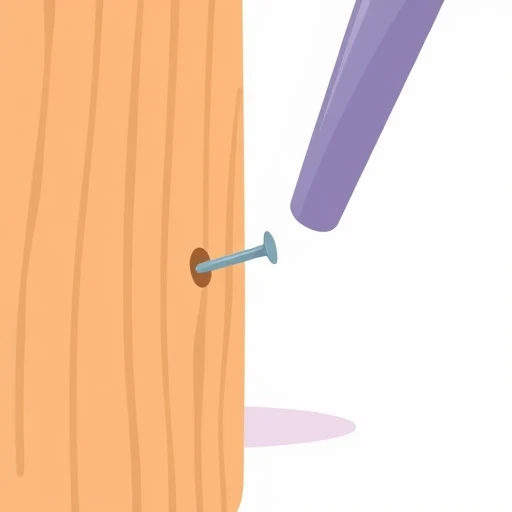
In the intricate world of woodworking, construction, and domestic repairs, the term brad refers to a specific category of fastener that is indispensable for fine detail work. A brad is essentially a very thin, small nail, typically made of 18-gauge steel wire. What distinguishes a brad from a common nail or a finishing nail is its diameter and its head. Brads are remarkably slender, which allows them to be driven into delicate pieces of wood or thin materials without the risk of splitting the grain. This makes them the primary choice for attaching decorative trim, crown molding, and baseboards. Unlike larger nails that have a wide, flat head designed to provide maximum holding power through surface area, a brad has a very small, almost non-existent head. This design is intentional; it allows the brad to be driven flush with or even slightly below the surface of the material. Once the brad is seated, the tiny hole it leaves can be easily concealed with a bit of wood putty or paint, making the fastener virtually invisible in the finished product.
- Technical Specification
- Most modern brads are 18-gauge, meaning they are much thinner than the 15 or 16-gauge finishing nails used for heavier structural trim.
The carpenter carefully loaded the pneumatic nailer with a strip of brads before attaching the delicate mahogany trim to the cabinet face.
Beyond its physical utility in the workshop, the word 'Brad' also serves as a common masculine given name in English-speaking countries. It is frequently used as a diminutive or shortened form of names like Bradley or Bradford. In popular culture, the name is often associated with a certain 'all-American' persona, exemplified by famous figures such as the actor Brad Pitt. When used as a name, it is always capitalized, whereas the fastener is written in lowercase unless it starts a sentence. Understanding the context is key: if someone says they need a 'Brad' at a construction site, they are looking for a nail; if they say it at a dinner party, they are likely referring to a guest. The dual nature of the word makes it a versatile part of the English lexicon, bridging the gap between technical terminology and personal identification.
Historically, the word 'brad' stems from Middle English and Old Norse roots, originally meaning a spike or a small sprout. This botanical metaphor is apt, as the brad is like a small sliver of metal that 'grows' into the wood to hold it together. In modern industrial contexts, brads are often sold in 'collated' strips, held together by a thin layer of adhesive or paper, designed specifically for use in pneumatic brad nailers. These power tools have revolutionized the speed and precision with which trim can be installed. For a DIY enthusiast, knowing when to reach for a brad instead of a screw or a larger nail is a sign of growing expertise. You use a brad when the priority is aesthetics and preventing material damage, rather than structural load-bearing strength. For example, you wouldn't use brads to build the frame of a house, but you would certainly use them to attach the decorative shoe molding at the base of a wall.
- Common Usage
- Brads are the standard fastener for picture framing, where the thin wood of the frame could easily crack under the pressure of a larger nail.
After applying a thin bead of glue, she used a single brad to hold the corner of the birdhouse in place while it dried.
In summary, the brad is a specialized tool for specialized tasks. Its slender profile and minimal head make it the surgeon's scalpel of the carpentry world—precise, clean, and leaving behind very little evidence of its presence. Whether you are a professional builder or a hobbyist, mastering the use of the brad is essential for high-quality finish work. It represents the intersection of functionality and beauty, ensuring that the structural integrity of a piece is maintained without sacrificing its visual appeal. As you continue your journey in English, remember that 'brad' is one of those words that sounds simple but carries a wealth of specific meaning in the right environment.
- Material Composition
- While usually steel, some brads are galvanized or made of stainless steel to prevent rusting in humid environments.
The antique restoration expert insisted on using hand-forged brads to maintain the historical accuracy of the 18th-century chest.
I asked Brad to pass me the box of fasteners, but he thought I was calling his name.
Using the word brad correctly requires an understanding of whether you are discussing a tool or a person. In a technical or DIY context, 'brad' is a countable noun. You can have one brad, two brads, or a whole box of them. Because they are small, they are often referred to in the plural. When constructing sentences about woodworking, 'brad' often appears as a direct object or as part of a compound noun like 'brad nailer'. For instance, you might say, 'I need to buy a box of one-inch brads for this project.' Here, the word functions as the specific item being purchased. It is important to specify the length, as brads come in various sizes, usually ranging from 5/8 of an inch to 2 inches. Using the word in this way demonstrates a level of precision in your vocabulary that distinguishes you from someone who just uses the generic word 'nail'.
- Sentence Structure: Tool
- Subject + Verb + [Number/Adjective] + brad(s). Example: 'The carpenter drove three brads into the molding.'
To ensure the delicate lattice didn't split, the artisan used a tiny brad instead of a standard nail.
When 'Brad' is used as a proper noun (a name), the sentence structure follows the standard rules for names. It can be the subject of a sentence ('Brad went to the store'), an object ('I saw Brad yesterday'), or possessive ('That is Brad's hammer'). In casual conversation, you might encounter sentences where both meanings could potentially overlap, leading to humorous misunderstandings. For example, 'Can you give me a Brad?' could be interpreted as asking for a person or a nail. To avoid confusion, speakers often add the word 'nail' after the word 'brad' when referring to the fastener: 'Can you give me a brad nail?' This clarifying addition is very common in spoken English, especially in noisy environments like a construction site or a busy workshop.
In more advanced usage, you might see 'brad' used in a descriptive or adjectival sense, particularly in the phrase 'brad-awl'. A brad-awl is a small tool used for making a hole for a brad to enter. Sentences using this term are quite specific to the craft: 'He used the brad-awl to mark the exact spot for the fastener.' Furthermore, in the world of paper crafts and office supplies, a 'brad' (also known as a split pin or paper fastener) refers to a small metal device with two tines that are spread apart to hold sheets of paper together. In this context, the sentence might look like: 'Secure the rotating wheel to the poster board using a brass brad.' This is a completely different physical object but shares the name because of its small, fastening nature. Being able to navigate these different meanings based on the surrounding words—whether it's 'wood', 'paper', or 'person'—is a hallmark of a B1-level learner moving toward B2 proficiency.
- Sentence Structure: Paper Fastener
- 'Insert the brad through the punched holes and flatten the legs on the back.'
The elementary school student used a colorful brad to create a moving clock face for his project.
Finally, consider the register of the sentence. In a formal report about construction quality, you might write: 'The contractor utilized 18-gauge brads to ensure the aesthetic integrity of the finish carpentry.' In an informal text message to a friend, you might say: 'Hey, do you have any brads? I'm trying to fix this frame.' The word 'brad' is perfectly acceptable in both formal and informal registers, as it is the standard technical term for the object. There is no 'slang' version of the word for the nail, although the name 'Brad' has various cultural connotations. By practicing these different sentence types, you will become comfortable using 'brad' in any situation, from a professional job site to a creative hobby session.
- Comparison
- 'I used a nail for the fence, but a brad for the jewelry box.'
Even though the brad is small, it provides enough tension to hold the decorative trim in place.
If you don't have a hammer, you can sometimes push a brad into soft wood using the end of a screwdriver.
The word brad is most frequently encountered in environments where physical creation and repair take place. If you walk into a hardware store like Home Depot, Lowe's, or a local neighborhood shop, you will see entire aisles dedicated to fasteners, and 'brads' will have their own clearly marked section. You will hear customers asking employees, 'Where can I find the 18-gauge brads?' or 'Do you sell brads for a pneumatic gun?' In these settings, the word is spoken with technical precision. Professional contractors, interior designers, and DIY hobbyists use the word daily. It is a 'bread and butter' term in the construction industry, particularly among 'finish carpenters'—those who specialize in the visible, final touches of a building's interior. When they talk about their work, they might say, 'I just need to pop a few brads into this crown molding to finish the room.'
- Location: The Workshop
- In a woodshop, the sound of a pneumatic 'thwack' is often followed by someone saying, 'That brad didn't go in all the way.'
'Hand me that box of brads,' the teacher said to the student in the shop class.
Another common place to hear the word is in the context of arts and crafts. As mentioned previously, 'brads' are a staple in scrapbooking and school projects. In an elementary school classroom, a teacher might instruct the children, 'Now, take your brass brad and push it through the center of the paper flower.' Here, the word is associated with creativity and play. It is a term that many native English speakers learn at a very young age, long before they ever pick up a hammer. This dual exposure—first in the classroom with paper and later in the garage with wood—cements the word in the average person's vocabulary as a general term for a small, specialized fastener. You might also hear it in a professional office setting when someone is organizing old legal documents that were traditionally held together with split-pin brads rather than modern staples or paperclips.
Of course, the most frequent place you will hear 'Brad' is as a name. In social situations, introductions often involve the name: 'Hi, I'm Brad.' It is a name that has been popular for decades, peaking in the mid-20th century but remaining a steady choice for parents. You will hear it in movies, on television, and in sports. Because it is a short, punchy, one-syllable name, it is easy to hear and remember. In a crowded room, someone might shout, 'Hey Brad!' and three different people might turn around. This ubiquity as a name means that the word is always 'in the air' in English-speaking societies. Interestingly, the name itself can sometimes carry a 'preppy' or 'jock' connotation in American media, often used for characters who are athletic or popular, though this is a stereotype and not a rule.
- Location: The Office/School
- 'Does anyone have a brad? I need to attach these two pieces of cardstock for the presentation.'
'I'm meeting Brad for lunch at the cafe near the hardware store,' she mentioned to her colleague.
Finally, you might encounter the word in instructional videos on YouTube or TikTok. The 'Maker' community—people who film themselves building furniture, crafting jewelry, or doing home renovations—uses the word 'brad' constantly. If you watch a video titled 'How to Install Baseboards,' the narrator will almost certainly mention 'brad nails' and 'brad nailers'. This digital space is a major modern source for hearing the word in its technical capacity. By listening to these experts, you can hear the natural cadence and pronunciation of the word, often paired with other technical terms like 'miter joint', 'wood glue', and 'caulk'. Whether in a physical store, a classroom, a social gathering, or an online tutorial, 'brad' is a word that pops up in a surprising variety of contexts, making it a small but essential piece of the English language puzzle.
- Location: Pop Culture
- In the movie 'The Rocky Horror Picture Show', the character Brad Majors is a central figure, and his name is famously chanted by the audience.
The DIY influencer explained that using a brad is the secret to a professional-looking finish on any woodworking project.
'Is that a brad or a finishing nail?' the apprentice asked, squinting at the small piece of metal.
One of the most frequent mistakes learners make with the word brad is confusing it with other types of nails, particularly the 'finishing nail'. While they look similar to the untrained eye, they are not interchangeable. A finishing nail is thicker (usually 15 or 16-gauge) and has a more pronounced head. Using a finishing nail where a brad is required can lead to the wood splitting, especially in thin trim. Conversely, using a brad where a finishing nail is needed might result in a weak joint that doesn't hold over time. It is a mistake of 'scale'. When writing or speaking, using the generic word 'nail' is not technically a mistake, but it lacks the precision that 'brad' provides. If you are describing a delicate task, using 'nail' might make you sound less experienced than you are. Precision in vocabulary reflects precision in the craft itself.
- Mistake: Confusing with Finishing Nails
- Incorrect: 'I used a big brad to build the deck.' (Brads are too small for decks). Correct: 'I used a common nail for the deck and a brad for the trim.'
Don't mistake a brad for a tack; a tack has a large head and is used for fabric, not wood trim.
Another common error involves capitalization. As previously noted, 'brad' (the nail) should not be capitalized unless it is at the beginning of a sentence. 'Brad' (the name) must always be capitalized. Writing 'I saw brad at the park' is a grammatical error that can confuse the reader into thinking you saw a small nail in the grass rather than your friend. Similarly, writing 'I need a Brad to fix this chair' suggests you need a person named Brad to help you, rather than a fastener. This is a small detail, but it is one that native speakers notice immediately. In professional writing, such as a manual or a supply list, these capitalization errors can make the document look amateurish. Always double-check your context before deciding whether to hit the shift key.
In the realm of paper crafts, a mistake occurs when people call a 'brad' a 'staple'. While both hold paper together, they function differently. A staple pierces the paper and folds over, while a brad requires a hole to be punched first (or it pierces the paper) and then its two 'legs' are spread apart. Using the word 'staple' when you mean 'brad' can lead to confusion in a craft store or classroom. Furthermore, some people mistakenly use 'brad' to refer to 'screws'. Screws have threads and are turned with a screwdriver; brads are smooth and are driven with a hammer or nailer. This is a fundamental distinction in hardware. If you ask for a 'brad' but need something that can be unscrewed later, you have chosen the wrong word and the wrong tool.
- Mistake: Tool Misidentification
- Incorrect: 'Can you unscrew that brad?' Correct: 'Can you pull that brad out with pliers?'
The student lost points because she used brads instead of glue, making the model look messy.
Finally, there is the mistake of 'over-application'. Because brads are so convenient, especially with a pneumatic nailer, some people use them for everything. However, brads have very little 'pull-out' resistance. If you use a brad to hang a heavy mirror, the mirror will eventually fall. The mistake here is linguistic and practical: calling a brad a 'secure fastener' for heavy loads is a misuse of the term's functional definition. In your writing, if you describe someone 'securing a heavy beam with a brad', a knowledgeable reader will find the sentence unrealistic. Understanding the limitations of the object helps you use the word more accurately in descriptive writing. By avoiding these common pitfalls, you ensure that your use of 'brad' is both grammatically correct and technically sound.
- Mistake: Pluralization
- 'I need some brad' (Incorrect). 'I need some brads' (Correct). Brads are countable.
Using a brad on a structural joint is a common mistake for beginner woodworkers.
The editor corrected the manuscript, changing 'brad' to 'Brad' whenever the character was mentioned.
To truly master the word brad, it is helpful to compare it to its linguistic 'cousins' in the world of fasteners. The most obvious alternative is the generic word nail. While every brad is a nail, not every nail is a brad. Using 'nail' is safe but less descriptive. If you want to be more specific about the size and purpose, you might use finishing nail. As discussed, finishing nails are slightly larger and stronger. If the fastener is even smaller than a brad, it might be called a pin or a headless pin. These are often 23-gauge and are used for the most delicate work imaginable, like attaching tiny beads of molding. In the context of upholstery or temporary fixes, you might use the word tack. Tacks have very large heads and short shanks, designed to be pushed in by hand or a light hammer to hold fabric or paper to a surface.
- Brad vs. Finishing Nail
- A brad is 18-gauge (thinner); a finishing nail is 15-16 gauge (thicker). Brads are for thin trim; finishing nails are for thick trim.
While a brad is perfect for this trim, a common nail would be better for the structural frame.
In the paper-fastening world, the word 'brad' has several synonyms depending on the region. In the United Kingdom and many Commonwealth countries, the term split pin is the standard. It describes the physical action of the fastener—splitting its two legs apart. Another term is paper fastener, which is more formal and descriptive of its function. In some office environments, you might hear them called brass fasteners, referring to the material they are traditionally made from. If you are looking for something that holds paper but isn't a brad, you might consider a staple, a paper clip, or a binder clip. Each of these has a different 'feel' and level of permanence. A brad is unique because it allows for rotation, which is why it's used for making paper clocks or moving puppets in school crafts.
When it comes to the name 'Brad', the alternatives are usually the full versions of the name: Bradley or Bradford. In some cases, 'Brad' might be a nickname for Brady. Choosing between 'Brad' and 'Bradley' often depends on the level of formality or the person's preference. In a professional setting, someone might introduce themselves as Bradley, but friends will call them Brad. In literature, a character named 'Brad' might be portrayed differently than one named 'Bradley'; the former sounds more casual and approachable, while the latter can sound more formal or even upper-class. Understanding these subtle social cues is part of advanced language acquisition. It's not just about the word itself, but the 'flavor' it adds to the person's identity.
- Brad vs. Pin
- A brad has a tiny head; a pin often has no head at all and is even thinner (23-gauge).
The architect preferred the term 'split pin' in his specifications, but the contractor just called them brads.
Finally, if you are looking for a verb that describes the action of using a brad, you won't find 'to brad' in common usage. Instead, we use verbs like fasten, secure, tack, or simply nail. For example, 'I need to fasten this trim with some brads.' Using 'fasten' sounds more professional, while 'nail' is more common. If you are using a pneumatic tool, you might say shoot: 'I'm going to shoot a few brads into this corner.' This is industry jargon that sounds very natural coming from a professional. By expanding your vocabulary to include these synonyms and related terms, you can tailor your speech to your audience, whether you are talking to a hardware store clerk, a fellow crafter, or a professional colleague. The word 'brad' is your starting point, but the world of fasteners is vast and full of interesting distinctions.
- Brad vs. Screw
- A brad is driven by impact; a screw is driven by rotation and has much higher holding power.
She decided to use a brad because she wanted the fastener to be invisible once the project was painted.
'Bradley' sounded too formal for the young boy, so everyone just called him Brad.
How Formal Is It?
Fun Fact
The name Brad and the tool brad share the same linguistic ancestor, implying something sharp or pointed.
Pronunciation Guide
- Pronouncing it like 'braid' /breɪd/.
- Confusing the 'b' and 'p' sounds (prad).
- Making the 'd' silent.
- Using a long 'e' sound (bread).
- Not blending the 'b' and 'r' smoothly.
Difficulty Rating
Easy to read, but context determines the meaning.
Must remember capitalization rules for the name.
Simple one-syllable word.
Can be confused with 'bread' or 'braid' in fast speech.
What to Learn Next
Prerequisites
Learn Next
Advanced
Grammar to Know
Proper Noun Capitalization
Brad (person) vs. brad (nail).
Countable Nouns
One brad, two brads.
Compound Nouns
Brad nailer, brad-awl.
Adjective Placement
A small, thin brad.
Possessive Nouns
Brad's hammer.
Examples by Level
Brad is my brother.
Brad est mon frère.
Proper noun, subject.
I have one small brad.
J'ai un petit clou à tête d'homme.
Countable noun, singular.
Brad has a hammer.
Brad a un marteau.
Subject + has + object.
The brad is in the wood.
Le clou est dans le bois.
Definite article 'the'.
Is Brad your friend?
Est-ce que Brad est ton ami ?
Interrogative sentence.
I see a brad on the floor.
Je vois un clou par terre.
Indefinite article 'a'.
Brad likes to build things.
Brad aime construire des choses.
Present simple tense.
This brad is very sharp.
Ce clou est très pointu.
Demonstrative adjective 'this'.
Please use a brad for the picture frame.
S'il vous plaît, utilisez un clou à tête d'homme pour le cadre.
Imperative with 'please'.
Brad and I are going to the store.
Brad et moi allons au magasin.
Compound subject.
I need a box of small brads.
J'ai besoin d'une boîte de petits clous.
Plural noun 'brads'.
The brad is too short for this wood.
Le clou est trop court pour ce bois.
Adverb 'too' + adjective.
Did you see Brad at the party?
As-tu vu Brad à la fête ?
Past simple question.
He used a brad to hold the paper.
Il a utilisé une attache parisienne pour tenir le papier.
Infinitive of purpose 'to hold'.
Brad's dog is very friendly.
Le chien de Brad est très amical.
Possessive 's.
You can find brads in the tool box.
Tu peux trouver des clous dans la boîte à outils.
Modal verb 'can'.
A brad is better than a regular nail for thin trim.
Un clou à tête d'homme est meilleur qu'un clou ordinaire pour les fines moulures.
Comparative 'better than'.
Brad finished the project ahead of schedule.
Brad a terminé le projet en avance.
Past simple with prepositional phrase.
I'm looking for 18-gauge brads for my nail gun.
Je cherche des clous de calibre 18 pour mon cloueur.
Present continuous + technical adjective.
The paper brad allows the parts of the puppet to move.
L'attache parisienne permet aux parties de la marionnette de bouger.
Subject + verb + object + infinitive.
If you use a brad, the wood won't split.
Si tu utilises un clou à tête d'homme, le bois ne se fendra pas.
First conditional.
Brad suggested that we use a different type of fastener.
Brad a suggéré que nous utilisions un type d'attache différent.
Reported speech with 'that' clause.
The hole left by a brad is very easy to fill.
Le trou laissé par un clou à tête d'homme est très facile à boucher.
Passive participle 'left by'.
I accidentally bent the brad while hammering it.
J'ai accidentellement tordu le clou en le martelant.
Adverb of manner 'accidentally'.
The finish carpenter used a pneumatic nailer to fire the brads.
Le menuisier de finition a utilisé un cloueur pneumatique pour tirer les clous.
Technical vocabulary: 'pneumatic nailer'.
Brad's expertise in restoration is well-known in the industry.
L'expertise de Brad en restauration est bien connue dans l'industrie.
Noun phrase as subject.
Unlike finishing nails, brads are thin enough to avoid splitting delicate grain.
Contrairement aux clous de finition, les clous à tête d'homme sont assez fins pour éviter de fendre le grain délicat.
Contrastive 'unlike' + 'enough to'.
The document was secured with a brass brad to allow for easy rotation.
Le document a été fixé avec une attache en laiton pour permettre une rotation facile.
Passive voice + infinitive of purpose.
Brad had been working on the design for months before it was approved.
Brad travaillait sur le design depuis des mois avant qu'il ne soit approuvé.
Past perfect continuous.
Ensure the brad is countersunk so it can be hidden with wood filler.
Assurez-vous que le clou est noyé pour qu'il puisse être caché avec du mastic à bois.
Imperative + 'so' result clause.
The 18-gauge brad is the industry standard for interior trim installation.
Le clou de calibre 18 est la norme de l'industrie pour l'installation des moulures intérieures.
Technical specification as subject.
Brad found himself in a difficult position during the negotiations.
Brad s'est retrouvé dans une position difficile pendant les négociations.
Reflexive verb 'found himself'.
The subtle use of brads allowed the artisan to maintain the piece's minimalist aesthetic.
L'utilisation subtile de clous à tête d'homme a permis à l'artisan de maintenir l'esthétique minimaliste de la pièce.
Complex noun phrase + gerund.
Brad's meticulous attention to detail is what sets his work apart from his competitors.
L'attention méticuleuse de Brad aux détails est ce qui distingue son travail de celui de ses concurrents.
Cleft sentence 'is what sets'.
In traditional joinery, the brad-awl is used to create a pilot hole, preventing the wood from marring.
En menuiserie traditionnelle, l'alêne à piquer est utilisée pour créer un avant-trou, empêchant le bois de s'abîmer.
Participial phrase 'preventing... from'.
The historical archives contain several manuscripts held together by primitive iron brads.
Les archives historiques contiennent plusieurs manuscrits maintenus ensemble par des clous en fer primitifs.
Reduced relative clause 'held together by'.
Brad articulated his concerns regarding the project's sustainability with great clarity.
Brad a articulé ses préoccupations concernant la durabilité du projet avec une grande clarté.
Advanced verb 'articulated' + preposition 'regarding'.
The sheer versatility of the 18-gauge brad makes it a staple in any modern workshop.
La pure polyvalence du clou de calibre 18 en fait un élément de base dans tout atelier moderne.
Abstract noun 'versatility' + 'makes it a staple'.
Should you choose to use brads, ensure they are made of stainless steel for outdoor applications.
Si vous choisissez d'utiliser des clous à tête d'homme, assurez-vous qu'ils sont en acier inoxydable pour les applications extérieures.
Inverted conditional 'Should you choose'.
Brad's contribution to the field of linguistics has been widely recognized by his peers.
La contribution de Brad au domaine de la linguistique a été largement reconnue par ses pairs.
Present perfect passive.
The restoration of the Victorian sideboard required the sourcing of period-accurate cut brads.
La restauration du buffet victorien a nécessité l'approvisionnement de clous coupés fidèles à l'époque.
Gerund as subject + technical compound adjective.
Brad's idiosyncratic approach to problem-solving often yielded surprisingly innovative results.
L'approche idiosyncrasique de Brad pour résoudre les problèmes donnait souvent des résultats étonnamment innovants.
Sophisticated adjective 'idiosyncratic'.
The structural integrity of the lattice was compromised by the use of brads where bolts were necessitated.
L'intégrité structurelle du treillis a été compromise par l'utilisation de clous là où des boulons étaient nécessaires.
Passive voice with 'necessitated'.
Tracing the etymology of 'brad' reveals a fascinating lineage from Old Norse 'broddr', meaning a spike or shaft.
Tracer l'étymologie de 'brad' révèle une lignée fascinante du vieux norrois 'broddr', signifiant une pointe ou une tige.
Participial phrase + 'reveals a fascinating lineage'.
Brad's tenure as the lead architect was marked by a shift towards more organic, fluid forms.
Le mandat de Brad en tant qu'architecte principal a été marqué par un passage vers des formes plus organiques et fluides.
Noun 'tenure' + 'marked by a shift'.
The minute head of the brad is designed to be driven sub-flush, facilitating a seamless finish.
La tête minuscule du clou est conçue pour être enfoncée sous la surface, facilitant une finition sans raccord.
Adjective 'minute' (small) + 'facilitating'.
In the context of 19th-century industrialization, the mass production of wire brads was a significant milestone.
Dans le contexte de l'industrialisation du XIXe siècle, la production de masse de clous en fil de fer a été une étape importante.
Prepositional phrase + 'significant milestone'.
Brad's latest publication delves into the socio-economic impact of fastener standardization.
La dernière publication de Brad se penche sur l'impact socio-économique de la normalisation des attaches.
Phrasal verb 'delves into'.
Synonyms
Antonyms
Common Collocations
Common Phrases
— A more specific way to say 'brad' to avoid confusion with the name.
I need a 1-inch brad nail.
— A very famous American actor often used as a cultural reference.
He thinks he looks like Brad Pitt.
— A brad designed for use in a power tool.
These are pneumatic brads, not for hammers.
— A brad with two legs that spread apart (paper fastener).
The split-shank brad is perfect for the puppet.
— A type of drill bit that has a sharp center point like a brad.
A brad point bit is best for wood.
— A casual slang phrase meaning Brad is doing a great job.
Brad's the man for fixing that shelf!
Often Confused With
Sounds similar but is food. 'I eat bread' vs 'I use a brad'.
Sounds similar but is hair or rope. 'She has a braid' vs 'I have a brad'.
Missing the 'r'. 'That is bad' vs 'That is a brad'.
Idioms & Expressions
— Very intelligent or quick-witted (rare, more common with 'tack').
That kid is sharp as a brad.
informal— To finalize something (related to nails/brads).
We need to nail down the details of the contract.
neutral— To be exactly right about something.
Brad hit the nail on the head with that suggestion.
neutral— Something that contributes to the failure of something.
The high price was another nail in the coffin for the project.
neutral— Completely dead or non-functional.
The battery is dead as a doornail.
informal— Perfectly fine (often used after a fix).
One brad and the frame is right as rain.
informalEasily Confused
Both are used for trim.
Finishing nails are thicker and have larger heads.
Use a finishing nail for the door jamb.
Both are very thin.
Pins are even thinner (23-gauge) and usually have no head.
Use a pin for the tiny bead.
Both are small fasteners.
Tacks have large heads and are for fabric/paper.
Use a tack for the upholstery.
Both hold things together.
Staples have two points and fold over.
Staple the papers together.
Both are fasteners.
Screws have threads and rotate.
Screw the hinge to the door.
Sentence Patterns
I am [Name].
I am Brad.
I have a [Object].
I have a brad.
Please [Verb] the [Object].
Please hammer the brad.
Use a [Object] to [Verb].
Use a brad to fix the frame.
The [Object] is [Adjective] enough to [Verb].
The brad is thin enough to prevent splitting.
Despite being [Adjective], the [Object] [Verb].
Despite being small, the brad holds the trim securely.
The [Noun] of [Object] facilitates [Noun].
The minute head of the brad facilitates a seamless finish.
Should you [Verb], ensure [Noun].
Should you use brads, ensure they are galvanized.
Word Family
Nouns
Verbs
Adjectives
Related
How to Use It
Common in specialized fields (woodworking, crafts) and as a name.
-
Using a brad for structural work.
→
Using a screw or large nail.
Brads lack the 'head' and thickness to hold heavy loads.
-
Writing 'brad' for the person's name.
→
Writing 'Brad'.
Names are proper nouns and must be capitalized.
-
Confusing 'brad' with 'braid'.
→
Using the correct spelling.
A braid is hair; a brad is a nail.
-
Using a 16-gauge nail in an 18-gauge brad nailer.
→
Using the matching gauge.
The wrong size will jam the pneumatic tool.
-
Calling a paper brad a 'staple'.
→
Calling it a 'brad' or 'split pin'.
They function differently and require different tools.
Tips
Avoid Splitting
Always use a brad when working with wood thinner than half an inch to avoid splitting the grain.
Capitalization
Remember: 'Brad' is a person, 'brad' is a nail. This distinction is vital for clear writing.
Nail Set
Use a nail set to push the brad head below the surface without denting the wood with your hammer.
Eye Protection
When using a brad nailer, always wear safety glasses as the small nails can occasionally ricochet.
Paper Crafts
For school projects, use brass brads to create joints that allow parts of your project to move or rotate.
Check the Gauge
When buying nails for a 'brad nailer', make sure they are 18-gauge, as other sizes will jam the machine.
Keep Dry
Store your brads in a dry place; because they are so thin, even a little rust can make them unusable.
Regional Terms
If you are in the UK, ask for 'split pins' if you are looking for paper brads.
Glue Combo
The best way to use a brad is in combination with wood glue for a professional, long-lasting bond.
Context is King
If someone mentions 'Brad' in a sentence about a movie, they are talking about the actor Brad Pitt.
Memorize It
Mnemonic
B-R-A-D: Barely Realized After Driving. (Because the head is so small you can't see it).
Visual Association
Imagine a tiny nail that looks like a pin but is made of metal for wood.
Word Web
Challenge
Try to use 'brad' in a sentence that also includes the name 'Brad' and the word 'wood'.
Word Origin
Derived from the Middle English word 'brad', which comes from the Old Norse word 'broddr'.
Original meaning: Originally meant a spike, a shaft, or a small sprout/shoot.
Germanic (Old Norse/Middle English).Cultural Context
No major sensitivities, though 'Brad' is sometimes used in internet slang to describe a stereotypical 'bro' character.
Common name and common tool. Most people know both meanings.
Practice in Real Life
Real-World Contexts
Woodworking
- brad nailer
- 18-gauge brads
- attach the trim
- hide the head
Social Introduction
- Hi, I'm Brad
- Meet my friend Brad
- Brad's coming over
- Is Brad here?
Office/School Crafts
- paper brad
- brass fastener
- split pin
- make it rotate
Hardware Store
- box of brads
- where are the brads
- one-inch brads
- brad nails
Construction Site
- shoot some brads
- finish carpentry
- molding brads
- load the nailer
Conversation Starters
"Do you prefer using a manual hammer or a pneumatic nailer for brads?"
"Have you ever met someone named Brad who was actually a carpenter?"
"What's the smallest thing you've ever built using brads?"
"In your country, do you call paper fasteners 'brads' or 'split pins'?"
"Why do you think brads are better than screws for decorative trim?"
Journal Prompts
Describe a time you tried to fix something and realized you had the wrong size nail or brad.
If you were to name a character Brad, what kind of personality would they have?
Write about the importance of small details (like a brad) in a large project.
Compare the utility of a brad in woodworking versus its utility in paper crafts.
Imagine a world where all fasteners disappeared. How would you hold things together?
Frequently Asked Questions
10 questionsA brad is a specific type of nail. It is much thinner and has a smaller head than a common nail. This makes it better for delicate wood because it won't split the material.
Yes, Brad is a very common masculine name in English-speaking countries. It is often a nickname for Bradley or Bradford.
The industry standard for a brad is 18-gauge. This refers to the thickness of the wire used to make it.
Yes, you can use a small hammer, but because brads are so thin, they bend easily. Many people prefer using a pneumatic brad nailer for better results.
A paper brad is a metal fastener with two legs that you push through paper and then spread apart. It is also called a split pin.
Yes, brads typically range from 5/8 of an inch to 2 inches in length.
A brad provides an immediate mechanical hold, whereas glue takes time to dry. Often, carpenters use both: glue for the permanent bond and a brad to hold the piece while the glue dries.
You drive the brad slightly below the surface of the wood (using a nail set or a nailer) and then fill the tiny hole with wood putty.
No, 'brad' is almost always a noun. You would say 'fasten with a brad' or 'nail it with a brad'.
They are strong enough for decorative parts and trim, but they are not strong enough for the main structural frame of a chair or table.
Test Yourself 180 questions
Write a sentence using 'brad' as a nail.
Well written! Good try! Check the sample answer below.
Write a sentence using 'Brad' as a name.
Well written! Good try! Check the sample answer below.
Explain why a carpenter would use a brad instead of a screw.
Well written! Good try! Check the sample answer below.
Describe a 'paper brad' and its use.
Well written! Good try! Check the sample answer below.
Write a dialogue between two people in a hardware store asking for brads.
Well written! Good try! Check the sample answer below.
Use the words 'Brad', 'brad', and 'hammer' in one sentence.
Well written! Good try! Check the sample answer below.
Write a short story (3 sentences) about a woodworking project using brads.
Well written! Good try! Check the sample answer below.
Explain the difference between a brad and a finishing nail.
Well written! Good try! Check the sample answer below.
Write a formal instruction for using a brad nailer.
Well written! Good try! Check the sample answer below.
Describe the etymological origin of the word 'brad'.
Well written! Good try! Check the sample answer below.
Write a sentence using 'brad' in a metaphorical sense.
Well written! Good try! Check the sample answer below.
Compare a brad to a staple in 2 sentences.
Well written! Good try! Check the sample answer below.
Write a sentence about Brad Pitt using the word 'famous'.
Well written! Good try! Check the sample answer below.
Use 'galvanized brads' in a sentence about outdoor work.
Well written! Good try! Check the sample answer below.
Write a sentence using 'brad-awl'.
Well written! Good try! Check the sample answer below.
Explain the term '18-gauge' in relation to brads.
Well written! Good try! Check the sample answer below.
Write a sentence about a 'strip of brads'.
Well written! Good try! Check the sample answer below.
Use 'countersink' and 'brad' in a sentence.
Well written! Good try! Check the sample answer below.
Write a sentence about a 'brass brad' in a school project.
Well written! Good try! Check the sample answer below.
Write a sentence about the plural 'brads'.
Well written! Good try! Check the sample answer below.
Pronounce the word 'brad'.
Read this aloud:
You said:
Speech recognition is not supported in your browser. Try Chrome or Edge.
Say: 'Brad is a good friend.'
Read this aloud:
You said:
Speech recognition is not supported in your browser. Try Chrome or Edge.
Say: 'I need an 18-gauge brad.'
Read this aloud:
You said:
Speech recognition is not supported in your browser. Try Chrome or Edge.
Explain the difference between 'brad' and 'braid' out loud.
Read this aloud:
You said:
Speech recognition is not supported in your browser. Try Chrome or Edge.
Say: 'The brad nailer is in the garage.'
Read this aloud:
You said:
Speech recognition is not supported in your browser. Try Chrome or Edge.
Say: 'Brad Pitt is a famous actor.'
Read this aloud:
You said:
Speech recognition is not supported in your browser. Try Chrome or Edge.
Say: 'Use a brad to fix the trim.'
Read this aloud:
You said:
Speech recognition is not supported in your browser. Try Chrome or Edge.
Say: 'I have a box of brads.'
Read this aloud:
You said:
Speech recognition is not supported in your browser. Try Chrome or Edge.
Say: 'The paper brad allows rotation.'
Read this aloud:
You said:
Speech recognition is not supported in your browser. Try Chrome or Edge.
Say: 'Brad's birthday is in June.'
Read this aloud:
You said:
Speech recognition is not supported in your browser. Try Chrome or Edge.
Say: 'Don't split the wood, use a brad.'
Read this aloud:
You said:
Speech recognition is not supported in your browser. Try Chrome or Edge.
Say: 'Is that a brad or a finishing nail?'
Read this aloud:
You said:
Speech recognition is not supported in your browser. Try Chrome or Edge.
Say: 'The brad-awl is a useful tool.'
Read this aloud:
You said:
Speech recognition is not supported in your browser. Try Chrome or Edge.
Say: 'I need three brass brads.'
Read this aloud:
You said:
Speech recognition is not supported in your browser. Try Chrome or Edge.
Say: 'Brad and Janet went for a walk.'
Read this aloud:
You said:
Speech recognition is not supported in your browser. Try Chrome or Edge.
Say: 'The brad head is tiny.'
Read this aloud:
You said:
Speech recognition is not supported in your browser. Try Chrome or Edge.
Say: 'I accidentally bent the brad.'
Read this aloud:
You said:
Speech recognition is not supported in your browser. Try Chrome or Edge.
Say: 'Brad is short for Bradley.'
Read this aloud:
You said:
Speech recognition is not supported in your browser. Try Chrome or Edge.
Say: 'The brad is made of steel.'
Read this aloud:
You said:
Speech recognition is not supported in your browser. Try Chrome or Edge.
Say: 'I love using my brad nailer.'
Read this aloud:
You said:
Speech recognition is not supported in your browser. Try Chrome or Edge.
Listen to the word: /bræd/. Is it 'brad' or 'braid'?
Listen to the sentence: 'Brad is here.' Is it a person or a tool?
Listen: 'I need a brad.' Is it a person or a tool?
Listen: 'The brad is 18-gauge.' What is the number?
Listen: 'Brad Pitt is famous.' Who is being talked about?
Listen: 'Pass me the brads.' Is it singular or plural?
Listen: 'The brad-awl is sharp.' What tool is mentioned?
Listen: 'Brad's car.' Who owns the car?
Listen: 'Use a brass brad.' What material is mentioned?
Listen: 'The brad head is small.' What part is small?
Listen: 'I bent the brad.' What happened?
Listen: 'Brad is short for Bradley.' What is the full name?
Listen: 'Nail it with a brad.' What should you use?
Listen: 'The brad is made of wire.' What is it made of?
Listen: 'Brad and Janet.' How many people?
/ 180 correct
Perfect score!
Summary
The word 'brad' refers to a tiny, thin nail ideal for delicate work where hiding the fastener is important. It is also a very common male name. Example: 'I used a brad to fix the frame for my friend Brad.'
- A brad is a small, thin nail (usually 18-gauge) used for delicate woodworking like trim and molding to prevent splitting.
- The word 'Brad' is a common masculine name, frequently serving as a shorter version of Bradley or Bradford.
- In office and craft contexts, a brad is a split-pin fastener used to hold sheets of paper together and allow rotation.
- The term is essential for finish carpentry, DIY projects, and understanding social introductions in English-speaking cultures.
Avoid Splitting
Always use a brad when working with wood thinner than half an inch to avoid splitting the grain.
Capitalization
Remember: 'Brad' is a person, 'brad' is a nail. This distinction is vital for clear writing.
Nail Set
Use a nail set to push the brad head below the surface without denting the wood with your hammer.
Eye Protection
When using a brad nailer, always wear safety glasses as the small nails can occasionally ricochet.