









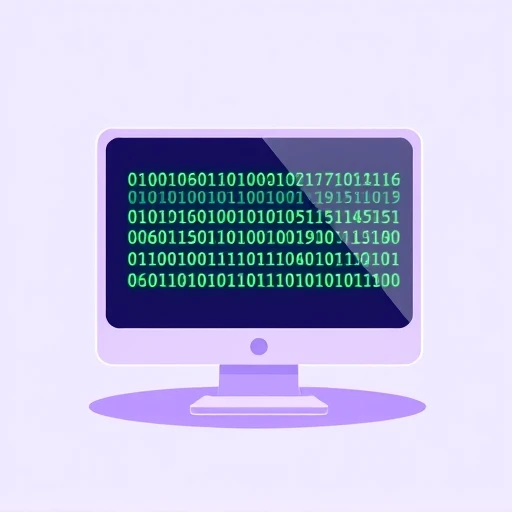
code in 30 Seconds
- A system of symbols or signals used to represent information, often for secrecy or technical communication like computer programming.
- A formal set of rules, laws, or principles that govern the behavior of a group or society, such as a code of ethics.
- A shorthand method of identification, such as a zip code, area code, or bar code, used to organize and categorize data.
- A specialized language used in specific environments, such as medical 'codes' in hospitals or 'coded language' in politics.
The word code is a versatile and multifaceted noun that serves as a cornerstone in both technical and social contexts. At its most fundamental level, a code is a system of symbols, letters, or figures used to represent something else. This representation is often designed for specific purposes, such as ensuring secrecy, enabling communication between different systems, or providing instructions to a computer. When we speak of 'computer code,' we are referring to the specialized languages like Python, Java, or C++ that programmers use to build software, websites, and applications. In this sense, code is the 'DNA' of the digital world, a set of logical instructions that tell a machine exactly how to behave. However, the utility of the word extends far beyond the glowing screens of silicon valley. It also refers to a set of rules, principles, or laws that a group of people or a society agrees to follow. This social application of the word is seen in terms like 'moral code,' 'dress code,' or 'penal code.' In these instances, the 'code' acts as a framework for behavior, establishing what is acceptable, legal, or ethical within a specific community. Whether it is the hidden signals used by spies to transmit secrets or the rigorous safety standards of a 'building code,' the term always implies a structured system of information or conduct.
- Technical Application
- In computer science, code is the symbolic arrangement of data or instructions in a computer program. It is the bridge between human logic and machine execution.
The developer spent weeks writing the code for the new mobile application to ensure it was bug-free.
Historically, the concept of a code was rooted in the physical world. The word originates from the Latin 'codex,' which referred to a wooden block or a set of tablets bound together. This eventually evolved into the modern book format, but the underlying idea of a 'collection of laws' or a 'systematic arrangement' remained. This is why we still use the term 'civil code' to describe a comprehensive collection of laws. In the 19th and 20th centuries, the rise of telecommunications introduced codes like Morse code, where short and long signals (dots and dashes) represented letters of the alphabet. This allowed for rapid long-distance communication before the invention of the telephone. Today, we encounter codes in almost every facet of life. A 'zip code' or 'postal code' helps the mail reach its destination; a 'bar code' allows a supermarket scanner to identify a product; and a 'QR code' links our physical world to digital content. In each case, the code is a shorthand—a way to pack a large amount of specific information into a small, standardized format.
- Social Conduct
- A code of conduct is a set of rules outlining the social norms, religious rules, and responsibilities of, or or proper practices for, an individual, party or organization.
Adhering to a strict ethical code is essential for anyone working in the medical profession.
Furthermore, the word 'code' is often used in emergency situations. In hospitals, a 'Code Blue' is a specialized signal indicating that a patient is in cardiac arrest and requires immediate resuscitation. This use of 'code' allows for clear, unambiguous communication among medical staff without causing undue panic among patients or visitors. Similarly, 'Code Red' might indicate a fire or a high-level security threat. These examples highlight the word's role in creating a shared language that is both efficient and discreet. In the realm of linguistics and sociology, 'code-switching' refers to the practice of alternating between two or more languages or varieties of language in conversation. This demonstrates how 'code' can also represent the cultural and linguistic frameworks we inhabit. Ultimately, whether we are talking about the binary digits of a computer program, the secret ciphers of wartime intelligence, or the unwritten rules of social etiquette, 'code' represents the structured systems that allow us to organize information and govern our interactions with the world and each other.
- Cryptography
- In the world of secrets, a code is a method used to transform a message into an obscured form to prevent unauthorized people from understanding it.
During World War II, breaking the Enigma code was a turning point for the Allied forces.
The company's dress code requires employees to wear business casual attire from Monday to Thursday.
The genetic code contained within our DNA determines many of our physical characteristics.
Using the word code correctly requires an understanding of its grammatical nuances and the specific context in which it is applied. As a noun, it can be either countable or uncountable, which is a common point of confusion for learners. When referring to computer programming, 'code' is typically treated as an uncountable noun, similar to 'water' or 'information.' You would say, 'I wrote a lot of code today,' rather than 'I wrote many codes.' However, when you are referring to a specific system of rules or a particular cipher, it becomes countable. For example, 'The two countries use different postal codes,' or 'The military developed several secret codes during the conflict.' Understanding this distinction is the first step toward using the word naturally in both spoken and written English.
- Verbal Collocations
- Common verbs used with 'code' include: write, develop, break, crack, decipher, adhere to, violate, and implement. Each verb shifts the meaning slightly depending on whether the code is technical or social.
It took the cryptographers months to crack the code used in the intercepted transmissions.
In professional and academic writing, 'code' often appears in the context of ethics and standards. You might write about a 'code of practice' or a 'code of ethics.' In these cases, the word is almost always followed by the preposition 'of.' For example, 'All members must abide by the professional code of conduct.' This structure emphasizes that the 'code' is a collection or a summary of specific expectations. In legal contexts, 'code' is often used as a proper noun when referring to specific bodies of law, such as the 'United States Code' or the 'Napoleonic Code.' In these instances, it should be capitalized. When discussing computer programming, you might use terms like 'source code,' 'object code,' or 'machine code' to be more specific about the level of abstraction you are referring to.
The software engineer is reviewing the source code to identify the cause of the system crash.
Another important usage involves the concept of 'breaking' or 'cracking' a code. While these are often used interchangeably, 'breaking a code' can also imply violating a rule (e.g., 'He broke the code of silence'). In contrast, 'cracking a code' almost always refers to the intellectual feat of solving a cipher or understanding a hidden message. When talking about social rules, we often use the verb 'adhere to' or 'follow.' For example, 'Students are expected to adhere to the school's dress code.' If someone fails to follow these rules, we might say they 'violated the code.' This range of verbs allows you to describe everything from a genius mathematician solving a puzzle to a rebellious student wearing the wrong uniform.
- Prepositional Phrases
- Common phrases include: 'in code' (written using a secret system), 'under the code' (subject to certain rules), and 'by the code' (according to the rules).
The spies communicated in code to ensure their messages remained confidential.
The new residential building was constructed strictly according to the local building code.
The samurai lived by a strict code of honor known as Bushido.
In the modern era, the word code is ubiquitous, appearing in diverse environments ranging from high-tech laboratories to everyday social interactions. One of the most common places you will hear this word is in the technology sector. In software development offices, 'code' is the primary subject of conversation. Engineers discuss 'clean code,' 'legacy code,' and 'pushing code' to production. Here, the word is synonymous with the work product itself. If you visit a 'coding bootcamp' or attend a 'hackathon,' the word will be used hundreds of times a day as participants collaborate on digital projects. In this context, 'code' is the language of creation, the medium through which new digital realities are constructed.
- The Tech Industry
- In Silicon Valley and beyond, 'code' is the fundamental unit of value. It is what developers write, what compilers translate, and what users ultimately interact with through an interface.
'We need to refactor the code to improve the application's performance,' the lead developer explained during the meeting.
Moving away from technology, you will frequently encounter 'code' in the healthcare sector. Hospitals use 'codes' as a form of shorthand for emergencies. If you are in a medical facility and hear an announcement for 'Code Blue' over the intercom, it signifies a life-threatening emergency, usually a cardiac or respiratory arrest. Other codes, such as 'Code Pink' (infant abduction) or 'Code Silver' (active shooter), allow staff to respond quickly and appropriately without causing mass panic. In this high-stakes environment, the 'code' is a tool for precision and calm. Similarly, in the legal and regulatory world, 'code' is a standard term. Lawyers and judges refer to the 'tax code,' the 'penal code,' or 'building codes.' Here, the word represents the formalization of rules that govern society. When a contractor says a house is 'up to code,' they mean it meets all the legal safety requirements established by the local government.
The hospital staff moved with urgent precision after the Code Blue was announced over the loudspeaker.
In everyday life, you hear 'code' in more mundane but equally important ways. When you ask for the 'Wi-Fi code' at a cafe, you are asking for the password (a type of security code) that allows you to access the internet. When you enter your 'PIN code' at an ATM, you are using a Personal Identification Number to verify your identity. Even in fashion and social etiquette, the term 'dress code' is common. Whether it's 'black tie' for a gala or 'business casual' for an office, the dress code tells you what is appropriate to wear. In the world of sports, athletes often speak of a 'code of conduct' or an unwritten 'players' code' that governs how they treat their teammates and opponents. These varied applications show that 'code' is not just a technical term, but a fundamental concept used to organize, protect, and regulate almost every aspect of human life.
- Daily Life
- From 'area codes' in phone numbers to 'discount codes' for online shopping, the word is a constant presence in our modern routine.
Please enter the four-digit code on the keypad to unlock the front door.
The restaurant has a strict dress code that prohibits diners from wearing shorts or flip-flops.
I used a promotional code to get a twenty percent discount on my online order.
One of the most frequent mistakes learners make with the word code involves its countability. In the context of computer programming, 'code' is almost always an uncountable noun. Many learners mistakenly say, 'I wrote three codes today,' when they actually mean 'I wrote three lines of code' or 'I wrote three programs.' Using 'codes' in a technical context often sounds unnatural to native speakers. It is much better to say, 'There is a lot of code in this file' or 'The code is very complex.' However, this rule changes when you are talking about specific systems of rules or identification numbers. In those cases, 'code' is countable. You can have 'different area codes,' 'multiple discount codes,' or 'various codes of ethics.' Distinguishing between these two usages is vital for sounding like a proficient English speaker.
- Countable vs. Uncountable
- Programming: Uncountable (e.g., 'The code is broken'). Rules/IDs: Countable (e.g., 'We need two different access codes').
Incorrect: He wrote many codes for the website. Correct: He wrote a lot of code for the website.
Another common error is confusing 'code' with 'cipher' or 'password.' While they are related, they are not identical. A 'cipher' is a specific method for encrypting or decrypting a message (like shifting every letter three places to the right). A 'code' is a broader term that can refer to the entire system or the resulting message. A 'password' is a specific type of security code used for authentication. Using 'code' when you specifically mean 'password' is usually understood, but it can sometimes be imprecise. For example, if you ask for the 'code' to a computer, people might think you are asking for the source code rather than the login password. Precision in these terms helps avoid confusion, especially in technical or security-related discussions.
The message was written in a complex code that required a special key to decipher.
Learners also sometimes struggle with the prepositions used with 'code.' When something is written using a code, we say it is 'in code' (e.g., 'The diary was written in code'). When someone follows a set of rules, they 'abide by the code' or 'follow the code.' A common mistake is saying 'follow with the code' or 'abide to the code.' Using the correct preposition—'by' for 'abide' and no preposition for 'follow'—is essential. Additionally, when referring to a specific set of rules, the phrase is 'code of [something],' such as 'code of conduct' or 'code of ethics.' Forgetting the 'of' or using a different preposition like 'for' (e.g., 'code for conduct') is a frequent error that can make your English sound slightly 'off.' Paying close attention to these small grammatical details will significantly improve your fluency and accuracy.
- Preposition Pitfalls
- Remember: 'In code' (secretly), 'Abide by the code' (obey), 'Code of conduct' (the standard phrase).
Every employee is required to sign a document stating they will abide by the company's code of ethics.
The general sent a message in code to prevent the enemy from learning the attack plan.
The programmer found a bug in the code that was causing the server to restart unexpectedly.
Because code has so many different meanings, there are several synonyms and alternatives you can use depending on the context. If you are talking about computer programming, alternatives might include 'software,' 'script,' 'program,' or 'instructions.' While 'code' is the most general term, 'script' often refers to a smaller, simpler set of instructions, and 'software' refers to the complete, finished product. In the context of secrecy and cryptography, you might use 'cipher,' 'cryptogram,' or 'encryption.' A 'cipher' is specifically a method for hiding the meaning of a message by replacing or rearranging letters, whereas 'code' can also mean replacing whole words or phrases with other words or symbols. Understanding these subtle differences can help you choose the most precise word for your needs.
- Code vs. Cipher
- A code typically replaces entire words or ideas (e.g., 'Eagle' means 'The President'), while a cipher typically replaces individual letters or bits (e.g., 'A' becomes 'D').
The ancient cipher was finally solved using a newly discovered stone tablet.
When 'code' refers to a set of rules or principles, synonyms include 'regulations,' 'laws,' 'statutes,' 'protocol,' or 'standards.' 'Regulations' and 'laws' are more formal and usually carry legal weight. 'Protocol' often refers to the expected behavior in a formal or diplomatic setting (e.g., 'diplomatic protocol'). 'Standards' often refers to technical or quality requirements (e.g., 'safety standards'). If you are talking about a person's internal sense of right and wrong, you might use 'principles,' 'ethics,' or 'morals' instead of 'moral code.' Each of these alternatives provides a slightly different shade of meaning, allowing you to be more specific about the nature of the rules you are describing.
The laboratory has a strict protocol for handling hazardous materials.
In the context of identification, 'code' can be replaced by 'identifier,' 'key,' 'password,' or 'tag.' For example, instead of 'area code,' you might hear 'dialing code' in some countries. Instead of 'bar code,' you might hear 'SKU' (Stock Keeping Unit) in a retail environment. In the digital world, a 'QR code' is a specific type of 'matrix barcode.' By learning these alternatives, you can expand your vocabulary and better understand the specialized language used in different industries. Whether you are discussing the 'legal statutes' of a country or the 'encryption' of a private message, knowing the right synonym for 'code' will make your communication clearer and more professional.
- Social Alternatives
- Instead of 'code of conduct,' you might use 'rules of engagement' in a military or business context, or 'etiquette' for social situations.
The ambassador was careful to follow every detail of diplomatic etiquette during the state dinner.
The new regulations regarding data privacy will go into effect next month.
The engineer checked the specifications to ensure the bridge could withstand high winds.
How Formal Is It?
Fun Fact
The transition from 'tree trunk' to 'book' happened because early books were made of wooden tablets. Today, the same word that once meant a piece of wood now describes the invisible instructions that power the internet.
Pronunciation Guide
- Pronouncing it like 'cod' (short 'o' sound).
- Adding an extra vowel sound at the end (e.g., 'code-uh').
- Mixing it up with 'coat' (ending with a 't' sound instead of a 'd' sound).
- Pronouncing the 'c' as an 's' sound (e.g., 'sode').
- Over-emphasizing the 'd' sound so it sounds like two syllables.
Difficulty Rating
Easy to recognize but has many different meanings depending on the text.
Requires careful attention to countability (code vs codes).
Common in many everyday phrases like 'Wi-Fi code'.
Clear pronunciation, but context is needed to know which meaning is intended.
What to Learn Next
Prerequisites
Learn Next
Advanced
Grammar to Know
Uncountable Nouns
We say 'a lot of code' not 'many codes' for programming.
Compound Nouns
Words like 'barcode' and 'zipcode' combine 'code' with a descriptor.
Prepositional Phrases
Using 'in' for 'in code' or 'by' for 'abide by the code'.
Proper Nouns
Capitalizing 'Code' in specific titles like 'The Penal Code'.
Gerunds
Using 'coding' as a noun (e.g., 'Coding is a useful skill').
Examples by Level
What is the Wi-Fi code for this cafe?
Quel est le code Wi-Fi de ce café ?
Noun, countable. Used here for a password.
Please enter your PIN code now.
Veuillez saisir votre code PIN maintenant.
Noun, countable. PIN stands for Personal Identification Number.
I don't know the code to the door.
Je ne connais pas le code de la porte.
Noun, countable. Refers to a security combination.
What is your zip code?
Quel est votre code postal ?
Noun, countable. Used in addresses.
The computer code is very long.
Le code informatique est très long.
Noun, uncountable. Refers to programming instructions.
He wrote a secret code in his notebook.
Il a écrit un code secret dans son carnet.
Noun, countable. Refers to a cipher or secret system.
The discount code gives you 10% off.
Le code de réduction vous donne 10 % de réduction.
Noun, countable. Used in shopping.
Is there a dress code for the party?
Y a-t-il un code vestimentaire pour la fête ?
Noun, countable. Refers to rules about clothing.
She is learning how to write computer code.
Elle apprend à écrire du code informatique.
Noun, uncountable. Common in educational contexts.
The school has a strict dress code for students.
L'école a un code vestimentaire strict pour les élèves.
Noun, countable. Refers to a set of rules.
Can you help me break this secret code?
Peux-tu m'aider à déchiffrer ce code secret ?
Verb phrase 'break a code' means to solve it.
The bar code on the milk is not working.
Le code-barres sur le lait ne fonctionne pas.
Noun, countable. A specific type of identification code.
Morse code uses dots and dashes to send messages.
Le code Morse utilise des points et des tirets pour envoyer des messages.
Proper noun phrase. A historical communication system.
You need an access code to enter the building.
Vous avez besoin d'un code d'accès pour entrer dans le bâtiment.
Noun, countable. Refers to a security credential.
The programmer found an error in the code.
Le programmeur a trouvé une erreur dans le code.
Noun, uncountable. Refers to the source code.
The area code for London is 020.
Le code régional de Londres est le 020.
Noun, countable. Used in telephony.
The company's code of conduct is very clear.
Le code de conduite de l'entreprise est très clair.
Noun phrase. Refers to a set of professional rules.
He spent the whole night coding a new game.
Il a passé toute la nuit à coder un nouveau jeu.
Verb 'coding' derived from the noun 'code'.
The spies communicated using a sophisticated code.
Les espions communiquaient à l'aide d'un code sophistiqué.
Noun, countable. Refers to a cryptographic system.
Does this software have open-source code?
Ce logiciel a-t-il un code source ouvert ?
Noun phrase. Refers to publicly available programming instructions.
You must follow the safety code at all times.
Vous devez respecter le code de sécurité en tout temps.
Noun, countable. Refers to regulatory rules.
The genetic code is the same for all living things.
Le code génétique est le même pour tous les êtres vivants.
Noun phrase. A scientific term for biological instructions.
I need to change my security code immediately.
Je dois changer mon code de sécurité immédiatement.
Noun, countable. Refers to a password or PIN.
The movie was released under a strict code of secrecy.
Le film est sorti sous un code de secret strict.
Noun phrase. Refers to a formal agreement of silence.
The developer is refactoring the legacy code to improve efficiency.
Le développeur restructure le code hérité pour améliorer l'efficacité.
Noun, uncountable. 'Legacy code' refers to old programming.
Medical professionals must adhere to a strict ethical code.
Les professionnels de la santé doivent adhérer à un code d'éthique strict.
Noun phrase. Refers to professional moral standards.
The hacker managed to crack the encryption code in minutes.
Le pirate a réussi à déchiffrer le code de cryptage en quelques minutes.
Noun, countable. Refers to a cryptographic key.
The building was not up to code and had to be renovated.
Le bâtiment n'était pas aux normes et a dû être rénové.
Idiom 'up to code' means meeting legal standards.
Linguists study how people use code-switching in bilingual communities.
Les linguistes étudient comment les gens utilisent l'alternance codique dans les communautés bilingues.
Noun phrase. A specialized term in linguistics.
The penal code outlines the punishments for various crimes.
Le code pénal énonce les peines pour divers crimes.
Proper noun phrase. Refers to a body of criminal law.
The message was sent in a code that only the general could understand.
Le message a été envoyé dans un code que seul le général pouvait comprendre.
Prepositional phrase 'in a code'.
The software's source code is protected by copyright law.
Le code source du logiciel est protégé par le droit d'auteur.
Noun phrase. Refers to the original programming text.
The novel explores the rigid social code of the Victorian era.
Le roman explore le code social rigide de l'époque victorienne.
Noun, countable. Refers to unwritten societal rules.
Deciphering the genetic code was a monumental achievement in biology.
Le déchiffrement du code génétique a été une réalisation monumentale en biologie.
Noun phrase. Refers to the fundamental biological system.
The programmer's use of 'spaghetti code' made the system nearly impossible to maintain.
L'utilisation par le programmeur d'un « code spaghetti » a rendu le système presque impossible à maintenir.
Idiom. Refers to poorly structured computer code.
The diplomat was careful not to violate the unspoken code of international relations.
Le diplomate a veillé à ne pas violer le code tacite des relations internationales.
Noun, countable. Refers to subtle, unwritten protocols.
The binary code is the most basic level of computer language.
Le code binaire est le niveau le plus basique du langage informatique.
Noun phrase. Refers to the 0s and 1s used by computers.
The artist used a visual code to convey hidden meanings in her paintings.
L'artiste a utilisé un code visuel pour transmettre des significations cachées dans ses peintures.
Noun, countable. Refers to a symbolic representational system.
The company was fined for failing to comply with the environmental code.
L'entreprise a été condamnée à une amende pour ne pas avoir respecté le code de l'environnement.
Noun, countable. Refers to a body of environmental regulations.
The ancient script remains a code that no one has been able to crack.
L'écriture ancienne reste un code que personne n'a pu déchiffrer.
Metaphorical use of 'code' for an unsolved mystery.
The philosopher argued that morality is not a fixed code but a dynamic process.
Le philosophe a soutenu que la moralité n'est pas un code fixe mais un processus dynamique.
Noun, countable. Refers to a system of ethical rules.
The complexity of the neural code remains one of the greatest challenges in neuroscience.
La complexité du code neural reste l'un des plus grands défis des neurosciences.
Noun phrase. Refers to how the brain processes information.
The legal team spent months codifying the disparate regulations into a single, coherent code.
L'équipe juridique a passé des mois à codifier les réglementations disparates en un code unique et cohérent.
Noun, countable. Refers to a comprehensive legal framework.
The poet used a highly personal code of metaphors that only a few readers could fully grasp.
Le poète a utilisé un code de métaphores hautement personnel que seuls quelques lecteurs pouvaient pleinement saisir.
Noun, countable. Refers to a private symbolic system.
The software architecture was designed to allow for modular code that is easily extensible.
L'architecture logicielle a été conçue pour permettre un code modulaire facilement extensible.
Noun, uncountable. Refers to high-quality programming.
The subtext of the political speech was written in a code intended for the party's core supporters.
Le sous-texte du discours politique a été écrit dans un code destiné aux principaux partisans du parti.
Noun, countable. Refers to 'coded language' or dog-whistles.
The Enigma machine was a masterpiece of engineering designed to create an unbreakable code.
La machine Enigma était un chef-d'œuvre d'ingénierie conçu pour créer un code incassable.
Noun, countable. Refers to a cryptographic system.
The structural integrity of the bridge was verified against the most stringent building codes.
L'intégrité structurelle du pont a été vérifiée par rapport aux codes du bâtiment les plus stricts.
Noun, countable. Refers to engineering regulations.
Antonyms
Common Collocations
Common Phrases
— Meeting all the required legal or safety standards.
The electrical wiring in the old house is finally up to code.
— To solve a difficult problem or understand a complex system.
The marketing team finally cracked the code for reaching younger audiences.
— An agreement among a group of people not to share information with outsiders.
The gang members maintained a strict code of silence during the police investigation.
— Written or spoken using a secret system to hide the meaning.
The diary was written entirely in code to keep it private.
— A system of representing numbers, letters, or symbols using only 0 and 1.
Computers process all information as binary code.
— A type of barcode that can be scanned by a smartphone to access digital content.
Scan the QR code on the menu to see the daily specials.
— A series of lines on a product that can be scanned to identify it.
The cashier scanned the bar code on the cereal box.
— A set of numbers that identifies a specific geographic region for telephone calls.
You need to dial the area code if you are calling from another state.
— A series of letters or numbers used in an address to help sort mail.
Don't forget to write the postal code on the envelope.
— A secret number or password used to enter a building or use a system.
I typed the access code into the keypad to open the gate.
Often Confused With
A cipher is a specific method of encryption, while code is a broader term for any system of representation.
A password is a type of code used for security, but 'code' can also mean a set of rules or instructions.
A codex is an ancient book, while code is the modern system of rules or symbols.
Idioms & Expressions
— To find the solution to a complex problem or to understand something difficult.
After months of research, they finally cracked the code to the disease's origin.
informal/neutral— A collective refusal to provide information, often to protect a group.
The police officers were accused of maintaining a code of silence regarding the incident.
neutral/formal— To violate a set of rules or to solve a secret message.
By telling the secret, he broke the code of their friendship.
neutral— To strictly follow a set of personal principles or rules.
He is a man who lives by a code of honor and integrity.
neutral— Computer code that is tangled, disorganized, and difficult to follow.
The new developer struggled to fix the bugs in the messy spaghetti code.
informal/technical— A state of emergency or a warning of imminent danger.
The hospital went into code red after the fire alarm was triggered.
neutral— While not using the word 'code', it relates to the 'code of silence'—to stop talking or keep a secret.
If you want to stay in this group, you'd better zip your lip.
informal— A set of rules that are understood by a group but not officially recorded.
There is an unwritten code among commuters about who gets the last seat.
neutral— The practice of alternating between different languages or styles of speech.
She uses code-switching when she talks to her family in Spanish and her friends in English.
neutral/academic— Understanding the fundamental instructions of life; often used metaphorically for any great discovery.
The startup claims to have cracked the genetic code of successful marketing.
neutral/metaphoricalEasily Confused
Similar spelling and sound.
Cod is a type of fish; code is a system of symbols or rules.
I ate cod for dinner, then I wrote some code.
Similar sound.
A coat is a piece of clothing; a code is a system of rules.
Put on your coat before you go out.
Similar sound.
A chord is a group of musical notes; a code is a system of symbols.
He played a C-major chord on the guitar.
Rhymes with code.
A node is a point in a network; a code is the instruction set.
The data traveled from one node to another.
Rhymes with code.
A mode is a way of doing something; a code is a system of rules.
The computer is in sleep mode.
Sentence Patterns
What is the [noun] code?
What is the Wi-Fi code?
The [place] has a [adjective] code.
The school has a strict code.
I am learning how to [verb] code.
I am learning how to write code.
You must [verb] by the code of [noun].
You must abide by the code of ethics.
The [noun] is written in a [adjective] code.
The message was written in a complex code.
The [abstract noun] is governed by a [adjective] code.
Social interaction is governed by a subtle code.
The building is not up to code.
The building is not up to code.
Please enter your [noun] code.
Please enter your access code.
Word Family
Nouns
Verbs
Adjectives
Related
How to Use It
Extremely high in modern English due to technology and regulation.
-
I wrote many codes for my app.
→
I wrote a lot of code for my app.
In programming, 'code' is uncountable. You should use 'a lot of code' or 'lines of code'.
-
The building is not up to the code.
→
The building is not up to code.
The idiom is 'up to code' without the article 'the' before 'code'.
-
He broke the code of silence.
→
He broke the code of silence.
This is actually correct, but some learners mistakenly say 'broke the silence code'. The standard phrase is 'code of silence'.
-
What is your area's code?
→
What is your area code?
It is a compound noun 'area code', so you don't need the possessive 's'.
-
The spies wrote in a code.
→
The spies wrote in code.
When referring to the state of writing secretly, we usually say 'in code' without the article 'a'.
Tips
Countability
Remember that you can't say 'many codes' when talking about programming. Use 'a lot of code' or 'lines of code' instead.
Collocations
Learn the phrase 'code of conduct' as a single unit. It is one of the most common ways to use the word in a professional setting.
The Long O
Make sure to pronounce the 'o' in 'code' as a long diphthong (/oʊ/) so it doesn't sound like 'cod'.
Emergency Codes
Be aware that 'Code Red' or 'Code Blue' are specific signals. Don't use them casually in a hospital or public place.
Open Source
If you hear 'open source code,' it means the programming instructions are free for anyone to see and change.
Dress Code
Always check the 'dress code' before going to a formal event like a wedding or a business meeting.
Capitalization
Capitalize 'Code' when it is part of a specific legal title, like 'The Civil Code of France'.
Cracking the Code
Use 'crack the code' when you finally understand something very difficult, like a hard math problem or a person's behavior.
Access Codes
An 'access code' is often more than just a password; it can be a physical keycard or a numeric PIN.
Genetic Code
When talking about biology, the 'genetic code' refers to the instructions in DNA that make every living thing unique.
Memorize It
Mnemonic
Think of a 'CO-DE' as a 'CO-llection of DE-tails'. Whether it's details of laws or details of computer instructions, it's a collection that makes a system.
Visual Association
Imagine a secret agent wearing a 'dress code' (a tuxedo) while typing 'computer code' into a laptop to 'break a code' on a safe.
Word Web
Challenge
Try to use the word 'code' in three different ways in one paragraph: as a password, as computer instructions, and as a set of rules.
Word Origin
The word 'code' comes from the Old French 'code', which in turn comes from the Latin 'codex'. In Latin, 'codex' originally meant the trunk of a tree. Later, it referred to wooden tablets covered with wax that were used for writing. These tablets were often bound together, forming the earliest type of book.
Original meaning: A collection of laws or a systematic arrangement of rules.
Indo-European (Latin branch).Cultural Context
Be aware that 'coded language' can sometimes be used for exclusionary or discriminatory purposes in social contexts.
In the US and UK, 'zip code' and 'postal code' are everyday terms. 'Coding' is a major part of the modern economy and education system.
Practice in Real Life
Real-World Contexts
Technology
- source code
- open source
- bug in the code
- clean code
Law
- penal code
- civil code
- tax code
- legal code
Social
- dress code
- code of conduct
- moral code
- unwritten code
Emergency
- code blue
- code red
- emergency code
- hospital code
Identification
- area code
- zip code
- bar code
- access code
Conversation Starters
"Do you think schools should teach coding to every student from a young age?"
"Does your workplace have a strict dress code, or is it more casual?"
"Have you ever tried to create a secret code with your friends when you were a child?"
"What is the most important part of a professional code of ethics in your opinion?"
"How often do you use QR codes when you go out to restaurants or shops?"
Journal Prompts
Describe a time when you had to follow a strict code of conduct. How did it make you feel?
If you could create a secret code for your personal diary, what symbols would you use and why?
Reflect on the 'unwritten codes' of your culture. What are some rules that everyone follows but no one talks about?
Write about the importance of the genetic code and how it shapes who we are as individuals.
Imagine a world without any codes (laws, rules, or technical instructions). What would that world look like?
Frequently Asked Questions
10 questionsIt depends on the meaning. For computer programming, it is usually uncountable ('I wrote some code'). For rules or identification numbers, it is countable ('There are many different area codes').
A code usually replaces whole words or phrases with symbols, while a cipher usually replaces individual letters or bits. However, in casual speech, they are often used interchangeably.
It means that a building or piece of equipment meets all the legal safety and quality standards required by law.
Yes, 'to code' means to write computer instructions. It is very common in the tech industry.
It is a set of rules that members of a group or organization must follow to ensure professional and ethical behavior.
Source code is the version of a computer program as it is originally written by a human in a programming language.
An area code is a three-digit number that identifies a specific geographic region for telephone calls in the US and Canada.
It is an emergency signal indicating that a patient is in cardiac arrest and needs immediate medical help.
It is the practice of changing between two or more languages or styles of speech depending on who you are talking to.
Yes, 'zip code' is the term used in the United States, while 'postal code' is used in the UK, Canada, and many other countries.
Test Yourself 180 questions
Write a sentence using 'code' as a secret message.
Well written! Good try! Check the sample answer below.
Write a sentence using 'code' as computer instructions.
Well written! Good try! Check the sample answer below.
Write a sentence using 'dress code'.
Well written! Good try! Check the sample answer below.
Write a sentence using 'code of conduct'.
Well written! Good try! Check the sample answer below.
Write a sentence using 'crack the code'.
Well written! Good try! Check the sample answer below.
Write a sentence using 'zip code'.
Well written! Good try! Check the sample answer below.
Write a sentence using 'area code'.
Well written! Good try! Check the sample answer below.
Write a sentence using 'genetic code'.
Well written! Good try! Check the sample answer below.
Write a sentence using 'up to code'.
Well written! Good try! Check the sample answer below.
Write a sentence using 'in code'.
Well written! Good try! Check the sample answer below.
Write a sentence using 'moral code'.
Well written! Good try! Check the sample answer below.
Write a sentence using 'source code'.
Well written! Good try! Check the sample answer below.
Write a sentence using 'code of ethics'.
Well written! Good try! Check the sample answer below.
Write a sentence using 'bar code'.
Well written! Good try! Check the sample answer below.
Write a sentence using 'Morse code'.
Well written! Good try! Check the sample answer below.
Write a sentence using 'access code'.
Well written! Good try! Check the sample answer below.
Write a sentence using 'penal code'.
Well written! Good try! Check the sample answer below.
Write a sentence using 'code-switching'.
Well written! Good try! Check the sample answer below.
Write a sentence using 'binary code'.
Well written! Good try! Check the sample answer below.
Write a sentence using 'unwritten code'.
Well written! Good try! Check the sample answer below.
Explain what a 'dress code' is in your own words.
Read this aloud:
You said:
Speech recognition is not supported in your browser. Try Chrome or Edge.
Why do we use 'zip codes' in addresses?
Read this aloud:
You said:
Speech recognition is not supported in your browser. Try Chrome or Edge.
What does it mean to 'write code'?
Read this aloud:
You said:
Speech recognition is not supported in your browser. Try Chrome or Edge.
What is a 'code of conduct' and why is it important?
Read this aloud:
You said:
Speech recognition is not supported in your browser. Try Chrome or Edge.
Have you ever used a 'discount code'? How did you get it?
Read this aloud:
You said:
Speech recognition is not supported in your browser. Try Chrome or Edge.
What is 'Morse code' and who used it?
Read this aloud:
You said:
Speech recognition is not supported in your browser. Try Chrome or Edge.
What does 'crack the code' mean metaphorically?
Read this aloud:
You said:
Speech recognition is not supported in your browser. Try Chrome or Edge.
What is a 'PIN code' and where do you use it?
Read this aloud:
You said:
Speech recognition is not supported in your browser. Try Chrome or Edge.
What is 'code-switching'?
Read this aloud:
You said:
Speech recognition is not supported in your browser. Try Chrome or Edge.
What is the 'genetic code'?
Read this aloud:
You said:
Speech recognition is not supported in your browser. Try Chrome or Edge.
What is 'open-source code'?
Read this aloud:
You said:
Speech recognition is not supported in your browser. Try Chrome or Edge.
What is a 'penal code'?
Read this aloud:
You said:
Speech recognition is not supported in your browser. Try Chrome or Edge.
What is an 'area code'?
Read this aloud:
You said:
Speech recognition is not supported in your browser. Try Chrome or Edge.
What is a 'bar code'?
Read this aloud:
You said:
Speech recognition is not supported in your browser. Try Chrome or Edge.
What does 'up to code' mean for a building?
Read this aloud:
You said:
Speech recognition is not supported in your browser. Try Chrome or Edge.
What is a 'moral code'?
Read this aloud:
You said:
Speech recognition is not supported in your browser. Try Chrome or Edge.
What is 'binary code'?
Read this aloud:
You said:
Speech recognition is not supported in your browser. Try Chrome or Edge.
What is a 'Code Blue'?
Read this aloud:
You said:
Speech recognition is not supported in your browser. Try Chrome or Edge.
What is 'spaghetti code'?
Read this aloud:
You said:
Speech recognition is not supported in your browser. Try Chrome or Edge.
What is a 'QR code'?
Read this aloud:
You said:
Speech recognition is not supported in your browser. Try Chrome or Edge.
Listen to the sentence: 'The programmer spent all night writing code.' What was the programmer doing?
Listen to the sentence: 'What is the area code for London?' What information is being asked for?
Listen to the sentence: 'The school has a strict dress code.' What must the students follow?
Listen to the sentence: 'The message was in code.' Was the message easy to read?
Listen to the sentence: 'The building is up to code.' Is the building safe?
Listen to the sentence: 'Please enter your PIN code.' What is the person doing?
Listen to the sentence: 'The doctor called a Code Blue.' Is there an emergency?
Listen to the sentence: 'The penal code is very long.' What is the sentence about?
Listen to the sentence: 'I have a discount code.' Will the person pay full price?
Listen to the sentence: 'The genetic code is in our DNA.' What is the sentence about?
Listen to the sentence: 'The bar code was scanned.' Where is this happening?
Listen to the sentence: 'He broke the code of silence.' Did he tell a secret?
Listen to the sentence: 'The source code is open.' Can anyone see it?
Listen to the sentence: 'The area code is 212.' What is 212?
Listen to the sentence: 'The zip code is 90210.' What is 90210?
/ 180 correct
Perfect score!
Summary
The word 'code' functions as both a technical term for computer instructions and a social term for a system of rules. Whether you are 'writing code' for an app or 'following a code' of conduct, the word implies a structured and shared system of meaning.
- A system of symbols or signals used to represent information, often for secrecy or technical communication like computer programming.
- A formal set of rules, laws, or principles that govern the behavior of a group or society, such as a code of ethics.
- A shorthand method of identification, such as a zip code, area code, or bar code, used to organize and categorize data.
- A specialized language used in specific environments, such as medical 'codes' in hospitals or 'coded language' in politics.
Countability
Remember that you can't say 'many codes' when talking about programming. Use 'a lot of code' or 'lines of code' instead.
Collocations
Learn the phrase 'code of conduct' as a single unit. It is one of the most common ways to use the word in a professional setting.
The Long O
Make sure to pronounce the 'o' in 'code' as a long diphthong (/oʊ/) so it doesn't sound like 'cod'.
Emergency Codes
Be aware that 'Code Red' or 'Code Blue' are specific signals. Don't use them casually in a hospital or public place.
Example
I forgot the entry code for the garage door.
Related Content

Learn it in Context
This Word in Other Languages
More Language words
humanus
C2A Latin adjective meaning 'human', 'kind', or 'refined', serving as the etymological root for English words such as 'human', 'humane', and 'humanity'. It is often cited in academic, biological, or philosophical contexts to discuss the nature of mankind.
transferable
B2A quality, skill, or asset that can be moved from one person, place, or situation to another. In academic and professional contexts, it often refers to 'transferables'—competencies gained in one environment that are applicable in a different field or role.
overall
B2Describing the total or general nature of something when all parts or factors are considered together. It refers to the whole of a situation rather than specific details or individual components.
roughly
B1Used to indicate that a number or amount is approximate rather than exact; also describes actions done with force or without care, or something done in a preliminary way.
definite
B2To be clearly stated, certain, or fixed in nature. It describes something that is not vague and leaves no room for doubt or confusion.
omni
B1A prefix and combining form used in the English language to mean 'all' or 'every.' It is derived from the Latin word 'omnis' and is typically used to describe things that are universal, all-encompassing, or present in every possible way.
limit
B1A point or level beyond which something does not or may not extend or pass. It also refers to a restriction on the size or amount of something permissible or possible.
topic
B2A topic is a specific subject that is being discussed, written about, or studied. It serves as the central focus or theme of a conversation, book, or academic paper.
modifier
B2A word, phrase, or clause that functions as an adjective or adverb to describe another word or group of words. It provides additional details about the head word.
detailed
B1The adjective 'detailed' describes something that is thorough and includes many small facts, items, or specifics. It indicates that a high level of completeness and attention has been given to every individual part of a subject or object.

