crack in 30 Seconds
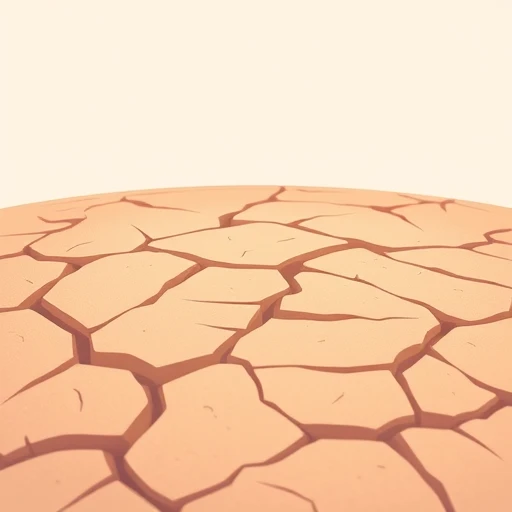
- A crack is a thin line of damage on a solid surface.
- It can be a sharp, loud noise like thunder or a whip.
- Metaphorically, it means to solve a problem or lose control.
- It is used in many common idioms like 'crack a joke'.
The word crack is a versatile English term that functions as both a noun and a verb. At its most fundamental level, it describes a physical state where something solid has begun to break but has not yet completely separated into pieces. Imagine a windshield after a small stone hits it; the lines spreading out are cracks. However, the utility of this word extends far beyond physical damage. It is deeply embedded in the English language to describe sounds, psychological states, and even social interactions. When we talk about a 'crack in the wall,' we are being literal. When we talk about 'cracking a joke,' we are using the word to describe the sudden 'breaking' of silence or a serious mood with humor. The word captures the essence of suddenness and precision.
- Physical Fissure
- A narrow opening or line of breakage caused by stress, age, or impact. For example, 'The dry earth began to crack under the heat of the sun.'
- Auditory Sharpness
- A sudden, loud, and sharp noise, similar to the sound of a whip or a branch breaking. 'A loud crack of thunder woke the sleeping children.'
The old wooden floorboards would crack every time someone stepped on them.
In social and psychological contexts, 'crack' takes on more metaphorical meanings. To 'crack under pressure' means to lose mental control or emotional stability when a situation becomes too difficult to handle. This draws a parallel between a person's resolve and a physical object that fails when too much weight is applied. Conversely, to 'crack a code' or 'crack a case' implies using intelligence to break through a barrier of mystery or security. This usage suggests that the solution was hidden behind a hard exterior, and the person successfully found the weakness to get inside. It is a word that balances between destruction and discovery.
He finally managed to crack the encryption on the old hard drive.
- Social Usage
- To 'crack a smile' means to finally show a bit of happiness or amusement after being serious. It implies a breakthrough in a rigid facial expression.
Furthermore, 'crack' can describe an elite level of skill. A 'crack team' or a 'crack shot' refers to someone or a group that is exceptionally proficient and precise. This likely stems from the idea of being 'sharp' or 'hitting the mark' with the speed and accuracy of a whip's crack. Whether you are describing a damaged pavement, a funny story, or a high-stakes investigation, 'crack' provides a vivid, energetic way to describe the moment a barrier—physical or metaphorical—is breached.
Using crack correctly requires understanding its role as both a noun (a thing) and a verb (an action). As a noun, it often follows an article like 'a' or 'the'. You might see a crack, hear a crack, or take a crack at something. As a verb, it is regular, meaning its past tense is 'cracked' and its present participle is 'cracking'. The word is incredibly flexible, fitting into formal reports about structural integrity and informal conversations about jokes or attempts.
- As a Noun (Physical)
- 'There is a tiny crack in the antique vase, so please handle it with care.' Here, it identifies a specific physical defect.
- As a Noun (Attempt)
- 'I’ve never tried coding before, but I’m willing to have a crack at it.' This is a common idiomatic way to say 'try'.
The crack of the bat echoed through the entire stadium.
When using 'crack' as a verb, pay attention to the object. If you crack an object, you are the cause of the damage. If an object cracks on its own, the object is the subject. For example, 'I cracked the window' (active) versus 'The window cracked' (intransitive). This distinction is important for clarity. Additionally, 'crack' is frequently used in phrasal verbs. 'Crack down' means to enforce rules more strictly, while 'crack up' means to laugh uncontrollably or to suffer a mental breakdown.
The police decided to crack down on speeding in residential areas.
- Verb (Metaphorical)
- 'She finally cracked the secret to making perfect sourdough bread.' This implies solving a difficult problem.
In more advanced usage, 'crack' can describe a change in voice quality. When a teenager's voice 'cracks' during puberty, it changes pitch suddenly. Similarly, if someone's voice 'cracks' with emotion, it means they are about to cry. These nuances allow you to convey deep emotional or physical transitions with a single, simple word. Always consider the context: are you talking about a sound, a break, a joke, or a specialized skill level? Matching the right form of 'crack' to your context will make your English sound much more natural and sophisticated.
You will encounter the word crack in a surprising variety of environments, from construction sites to comedy clubs. In everyday life, it is most common when discussing damage or sounds. If you are at home and hear a loud noise from the kitchen, you might say, 'What was that crack?' If you are inspecting a house you want to buy, the surveyor will look for 'cracks in the foundation.' These are literal, physical applications that everyone understands regardless of their English proficiency level.
- In the News
- You will often hear news anchors talk about a 'crackdown' on crime or illegal immigration. This implies a sudden, forceful application of the law.
- In Entertainment
- Comedians are said to 'crack jokes.' If the audience finds them hilarious, they might 'crack up,' which means they are laughing so hard they feel like they are breaking apart.
The detective was determined to crack the case before the weekend.
In professional settings, specifically in technology and security, 'cracking' refers to the act of breaking into a computer system or decrypting a file without authorization. While 'hacking' is a broader term, 'cracking' is specifically about breaking security. In the workplace, a manager might tell a team to 'get cracking' on a project, which is a common way to say 'start working immediately and energetically.' This usage likely comes from the sound of a whip being cracked to start a race or move animals.
We need to get cracking if we want to finish this report by five.
- Weather and Nature
- 'The crack of dawn' is a poetic and common way to describe the very first light of the morning. It suggests the sun is 'breaking' through the darkness.
Finally, in sports, you'll hear about a 'crack player' or a 'crack shot.' This is high praise, indicating that the person is among the best in their field. Whether it's the literal sound of a baseball bat hitting a ball or the metaphorical breaking of a mystery, 'crack' is a word that captures high-energy, decisive moments in life. Listening for these different contexts will help you understand the speaker's intent—whether they are concerned about a broken wall or excited about a new project.
While crack is a common word, it is frequently misused by learners who confuse it with similar words like 'break,' 'split,' or 'snap.' The most common mistake is using 'crack' when the object has actually separated into two or more distinct pieces. A crack is a line on the surface; if the pieces are no longer touching, it is a 'break.' For example, if you drop a glass and it stays in one piece but has lines in it, it is cracked. If it is in fifty pieces on the floor, it is broken.
- Crack vs. Break
- Mistake: 'I cracked my pencil in half.' Correction: 'I broke my pencil in half.' (Because it is now in two pieces).
- Crack vs. Split
- Mistake: 'The wood cracked down the middle.' Correction: 'The wood split down the middle.' (Split implies a clean separation along a line).
Don't say 'I cracked the egg' if you mean you opened it into a pan; usually, we say 'I broke the egg open.'
Another area of confusion is the phrasal verb 'crack up.' Learners often use it to mean 'getting angry,' but in modern English, it almost exclusively means to laugh very hard or to have a mental breakdown. If you want to say someone got angry, use 'blew up' or 'snapped.' Furthermore, the idiom 'a crack at' is often used incorrectly with the wrong preposition. It is always 'a crack at something,' never 'a crack on' or 'a crack to.'
Correct: 'I'll take a crack at solving this puzzle.'
- Voice Cracking
- Mistake: 'His voice broke with the cold.' Correction: 'His voice cracked with the cold.' (Cracking refers to the pitch change; breaking is more final).
Lastly, be careful with the word 'cracker.' While related to 'crack' (because they are crunchy and make a noise), a 'cracker' is a biscuit or a firework. Calling someone a 'cracker' can also be a racial slur in certain parts of the United States, so it is a word that should be used with extreme caution outside of the context of food or Christmas celebrations. By understanding these subtle distinctions, you can use 'crack' with confidence and precision.
To truly master the word crack, it is helpful to know its synonyms and how they differ in nuance. Depending on whether you are talking about a physical opening, a sound, or an action, there might be a more specific word that fits your needs. Using these alternatives can make your writing more descriptive and your speaking more precise. For example, in a technical report, 'fissure' sounds more professional than 'crack,' while in a story, 'snap' might convey more suddenness than 'crack.'
- Fissure
- A long, narrow opening or line of breakage made by cracking or splitting, especially in rock or earth. It sounds more geological or medical.
- Crevice
- A narrow opening or fissure, especially in a rock or wall. This usually implies a space where something could be hidden.
The mountain climbers found a small crevice to shelter from the wind.
When describing sounds, 'snap,' 'pop,' and 'bang' are all related to 'crack.' A 'snap' is usually thinner and sharper (like a twig), a 'pop' is more hollow (like a balloon), and a 'bang' is much louder and heavier (like a gun). If you are talking about solving something, 'decipher' or 'resolve' are more formal alternatives to 'crack.' For instance, 'The linguist deciphered the ancient script' sounds more academic than 'The linguist cracked the ancient script.'
The scientist finally deciphered the genetic sequence.
- Fracture
- Used mostly in medical contexts for bones or in engineering for materials. 'He has a minor fracture in his wrist.'
In the context of humor, instead of 'cracking a joke,' you could say someone 'quipped' or 'jested.' These words suggest a more intellectual or playful type of humor. If you are 'cracking under pressure,' you might also be 'succumbing' or 'yielding.' Each of these alternatives shifts the focus slightly—'succumbing' sounds more tragic, while 'yielding' sounds more like a choice. By expanding your vocabulary to include these similar words, you gain the ability to paint much more detailed pictures with your language.
How Formal Is It?
Fun Fact
The use of 'crack' to mean 'excellent' (as in 'a crack team') dates back to the 18th century, possibly referring to the speed of a whip.
Pronunciation Guide
- Pronouncing it like 'clack'.
- Making the 'a' sound too long like 'crake'.
- Softening the final 'k' sound.
- Confusing it with 'croak' (the sound of a frog).
- Adding an extra vowel sound at the end (crack-uh).
Difficulty Rating
Easy to recognize in context but has many meanings.
Requires knowledge of specific idioms and phrasal verbs.
Natural usage of idioms like 'get cracking' takes practice.
Usually clear, but watch for fast speech in phrasal verbs.
What to Learn Next
Prerequisites
Learn Next
Advanced
Grammar to Know
Regular Verb Conjugation
I crack, he cracks, we cracked, they are cracking.
Phrasal Verbs with 'Crack'
Crack down, crack up, crack on.
Nouns as Adjectives
A 'crack' team (using the noun to modify another noun).
Zero Derivation
Using the same word as a noun and a verb without changing form.
Prepositional Idioms
Have a crack 'at' something.
Examples by Level
There is a crack in my cup.
Il y a une fissure dans ma tasse.
Noun, singular countable.
I heard a loud crack.
J'ai entendu un craquement fort.
Noun, singular.
Crack the egg into the bowl.
Cassez l'œuf dans le bol.
Imperative verb.
The ice has a crack.
La glace a une fissure.
Noun.
Don't crack the glass!
Ne casse pas le verre !
Negative imperative.
The wall has a small crack.
Le mur a une petite fissure.
Noun.
I can see a crack in the door.
Je peux voir une fente dans la porte.
Noun.
The mirror has a crack.
Le miroir a une fissure.
Noun.
He likes to crack jokes during dinner.
Il aime raconter des blagues pendant le dîner.
Verb phrase 'crack jokes'.
We woke up at the crack of dawn.
Nous nous sommes réveillés à l'aube.
Idiom 'crack of dawn'.
The dry ground started to crack.
Le sol sec a commencé à se fissurer.
Infinitive verb.
She cracked her phone screen.
Elle a fissuré l'écran de son téléphone.
Past tense verb.
The whip made a loud crack.
Le fouet a fait un claquement fort.
Noun.
He cracked a smile when he saw me.
Il a esquissé un sourire quand il m'a vu.
Verb phrase 'crack a smile'.
The old wood will crack if you hit it.
Le vieux bois se fissurera si vous le frappez.
Future tense.
They are cracking up at the movie.
Ils éclatent de rire devant le film.
Present continuous phrasal verb.
The detective finally cracked the case.
Le détective a enfin résolu l'affaire.
Metaphorical verb usage.
He cracked under pressure during the exam.
Il a craqué sous la pression pendant l'examen.
Idiomatic verb usage.
The government is cracking down on pollution.
Le gouvernement prend des mesures contre la pollution.
Phrasal verb 'crack down'.
I'll have a crack at fixing the sink.
Je vais essayer de réparer l'évier.
Idiom 'have a crack at'.
The thunder gave a terrifying crack.
Le tonnerre a fait un craquement terrifiant.
Noun.
His voice cracked as he gave the speech.
Sa voix a mué alors qu'il prononçait le discours.
Verb describing voice change.
We need to crack the code to enter.
Nous devons déchiffrer le code pour entrer.
Verb meaning 'solve'.
The vase has a hairline crack.
Le vase a une fissure très fine.
Compound noun phrase.
They are a crack team of engineers.
C'est une équipe d'ingénieurs d'élite.
Adjective usage.
The company is starting to show cracks.
L'entreprise commence à montrer des signes de faiblesse.
Metaphorical noun usage.
Let's get cracking on the new project.
Mettons-nous au travail sur le nouveau projet.
Idiom 'get cracking'.
He's a crack shot with a rifle.
C'est un excellent tireur à la carabine.
Adjective usage.
The cold weather caused the pipes to crack.
Le temps froid a fait éclater les tuyaux.
Causative verb usage.
She's always making cracks about my hair.
Elle fait toujours des remarques sarcastiques sur mes cheveux.
Noun meaning 'sarcastic remarks'.
The security was cracked by a teenager.
La sécurité a été forcée par un adolescent.
Passive voice verb.
He cracked the whip to get the job done.
Il a fait preuve d'autorité pour terminer le travail.
Idiom 'crack the whip'.
The first cracks in the alliance appeared today.
Les premières failles de l'alliance sont apparues aujourd'hui.
Metaphorical noun usage.
The negotiator tried to crack the witness.
Le négociateur a essayé de faire craquer le témoin.
Verb meaning 'break someone's resolve'.
It was a cracking performance by the lead actor.
C'était une performance magistrale de l'acteur principal.
Adjective meaning 'excellent'.
They are papering over the cracks in the economy.
Ils masquent les problèmes de l'économie.
Idiom 'papering over the cracks'.
The whip-crack of his voice silenced the room.
Le claquement sec de sa voix a fait taire la pièce.
Compound noun.
The encryption was virtually impossible to crack.
Le cryptage était virtuellement impossible à déchiffrer.
Infinitive verb.
He made a wisecrack about the boss's tie.
Il a fait une boutade sur la cravate du patron.
Noun 'wisecrack'.
The pavement was a network of cracks.
Le trottoir était un réseau de fissures.
Noun, plural.
The facade of normalcy began to crack.
La façade de normalité a commencé à se fissurer.
Abstract verb usage.
He is a crack hand at restoring old paintings.
C'est un expert dans la restauration de vieux tableaux.
Idiomatic adjective 'crack hand'.
The sonic crack of the jet broke the windows.
Le bang supersonique de l'avion a brisé les fenêtres.
Technical noun usage.
She finally cracked the glass ceiling.
Elle a enfin brisé le plafond de verre.
Idiomatic metaphorical usage.
The report identified a crack in the theory.
Le rapport a identifié une faille dans la théorie.
Noun meaning 'flaw'.
He cracked a bottle of champagne to celebrate.
Il a débouché une bouteille de champagne pour fêter ça.
Verb meaning 'open'.
The whip's crack echoed through the canyon.
Le claquement du fouet a résonné dans le canyon.
Possessive noun.
The stress of the trial made him crack.
Le stress du procès l'a fait craquer.
Intransitive verb usage.
Synonyms
Antonyms
Common Collocations
Common Phrases
— To start doing something immediately and with energy.
We have a lot to do, so let's get cracking.
— To continue doing something, especially with energy.
I need to crack on with my homework.
— To laugh very hard or to have a mental breakdown.
That comedian really makes me crack up.
— An equal opportunity to do something.
Everyone deserves a fair crack of the whip.
— The sudden loud noise heard after lightning.
A sudden crack of thunder made everyone jump.
— A voice that changes pitch due to emotion or age.
His cracked voice betrayed his sadness.
— To hide problems instead of fixing them.
They are just papering over the cracks in the relationship.
Often Confused With
Break means the pieces are separated; crack means they are still together.
Split implies a clean, straight division, often along a grain.
Snap is usually for thin things like twigs and emphasizes the sound.
Idioms & Expressions
— Very early in the morning, just as the sun rises.
Farmers are usually up at the crack of dawn.
informal/neutral— To tell a joke, often to make people feel more relaxed.
He cracked a joke to break the ice.
neutral— To use authority to make people work harder.
The director had to crack the whip to finish the movie.
informal— To fail or lose control because of too much stress.
The bridge began to crack under the strain of the heavy trucks.
neutral— To show a small smile, often after being serious.
I couldn't help but crack a smile at the baby's face.
neutral— To use much more force than is necessary to solve a small problem.
Firing him for being five minutes late is like cracking a nut with a sledgehammer.
informal— To figure out how something complex works.
Scientists are trying to crack the code of human aging.
neutral— The sound of a baseball bat hitting a ball.
At the crack of the bat, the runner started sprinting.
sports— To open a beer or a cold drink.
Let's crack open a cold one after work.
slangEasily Confused
Sounds similar.
Clack is the sound of two hard objects hitting together (like high heels). Crack is a breaking sound.
The clack of her shoes on the floor was annoying.
Similar spelling/sound.
Croak is the sound a frog makes or a very deep, hoarse human voice.
The frog croaked in the pond.
Similar sound.
Creak is a long, squeaky sound (like an old door). Crack is a short, sharp sound.
The old floorboards creak when you walk.
Both start with 'cra'.
Crash is a much louder, more destructive sound and event.
The car crash was very loud.
Both short sounds.
Click is a very small, light sound (like a computer mouse).
Click the button to start.
Sentence Patterns
There is a crack in [noun].
There is a crack in the cup.
Subject cracked the [noun].
He cracked the window.
Subject cracked under [noun].
She cracked under the pressure.
Subject is cracking down on [noun].
The school is cracking down on bullying.
Let's get cracking on [noun].
Let's get cracking on the homework.
Subject is a crack [noun].
He is a crack pilot.
The first cracks in [noun] appeared.
The first cracks in the plan appeared.
Subject cracked a [noun] of [liquid].
They cracked a bottle of bubbly.
Word Family
Nouns
Verbs
Adjectives
Related
How to Use It
Very common in daily speech and news.
-
I cracked my phone in two pieces.
→
I broke my phone in half.
A crack is a line; if it's in two pieces, it's broken.
-
He cracked a joke to me.
→
He cracked a joke.
We usually don't use 'to [person]' after 'crack a joke'.
-
I'll take a crack on it.
→
I'll take a crack at it.
The correct preposition for this idiom is 'at'.
-
The police are cracking on crime.
→
The police are cracking down on crime.
'Crack down' means to enforce rules; 'crack on' means to continue working.
-
His voice broke when he was 13.
→
His voice cracked when he was 13.
While 'broke' is sometimes used, 'cracked' is more specific for the pitch changes of puberty.
Tips
Precision
Use 'crack' for glass and 'split' for wood to sound more like a native speaker.
Elite Skill
Remember that 'crack' as an adjective means 'expert'. A 'crack team' is the best team.
Morning Routine
Use 'at the crack of dawn' to describe waking up very early for a trip or work.
Breaking the Ice
If a meeting is too serious, 'crack a joke' to make people feel more comfortable.
Verb Form
Remember 'crack' is a regular verb: crack, cracked, cracked. No irregular forms to worry about!
Sound Words
Listen for the 'k' at the end. It's a sharp sound that mimics the action of cracking.
Metaphors
Use 'cracks appearing' to describe a plan or a relationship that is starting to fail.
Irish English
If you are in Ireland, 'What's the craic?' just means 'How are you?' or 'What's happening?'
Warning
If you see a 'crack' in a building's foundation, it's a sign of serious structural trouble.
Laughter
If you want to say something was very funny, say 'It cracked me up!'
Memorize It
Mnemonic
Think of a 'CR-ack' as a 'CR-azy' 'break'. It's not a full break, just a crazy line.
Visual Association
Imagine a spiderweb on a glass window. Those lines are cracks.
Word Web
Challenge
Try to use 'crack' in three different ways (noun, verb, idiom) in one short paragraph.
Word Origin
Derived from the Old English word 'cracian', which meant to make a sharp noise or to resound.
Original meaning: The word originally focused on the sound rather than the physical break.
Germanic (related to Dutch 'kraken' and German 'krachen').Cultural Context
Be aware that 'crack' can refer to a drug or be used as a racial slur ('cracker').
Commonly used in both UK and US English with very similar meanings.
Practice in Real Life
Real-World Contexts
Construction
- foundation crack
- stress crack
- hairline crack
- seal the crack
Humor
- crack a joke
- crack up
- wisecrack
- make a crack about
Morning
- crack of dawn
- early start
- first light
- get cracking
Police/Law
- crack down on
- crack the case
- criminal crackdown
- break the code
Stress
- crack under pressure
- mental crack
- breaking point
- emotional crack
Conversation Starters
"Have you ever seen a famous landmark with a crack in it, like the Liberty Bell?"
"What time do you usually wake up? Are you up at the crack of dawn?"
"Do you know anyone who is really good at cracking jokes?"
"Have you ever tried to crack a secret code or a difficult puzzle?"
"What do you do to make sure you don't crack under pressure at work?"
Journal Prompts
Describe a time when you had to 'crack a code' or solve a very difficult problem. How did you feel?
Write about a moment when you 'cracked up' laughing. What was so funny?
Reflect on a situation where you felt like you might 'crack under pressure.' How did you handle it?
If you could 'crack down' on one thing in the world, what would it be and why?
Think about the phrase 'the crack of dawn.' Describe your perfect early morning.
Frequently Asked Questions
10 questionsYes, but usually metaphorically. You can say someone 'cracked under pressure' or that they are a 'crack' (elite) professional. It doesn't mean they are physically broken.
'Crack up' is more intense. It means to laugh suddenly and uncontrollably. You 'laugh' at a joke, but you 'crack up' if it's really hilarious.
Not at all! 'Cracking a code' is a success, 'cracking a joke' is fun, and being a 'crack shot' is a compliment about your skill.
It means a manager is being very strict and making employees work harder or faster to meet a goal.
The most common way is 'a crack of thunder.' You can also say the 'crack of dawn' for the very early morning.
Yes, because crackers are crunchy and make a 'crack' sound when you eat or break them.
It is a very, very thin crack, as thin as a human hair. It's often used to describe small damage in bones or engines.
Yes, it means you opened the door just a tiny bit. It's a common informal expression.
It is an idiomatic way to say 'start working' or 'hurry up.' For example: 'We're late, let's get cracking!'
It can be. 'Crack' can refer to a drug, or 'making cracks' can mean making mean comments. Always check the context.
Test Yourself 180 questions
Write a sentence using 'crack' as a noun describing a physical object.
Well written! Good try! Check the sample answer below.
Write a sentence using 'crack' as a verb meaning to solve something.
Well written! Good try! Check the sample answer below.
Use the idiom 'crack of dawn' in a sentence about travel.
Well written! Good try! Check the sample answer below.
Describe a funny situation using the phrasal verb 'crack up'.
Well written! Good try! Check the sample answer below.
Write a sentence about a 'crackdown' by the police.
Well written! Good try! Check the sample answer below.
Use 'crack under pressure' to describe a sports moment.
Well written! Good try! Check the sample answer below.
Write a sentence using 'crack' as an adjective meaning elite.
Well written! Good try! Check the sample answer below.
Use 'crack a smile' in a sentence about a serious person.
Well written! Good try! Check the sample answer below.
Write a sentence using 'crack' to describe a sound.
Well written! Good try! Check the sample answer below.
Use 'get cracking' to encourage someone to start working.
Well written! Good try! Check the sample answer below.
Write a sentence about 'papering over the cracks' in a business.
Well written! Good try! Check the sample answer below.
Describe a 'hairline crack' in an antique.
Well written! Good try! Check the sample answer below.
Use 'crack a bottle' in a sentence about a celebration.
Well written! Good try! Check the sample answer below.
Write a sentence about a teenager's voice 'cracking'.
Well written! Good try! Check the sample answer below.
Use 'crack the whip' to describe a boss.
Well written! Good try! Check the sample answer below.
Write a sentence using 'wisecrack'.
Well written! Good try! Check the sample answer below.
Use 'crack on' to describe continuing a task.
Well written! Good try! Check the sample answer below.
Write a sentence about 'cracks in the foundation' metaphorically.
Well written! Good try! Check the sample answer below.
Use 'have a crack at' for a new sport.
Well written! Good try! Check the sample answer below.
Write a sentence about the 'crack of the bat'.
Well written! Good try! Check the sample answer below.
Describe a time you saw a crack in something valuable.
Read this aloud:
You said:
Speech recognition is not supported in your browser. Try Chrome or Edge.
What do you do when you need to 'get cracking' on a difficult task?
Read this aloud:
You said:
Speech recognition is not supported in your browser. Try Chrome or Edge.
Tell a short story about someone who 'cracked a joke' at the wrong time.
Read this aloud:
You said:
Speech recognition is not supported in your browser. Try Chrome or Edge.
How do you feel about waking up at the 'crack of dawn'?
Read this aloud:
You said:
Speech recognition is not supported in your browser. Try Chrome or Edge.
Have you ever 'cracked a code' or solved a hard puzzle? Describe it.
Read this aloud:
You said:
Speech recognition is not supported in your browser. Try Chrome or Edge.
What is something the government should 'crack down on' in your city?
Read this aloud:
You said:
Speech recognition is not supported in your browser. Try Chrome or Edge.
Describe a person you know who never 'cracks a smile'.
Read this aloud:
You said:
Speech recognition is not supported in your browser. Try Chrome or Edge.
What makes you 'crack up' laughing every time?
Read this aloud:
You said:
Speech recognition is not supported in your browser. Try Chrome or Edge.
Have you ever 'cracked' a phone screen? How did it happen?
Read this aloud:
You said:
Speech recognition is not supported in your browser. Try Chrome or Edge.
What does it mean to be a 'crack' professional in your field?
Read this aloud:
You said:
Speech recognition is not supported in your browser. Try Chrome or Edge.
How do you handle it when you feel like you might 'crack under pressure'?
Read this aloud:
You said:
Speech recognition is not supported in your browser. Try Chrome or Edge.
Describe the sound of a 'crack of thunder'.
Read this aloud:
You said:
Speech recognition is not supported in your browser. Try Chrome or Edge.
What's the 'craic' in your life right now? (Irish style)
Read this aloud:
You said:
Speech recognition is not supported in your browser. Try Chrome or Edge.
Would you like to have a 'crack' at bungee jumping?
Read this aloud:
You said:
Speech recognition is not supported in your browser. Try Chrome or Edge.
Why do people 'paper over the cracks' in relationships?
Read this aloud:
You said:
Speech recognition is not supported in your browser. Try Chrome or Edge.
Describe a 'crack shot' you have seen in a movie.
Read this aloud:
You said:
Speech recognition is not supported in your browser. Try Chrome or Edge.
When was the last time you had to 'crack the whip' at work or home?
Read this aloud:
You said:
Speech recognition is not supported in your browser. Try Chrome or Edge.
How does a teenager's voice 'cracking' affect them socially?
Read this aloud:
You said:
Speech recognition is not supported in your browser. Try Chrome or Edge.
What is a 'wisecrack' you remember?
Read this aloud:
You said:
Speech recognition is not supported in your browser. Try Chrome or Edge.
Do you prefer to 'crack on' with work or take frequent breaks?
Read this aloud:
You said:
Speech recognition is not supported in your browser. Try Chrome or Edge.
Listen for the word 'crack' in a news report about a 'crackdown'. What is the report about?
If a speaker says 'I'm cracking up!', are they happy or sad?
A person says 'We're up at the crack of dawn.' Are they going to sleep or waking up?
If someone says 'He's a crack pilot,' would you trust him to fly the plane?
You hear a 'loud crack' in a forest. What might have happened?
A friend says 'I'll have a crack at it.' Are they giving up or trying?
Someone says 'The foundation is cracking.' Is the house in good condition?
You hear 'He cracked under pressure.' Did he succeed in his task?
A speaker says 'Let's crack a bottle.' What are they about to do?
If someone 'cracks a joke,' what should you do if you like it?
You hear 'His voice cracked.' What was the speaker describing?
A boss says 'Get cracking!' What do they want you to do?
You hear 'There's a crack in the ice.' Should you walk there?
Someone says 'She's papering over the cracks.' Is she being honest about problems?
You hear 'A crack of thunder.' What is the weather like?
/ 180 correct
Perfect score!
Summary
The word 'crack' describes a partial break or a sharp sound. For example, 'The crack in the window was small, but the crack of the thunder was huge.' It is a versatile word for both physical damage and sudden actions.
- A crack is a thin line of damage on a solid surface.
- It can be a sharp, loud noise like thunder or a whip.
- Metaphorically, it means to solve a problem or lose control.
- It is used in many common idioms like 'crack a joke'.
Precision
Use 'crack' for glass and 'split' for wood to sound more like a native speaker.
Elite Skill
Remember that 'crack' as an adjective means 'expert'. A 'crack team' is the best team.
Morning Routine
Use 'at the crack of dawn' to describe waking up very early for a trip or work.
Breaking the Ice
If a meeting is too serious, 'crack a joke' to make people feel more comfortable.