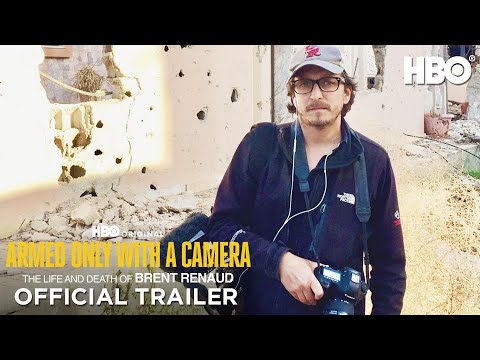
documentary in 30 Seconds
- A documentary is a non-fiction film or show about real life.
- It uses real footage and interviews to inform or educate.
- It differs from fiction because it focuses on factual events.
- Common topics include nature, history, science, and social issues.
The term documentary refers to a broad and multifaceted genre of non-fiction media intended to document some aspect of reality, primarily for the purposes of instruction, education, or maintaining a historical record. At its core, a documentary is a creative treatment of actuality. It differs from narrative fiction because its primary subject matter is the real world, real people, and real events, rather than imagined characters or scripted scenarios. However, the line between documentary and fiction can sometimes blur, as filmmakers use various techniques to tell a compelling story. When people use the word documentary, they are usually referring to a film or television program, but the term can also apply to radio programs or even photography series that provide a factual report on a subject. The use of this word implies a level of authenticity and truth-seeking, though the perspective of the filmmaker always influences the final product. In modern conversation, you might hear someone say they are 'watching a documentary' to signify they are engaging in a learning activity or exploring a serious topic, such as climate change, historical wars, or the lives of famous artists.
- Genre Classification
- A documentary is categorized under non-fiction, sitting alongside news reports and educational videos, but usually possessing a more artistic or investigative depth.
The filmmaker spent five years in the Amazon rainforest to complete her latest documentary about endangered species.
The evolution of the documentary has seen it move from simple 'actuality' films—short clips of trains arriving at stations or workers leaving factories—to complex, multi-part series on streaming platforms. In the early 20th century, pioneers like John Grierson defined the documentary as the 'creative treatment of actuality,' emphasizing that while the content is real, the presentation involves artistic choices. Today, documentaries are more popular than ever, often topping the charts on platforms like Netflix or Disney+. They serve as powerful tools for social change, exposing injustices or highlighting the beauty of the natural world. People use the word in academic settings to discuss historical evidence, in casual settings to recommend a 'must-watch' series, and in professional settings to describe a specific format of media production. The word carries a weight of authority; when a story is labeled a documentary, the audience expects a higher degree of factual accuracy than they would from a 'based on a true story' Hollywood movie.
- Educational Value
- Documentaries are frequently used in classrooms to provide visual context to historical events or scientific theories that are difficult to explain through text alone.
I learned more about the French Revolution from that ninety-minute documentary than I did from my entire history textbook.
Furthermore, the term encompasses various styles. There are 'observational' documentaries, where the camera simply follows subjects without interference, often called 'fly-on-the-wall.' There are 'expository' documentaries, which use a narrator (often called the 'Voice of God') to explain a topic directly to the viewer. 'Participatory' documentaries involve the filmmaker interacting with the subjects, while 'performative' documentaries focus on the filmmaker's personal experience. Understanding these distinctions helps in using the word correctly in critical discussions. When someone says, 'It was a very biased documentary,' they are acknowledging that even though the film is non-fiction, it still presents a specific point of view. This nuance is essential for B1 learners and above, as it moves beyond the simple definition of 'a true movie' into a more sophisticated understanding of media literacy. The word is ubiquitous in the digital age, where everyone with a smartphone can potentially create a documentary-style video of their own life or surroundings.
- Social Impact
- Many documentaries aim to provoke action, such as those focusing on environmental protection or human rights abuses, turning viewers into activists.
The documentary about plastic pollution in the oceans went viral and led to new laws banning single-use straws.
After watching the documentary on fast fashion, I decided to only buy clothes from ethical and sustainable brands.
The award-winning documentary featured interviews with survivors of the Great Depression.
Using the word 'documentary' correctly involves understanding its grammatical role as a countable noun. This means you can have one documentary, two documentaries, or several documentaries. It is frequently preceded by articles like 'a,' 'an,' or 'the,' or possessive adjectives like 'my' or 'their.' Because documentaries are creative works, they are often the object of verbs related to consumption and production. Common verbs include 'watch,' 'see,' 'view,' 'film,' 'produce,' 'direct,' 'edit,' and 'release.' For example, you might say, 'I watched a documentary last night,' or 'She is directing a documentary about urban gardening.' When discussing the content of the film, we often use the preposition 'about' or 'on.' For instance, 'a documentary about space' or 'a documentary on the history of jazz.' These prepositions help specify the factual subject matter that the film explores.
- Verbal Collocations
- Commonly paired with: make, film, produce, watch, narrate, broadcast, release, stream.
The BBC is planning to documentary—wait, that's wrong; the BBC is planning to broadcast a documentary on ancient civilizations.
Adjectives play a crucial role in describing the quality or type of a documentary. You might describe one as 'compelling,' 'thought-provoking,' 'eye-opening,' or 'controversial.' These adjectives provide the speaker's opinion on the impact of the factual content. For example, 'The eye-opening documentary revealed the truth about the food industry.' Alternatively, you can use adjectives to describe the format, such as 'feature-length documentary' (meaning a full movie) or 'short documentary.' In academic or professional contexts, you might hear about 'primary documentary sources,' where 'documentary' acts as an adjective meaning 'consisting of documents.' However, in 90% of everyday English, it functions as a noun. It is also important to note the difference between a 'documentary' and a 'docudrama.' A docudrama is a fictionalized version of real events with actors, whereas a documentary uses real footage and real people.
- Descriptive Adjectives
- Frequent descriptors: award-winning, gripping, informative, biased, investigative, historical, nature.
That documentary was so gripping that I couldn't look away for a single second.
When constructing more complex sentences, you can use the word 'documentary' in the passive voice to focus on the film itself rather than the creator. For example, 'The documentary was filmed over a period of ten years.' This is common in reviews or reports. You can also use it in conditional sentences: 'If you want to learn about the deep sea, you should watch this documentary.' In the plural form, 'documentaries,' it is often used to generalize about the genre: 'I prefer documentaries to action movies because I like learning new things.' This usage highlights a personal preference for non-fiction over fiction. Additionally, the word can be part of compound nouns, such as 'documentary filmmaker' or 'documentary series.' Using these variations correctly shows a higher level of English proficiency, as it demonstrates an understanding of how the word integrates into different syntactic structures.
- Prepositional Phrases
- Common patterns: a documentary by [director], a documentary featuring [person], a documentary on [topic].
The documentary by David Attenborough features incredible footage of rare birds in New Guinea.
We are currently producing a documentary series that explores the impact of artificial intelligence on modern art.
Several documentaries have been made about the life of Steve Jobs, but this one is the most detailed.
The word 'documentary' is a staple in many different environments, from the living room to the lecture hall. In the world of entertainment and media, you will hear it constantly on streaming services like Netflix, Hulu, and Amazon Prime, which have dedicated categories for 'Documentaries.' On television, channels like National Geographic, Discovery, and the BBC are famous for their high-quality documentary programming. When you browse these platforms, the word appears in titles, descriptions, and marketing materials. You might hear a narrator say, 'In this documentary, we explore the hidden depths of the ocean.' In the film industry, the word is central to awards season. You will hear about the 'Best Documentary Feature' category at the Oscars or the 'Grand Jury Prize for Documentary' at the Sundance Film Festival. In these contexts, the word represents a prestigious form of filmmaking that is respected for its truthfulness and technical skill.
- Media & Streaming
- Streaming giants often use 'documentary' as a primary navigation tag to help users find non-fiction content.
Netflix just released a new true-crime documentary that everyone is talking about on social media.
In educational settings, teachers and professors frequently use the word when assigning materials. A history teacher might say, 'For homework, watch the documentary on the Civil Rights Movement and write a one-page summary.' Here, the word is synonymous with a learning resource. In universities, film students study 'documentary theory,' which involves analyzing how these films are constructed and their ethical implications. You will also hear the word in the news. Journalists often refer to documentaries when a new one makes a significant impact on public opinion or reveals a scandal. For example, a news anchor might report, 'A new documentary has sparked a national conversation about healthcare reform.' In this sense, the documentary is seen as a catalyst for political and social discourse. It is not just a movie; it is a piece of investigative journalism that happens to be in film format.
- Academic Context
- In higher education, 'documentary' is treated as a serious subject of study, involving ethics, cinematography, and rhetoric.
Our professor showed us a documentary about the indigenous tribes of the Amazon to illustrate the concept of cultural preservation.
In casual social interactions, the word is used to describe one's interests. Someone might say, 'I'm a big fan of nature documentaries,' or 'I find historical documentaries fascinating.' It serves as a marker of intellectual curiosity. You might also hear it in the workplace, particularly in creative or research-heavy industries. A marketing team might say, 'We should produce a short documentary about our company's history to build brand trust.' In this case, the word is used to describe a specific style of promotional video that feels more authentic than a standard commercial. Finally, the word appears in legal and historical contexts, though often as an adjective. 'Documentary evidence' refers to papers, photos, or recordings used in court. While this is a different grammatical use, it shares the same root idea: providing a factual record of reality. Whether you are at a film festival, in a classroom, or just scrolling through your phone, the word 'documentary' is an essential part of the modern vocabulary for describing how we record and share the truth.
- Professional Usage
- Marketing and PR firms use 'documentary-style' videos to create a sense of realism and transparency for their clients.
The company's anniversary documentary highlighted the struggles and triumphs of the founders over the last fifty years.
During the trial, the prosecution presented documentary evidence that proved the defendant was at the scene of the crime.
I spent my entire Sunday afternoon watching a documentary marathon about the space race.
One of the most frequent mistakes English learners make with the word 'documentary' is confusing it with the word 'document.' While they share the same Latin root (documentum, meaning 'lesson' or 'proof'), they have very different meanings in modern English. A 'document' is typically a piece of paper or a digital file containing information, like a contract, a letter, or a report. A 'documentary' is a film or program. You would never say, 'I am going to watch a document about the ocean,' unless you were literally planning to read a paper about it. Conversely, you wouldn't say, 'Please sign this documentary' when you want someone to sign a contract. Keeping these two distinct is vital for clear communication. Another common error is treating 'documentary' as an uncountable noun. Learners sometimes say, 'I watched much documentary,' but it should be 'I watched many documentaries' or 'I watched a lot of documentaries.' Because it is a countable noun, it requires the appropriate plural forms and quantifiers.
- Document vs. Documentary
- Document = Paper/File. Documentary = Film/Program. They are not interchangeable in media contexts.
Incorrect: I found a very interesting documentary in my office drawer. (Unless you found a DVD, you mean 'document'.)
Pronunciation can also be a stumbling block. The word has five syllables: doc-u-men-ta-ry (/ˌdɒk.jəˈmen.tər.i/). Some learners try to shorten it or misplace the stress. The primary stress is on the third syllable 'men.' Mispronouncing it can make it difficult for native speakers to understand, especially if the 'u' sound is skipped or the 'tary' ending is mangled. Another subtle mistake involves the distinction between a documentary and a 'biopic' or 'docudrama.' A biopic is a fictional film about a real person's life (like Oppenheimer), featuring actors and scripted dialogue. A documentary about the same person would feature actual footage of them or interviews with people who knew them. Using 'documentary' to describe a Hollywood movie with actors is a common slip-up. For example, calling the movie Titanic a documentary is incorrect; it is a historical drama. However, there are many documentaries *about* the sinking of the Titanic.
- Genre Confusion
- Biopic/Drama = Actors/Script. Documentary = Real people/Footage. Don't mix them up!
Incorrect: I love the documentary where Joaquin Phoenix plays Napoleon. (This is a biopic, not a documentary.)
Finally, there is the 'mockumentary' trap. A mockumentary is a fictional film or show that is *styled* like a documentary for comedic effect (like The Office or This Is Spinal Tap). While they look like documentaries, they are entirely scripted and fictional. Calling a mockumentary a documentary might lead people to think you believe the fictional events are real. It's important to use the specific term 'mockumentary' if you are talking about these types of shows. Lastly, be careful with the adjective form. While 'documentary' can be an adjective, 'documental' is a very rare and often incorrect word in modern English. Stick to 'documentary' for both the noun and the adjective. For example, say 'documentary evidence,' not 'documental evidence.' Avoiding these common pitfalls will ensure your use of the word is precise, professional, and natural.
- The 'Mock' Factor
- A 'mockumentary' is a parody. Using the word 'documentary' for a comedy show like 'Parks and Recreation' is technically incorrect.
Correct: Although it looks like a documentary, 'The Office' is actually a mockumentary.
Incorrect: I need to check the documentary files for the meeting. (Correct: I need to check the documents.)
Correct: The journalist provided documentary proof of the politician's corruption.
While 'documentary' is the most common term for non-fiction films, several other words can be used depending on the context and the specific type of media. 'Non-fiction film' is a broader category that includes documentaries but also encompasses instructional videos and raw news footage. If you want to sound more technical, you might use the term 'factual programming,' which is often used by TV networks to describe documentaries, reality TV, and news. Another alternative is 'reportage,' which specifically refers to the reporting of news and events, often in a documentary style but usually shorter and more focused on current events. For historical records, you might use the word 'chronicle,' which implies a chronological record of events. For example, 'The film serves as a chronicle of the city's growth over the last century.'
- Documentary vs. Docudrama
- A documentary uses real footage; a docudrama uses actors to recreate real events. Docudramas are 'dramatized' for entertainment.
Instead of a standard documentary, the director chose to make a docudrama to better convey the emotional weight of the story.
In the digital age, 'vlog' (video blog) is sometimes confused with documentary. While a vlog can be documentary-like, it is usually more personal, less structured, and produced by an individual rather than a professional crew. 'Exposé' is another powerful word; it refers to a documentary or article that reveals a hidden truth or scandal, often involving investigative journalism. If a documentary is specifically about a person's life, you might call it a 'biographical film' or 'biopic,' though as mentioned before, 'biopic' usually implies a scripted drama. 'Profile' is often used for shorter documentary pieces focusing on a single individual. For example, 'The news program featured a profile of the local hero.' Understanding these synonyms allows you to be more precise. If you are talking about a film that uncovers corporate corruption, 'exposé' is a much more descriptive and impactful word than just 'documentary.'
- Documentary vs. News Report
- News reports are brief and focus on 'what happened now.' Documentaries are longer and explore 'why it happened' or 'how it feels.'
The investigative documentary functioned as an exposé, revealing the environmental damage caused by the factory.
There is also the term 'feature film.' While this usually refers to fictional movies, a 'documentary feature' is a full-length documentary intended for theatrical release. In contrast, a 'short' or 'documentary short' is a film under 40 minutes. In the world of art, you might hear the term 'video art,' which can sometimes be documentary-like but is focused more on aesthetic expression than factual reporting. Lastly, 'travelogue' is a specific type of documentary that describes a person's travels and experiences in a foreign place. While the word is a bit old-fashioned, it is still used to describe certain types of nature and travel shows. By learning these alternatives, you can navigate conversations about media with much more nuance and avoid repeating the word 'documentary' too often in your writing or speech.
- Documentary vs. Mockumentary
- Documentary = Fact. Mockumentary = Fiction disguised as fact for humor. They look the same but have opposite goals.
The documentary was so well-made that it felt like a feature film, with high production values and a dramatic narrative arc.
We watched a fascinating travelogue about the Silk Road, which combined historical facts with beautiful cinematography.
The journalist's reportage from the war zone was later expanded into a full-length documentary.
How Formal Is It?
Fun Fact
The first person to use the term 'documentary' in a cinematic sense was John Grierson in 1926, in a review of Robert Flaherty's film 'Moana.'
Pronunciation Guide
- Saying 'doc-u-men-try' (skipping the 'a').
- Stressing the first syllable: 'DOC-u-men-ta-ry'.
- Confusing the 'u' sound with 'oo'.
- Pronouncing it like 'document' (doc-u-ment).
- Mumbling the 'tary' ending.
Difficulty Rating
The word itself is common, but the topics in documentaries can be complex.
Spelling 'documentary' correctly can be tricky for learners.
The five-syllable pronunciation requires practice for fluency.
Usually clearly pronounced in formal contexts.
What to Learn Next
Prerequisites
Learn Next
Advanced
Grammar to Know
Countable Noun Plurals
One documentary, two documentaries.
Prepositions of Topic
A documentary *about* space / *on* history.
Adjective vs Noun usage
The *documentary* (noun) was good. The *documentary* (adj) evidence was clear.
Passive Voice in Reviews
The documentary *was filmed* in Brazil.
Articles with Genres
I like *documentaries* (no article for general) vs I liked *the* documentary (specific).
Examples by Level
I like to watch a documentary about cats.
J'aime regarder un documentaire sur les chats.
Use 'a' before 'documentary' because it is a singular countable noun.
This documentary is very long.
Ce documentaire est très long.
The adjective 'long' describes the noun 'documentary'.
Is it a documentary or a cartoon?
Est-ce un documentaire ou un dessin animé ?
This is a question comparing two different genres.
We saw a documentary in school today.
Nous avons vu un documentaire à l'école aujourd'hui.
'Saw' is the past tense of 'see'.
My dad loves nature documentaries.
Mon père adore les documentaires sur la nature.
The plural of 'documentary' is 'documentaries'.
I want to watch a documentary about space.
Je veux regarder un documentaire sur l'espace.
The preposition 'about' introduces the topic.
The documentary has beautiful pictures.
Le documentaire a de belles images.
'The' refers to a specific documentary.
He is making a documentary.
Il fait un documentaire.
Present continuous tense for an ongoing action.
I learned many things from that documentary.
J'ai appris beaucoup de choses de ce documentaire.
'Learned' is the past tense; 'from' indicates the source.
Do you prefer documentaries or movies?
Préfères-tu les documentaires ou les films ?
Generalizing about a genre using the plural form.
She watched a documentary about the history of music.
Elle a regardé un documentaire sur l'histoire de la musique.
The phrase 'history of music' specifies the subject.
This documentary tells the story of a famous runner.
Ce documentaire raconte l'histoire d'un coureur célèbre.
Third person singular 'tells'.
There are many interesting documentaries on Netflix.
Il y a beaucoup de documentaires intéressants sur Netflix.
Use 'there are' with plural nouns.
We are going to film a documentary for our project.
Nous allons filmer un documentaire pour notre projet.
'Going to' expresses a future plan.
The documentary was about the lives of tigers.
Le documentaire portait sur la vie des tigres.
Past tense 'was' for a completed viewing.
I don't like documentaries that are too sad.
Je n'aime pas les documentaires qui sont trop tristes.
Relative clause 'that are too sad' describes the documentaries.
The documentary provided a detailed account of the event.
Le documentaire a fourni un compte rendu détaillé de l'événement.
'Detailed account' is a common collocation for factual reports.
I highly recommend this documentary to anyone interested in science.
Je recommande vivement ce documentaire à toute personne intéressée par la science.
'Recommend something to someone' is the standard pattern.
After watching the documentary, I changed my opinion on the issue.
Après avoir regardé le documentaire, j'ai changé d'avis sur la question.
Gerund 'watching' follows the preposition 'after'.
The filmmaker spent years researching for her documentary.
La cinéaste a passé des années à faire des recherches pour son documentaire.
'Spend time doing something' is a useful structure.
Is there any documentary evidence to support your claim?
Existe-t-il des preuves documentaires pour étayer votre affirmation ?
Here, 'documentary' is used as an adjective.
The documentary features interviews with several experts.
Le documentaire présente des entretiens avec plusieurs experts.
'Features' means 'includes as a main part'.
Many documentaries aim to raise awareness about social problems.
De nombreux documentaires visent à sensibiliser aux problèmes sociaux.
'Aim to' expresses purpose.
It was an eye-opening documentary about the fashion industry.
C'était un documentaire révélateur sur l'industrie de la mode.
'Eye-opening' is a common adjective for documentaries.
The documentary explores the complex relationship between humans and nature.
Le documentaire explore la relation complexe entre l'homme et la nature.
'Explores' is a sophisticated verb for analyzing a topic.
Critics praised the documentary for its objective approach.
Les critiques ont loué le documentaire pour son approche objective.
'Praise someone for something' is a formal structure.
The award-winning documentary was broadcast on national television.
Le documentaire primé a été diffusé sur la télévision nationale.
Passive voice 'was broadcast' focuses on the film.
She is a well-known documentary filmmaker who focuses on human rights.
C'est une documentariste de renom qui se concentre sur les droits de l'homme.
Compound noun 'documentary filmmaker'.
The documentary's narrative was enhanced by a haunting soundtrack.
Le récit du documentaire a été enrichi par une bande-son envoûtante.
Possessive 'documentary's' refers to its elements.
While it is a documentary, it uses many techniques from fictional cinema.
Bien qu'il s'agisse d'un documentaire, il utilise de nombreuses techniques du cinéma de fiction.
Conjunction 'while' introduces a contrast.
The documentary sheds light on the struggles of migrant workers.
Le documentaire met en lumière les luttes des travailleurs migrants.
Idiom 'sheds light on' means to make something clear.
Several controversial documentaries have sparked intense public debate.
Plusieurs documentaires controversés ont suscité un débat public intense.
Present perfect 'have sparked' for recent impact.
The documentary challenges the prevailing narrative about the economic crisis.
Le documentaire remet en question le récit dominant sur la crise économique.
'Prevailing narrative' is an academic collocation.
Through its use of archival footage, the documentary reconstructs the past vividly.
Grâce à l'utilisation d'images d'archives, le documentaire reconstitue le passé de manière vivante.
'Archival footage' is a technical term in filmmaking.
The filmmaker's reflexive style makes the documentary a study of the medium itself.
Le style réflexif du cinéaste fait du documentaire une étude du média lui-même.
'Reflexive' refers to a work that acknowledges its own creation.
The documentary serves as a poignant reminder of the fragility of peace.
Le documentaire sert de rappel poignant de la fragilité de la paix.
'Poignant reminder' is a high-level descriptive phrase.
The documentary was meticulously researched over a decade.
Le documentaire a fait l'objet de recherches méticuleuses pendant une décennie.
Adverb 'meticulously' modifies the verb 'researched'.
Despite its factual basis, the documentary employs a highly subjective viewpoint.
Malgré sa base factuelle, le documentaire adopte un point de vue très subjectif.
'Despite' is followed by a noun phrase.
The documentary's release was met with both acclaim and skepticism.
La sortie du documentaire a été accueillie à la fois par des éloges et du scepticisme.
'Met with' describes the public reaction.
This documentary exemplifies the observational mode of non-fiction filmmaking.
Ce documentaire illustre le mode observationnel du cinéma de non-fiction.
'Exemplifies' is a formal synonym for 'is a good example of'.
The documentary interrogates the ethical implications of surveillance technology.
Le documentaire interroge les implications éthiques de la technologie de surveillance.
'Interrogates' is used here in an academic, analytical sense.
The film transcends the traditional documentary format to become a visual essay.
Le film transcende le format documentaire traditionnel pour devenir un essai visuel.
'Transcends' suggests going beyond normal limits.
Critics debated the documentary's ontological status as a record of truth.
Les critiques ont débattu du statut ontologique du documentaire en tant qu'enregistrement de la vérité.
'Ontological status' refers to the nature of being or existence.
The documentary's non-linear structure mirrors the fragmented nature of memory.
La structure non linéaire du documentaire reflète la nature fragmentée de la mémoire.
'Mirrors' is used metaphorically to show a correspondence.
The documentary provides an incisive critique of contemporary consumerism.
Le documentaire fournit une critique incisive du consumérisme contemporain.
'Incisive critique' is a sophisticated academic collocation.
The filmmaker eschews traditional narration in favor of a more immersive documentary experience.
Le cinéaste évite la narration traditionnelle au profit d'une expérience documentaire plus immersive.
'Eschews' is a formal word meaning 'deliberately avoids'.
The documentary's potency lies in its refusal to offer easy answers.
La puissance du documentaire réside dans son refus d'offrir des réponses faciles.
'Potency' refers to the power or effectiveness of the work.
This documentary is a seminal work that redefined the genre for a new generation.
Ce documentaire est une œuvre séminale qui a redéfini le genre pour une nouvelle génération.
'Seminal' describes a work that strongly influences later developments.
Synonyms
Antonyms
Common Collocations
Common Phrases
— When a fictional story is inspired by a real documentary.
The new movie is based on a documentary from the 1990s.
— When something is made to look like a documentary.
The commercial was filmed in a documentary-style to seem more real.
— A documentary where the camera just observes without interfering.
It was a fascinating fly-on-the-wall documentary about life in a hospital.
— The verb form, meaning to record something in detail.
He wanted to document his travels through South America.
— Presenting information as a documentary.
The report was presented in documentary form to the board.
— A high-quality, expensive documentary often on a major platform.
The network is known for its prestige documentary content.
— A documentary that is typically less than 40 minutes long.
The short documentary won an Oscar last year.
— A popular genre focusing on real criminal cases.
I can't stop watching this true-crime documentary.
— A documentary that features a person explaining the events.
The narrated documentary was very easy to follow.
— Emphasizing that the dialogue and events were not planned.
The beauty of the film was that it was a completely unscripted documentary.
Often Confused With
A document is a piece of paper; a documentary is a film.
A docudrama uses actors to recreate real events; a documentary uses real footage.
A mockumentary is a fictional comedy made to look like a documentary.
Idioms & Expressions
— Often used when discussing documentaries with unbelievable real events.
After seeing that documentary, I realized truth is stranger than fiction.
informal— What many documentaries aim to do regarding historical events.
The documentary was made to set the record straight about the scandal.
neutral— To understand the whole situation, often by watching a documentary.
You need to watch the documentary to get the full picture of the crisis.
informal— Documentaries often show what happens out of public view.
The documentary gave us a look behind the scenes of the fashion show.
neutral— Something that is officially documented.
The events shown in the documentary are now a matter of record.
formal— To clarify or reveal information about a topic.
The documentary helped shed light on the mystery of the lost city.
neutral— To make someone realize the truth about something.
That documentary really opened my eyes to the reality of poverty.
informal— To report illegal or unethical activity, often the subject of a doc.
The documentary features the man who blew the whistle on the company.
informal— When a documentary only shows a small part of a larger problem.
The documentary shows that this scandal is just the tip of the iceberg.
informal— Something that makes you think seriously, like a good documentary.
The documentary provided plenty of food for thought regarding our future.
informalEasily Confused
Both are about real people.
A biopic is a scripted movie with actors (e.g., 'Elvis'). A documentary uses real footage of the person.
The Elvis biopic was flashy, but the documentary was more factual.
Both can be full-length films.
A 'feature' usually means a fictional movie. A 'documentary feature' is a non-fiction movie.
Is it a feature film or a documentary?
Both show real events.
A newsreel is a very short film of news shown in theaters (mostly historical). A documentary is longer and more thematic.
The old newsreels were the ancestors of the modern documentary.
Both show real life.
A vlog is personal and informal. A documentary is usually professionally produced and thematic.
Her vlog is just about her day, but she wants to make a real documentary.
Both give facts.
A report is usually a short summary of news. A documentary is an in-depth exploration.
The news report was five minutes, but the documentary was two hours.
Sentence Patterns
I like [topic] documentaries.
I like animal documentaries.
I watched a documentary about [topic].
I watched a documentary about space.
This documentary is very [adjective].
This documentary is very informative.
The documentary explores the issue of [topic].
The documentary explores the issue of pollution.
The documentary challenges the idea that [clause].
The documentary challenges the idea that technology is always good.
The film's documentary style enhances its [noun].
The film's documentary style enhances its authenticity.
I recommend this documentary to [person].
I recommend this documentary to my students.
The documentary features [person/thing].
The documentary features interviews with survivors.
Word Family
Nouns
Verbs
Adjectives
Related
How to Use It
Very high in media and educational contexts.
-
I watched a document about space.
→
I watched a documentary about space.
A 'document' is a piece of paper. A 'documentary' is a film.
-
He is a documentary's director.
→
He is a documentary director.
You don't need the possessive 's' when using 'documentary' as a modifier for 'director'.
-
I like many documentarys.
→
I like many documentaries.
The plural spelling requires changing 'y' to 'ies'.
-
The movie was a documentary with actors.
→
The movie was a docudrama.
If it has actors playing parts, it's not a pure documentary.
-
I saw a documentary documental.
→
I saw a documentary.
'Documental' is not a standard word in this context; 'documentary' is both the noun and the adjective.
Tips
Use 'Doc' for Short
In casual English, people often say 'doc' instead of the full word. Example: 'That was a great doc!'
Watch the Plural
Remember to change the 'y' to 'i' when making it plural: documentaries. Don't write 'documentarys'.
Stress the 'MEN'
The stress is on the middle syllable: doc-u-MEN-ta-ry. This is the key to sounding natural.
About vs. On
Use 'about' for general topics (a documentary about dogs) and 'on' for more serious or academic topics (a documentary on the economy).
Italicize Titles
When you write the name of a documentary, put it in italics, like *Blackfish* or *The Last Dance*.
Not a Document
Never use 'documentary' when you mean a piece of paper. That is just a 'document'.
Nature Docs
Nature documentaries are the most common type. If you like animals, this is the phrase to use.
Great for English
Documentaries are excellent for learning English because the narration is usually slow and clear.
Conversation Starter
Asking someone about their favorite documentary is a great way to start a deep conversation.
Streaming Tags
Look for the 'Documentary' tag on streaming sites to find non-fiction content easily.
Memorize It
Mnemonic
Think of a 'DOCUMENT' that comes to life on 'TV' (Documentary). It's a 'document' on 'air' (tary).
Visual Association
Imagine a film reel wrapping around a stack of old history books and official papers.
Word Web
Challenge
Try to name three documentaries you have seen and explain what facts they taught you using the word 'documentary' in every sentence.
Word Origin
Derived from the French word 'documentaire,' which was first used to describe travel films in the early 20th century. It comes from the Latin 'documentum,' meaning 'lesson, proof, or specimen.'
Original meaning: Originally, it referred to something that provided evidence or instruction.
Romance (via Latin) into English.Cultural Context
Documentaries often deal with sensitive topics like war or poverty; always be mindful of the subject's perspective.
In the US and UK, nature documentaries narrated by figures like David Attenborough are considered cultural treasures.
Practice in Real Life
Real-World Contexts
Education
- educational documentary
- watch for homework
- primary source
- learning tool
Entertainment
- streaming documentaries
- must-watch doc
- film festival
- award-winning
Science/Nature
- nature documentary
- scientific record
- wildlife footage
- environmental impact
History
- historical documentary
- archival footage
- eyewitness accounts
- chronicle of events
Law
- documentary evidence
- record of proof
- factual report
- legal documentation
Conversation Starters
"Have you seen any interesting documentaries lately?"
"Do you prefer watching documentaries or fictional movies?"
"What is the most eye-opening documentary you have ever watched?"
"If you could make a documentary about any topic, what would it be?"
"Do you think documentaries are always 100% objective?"
Journal Prompts
Write a review of a documentary you recently watched. What did you learn?
Describe a social issue that you think deserves its own documentary.
Compare a documentary you saw with a fictional movie on the same topic.
How have documentaries changed the way you see the world?
If your life was a documentary, what would the title be and why?
Frequently Asked Questions
10 questionsA 'movie' usually refers to a fictional story with actors. A 'documentary' is a type of movie that is about real life and uses facts and real people.
Usually, no. If it has actors playing real people, it is called a 'docudrama' or 'reenactment.' However, some documentaries use small reenactments to show things that weren't filmed.
Yes, it is one of the most famous nature documentaries in the world. It documents the lives of animals and the beauty of nature.
The plural is 'documentaries.' You change the 'y' to 'i' and add 'es'.
It is *intended* to be true, but it always shows the filmmaker's perspective. Some documentaries can be biased or only show one side of a story.
A mockumentary is a fake documentary. It is a fictional story (usually a comedy) that is filmed to look like a real documentary, like 'The Office'.
Yes, in informal speaking or writing, 'doc' is a very common abbreviation.
In legal terms, it means proof that comes from documents, photos, or recordings rather than just someone's spoken word.
They are made by documentary filmmakers. Some work for big TV channels like Discovery, while others are independent artists.
They are important because they educate people, preserve history, and can help change society by showing the truth about important issues.
Test Yourself 200 questions
Write a short paragraph about a documentary you enjoyed. Why was it interesting?
Well written! Good try! Check the sample answer below.
Describe the difference between a documentary and a fictional movie.
Well written! Good try! Check the sample answer below.
If you were to make a documentary, what topic would you choose and why?
Well written! Good try! Check the sample answer below.
Write a review of a nature documentary using at least three collocations.
Well written! Good try! Check the sample answer below.
Explain why documentaries are important for education.
Well written! Good try! Check the sample answer below.
Compare a documentary you've seen with a news report on the same topic.
Well written! Good try! Check the sample answer below.
Write a dialogue between two friends discussing whether a documentary they watched was biased.
Well written! Good try! Check the sample answer below.
Summarize the plot of a famous documentary in 50 words.
Well written! Good try! Check the sample answer below.
Discuss the ethical responsibilities of a documentary filmmaker.
Well written! Good try! Check the sample answer below.
Write a pitch for a new documentary series about your city.
Well written! Good try! Check the sample answer below.
How can a documentary influence public opinion? Give an example.
Well written! Good try! Check the sample answer below.
Describe a 'mockumentary' and explain why it is funny.
Well written! Good try! Check the sample answer below.
Write five sentences using the word 'documentary' as an adjective.
Well written! Good try! Check the sample answer below.
What are the benefits of watching documentaries in English?
Well written! Good try! Check the sample answer below.
Describe the 'fly-on-the-wall' documentary style.
Well written! Good try! Check the sample answer below.
Write a letter to a filmmaker thanking them for their documentary.
Well written! Good try! Check the sample answer below.
How does archival footage improve a historical documentary?
Well written! Good try! Check the sample answer below.
Write a short script for the opening of a nature documentary.
Well written! Good try! Check the sample answer below.
Explain the term 'docuseries' to someone who has never heard it.
Well written! Good try! Check the sample answer below.
Discuss the impact of streaming platforms on the popularity of documentaries.
Well written! Good try! Check the sample answer below.
Tell me about a documentary you watched recently. What was it about?
Read this aloud:
You said:
Speech recognition is not supported in your browser. Try Chrome or Edge.
Do you think documentaries are better than textbooks for learning history? Why?
Read this aloud:
You said:
Speech recognition is not supported in your browser. Try Chrome or Edge.
Describe a nature documentary you have seen. What animals were in it?
Read this aloud:
You said:
Speech recognition is not supported in your browser. Try Chrome or Edge.
If you could film a documentary about your family, what stories would you tell?
Read this aloud:
You said:
Speech recognition is not supported in your browser. Try Chrome or Edge.
Why do you think true-crime documentaries are so popular right now?
Read this aloud:
You said:
Speech recognition is not supported in your browser. Try Chrome or Edge.
What makes a documentary 'good' in your opinion?
Read this aloud:
You said:
Speech recognition is not supported in your browser. Try Chrome or Edge.
Explain the difference between a documentary and a news report to a friend.
Read this aloud:
You said:
Speech recognition is not supported in your browser. Try Chrome or Edge.
Have you ever seen a documentary that changed your mind about something? Tell me about it.
Read this aloud:
You said:
Speech recognition is not supported in your browser. Try Chrome or Edge.
Would you like to be the subject of a documentary? Why or why not?
Read this aloud:
You said:
Speech recognition is not supported in your browser. Try Chrome or Edge.
What are some common topics for documentaries in your country?
Read this aloud:
You said:
Speech recognition is not supported in your browser. Try Chrome or Edge.
Do you prefer documentaries with a narrator or without one? Why?
Read this aloud:
You said:
Speech recognition is not supported in your browser. Try Chrome or Edge.
How do documentaries help us understand different cultures?
Read this aloud:
You said:
Speech recognition is not supported in your browser. Try Chrome or Edge.
Talk about a famous documentary filmmaker you know.
Read this aloud:
You said:
Speech recognition is not supported in your browser. Try Chrome or Edge.
What are the challenges of filming a documentary in a dangerous place?
Read this aloud:
You said:
Speech recognition is not supported in your browser. Try Chrome or Edge.
How can a documentary be used as a tool for social change?
Read this aloud:
You said:
Speech recognition is not supported in your browser. Try Chrome or Edge.
Describe the most beautiful scene you've ever seen in a nature documentary.
Read this aloud:
You said:
Speech recognition is not supported in your browser. Try Chrome or Edge.
If you had to choose a celebrity to narrate your life's documentary, who would it be?
Read this aloud:
You said:
Speech recognition is not supported in your browser. Try Chrome or Edge.
What is the difference between a documentary and a 'mockumentary'?
Read this aloud:
You said:
Speech recognition is not supported in your browser. Try Chrome or Edge.
Do you think documentaries can be biased? How can we tell?
Read this aloud:
You said:
Speech recognition is not supported in your browser. Try Chrome or Edge.
Recommend a documentary to me and tell me why I should watch it.
Read this aloud:
You said:
Speech recognition is not supported in your browser. Try Chrome or Edge.
Listen to a description of a film about lions in Africa. Is this a documentary or a cartoon?
A narrator says: 'In tonight's program, we look at the secret life of the city.' What type of program is it?
A person says: 'I love docs because they teach me so much.' What does 'docs' mean?
You hear a review: 'The documentary was informative but a bit too long.' What was the critic's opinion?
A filmmaker says: 'We used archival footage from the 1940s.' What is she making?
You hear an ad: 'Watch the award-winning documentary series starting this Monday.' How many parts does it have?
A student says: 'I need to find some documentary evidence for my essay.' What is the student looking for?
A narrator says: 'This film was shot over ten years to document the child's growth.' What is the verb used?
You hear: 'It's a fly-on-the-wall look at a high school.' What is the style of the documentary?
A person says: 'I prefer documentaries to biopics.' What does the person like more?
You hear: 'The documentary sparked a national debate.' What was the effect of the film?
A narrator says: 'Welcome to this investigative documentary.' What kind of documentary is it?
You hear: 'The mockumentary was hilarious.' Was the film real or fake?
A person says: 'I'm watching a docuseries about space.' What is the format?
You hear: 'The documentary features interviews with survivors.' Who is in the film?
/ 200 correct
Perfect score!
Summary
A documentary is a powerful tool for learning about the real world. Unlike fictional movies, it relies on facts and authentic evidence to tell a story. For example: 'The documentary about the ocean helped me understand the importance of conservation.'
- A documentary is a non-fiction film or show about real life.
- It uses real footage and interviews to inform or educate.
- It differs from fiction because it focuses on factual events.
- Common topics include nature, history, science, and social issues.
Use 'Doc' for Short
In casual English, people often say 'doc' instead of the full word. Example: 'That was a great doc!'
Watch the Plural
Remember to change the 'y' to 'i' when making it plural: documentaries. Don't write 'documentarys'.
Stress the 'MEN'
The stress is on the middle syllable: doc-u-MEN-ta-ry. This is the key to sounding natural.
About vs. On
Use 'about' for general topics (a documentary about dogs) and 'on' for more serious or academic topics (a documentary on the economy).