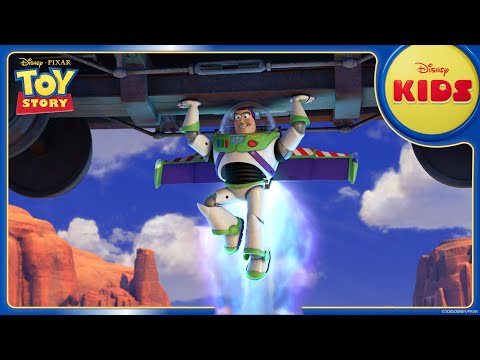
falling in 30 Seconds
- Falling describes something moving downward or decreasing in value, level, or intensity over a period of time.
- It is used for physical movement, weather, financial trends, and emotional transitions like falling in love.
- As an adjective, it modifies nouns to show a downward trend, such as falling prices or falling stars.
- Common phrasal verbs include falling behind, falling apart, and falling out, each with distinct metaphorical meanings.
The word falling is a dynamic and versatile term in the English language, primarily functioning as the present participle of the verb 'fall' or as an adjective. At its most fundamental level, it describes the physical process of moving downward from a higher position to a lower one, typically under the force of gravity. Imagine a leaf detached from a branch in autumn; it is falling through the air. This physical manifestation is the root of all other metaphorical and abstract uses of the word. Beyond physics, 'falling' is ubiquitous in financial contexts to describe a decrease in value, such as falling stock prices or a falling currency. It also captures transitions in states of being, most notably in the transition from wakefulness to sleep or from platonic interest to romantic love. The word carries a sense of inevitability and continuous motion, as it is a present participle indicating an ongoing action. In daily conversation, you might use it to describe the weather, specifically precipitation like rain or snow, or to describe a person's physical mishap. The nuance of 'falling' often depends on the speed and intent; a 'falling' object is usually uncontrolled, whereas a 'descending' object might be controlled. This lack of control often imbues the word with a sense of vulnerability or danger, though in contexts like 'falling snow,' it can be quite serene.
- Physical Motion
- The act of moving toward the ground without support. This can be sudden, like a person tripping, or slow, like a feather drifting.
- Economic Decline
- Used to indicate that numbers, rates, or values are getting lower. Common in news reports regarding inflation, interest rates, or market indices.
- Temporal Occurrence
- Refers to when a specific date or event happens to land on a particular day of the week, such as 'Christmas is falling on a Wednesday this year.'
The autumn leaves were falling gently onto the damp pavement, creating a colorful mosaic of reds and golds.
When we look at the emotional spectrum, 'falling' is perhaps most famous for its association with love. 'Falling in love' suggests a loss of control, a surrender to a powerful force that pulls one toward another person. This linguistic choice is fascinating because it frames a positive emotional experience as a downward, uncontrolled movement. Similarly, 'falling asleep' describes the passive transition into unconsciousness. In both cases, the individual is not actively 'doing' the action in a directed way; rather, the state is happening to them. This passive-active hybrid nature makes 'falling' a unique tool for writers and speakers to convey experiences that are both intense and involuntary. In technical or academic settings, 'falling' might describe a trajectory or a statistical trend. For instance, a scientist might observe a falling temperature in a chemical reaction, or a sociologist might note falling birth rates in a specific region. The word's flexibility allows it to move seamlessly between the poetic and the pragmatic, the literal and the figurative.
Investors are worried about the falling value of the tech sector stocks after the recent quarterly reports.
I could hear the sound of falling water from the hidden waterfall deep within the forest.
The falling snow began to cover the tracks we had made just an hour earlier.
With the falling darkness, the city lights began to twinkle like distant stars.
Using falling correctly requires an understanding of its role as both a verb form and an adjective. As a present participle, it is frequently used in continuous tenses to describe an action that is currently in progress. For example, 'The rain is falling' tells us about the current weather. It is also used in participial phrases to provide extra information about a noun, such as 'The man, falling from the ladder, grabbed the railing.' In this case, 'falling' describes the state of the man at a specific moment. As an adjective, it modifies a noun directly to describe a quality or a trend. 'Falling prices' describes a market condition, while a 'falling star' describes a specific celestial phenomenon (though scientifically it's a meteor). The placement of the word is crucial: when used as an adjective, it typically comes before the noun. When used as part of a verb phrase, it follows an auxiliary verb like 'is', 'was', or 'will be'.
- Continuous Verb Tense
- Subject + be + falling. Example: 'The snow was falling all night long.'
- Attributive Adjective
- Falling + Noun. Example: 'We need to address the problem of falling standards in education.'
- Participial Phrase
- Noun + falling... Example: 'I watched the leaves falling to the ground.'
The falling debris from the construction site made the sidewalk dangerous for pedestrians.
One of the most common ways 'falling' is used is in phrasal verbs. These are combinations of the verb 'fall' (often in its 'falling' form) and a preposition or adverb. For instance, 'falling apart' can describe a physical object breaking into pieces or a person's emotional state deteriorating. 'Falling behind' is used when someone is not keeping up with a schedule or a group. 'Falling out' refers to having a disagreement that ends a friendship. Understanding these combinations is essential for achieving fluency, as they are used constantly in both informal and formal English. Additionally, 'falling' is used in various idiomatic expressions that don't always follow literal logic. 'Falling on deaf ears' means a message is being ignored, while 'falling short' means failing to meet a goal or expectation. Each of these uses maintains the core concept of a downward or negative trajectory, whether physical, social, or performance-based.
She felt like her world was falling apart after she lost her job and her apartment in the same week.
The falling action in the play occurs right after the climax, leading toward the resolution.
He is falling behind in his studies because he missed two weeks of classes.
The falling pitch of the siren indicated that the ambulance was moving away from us.
You will encounter the word falling in a wide variety of real-world contexts, ranging from the mundane to the highly specialized. One of the most common places is in weather forecasts. Meteorologists frequently use 'falling' to describe precipitation ('rain is falling across the region') or changes in atmospheric conditions ('the barometric pressure is falling'). This usage is literal and descriptive. Similarly, in news and financial reports, 'falling' is a staple term. You will hear about 'falling oil prices,' 'falling interest rates,' or 'falling approval ratings' for politicians. In these contexts, 'falling' serves as a neutral but clear indicator of a downward trend. It is preferred in journalism because it is concise and easily understood by a general audience. In the medical field, doctors might talk about a patient's 'falling oxygen levels' or the risk of 'falling' among the elderly, which is a significant health concern. Here, the word carries a more serious, cautionary tone.
- The Evening News
- 'The stock market saw a sharp decline today, with tech shares falling for the third consecutive day.'
- Romantic Movies
- 'I think I'm falling for you,' is a classic line used to express the beginning of romantic feelings.
- Construction Sites
- Signs saying 'Caution: Falling Objects' are common safety warnings in urban areas undergoing development.
The news anchor reported that falling temperatures would lead to icy roads by tomorrow morning.
In the world of entertainment and literature, 'falling' is used to set the scene or describe character arcs. Songs often use 'falling' as a metaphor for losing control or being overwhelmed by emotion. In storytelling, 'falling action' is a technical term for the events that follow the climax of a story. You might also hear it in sports commentary, such as 'the player is falling out of favor with the coach' or 'the team is falling down the league table.' In everyday social interactions, 'falling' appears in common phrases like 'falling asleep' or 'falling ill.' If you are at a party, someone might mention they are 'falling behind' on their work, or if you are hiking, a guide might warn you about 'falling rocks.' The word is so integrated into the English experience that it often goes unnoticed, yet it provides the necessary vocabulary to describe a vast array of changes and movements. Whether it's a literal object or a metaphorical value, 'falling' is the go-to word for anything moving toward a lower state.
I heard the sound of falling glass and realized that the vase had been knocked off the shelf.
The falling light of the sunset turned the mountains a deep shade of purple.
We watched the falling tide reveal the hidden rock pools along the shoreline.
The falling levels of the reservoir are a major concern for the local water board.
Despite its commonality, the word falling is frequently misused by learners of English, often due to confusion with similar-sounding words or incorrect grammatical applications. One of the most frequent errors is confusing 'falling' with 'felling.' While 'falling' is an intransitive action (something falls on its own), 'felling' is a transitive action (someone cuts something down, usually a tree). You would say 'The tree is falling,' but 'The lumberjack is felling the tree.' Another common confusion is between 'falling' and 'feeling.' Though they sound different to native speakers, the 'l' and 'n' sounds in 'falling' can sometimes be blurred by learners, leading to sentences like 'I am falling happy,' which is incorrect. A third area of confusion involves the difference between 'falling' and 'dropping.' While often interchangeable, 'dropping' usually implies an intentional act or a sudden, vertical descent, whereas 'falling' is more general and often implies an unintentional or natural process.
- Falling vs. Felling
- Incorrect: 'He is falling the tree.' Correct: 'He is felling the tree.' or 'The tree is falling.'
- Falling vs. Fallen
- Incorrect: 'Watch out for the falling tree on the road.' (if the tree is already on the ground). Correct: 'Watch out for the fallen tree.'
- Preposition Errors
- Incorrect: 'I fell with love.' Correct: 'I fell in love.' Incorrect: 'He fell from his bike.' (Correct, but 'He fell off his bike' is more common for vehicles).
The student made a mistake by saying the prices were felling instead of falling.
Grammatically, learners sometimes struggle with the continuous aspect of 'falling.' Because 'falling' is a process, it is used with 'be' verbs. However, some learners forget the auxiliary verb, saying 'The rain falling' instead of 'The rain is falling.' Additionally, the use of 'falling' in phrasal verbs can be tricky. For example, 'falling out' means having a fight, but 'falling off' means physically descending from something. Misusing these prepositions can completely change the meaning of a sentence. Another subtle mistake is using 'falling' when 'decreasing' or 'reducing' would be more appropriate in a highly formal or technical document. While 'falling' is not wrong, it can sometimes feel too informal for a scientific paper. Finally, ensure you don't confuse 'falling' with 'failing.' 'Failing' means not succeeding, while 'falling' means moving downward. A 'failing business' is one that is not successful, while 'falling profits' refers specifically to the money decreasing.
It is a common error to use falling when the action has already been completed; in that case, 'fallen' is the correct choice.
Many learners confuse falling with 'dropping', but 'dropping' often implies someone let go of something.
The phrase falling down is often redundant; since falling is inherently downward, 'falling' is usually sufficient.
Don't confuse falling (moving down) with 'filling' (making something full).
To enrich your vocabulary, it is helpful to look at synonyms and alternatives for falling. While 'falling' is a great all-purpose word, more specific terms can provide better imagery or precision. For physical descent, 'descending' is a more formal and often more controlled alternative. 'Plummeting' or 'plunging' suggest a very fast, steep, and often dangerous fall. 'Tumbling' implies a clumsy, rolling fall, like a child rolling down a hill. If you are talking about water, 'cascading' is a beautiful alternative that suggests a series of small falls. In financial or statistical contexts, 'declining,' 'dropping,' 'slumping,' or 'sagging' can be used to describe different types of decreases. 'Declining' is neutral and formal, 'dropping' is common and direct, 'slumping' suggests a sudden and significant drop, and 'sagging' suggests a slow, slight decrease. Understanding these nuances allows you to choose the word that best fits the intensity and tone of your message.
- Falling vs. Descending
- 'Falling' is usually accidental or natural; 'Descending' is often planned or gradual (e.g., an airplane descending).
- Falling vs. Plummeting
- 'Falling' can be slow or fast; 'Plummeting' is always extremely fast and usually indicates a crisis.
- Falling vs. Declining
- 'Falling' is more visual and common; 'Declining' is more abstract and formal, often used for data.
The eagle was descending toward its prey with incredible speed and precision.
On the opposite side, antonyms of 'falling' include 'rising,' 'ascending,' 'climbing,' and 'increasing.' These words describe an upward trajectory. Just as 'falling' has many nuances, so do its opposites. 'Rising' is the general term, 'ascending' is formal, 'climbing' suggests effort, and 'increasing' is used for numbers and amounts. In a conversation about the economy, you might contrast 'falling wages' with 'rising costs.' In a description of a mountain hike, you might talk about the 'falling temperature' as you are 'ascending the peak.' By learning these pairs, you can build a more balanced and expressive vocabulary. Additionally, consider the metaphorical opposites: 'falling in love' vs. 'falling out of love,' or 'falling behind' vs. 'getting ahead.' These pairs help you navigate the complex social and emotional landscapes that English describes so vividly. Using a variety of these words will make your writing more engaging and your speaking more precise.
Instead of saying the prices are falling, the economist used the word 'contracting' to describe the market.
The plummeting temperatures forced the hikers to seek shelter immediately.
The cascading water created a mist that cooled the entire valley.
We noticed the dwindling light and realized we had to head back before dark.
How Formal Is It?
Fun Fact
The use of 'fall' for the season of autumn is primarily American, but it comes from the Middle English phrase 'fall of the leaf'.
Pronunciation Guide
- Pronouncing the 'g' too hard at the end.
- Confusing the 'a' sound with 'feeling'.
- Dropping the 'l' sound.
- Making the 'a' sound too short like 'cat'.
- Adding an extra vowel sound between 'l' and 'i'.
Difficulty Rating
Very common and easy to recognize in most texts.
Requires knowledge of phrasal verbs and spelling.
Pronunciation of 'ng' and 'l' can be tricky for some.
Clear sound, but can be confused with 'feeling' in fast speech.
What to Learn Next
Prerequisites
Learn Next
Advanced
Grammar to Know
Present Participle as Adjective
The falling snow is beautiful.
Present Continuous Tense
The rain is falling.
Gerund as Subject
Falling is a common fear.
Phrasal Verbs with Fall
Don't fall behind.
Participial Phrases
I saw the man falling.
Examples by Level
The rain is falling.
La pluie tombe.
Present continuous tense.
The leaves are falling.
Les feuilles tombent.
Plural subject with 'are'.
He is falling down.
Il tombe.
Phrasal verb 'fall down'.
The snow is falling.
La neige tombe.
Uncountable noun 'snow'.
The apple is falling.
La pomme tombe.
Singular subject with 'is'.
Water is falling.
L'eau tombe.
Present continuous.
The ball is falling.
La balle tombe.
Simple physical action.
She is falling asleep.
Elle s'endort.
Idiomatic use for transition to sleep.
Prices are falling this month.
Les prix baissent ce mois-ci.
Metaphorical use for 'decreasing'.
The temperature is falling fast.
La température baisse rapidement.
Used with an adverb 'fast'.
He is falling in love with her.
Il tombe amoureux d'elle.
Common idiom 'fall in love'.
She is falling off her bike.
Elle tombe de son vélo.
Preposition 'off' for vehicles.
The cup is falling from the table.
La tasse tombe de la table.
Preposition 'from' for origin.
He is falling ill.
Il tombe malade.
Idiom for becoming sick.
The stars are falling.
Les étoiles tombent.
Descriptive adjective/participle.
Rain was falling when I left.
La pluie tombait quand je suis parti.
Past continuous tense.
The company has falling profits.
L'entreprise a des bénéfices en baisse.
Used as an attributive adjective.
He is falling behind in his work.
Il prend du retard dans son travail.
Phrasal verb 'fall behind'.
The plan is falling through.
Le projet tombe à l'eau.
Phrasal verb 'fall through' (fail).
My birthday is falling on a Monday.
Mon anniversaire tombe un lundi.
Used for dates/events.
The falling action leads to the end.
L'action décroissante mène à la fin.
Literary term.
She is falling out with her friend.
Elle se brouille avec son amie.
Phrasal verb 'fall out' (argue).
The falling masonry was dangerous.
La maçonnerie qui tombait était dangereuse.
Adjective describing a noun.
His words are falling on deaf ears.
Ses paroles tombent dans l'oreille d'un sourd.
Idiomatic expression.
We are seeing falling standards here.
Nous voyons une baisse des normes ici.
Abstract noun modification.
The falling value of the dollar is a concern.
La valeur en baisse du dollar est une préoccupation.
Complex noun phrase.
He is falling into a bad habit.
Il prend une mauvaise habitude.
Metaphorical 'falling into'.
The falling pitch of the engine was odd.
La chute de la tonalité du moteur était bizarre.
Technical description.
She is falling for his lies again.
Elle se fait encore avoir par ses mensonges.
Phrasal verb 'fall for' (be deceived).
The falling snow muffled all sounds.
La neige qui tombait étouffait tous les sons.
Descriptive participle.
They are falling short of their goal.
Ils n'atteignent pas leur objectif.
Idiom 'fall short'.
The falling tide revealed the rocks.
La marée descendante a révélé les rochers.
Natural process adjective.
The building is falling into disrepair.
Le bâtiment tombe en ruine.
Idiom for gradual decay.
He is falling back on his savings.
Il a recours à ses économies.
Phrasal verb 'fall back on'.
The falling fortunes of the family were sad.
La déchéance de la famille était triste.
Literary use for wealth/status.
She is falling in with a rough crowd.
Elle commence à fréquenter des gens peu fréquentables.
Phrasal verb 'fall in with'.
The falling intonation suggests a question.
L'intonation descendante suggère une question.
Linguistic term.
The falling away of old beliefs is evident.
L'abandon des anciennes croyances est évident.
Abstract phrasal noun use.
He is falling into a trap of his own making.
Il tombe dans un piège qu'il a lui-même tendu.
Metaphorical idiom.
The falling light of dusk is very beautiful.
La lumière déclinante du crépuscule est très belle.
Poetic/Literary use.
The falling rate of profit is a key theory.
La baisse du taux de profit est une théorie clé.
Academic/Theoretical use.
The falling action of the play is masterful.
L'action décroissante de la pièce est magistrale.
Advanced literary criticism.
He is falling prey to his own insecurities.
Il est la proie de ses propres insécurités.
Idiom 'fall prey to'.
The falling shadows elongated across the lawn.
Les ombres déclinantes s'allongeaient sur la pelouse.
Sophisticated descriptive use.
The falling out between the two nations led to war.
La rupture entre les deux nations a mené à la guerre.
Noun form of phrasal verb.
The falling cadence of the music was soothing.
La cadence descendante de la musique était apaisante.
Technical musical term.
She is falling into a state of catatonia.
Elle tombe dans un état de catatonie.
Clinical/Technical use.
The falling of the leaves marks the year's end.
La chute des feuilles marque la fin de l'année.
Formal/Poetic gerund use.
Common Collocations
Common Phrases
— To be in a very bad condition or failing completely.
The old house was falling apart at the seams.
— To be completely deceived by a trick or lie.
He told her a crazy story and she fell for it hook, line, and sinker.
— When advice or a warning is completely ignored.
My warnings about the weather were falling on deaf ears.
— To fail to reach a specific goal or standard.
The new product is falling short of the mark in terms of sales.
— When things start to happen in a way that makes sense.
After months of planning, everything is finally falling into place.
— To be very eager or clumsy in trying to do something.
They were falling over themselves to help the celebrity.
— To get into trouble with legal authorities.
He is falling foul of the law due to his tax issues.
— To make a mistake that was expected or planned by others.
Don't fall into the trap of buying things you don't need.
— To be overlooked or forgotten by a system.
Some students are falling through the cracks in the large school.
— To use a secondary plan when the first one fails.
We are falling back on our original plan since this one didn't work.
Often Confused With
Felling is transitive (you fell a tree); falling is intransitive (the tree falls).
Feeling is about emotions or touch; falling is about downward motion.
Filling is making something full; falling is moving down.
Idioms & Expressions
— To begin to feel romantic love for someone.
They fell in love while traveling in Italy.
neutral— To break into pieces or to lose emotional control.
The old book fell apart when I touched it.
neutral— To fail to keep up with a pace or schedule.
He fell behind in the race after the first mile.
neutral— When a plan or arrangement fails to happen.
Our holiday plans fell through at the last minute.
neutral— To be attracted to someone or to be tricked by something.
I can't believe you fell for that prank!
informal— To have a disagreement and stop being friends.
They fell out over a small debt.
neutral— To use something as a support when other things fail.
She has her family to fall back on if she loses her job.
neutral— To fail to meet a requirement or expectation.
The movie fell short of my expectations.
neutral— To become organized or clear.
Once we had the budget, everything fell into place.
neutral— To be ignored or not listened to.
His pleas for help fell on deaf ears.
neutralEasily Confused
Similar sound and both can be negative.
Failing means not succeeding; falling means moving down or decreasing.
The business is failing because profits are falling.
Both mean moving down.
Dropping often implies an intentional act or a sudden vertical fall.
He is dropping the ball, but the rain is falling.
Both mean moving down.
Descending is more formal and often implies a controlled movement.
The plane is descending to the runway.
Both can lead to a fall.
Slipping is the loss of footing; falling is the subsequent descent.
He is slipping on the ice and falling down.
Both mean moving down.
Sinking usually refers to moving down into a liquid or soft substance.
The boat is sinking in the falling rain.
Sentence Patterns
The [Noun] is falling.
The rain is falling.
[Noun] are falling.
Prices are falling.
He is falling [Preposition] [Noun].
He is falling behind in class.
The falling [Noun] is [Adjective].
The falling snow is cold.
With the falling of [Noun], [Clause].
With the falling of the sun, the air grew cold.
The falling [Noun] of [Noun] is [Adjective].
The falling action of the play is masterful.
I am falling [Adjective].
I am falling asleep.
They are falling in [Noun].
They are falling in love.
Word Family
Nouns
Verbs
Adjectives
Related
How to Use It
Very High
-
The rain falling.
→
The rain is falling.
You need the auxiliary verb 'is' for the present continuous tense.
-
He is felling down.
→
He is falling down.
'Felling' means cutting down a tree; 'falling' means dropping down.
-
I am feeling in love.
→
I am falling in love.
The idiom is 'falling in love', not 'feeling in love'.
-
The prices are falling down.
→
The prices are falling.
'Down' is redundant when talking about prices; 'falling' is enough.
-
He fell with his bike.
→
He fell off his bike.
Use 'off' for falling from a vehicle like a bike or horse.
Tips
Continuous Tense
Always use a 'be' verb (am, is, are, was, were) before 'falling' when using it as a verb.
Synonym Choice
Use 'plummeting' if you want to sound more dramatic about a fast fall.
Clear 'L'
Make sure your tongue touches the roof of your mouth for the 'l' in falling.
Avoid Redundancy
You don't always need to say 'falling down'; 'falling' often implies the direction.
Fall Behind
Use 'falling behind' when you have too much work and not enough time.
Weather
In English, we say 'rain is falling' or 'it is raining', but never 'it is falling rain'.
Market Trends
'Falling' is a neutral way to describe a market decline in news reports.
Mood Setting
Use 'falling light' or 'falling leaves' to create a sad or peaceful mood.
Medical
'Falling' is a serious term for elderly patients; use it carefully in medical contexts.
Double 'L'
Remember that 'falling' always has two 'l's, just like 'fall'.
Memorize It
Mnemonic
Think of 'Falling' as 'F-A-L-L': Fast Action Leaving Level. It helps you remember the downward movement.
Visual Association
Imagine a red autumn leaf slowly drifting down from a tall oak tree to the ground.
Word Web
Challenge
Try to use 'falling' in three different ways in one paragraph: physical, financial, and idiomatic.
Word Origin
Derived from the Old English word 'feallan', which means to fall, die, or fail. It has roots in the Proto-Germanic 'fallan'.
Original meaning: To drop from a height, but also to perish or come to ruin.
GermanicCultural Context
Be careful when using 'falling' to describe people, as it can imply weakness or clumsiness.
The term 'fall' for autumn is standard in the US but 'autumn' is preferred in the UK, though 'falling leaves' is used in both.
Practice in Real Life
Real-World Contexts
Weather
- rain is falling
- snow is falling
- hail is falling
- pressure is falling
Finance
- falling prices
- falling stocks
- falling profits
- falling value
Health
- falling ill
- falling asleep
- falling unconscious
- falling levels
Social
- falling in love
- falling out
- falling behind
- falling for it
Physics
- falling object
- falling body
- falling speed
- falling distance
Conversation Starters
"Have you noticed the falling temperatures lately?"
"What do you do when you feel like you're falling behind at work?"
"Do you remember the first time you felt like you were falling in love?"
"How do you stay awake when you feel yourself falling asleep in a meeting?"
"What's your favorite thing about the falling leaves in autumn?"
Journal Prompts
Describe a time when a plan of yours was falling through and how you handled it.
Write about the feeling of falling asleep after a very long and productive day.
Reflect on a time you had a falling out with a friend and what you learned.
Imagine you are a falling leaf. Describe your journey from the tree to the ground.
Discuss the impact of falling standards in any area of modern life.
Frequently Asked Questions
10 questionsIt can be both. In 'The rain is falling,' it is a verb. In 'falling stars,' it is an adjective.
'Falling' describes an action in progress, while 'fallen' describes a completed action.
Yes, it is very common, especially when talking about a person tripping or a building collapsing.
It usually means having a big argument with a friend and stopping the friendship.
Yes, it is a very common way to say that prices are getting lower.
It is the part of the story after the most exciting part (the climax) and before the end.
As a verb or adjective, it doesn't have a plural. As a noun (gerund), it is usually uncountable.
Yes, we say a date is 'falling on' a certain day of the week.
It is neutral and can be used in almost any context, from songs to serious conversations.
It is a common name for a meteor that looks like a star moving quickly across the sky.
Test Yourself 191 questions
Write a sentence using 'falling' to describe the weather.
Well written! Good try! Check the sample answer below.
Write a sentence using 'falling in love'.
Well written! Good try! Check the sample answer below.
Write a sentence using 'falling behind'.
Well written! Good try! Check the sample answer below.
Write a sentence using 'falling' as an adjective.
Well written! Good try! Check the sample answer below.
Write a sentence using 'falling apart'.
Well written! Good try! Check the sample answer below.
Write a sentence using 'falling short'.
Well written! Good try! Check the sample answer below.
Write a sentence using 'falling out'.
Well written! Good try! Check the sample answer below.
Write a sentence using 'falling asleep'.
Well written! Good try! Check the sample answer below.
Write a sentence using 'falling' to describe prices.
Well written! Good try! Check the sample answer below.
Write a sentence using 'falling back on'.
Well written! Good try! Check the sample answer below.
Write a sentence using 'falling through'.
Well written! Good try! Check the sample answer below.
Write a sentence using 'falling ill'.
Well written! Good try! Check the sample answer below.
Write a sentence using 'falling star'.
Well written! Good try! Check the sample answer below.
Write a sentence using 'falling action'.
Well written! Good try! Check the sample answer below.
Write a sentence using 'falling into place'.
Well written! Good try! Check the sample answer below.
Write a sentence using 'falling prey to'.
Well written! Good try! Check the sample answer below.
Write a sentence using 'falling' for a date.
Well written! Good try! Check the sample answer below.
Write a sentence using 'falling' for the tide.
Well written! Good try! Check the sample answer below.
Write a sentence using 'falling masonry'.
Well written! Good try! Check the sample answer below.
Write a sentence using 'falling' for intonation.
Well written! Good try! Check the sample answer below.
Pronounce the word 'falling' correctly.
Read this aloud:
You said:
Speech recognition is not supported in your browser. Try Chrome or Edge.
Use 'falling' in a sentence about rain.
Read this aloud:
You said:
Speech recognition is not supported in your browser. Try Chrome or Edge.
Explain what 'falling in love' means.
Read this aloud:
You said:
Speech recognition is not supported in your browser. Try Chrome or Edge.
Describe a 'falling star'.
Read this aloud:
You said:
Speech recognition is not supported in your browser. Try Chrome or Edge.
Use 'falling behind' in a sentence.
Read this aloud:
You said:
Speech recognition is not supported in your browser. Try Chrome or Edge.
What happens when a plan is 'falling through'?
Read this aloud:
You said:
Speech recognition is not supported in your browser. Try Chrome or Edge.
Use 'falling apart' in a sentence.
Read this aloud:
You said:
Speech recognition is not supported in your browser. Try Chrome or Edge.
What does 'falling out' mean?
Read this aloud:
You said:
Speech recognition is not supported in your browser. Try Chrome or Edge.
Use 'falling' to describe prices.
Read this aloud:
You said:
Speech recognition is not supported in your browser. Try Chrome or Edge.
Explain 'falling action'.
Read this aloud:
You said:
Speech recognition is not supported in your browser. Try Chrome or Edge.
Use 'falling asleep' in a sentence.
Read this aloud:
You said:
Speech recognition is not supported in your browser. Try Chrome or Edge.
What does 'falling short' mean?
Read this aloud:
You said:
Speech recognition is not supported in your browser. Try Chrome or Edge.
Use 'falling ill' in a sentence.
Read this aloud:
You said:
Speech recognition is not supported in your browser. Try Chrome or Edge.
Explain 'falling back on'.
Read this aloud:
You said:
Speech recognition is not supported in your browser. Try Chrome or Edge.
Use 'falling' for a date.
Read this aloud:
You said:
Speech recognition is not supported in your browser. Try Chrome or Edge.
What is 'falling intonation'?
Read this aloud:
You said:
Speech recognition is not supported in your browser. Try Chrome or Edge.
Use 'falling prey to' in a sentence.
Read this aloud:
You said:
Speech recognition is not supported in your browser. Try Chrome or Edge.
Describe the 'falling tide'.
Read this aloud:
You said:
Speech recognition is not supported in your browser. Try Chrome or Edge.
Use 'falling' as an adjective.
Read this aloud:
You said:
Speech recognition is not supported in your browser. Try Chrome or Edge.
What does 'falling for it' mean?
Read this aloud:
You said:
Speech recognition is not supported in your browser. Try Chrome or Edge.
Listen and identify the word: 'The rain is falling.'
Listen and identify the phrase: 'falling in love'.
Listen and identify the phrasal verb: 'falling behind'.
Listen and identify the adjective: 'falling stars'.
Listen and identify the idiom: 'falling short'.
Listen and identify the word: 'falling apart'.
Listen and identify the phrase: 'falling asleep'.
Listen and identify the word: 'falling through'.
Listen and identify the phrase: 'falling out'.
Listen and identify the word: 'falling ill'.
Listen and identify the phrase: 'falling action'.
Listen and identify the word: 'falling tide'.
Listen and identify the phrase: 'falling back on'.
Listen and identify the word: 'falling masonry'.
Listen and identify the phrase: 'falling prey to'.
/ 191 correct
Perfect score!
Summary
The word 'falling' is essential for describing any downward transition, whether it's a physical object, a statistical trend, or a personal state. For example, 'The falling leaves' and 'falling profits' both use the same core concept of descent.
- Falling describes something moving downward or decreasing in value, level, or intensity over a period of time.
- It is used for physical movement, weather, financial trends, and emotional transitions like falling in love.
- As an adjective, it modifies nouns to show a downward trend, such as falling prices or falling stars.
- Common phrasal verbs include falling behind, falling apart, and falling out, each with distinct metaphorical meanings.
Continuous Tense
Always use a 'be' verb (am, is, are, was, were) before 'falling' when using it as a verb.
Synonym Choice
Use 'plummeting' if you want to sound more dramatic about a fast fall.
Clear 'L'
Make sure your tongue touches the roof of your mouth for the 'l' in falling.
Avoid Redundancy
You don't always need to say 'falling down'; 'falling' often implies the direction.