himalayas in 30 Seconds
- The Himalayas are the highest mountain range on Earth, located in Asia.
- They contain Mount Everest and are vital for Asia's water and climate.
- The name means 'Abode of Snow' in Sanskrit and they are sacred to many.
- Formed by tectonic plate collisions, they continue to rise and change today.
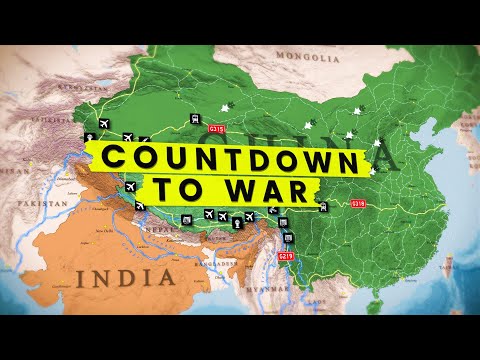
The Himalayas represent more than just a collection of mountains; they are a colossal geological barrier and a spiritual sanctuary that spans five countries: India, Nepal, Bhutan, China, and Pakistan. When people use the term Himalayas, they are referring to the highest mountain range on the planet, a massive arc of soaring peaks and deep valleys that separates the plains of the Indian subcontinent from the vast Tibetan Plateau. Geologically, this range is relatively young, formed by the ongoing collision between the Indian and Eurasian tectonic plates, a process that continues to push the mountains higher even today. In conversation, the word is often used to evoke themes of extreme challenge, natural majesty, and spiritual enlightenment. For a geographer, the Himalayas are a study in tectonic forces; for a biologist, they are a biodiversity hotspot home to the elusive snow leopard; and for a pilgrim, they are the 'Abode of Snow' where the divine resides. The term is almost always preceded by the definite article 'the' because it refers to a specific, unique geographic entity. You will hear it in news reports regarding climate change and glacial melt, in travel documentaries about trekking to Everest Base Camp, and in literature that explores the isolation and beauty of high-altitude life. It is a word that carries weight, signifying the limits of human endurance and the overwhelming power of nature. Whether discussing the monsoon patterns of South Asia, which are heavily influenced by this range, or the ancient trade routes like the Silk Road that skirted its edges, the Himalayas remain a central focal point of global geography. The range includes over fifty mountains exceeding 7,200 meters in elevation, including ten of the fourteen 8,000-meter peaks. This concentration of height is unparalleled elsewhere on Earth, making the word synonymous with 'the ultimate height' or 'the roof of the world.'
- Geological Origin
- The range was formed approximately 40 to 50 million years ago when the Indo-Australian Plate collided with the Eurasian Plate, causing the crust to fold and rise into the sky.
- Cultural Significance
- In Sanskrit, the name translates to 'Abode of Snow,' reflecting the permanent ice caps that crown its summits and its role as a sacred site in Hinduism and Buddhism.
- Environmental Impact
- The mountains act as a giant weather regulator, blocking cold Siberian winds from reaching India and forcing the monsoon rains to fall on the southern slopes.
The sheer scale of the himalayas is difficult to comprehend until you are standing in their shadow, looking up at peaks that pierce the clouds.
Climbers from around the world dream of testing their mettle against the treacherous slopes of the himalayas.
The himalayas serve as the source for several of the world's major river systems, providing water to billions of people.
Many spiritual seekers travel to the himalayas in search of peace and meditation in remote mountain monasteries.
Satellite imagery shows how the himalayas create a stark boundary between the green valleys of Nepal and the arid Tibetan Plateau.
Using the word Himalayas correctly involves understanding its role as a collective proper noun. Because it describes a mountain range—a plural entity—it typically takes a plural verb in British English (e.g., 'The Himalayas are...') but can occasionally be treated as a singular geographic unit in specific contexts, though plural is much more common. When writing about them, you might focus on their physical attributes, their ecological importance, or their cultural impact. For instance, in a scientific context, you might say, 'The Himalayas provide a unique laboratory for studying high-altitude biology.' In a travel context, you could write, 'The Himalayas offer some of the most challenging trekking routes in the world.' It is important to remember that the word is always capitalized. Furthermore, when describing something related to the mountains, you can use the adjective form 'Himalayan,' such as 'Himalayan salt' or 'Himalayan culture.' However, the noun 'Himalayas' is reserved for the range itself. In descriptive writing, the word is often paired with powerful verbs like 'tower,' 'loom,' 'stretch,' and 'dominate.' For example, 'The Himalayas tower over the northern borders of India, acting as a natural fortress.' You can also use it to describe movement: 'The expedition trekked deep into the heart of the Himalayas.' In figurative language, the Himalayas can represent an insurmountable obstacle or a peak of achievement, though this is less common than its literal geographic use. When discussing environmental issues, the phrase 'Himalayan glaciers' is frequently used to highlight the impact of global warming. The word also appears in political discussions regarding border disputes and regional stability, as the range forms a significant part of the boundaries between major Asian powers. To use the word effectively, consider the scale you are trying to convey. Are you talking about the entire 2,400-kilometer range, or a specific part of it? If the latter, you might say 'the Western Himalayas' or 'the Eastern Himalayas.' This specificity adds precision to your writing and shows a deeper understanding of the geography.
- Subject-Verb Agreement
- Always treat 'The Himalayas' as plural. Example: 'The Himalayas are home to Mount Everest,' not 'is home.'
- Adjectival Use
- Use 'Himalayan' to describe things from the region. Example: 'Himalayan herbs are used in traditional medicine.'
- Prepositional Phrases
- Commonly used with 'in,' 'across,' or 'through.' Example: 'The route passes through the Himalayas.'
Geologists believe the himalayas are still growing at a rate of about one centimeter per year.
The biodiversity found in the himalayas is among the richest in the world, with many species found nowhere else.
For centuries, the himalayas have served as a formidable barrier to migration and trade.
You will encounter the word Himalayas in a variety of professional and casual settings. In the world of international news, the term frequently appears in reports about climate change. Scientists often refer to the Himalayas as the 'Third Pole' because they contain the largest reserve of fresh water outside the polar regions. Consequently, news stories about melting glaciers and their impact on the water supply for billions of people in Asia will always feature the Himalayas prominently. In the realm of adventure and sports, the word is a staple. Every spring, media outlets cover the climbing season on Mount Everest, and the broader context of these stories always involves the challenges of the Himalayas—the extreme weather, the thin air, and the logistical difficulties of high-altitude mountaineering. You will also hear the word in cultural and religious documentaries. Because the range is sacred to millions of Hindus and Buddhists, programs exploring the source of the Ganges River or the life of monks in Tibetan monasteries will use 'the Himalayas' to set the scene. In educational settings, geography and geology teachers use the word to explain plate tectonics and the formation of mountain belts. In the commercial world, 'Himalayan' has become a popular branding term for products perceived as pure, natural, or exotic, such as Himalayan pink salt, Himalayan wool, or Himalayan skincare products. Even in casual conversation, someone might say, 'I've always wanted to trek in the Himalayas,' expressing a bucket-list desire for adventure. In literature, the Himalayas often serve as a backdrop for stories of isolation, spiritual searching, or colonial exploration, as seen in books like 'The Snow Leopard' by Peter Matthiessen or 'Seven Years in Tibet' by Heinrich Harrer. In film, the dramatic landscape of the Himalayas provides a visually stunning setting for movies ranging from 'Seven Years in Tibet' to 'Everest.' Whether it's a scientific journal discussing the 'Himalayan orogeny' or a travel blogger sharing photos of a sunrise over the peaks, the word is universally recognized as a symbol of the world's most impressive heights.
- In Science
- Used to discuss tectonic plates, glacial melting, and high-altitude ecosystems.
- In Tourism
- A primary destination for trekking, mountaineering, and spiritual tourism.
- In Geopolitics
- Refers to the strategic and disputed borders between India, China, and Pakistan.
'The himalayas are the water towers of Asia,' the scientist explained during the climate summit.
One of the most frequent mistakes learners make with the word Himalayas is omitting the definite article 'the.' In English, mountain ranges almost always require 'the' (e.g., the Andes, the Alps, the Himalayas). Saying 'I want to visit Himalayas' sounds unnatural to a native speaker; it must be 'I want to visit the Himalayas.' Another common error is treating the word as a singular noun. While it refers to one mountain system, the word itself is plural in form and usually takes a plural verb. For example, 'The Himalayas are beautiful' is correct, whereas 'The Himalayas is beautiful' is generally considered incorrect in standard English. Spelling is another area where mistakes occur. The name comes from Sanskrit, and the placement of the 'a's and 'i' can be tricky. Common misspellings include 'Himalayas,' 'Himalayas,' or 'Himalayas.' Remember the pattern: H-i-m-a-l-a-y-a-s. Additionally, learners sometimes confuse the noun 'Himalayas' with the adjective 'Himalayan.' You would say 'The Himalayas are in Asia,' but 'He is a Himalayan guide.' Using 'Himalayas' as an adjective (e.g., 'Himalayas salt') is incorrect. Another subtle mistake involves the pronunciation of the word. While there are two accepted pronunciations, some learners put the stress on the wrong syllable entirely, making it hard to understand. The most common US pronunciation stresses the third syllable (him-uh-LAY-uhz), while the UK often stresses the second (hi-MAHL-yuhz). Finally, people often forget to capitalize the word. As a proper noun referring to a specific geographic location, it must always start with a capital 'H.' Failing to do so is a common mistake in written English, especially in informal digital communication. By paying attention to the article, the plural agreement, the spelling, and the capitalization, you can avoid the most common pitfalls associated with this word.
- Article Omission
- Mistake: 'Climbing Himalayas is hard.' Correct: 'Climbing the Himalayas is hard.'
- Subject-Verb Error
- Mistake: 'The Himalayas is a long range.' Correct: 'The Himalayas are a long range.'
- Adjective vs Noun
- Mistake: 'I love Himalayas food.' Correct: 'I love Himalayan food.'
Incorrect: We saw himalayas from the plane. Correct: We saw the Himalayas from the plane.
While Himalayas is a specific proper noun, there are several words and phrases you can use to describe them or similar geographic features. The most direct synonym is 'mountain range,' though this is much more general. If you want to emphasize their height, you might use the phrase 'the roof of the world,' a common epithet for the Himalayas and the Tibetan Plateau. Another alternative is 'the high peaks,' which focuses on the individual summits rather than the entire range. In a geological context, scientists might refer to the 'Himalayan orogen' or the 'Himalayan belt.' If you are comparing them to other ranges, you might mention the 'Andes,' the 'Alps,' or the 'Rockies,' though the Himalayas are significantly higher than all of them. For a more poetic or literary tone, you could use 'the Abode of Snow,' which is the literal translation of the Sanskrit name. When discussing the region's impact on weather, you might hear the term 'the Third Pole.' It's also common to refer to specific parts of the range, such as the 'Karakoram' (which is technically a separate but adjacent range) or the 'Hindu Kush.' Understanding the difference between these terms is key. A 'mountain range' is any group of mountains, but 'the Himalayas' is the specific one in Asia. 'The roof of the world' is a metaphorical way to describe the extreme elevation of the region. 'Himalayan' is the adjective form used for people, culture, and objects. By using these alternatives, you can vary your language and provide more specific details about what aspect of the mountains you are discussing.
- The Roof of the World
- A metaphorical term emphasizing the extreme altitude of the Himalayas and Tibet.
- The Third Pole
- A scientific term highlighting the region's massive ice reserves, comparable to the North and South Poles.
- Mountain Range
- The general category that the Himalayas belong to. Use this when you don't need to be specific.
While the Alps are famous for skiing, the himalayas are the ultimate destination for high-altitude climbers.
How Formal Is It?
Fun Fact
The Himalayas are so high that they influence the weather in the entire Northern Hemisphere, not just Asia.
Pronunciation Guide
- Saying 'Himalaya' without the 's'.
- Putting stress on the first syllable.
- Pronouncing the 'h' as silent.
- Confusing the 'a' sounds.
- Omitting the 'the' before the word.
Difficulty Rating
Easy to recognize but requires context for geological terms.
Spelling and the use of 'the' can be tricky for learners.
Pronunciation varies but is generally understood.
Very distinct sound, easy to pick out in speech.
What to Learn Next
Prerequisites
Learn Next
Advanced
Grammar to Know
Proper Nouns with 'The'
The Himalayas, The Nile, The Pacific.
Plural Proper Nouns
The Himalayas are (not is).
Capitalization of Geographic Features
Himalayas, not himalayas.
Adjective Formation from Proper Nouns
Himalaya -> Himalayan.
Prepositions of Place with Ranges
In the Himalayas, not on the Himalayas.
Examples by Level
The Himalayas are very high.
Himalaya bahut oonche hain.
Use 'the' and 'are'.
I see the Himalayas in the photo.
Main photo mein Himalaya dekhta hoon.
Proper noun capitalization.
The Himalayas have lots of snow.
Himalaya mein bahut barf hai.
Plural verb 'have'.
Mount Everest is in the Himalayas.
Mount Everest Himalaya mein hai.
Preposition 'in'.
The Himalayas are in Asia.
Himalaya Asia mein hain.
Location phrase.
Are the Himalayas cold?
Kya Himalaya thande hain?
Question form.
The Himalayas are beautiful.
Himalaya sundar hain.
Adjective use.
We love the Himalayas.
Hamein Himalaya pasand hain.
Direct object.
The Himalayas are the highest mountains.
Himalaya sabse oonche pahad hain.
Superlative 'highest'.
Many rivers start in the Himalayas.
Kayi nadiyan Himalaya se shuru hoti hain.
Plural noun 'rivers'.
It is difficult to climb the Himalayas.
Himalaya chadhna mushkil hai.
Infinitive 'to climb'.
The Himalayas protect the country.
Himalaya desh ki raksha karte hain.
Present simple verb.
I want to travel to the Himalayas.
Main Himalaya ki yatra karna chahta hoon.
Preposition 'to'.
The Himalayas are famous for Everest.
Himalaya Everest ke liye prasiddh hain.
Adjective phrase 'famous for'.
Snow covers the Himalayas all year.
Barf saal bhar Himalaya ko dhakti hai.
Verb 'covers'.
The Himalayas are a great place to visit.
Himalaya ghumne ke liye ek acchi jagah hai.
Noun phrase.
The Himalayas form a natural border between countries.
Himalaya deshon ke beech ek prakritik seema banate hain.
Verb 'form'.
Trekking in the Himalayas requires good fitness.
Himalaya mein trekking ke liye acchi fitness chahiye.
Gerund 'trekking'.
The Himalayas are known as the 'Abode of Snow'.
Himalaya ko 'Barf ka Ghar' ke roop mein jana jata hai.
Passive voice 'are known as'.
Climate change is affecting the Himalayas.
Jalvayu parivartan Himalaya ko prabhavit kar raha hai.
Present continuous.
The Himalayas are home to many rare animals.
Himalaya kayi durlabh janvaron ka ghar hai.
Idiomatic 'home to'.
We flew over the Himalayas on our way to Delhi.
Delhi jate samay humne Himalaya ke upar se udaan bhari.
Preposition 'over'.
The Himalayas have a significant impact on the climate.
Himalaya ka jalvayu par mahatvapurn prabhav padta hai.
Collocation 'significant impact'.
People have lived in the Himalayas for centuries.
Log sadiyon se Himalaya mein reh rahe hain.
Present perfect.
The Himalayas act as a barrier to the cold winds from the north.
Himalaya uttar se aane wali thandi hawaon ke liye ek badha ke roop mein karya karte hain.
Verb 'act as'.
The geological formation of the Himalayas is a complex process.
Himalaya ki bhu-vaigyanik sanrachna ek jatil prakriya hai.
Abstract noun 'formation'.
The Himalayas are essential for the survival of millions.
Millions logon ke jeevit rehne ke liye Himalaya avashyak hain.
Adjective 'essential'.
The Himalayas boast some of the most spectacular scenery on Earth.
Himalaya mein dharti ke kuch sabse shandaar drishya hain.
Verb 'boast' (meaning to possess).
Conservation efforts in the Himalayas are increasing.
Himalaya mein sanrakshan ke prayas badh rahe hain.
Compound subject.
The Himalayas are steeped in spiritual tradition.
Himalaya adhyatmik paramparaon mein rache-base hain.
Idiom 'steeped in'.
The Himalayas provide a livelihood for local communities.
Himalaya sthaniye samudayon ke liye aajeevika pradan karte hain.
Noun 'livelihood'.
The Himalayas are a focal point for scientific research.
Himalaya vaigyanik anusandhan ke liye ek kendra bindu hain.
Noun phrase 'focal point'.
The Himalayas exert a profound influence on the Asian monsoon system.
Himalaya Asian monsoon pranali par gahra prabhav dalte hain.
Verb 'exert'.
The Himalayas are a testament to the power of tectonic forces.
Himalaya tectonic shaktiyon ki takat ka ek praman hain.
Metaphor 'testament to'.
The fragile ecosystem of the Himalayas is under threat from tourism.
Himalaya ka nazuk paryavaran paryatan se khatre mein hai.
Adjective 'fragile'.
The Himalayas serve as a vital carbon sink for the region.
Himalaya kshetra ke liye ek mahatvapurn carbon sink ke roop mein karya karte hain.
Scientific term 'carbon sink'.
The Himalayas are characterized by extreme topographical diversity.
Himalaya ki visheshta atyadhik bhu-akriti vividhata hai.
Passive 'characterized by'.
The Himalayas have long been a site of geopolitical tension.
Himalaya lambe samay se bhu-rajnaitik tanav ka sthal raha hai.
Present perfect passive.
The Himalayas encapsulate the sublime beauty of the natural world.
Himalaya prakritik duniya ki utkrisht sundarta ko samete hue hain.
Verb 'encapsulate'.
The Himalayas are undergoing rapid environmental changes.
Himalaya mein tezi se paryavaran parivartan ho rahe hain.
Verb 'undergoing'.
The Himalayas represent the zenith of terrestrial elevation.
Himalaya sthaliye oonchai ke shikhar ka pratinidhitva karte hain.
Noun 'zenith'.
The Himalayas are an integral component of the global hydrological cycle.
Himalaya vaishvik jal-chakra ka ek abhinn ang hain.
Adjective 'integral'.
The Himalayas' orogenic history is etched into their jagged peaks.
Himalaya ka parvat-nirman itihas unki nukili chotiyon mein ankita hai.
Possessive 'Himalayas' orogenic'.
The Himalayas foster a unique synthesis of diverse cultural identities.
Himalaya vividh sanskritik pehchanon ke ek anokhe sanshleshan ko badhava dete hain.
Verb 'foster'.
The Himalayas are increasingly susceptible to seismic activity.
Himalaya mein bhukampiye gatividhiyon ka khatra badh raha hai.
Adjective 'susceptible'.
The Himalayas embody the inherent contradictions of human exploration.
Himalaya manaviye khoj ki nihit virodhabhashon ko darshate hain.
Verb 'embody'.
The Himalayas' vastness defies easy categorization or description.
Himalaya ki vishalta asaan vargikaran ya varnan ko chunauti deti hai.
Verb 'defies'.
The Himalayas remain a frontier for both physical and spiritual endeavor.
Himalaya sharirik aur adhyatmik dono prayason ke liye ek seema bane hue hain.
Noun 'frontier'.
Common Collocations
Common Phrases
— Living very close to the mountains.
The town lies in the shadow of the Himalayas.
— The strong desire to visit or climb them.
He finally answered the call of the Himalayas.
— In a remote part of the range.
They found a hidden monastery deep in the Himalayas.
— The massive size of the mountains.
The scale of the Himalayas is hard to imagine.
— The lower hills at the base of the range.
We hiked in the Himalayan foothills.
— The unique environment of the mountains.
The Himalayan ecosystem is very fragile.
— The cultural or spiritual feeling of the place.
The book captures the spirit of the Himalayas.
— A city or place where people start their journey to the mountains.
Kathmandu is the gateway to the Himalayas.
Often Confused With
Everest is a single mountain; the Himalayas is the whole range.
Tibet is a plateau/region; the Himalayas are the mountains next to it.
A different but nearby mountain range to the west.
Idioms & Expressions
— Extremely high or ambitious.
His goals are as high as the Himalayas.
Informal— A very difficult task ahead.
We have a mountain to climb to finish this project.
Common— A small part of a much larger problem.
The melting of one glacier is just the tip of the iceberg in the Himalayas.
Common— To do something that seems impossible.
She would move mountains to help her family.
Common— Doing something at the highest level possible.
Athletes in the Himalayas need peak performance.
Neutral— Feeling very happy or successful.
Standing on the summit, he felt on top of the world.
Informal— Past one's prime (usually age).
He's not over the hill yet; he can still climb.
Informal— To achieve a higher level of success.
The project reached new heights this year.
Neutral— Belief can overcome any obstacle.
They believed they could survive, and faith can move mountains.
Literary— To advance in a career or society.
He is slowly climbing the professional ladder.
NeutralEasily Confused
Singular vs Plural
Himalaya is the Sanskrit singular; Himalayas is the standard English plural.
The Himalayas are vast.
Noun vs Adjective
Himalayan is the adjective; Himalayas is the noun.
I like Himalayan tea.
Both are ranges
The Andes are in South America; the Himalayas are in Asia.
The Himalayas are higher than the Andes.
Both are ranges
The Alps are in Europe; the Himalayas are in Asia.
The Alps are smaller than the Himalayas.
Both are ranges
The Rockies are in North America; the Himalayas are in Asia.
The Himalayas are much taller.
Sentence Patterns
The Himalayas are [adjective].
The Himalayas are big.
I want to see the Himalayas.
I want to see the Himalayas.
The Himalayas are located in [place].
The Himalayas are located in Asia.
The Himalayas serve as [noun phrase].
The Himalayas serve as a natural barrier.
The Himalayas exert an influence on [noun phrase].
The Himalayas exert an influence on the climate.
The Himalayas encapsulate the [abstract noun].
The Himalayas encapsulate the sublime.
Trekking in the Himalayas is [adjective].
Trekking in the Himalayas is difficult.
The Himalayas are home to [noun].
The Himalayas are home to snow leopards.
Word Family
Nouns
Adjectives
Related
How to Use It
Common in geography, travel, and environmental contexts.
-
I went to Himalayas.
→
I went to the Himalayas.
You must use 'the' with mountain ranges.
-
The Himalayas is high.
→
The Himalayas are high.
The word is plural and needs a plural verb.
-
himalayas
→
Himalayas
It is a proper noun and must be capitalized.
-
Himalayan is a mountain.
→
The Himalayas is a mountain range.
Himalayan is an adjective, not a noun for the range.
-
Himulayas
→
Himalayas
Incorrect spelling of the second syllable.
Tips
Always use 'the'
Never forget the definite article before the name of the range.
Double 'a' check
Remember there are three 'a's in Himalayas: H-i-m-a-l-a-y-a-s.
Stress the 'LAY'
Most people say him-uh-LAY-uhz. Practice this to sound natural.
Think of scale
Use 'the Himalayas' when you want to emphasize something massive.
Use 'Himalayan' as an adjective
For food, culture, or salt, use the adjective form.
Know the countries
Remember they touch India, Nepal, Bhutan, China, and Pakistan.
Third Pole
In scientific writing, you can call them the Third Pole.
Capitalize
Always capitalize the 'H' in Himalayas.
Plural agreement
Say 'The Himalayas are...' not 'The Himalayas is...'
Connect with Everest
If you remember Everest, you'll remember the Himalayas.
Memorize It
Mnemonic
HIM-A-LAY-AS: 'Him' (a person) 'a' (one) 'lay' (resting) 'as' (like) a giant on the Earth.
Visual Association
Imagine a giant white wall of snow touching the blue sky.
Word Web
Challenge
Try to use 'the Himalayas' in three different sentences about travel, weather, and history.
Word Origin
The word comes from the Sanskrit words 'hima' (snow) and 'alaya' (abode or dwelling). It literally means 'the abode of snow.'
Original meaning: A place where snow lives or stays permanently.
Indo-Aryan / Sanskrit.Cultural Context
Be respectful of the sacred nature of many peaks; some are forbidden to climb for religious reasons.
Often associated with adventure, 'finding oneself,' and extreme sports.
Practice in Real Life
Real-World Contexts
Geography Class
- Mountain range
- Tectonic plates
- Highest peaks
- Asian continent
Travel Planning
- Trekking route
- Base camp
- Best time to visit
- Local guides
Climate News
- Glacial melt
- Water source
- Global warming
- Third Pole
Spirituality
- Sacred peaks
- Monastery
- Meditation retreat
- Pilgrimage
History
- Trade routes
- Exploration
- Border disputes
- Ancient kingdoms
Conversation Starters
"Have you ever dreamed of visiting the Himalayas?"
"What do you think is the most beautiful part of the Himalayas?"
"How do the Himalayas affect the weather in your country?"
"Do you know any famous stories about people climbing the Himalayas?"
"Would you prefer to trek in the Himalayas or the Alps?"
Journal Prompts
Imagine you are standing at the foot of the Himalayas. Describe what you see and feel.
Why do you think the Himalayas are considered sacred by so many people?
Write about the challenges a person might face while living in the Himalayas.
If you could name a new peak in the Himalayas, what would you call it and why?
Discuss the importance of protecting the Himalayan environment for future generations.
Frequently Asked Questions
10 questionsThe Himalayas are located in Asia, spanning five countries: India, Nepal, Bhutan, China, and Pakistan.
The highest peak is Mount Everest, which stands at 8,848 meters above sea level.
They were formed by the collision of the Indian and Eurasian tectonic plates millions of years ago.
It comes from Sanskrit and means 'Abode of Snow'.
Yes, they are still rising by about 1 cm per year due to tectonic activity.
They regulate the climate of Asia and provide water for major rivers like the Ganges and Indus.
Yes, they are a prominent feature visible from Earth's orbit.
Rare animals like the snow leopard, red panda, and Himalayan tahr live there.
In English, 'the Himalayas' is the most common and correct way to refer to the range.
The best times are usually spring (March-May) and autumn (September-November).
Test Yourself 180 questions
Describe the Himalayas in three sentences.
Well written! Good try! Check the sample answer below.
Why are the Himalayas important for the environment?
Well written! Good try! Check the sample answer below.
Write a short paragraph about a trip to the Himalayas.
Well written! Good try! Check the sample answer below.
Explain how the Himalayas were formed.
Well written! Good try! Check the sample answer below.
Discuss the cultural significance of the Himalayas.
Well written! Good try! Check the sample answer below.
What are the effects of climate change on the Himalayas?
Well written! Good try! Check the sample answer below.
Compare the Himalayas with another mountain range.
Well written! Good try! Check the sample answer below.
Write a dialogue between two people planning a trek in the Himalayas.
Well written! Good try! Check the sample answer below.
Describe the biodiversity of the Himalayas.
Well written! Good try! Check the sample answer below.
What does the 'Third Pole' refer to?
Well written! Good try! Check the sample answer below.
Write a poem about the Himalayas.
Well written! Good try! Check the sample answer below.
Explain the role of Sherpas in the Himalayas.
Well written! Good try! Check the sample answer below.
How do the Himalayas affect the monsoon?
Well written! Good try! Check the sample answer below.
Describe the feeling of standing on a Himalayan peak.
Well written! Good try! Check the sample answer below.
Discuss the impact of tourism on the Himalayas.
Well written! Good try! Check the sample answer below.
Write a formal report on Himalayan glacial retreat.
Well written! Good try! Check the sample answer below.
What are the geopolitical tensions in the Himalayas?
Well written! Good try! Check the sample answer below.
Describe a Himalayan sunrise.
Well written! Good try! Check the sample answer below.
Why is the Himalayan region called a 'water tower'?
Well written! Good try! Check the sample answer below.
What is the future of the Himalayas?
Well written! Good try! Check the sample answer below.
Pronounce 'The Himalayas' clearly.
Read this aloud:
You said:
Speech recognition is not supported in your browser. Try Chrome or Edge.
Tell me one fact about the Himalayas.
Read this aloud:
You said:
Speech recognition is not supported in your browser. Try Chrome or Edge.
Would you like to visit the Himalayas? Why?
Read this aloud:
You said:
Speech recognition is not supported in your browser. Try Chrome or Edge.
Describe the weather in the Himalayas.
Read this aloud:
You said:
Speech recognition is not supported in your browser. Try Chrome or Edge.
What is the highest mountain in the Himalayas?
Read this aloud:
You said:
Speech recognition is not supported in your browser. Try Chrome or Edge.
Explain why the Himalayas are called the 'Abode of Snow'.
Read this aloud:
You said:
Speech recognition is not supported in your browser. Try Chrome or Edge.
How do the Himalayas help people?
Read this aloud:
You said:
Speech recognition is not supported in your browser. Try Chrome or Edge.
What challenges do climbers face in the Himalayas?
Read this aloud:
You said:
Speech recognition is not supported in your browser. Try Chrome or Edge.
Discuss the importance of the Himalayas in your culture.
Read this aloud:
You said:
Speech recognition is not supported in your browser. Try Chrome or Edge.
What is the 'Third Pole'?
Read this aloud:
You said:
Speech recognition is not supported in your browser. Try Chrome or Edge.
How does climate change affect the Himalayas?
Read this aloud:
You said:
Speech recognition is not supported in your browser. Try Chrome or Edge.
Talk about the biodiversity of the Himalayas.
Read this aloud:
You said:
Speech recognition is not supported in your browser. Try Chrome or Edge.
What is Himalayan salt used for?
Read this aloud:
You said:
Speech recognition is not supported in your browser. Try Chrome or Edge.
Where are the Himalayas?
Read this aloud:
You said:
Speech recognition is not supported in your browser. Try Chrome or Edge.
Why are the Himalayas sacred?
Read this aloud:
You said:
Speech recognition is not supported in your browser. Try Chrome or Edge.
What is a Sherpa?
Read this aloud:
You said:
Speech recognition is not supported in your browser. Try Chrome or Edge.
Describe a trek in the Himalayas.
Read this aloud:
You said:
Speech recognition is not supported in your browser. Try Chrome or Edge.
What is the orogenic belt?
Read this aloud:
You said:
Speech recognition is not supported in your browser. Try Chrome or Edge.
How high is Mount Everest?
Read this aloud:
You said:
Speech recognition is not supported in your browser. Try Chrome or Edge.
What is the future of the Himalayas?
Read this aloud:
You said:
Speech recognition is not supported in your browser. Try Chrome or Edge.
Listen to the word: Himalayas. How many syllables do you hear?
Listen to the sentence: 'The Himalayas are in Asia.' Where are they?
Listen: 'Mount Everest is the highest peak.' What is the highest peak?
Listen: 'The Himalayas are sacred.' What are they?
Listen: 'Glaciers are melting in the Himalayas.' What is happening?
Listen: 'The Himalayas span five countries.' How many countries?
Listen: 'Himalayan salt is pink.' What color is the salt?
Listen: 'Trekking in the Himalayas is hard.' Is it easy?
Listen: 'The Himalayas are the Third Pole.' What is the nickname?
Listen: 'Sherpas live in the Himalayas.' Who lives there?
Listen: 'The Himalayas were formed by plates.' What formed them?
Listen: 'The Himalayas are majestic.' What is the adjective?
Listen: 'The Himalayas are 2,400 km long.' How long are they?
Listen: 'The Himalayas are home to snow leopards.' What animal lives there?
Listen: 'The Himalayas are a water tower.' What are they called?
/ 180 correct
Perfect score!
Summary
The Himalayas are the 'Roof of the World,' a massive mountain range in Asia that includes Earth's highest peaks and serves as a crucial geographical, cultural, and environmental landmark for billions of people. Example: 'The Himalayas are a natural wonder.'
- The Himalayas are the highest mountain range on Earth, located in Asia.
- They contain Mount Everest and are vital for Asia's water and climate.
- The name means 'Abode of Snow' in Sanskrit and they are sacred to many.
- Formed by tectonic plate collisions, they continue to rise and change today.
Always use 'the'
Never forget the definite article before the name of the range.
Double 'a' check
Remember there are three 'a's in Himalayas: H-i-m-a-l-a-y-a-s.
Stress the 'LAY'
Most people say him-uh-LAY-uhz. Practice this to sound natural.
Think of scale
Use 'the Himalayas' when you want to emphasize something massive.