









indigenous in 30 Seconds
- Indigenous describes anything that originates naturally in a particular place, rather than being introduced or imported from elsewhere. It is a key term in biology and sociology.
- When applied to people, it refers to the original inhabitants of a region who maintain a distinct cultural and historical connection to their ancestral lands.
- In environmental science, indigenous species are those that evolved within a specific ecosystem, playing a vital role in maintaining its natural balance and health.
- The word is often used in formal, legal, and academic contexts to emphasize rights, authenticity, and historical primacy over more recent settler or colonial structures.
The term indigenous is a sophisticated adjective used to describe things—whether they be people, plants, animals, or even ideas—that have a deep-rooted, natural, and original connection to a specific geographical location. At its core, the word signifies that something was not brought to a place from elsewhere; it emerged there, evolved there, and is fundamentally part of that environment's historical and biological fabric. In contemporary discourse, the word carries significant weight in both scientific and sociological contexts. In biology, we speak of indigenous species to distinguish them from invasive or introduced ones. In a social context, it refers to the first inhabitants of a land who maintain a distinct cultural and historical continuity with their pre-colonial or pre-settler ancestors. The usage of 'indigenous' often implies a sense of belonging and a right to the land that predates modern political boundaries.
- Biological Context
- Refers to flora and fauna that occur naturally in an ecosystem without human intervention. For example, the kangaroo is indigenous to Australia, meaning it was not introduced by settlers but evolved on the continent over millions of years.
- Sociological Context
- Relates to human populations who are the original inhabitants of a territory. This often involves a political dimension, focusing on the rights, languages, and traditions of groups like the Sami in Scandinavia or the Maori in New Zealand.
- Material Context
- Used to describe resources or materials found locally. An architect might use indigenous stone to ensure a building blends perfectly with the local landscape and reduces the carbon footprint of transportation.
The researchers focused on documenting the indigenous knowledge of medicinal plants held by the local tribes.
When using this word, it is vital to understand the nuance of 'originality.' Something is indigenous not just because it is 'there,' but because it has been there since time immemorial or before a specific disruptive event, like colonization or a major ecological shift. In academic writing, 'indigenous' is preferred over 'native' when discussing human rights because it acknowledges a specific legal and historical status recognized by international bodies like the United Nations. It is a word of respect, recognition, and scientific precision. Whether you are discussing the indigenous trees of the Amazon rainforest or the indigenous languages of the Caucasus mountains, you are highlighting a primary, unadulterated connection to the earth itself. The word invites us to look past the surface of the modern world and recognize the ancient lineages that continue to shape our planet's diversity.
Many indigenous bird species are currently threatened by the introduction of non-native predators.
The museum features an extensive collection of indigenous art from the Pacific Northwest.
- Etymological Root
- Derived from the Latin 'indigena', meaning 'native' or 'sprung from the land itself'. It combines 'indu' (within) and 'gignere' (to beget).
The project aims to restore the indigenous grasslands that were destroyed by intensive farming.
Using 'indigenous' correctly requires an understanding of its role as an adjective that modifies nouns to indicate origin and belonging. It is most frequently used in attributive positions (before the noun), such as 'indigenous people' or 'indigenous plants.' However, it can also function predicatively (after a verb), as in 'The species is indigenous to this region.' When you use it, you are making a claim about the history and the 'first-ness' of the subject. It is a powerful word because it often contrasts the subject with something 'foreign,' 'alien,' or 'introduced.' For instance, in environmental science, the distinction between an indigenous plant and an invasive one is critical for conservation efforts. In these sentences, the word serves as a marker of ecological authenticity and balance.
- Scientific Precision
- Use it to specify the natural habitat of a species. Example: 'The giant panda is indigenous to south-central China.' This is more precise than saying it 'lives' there; it means it belongs there by nature.
- Cultural Respect
- Use it when discussing the rights and histories of original inhabitants. Example: 'The government signed a treaty recognizing the land rights of indigenous communities.' Here, the word acknowledges a legal and moral status.
The chef prides himself on using only indigenous ingredients that have been harvested sustainably by local farmers.
In more abstract or metaphorical sentences, 'indigenous' can describe things that are inherent or innate. You might hear about 'indigenous traditions' or 'indigenous technology,' referring to methods and customs developed within a culture rather than imported from outside. This usage highlights self-sufficiency and internal development. For example, 'The development of indigenous satellite technology was a major milestone for the nation.' In this case, 'indigenous' emphasizes that the technology was created 'in-house' or locally, without external help. This adds a layer of pride and independence to the sentence. It is also important to note the preposition 'to' that often follows the word: 'indigenous to [place].' This structure is essential for linking the subject to its specific origin.
The bluebell is indigenous to the British Isles and forms spectacular carpets in ancient woodlands during spring.
Scholars are working to preserve indigenous languages that are at risk of extinction due to globalization.
- Prepositional Use
- Always use 'to' when specifying the location: 'The potato is indigenous to the Andes mountains.'
The film explores the indigenous myths and legends that have been passed down through generations.
In the modern world, 'indigenous' is a high-frequency word in specific professional and public domains. You will most likely encounter it in news reports concerning human rights, environmental conservation, and international law. For instance, the United Nations frequently uses the term in its 'Declaration on the Rights of Indigenous Peoples.' This legal framework has brought the word into the mainstream, making it a staple of political activism and social justice discussions. When you hear a news anchor talk about 'indigenous land rights' or 'indigenous sovereignty,' they are using the word to acknowledge a group's historical primacy and their ongoing struggle for recognition within a modern nation-state. It is a word that carries the weight of history and the urgency of current political movements.
- Nature Documentaries
- Narrators like David Attenborough often use 'indigenous' to describe the unique wildlife of a region. It helps viewers understand that these animals belong to that specific ecosystem and are vital to its health.
- Academic Lectures
- In anthropology, sociology, and biology departments, 'indigenous' is the standard technical term. Professors use it to discuss everything from 'indigenous knowledge systems' to 'indigenous flora.'
The BBC documentary highlighted the importance of indigenous forest management in preventing wildfires.
Beyond the news and academia, 'indigenous' is increasingly common in the culinary and travel industries. As people become more interested in sustainability and 'slow food,' chefs are highlighting 'indigenous ingredients'—foods that are native to a region and have been eaten there for centuries. In travel, 'indigenous tourism' refers to experiences led by the original inhabitants of a place, offering a more authentic and respectful way to learn about a culture. You might also see the word in corporate sustainability reports, where companies discuss their impact on 'indigenous communities' near their operations. In all these contexts, the word serves as a bridge between the past and the present, emphasizing the value of what is original and local in an increasingly globalized world.
During the climate summit, indigenous leaders from around the world demanded a seat at the negotiating table.
The university recently introduced a course on indigenous philosophy and worldviews.
- Legal Documents
- Found in land claims, environmental regulations, and human rights treaties where precise definitions of 'original inhabitant' are required.
The podcast discussed how indigenous music is being fused with modern electronic beats.
Despite its frequent use, 'indigenous' is often confused with several other words that sound similar or have related meanings. The most common phonetic confusion is with 'ingenious.' While 'indigenous' means native, 'ingenious' means clever or inventive. Confusing these two can lead to nonsensical sentences like 'He had an indigenous plan' (unless the plan was native to a specific region, which is unlikely). Another common mix-up is with 'indigent,' which means extremely poor. Using 'indigent' when you mean 'indigenous' can be particularly offensive or confusing in a social context. Finally, 'indignant' (feeling or showing anger at what is perceived as unfair treatment) is another 'indi-' word that learners sometimes grab by mistake in the heat of a conversation.
- Indigenous vs. Ingenious
- Indigenous = Native (e.g., indigenous plants). Ingenious = Clever (e.g., an ingenious invention). Remember: 'Gen' in indigenous relates to 'generation/birth', while 'gen' in ingenious relates to 'genius'.
- Indigenous vs. Indigent
- Indigenous = Original to a place. Indigent = Poor/Needy. These are completely unrelated in meaning despite the similar prefix.
Correct: The indigenous people have lived here for millennia. Incorrect: The indigent people have lived here for millennia (unless you specifically mean they are poor).
Beyond phonetic confusion, there are semantic nuances to watch out for. Many learners use 'native' and 'indigenous' interchangeably. While they are often synonyms, 'indigenous' is usually more formal and carries a stronger connotation of 'first-ness' and historical continuity. For example, you might be a 'native of London' if you were born there, but you are not 'indigenous to London' unless your ancestry traces back to the original inhabitants of the area before various historical migrations. Similarly, 'endemic' is a term used in biology that is even more specific than 'indigenous.' An endemic species is indigenous to a place and *only* found in that place. If a bird is indigenous to Brazil, it might also be indigenous to Colombia. But if it is endemic to Brazil, it is found nowhere else on Earth. Mixing these up can lead to scientific inaccuracies.
It is a common error to use indigenous when 'endemic' would be more scientifically accurate for a species restricted to one island.
Avoid saying 'indigenous from'; the correct preposition is almost always 'indigenous to'.
- Indigenous vs. Indignant
- Indignant = Angry at injustice. Indigenous = Native. Example: 'The indigenous leader was indignant about the new law.'
Don't confuse indigenous (native) with 'exotic' (introduced from elsewhere).
When you want to describe something that belongs to a specific place, 'indigenous' is a powerful choice, but it isn't always the only one. Depending on the context—whether you are writing a scientific paper, a news article, or a casual blog post—you might choose a synonym that carries a slightly different shade of meaning. The most common alternative is 'native.' While 'native' is more versatile and can apply to individuals (e.g., 'a native New Yorker'), 'indigenous' is generally reserved for broader groups or species with a long historical presence. In scientific writing, 'endemic' is a crucial alternative; it means 'indigenous and found nowhere else.' Using 'endemic' instead of 'indigenous' adds a layer of rarity and geographic restriction that is vital in ecology.
- Native
- The most general term. Use it for people born in a place or plants that grow there naturally. It is less formal than 'indigenous'.
- Endemic
- A scientific term. Use it when a species is indigenous to one specific area and *only* that area. Example: 'Lemurs are endemic to Madagascar.'
- Aboriginal
- Often used as a synonym for indigenous people, particularly in Australia. It comes from 'ab origine', meaning 'from the beginning'.
- Autochthonous
- A very formal, academic term (often used in geology or anthropology) meaning 'sprung from the earth'. It is essentially a high-level synonym for indigenous.
While many plants are indigenous to the region, only a few are truly endemic to this specific valley.
In social and political contexts, the choice of word can be sensitive. 'Indigenous' is currently the preferred international term, but local preferences vary. In the United States, 'Native American' is common, while in Canada, 'First Nations' or 'Aboriginal' might be used. In a more general sense, you might use 'local' or 'homegrown' when talking about products or ideas. For instance, 'local traditions' is simpler than 'indigenous traditions' and might be more appropriate for a casual conversation. However, 'homegrown' often implies something developed recently within a community, whereas 'indigenous' always points back to ancient roots. Understanding these subtle differences allows you to choose the word that best fits the level of formality and the specific historical depth you want to convey.
The scholar preferred the term 'autochthonous' to describe the indigenous myths of the region, emphasizing their deep connection to the soil.
We should distinguish between indigenous species and those that have become 'naturalized' over centuries.
- Innate
- Use this for qualities or abilities rather than people or plants. Example: 'An innate talent' vs. 'An indigenous culture'.
The project focuses on the revitalization of indigenous crops to improve food security.
How Formal Is It?
Fun Fact
The 'indu' part of the word is an archaic Latin form of 'in', and 'gignere' means 'to beget' or 'to produce'. So, etymologically, it means 'produced from within'.
Pronunciation Guide
- Pronouncing it like 'indigen-ious' (adding an extra 'i').
- Confusing the 'g' sound with a hard 'g' like in 'goat'.
- Putting the stress on the first or third syllable.
- Confusing it with 'ingenious' (clever).
- Misspelling it as 'indiginous'.
Difficulty Rating
Common in news and textbooks, but requires context to understand the political weight.
Must be used carefully to avoid confusion with 'ingenious' or 'indigent'.
Pronunciation can be tricky due to the 'didge' sound.
Easily recognized in documentaries and formal speeches.
What to Learn Next
Prerequisites
Learn Next
Advanced
Grammar to Know
Adjective Order
The beautiful (opinion) small (size) indigenous (origin) bird.
Prepositional Phrases
The species is indigenous TO the island.
Capitalization
Capitalize 'Indigenous' when referring to specific groups of people.
Articles with Vowels
Use 'an' before 'indigenous' (an indigenous tree).
Attributive vs Predicative
Indigenous people (attributive) vs. The people are indigenous (predicative).
Examples by Level
The panda is indigenous to China.
The panda is from China naturally.
Subject + is + indigenous + to + Place.
This is an indigenous plant.
This plant belongs here.
Indigenous is an adjective before the noun.
Are these birds indigenous?
Are these birds from here?
Question form using 'to be'.
The tree is indigenous to this forest.
The tree grows here naturally.
Using 'to' to show the location.
Indigenous animals live here.
Local animals live here.
Plural noun modified by the adjective.
It is not an indigenous flower.
It is from another place.
Negative sentence.
They study indigenous fish.
They look at local fish.
Present simple tense.
Is the cat indigenous to this island?
Is the cat originally from here?
Interrogative with prepositional phrase.
The museum shows indigenous art.
Art made by the first people of the land.
Adjective modifying a collective noun.
Many indigenous people live in the mountains.
Original inhabitants live in the mountains.
Quantifier 'many' + adjective + noun.
Is this fruit indigenous to Africa?
Does this fruit come from Africa originally?
Check the preposition 'to'.
We should protect indigenous forests.
We must save the original forests.
Modal verb 'should' + base verb.
The kangaroo is indigenous to Australia.
The kangaroo is native to Australia.
Standard 'to be' + adjective + to + place.
They use indigenous materials to build houses.
They use local wood and stone.
Infinitive of purpose 'to build'.
The guide talked about indigenous history.
History of the first people.
Past simple tense.
Is the potato indigenous to South America?
Did potatoes start in South America?
Fact-checking question.
The scientist discovered an indigenous species of orchid.
A native type of flower found only there.
Indefinite article 'an' before 'indigenous'.
Indigenous cultures have a deep connection to nature.
Original cultures respect the environment.
General statement about a group.
The project aims to preserve indigenous languages.
Saving the original languages of the area.
Verb 'aims' + infinitive.
Is that bird indigenous or was it introduced?
Is it native or brought from elsewhere?
Contrast between indigenous and introduced.
The tribe has indigenous rights to the land.
Legal rights based on being the first inhabitants.
Adjective modifying 'rights'.
They are studying indigenous medicine.
Traditional healing methods from local people.
Present continuous tense.
The building was made with indigenous stone.
Stone found in the local area.
Passive voice 'was made'.
Indigenous music is very popular in this region.
Traditional local music is liked by many.
Adjective + noun as subject.
The government is working to recognize indigenous land claims.
Legal recognition of original ownership.
Compound noun 'land claims'.
Climate change is a major threat to indigenous communities.
Environmental changes hurt original inhabitants.
Prepositional phrase 'to indigenous communities'.
The park is home to many indigenous and endemic plants.
Both native and unique-to-the-area plants.
Using 'indigenous' and 'endemic' together.
Indigenous knowledge is vital for sustainable development.
Traditional wisdom helps the future.
Uncountable noun 'knowledge'.
The film explores the struggles of indigenous youth.
Challenges faced by young original people.
Possessive-like structure.
Is the olive tree truly indigenous to the Mediterranean?
Did it originate there naturally?
Adverb 'truly' modifying the adjective.
They are promoting indigenous tourism in the Amazon.
Tourism led by the local original people.
Gerund 'promoting' as part of a phrase.
The report highlights the loss of indigenous biodiversity.
The disappearance of native plants and animals.
Complex noun phrase.
The revitalization of indigenous epistemologies is crucial for ecological restoration.
Bringing back traditional ways of knowing.
Use of high-level academic term 'epistemologies'.
The policy aims to safeguard indigenous intellectual property rights.
Protecting the ideas and creations of native groups.
Complex adjective-noun string.
Indigenous governance systems often predate modern state structures.
Traditional ways of ruling existed before the country.
Verb 'predate' showing historical relationship.
The architect incorporated indigenous design elements into the modern building.
Mixing traditional local styles with new ones.
Verb 'incorporated' + 'into'.
Scholars debate the extent to which the crop is indigenous to the region.
Discussing if the plant really started there.
Noun clause 'the extent to which'.
The exhibition critiques the colonial representation of indigenous peoples.
Analyzing how outsiders portrayed native groups.
Abstract noun 'representation'.
Indigenous oral traditions provide a unique perspective on historical events.
Stories passed down by mouth offer a different view.
Adjective 'oral' modifying 'traditions'.
The treaty acknowledges the inherent sovereignty of indigenous nations.
Recognizing the natural right to self-rule.
Adjective 'inherent' used with 'sovereignty'.
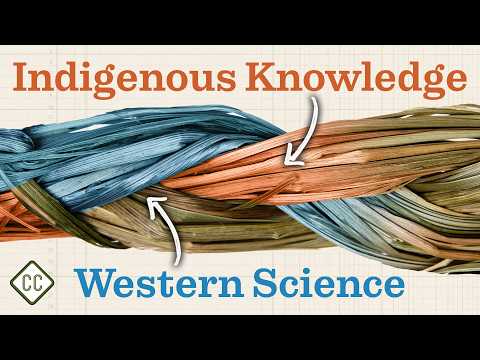
The hegemony of Western science often obscures the value of indigenous cosmologies.
Dominant views hide the importance of native worldviews.
Sophisticated vocabulary: 'hegemony', 'obscures', 'cosmologies'.
The discourse surrounding indigenous land rights is fraught with legal complexities.
Talk about land ownership is full of difficult law issues.
Adjective 'fraught' + 'with'.
The researcher utilized an indigenous methodology to conduct the ethnographic study.
Using local ways of researching for the project.
Formal verb 'utilized'.
Indigenous linguistic diversity is a testament to the richness of human history.
Many native languages show how rich our past is.
Noun phrase 'a testament to'.
The project seeks to bridge the gap between indigenous wisdom and modern technology.
Connecting old native knowledge with new tools.
Metaphorical 'bridge the gap'.
The court's decision was a landmark for indigenous self-determination.
A very important ruling for native people's right to choose.
Compound noun 'self-determination'.
The erosion of indigenous habitats has led to a crisis in local biodiversity.
The loss of native homes for animals is a big problem.
Noun 'erosion' used metaphorically for habitat loss.
The author explores the intersectionality of indigenous identity and gender.
How being native and being a man/woman work together.
Academic term 'intersectionality'.
Synonyms
Antonyms
Common Collocations
Common Phrases
— Naturally occurring in a specific area.
This bird is indigenous to the region.
— The legal and human rights of original inhabitants.
The UN discussed the rights of indigenous peoples.
— Traditional ways of understanding the world.
Scholars study indigenous knowledge systems.
— Legal demands for the return of ancestral lands.
The court heard the indigenous land claims.
— Traditional ways of taking care of forests.
The project uses indigenous forest management.
— The traditions and history of original people.
We must preserve indigenous cultural heritage.
— Traditional ways of growing and eating food.
Indigenous food systems are often more sustainable.
— The right of original people to rule themselves.
The movement fights for indigenous sovereignty.
— Traditional creative works of native groups.
The shop sells indigenous art and craft.
— The variety of native life in an area.
The dam threatened indigenous biodiversity.
Often Confused With
Means clever or inventive. Do not use for origin.
Means poor or needy. Completely different meaning.
Means angry at unfairness. A common phonetic mistake.
Idioms & Expressions
— To be deeply connected to a place, similar to being indigenous.
He is a man of the soil, born and raised in this valley.
Literary— A person born in a specific place, often used with pride.
The city welcomed back its native son.
Journalistic— Starting from the very beginning or the local level.
They built the indigenous business from the ground up.
Informal— Completely or thoroughly, often used regarding change.
The indigenous system was changed root and branch.
Formal— To settle in a place and become part of it.
The settlers put down roots, but they weren't indigenous.
Informal— A common way to refer to indigenous groups.
We must honor the first people of this land.
Respectful— A time so long ago that no one can remember it; often used with indigenous rights.
They have lived here since time immemorial.
Legal/Formal— The first language a person learns, often an indigenous one.
She spoke to her grandmother in her native tongue.
Neutral— Ancestral land, often used in a poetic sense.
He returned to the land of his fathers.
Poetic— A controversial phrase relating ethnicity to land; use with extreme caution.
The phrase has been used in nationalist propaganda.
Political/CautionEasily Confused
They both mean 'from a place'.
Native is more general and can apply to individuals born in a city. Indigenous implies a deeper, ancient, or pre-colonial connection.
I am a native of New York, but I am not indigenous to the Americas.
Both are used in biology for native species.
Indigenous means native to an area (but could be native elsewhere too). Endemic means native to an area and found *nowhere else*.
The tree is indigenous to Europe, but this flower is endemic to this one mountain.
Both refer to original inhabitants.
Aboriginal is often used as a specific proper noun for groups in Australia, while indigenous is the broader international term.
Aboriginal Australians are an indigenous group.
Both mean 'from here'.
Local just means nearby. Indigenous means it has been here for a very long time naturally.
The local supermarket sells indigenous fruits.
Both mean 'born with' or 'internal'.
Innate refers to personal qualities or biological traits. Indigenous refers to geographical origin.
She has an innate talent for learning indigenous languages.
Sentence Patterns
It is an indigenous [noun].
It is an indigenous flower.
The [noun] is indigenous to [place].
The koala is indigenous to Australia.
They want to protect indigenous [noun].
They want to protect indigenous languages.
Indigenous [noun] are important for [reason].
Indigenous forests are important for the climate.
The recognition of indigenous [noun] is [adjective].
The recognition of indigenous rights is essential.
By utilizing indigenous [noun], we can [verb].
By utilizing indigenous knowledge, we can save the forest.
The intersection of [noun] and indigenous [noun] reveals [noun].
The intersection of law and indigenous sovereignty reveals deep conflicts.
Indigenous [noun] serves as a testament to [noun].
Indigenous art serves as a testament to cultural resilience.
Word Family
Nouns
Verbs
Adjectives
Related
How to Use It
High in specific domains (Science, Law, News).
-
Using 'indigenious'
→
indigenous
People often add an extra 'i' because of words like 'religious'. Remember it's -enous.
-
Confusing with 'ingenious'
→
indigenous
Ingenious means clever. Indigenous means native. They sound similar but are very different.
-
Saying 'indigenous from'
→
indigenous to
The standard preposition is 'to'. Example: 'The plant is indigenous to Mexico.'
-
Using 'indigent' for native people
→
indigenous
Indigent means very poor. This is a serious mistake that can be offensive.
-
Capitalizing for plants
→
indigenous plants
Only capitalize 'Indigenous' when referring to groups of people as a proper noun.
Tips
Use for Authenticity
Use 'indigenous' when you want to emphasize that something is truly original and hasn't been changed by outside forces.
Check the Preposition
Always pair 'indigenous' with 'to' when mentioning a location. 'Indigenous to the Andes' is correct.
The Soft G
Remember the 'g' in indigenous is soft, like the 'j' in 'jump'. Practice saying 'in-DID-jen-us'.
Respectful Usage
When talking about people, 'Indigenous' (capitalized) is often the most respectful term in international contexts.
Indigenous vs. Invasive
Use 'indigenous' to describe the good, natural species and 'invasive' for the ones that don't belong and cause harm.
The O-U-S ending
Like 'generous' or 'famous', 'indigenous' ends in -ous. Don't add an extra 'i' before the 'o'.
Global Term
Indigenous is recognized by the UN, making it a safe and professional word for international discussions.
Knowledge Systems
Use the phrase 'indigenous knowledge' when discussing traditional wisdom in science or history papers.
Indigenous Tourism
Look for this term if you want to find travel experiences that support and are led by local original communities.
Variety
If you use 'native' in one sentence, try 'indigenous' in the next to keep your writing interesting and varied.
Memorize It
Mnemonic
Think of 'IN-DID-GEN-US'. The people who were 'IN' the land and 'DID' 'GENerate' (start) 'US' (the culture).
Visual Association
Imagine a deep tree root that goes far into the ground, representing the ancient connection to the earth.
Word Web
Challenge
Try to use 'indigenous' in three different ways today: once for a plant, once for a person, and once for a tradition.
Word Origin
The word comes from the Late Latin 'indigena', which means 'native' or 'original inhabitant'. It was first used in English in the mid-17th century.
Original meaning: Born in a country; native.
It belongs to the Indo-European family, specifically the Latin branch.Cultural Context
Always be aware that some individuals may prefer more specific tribal or national names (e.g., Cherokee, Maori) rather than the general term 'indigenous'.
In the US, 'Native American' is common, but 'Indigenous' is gaining ground in academic and activist circles. In Canada, 'Indigenous' is the official collective term.
Practice in Real Life
Real-World Contexts
Environmental Science
- indigenous species
- native habitat
- ecological balance
- invasive species
Human Rights
- land rights
- self-determination
- cultural preservation
- ancestral lands
Anthropology
- indigenous knowledge
- oral tradition
- social structure
- kinship
Tourism
- authentic experience
- local guide
- cultural heritage
- sustainable travel
Culinary Arts
- indigenous ingredients
- traditional recipes
- local flavors
- foraging
Conversation Starters
"Do you know which plants are indigenous to your home country?"
"How does your country recognize the rights of indigenous peoples?"
"Have you ever tried food made with indigenous ingredients?"
"Why is it important to preserve indigenous languages?"
"What is the difference between an indigenous species and an invasive one?"
Journal Prompts
Reflect on the indigenous history of the place where you currently live. Who were the first people there?
Describe an indigenous plant or animal from your region and why it is important to the ecosystem.
How can modern technology be used to support the preservation of indigenous cultures?
Write about a time you learned something from an indigenous perspective or tradition.
Discuss the challenges faced by indigenous communities in a globalized world.
Frequently Asked Questions
10 questionsIn many style guides, it is capitalized when referring to specific groups of people (Indigenous Peoples) but lowercase when referring to plants or animals (indigenous trees).
Yes, but it is often better to use the specific name of the group if you know it. 'Indigenous' is a respectful general term.
Indigenous is more formal and implies a longer historical or evolutionary presence. Native is more common for individuals born in a place.
Generally, yes. It is used to show respect for original cultures and the natural world.
Yes, you can talk about 'indigenous ideas' or 'indigenous technology' to mean they were developed locally.
It is pronounced in-DID-jen-us. The 'g' sounds like a 'j'.
Yes, it is a key term in biology to describe species that belong to an ecosystem naturally.
It is a plant or animal that has lived in a place for a long time without being brought there by humans.
They are similar, but 'aboriginal' is often used for specific groups in certain countries like Australia.
It is more common and correct to say 'indigenous to' (e.g., indigenous to the island).
Test Yourself 200 questions
Write a sentence using 'indigenous' to describe a plant.
Well written! Good try! Check the sample answer below.
Explain why it is important to protect indigenous languages.
Well written! Good try! Check the sample answer below.
Compare the words 'indigenous' and 'native'.
Well written! Good try! Check the sample answer below.
Discuss the impact of climate change on indigenous communities.
Well written! Good try! Check the sample answer below.
Write a short paragraph about an indigenous animal from your country.
Well written! Good try! Check the sample answer below.
How can indigenous knowledge help in modern medicine?
Well written! Good try! Check the sample answer below.
Describe an indigenous tradition you find interesting.
Well written! Good try! Check the sample answer below.
What are the legal challenges of indigenous land claims?
Well written! Good try! Check the sample answer below.
Write a sentence using 'indigenous' and 'to'.
Well written! Good try! Check the sample answer below.
Critique the use of the word 'indigenous' in colonial history.
Well written! Good try! Check the sample answer below.
Describe the difference between indigenous and invasive species.
Well written! Good try! Check the sample answer below.
Write a dialogue between two people discussing indigenous art.
Well written! Good try! Check the sample answer below.
How does indigenous tourism benefit local communities?
Well written! Good try! Check the sample answer below.
Explain the etymology of the word 'indigenous'.
Well written! Good try! Check the sample answer below.
Write a formal letter supporting indigenous rights.
Well written! Good try! Check the sample answer below.
Describe an indigenous crop and its history.
Well written! Good try! Check the sample answer below.
What does 'indigenous sovereignty' mean to you?
Well written! Good try! Check the sample answer below.
Write a sentence about indigenous music.
Well written! Good try! Check the sample answer below.
How do indigenous people maintain their cultural identity?
Well written! Good try! Check the sample answer below.
Summarize the UN Declaration on the Rights of Indigenous Peoples.
Well written! Good try! Check the sample answer below.
Pronounce the word 'indigenous' three times correctly.
Read this aloud:
You said:
Speech recognition is not supported in your browser. Try Chrome or Edge.
Describe an indigenous animal from your country to a partner.
Read this aloud:
You said:
Speech recognition is not supported in your browser. Try Chrome or Edge.
Discuss the importance of indigenous culture in a small group.
Read this aloud:
You said:
Speech recognition is not supported in your browser. Try Chrome or Edge.
Give a short presentation on indigenous land rights.
Read this aloud:
You said:
Speech recognition is not supported in your browser. Try Chrome or Edge.
Debate the difference between 'native' and 'indigenous'.
Read this aloud:
You said:
Speech recognition is not supported in your browser. Try Chrome or Edge.
Explain the concept of indigenous knowledge to a friend.
Read this aloud:
You said:
Speech recognition is not supported in your browser. Try Chrome or Edge.
Tell a story about an indigenous myth you know.
Read this aloud:
You said:
Speech recognition is not supported in your browser. Try Chrome or Edge.
Discuss how to support indigenous communities through tourism.
Read this aloud:
You said:
Speech recognition is not supported in your browser. Try Chrome or Edge.
Argue for the protection of indigenous languages.
Read this aloud:
You said:
Speech recognition is not supported in your browser. Try Chrome or Edge.
Use 'indigenous' in a sentence about a local tradition.
Read this aloud:
You said:
Speech recognition is not supported in your browser. Try Chrome or Edge.
Describe the indigenous flora of your region.
Read this aloud:
You said:
Speech recognition is not supported in your browser. Try Chrome or Edge.
Discuss the role of indigenous people in environmental conservation.
Read this aloud:
You said:
Speech recognition is not supported in your browser. Try Chrome or Edge.
Explain the etymology of 'indigenous' in your own words.
Read this aloud:
You said:
Speech recognition is not supported in your browser. Try Chrome or Edge.
Role-play a meeting between an indigenous leader and a government official.
Read this aloud:
You said:
Speech recognition is not supported in your browser. Try Chrome or Edge.
Describe an indigenous art piece you have seen.
Read this aloud:
You said:
Speech recognition is not supported in your browser. Try Chrome or Edge.
Talk about the challenges of preserving indigenous heritage.
Read this aloud:
You said:
Speech recognition is not supported in your browser. Try Chrome or Edge.
Use 'indigenous' in a sentence about food.
Read this aloud:
You said:
Speech recognition is not supported in your browser. Try Chrome or Edge.
Discuss the impact of colonization on indigenous groups.
Read this aloud:
You said:
Speech recognition is not supported in your browser. Try Chrome or Edge.
Present a case study of a successful indigenous-led project.
Read this aloud:
You said:
Speech recognition is not supported in your browser. Try Chrome or Edge.
Ask a question using the word 'indigenous'.
Read this aloud:
You said:
Speech recognition is not supported in your browser. Try Chrome or Edge.
Listen to a clip about kangaroos and identify the word 'indigenous'.
Listen to a news report on land rights and note the context of 'indigenous'.
Listen to a lecture on biodiversity and write down the definition of indigenous species.
Listen to an interview with an indigenous artist and summarize their message.
Listen to a podcast about indigenous languages and list the reasons for their decline.
Listen to a documentary narrator and identify the stress in 'indigenous'.
Listen to a debate on indigenous sovereignty and identify the main arguments.
Listen to a song in an indigenous language and describe the feeling.
Listen to a weather report for an indigenous territory.
Listen to a chef talk about indigenous ingredients.
Listen to a story about an indigenous hero.
Listen to a legal ruling on indigenous land claims.
Listen to a discussion on indigenous epistemologies.
Listen for the difference between 'indigenous' and 'ingenious' in two sentences.
Listen to a guide in a museum talking about indigenous tools.
/ 200 correct
Perfect score!
Summary
The word 'indigenous' is a formal and respectful way to describe things that are truly native to a place. Whether you are talking about 'indigenous people,' 'indigenous plants,' or 'indigenous knowledge,' you are highlighting a deep, original, and natural connection to the land. Example: 'The museum celebrates the indigenous cultures of the Amazon basin.'
- Indigenous describes anything that originates naturally in a particular place, rather than being introduced or imported from elsewhere. It is a key term in biology and sociology.
- When applied to people, it refers to the original inhabitants of a region who maintain a distinct cultural and historical connection to their ancestral lands.
- In environmental science, indigenous species are those that evolved within a specific ecosystem, playing a vital role in maintaining its natural balance and health.
- The word is often used in formal, legal, and academic contexts to emphasize rights, authenticity, and historical primacy over more recent settler or colonial structures.
Use for Authenticity
Use 'indigenous' when you want to emphasize that something is truly original and hasn't been changed by outside forces.
Check the Preposition
Always pair 'indigenous' with 'to' when mentioning a location. 'Indigenous to the Andes' is correct.
The Soft G
Remember the 'g' in indigenous is soft, like the 'j' in 'jump'. Practice saying 'in-DID-jen-us'.
Respectful Usage
When talking about people, 'Indigenous' (capitalized) is often the most respectful term in international contexts.
Example
The kangaroo is indigenous to the continent of Australia.
Related Content
More Culture words
creon
C2A figure in Greek mythology, the ruler of Thebes who plays a central role in the tragic legends of Oedipus and his family, particularly in the plays of Sophocles.
ethnic
B2As a noun, an ethnic refers to a member of a specific ethnic group, typically a minority group that retains distinct cultural, religious, or linguistic traditions. In modern usage, it is often used to describe individuals who belong to a population that shares a common national or cultural heritage.
wukong’s
B1The possessive form of 'Wukong', referring to things belonging to or associated with Sun Wukong, the Monkey King from Chinese mythology. It is used to denote ownership or a specific relationship to this legendary character in literature and modern media.
germanic
B2Relating to the language family that includes English, German, and Dutch, or to the ancient peoples of northern Europe. It describes the common linguistic, historical, and cultural roots shared by these groups.
hercules
C1In Roman mythology, Hercules was a hero celebrated for his superhuman strength and for completing twelve famously difficult tasks. The name is now commonly used to refer to any person who possesses extraordinary physical power or to describe an effort that requires immense strength.
moroccan
A2Relating to the country of Morocco in North Africa, its people, or its culture. As a noun, it refers to a person who is a citizen or inhabitant of Morocco.
daedalus
B2A legendary Greek architect and inventor who designed the Labyrinth for King Minos of Crete. He is most famous for creating wings of wax and feathers to escape his imprisonment, a story that serves as a classic symbol of human ingenuity and its potential dangers.
oedipus’
C1The possessive form of Oedipus, referring to the mythical Greek king of Thebes who tragically fulfilled a prophecy by killing his father and marrying his mother. It is most commonly used in psychological and literary contexts, particularly when discussing Sigmund Freud's concept of the Oedipus complex.
turkish
A1Relating to Turkey, its people, or their language; the language spoken in Turkey.
imp
B2A small, mischievous devil or sprite in folklore; also used playfully to describe a mischievous child.

