









junk in 30 Seconds
- Junk refers to discarded, low-value, or useless items like old furniture and scrap metal. It is a common, informal noun used in daily life.
- The word is uncountable when referring to trash. You should use phrases like 'a lot of junk' or 'pieces of junk' instead of 'junks'.
- It is frequently used in compound terms such as 'junk food' (unhealthy snacks) and 'junk mail' (unwanted advertisements or spam emails).
- Beyond physical objects, 'junk' can describe worthless ideas, poor-quality media, or specific financial and scientific concepts like junk bonds or junk DNA.
The word junk is a versatile and frequently used noun in the English language, primarily categorized at the CEFR B1 level. At its core, junk refers to items that are considered useless, of little value, or discarded. However, the nuance of the word extends far beyond mere 'trash.' When people use the word junk, they are often describing a collection of things that might have once had a purpose but have now lost their utility or aesthetic appeal. It is the stuff that accumulates in the back of a drawer, the boxes in the attic that haven't been opened in a decade, or the rusted machinery sitting in a field. Unlike 'garbage' or 'refuse,' which often implies organic waste or immediate disposal, junk suggests a lingering presence—objects that are kept despite their lack of immediate worth.
- Physical Manifestation
- Junk often consists of miscellaneous scrap material, broken electronics, or old furniture that is no longer functional. It is the physical debris of a consumerist society.
We spent the entire weekend clearing out all the junk from the garage to make room for the new car.
In a broader sense, junk is used to describe anything of poor quality. This is where we see the term applied to food (junk food) or information (junk mail). In these contexts, the word implies that while the item exists and is consumed, it provides no real nourishment or valuable information. It is 'empty' or 'filler.' When a person looks at a poorly made product, they might dismissively call it a 'piece of junk.' This usage highlights a sense of disappointment or frustration with the object's failure to perform its intended function. The word carries a slightly informal tone, making it perfect for everyday conversation but perhaps too casual for a formal technical report unless referring specifically to scrap metal.
- Abstract Usage
- Beyond physical objects, junk can refer to nonsensical talk or ideas. If someone is telling lies or speaking without logic, a listener might say, 'Stop talking junk.'
I tried to read that tabloid magazine, but it was just full of celebrity junk that didn't interest me.
The term also has a specific historical and technical meaning. A 'junk' is a type of ancient Chinese sailing ship. While this is a homonym (a word that sounds the same but has a different meaning), it is important for learners to distinguish between the two. In most modern contexts, however, the 'discarded items' definition is the one you will encounter. Culturally, the concept of junk has shifted with the rise of minimalism. People now talk about 'decluttering' their junk as a way to improve mental health. This suggests that junk is not just a physical burden but a psychological one as well. When we say we have 'too much junk,' we are expressing a desire for simplicity and order.
- Economic Value
- Interestingly, junk can have hidden value. 'Junk yards' sell old parts to people looking for cheap repairs, and 'junk bonds' are a specific type of high-risk, high-reward investment in the financial world.
One man's junk is another man's treasure, as the old saying goes.
Don't throw that old radio away; it might look like junk, but I can use the parts.
In conclusion, junk is a word that captures the essence of the unnecessary. Whether it is a pile of old newspapers, a slow computer, or a box of broken toys, junk represents the things we no longer need but haven't quite let go of yet. Understanding how to use this word allows you to describe your environment, your diet, and even your digital life (like your junk email folder) with precision and a touch of informal flair.
Using the word junk correctly requires an understanding of its grammatical properties and its various idiomatic applications. Primarily, junk is an uncountable noun. This means you do not typically say 'junks' when referring to a collection of old items. Instead, you would use phrases like 'a lot of junk,' 'some junk,' or 'pieces of junk.' If you are referring to the Chinese sailing vessels, however, the word becomes countable, and you can say 'three junks were spotted in the harbor.' But for the B1 learner focusing on the 'discarded items' definition, treating it as uncountable is the golden rule.
- Quantifying Junk
- Since it is uncountable, use 'much' instead of 'many' in negative sentences or questions. For example: 'There isn't much junk in the basement' or 'How much junk did you find?'
The yard was cluttered with all sorts of junk, from rusted pipes to broken chairs.
One of the most common ways to use junk is as a modifier for other nouns. This creates compound nouns that are staples of English vocabulary. 'Junk food' is perhaps the most famous example, referring to food that is high in calories but low in nutritional value. Similarly, 'junk mail' refers to the unwanted advertisements that arrive in your physical or digital mailbox. In these cases, 'junk' acts like an adjective, describing the quality or desirability of the following noun. When you use it this way, you are emphasizing that the subject is essentially worthless or harmful in the long run.
- The 'Piece of Junk' Idiom
- This phrase is used to describe a specific object that is broken or of very poor quality. It is a common way to express frustration with technology or vehicles.
My old laptop is a total piece of junk; it takes ten minutes just to start up.
You will also see 'junk' used as a verb in informal contexts, meaning to discard or scrap something. For instance, 'I decided to junk my old car because the repairs cost more than the vehicle was worth.' This usage is very common in North American English. It implies a decisive action to get rid of something that has become a burden. When using it as a verb, it follows regular conjugation: junk, junked, junking. However, for the purpose of this lesson, we focus on the noun form, which remains the most prevalent usage in daily life.
- Descriptive Collocations
- Common adjectives used with junk include: old, useless, rusty, plastic, electronic, and household. These help specify what kind of junk you are dealing with.
The beach was covered in plastic junk washed up by the storm.
He makes amazing sculptures out of junk he finds at the local dump.
Finally, consider the emotional weight of the word. Calling someone's belongings 'junk' can be perceived as an insult if those items have sentimental value to the owner. It is a subjective term. What is junk to one person might be a cherished memory to another. Therefore, when using the word in a social setting, be mindful of the context. If you are helping a friend move, asking 'Where should I put all this junk?' might be seen as insensitive if the 'junk' is actually a collection of vintage records or family heirlooms.
The word junk is ubiquitous in English-speaking cultures, appearing in a variety of settings from domestic life to high-stakes finance. One of the most common places you will hear it is in the home. Parents often tell their children to 'pick up your junk' from the living room floor, referring to toys, clothes, and miscellaneous items. In this context, junk is a catch-all term for clutter. It is also a staple of the 'spring cleaning' season, where families dedicate weekends to hauling junk to the local landfill or donating it to charity shops. If you visit a residential neighborhood on a weekend, you might see 'junk removal' trucks driving by, offering services to take away unwanted bulky items.
- In the Kitchen
- Almost every English-speaking household has a 'junk drawer.' This is a specific drawer, usually in the kitchen, where small, miscellaneous items like rubber bands, old batteries, and spare keys are kept.
I know I have a spare battery somewhere in the junk drawer, but I can't find it under all these old menus.
In the digital world, you will encounter 'junk' every time you open your email. Most email providers have a 'Junk' or 'Spam' folder designed to filter out unsolicited marketing messages and potential scams. This usage has become so standard that 'junking' an email has become a common verb phrase. Similarly, when browsing the internet, you might hear about 'junk code' or 'junk data,' referring to parts of a program or database that are redundant, poorly written, or serve no purpose. In the tech industry, cleaning up this junk is a vital part of maintaining system efficiency.
- In Health and Nutrition
- Doctors and nutritionists frequently use the term 'junk food' to warn patients about the dangers of a diet high in processed sugars and fats. It is a powerful rhetorical tool because it labels the food as worthless waste.
If you want to lose weight, the first step is to stop buying junk food like chips and soda.
The financial sector uses the word in a very specific, technical way. 'Junk bonds' (officially known as high-yield bonds) are investments in companies that have a high risk of defaulting on their debt. Because the risk is high, the potential interest rate (the 'yield') is also high. Investors who deal in these are often portrayed in movies and news reports as aggressive or speculative. Hearing the word junk in a financial news segment usually indicates a discussion about market volatility or corporate credit ratings. This is a far cry from the 'junk drawer' in a kitchen, showing how the word's meaning of 'low quality' translates into the world of economics.
- In Entertainment and Media
- Reality TV shows like 'American Pickers' or 'Hoarders' revolve entirely around the concept of junk. They explore the fine line between what is worthless and what is a valuable antique hidden under layers of dust.
The appraiser looked at the old trunk and told the owner it wasn't junk—it was a rare 19th-century heirloom.
I'm tired of watching this junk on TV; let's find a documentary or something educational.
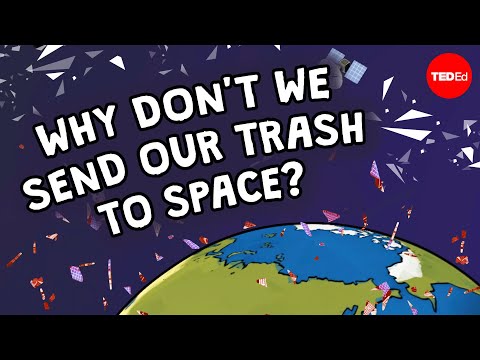
Finally, you will hear junk in the context of environmental activism. 'Space junk' refers to the thousands of pieces of defunct satellites and rocket stages orbiting the Earth. 'Ocean junk' refers to the massive patches of plastic waste in the Pacific. In these cases, junk is used to describe a global crisis, moving the word from a personal inconvenience to a planetary concern. Whether it is a small piece of 'junk mail' or a massive 'junk yard,' the word is a constant reminder of the physical and metaphorical waste produced by modern life.
While junk is a relatively simple word, its informal nature and grammatical quirks lead to several common errors for English learners. The most frequent mistake is treating it as a countable noun. Many students, influenced by their native languages where 'trash' or 'rubbish' might be pluralizable, try to say 'junks.' For example, a student might say, 'I have many junks in my room.' This is incorrect. In English, junk is a mass noun, similar to 'water' or 'advice.' To express a large quantity, you must use 'a lot of,' 'plenty of,' or 'so much.' If you need to count individual items, you must use a counter like 'pieces of junk' or 'items of junk.'
- Countability Error
- Incorrect: 'The street was full of junks.' Correct: 'The street was full of junk' or 'The street was full of pieces of junk.'
She threw away several pieces of junk that were cluttering her desk.
Another common mistake involves confusing 'junk' with 'garbage' or 'trash.' While they are synonyms, they are not always interchangeable. 'Garbage' and 'trash' usually refer to things that are ready to be picked up by a waste management truck—things that are dirty, smelly, or organic (like food scraps). 'Junk,' on the other hand, often refers to durable goods that are no longer useful, like an old VCR or a broken bicycle. You wouldn't usually call a half-eaten apple 'junk'; you would call it 'garbage.' Conversely, you wouldn't call a collection of old magazines 'garbage' unless they were wet and rotting; you would call them 'junk.' Using the wrong word can make your description sound slightly 'off' to a native speaker.
- Nuance Confusion
- Use 'garbage' for kitchen waste. Use 'junk' for old possessions or scrap material. Using 'junk' for food waste sounds strange.
Take the garbage out to the bin, but leave that pile of junk for the scrap metal collector.
A third mistake is the misuse of 'junk' in formal writing. Because junk is an informal word, it should be avoided in academic essays, business proposals, or legal documents unless you are using a specific technical term like 'junk bonds.' Instead of writing 'The company produced a lot of junk,' a more professional approach would be 'The company produced a significant amount of defective merchandise' or 'unmarketable inventory.' Using 'junk' in a formal context can make the writer seem unprofessional or overly emotional. It is a word of judgment and casual observation, not objective analysis.
- Register Mismatch
- Avoid: 'The scientific data was junk.' Use: 'The scientific data was unreliable' or 'The data contained numerous inaccuracies.'
The critic dismissed the film as junk, though it was a box office hit.
I need to unsubscribe from these newsletters; they are just digital junk.
Lastly, learners sometimes struggle with the pronunciation of the 'j' sound and the short 'u' vowel. It should sound like 'dzhunk,' not 'yunk' or 'zhunk.' The 'u' is the same sound as in 'cup' or 'luck.' Mispronouncing it as 'yunk' (a common error for speakers of Germanic or Slavic languages) can lead to confusion with the word 'young.' Practicing the sharp 'j' sound and the clipped 'k' at the end will ensure that your use of the word is clear and natural.
To truly master the word junk, it is helpful to compare it with its synonyms and near-synonyms. Each word in this category carries a slightly different 'flavor' or level of formality. 'Trash' and 'garbage' are the most common alternatives. As discussed, 'garbage' usually implies wet waste (food), while 'trash' implies dry waste (paper, packaging). 'Junk' sits somewhere in the middle but leans toward larger, more durable items that have lost their value. In British English, 'rubbish' is the universal term that covers all three, though 'junk' is still used specifically for old belongings.
- Junk vs. Clutter
- 'Clutter' refers to a state of disorder caused by having too many things in a space. 'Junk' refers to the things themselves. You can have a room full of 'clutter' that consists of valuable items, but 'junk' is almost always low-value.
I need to clear the clutter off my desk so I can actually find my junk mail.
For more specific contexts, words like 'scrap,' 'debris,' and 'refuse' are useful. 'Scrap' usually refers to metal or leftover material from a manufacturing process that can be recycled. A 'scrap yard' and a 'junk yard' are often the same thing, but 'scrap' sounds more like a resource, while 'junk' sounds like a nuisance. 'Debris' refers to the scattered remains of something that has been destroyed, like the debris from a car crash or a fallen building. It is more formal and descriptive than junk. 'Refuse' is a very formal, technical term used by city councils and waste management companies to describe everything that is thrown away.
- Junk vs. Scrap
- 'Scrap' is often something that can be reused or sold for its material (like copper scrap). 'Junk' is usually seen as having no further use at all.
The workers collected the metal scrap to be melted down, leaving the rest of the junk behind.
In the realm of ideas and speech, synonyms for junk include 'nonsense,' 'rubbish' (figurative), 'hogwash,' or 'baloney.' If someone is giving a speech that you think is full of lies or useless information, you might say, 'That's a load of junk!' or 'He's talking rubbish!' These terms are all informal and expressive. 'Nonsense' is the most neutral of these, while 'junk' and 'rubbish' carry a stronger sense of dismissal. Choosing between them depends on how much emphasis you want to put on the worthlessness of the ideas being presented.
- Abstract Comparisons
- 'Gibberish' refers to speech that is impossible to understand. 'Junk' refers to speech that is understandable but completely without value or truth.
Don't listen to him; he's just talking junk to get attention.
The hard drive was corrupted, so all the files turned into junk data.
Finally, consider the word 'knick-knacks' or 'trinkets.' These are small decorative items that might be considered junk by some but are valued as ornaments by others. If you call someone's collection of porcelain cats 'junk,' you are being rude. If you call them 'knick-knacks,' you are being descriptive. This highlights the subjective nature of the word junk—it is often in the eye of the beholder. By learning these alternatives, you can navigate social situations more gracefully and describe the world around you with much greater nuance.
How Formal Is It?
Fun Fact
The 'junk' ship (the Chinese sailing vessel) has a completely different origin! It comes from the Portuguese 'junco,' which was adapted from the Javanese 'djong.' So, a 'junk' full of 'junk' is a linguistic coincidence where two different words from two different parts of the world ended up looking and sounding exactly the same in English.
Pronunciation Guide
- Pronouncing the 'j' as a 'y' (e.g., 'yunk'), which is common for speakers of Germanic languages.
- Pronouncing the 'u' as an 'oo' sound (e.g., 'joonk').
- Softening the final 'k' sound too much.
- Adding an 's' to the end when referring to trash (it is uncountable).
- Confusing it with the word 'chunk' (which starts with a 'ch' sound).
Difficulty Rating
The word is short and easy to recognize in text.
Learners must remember it is uncountable and avoid 'junks'.
Common in daily speech, but pronunciation of 'j' can be tricky.
Easily understood in context, though it has many rhymes.
What to Learn Next
Prerequisites
Learn Next
Advanced
Grammar to Know
Mass Nouns (Uncountable)
We say 'much junk' or 'some junk', never 'many junks'.
Compound Nouns
'Junk food' and 'junk mail' are treated as single concepts.
Noun as Adjective
In 'junk drawer', the noun 'junk' describes the type of drawer.
Quantifiers for Uncountable Nouns
Use 'a piece of' or 'a bit of' to refer to a single item.
Informal Verb Usage
'I junked it' is a casual way to say 'I threw it away'.
Examples by Level
Please put your junk in the box.
Veuillez mettre vos vieilleries dans la boîte.
Junk is uncountable here.
I don't like junk food.
Je n'aime pas la malbouffe.
Junk acts as an adjective for food.
There is a lot of junk in my room.
Il y a beaucoup de bazar dans ma chambre.
Use 'a lot of' with junk.
This old toy is junk.
Ce vieux jouet est une cochonnerie.
Junk is used as a complement.
Is this junk or can I keep it?
Est-ce que c'est de la camelote ou est-ce que je peux le garder ?
Question form using junk.
My dad has a lot of junk in the garage.
Mon père a beaucoup de bric-à-brac dans le garage.
Common location for junk.
Don't eat that junk!
Ne mange pas cette cochonnerie !
Imperative sentence.
We found some junk on the beach.
Nous avons trouvé des déchets sur la plage.
Using 'some' with junk.
I found an old key in the junk drawer.
J'ai trouvé une vieille clé dans le tiroir à tout-venant.
Compound noun: junk drawer.
My old car is a piece of junk.
Ma vieille voiture est un tas de boue.
Idiom: piece of junk.
Check your junk mail folder for the ticket.
Vérifiez votre dossier de courriers indésirables pour le billet.
Compound noun: junk mail.
We need to clear out all this junk before we move.
Nous devons débarrasser tout ce fourbi avant de déménager.
Phrasal verb: clear out.
The yard was full of rusty junk.
La cour était pleine de vieilleries rouillées.
Adjective 'rusty' modifying junk.
He collects junk and turns it into art.
Il collectionne les objets de récupération et les transforme en art.
Junk as a resource.
Stop buying junk you don't need.
Arrête d'acheter des babioles dont tu n'as pas besoin.
Junk referring to cheap products.
The basement is overflowing with junk.
Le sous-sol déborde de vieilleries.
Descriptive verb: overflowing.
The beach was littered with plastic junk after the storm.
La plage était jonchée de débris de plastique après la tempête.
Passive voice with 'littered'.
I decided to junk my old printer because it was unfixable.
J'ai décidé de mettre ma vieille imprimante au rebut car elle était irréparable.
Junk used as a verb (informal).
Most of the information in that tabloid is total junk.
La plupart des informations dans ce tabloïd sont du grand n'importe quoi.
Figurative use meaning 'worthless information'.
We took the old washing machine to the junk yard.
Nous avons emmené la vieille machine à laver à la casse.
Compound noun: junk yard.
She’s trying to cut down on junk food to improve her health.
Elle essaie de réduire la malbouffe pour améliorer sa santé.
Phrasal verb: cut down on.
I have so much junk in my inbox that I missed your email.
J'ai tellement de courriers indésirables dans ma boîte de réception que j'ai raté ton e-mail.
Junk referring to digital clutter.
That's a load of junk; don't believe a word he says.
C'est un tas de conneries ; ne crois pas un mot de ce qu'il dit.
Idiom: a load of junk.
The attic is a treasure trove of old junk from the 1950s.
Le grenier est une mine de vieilleries des années 1950.
Oxymoron-like use: treasure trove of junk.
One man's junk is another man's treasure, as the saying goes.
Ce qui est un déchet pour l'un est un trésor pour l'autre, comme dit le proverbe.
Famous proverb.
The company’s credit rating was downgraded to junk status.
La cote de crédit de l'entreprise a été rétrogradée au rang de 'junk bond'.
Financial term: junk status.
Space junk poses a significant threat to functioning satellites.
Les débris spatiaux représentent une menace importante pour les satellites en fonctionnement.
Scientific term: space junk.
The movie was criticized for being nothing more than cinematic junk.
Le film a été critiqué pour n'être rien de plus qu'un navet cinématographique.
Metaphorical use in criticism.
The scientist dismissed the study as junk science.
Le scientifique a rejeté l'étude, la qualifiant de pseudo-science.
Term: junk science.
He made a fortune by investing in junk bonds during the recession.
Il a fait fortune en investissant dans des obligations à haut risque pendant la récession.
Financial term: junk bonds.
The garage was so full of junk that there was no room for the car.
Le garage était si plein de bric-à-brac qu'il n'y avait plus de place pour la voiture.
Result clause with 'so... that'.
She felt overwhelmed by the sheer amount of junk she had accumulated.
Elle se sentait dépassée par la quantité impressionnante de vieilleries qu'elle avait accumulées.
Using 'sheer amount of' for emphasis.
The philosopher argued that our culture is obsessed with the accumulation of junk.
Le philosophe a soutenu que notre culture est obsédée par l'accumulation de pacotille.
Abstract philosophical usage.
Recent discoveries suggest that 'junk DNA' may actually play a vital role in gene regulation.
Des découvertes récentes suggèrent que l'ADN poubelle pourrait en fait jouer un rôle vital dans la régulation des gènes.
Biological term: junk DNA.
The artist's installation explores the intersection of high art and industrial junk.
L'installation de l'artiste explore l'intersection entre le grand art et les déchets industriels.
Artistic/Academic context.
Politicians often use junk rhetoric to distract the public from real issues.
Les politiciens utilisent souvent une rhétorique creuse pour distraire le public des vrais problèmes.
Metaphorical use: junk rhetoric.
The Great Pacific Garbage Patch is a swirling vortex of marine junk.
Le vortex de déchets du Pacifique Nord est un tourbillon de débris marins.
Environmental context.
The detective sifted through the suspect's junk, looking for a single clue.
Le détective a passé au crible les affaires du suspect, à la recherche d'un seul indice.
Narrative usage.
The book provides a scathing critique of the junk values promoted by social media.
Le livre propose une critique cinglante des valeurs bidon promues par les réseaux sociaux.
Social commentary.
Despite its reputation as a piece of junk, the old computer still ran the essential software.
Malgré sa réputation de vieillerie, le vieil ordinateur faisait toujours tourner les logiciels essentiels.
Concessive clause with 'despite'.
The novel depicts a dystopian future where the landscape is nothing but a sprawling expanse of junk.
Le roman dépeint un futur dystopique où le paysage n'est rien d'autre qu'une étendue tentaculaire de déchets.
Literary description.
The term 'junk' in nautical history refers to a high-sterned sailing ship of Chinese origin.
Le terme 'jonque' dans l'histoire nautique désigne un voilier à poupe haute d'origine chinoise.
Historical/Technical definition (countable).
The economist analyzed the systemic risks posed by the proliferation of junk debt in emerging markets.
L'économiste a analysé les risques systémiques posés par la prolifération de la dette toxique dans les marchés émergents.
High-level economic usage.
The poet found beauty in the discarded junk of the city, seeing it as a testament to human existence.
Le poète a trouvé de la beauté dans les rebuts de la ville, y voyant un témoignage de l'existence humaine.
Poetic/Philosophical usage.
The legal battle centered on whether the materials were 'junk' or 'proprietary assets'.
La bataille juridique portait sur la question de savoir si les matériaux étaient des 'déchets' ou des 'actifs exclusifs'.
Legal/Formal context.
The critique of the architecture focused on its 'junkspace'—the sterile, leftover areas of modern buildings.
La critique de l'architecture s'est concentrée sur son 'junkspace' — les zones stériles et délaissées des bâtiments modernes.
Architectural theory term.
She dismissed the entire argument as intellectual junk, devoid of any logical foundation.
Elle a rejeté tout l'argumentaire, le qualifiant de camelote intellectuelle, dépourvue de tout fondement logique.
Abstract metaphorical usage.
The archaeological dig revealed that what was once considered junk by the inhabitants was now a key to their history.
Les fouilles archéologiques ont révélé que ce qui était autrefois considéré comme des déchets par les habitants était désormais une clé de leur histoire.
Historical perspective.
Synonyms
Antonyms
Common Collocations
Common Phrases
— Something that is completely worthless or untrue. Often used to describe a speech or an idea.
Don't listen to that podcast; it's just a load of junk.
— Containing a large amount of useless items or information.
My computer is full of junk files that are slowing it down.
— A slang phrase referring to someone having large buttocks. Use with caution as it is informal and can be offensive.
That song has a line about having junk in the trunk.
— A service that takes away large unwanted items from a home or business.
We hired a junk removal company to take away the old sofa.
— Unnecessary files, apps, or emails that take up space on a device.
I spent the morning deleting digital junk from my phone.
— Common items from a home that are no longer used or needed.
The charity only accepts clothes, not general household junk.
— Items that have been kept for a long time but no longer serve a purpose.
The shed is packed with old junk from the previous owners.
— To organize or look through a collection of items to find what is useful.
It took hours to sort through the junk in the attic.
— An informal way to say 'throw away the useless items'.
Just toss the junk and keep the important documents.
— A person who gathers discarded items, either as a hobby or for profit.
The neighbor is a bit of a junk collector; his yard is always full.
Often Confused With
A 'chunk' is a thick piece of something (like a chunk of cheese). 'Junk' is trash.
A 'trunk' is the back of a car or a large box. You might put 'junk' in your 'trunk'.
A 'junket' is a trip, often for business or politics. It is not the same as trash.
Idioms & Expressions
— What one person considers worthless may be highly valued by someone else.
I was going to throw this lamp away, but my sister loved it. One man's junk is another man's treasure!
informal/neutral— Something that is broken, poorly made, or unreliable.
I'm not driving that piece of junk across the country; it will break down.
informal— To say things that are untrue, nonsensical, or insulting (similar to 'talk trash').
He's just talking junk because he's jealous of your success.
slang— To fill a space with useless items or to make something messy.
Don't junk up the living room with all your hobby supplies.
informal— A very low rating, especially in finance, indicating high risk.
The country's economy is in trouble now that its bonds have junk status.
formal/financial— To remove unwanted items or to simplify a situation.
We need to get rid of the junk in this contract and focus on the main points.
informal— Research that is presented as scientific but is actually flawed or biased.
The lawyer's argument was based on junk science that has been debunked.
neutral— Unsolicited and unwanted advertising material.
I spend half my time deleting junk mail from my inbox.
neutral— Food that is high in calories but low in nutritional value.
The school cafeteria is trying to serve less junk food.
neutral— A person who is aggressive, mean, or protective (often used metaphorically).
Our lawyer is a real junk yard dog; he never gives up a fight.
informalEasily Confused
Both mean waste.
Garbage is usually food waste or kitchen trash. Junk is old objects like furniture or electronics.
Put the food scraps in the garbage and the old TV in the junk pile.
Both mean waste.
Trash is often dry waste like paper. Junk implies things that were once useful but are now worthless.
The office trash is full of paper, but the basement is full of old junk.
Both mean waste.
Rubbish is the British equivalent of trash/garbage. Junk is used in both UK and US for old belongings.
He's talking rubbish (UK) / He's talking junk (US).
Both refer to old materials.
Scrap is usually metal or material that can be recycled for money. Junk is just useless stuff.
I sold the copper for scrap, but the rest of the car was just junk.
Both refer to a mess.
Clutter is the state of being messy. Junk is the actual worthless objects causing the mess.
The clutter on your desk is mostly junk mail.
Sentence Patterns
This is [junk].
This is junk.
I have a lot of [junk] in [place].
I have a lot of junk in my bag.
I need to [verb] all this [junk].
I need to clear out all this junk.
My [noun] is a [piece of junk].
My phone is a piece of junk.
One man's [junk] is another man's [treasure].
One man's junk is another man's treasure.
The [noun] was full of [adjective] [junk].
The yard was full of rusty junk.
[Junk] [noun] poses a threat to [noun].
Space junk poses a threat to satellites.
The [noun] was dismissed as [adjective] [junk].
The theory was dismissed as intellectual junk.
Word Family
Nouns
Verbs
Adjectives
Related
How to Use It
Very common in daily life, especially in American English.
-
I have many junks in my garage.
→
I have a lot of junk in my garage.
Junk is an uncountable noun. You cannot use 'many' or make it plural with an 's'.
-
This apple core is junk.
→
This apple core is garbage.
Junk usually refers to dry, durable items. Organic waste like food is called 'garbage' or 'trash'.
-
The report was full of junk.
→
The report was full of inaccuracies / was poorly written.
In a formal or professional setting, 'junk' is too informal and sounds unprofessional.
-
I saw a junk in the harbor.
→
I saw a junk (ship) in the harbor.
This is only correct if you are referring to the Chinese ship. If you mean trash, you can't say 'a junk'.
-
He is a junk.
→
He is talking junk / He is a junkie (slang).
You cannot call a person 'a junk'. You can say they are 'talking junk' or use the slang 'junkie' (though be careful with the latter).
Tips
Uncountable Noun
Never add an 's' to junk when referring to trash. It is always 'junk,' no matter how much there is. Use 'much' or 'a lot of' to describe quantity.
Piece of Junk
Use the phrase 'piece of junk' to describe a single item that is broken or poor quality. It's a very common and natural-sounding idiom for B1 learners.
The Junk Drawer
If you want to start a conversation with a native speaker, ask them what's in their 'junk drawer.' It's a funny and relatable topic that everyone understands.
Formal Alternatives
In professional writing, avoid 'junk.' Use 'refuse,' 'waste,' or 'obsolete equipment' instead. This will make your writing sound much more professional.
Tone Matters
When you call something 'junk,' your tone should be slightly dismissive or frustrated. This helps convey the meaning that the item is truly worthless.
Compound Words
Pay attention to words following 'junk.' 'Junk food,' 'junk mail,' and 'junk bonds' are fixed terms. Learning them as single units will help your comprehension.
Junk Food
Use 'junk food' to describe snacks like chips, candy, and soda. It's the most common way to talk about unhealthy eating habits in English.
Junk Folder
Always check your 'junk folder' in your email if you are expecting a message that hasn't arrived. Sometimes important emails are accidentally filtered as junk.
Junk Bonds
If you hear 'junk' in a business news report, it's almost certainly referring to high-risk bonds. It doesn't mean the company is literally selling trash!
Space and Ocean Junk
Use 'junk' when discussing pollution in space or the ocean. It's a powerful way to describe how human waste is affecting the entire planet.
Memorize It
Mnemonic
Think of a 'Junk' car that is 'Just Useless, No Keys.' The 'J' and 'U' remind you of the word, and the phrase reminds you it is worthless.
Visual Association
Imagine a giant 'J' made out of rusted metal, old newspapers, and broken toys. This visual connects the letter 'J' directly to the concept of discarded items.
Word Web
Challenge
Try to find three things in your house that you would call 'junk.' Write a sentence for each one explaining why it is junk. For example: 'This old remote is junk because the buttons don't work.'
Word Origin
The word 'junk' originated in the late 14th century from the Middle English word 'jonke,' which referred to old, worn-out pieces of rope used on ships. These ropes were often cut up and used for things like caulking (sealing gaps in the ship) or making mats. Over time, the meaning expanded from just old rope to any kind of discarded or useless material. By the 18th century, it was commonly used to describe salt meat used on long voyages, which was often tough and of poor quality. The modern sense of 'worthless items' became standard in the 19th century.
Original meaning: Old or discarded cable or rope on a ship.
Middle English / Old French (possibly 'jonc' meaning 'rush').Cultural Context
Avoid using 'junkie' as it is a derogatory term for people with drug addictions. Be careful calling someone's possessions 'junk' as it can be offensive.
In the US and UK, 'junk' is very common. Americans use 'trash' more, while Brits use 'rubbish', but both use 'junk' for old belongings.
Practice in Real Life
Real-World Contexts
Cleaning the house
- Clear out the junk
- Throw away the junk
- Junk drawer
- Sort through the junk
Talking about health
- Stop eating junk food
- Too much junk
- Cut out the junk
- Healthy vs junk
Complaining about technology
- Piece of junk
- Total junk
- Junk files
- It's just junk
Checking email
- Junk folder
- Junk mail
- Spam and junk
- Filter the junk
Environmental issues
- Space junk
- Ocean junk
- Plastic junk
- Accumulation of junk
Conversation Starters
"Do you have a 'junk drawer' in your kitchen? What's the weirdest thing in it?"
"What is the biggest 'piece of junk' you have ever owned?"
"How often do you try to clear out the junk in your house?"
"Do you think 'junk food' should be banned in schools?"
"Have you ever found something valuable in a pile of junk?"
Journal Prompts
Describe a time you had to get rid of a lot of junk. How did it feel to clear the space?
Write about an object you own that others might call junk, but you consider a treasure.
Do you think our society produces too much junk? What can we do to reduce it?
Imagine you are an artist. What kind of sculpture would you build out of junk?
Think about 'digital junk.' How do you keep your phone and computer organized?
Frequently Asked Questions
10 questionsYes, 'junk' is a neutral, informal word. It is not a swear word or offensive. However, calling someone's favorite things 'junk' can be rude because it implies they have no value. Use it to describe your own things or general trash, but be careful with others' belongings.
Only if you are talking about Chinese sailing ships. If you mean trash or old items, 'junk' is uncountable. You should say 'two pieces of junk' or 'two piles of junk.' This is a very common mistake for English learners, so try to remember it is like 'water' or 'sand'.
Fast food is food that is prepared and served quickly (like McDonald's). Junk food is food with low nutritional value (like candy or chips). Many fast foods are also junk foods, but not all. For example, a quick salad is fast food but not junk food.
It is called 'junk mail' because it is unwanted and has no value to the person receiving it, much like physical junk. It is usually advertising that people throw away immediately. In the digital world, we also call this 'spam,' but 'junk mail' is still very common.
A junk drawer is a drawer in a house (usually the kitchen) where people keep small, random items that don't have a specific home. Examples include rubber bands, spare keys, old batteries, and pens. It is a very common cultural feature in English-speaking homes.
Yes, in informal English, 'to junk' something means to throw it away or scrap it. For example, 'I junked my old car last week.' This is a very natural way to speak, but it is too informal for business writing or academic essays.
In the context of email, yes. Most email programs have a 'Junk' folder or a 'Spam' folder. They both mean the same thing: unwanted, unsolicited messages. In physical mail, we only use the term 'junk mail,' never 'spam mail'.
Junk bonds are a type of investment. They are bonds issued by companies that are at high risk of failing. Because the risk is high, the interest they pay is also high. They are called 'junk' because the investment might become worthless if the company goes bankrupt.
To 'talk junk' (or 'talk trash') means to say things that are untrue, boastful, or insulting to someone else. It is very informal and often heard in sports or arguments. For example, 'He was talking junk about how he's the best player, but he lost the game.'
Space junk refers to the thousands of man-made objects orbiting the Earth that no longer serve a purpose. This includes old satellites, pieces of rockets, and even tools lost by astronauts. It is a serious problem because it can crash into working satellites or the Space Station.
Test Yourself 180 questions
Write a sentence using 'junk food' and 'health'.
Well written! Good try! Check the sample answer below.
Describe what is in your 'junk drawer' in three sentences.
Well written! Good try! Check the sample answer below.
Write a complaint about a 'piece of junk' product you bought.
Well written! Good try! Check the sample answer below.
Explain the meaning of 'One man's junk is another man's treasure'.
Well written! Good try! Check the sample answer below.
Write a short paragraph about 'space junk'.
Well written! Good try! Check the sample answer below.
Compare 'junk' and 'garbage'.
Well written! Good try! Check the sample answer below.
Use 'junk bonds' in a sentence about finance.
Well written! Good try! Check the sample answer below.
Write a sentence using 'junk' as a verb.
Well written! Good try! Check the sample answer below.
Describe a 'junk yard' using three adjectives.
Well written! Good try! Check the sample answer below.
Write a sentence about 'junk mail'.
Well written! Good try! Check the sample answer below.
Use 'junk science' in a sentence about a news report.
Well written! Good try! Check the sample answer below.
Write a sentence about 'junk DNA'.
Well written! Good try! Check the sample answer below.
Use 'a load of junk' to describe a speech.
Well written! Good try! Check the sample answer below.
Write a sentence about 'junk removal'.
Well written! Good try! Check the sample answer below.
Use 'junk' in a sentence about the ocean.
Well written! Good try! Check the sample answer below.
Write a dialogue between two people cleaning a garage using the word 'junk'.
Well written! Good try! Check the sample answer below.
Write a sentence about 'junk status'.
Well written! Good try! Check the sample answer below.
Use 'junk' to describe a movie.
Well written! Good try! Check the sample answer below.
Write a sentence about 'junk rhetoric'.
Well written! Good try! Check the sample answer below.
Write a sentence about a 'junk' ship.
Well written! Good try! Check the sample answer below.
Tell a story about a 'piece of junk' you once owned.
Read this aloud:
You said:
Speech recognition is not supported in your browser. Try Chrome or Edge.
Discuss the pros and cons of 'junk food'.
Read this aloud:
You said:
Speech recognition is not supported in your browser. Try Chrome or Edge.
How do you feel about 'junk mail'? How do you handle it?
Read this aloud:
You said:
Speech recognition is not supported in your browser. Try Chrome or Edge.
Explain the concept of 'space junk' to a friend.
Read this aloud:
You said:
Speech recognition is not supported in your browser. Try Chrome or Edge.
Describe your 'junk drawer' and what you might find in it.
Read this aloud:
You said:
Speech recognition is not supported in your browser. Try Chrome or Edge.
Do you agree that 'one man's junk is another man's treasure'? Why?
Read this aloud:
You said:
Speech recognition is not supported in your browser. Try Chrome or Edge.
What would you do if you had a garage full of junk?
Read this aloud:
You said:
Speech recognition is not supported in your browser. Try Chrome or Edge.
Discuss the impact of 'junk bonds' on the economy.
Read this aloud:
You said:
Speech recognition is not supported in your browser. Try Chrome or Edge.
What is 'junk science' and why is it dangerous?
Read this aloud:
You said:
Speech recognition is not supported in your browser. Try Chrome or Edge.
How do you declutter your 'digital junk'?
Read this aloud:
You said:
Speech recognition is not supported in your browser. Try Chrome or Edge.
Talk about a time you found something valuable in the junk.
Read this aloud:
You said:
Speech recognition is not supported in your browser. Try Chrome or Edge.
What does 'talking junk' mean to you?
Read this aloud:
You said:
Speech recognition is not supported in your browser. Try Chrome or Edge.
Describe a 'junk yard' you have seen.
Read this aloud:
You said:
Speech recognition is not supported in your browser. Try Chrome or Edge.
Why do people keep junk?
Read this aloud:
You said:
Speech recognition is not supported in your browser. Try Chrome or Edge.
Is 'junk' a good word to use in a job interview? Why or why not?
Read this aloud:
You said:
Speech recognition is not supported in your browser. Try Chrome or Edge.
What is 'junk DNA' and is it really junk?
Read this aloud:
You said:
Speech recognition is not supported in your browser. Try Chrome or Edge.
Describe a 'junk' ship.
Read this aloud:
You said:
Speech recognition is not supported in your browser. Try Chrome or Edge.
What is 'junkspace'?
Read this aloud:
You said:
Speech recognition is not supported in your browser. Try Chrome or Edge.
How can we reduce the amount of junk in the world?
Read this aloud:
You said:
Speech recognition is not supported in your browser. Try Chrome or Edge.
What's the difference between junk and a collection?
Read this aloud:
You said:
Speech recognition is not supported in your browser. Try Chrome or Edge.
Listen and identify the word: 'I need to clear out all this [junk] from the basement.'
Listen and identify the phrase: 'This old toaster is a [piece of junk].'
Listen and identify the compound noun: 'I'm trying to stop eating [junk food].'
Listen and identify the compound noun: 'Check your [junk mail] folder.'
Listen and identify the location: 'We took the old car to the [junk yard].'
Listen and identify the scientific term: 'There is too much [space junk] in orbit.'
Listen and identify the financial term: 'He invested in [junk bonds].'
Listen and identify the proverb: '[One man's junk is another man's treasure].'
Listen and identify the biological term: 'The role of [junk DNA] is complex.'
Listen and identify the architectural term: 'The airport is full of [junkspace].'
Listen and identify the verb: 'I [junked] my old printer.'
Listen and identify the phrase: 'That's a [load of junk]!'
Listen and identify the adjective: 'The yard was full of [rusty] junk.'
Listen and identify the slang: 'Stop [talking junk] about her.'
Listen and identify the nautical term: 'The [junk] sailed into the harbor.'
/ 180 correct
Perfect score!
Summary
The word 'junk' is your go-to informal term for anything that is useless, broken, or of low quality. Whether you are cleaning out a messy 'junk drawer' or complaining about a 'piece of junk' car, it effectively communicates a lack of value. Example: 'I need to stop eating junk food and clear the junk out of my office.'
- Junk refers to discarded, low-value, or useless items like old furniture and scrap metal. It is a common, informal noun used in daily life.
- The word is uncountable when referring to trash. You should use phrases like 'a lot of junk' or 'pieces of junk' instead of 'junks'.
- It is frequently used in compound terms such as 'junk food' (unhealthy snacks) and 'junk mail' (unwanted advertisements or spam emails).
- Beyond physical objects, 'junk' can describe worthless ideas, poor-quality media, or specific financial and scientific concepts like junk bonds or junk DNA.
Uncountable Noun
Never add an 's' to junk when referring to trash. It is always 'junk,' no matter how much there is. Use 'much' or 'a lot of' to describe quantity.
Piece of Junk
Use the phrase 'piece of junk' to describe a single item that is broken or poor quality. It's a very common and natural-sounding idiom for B1 learners.
The Junk Drawer
If you want to start a conversation with a native speaker, ask them what's in their 'junk drawer.' It's a funny and relatable topic that everyone understands.
Formal Alternatives
In professional writing, avoid 'junk.' Use 'refuse,' 'waste,' or 'obsolete equipment' instead. This will make your writing sound much more professional.
Example
I need to clear all this junk out of the garage so I can park my car.
Related Content

This Word in Other Languages
More Other words
case
A2A case can refer to a physical container like a suitcase or box used for carrying and protecting items. It can also mean a specific example, situation, or instance of something happening, especially in legal or medical contexts.
ultimate
B2To reach a final result, conclusion, or peak state. It describes the process of something coming to its finished or most developed form.
demon’s
B1The singular possessive form of the noun 'demon', used to indicate that something belongs to or is associated with an evil spirit or a very wicked person. It is also frequently used metaphorically to describe intense, relentless, or supernatural qualities in a person or object.
range
A2A range refers to the limits between which something varies, or a set of different things of the same general type. It is commonly used to describe a variety of choices, a scale of numbers, or a physical distance.
lot
B1A large number or amount of people or things. It can also refer to a specific group of people or things, or a piece of land used for a particular purpose, like a parking lot.
kink
B2A sharp twist or bend in a flexible object like a rope, wire, or hose that prevents it from functioning properly. It is also used figuratively to describe a minor problem, flaw, or complication in a plan, system, or process.
beauty
B1The quality or aggregate of qualities in a person or thing that gives pleasure to the senses or pleasurably exalts the mind or spirit. It often refers to a combination of qualities, such as shape, color, or form, that pleases the aesthetic senses, especially the sight.
round
B1Shaped like a circle or a sphere. It can also refer to a complete series of events or a stage in a competition.
height
B1Height refers to the measurement of someone or something from head to foot or from base to top. It also describes the distance of an object above a certain level, such as sea level, or the most intense part of a period or activity.
loaded
B2The word 'loaded' describes something that is full, carrying a heavy weight, or charged with ammunition (like a gun). In informal contexts, it can also describe someone who is very wealthy or under the influence of alcohol.

