preacher in 30 Seconds
- A preacher is a person who delivers religious speeches or sermons, primarily in a church setting, to provide spiritual and moral guidance to a congregation.
- The term focuses on the act of public speaking and the communication of faith, distinguishing it from roles focused on administration or specific rituals.
- Metaphorically, it can describe anyone who passionately advocates for a cause or belief, though the adjective 'preachy' often carries a negative, moralizing connotation.
- Preachers have historically been influential figures in social and political movements, using their rhetorical skills to inspire large groups of people toward change.
The word preacher primarily refers to an individual who delivers a religious discourse or sermon, typically within the context of a Christian church service. However, the scope of the term extends far beyond just the act of speaking in a pulpit. A preacher is often seen as a spiritual leader, a moral guide, and a community figurehead whose primary tool is the spoken word. They use rhetoric, storytelling, and scripture to inspire, convict, or comfort their audience. In a broader, more secular sense, the term can be applied to anyone who earnestly advocates for a specific belief, cause, or lifestyle with great passion and persistence, often to the point of being perceived as 'preachy' or overly moralistic.
- The Religious Context
- In most Christian denominations, a preacher is the person designated to explain the Bible and apply its teachings to modern life during a service. While 'pastor' refers to the leader of a congregation and 'priest' refers to a sacramental role, 'preacher' specifically highlights the act of public speaking and proclamation.
The traveling preacher moved from town to town, drawing large crowds in open fields.
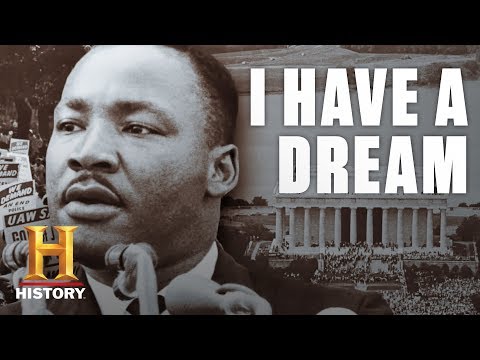
Historically, preachers have played pivotal roles in social movements. For instance, in the United States, the Civil Rights Movement was heavily influenced by preachers like Dr. Martin Luther King Jr., who used the pulpit to advocate for justice and equality. This demonstrates that a preacher's influence often spills over from the spiritual realm into the political and social spheres. The word evokes images of someone standing before a crowd, gesturing emphatically, and speaking with a rhythmic, powerful cadence designed to move the hearts of listeners.
- The Secular Metaphor
- When used outside of religion, 'preacher' can describe a person who constantly talks about a certain topic, like health, environmentalism, or a specific political ideology, trying to convince others to adopt their view. 'He is a real preacher for veganism,' implies he doesn't just eat vegan; he tries to convert everyone else too.
My grandfather was a preacher of hard work and frugality, never missing a chance to lecture us on the value of a dollar.
The term also carries a certain cultural weight in literature and film. The 'Southern Preacher' is a common trope in American media, characterized by a booming voice, a specific accent, and a dramatic style of delivery. This archetype highlights the preacher as a performer as much as a spiritual teacher. In many communities, the preacher is the most educated or respected member, acting as a counselor and mediator for families in distress. Understanding the word 'preacher' requires recognizing this blend of authority, oratory skill, and moral conviction.
- Synonym Nuance
- Compared to 'minister' or 'clergyman,' 'preacher' is more informal and focuses on the action of preaching. A 'minister' might spend most of their time doing administrative work or visiting the sick, but a 'preacher' is defined by their time behind the lectern.
Even without a church, he was a natural preacher, holding court at the local diner every morning.
The preacher's daughter often felt the pressure of living up to the community's high moral expectations.
Ultimately, a preacher is a bridge between a sacred text and a living audience. Whether they are shouting from a street corner or speaking softly from a wooden pulpit, their goal is the same: to communicate a message that they believe is of vital importance. The word captures the essence of vocalized faith and the human desire to share one's deepest convictions with others in a structured, persuasive format.
Using the word preacher correctly involves understanding its grammatical role as a common noun and its typical collocations. It is most frequently used as the subject or object of a sentence involving religious activities, but it can also appear in metaphorical contexts. When describing someone's profession, it is often preceded by an adjective that specifies their style or denomination, such as 'Baptist preacher,' 'charismatic preacher,' or 'lay preacher.'
- Common Verb Pairings
- Preachers 'deliver' sermons, 'address' congregations, 'exhort' followers, and 'study' scripture. Conversely, a congregation might 'listen to,' 'support,' or 'follow' a preacher.
The preacher delivered a stirring sermon on the importance of forgiveness.
In terms of sentence structure, 'preacher' functions like any other job title. You can use it with articles ('a preacher,' 'the preacher') or in the plural ('preachers'). It is important to note that 'preacher' is a role, while 'preach' is the corresponding verb. One 'preaches' a message, and the person doing it is the 'preacher.' This distinction is vital for maintaining grammatical clarity in complex sentences.
- Metaphorical Usage
- When using the word metaphorically, it often describes someone who is perceived as being 'on a soapbox.' It suggests a level of intensity and a desire to convert others to a specific way of thinking.
Don't be such a preacher about your new diet; just let us eat our pizza in peace!
Another common way to use the word is in the possessive form to describe things associated with the role, such as 'the preacher's Bible' or 'the preacher's tone.' The word can also be used as a direct address in some traditional or rural settings, where someone might say, 'Good morning, Preacher,' using the title as a name. However, in most modern, urban contexts, this is less common than using the person's actual name or a more formal title like 'Pastor [Name].'
- Descriptive Adjectives
- You can add depth to the word by using adjectives like 'fire-and-brimstone' (very intense and scary), 'eloquent' (well-spoken), or 'itinerant' (traveling from place to place).
The preacher's eloquent words brought many in the congregation to tears.
When writing about a preacher, consider the setting. If the setting is a formal cathedral, 'preacher' might feel slightly too informal compared to 'bishop' or 'dean.' If the setting is a small country church or a tent revival, 'preacher' is the perfect, most authentic choice. The word carries a sense of accessibility and directness that more formal titles sometimes lack.
Many famous civil rights leaders started their careers as local preachers.
In summary, 'preacher' is a versatile noun that can describe a professional religious speaker, a passionate advocate, or a specific cultural archetype. By pairing it with strong verbs and descriptive adjectives, you can convey a wide range of meanings, from deep spiritual respect to mild social annoyance.
The word preacher is most commonly heard in environments where religion, community leadership, or public speaking are central themes. While it is a staple of religious life, its presence in popular culture, literature, and everyday conversation ensures that even non-religious people encounter it frequently. Understanding the contexts in which this word appears helps in grasping its various connotations.
- In the Church and Religious Media
- Naturally, the most common place to hear the word is within a church. Members of the congregation might refer to their leader as 'the preacher.' Additionally, on religious television or radio stations, you will often hear introductions like, 'And now, a word from our guest preacher.'
I heard a preacher on the radio this morning talking about the power of gratitude.
In the United States, particularly in the South and Midwest, the word is deeply embedded in the cultural lexicon. It appears in the names of businesses (e.g., 'Preacher's Antiques'), in local news reports about community events, and in casual conversation about Sunday morning activities. In these regions, the preacher is often a well-known public figure, and their opinions on local matters are frequently sought after and discussed.
- In Movies and Literature
- The 'preacher' is a recurring character type in Westerns, Southern Gothic literature, and dramas. Think of characters like the preacher in 'The Grapes of Wrath' or the intense, conflicted preachers in Flannery O'Connor's stories. These portrayals often focus on the preacher's internal struggle between their holy calling and their human flaws.
The film depicts a preacher who loses his faith after a personal tragedy.
You will also hear the word in historical contexts. When students learn about the 'Great Awakening' or the 'Abolitionist Movement,' the role of the preacher is central. Figures like George Whitefield or Jonathan Edwards are always described as preachers. In this context, the word signifies a person of great historical influence who used their oratory skills to change the course of a nation.
- In Music and Song Lyrics
- From gospel and blues to country and rock, preachers are frequently mentioned in songs. They often represent a moral standard, a source of wisdom, or sometimes a figure of hypocrisy. Songs like 'Son of a Preacher Man' have made the term a part of global pop-culture consciousness.
The blues singer wailed about the preacher who stole his girl and his money.
Finally, the word is heard in metaphorical debates. In political commentary, a candidate might be accused of 'preaching to the choir' (talking only to people who already agree with them) or acting like a 'moral preacher' rather than a pragmatic leader. In these cases, the word is used to critique someone's communication style or perceived arrogance. Whether in a sacred space or a secular debate, the word 'preacher' remains a powerful descriptor of someone trying to influence others through speech.
While preacher is a relatively straightforward word, learners and even native speakers often make mistakes regarding its nuance, its relationship to other religious titles, and its grammatical forms. Understanding these pitfalls can help you use the word more accurately and avoid unintended connotations.
- Confusing 'Preacher' with 'Priest' or 'Pastor'
- This is the most common error. A 'priest' usually refers to Catholic, Orthodox, or Anglican traditions and has specific sacramental duties (like confession). A 'pastor' is the administrative and spiritual head of a specific congregation. A 'preacher' is anyone who delivers a sermon. While one person can be all three, the terms are not interchangeable in every context.
Incorrect: The Catholic preacher heard my confession. (Better: The Catholic priest heard my confession.)
Another mistake is using 'preacher' as a verb. The verb form is 'to preach.' You cannot 'preacher' a sermon; you 'preach' a sermon. Similarly, some learners confuse the noun 'preacher' with the noun 'preaching' (the act of delivering a sermon). You might say, 'I enjoyed the preaching today,' but you would say, 'I enjoyed the preacher's message today.'
- Misusing the Adjective 'Preachy'
- Learners often think 'preachy' just means 'like a preacher.' However, in modern English, 'preachy' is almost always a criticism. It implies that someone is being self-righteous, annoying, or condescending. If you want to say someone speaks well like a preacher, use 'eloquent' or 'persuasive' instead.
Mistake: I love my teacher because she is so preachy. (This sounds like you enjoy being lectured or judged.)
There is also a mistake regarding the formality of the word. In some high-church traditions (like Episcopalian or high-church Lutheran), calling the leader 'the preacher' might be seen as slightly disrespectful or overly informal, as they prefer titles like 'Father,' 'Reverend,' or 'Pastor.' Conversely, in some evangelical or non-denominational churches, 'preacher' is the most common and respected term. Knowing your audience is key.
- The 'Preach to the Choir' Idiom
- People often use this idiom incorrectly by saying 'preach to the crowd' or 'preach to the church.' The correct idiom is 'preach to the choir,' meaning to try to convince people who already agree with you. Using the wrong noun ruins the idiom.
Correct: You're preaching to the choir; I've been a supporter of this project from the start.
Finally, avoid overusing the word in a metaphorical sense. If someone gives you advice, calling them a 'preacher' can come across as defensive or rude. It's better to say 'You're lecturing me' or 'You're being a bit insistent' unless you specifically want to imply they are acting like they have a moral high ground that they don't actually possess.
The English language has a rich variety of words to describe people who speak about spiritual or moral matters. While preacher is a general and widely understood term, choosing a more specific alternative can add precision and flavor to your writing or speech. Here is a look at how 'preacher' compares to similar words.
- Preacher vs. Pastor
- A preacher is defined by the act of preaching. A pastor (from the Latin for 'shepherd') is defined by their care for a congregation. A pastor might preach, but they also counsel, lead meetings, and visit the sick. You can be a guest preacher without being a pastor.
The preacher for the revival was a famous evangelist, but the local pastor handled the logistics.
Another common alternative is minister. This is a broad term used in many Protestant churches. It implies someone who 'ministers' to the needs of others. It is often used in formal titles, such as 'The Minister of the First Baptist Church.' It feels slightly more professional and less focused solely on the act of speaking than 'preacher' does.
- Preacher vs. Evangelist
- An evangelist is a specific type of preacher whose primary goal is to convert non-believers to the faith. They often travel frequently and speak at large events. While all evangelists are preachers, not all preachers are evangelists; some focus on teaching and encouraging people who are already believers.
Billy Graham was perhaps the most famous preacher and evangelist of the 20th century.
In a secular context, you might use orator or speaker. An 'orator' is someone who is exceptionally skilled at public speaking, often in a formal or political setting. If you call a politician a 'preacher,' you are commenting on their moralizing tone; if you call them an 'orator,' you are praising their skill. 'Advocate' or 'proponent' are better choices if you want to describe someone who supports a cause without the religious or moralizing baggage of 'preacher.'
- Preacher vs. Chaplain
- A chaplain is a religious representative attached to a secular institution, like a hospital, the military, or a prison. They may preach, but their role is primarily one of providing spiritual support in a non-church setting.
The army preacher (chaplain) offered comfort to the soldiers before the battle.
Finally, consider the word exhorter. This is a somewhat old-fashioned term for a preacher who focuses on encouraging or urging people to take action. It emphasizes the emotional and motivational side of preaching. By understanding these subtle differences, you can choose the word that perfectly fits the religious tradition, the social role, or the rhetorical style you are trying to describe.
How Formal Is It?
Fun Fact
The Dominican Order of the Catholic Church is officially known as the 'Order of Preachers' (Ordo Praedicatorum), highlighting the central importance of this role in their mission.
Pronunciation Guide
- Pronouncing the 'ea' as a short 'e' (like 'precher').
- Softening the 'ch' sound to a 'sh' sound.
- Putting the stress on the second syllable.
- In non-rhotic accents, over-pronouncing the final 'r'.
- Confusing the spelling with 'preacher' and 'precher'.
Difficulty Rating
The word is common in literature and news, making it easy to recognize.
Requires care to distinguish from 'pastor' or 'priest' in specific contexts.
Pronunciation is relatively simple, but the 'ch' sound must be clear.
Very distinct sound, rarely confused with other words in speech.
What to Learn Next
Prerequisites
Learn Next
Advanced
Grammar to Know
Agent Nouns (-er suffix)
A person who preaches is a preacher; a person who teaches is a teacher.
Possessive 's with Titles
The preacher's Bible was worn from years of use.
Articles with Professions
He is a preacher (requires 'a').
Adjective formation with -y
Preach -> Preachy (often changes the connotation to negative).
Verbs of Communication
Preachers 'deliver', 'proclaim', or 'address' (specific verb-noun collocations).
Examples by Level
The preacher speaks in the church.
Le prédicateur parle à l'église.
Subject + Verb + Prepositional Phrase.
I like the preacher's voice.
J'aime la voix du prédicateur.
Possessive noun used as an adjective.
Is he a preacher?
Est-il prédicateur ?
Simple question with 'to be'.
The preacher reads the Bible.
Le prédicateur lit la Bible.
Present simple tense.
Many people listen to the preacher.
Beaucoup de gens écoutent le prédicateur.
Verb 'listen' followed by 'to'.
The preacher lives next to the church.
Le prédicateur habite à côté de l'église.
Preposition of place: 'next to'.
She wants to be a preacher.
Elle veut être prédicatrice.
Infinitive phrase 'to be a preacher'.
The preacher says 'Hello' to everyone.
Le prédicateur dit 'Bonjour' à tout le monde.
Present simple with third-person 's'.
The preacher gave a long sermon on Sunday.
Le prédicateur a fait un long sermon dimanche.
Past simple of 'give'.
A traveling preacher visited our small town.
Un prédicateur itinérant a visité notre petite ville.
Adjective 'traveling' modifying 'preacher'.
The preacher's words helped the family.
Les paroles du prédicateur ont aidé la famille.
Possessive 's' with a plural noun 'words'.
My uncle is a preacher in a big city.
Mon oncle est prédicateur dans une grande ville.
Prepositional phrase 'in a big city'.
The preacher asked us to pray for peace.
Le prédicateur nous a demandé de prier pour la paix.
Verb + object + infinitive.
He is a very famous preacher on the radio.
C'est un prédicateur très célèbre à la radio.
Adverb 'very' modifying adjective 'famous'.
The preacher stood behind the wooden pulpit.
Le prédicateur se tenait derrière le pupitre en bois.
Preposition 'behind'.
We invited the preacher to have dinner with us.
Nous avons invité le prédicateur à dîner avec nous.
Past simple 'invited'.
The preacher emphasized the importance of kindness.
Le prédicateur a souligné l'importance de la gentillesse.
Verb 'emphasized' followed by a noun phrase.
Even though he wasn't a preacher, he gave great advice.
Même s'il n'était pas prédicateur, il donnait d'excellents conseils.
Concession clause with 'even though'.
The local preacher is a well-respected member of the community.
Le prédicateur local est un membre très respecté de la communauté.
Compound adjective 'well-respected'.
She grew up as a preacher's daughter in the South.
Elle a grandi en tant que fille de prédicateur dans le Sud.
Preposition 'as' used for roles.
The preacher's message was broadcast to millions of people.
Le message du prédicateur a été diffusé à des millions de personnes.
Passive voice 'was broadcast'.
He has a very preacher-like way of speaking.
Il a une façon de parler très semblable à celle d'un prédicateur.
Suffix '-like' added to a noun.
The preacher warned the congregation about the dangers of greed.
Le prédicateur a mis en garde la congrégation contre les dangers de l'avidité.
Verb 'warn' + object + 'about'.
The old preacher retired after forty years of service.
Le vieux prédicateur a pris sa retraite après quarante ans de service.
Prepositional phrase of time.
The preacher's charismatic delivery captivated the entire audience.
La prestation charismatique du prédicateur a captivé tout l'auditoire.
Adjective 'charismatic' and verb 'captivated'.
In many rural areas, the preacher acts as a mediator in local disputes.
Dans de nombreuses zones rurales, le prédicateur fait office de médiateur dans les conflits locaux.
Verb 'acts as'.
The novel explores the internal conflicts of a small-town preacher.
Le roman explore les conflits internes d'un prédicateur de petite ville.
Noun phrase with multiple modifiers.
Stop being such a preacher and just listen to my side of the story.
Arrête de faire le prédicateur et écoute simplement ma version de l'histoire.
Metaphorical use of 'preacher'.
The preacher was known for his 'fire and brimstone' style of sermons.
Le prédicateur était connu pour son style de sermons 'de feu et de soufre'.
Idiomatic expression in quotes.
A lay preacher is someone who preaches without being ordained.
Un prédicateur laïc est quelqu'un qui prêche sans être ordonné.
Relative clause starting with 'who'.
The preacher's influence extended far beyond the walls of the church.
L'influence du prédicateur s'étendait bien au-delà des murs de l'église.
Prepositional phrase 'beyond the walls'.
He was accused of being a 'street preacher' who disturbed the peace.
Il a été accusé d'être un 'prédicateur de rue' qui troublait la paix.
Passive voice 'was accused of'.
The preacher's rhetoric was a masterful blend of scripture and social commentary.
La rhétorique du prédicateur était un mélange magistral d'écritures et de commentaires sociaux.
Complex noun phrase 'masterful blend of...'.
Many civil rights leaders utilized their roles as preachers to mobilize the masses.
De nombreux leaders des droits civiques ont utilisé leur rôle de prédicateur pour mobiliser les masses.
Verb 'utilize' and infinitive of purpose.
The documentary examines the rise of the 'televangelist' preacher in the 1980s.
Le documentaire examine l'ascension du prédicateur 'télévangéliste' dans les années 1980.
Specific historical/cultural term.
Her grandfather was an itinerant preacher who traveled the Appalachian circuit.
Son grand-père était un prédicateur itinérant qui parcourait le circuit des Appalaches.
Adjective 'itinerant' and specific historical context.
The preacher's sermon served as a scathing critique of modern materialism.
Le sermon du prédicateur a servi de critique cinglante du matérialisme moderne.
Verb 'served as' + noun phrase.
Critics argued that the politician was more of a preacher than a policymaker.
Les critiques ont soutenu que l'homme politique était plus un prédicateur qu'un décideur.
Comparative structure 'more of a... than a...'.
The preacher's cadence and tone were reminiscent of the great 19th-century orators.
La cadence et le ton du prédicateur rappelaient les grands orateurs du XIXe siècle.
Adjective 'reminiscent of'.
Despite his reputation as a holy man, the preacher was plagued by personal scandals.
Malgré sa réputation d'homme saint, le prédicateur était tourmenté par des scandales personnels.
Concession phrase 'Despite his reputation'.
The preacher's discourse transcended mere theology, touching upon universal human suffering.
Le discours du prédicateur transcendait la simple théologie, abordant la souffrance humaine universelle.
Verb 'transcended' and present participle 'touching'.
The archetype of the preacher in Southern literature often embodies the struggle between grace and depravity.
L'archétype du prédicateur dans la littérature du Sud incarne souvent la lutte entre la grâce et la dépravation.
Abstract nouns and complex subject.
The preacher's homiletic style was characterized by an intricate use of allegorical storytelling.
Le style homilétique du prédicateur se caractérisait par un usage complexe de la narration allégorique.
Passive voice with specific academic terminology.
In the wake of the disaster, the preacher became the de facto leader of the displaced community.
À la suite de la catastrophe, le prédicateur est devenu le leader de facto de la communauté déplacée.
Latin phrase 'de facto' and complex prepositional phrase.
The secularization of society has fundamentally altered the public's perception of the preacher's authority.
La sécularisation de la société a fondamentalement modifié la perception qu'a le public de l'autorité du prédicateur.
Present perfect with adverb 'fundamentally'.
The preacher's ability to synthesize ancient texts with contemporary anxieties was unparalleled.
La capacité du prédicateur à synthétiser des textes anciens avec des angoisses contemporaines était sans égale.
Infinitive phrase as a modifier for 'ability'.
He adopted a preacherly persona, complete with dramatic pauses and sweeping gestures.
Il a adopté un personnage de prédicateur, avec des pauses dramatiques et des gestes amples.
Adjective 'preacherly' and 'complete with' phrase.
The preacher's legacy is a testament to the enduring power of the spoken word in the digital age.
L'héritage du prédicateur est un témoignage du pouvoir durable de la parole à l'ère numérique.
Noun 'testament' and 'to the' prepositional phrase.
Synonyms
Antonyms
Common Collocations
Common Phrases
— Trying to convince people who already agree with you. It implies a waste of effort or a lack of challenge.
You're preaching to the choir about the need for better schools; we all agree!
— To do the things that you tell other people they should do. It highlights the importance of consistency.
If you tell us to be honest, you should practice what you preach.
— A common cultural trope referring to the children of clergy, often implying they are either very holy or very rebellious.
She felt the pressure of being a preacher's daughter her whole life.
— A common way to introduce a religious message or a short piece of advice.
And now, we'll have a short word from the preacher before the final song.
— The physical stand where a preacher speaks, often used metaphorically for their platform of authority.
He used the preacher's pulpit to advocate for social justice.
— Describing someone who speaks with great passion, authority, or a moralizing tone.
He was talking like a preacher about the benefits of a vegan diet.
— A historical figure who moved from place to place to share their message.
The traveling preacher was a common sight in the American frontier.
— To speak in a way that is annoyingly moralistic or condescending.
I don't want to sound preachy, but you really should save more money.
— A role that often carries its own set of community expectations and duties in many traditions.
The preacher's wife organized the annual charity bake sale.
— To be a dedicated member of a preacher's congregation or to adopt their teachings.
Many people followed the preacher because of his message of hope.
Often Confused With
A priest has sacramental duties in Catholic/Orthodox traditions; a preacher focuses on sermons.
A pastor is the leader of a congregation; a preacher is the one who speaks (one person can be both).
A teacher works in a school; a preacher works in a church, though both educate.
Idioms & Expressions
— Similar to 'preaching to the choir,' it means talking to people who already believe what you are saying.
The environmentalist was preaching to the converted at the green energy conference.
informal— To start talking passionately and at length about a subject one feels strongly about, like a preacher.
Once he gets on his soapbox about politics, he won't stop for an hour.
informal— To speak with absolute authority, often in a moralizing way similar to a stern preacher.
The manager laid down the law about being late to meetings.
informal— An attitude of moral superiority, often associated with a stereotypical 'preachy' person.
I can't stand her holier-than-thou attitude whenever I eat fast food.
informal— Something that is absolutely true, often used to emphasize the reliability of a message.
I'm telling you the gospel truth; I saw it with my own eyes.
neutral— To suddenly understand something or to undergo a religious conversion, often after hearing a preacher.
After the lecture, he finally saw the light and decided to change his career.
informal— To give someone a powerful, often overwhelming lesson or performance, sometimes used in sports or music.
The singer really took us to church with that final high note.
slang— To proclaim a message loudly and publicly for all to hear.
She wanted to preach her discovery from the mountaintop.
literary— To lose one's high position or reputation, often used for preachers who are caught in scandals.
The famous preacher's fall from grace was all over the news.
neutral— A person who warns of something or advocates for something that everyone else is ignoring, like a lonely preacher.
For years, he was a voice in the wilderness warning about the housing bubble.
literaryEasily Confused
Both relate to the same action.
Preacher is the person; preaching is the act or the style of speaking.
The preacher (person) is famous for his powerful preaching (act).
Sounds slightly similar to 'pastor' which is related to 'preacher'.
A pasture is a field for animals; a preacher is a person.
The preacher walked across the pasture to get to the church.
Similar starting sound.
Pressure is physical or mental stress; a preacher is a person.
The preacher felt the pressure of the large crowd.
Rhyming word.
A feature is a characteristic or a main part; a preacher is a person.
The main feature of the service was the preacher's talk.
Rhyming word.
A reacher is someone who reaches for something; a preacher is a religious speaker.
The preacher was a reacher for souls.
Sentence Patterns
The preacher is [adjective].
The preacher is kind.
The preacher [verb] a [noun].
The preacher read a story.
He is a preacher of [abstract noun].
He is a preacher of peace.
The preacher was known for [gerund phrase].
The preacher was known for helping the poor.
Acting as a preacher, he [verb past].
Acting as a preacher, he mobilized the community.
The preacher's [noun] served as a [noun].
The preacher's sermon served as a catalyst for change.
Don't be such a [noun].
Don't be such a preacher.
It's like [gerund] to the [noun].
It's like preaching to the choir.
Word Family
Nouns
Verbs
Adjectives
Related
How to Use It
Common in religious, historical, and metaphorical contexts.
-
He is preacher.
→
He is a preacher.
Preacher is a countable noun and requires an indefinite article when referring to someone's profession.
-
The preacher heard my confession.
→
The priest heard my confession.
In Catholic traditions, 'priest' is the correct term for someone who performs sacraments like confession.
-
I love how preachy you are.
→
I love how inspiring you are.
'Preachy' is a negative term meaning annoyingly moralistic. Use 'inspiring' or 'persuasive' for a positive meaning.
-
He preached to the crowd.
→
He preached to the choir.
The idiom for talking to people who already agree with you is 'preaching to the choir.'
-
The preacher gave a good preaching.
→
The preacher gave a good sermon.
'Preaching' is the act; 'sermon' is the noun for the actual speech given.
Tips
Context Matters
Use 'preacher' when the focus is on the speech itself. If you are talking about the person's life or leadership, 'pastor' might be better.
Avoid 'Preachy'
Be careful with the word 'preachy.' It's a common mistake to use it to mean 'good at preaching,' but it actually means 'annoyingly moralistic.'
Regional Differences
In the American South, 'preacher' is a very common and respectful term. In the UK, it might sound a bit more old-fashioned or specific to certain groups.
Countable Noun
Remember that 'preacher' is countable. You need an article: 'He is a preacher,' not 'He is preacher.'
Clear 'CH'
Make sure the 'ch' in preacher is sharp. If it's too soft, it might sound like 'pressure' or 'preasure,' which are different words.
Choir, not Crowd
When using the idiom, always say 'preaching to the choir.' Saying 'preaching to the crowd' is a common mistake.
Synonym Variety
If you use the word 'preacher' many times in a story, try switching to 'minister' or 'speaker' to keep the writing interesting.
Identify the Tone
Preachers often have a specific way of speaking. Learning to recognize this 'preacherly' tone can help you understand the context of a scene in a movie.
Respectful Address
If you meet a preacher, it's usually safe to call them 'Pastor [Last Name]' unless they tell you otherwise.
Historical Context
When reading about the 18th or 19th century, remember that preachers were often the most educated people in a town and acted as leaders.
Memorize It
Mnemonic
Think of a PREAcher as someone who PREAches to the PEAple in the PEWs. The 'P' sounds connect the person, the action, and the audience.
Visual Association
Imagine a person standing behind a large wooden stand (pulpit), holding a black book and gesturing with one hand toward the sky.
Word Web
Challenge
Try to use the word 'preacher' in three different ways today: once about a person in a church, once about a movie character, and once metaphorically about a friend's advice.
Word Origin
The word 'preacher' comes from the Old French 'precheur,' which in turn derives from the Latin 'praedicator.' The Latin root 'praedicare' means 'to proclaim publicly' or 'to announce.'
Original meaning: Originally, it referred to anyone who made a public announcement or proclamation, not necessarily religious.
Indo-European > Italic > Latin > Romance > Old French > English.Cultural Context
Be aware that while 'preacher' is a respected title for many, using it metaphorically ('Don't be a preacher') can be seen as dismissive of someone's sincere beliefs.
In the US, 'preacher' is very common in evangelical circles. In the UK, 'vicar' or 'rector' is more common for local leaders, with 'preacher' used for the specific act of giving a sermon.
Practice in Real Life
Real-World Contexts
At a Sunday church service
- The preacher is starting.
- What did the preacher say?
- I liked the preacher's sermon.
- Let's go talk to the preacher.
Discussing history or civil rights
- He was a powerful preacher.
- The preacher led the march.
- His preacher background helped him.
- Preachers were key to the movement.
Giving or receiving unwanted advice
- Don't be a preacher.
- You sound like a preacher.
- I'm not trying to preach.
- Stop being so preachy.
Watching a movie or reading a book
- The preacher is the villain.
- He plays a traveling preacher.
- The preacher's daughter is the lead.
- It's a story about a preacher.
Radio or Television
- A famous preacher is on.
- I heard a preacher today.
- The TV preacher asked for money.
- That preacher has a podcast.
Conversation Starters
"Have you ever heard a preacher who was really inspiring or moved you to take action?"
"In your country, what is the most common title for a religious leader—preacher, priest, or something else?"
"Do you think someone can be a 'preacher' for a secular cause, like protecting the environment?"
"Why do you think preachers are such common characters in movies and books?"
"If you had to be a preacher for one day, what topic would you choose to speak about?"
Journal Prompts
Write about a time someone acted like a 'preacher' toward you. How did it make you feel, and did you listen to them?
Describe the qualities you think make a 'good' preacher. Is it their voice, their message, or their actions?
Imagine you are a traveling preacher in the 1800s. Write a diary entry about your day and the people you met.
Reflect on the idiom 'practice what you preach.' Is it always possible to live up to our own standards?
Discuss the role of the preacher in modern society. Is their influence growing or shrinking, and why?
Frequently Asked Questions
10 questionsYes, in many modern Protestant denominations, women serve as preachers. However, some traditional denominations only allow men to hold the role. The term 'preacher' itself is gender-neutral in English.
The main difference is their religious tradition and duties. 'Priest' is usually used in Catholic, Orthodox, and Anglican churches and involves performing sacraments. 'Preacher' is more common in Protestant churches and focuses on delivering sermons.
It can be used as a title (e.g., 'Preacher Smith'), but it is generally less formal than 'Reverend' or 'Pastor.' In some communities, it is a very common and respectful way to address a religious leader.
It means trying to convince people who already agree with you. For example, if you tell a group of vegetarians why meat is bad, you are preaching to the choir.
No, 'preachy' is usually a criticism. It means someone is giving advice or moral lessons in an annoying or superior way. If you like a preacher's style, you should call them 'inspiring' or 'eloquent' instead.
Yes, 'street preachers' or 'itinerant preachers' speak in public places or travel between different locations rather than leading one specific church.
A lay preacher is a member of the church who preaches but has not been formally ordained as a member of the clergy. They often have another job during the week.
It refers to the children of preachers, who are often expected by the community to be perfect examples of morality. This can lead to them either being very well-behaved or very rebellious.
This describes a preacher who gives very intense, dramatic sermons that focus on the punishments of sin and the dangers of hell.
The path varies by denomination. Some require a degree from a divinity school or seminary, while others only require a 'call to ministry' and the approval of the local congregation.
Test Yourself 180 questions
Write a short paragraph (3-4 sentences) about what a preacher does on a Sunday morning.
Well written! Good try! Check the sample answer below.
Describe a time when someone was 'preaching to the choir.' What was the situation?
Well written! Good try! Check the sample answer below.
Compare and contrast the roles of a 'preacher' and a 'teacher.' How are they similar and different?
Well written! Good try! Check the sample answer below.
Write a short story about a traveling preacher in the 19th century.
Well written! Good try! Check the sample answer below.
Discuss the impact of famous preachers on social movements like the Civil Rights Movement.
Well written! Good try! Check the sample answer below.
Write a dialogue between two people where one is being 'preachy' and the other is annoyed.
Well written! Good try! Check the sample answer below.
Explain the meaning and origin of the word 'preacher' in your own words.
Well written! Good try! Check the sample answer below.
Create an advertisement for a guest preacher visiting a local church.
Well written! Good try! Check the sample answer below.
Write a review of a movie or book that features a preacher as a main character.
Well written! Good try! Check the sample answer below.
Reflect on the phrase 'practice what you preach.' Why is this difficult for many people?
Well written! Good try! Check the sample answer below.
Describe the setting of a traditional church where a preacher might speak.
Well written! Good try! Check the sample answer below.
How has the role of the preacher changed with the rise of the internet and social media?
Well written! Good try! Check the sample answer below.
Write a letter to a preacher thanking them for an inspiring sermon.
Well written! Good try! Check the sample answer below.
Describe the 'fire-and-brimstone' style of preaching. Why do you think it was popular?
Well written! Good try! Check the sample answer below.
What are the ethical responsibilities of a preacher toward their congregation?
Well written! Good try! Check the sample answer below.
Write a short poem about a preacher standing at a pulpit.
Well written! Good try! Check the sample answer below.
Discuss the difference between a 'lay preacher' and an 'ordained minister.'
Well written! Good try! Check the sample answer below.
How does a preacher use rhetoric to influence an audience?
Well written! Good try! Check the sample answer below.
Write a journal entry from the perspective of a preacher's daughter.
Well written! Good try! Check the sample answer below.
Analyze the archetype of the 'corrupt preacher' in literature.
Well written! Good try! Check the sample answer below.
Describe a preacher you have seen in a movie or on TV. What was their personality like?
Read this aloud:
You said:
Speech recognition is not supported in your browser. Try Chrome or Edge.
Explain the idiom 'preaching to the choir' to a friend who doesn't know it.
Read this aloud:
You said:
Speech recognition is not supported in your browser. Try Chrome or Edge.
Do you think preachers should be involved in politics? Why or why not?
Read this aloud:
You said:
Speech recognition is not supported in your browser. Try Chrome or Edge.
If you had to give a 5-minute 'sermon' on any topic, what would it be?
Read this aloud:
You said:
Speech recognition is not supported in your browser. Try Chrome or Edge.
How does the style of a preacher differ from the style of a university professor?
Read this aloud:
You said:
Speech recognition is not supported in your browser. Try Chrome or Edge.
Pronounce the word 'preacher' and use it in a sentence about a church.
Read this aloud:
You said:
Speech recognition is not supported in your browser. Try Chrome or Edge.
Talk about a time someone gave you advice in a 'preachy' way. How did you react?
Read this aloud:
You said:
Speech recognition is not supported in your browser. Try Chrome or Edge.
What role do preachers play in your local community or country?
Read this aloud:
You said:
Speech recognition is not supported in your browser. Try Chrome or Edge.
Discuss the importance of the 'spoken word' in religious traditions.
Read this aloud:
You said:
Speech recognition is not supported in your browser. Try Chrome or Edge.
How can a preacher maintain their authority in a modern, secular world?
Read this aloud:
You said:
Speech recognition is not supported in your browser. Try Chrome or Edge.
Describe the physical appearance of a stereotypical preacher.
Read this aloud:
You said:
Speech recognition is not supported in your browser. Try Chrome or Edge.
What are some common topics a preacher might talk about?
Read this aloud:
You said:
Speech recognition is not supported in your browser. Try Chrome or Edge.
Is 'preacher' a common job in your culture? What is it called in your language?
Read this aloud:
You said:
Speech recognition is not supported in your browser. Try Chrome or Edge.
Why do you think some preachers become very famous and wealthy?
Read this aloud:
You said:
Speech recognition is not supported in your browser. Try Chrome or Edge.
How does a preacher's tone change the way people receive their message?
Read this aloud:
You said:
Speech recognition is not supported in your browser. Try Chrome or Edge.
Talk about the history of 'circuit riders' and traveling preachers.
Read this aloud:
You said:
Speech recognition is not supported in your browser. Try Chrome or Edge.
What are the pros and cons of being a 'preacher's kid'?
Read this aloud:
You said:
Speech recognition is not supported in your browser. Try Chrome or Edge.
Discuss the use of the word 'preacher' in music lyrics.
Read this aloud:
You said:
Speech recognition is not supported in your browser. Try Chrome or Edge.
How does a 'lay preacher' balance their secular job with their religious role?
Read this aloud:
You said:
Speech recognition is not supported in your browser. Try Chrome or Edge.
Explain the 'fire-and-brimstone' style of preaching to a classmate.
Read this aloud:
You said:
Speech recognition is not supported in your browser. Try Chrome or Edge.
Listen to the description of a man in a suit speaking to a crowd. Is he a preacher or a doctor?
Identify the tone of the speaker: Are they being 'preachy' or just sharing information?
Listen to a short sermon excerpt. What is the main message the preacher is sharing?
Listen to a historical account of a traveling preacher. How did he travel?
Listen to a conversation about 'preaching to the choir.' Who is the person talking to?
Listen for the word 'preacher' in a song lyric. What is the context?
Listen to a news report about a local preacher. What community project are they leading?
Listen to a description of a 'pulpit.' What is it used for?
Listen to a discussion on 'homiletics.' Is this a simple or complex topic?
Listen to a 'fire-and-brimstone' sermon clip. How does it make you feel?
Listen to a child describing their father's job as a preacher. What do they like about it?
Listen to a debate about preachers in politics. What are the two main viewpoints?
Listen to a podcast about 'preacher's kids.' What are some common challenges they face?
Listen to a definition of 'lay preacher.' Can they perform weddings?
Listen to a story about a 'street preacher.' Where are they standing?
He is preacher in a small town.
The preacher's preachings was very long.
Don't be so preacher about your diet.
/ 180 correct
Perfect score!
Summary
A preacher is a powerful communicator of faith and morals. Whether in a traditional church or as a passionate advocate for a cause, they use the art of the sermon to inspire and guide others. Example: 'The preacher's moving words inspired the community to help those in need.'
- A preacher is a person who delivers religious speeches or sermons, primarily in a church setting, to provide spiritual and moral guidance to a congregation.
- The term focuses on the act of public speaking and the communication of faith, distinguishing it from roles focused on administration or specific rituals.
- Metaphorically, it can describe anyone who passionately advocates for a cause or belief, though the adjective 'preachy' often carries a negative, moralizing connotation.
- Preachers have historically been influential figures in social and political movements, using their rhetorical skills to inspire large groups of people toward change.
Context Matters
Use 'preacher' when the focus is on the speech itself. If you are talking about the person's life or leadership, 'pastor' might be better.
Avoid 'Preachy'
Be careful with the word 'preachy.' It's a common mistake to use it to mean 'good at preaching,' but it actually means 'annoyingly moralistic.'
Regional Differences
In the American South, 'preacher' is a very common and respectful term. In the UK, it might sound a bit more old-fashioned or specific to certain groups.
Countable Noun
Remember that 'preacher' is countable. You need an article: 'He is a preacher,' not 'He is preacher.'