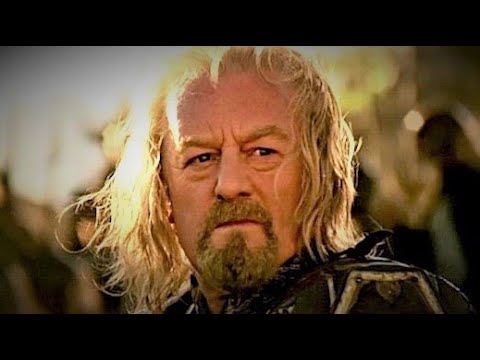
rohan in 30 Seconds
- Rohan is a fictional kingdom in Middle-earth, primarily known for its horse-based culture and its people, the Rohirrim, who are expert cavalry warriors.
- The land is characterized by vast, golden grasslands and is ruled by a king from the capital city of Edoras, located on a strategic hill.
- In the story, Rohan is a vital ally to the kingdom of Gondor, bound by an ancient oath to provide military support during times of crisis.
- Tolkien used Rohan to explore Anglo-Saxon themes, creating a unique society that blends historical Germanic elements with a fictional equestrian tradition.
The term Rohan is a proper noun that carries immense weight within the realm of epic fantasy literature, specifically within J.R.R. Tolkien's legendarium. Geographically and politically, it represents a sovereign kingdom of Men situated in the vast, rolling grasslands of Middle-earth. When people use this word, they are almost exclusively referring to the 'Land of the Horse-lords,' a culture defined by its symbiotic relationship with equine companions and its fierce, Germanic-inspired warrior ethos. The name itself is Sindarin (an Elvish language) for 'Horse-country,' though the inhabitants call their own land the Riddermark or simply the Mark. In contemporary discourse, mentioning Rohan evokes imagery of wide-open horizons, the thundering of hooves, and a sense of heroic, albeit tragic, nobility. It is used by literary critics to discuss Tolkien's use of Old English culture, by fans to describe a specific aesthetic of 'horse-culture,' and in general pop culture to reference one of the most iconic allies of the kingdom of Gondor.
- Geographical Context
- Rohan is located north of Gondor and south of the Misty Mountains, characterized by its endless prairies known as the Pelennor Fields and the Wold.
The riders of Rohan arrived at the dawn of the fifth day, their spears shining like a forest of light.
The usage of the word extends beyond the literal map of Middle-earth. It serves as a cultural shorthand for a specific type of 'heroic pastoralism.' When a writer describes a landscape as 'reminiscent of Rohan,' they are signaling to the reader a place of natural beauty that is both bountiful and defenseless without the protection of a skilled cavalry. It is a word steeped in the 'Northern Courage' that Tolkien so admired—the idea of fighting on even when victory seems impossible. This makes the word a favorite in discussions regarding the 'Lord of the Rings' films, where the visual representation of Edoras (the capital of Rohan) and the Golden Hall of Meduseld became definitive benchmarks for fantasy world-building. Furthermore, the word is often paired with the 'Rohirrim,' the collective name for the people, emphasizing that the land and the people are inseparable in the narrative mind.
To understand the history of Rohan, one must look at the oath of Eorl the Young.
- Symbolism
- The white horse on a green field is the royal standard of Rohan, symbolizing speed, purity, and the fertility of the plains.
The King of Rohan sat upon his throne, weary from the influence of Saruman.
In a broader sense, the word is used in gaming (like the Lord of the Rings Online) and in tabletop RPGs to denote a faction or a character origin. If a player says, 'My character is from Rohan,' they are instantly communicating a set of skills: horsemanship, spear-fighting, and a likely sense of duty to a king. This demonstrates the word's power as a 'world-building anchor.' It isn't just a name; it's a genre trope that defines the 'noble horseman' archetype. In academic circles, 'Rohan' is analyzed through the lens of philology. Tolkien, a professor of Anglo-Saxon, used the Mercian dialect of Old English to represent the language of the Rohirrim, making the study of Rohan a gateway into the study of medieval European linguistics. Thus, the word bridges the gap between modern entertainment and ancient history.
The architecture of Rohan reflects a society that values wood and craftsmanship over the cold stone of Gondor.
- Political Status
- Rohan is an ally of Gondor, bound by the ancient Oath of Eorl to provide military aid in times of need.
The beacons were lit, signaling that Rohan must prepare for war.
Using the word Rohan correctly requires an understanding of its role as a proper noun designating a specific location and political entity. Because it is a unique place name, it is almost always capitalized. In sentences, it typically functions as the object of a preposition (e.g., 'to Rohan,' 'in Rohan') or as a modifier (e.g., 'the Rohan army,' though 'Rohirrim' is more common for the people). When writing about literary themes, you might use it to describe a setting: 'The vastness of Rohan serves as a stark contrast to the claustrophobic darkness of Moria.' Here, the word acts as a focal point for geographical comparison. It is also common to use it in the possessive form, 'Rohan's,' to denote ownership or characteristic traits: 'Rohan's military strength lies in its swift cavalry.' This usage highlights the kingdom's primary asset and identity.
- Subject Position
- Rohan remains a bastion of hope for the free peoples of Middle-earth during the Third Age.
The history of Rohan is defined by its enduring alliance with the kingdom of Gondor.
In more creative or descriptive writing, 'Rohan' can be used to evoke a specific mood. For instance, 'The wind swept across the plains with a ferocity that reminded the travelers of the wild lands of Rohan.' In this case, the word is being used as a simile or a point of reference to describe a real-world or secondary-world environment. It carries connotations of freedom, speed, and perhaps a touch of loneliness. When discussing the plot of *The Lord of the Rings*, the word is often the subject of verbs related to movement or defense: 'Rohan musters its forces at Dunharrow,' or 'Rohan falls under the shadow of Isengard.' These sentences treat the kingdom as a living, breathing entity capable of action and suffering. It is important to note that while 'Rohan' is the land, the people are the 'Rohirrim' or 'the Eorlingas.' Using 'Rohan' to refer to the people (e.g., 'Rohan are coming') is technically a metonymy but is less precise than using the specific name for the inhabitants.
Many scholars believe that the culture of Rohan was Tolkien's way of reimagining the Anglo-Saxons as horse-lords.
- Prepositional Use
- The fellowship traveled through the Gap of Rohan to avoid the mountain passes.
The borders of Rohan were constantly threatened by Orcs from the White Mountains.
Furthermore, 'Rohan' can be used in comparative literature to discuss the 'pastoral epic.' One might write, 'Unlike the urban complexity of Minas Tirith, Rohan offers a vision of a simpler, more rural society.' Here, the word represents a socio-political model. In casual conversation among fans, it might be used as an adjective in a non-standard way: 'That horse looks very Rohan,' meaning the horse looks like it belongs in that fictional world. While this is informal, it shows how the proper noun has become a descriptor for a specific aesthetic. In formal essays, one should stick to its function as a noun: 'The internal politics of Rohan, specifically the manipulation of King Théoden by Gríma Wormtongue, illustrate the dangers of isolationism.' This sentence uses the word to ground a complex political analysis in the specific geography of the narrative.
If you visit the filming locations in New Zealand, you can see the hill where the capital of Rohan was built.
- Possessive Form
- Rohan's survival depended entirely on the arrival of the reinforcements from the Westfold.
The King of Rohan led the charge at the Battle of the Pelennor Fields.
The most common place to hear the word Rohan is in discussions surrounding J.R.R. Tolkien’s *The Lord of the Rings*. Whether it is in a classroom setting where the book is being analyzed for its mythological roots, or in a living room where friends are watching the film adaptations by Peter Jackson, the word is a staple of fantasy discourse. In the films, the name is frequently spoken with a sense of urgency or reverence, particularly by characters like Aragorn or Gandalf. For instance, the iconic line 'Where was Gondor when the Westfold fell? Where was Gondor when our enemies closed in around us? Where was...?' is often followed by discussions of Rohan's isolation. You will also hear it in the soundtrack's titles, such as 'The Riders of Rohan' by Howard Shore, which uses a distinct Hardanger fiddle to give the kingdom its unique musical identity.
- In Media
- The word appears in countless video games, from official LOTR titles to mods in games like Skyrim or Total War.
'We shall ride to Rohan and muster the Rohirrim,' declared Aragorn as they looked over the plains.
Beyond the fictional world, the word is heard in the context of naming. It is a popular name in South Asia, particularly in India and Nepal. In this context, you might hear it at a school roll call or in a business meeting: 'Rohan, could you present the quarterly report?' It is vital to distinguish between these two uses based on context. In the Western world, 'Rohan' is also occasionally used as a surname or a first name, sometimes inspired by the book and sometimes by the French noble House of Rohan. In historical circles, you might hear about the 'House of Rohan,' an ancient and powerful French aristocratic family that played a significant role in European history. This adds a layer of real-world prestige to the name that predates Tolkien's use of it.
The historian discussed the influence of the House of Rohan on the French court during the 17th century.
- In Gaming
- Players often debate the 'Rohan build' in strategy games, referring to a focus on high-mobility cavalry units.
'I'm playing as Rohan in this match because I love their hit-and-run tactics,' the gamer explained.
You will also encounter the word in travel and tourism discussions, specifically regarding New Zealand. Fans of the films often go on 'Lord of the Rings tours,' and the guide will point out 'the plains of Rohan' (actually the Canterbury Plains or the Poolburn Reservoir area). In this setting, the word is used to bridge the gap between reality and fiction. Hearing the word in the middle of a vast New Zealand landscape can be a powerful experience for fans. Additionally, in the world of anime, 'Rohan Kishibe' is a very famous character from *JoJo's Bizarre Adventure*. While this is a specific character name, it has made the word 'Rohan' recognizable to a completely different demographic of people who might not even be familiar with Tolkien. This cross-cultural saturation makes 'Rohan' a truly global word.
The tour guide pointed out that the scenes for Rohan were filmed in this valley because of its natural golden grass.
- In Literature
- Literary journals often feature essays titled 'The Anglo-Saxon Roots of Rohan' or 'Equestrian Symbolism in Tolkien's Rohan.'
The professor noted that Rohan represents the 'middle way' between the ancient Gondor and the humble Shire.
One of the most frequent mistakes people make when using the word Rohan is failing to capitalize it. As a proper noun referring to a specific kingdom, it must always start with an uppercase 'R.' Writing 'the kingdom of rohan' is grammatically incorrect in the same way that writing 'the country of france' would be. Another common error is confusing the land with its people. While 'Rohan' is the place, the people are the 'Rohirrim.' You might hear someone say, 'The Rohan are coming to help,' but the more accurate phrasing would be 'The Rohirrim are coming' or 'The army of Rohan is coming.' This distinction is important for maintaining the formal tone often associated with Tolkien's work. Furthermore, people often mispronounce the word. In the English-speaking world, it is often pronounced 'RO-han' (with a long 'o'), but Tolkien's intended pronunciation is closer to 'RO-hahn' (with a shorter, more open 'a').
- Capitalization
- Incorrect: We traveled across the plains of rohan. Correct: We traveled across the plains of Rohan.
It is a mistake to think that Rohan was always a kingdom; it was gifted to Eorl by the Steward of Gondor.
Another mistake involves the etymological confusion mentioned earlier. Because 'Rohan' is a common South Asian name, people sometimes assume the Tolkien name has Sanskrit origins. However, Tolkien's 'Rohan' is derived from his invented Elvish language, Sindarin, where 'roch' means horse and 'and' or 'han' (in this context) implies a land or region. Using the word in a way that suggests it has a real-world linguistic origin other than the ones Tolkien specified can lead to confusion in academic or fan-based discussions. Additionally, some users mistakenly use 'Rohan' as a plural noun. For example, 'The Rohan have many horses.' Because it is the name of a single kingdom, it should be treated as a singular noun: 'Rohan has many horses.' If you want to refer to the collective group of people, 'The Rohirrim' is the correct plural form.
Many readers confuse the Gap of Rohan with the pass of Caradhras, but they are geographically distinct.
- Noun-Verb Agreement
- Incorrect: Rohan are a powerful ally. Correct: Rohan is a powerful ally.
Don't assume that every horse in Middle-earth comes from Rohan, though the best ones certainly do.
In writing, a subtle mistake is the over-reliance on the word 'Rohan' when 'the Mark' or 'the Riddermark' would be more stylistically appropriate for a character's perspective. Tolkien often used these terms interchangeably to add depth to the world. A character from Rohan would likely call it 'the Mark,' while an outsider would call it 'Rohan.' Using only 'Rohan' can make the writing feel a bit flat or 'outsider-ish.' Finally, avoid using 'Rohan' as a verb. While English is flexible, 'to Rohan someone' or 'Rohan-ing across the field' is generally considered poor style and can be confusing to the reader. Stick to its role as a noun to ensure clarity and respect for the source material's tone.
The student mistakenly wrote that the capital of Rohan was Gondor, which is a major lore error.
- Spelling
- Incorrect: Rohann, Rohen, Rowan (different word). Correct: Rohan.
The map clearly shows Rohan to the west of the river Anduin.
While Rohan is a unique proper noun, there are several terms that are closely related or can serve as alternatives depending on the context. The most direct alternative is The Mark or The Riddermark. These are the names used by the inhabitants themselves. 'The Mark' comes from the Old English word 'mearc,' meaning borderland. Using these terms can add a layer of authenticity to your writing if you are writing from the perspective of a character within the world. Another related term is The Land of the Horse-lords. This is more of a descriptive title than a name, but it is frequently used in the books to emphasize the kingdom's primary cultural trait. It is a great way to avoid repeating the word 'Rohan' too many times in a paragraph.
- Rohan vs. Gondor
- Rohan is a pastoral, wood-based culture of horsemen, whereas Gondor is an urban, stone-based culture of ancient lineage and seafaring history.
Instead of saying Rohan again, the author referred to it as the Riddermark to show the king's pride.
In a broader literary sense, you might compare Rohan to Mercia, the historical Anglo-Saxon kingdom that served as Tolkien's primary inspiration. While not a synonym in the fictional sense, it is a historical 'alternative' for scholars. Another term often confused with Rohan is Rhovanion. Rhovanion is a much larger geographic region that includes Rohan, but also includes Mirkwood and the lands around the Lonely Mountain. It is important to use 'Rohan' when referring to the specific kingdom and 'Rhovanion' when referring to the broader northern wilderness. Additionally, the term Eorlingas is often used to refer to the people of Rohan. While 'Rohirrim' is the Sindarin name for the people, 'Eorlingas' is what they call themselves (meaning 'sons of Eorl').
The Riddermark was a name that carried the weight of centuries of tradition for the horse-lords.
- Rohan vs. The Shire
- Both are rural, but Rohan is a warrior society focused on external defense, while the Shire is a pacifist society focused on domestic comfort.
The Land of the Horse-lords is a fitting title for a nation that lives and dies in the saddle.
If you are looking for words that describe the *vibe* of Rohan without using the name, consider words like equestrian, pastoral, steppes, or savannah. These words capture the essence of the geography and culture. In a fantasy setting, you might also use cavalry-state or marcher-lordship. A 'march' or 'mark' is historically a borderland territory, which perfectly describes Rohan's role as a buffer between Gondor and the wilder lands to the north. Understanding these nuances allows a writer to choose the word that best fits the tone of their sentence. For example, 'The steppes of Rohan' sounds more scientific, while 'The green seas of the Mark' sounds more poetic. Both are correct, but they serve different purposes in the narrative.
The Eorlingas gathered at the Hornburg, ready to defend their land to the last man.
- Rohan vs. Isengard
- Rohan represents nature and tradition, while Isengard represents industry, technology, and the destruction of the natural world.
The Horse-country was a literal translation of the Elvish name for the kingdom.
How Formal Is It?
Fun Fact
Tolkien originally considered the name 'the Mark' but wanted an Elvish name that Gondorians would use, leading to 'Rohan'.
Pronunciation Guide
- Pronouncing it as 'Row-anne'.
- Silent 'h' (it should be audible).
- Stressing the second syllable (ro-HAN).
- Confusing it with 'Rowan' (the tree/name).
- Pronouncing the 'o' like 'ah' (RAH-han).
Difficulty Rating
Easy to recognize in context.
Requires correct capitalization and spelling.
Pronunciation can be tricky for non-fans.
Distinctive sound makes it easy to hear.
What to Learn Next
Prerequisites
Learn Next
Advanced
Grammar to Know
Proper Nouns
Rohan must always be capitalized.
Possessive Proper Nouns
Rohan's army is vast.
Zero Article with Places
We are going to Rohan (not 'the Rohan').
Collective Nouns for People
The Rohirrim are (plural) vs Rohan is (singular).
Prepositional Phrases of Place
He lives in Rohan.
Examples by Level
Rohan is a land of horses.
Rohan est une terre de chevaux.
Proper noun, singular.
The king of Rohan is old.
Le roi de Rohan est vieux.
Possessive 'of' construction.
I see Rohan on the map.
Je vois Rohan sur la carte.
Direct object.
Rohan has many hills.
Rohan a beaucoup de collines.
Third person singular 'has'.
The people of Rohan are brave.
Les gens de Rohan sont courageux.
Plural subject 'people'.
Rohan is a beautiful place.
Rohan est un bel endroit.
Predicate adjective.
They ride horses in Rohan.
Ils montent à cheval à Rohan.
Prepositional phrase 'in Rohan'.
Is Rohan far away?
Est-ce que Rohan est loin ?
Interrogative sentence.
Rohan is famous for its great riders.
Rohan est célèbre pour ses grands cavaliers.
Adjective + preposition 'famous for'.
The capital of Rohan is called Edoras.
La capitale de Rohan s'appelle Edoras.
Passive voice 'is called'.
Rohan helps Gondor in the war.
Rohan aide Gondor dans la guerre.
Present simple for general facts.
The flag of Rohan is green and white.
Le drapeau de Rohan est vert et blanc.
Compound adjective 'green and white'.
Many battles happened in Rohan.
Beaucoup de batailles ont eu lieu à Rohan.
Past simple 'happened'.
Rohan is a kingdom of men.
Rohan est un royaume d'hommes.
Noun phrase.
The grass in Rohan is very tall.
L'herbe à Rohan est très haute.
Subject-verb agreement.
You can visit Rohan in the movies.
Vous pouvez visiter Rohan dans les films.
Modal verb 'can'.
Rohan provided the cavalry needed to win the battle.
Rohan a fourni la cavalerie nécessaire pour gagner la bataille.
Past participle 'needed' as an adjective.
The culture of Rohan is based on ancient traditions.
La culture de Rohan est basée sur des traditions anciennes.
Passive voice 'is based on'.
Rohan's borders are protected by the Rohirrim.
Les frontières de Rohan sont protégées par les Rohirrim.
Possessive noun 'Rohan's'.
If Rohan falls, Gondor will be alone.
Si Rohan tombe, Gondor sera seul.
First conditional.
The fellowship traveled across the plains of Rohan.
La communauté a voyagé à travers les plaines de Rohan.
Preposition 'across'.
Rohan is known for its legendary horses, the Mearas.
Rohan est connu pour ses chevaux légendaires, les Mearas.
Appositive 'the Mearas'.
The King of Rohan was under a dark spell.
Le roi de Rohan était sous un sortilège sombre.
Past continuous/state.
Rohan's landscape is inspired by the English countryside.
Le paysage de Rohan est inspiré par la campagne anglaise.
Passive voice.
Rohan's political stability was threatened by internal betrayal.
La stabilité politique de Rohan était menacée par une trahison interne.
Abstract noun phrase.
The riders of Rohan are renowned for their bravery and skill.
Les cavaliers de Rohan sont renommés pour leur bravoure et leur habileté.
Adjective 'renowned'.
Rohan serves as a buffer between the civilized south and the wild north.
Rohan sert de tampon entre le sud civilisé et le nord sauvage.
Metaphorical use of 'buffer'.
The architecture in Rohan is predominantly made of wood.
L'architecture à Rohan est principalement faite de bois.
Adverb 'predominantly'.
Rohan's history is recorded in songs and epic poems.
L'histoire de Rohan est enregistrée dans des chansons et des poèmes épiques.
Passive voice.
The alliance between Gondor and Rohan is centuries old.
L'alliance entre Gondor et Rohan date de plusieurs siècles.
Compound subject.
Rohan's economy is largely based on agriculture and livestock.
L'économie de Rohan est largement basée sur l'agriculture et l'élevage.
Economic terminology.
The King of Rohan led his people to the safety of Helm's Deep.
Le roi de Rohan a conduit son peuple vers la sécurité du Gouffre de Helm.
Transitive verb 'led'.
Rohan embodies the heroic-elegiac spirit of Old English literature.
Rohan incarne l'esprit héroïco-élégiaque de la littérature en vieil anglais.
Literary terminology.
The name Rohan is a testament to Tolkien's linguistic ingenuity.
Le nom Rohan est un témoignage de l'ingéniosité linguistique de Tolkien.
Noun phrase 'testament to'.
Rohan's social hierarchy is reminiscent of early medieval European structures.
La hiérarchie sociale de Rohan rappelle les structures européennes du début du Moyen Âge.
Adjective 'reminiscent of'.
The vastness of Rohan's plains emphasizes the isolation of its settlements.
L'immensité des plaines de Rohan souligne l'isolement de ses colonies.
Subject-verb agreement with 'vastness'.
Rohan's role in the narrative is to provide a bridge between different cultures.
Le rôle de Rohan dans le récit est de fournir un pont entre différentes cultures.
Infinitive phrase as complement.
The mobilization of Rohan's forces was a turning point in the war.
La mobilisation des forces de Rohan a été un tournant dans la guerre.
Gerund 'mobilization'.
Rohan's cultural identity is deeply intertwined with the welfare of their horses.
L'identité culturelle de Rohan est profondément liée au bien-être de leurs chevaux.
Passive voice 'intertwined with'.
The King of Rohan's speech inspired his men to face certain death.
Le discours du roi de Rohan a inspiré ses hommes à affronter une mort certaine.
Possessive with 'speech'.
Rohan's topography serves as a narrative device to heighten the sense of scale.
La topographie de Rohan sert de dispositif narratif pour accentuer le sentiment d'échelle.
Technical literary term 'narrative device'.
The philological roots of Rohan reveal Tolkien's preoccupation with the Mercian dialect.
Les racines philologiques de Rohan révèlent la préoccupation de Tolkien pour le dialecte mercien.
Complex subject 'philological roots'.
Rohan's existence as a 'marcher-lordship' is a nod to historical border territories.
L'existence de Rohan en tant que 'seigneurie de marche' est un clin d'œil aux territoires frontaliers historiques.
Noun in apposition.
The dichotomy between Rohan's pastoralism and Isengard's industrialism is a central theme.
La dichotomie entre le pastoralisme de Rohan et l'industrialisme d'Isengard est un thème central.
Abstract noun 'dichotomy'.
Rohan's resilience in the face of Saruman's machinations is a testament to their spirit.
La résilience de Rohan face aux machinations de Saroumane est un témoignage de leur esprit.
Prepositional phrase 'in the face of'.
The King of Rohan's lament for his son is a poignant example of Tolkien's elegiac style.
La complainte du roi de Rohan pour son fils est un exemple poignant du style élégiaque de Tolkien.
Adjective 'poignant'.
Rohan's geographical isolationism was ultimately its greatest vulnerability.
L'isolationnisme géographique de Rohan était finalement sa plus grande vulnérabilité.
Noun 'isolationism'.
The synthesis of Elvish naming and Germanic culture in Rohan is a hallmark of Middle-earth.
La synthèse du nommage elfique et de la culture germanique à Rohan est une marque de fabrique de la Terre du Milieu.
Noun 'synthesis'.
Synonyms
Antonyms
Common Collocations
Common Phrases
— A battle cry used by the soldiers of the kingdom.
The captain shouted, 'For Rohan!' as he charged.
— A symbol used to call for aid between Rohan and Gondor.
The messenger brought the Red Arrow of Rohan.
— Refers to Meduseld, the seat of the king.
They were summoned to the Golden Hall of Rohan.
— A phrase indicating loyalty and military support.
When the beacons are lit, Rohan will answer.
— A respectful way to refer to the ruling class.
The horse-lords of Rohan are known for their honor.
— Refers to the emblem on their flag.
He wore the white horse of Rohan on his shield.
— The gathering of the army for war.
The muster of Rohan took place at Dunharrow.
— Refers to Rohirric, the tongue of the people.
The language of Rohan sounds like old songs.
— Refers to the lineage of the monarchs.
The kings of Rohan are buried in the barrows.
— The collective courage and identity of the nation.
The spirit of Rohan cannot be broken.
Often Confused With
A type of tree or a common English first name.
A larger geographical region that contains Rohan.
The neighboring kingdom, often confused by casual fans.
Idioms & Expressions
— To ride a horse with extreme skill and speed.
He was riding like a Rohirrim to reach the city.
Informal— To have complete freedom and no restrictions.
In the summer, I feel as free as the plains of Rohan.
Poetic— To be incredibly brave and loyal.
She has a heart of Rohan and will never give up.
Literary— To call for help in a desperate situation.
It's time to blow the horn of Rohan and ask for backup.
Metaphorical— A sense of change or a fresh start.
The wind of Rohan is blowing through our company.
Poetic— To be a beacon of hope or strength.
Our leader stood like the Golden Hall amidst the chaos.
Literary— To have an abundance of a particular resource.
That garage has more cars than Rohan has horses.
Slang— An unbreakable promise or alliance.
Our contract is as strong as the oath of Eorl.
Formal— To be defeated quickly or unexpectedly.
The project fell like the Westfold when the funding was cut.
Informal— A particularly beautiful and golden sunset.
We watched a Rohan sunset over the hills.
DescriptiveEasily Confused
Similar spelling and sound.
Rowan is a tree or a name; Rohan is a kingdom or a name.
The rowan tree is beautiful, but I want to visit Rohan.
Both refer to the same culture.
Rohan is the place; Rohirrim are the people.
The Rohirrim live in Rohan.
They are the same place.
Rohan is the Elvish name; Riddermark is the native name.
He called his home the Riddermark, but the Elves called it Rohan.
Geographical proximity.
Rhovanion is a vast region; Rohan is a specific kingdom within it.
Rohan is the most powerful kingdom in Rhovanion.
Homophone in some accents.
Roan is a horse color; Rohan is a kingdom.
He rode a roan horse through Rohan.
Sentence Patterns
Rohan is [adjective].
Rohan is big.
The [noun] of Rohan is [adjective].
The king of Rohan is brave.
Rohan is known for [noun].
Rohan is known for its horses.
Unlike [place], Rohan [verb].
Unlike Gondor, Rohan uses wood for building.
The [abstract noun] of Rohan [verb].
The resilience of Rohan inspired many.
Rohan's [noun] serves as a [noun].
Rohan's topography serves as a narrative anchor.
If Rohan [verb], then [result].
If Rohan falls, then we are lost.
I want to go to Rohan.
I want to go to Rohan.
Word Family
Nouns
Adjectives
Related
How to Use It
High in fantasy contexts, Low in general news.
-
rohan
→
Rohan
Proper nouns must be capitalized.
-
The Rohan are coming.
→
The Rohirrim are coming.
Rohan is the place; Rohirrim is the people.
-
Rohan are a big country.
→
Rohan is a big country.
Rohan is a singular noun.
-
I saw a rowan in the book.
→
I saw Rohan in the book.
Rowan is a tree; Rohan is the kingdom.
-
The capital of Rohan is Gondor.
→
The capital of Rohan is Edoras.
Gondor is a separate kingdom.
Tips
Capitalize It
Always remember that Rohan is a proper noun. Using a lowercase 'r' is a common mistake that makes your writing look unprofessional.
Think Horses
Whenever you mention Rohan, try to include a reference to horses or wide spaces to maintain the correct thematic feel.
Audible H
Don't let the 'h' disappear. It's not 'Ro-an.' A clear 'h' sound makes you sound more like a knowledgeable fan.
Use Synonyms
To avoid repetition, use 'the Mark' or 'the Riddermark' when writing long passages about the kingdom.
Check the Origin
If you meet someone named Rohan, don't immediately start talking about Lord of the Rings. They might have the Indian name instead!
Singular Verb
Treat Rohan as a singular entity. 'Rohan is a great land,' not 'Rohan are a great land.'
Visual Words
Use words like 'golden,' 'sweeping,' and 'grassy' when describing Rohan to evoke the right imagery.
Know the Ally
Always remember that Rohan and Gondor are best friends. Mentioning one often leads to the other.
Speed is Key
In games, Rohan is almost always about speed. Use the word when discussing fast tactics.
Old English Link
If you're studying literature, look up 'Mercia' to see the real-world inspiration for Rohan.
Memorize It
Mnemonic
Think of a 'ROw' of 'HANdsome' horses. RO-HAN.
Visual Association
Imagine a golden field of grass with a white horse running through it.
Word Web
Challenge
Try to describe a landscape in your own country that looks like Rohan.
Word Origin
Coined by J.R.R. Tolkien for his fictional world. It is a Sindarin (Elvish) name.
Original meaning: Derived from 'roch' (horse) and the suffix '-and' or '-han' (land/region).
Constructed Language (Conlang) - Sindarin.Cultural Context
Be careful not to assume someone named Rohan is named after the book; it is a very common real-world name.
Primarily associated with Tolkien's literature and the Peter Jackson films.
Practice in Real Life
Real-World Contexts
Literary Discussion
- The symbolism of Rohan
- Tolkien's portrayal of Rohan
- The culture of Rohan
- Rohan's role in the plot
Gaming
- Playing as Rohan
- Rohan's cavalry bonus
- The Rohan faction
- Rohan units
Travel (New Zealand)
- The Rohan filming site
- Looking over Rohan
- Visiting Rohan
- The plains of Rohan
Naming
- Named Rohan
- The meaning of Rohan
- Rohan's birthday
- Meeting Rohan
History (French)
- The House of Rohan
- Cardinal de Rohan
- Rohan history
- The Rohan family
Conversation Starters
"Have you ever noticed how Rohan's culture is different from Gondor's?"
"If you could live in any part of Middle-earth, would you choose Rohan?"
"What do you think is the most iconic scene set in Rohan?"
"Did you know that the name Rohan has a completely different meaning in India?"
"How do you think the Riders of Rohan would fare against a modern army?"
Journal Prompts
Describe what it would be like to wake up in a tent on the plains of Rohan.
Write a letter from a soldier in Rohan to their family during the war.
Compare the kingdom of Rohan to a real-world country or culture.
Imagine you are the King of Rohan; what would be your first decree?
Discuss the importance of horses in the identity of Rohan.
Frequently Asked Questions
10 questionsNo, Rohan is a fictional kingdom created by J.R.R. Tolkien for his book 'The Lord of the Rings.' However, the scenes in the movies were filmed in real locations in New Zealand.
In Tolkien's Elvish language, it means 'Horse-country.' In Sanskrit, it is a real name meaning 'ascending' or 'blossoming.' These two meanings are completely unrelated.
King Théoden, Éomer, and Éowyn are the most famous characters from Rohan in the story.
The capital is Edoras, which is home to the Golden Hall of Meduseld, where the king lives.
They are called Horse-lords because their entire culture and military are centered around breeding and riding the finest horses in Middle-earth.
Yes, Tolkien based Rohan on the Anglo-Saxons (Old English culture), but he gave them a cavalry-focused military which the real Anglo-Saxons lacked.
The flag is green with a white horse running, symbolizing the green fields and the horses of the land.
It is located in the central part of Middle-earth, north of Gondor and south of the Misty Mountains.
They speak Rohirric, which Tolkien represented using Old English in his books to show its relationship to the 'Common Speech' (represented by modern English).
Yes, Rohan is a very popular and beautiful name in many cultures, especially in India, and it is also used by fans of the books.
Test Yourself 180 questions
Describe the kingdom of Rohan in three sentences.
Well written! Good try! Check the sample answer below.
Why is Rohan important to the story of 'The Lord of the Rings'?
Well written! Good try! Check the sample answer below.
Compare Rohan to Gondor.
Well written! Good try! Check the sample answer below.
Explain the origin of the name 'Rohan'.
Well written! Good try! Check the sample answer below.
Write a short dialogue between two riders of Rohan.
Well written! Good try! Check the sample answer below.
What does the 'Golden Hall' symbolize for the people of Rohan?
Well written! Good try! Check the sample answer below.
Describe the landscape of Rohan.
Well written! Good try! Check the sample answer below.
How did Tolkien use language to define Rohan?
Well written! Good try! Check the sample answer below.
Write a battle cry for the army of Rohan.
Well written! Good try! Check the sample answer below.
What is the significance of the horse in Rohan's culture?
Well written! Good try! Check the sample answer below.
Say 'Rohan' out loud. Focus on the 'h'.
Read this aloud:
You said:
Speech recognition is not supported in your browser. Try Chrome or Edge.
Describe Rohan to a friend in 30 seconds.
Read this aloud:
You said:
Speech recognition is not supported in your browser. Try Chrome or Edge.
Explain why the riders of Rohan are important.
Read this aloud:
You said:
Speech recognition is not supported in your browser. Try Chrome or Edge.
Pronounce 'Rohirrim' correctly.
Read this aloud:
You said:
Speech recognition is not supported in your browser. Try Chrome or Edge.
Discuss the themes of Rohan's culture.
Read this aloud:
You said:
Speech recognition is not supported in your browser. Try Chrome or Edge.
Listen to the word: Rohan. Is the stress on the first or second syllable?
Listen to the sentence: 'The riders of Rohan are coming.' What are they doing?
Listen to the name: Rohan. Does it rhyme with 'showman'?
Write a sentence using 'Rohan' and 'horse'.
Well written! Good try! Check the sample answer below.
Write a sentence using 'Rohan' and 'king'.
Well written! Good try! Check the sample answer below.
Write a sentence using 'Rohan' and 'ally'.
Well written! Good try! Check the sample answer below.
Write a sentence using 'Rohan' and 'plains'.
Well written! Good try! Check the sample answer below.
Write a sentence using 'Rohan' and 'cavalry'.
Well written! Good try! Check the sample answer below.
Say 'The riders of Rohan'.
Read this aloud:
You said:
Speech recognition is not supported in your browser. Try Chrome or Edge.
Say 'King of the Mark'.
Read this aloud:
You said:
Speech recognition is not supported in your browser. Try Chrome or Edge.
Say 'Golden Hall of Meduseld'.
Read this aloud:
You said:
Speech recognition is not supported in your browser. Try Chrome or Edge.
Say 'Rohirrim cavalry'.
Read this aloud:
You said:
Speech recognition is not supported in your browser. Try Chrome or Edge.
Say 'Eorlingas'.
Read this aloud:
You said:
Speech recognition is not supported in your browser. Try Chrome or Edge.
Does Rohan start with an R?
Does Rohan end with an N?
Is Rohan a long word?
/ 180 correct
Perfect score!
Summary
Rohan is the definitive 'horse-kingdom' of fantasy literature, representing honor, pastoral beauty, and heroic sacrifice. For example, the charge of the Rohirrim at the Pelennor Fields is one of the most famous moments in the genre.
- Rohan is a fictional kingdom in Middle-earth, primarily known for its horse-based culture and its people, the Rohirrim, who are expert cavalry warriors.
- The land is characterized by vast, golden grasslands and is ruled by a king from the capital city of Edoras, located on a strategic hill.
- In the story, Rohan is a vital ally to the kingdom of Gondor, bound by an ancient oath to provide military support during times of crisis.
- Tolkien used Rohan to explore Anglo-Saxon themes, creating a unique society that blends historical Germanic elements with a fictional equestrian tradition.
Capitalize It
Always remember that Rohan is a proper noun. Using a lowercase 'r' is a common mistake that makes your writing look unprofessional.
Think Horses
Whenever you mention Rohan, try to include a reference to horses or wide spaces to maintain the correct thematic feel.
Audible H
Don't let the 'h' disappear. It's not 'Ro-an.' A clear 'h' sound makes you sound more like a knowledgeable fan.
Use Synonyms
To avoid repetition, use 'the Mark' or 'the Riddermark' when writing long passages about the kingdom.