









vampire in 30 Seconds
- A mythical 'undead' creature that drinks blood to survive.
- Commonly features fangs, immortality, and a weakness to sunlight.
- Popularized by Bram Stoker's Dracula and modern pop culture.
- Used metaphorically for people or things that drain energy or resources.
The term vampire refers to a mythical being, typically a reanimated corpse, that is said to subsist by feeding on the vital essence (generally in the form of blood) of the living. In European folklore, these creatures were often depicted as bloated, ruddy, or dark-colored beings that visited loved ones and caused mischief or deaths in the neighborhoods they inhabited while alive. However, the modern interpretation of the vampire—a pale, aristocratic, and charismatic figure—was largely popularized by 19th-century literature, most notably Bram Stoker's 1897 novel, Dracula.
- Mythological Origin
- Rooted in Slavic and Balkan folklore, where the 'vampir' was a physical entity returning from the grave.
- Biological Inspiration
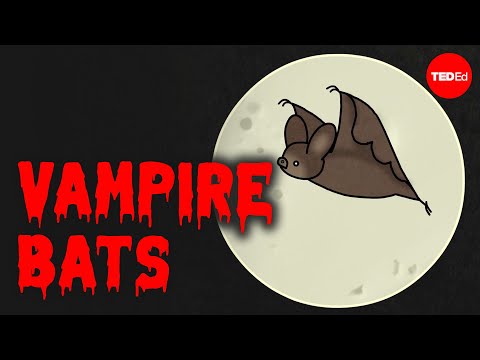
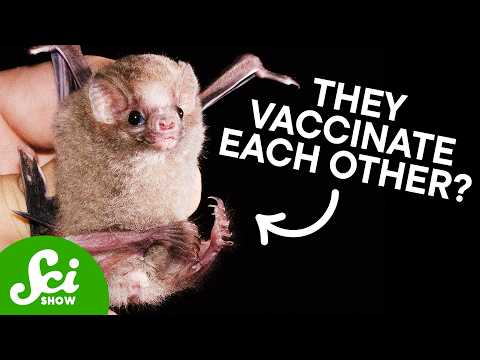
- The Desmodontinae subfamily of bats, known as vampire bats, which feed exclusively on blood.
- Metaphorical Usage
- A person who preys on others, often emotionally or financially, draining their resources or energy.
"The legend of the vampire has evolved from a terrifying peasant superstition into a sophisticated symbol of eternal life and forbidden desire in modern cinema."
In contemporary culture, vampires are often defined by a specific set of characteristics: they possess sharp fangs for piercing skin, they lack a heartbeat, and they are frequently immortal. Their weaknesses are just as iconic, including a fatal sensitivity to sunlight, an aversion to garlic, and the necessity of being invited into a home before they can enter. These tropes have been expanded in various media, from the sparkling skin in Twilight to the complex political hierarchies in Vampire: The Masquerade.
"He felt like an emotional vampire was in the room, sucking all the joy out of the conversation."
- Etymology
- Derived from the Serbian 'vampir', which entered Western European languages in the early 18th century during a period of 'vampire hysteria' in Eastern Europe.
The vampire's role in storytelling often serves as a mirror for societal fears. During the Victorian era, they represented repressed sexuality and the fear of 'foreign' contamination. In the late 20th century, they became symbols of the AIDS crisis or the loneliness of immortality. Today, they often represent the 'outsider' or the misunderstood rebel, reflecting a shift toward more sympathetic portrayals of monsters.
Using the word vampire effectively requires understanding its dual nature as both a literal monster and a powerful metaphor. When speaking literally, it is a countable noun used to describe characters in fiction or mythology. In a metaphorical sense, it describes parasitic relationships.
- Literal Application
- Used in horror, fantasy, and historical discussions about folklore. Example: 'The vampire slept in a wooden coffin.'
- Metaphorical Application
- Used to describe people who drain energy (emotional vampires) or money (financial vampires). Example: 'That high-interest loan is a financial vampire.'
"The film portrays the vampire not as a monster, but as a lonely soul cursed with eternal life."
In grammar, 'vampire' can also function as an attributive noun (a noun acting like an adjective) to modify other nouns. Common pairings include 'vampire bat', 'vampire movie', and 'vampire lore'. When using the word metaphorically, it is often paired with an adjective that specifies what is being 'drained'.
"She realized her boss was a 'time vampire', constantly calling for meetings that achieved nothing."
The word vampire is ubiquitous in modern entertainment. You will encounter it most frequently in the following contexts:
- Cinema and Television: From the classic Nosferatu to the modern What We Do in the Shadows, vampires are a staple of the screen.
- Literature: Gothic novels, young adult fiction (like The Vampire Diaries), and urban fantasy.
- Halloween: As one of the most popular costumes and decorations.
- Psychology: In the term 'energy vampire', referring to people who leave others feeling exhausted after an interaction.
"The vampire genre has seen a massive resurgence in the last decade, moving from horror to romance."
In news and science, you might hear about 'vampire power' or 'vampire energy', which refers to the electricity consumed by electronic devices while they are switched off or in standby mode. This is a common term in environmental and engineering discussions.
Learners often make specific errors when using the word vampire. Here are the most common pitfalls to avoid:
- Confusing with 'Ghoul' or 'Zombie'
- Vampires are specifically blood-drinkers and usually retain their intelligence. Ghouls eat flesh, and zombies are typically mindless.
- Spelling Errors
- Avoid spelling it as 'vampyre' unless you are intentionally using the archaic, 19th-century spelling for stylistic reasons.
- Pronunciation
- The 'i' is a long /aɪ/ sound, like 'fire'. It is not 'vam-peer'.
"Incorrect: He is a vampire because he eats brains. (Correct: He is a zombie...)"
Another mistake is overusing the word metaphorically. Calling someone a 'vampire' is a strong accusation of being parasitic. In professional settings, it is better to use more neutral terms like 'draining' or 'demanding' unless the context is informal.
While vampire is unique, it belongs to a family of supernatural and parasitic concepts. Understanding the nuances between these can improve your vocabulary precision.
- Undead
- A broad category including any being that is technically dead but behaves as if alive (vampires, zombies, ghosts).
- Parasite
- The biological or social equivalent; an organism or person that lives off another.
- Leech
- Literally a blood-sucking worm; metaphorically, a person who clings to another for gain.
- Succubus/Incubus
- Demons that drain energy or life force through sexual encounters.
"While the vampire hunts for blood, the ghost merely haunts the living."
In literary analysis, you might compare a vampire to a 'Byronic hero'—a character who is intelligent, mysterious, and emotionally tortured, yet often destructive to those around them.
How Formal Is It?
Difficulty Rating
Grammar to Know
Compound nouns (vampire bat)
Adjectives ending in -ic (vampiric)
Metaphorical language
Noun as adjective
Irregular plurals (none for vampire, but related to 'werewolves')
Examples by Level
The vampire has sharp teeth.
Le vampire a des dents pointues.
Simple subject-verb-object structure.
I see a vampire in the movie.
Je vois un vampire dans le film.
Present simple tense.
Vampires do not like the sun.
Les vampires n'aiment pas le soleil.
Negative form of present simple.
He is a scary vampire.
C'est un vampire effrayant.
Adjective before noun.
The vampire wears a red cape.
Le vampire porte une cape rouge.
Third person singular -s.
Do you like vampire stories?
Aimes-tu les histoires de vampires?
Question form with 'do'.
The vampire sleeps in a coffin.
Le vampire dort dans un cercueil.
Preposition 'in'.
Vampires drink blood.
Les vampires boivent du sang.
Plural noun usage.
Dracula is a very famous vampire.
Dracula est un vampire très célèbre.
Proper noun with 'is'.
The vampire turned into a small bat.
Le vampire s'est transformé en une petite chauve-souris.
Past simple 'turned'.
Vampires cannot see themselves in mirrors.
Les vampires ne peuvent pas se voir dans les miroirs.
Modal verb 'cannot'.
She dressed as a vampire for the party.
Elle s'est déguisée en vampire pour la fête.
Phrasal verb 'dress as'.
Many vampire legends come from Europe.
Beaucoup de légendes de vampires viennent d'Europe.
Quantifier 'many'.
The vampire lives in a dark castle.
Le vampire vit dans un château sombre.
Adjective 'dark' modifying 'castle'.
He has a vampire bat as a pet.
Il a une chauve-souris vampire comme animal de compagnie.
Noun as adjective 'vampire bat'.
Vampires are afraid of garlic.
Les vampires ont peur de l'ail.
Adjective phrase 'afraid of'.
The novel explores the life of a lonely vampire.
Le roman explore la vie d'un vampire solitaire.
Present simple for literary analysis.
I felt like an energy vampire was draining me.
J'avais l'impression qu'un vampire énergétique m'épuisait.
Metaphorical usage.
Vampires are often depicted as immortal beings.
Les vampires sont souvent représentés comme des êtres immortels.
Passive voice 'are depicted'.
The movie features a war between vampires and werewolves.
Le film met en scène une guerre entre vampires et loups-garous.
Preposition 'between'.
She has a collection of old vampire movies.
Elle a une collection de vieux films de vampires.
Compound noun 'vampire movies'.
According to the legend, a stake can kill a vampire.
Selon la légende, un pieu peut tuer un vampire.
Introductory phrase 'According to'.
The vampire's skin was pale and cold.
La peau du vampire était pâle et froide.
Possessive 's.
He is obsessed with vampire folklore.
Il est obsédé par le folklore des vampires.
Adjective + preposition 'obsessed with'.
The film reinterprets the vampire myth for a modern audience.
Le film réinterprète le mythe du vampire pour un public moderne.
Prefix 're-' in 'reinterprets'.
The company was accused of being a financial vampire.
L'entreprise a été accusée d'être un vampire financier.
Metaphorical noun phrase.
Vampire bats are the only mammals that feed on blood.
Les chauves-souris vampires sont les seuls mammifères qui se nourrissent de sang.
Relative clause 'that feed on blood'.
The gothic atmosphere was perfect for a vampire story.
L'atmosphère gothique était parfaite pour une histoire de vampire.
Adjective 'gothic'.
He wrote a thesis on the evolution of vampire literature.
Il a écrit une thèse sur l'évolution de la littérature de vampires.
Preposition 'on' for topics.
The vampire archetype has changed significantly over time.
L'archétype du vampire a considérablement changé au fil du temps.
Present perfect 'has changed'.
She described her ex-boyfriend as an emotional vampire.
Elle a décrit son ex-petit ami comme un vampire émotionnel.
Simile 'as a'.
The legend of the vampire originated in Eastern Europe.
La légende du vampire est née en Europe de l'Est.
Verb 'originated' with 'in'.
The vampire serves as a poignant metaphor for societal decay.
Le vampire sert de métaphore poignante du déclin sociétal.
Advanced vocabulary 'poignant', 'decay'.
Critics argue that the vampire represents repressed Victorian desires.
Les critiques soutiennent que le vampire représente les désirs victoriens refoulés.
Subordinate clause with 'that'.
The parasitic nature of the vampire is mirrored in the protagonist's behavior.
La nature parasitique du vampire se reflète dans le comportement du protagoniste.
Passive voice 'is mirrored'.
Vampire folklore is deeply intertwined with historical plagues.
Le folklore des vampires est profondément lié aux pestes historiques.
Participle adjective 'intertwined'.
The author deconstructs the traditional vampire tropes in her latest novel.
L'auteur déconstruit les tropes traditionnels du vampire dans son dernier roman.
Literary verb 'deconstructs'.
The cinematic portrayal of the vampire has become increasingly sympathetic.
La représentation cinématographique du vampire est devenue de plus en plus sympathique.
Adverbial phrase 'increasingly sympathetic'.
Vampire power consumption is a significant concern for energy efficiency.
La consommation d'énergie vampire est une préoccupation majeure pour l'efficacité énergétique.
Technical jargon.
The Byronic hero is often seen as a precursor to the modern vampire.
Le héros byronien est souvent considéré comme un précurseur du vampire moderne.
Noun 'precursor'.
The vampire mythos is a perennial exploration of the human psyche.
Le mythe du vampire est une exploration pérenne de la psyché humaine.
Sophisticated noun 'mythos'.
One might posit that the vampire is the ultimate consumer in a capitalist framework.
On pourrait avancer que le vampire est le consommateur ultime dans un cadre capitaliste.
Academic verb 'posit'.
The ontological status of the vampire—neither dead nor alive—challenges binary logic.
Le statut ontologique du vampire—ni mort ni vivant—défie la logique binaire.
Philosophical term 'ontological'.
The narrative utilizes the vampire as a vehicle for exploring xenophobia.
Le récit utilise le vampire comme véhicule pour explorer la xénophobie.
Metaphorical 'vehicle'.
Vampiric imagery permeates the aesthetic of the 19th-century Decadent movement.
L'imagerie vampirique imprègne l'esthétique du mouvement décadent du XIXe siècle.
Verb 'permeates'.
The subtext of the vampire story often reveals underlying anxieties about bodily autonomy.
Le sous-texte de l'histoire de vampire révèle souvent des angoisses sous-jacentes concernant l'autonomie corporelle.
Complex subject 'subtext of the vampire story'.
Lest we forget, the vampire was once a symbol of the terrifyingly literal return of the dead.
De peur que nous n'oubliions, le vampire était autrefois un symbole du retour terrifiant et littéral des morts.
Archaic conjunction 'Lest'.
The ubiquity of the vampire in pop culture suggests a collective fascination with predation.
L'ubiquité du vampire dans la culture populaire suggère une fascination collective pour la prédation.
Noun 'ubiquity'.
Synonyms
Common Collocations
Common Phrases
Often Confused With
Idioms & Expressions
Easily Confused
Sentence Patterns
How to Use It
Only three species of bats are actually 'vampire bats'.
When calling a person a vampire, it is usually negative.
'Vampyre' is an old-fashioned spelling.
- Calling a zombie a vampire.
- Saying 'He is vampire'.
- Pronouncing it 'Vam-peer'.
- Thinking all bats are vampires.
- Using 'vampire' as a verb for drinking.
Tips
Use the Adjective
Instead of saying 'like a vampire', use the word 'vampiric' to sound more advanced.
Know Dracula
If you talk about vampires, mentioning 'Bram Stoker' or 'Transylvania' shows good cultural knowledge.
Energy Vampires
Use this term to describe people who drain your energy; it's a very common modern idiom.
Standard Spelling
Always use 'vampire' with an 'i' for modern writing. The 'y' version is only for old books.
The 'I' Sound
Remember it rhymes with 'tire' and 'fire'. Don't say 'vam-peer'.
Vampire Bats
When talking about animals, always specify 'vampire bat' so people don't think you mean the monster.
Countable Noun
You can say 'one vampire' or 'two vampires'. It follows normal plural rules.
Costume Context
If someone is wearing a cape and fangs, they are 'dressed as a vampire'.
Metaphorical Clues
If someone says 'my job is a vampire', they mean it is exhausting, not that it drinks blood.
Avoid Clichés
Try to describe a vampire without using the word 'fangs' immediately to make your writing more interesting.
Memorize It
Word Origin
Serbian/Slavic
Cultural Context
Vampires are one of the 'Big Four' Halloween monsters along with ghosts, witches, and werewolves.
Bram Stoker's Dracula is the definitive text that shaped modern vampire rules.
The 'Twilight' saga changed the trope by making vampires 'sparkle' in the sun instead of burning.
Practice in Real Life
Real-World Contexts
Conversation Starters
"What is your favorite vampire movie?"
"Do you believe in any urban legends about vampires?"
"Why do you think vampires are so popular in books?"
"Have you ever met someone you would call an 'energy vampire'?"
"If you were a vampire, what power would you want?"
Journal Prompts
Write a story about a vampire who hates the sight of blood.
Describe how the image of the vampire has changed from scary to romantic.
How would society change if vampires were real?
Is being immortal a blessing or a curse? Why?
Write about a time you felt like someone was draining your energy.
Frequently Asked Questions
10 questionsNo, they are mythical creatures from folklore. However, vampire bats and 'vampire' insects like mosquitoes exist in nature.
In legends, blood is the 'life force'. Drinking it allows the undead to maintain a semblance of life and strength.
According to most legends, no. This is because mirrors were once thought to reflect the soul, and vampires are said to have no soul.
Common methods in stories include a wooden stake through the heart, sunlight, fire, or decapitation.
In literature, Lord Ruthven (1819) was one of the first. In history, Vlad the Impaler is often cited as the inspiration for Dracula.
It is a slang term for a person who emotionally exhausts the people around them through constant complaining or attention-seeking.
In many folklore traditions, a vampire cannot enter a private home unless the owner explicitly invites them.
Garlic was historically used as a medicinal herb to ward off disease and 'evil spirits', which eventually became part of vampire lore.
It is the electricity that appliances use when they are plugged in but not being used, like a TV in standby mode.
No, it is a modern 'reimagining' that changes many traditional rules, such as vampires being able to go out in daylight (though they sparkle).
Test Yourself 180 questions
/ 180 correct
Perfect score!
Summary
The word 'vampire' describes both a literal blood-drinking monster from folklore and a metaphorical parasite that drains energy, money, or time from others.
- A mythical 'undead' creature that drinks blood to survive.
- Commonly features fangs, immortality, and a weakness to sunlight.
- Popularized by Bram Stoker's Dracula and modern pop culture.
- Used metaphorically for people or things that drain energy or resources.
Use the Adjective
Instead of saying 'like a vampire', use the word 'vampiric' to sound more advanced.
Know Dracula
If you talk about vampires, mentioning 'Bram Stoker' or 'Transylvania' shows good cultural knowledge.
Energy Vampires
Use this term to describe people who drain your energy; it's a very common modern idiom.
Standard Spelling
Always use 'vampire' with an 'i' for modern writing. The 'y' version is only for old books.
Example
Vampire legends are popular in folklore.
Related Content
More Other words
abate
C1To become less intense, active, or severe, or to reduce the amount or degree of something. It is most commonly used to describe the subsiding of natural phenomena, emotions, or legal nuisances.
abcarndom
C1To intentionally deviate from a fixed sequence or established pattern in favor of a randomized or non-linear approach. It is often used in technical or analytical contexts to describe the process of breaking a structured flow to achieve a more varied result.
abcenthood
C1The state, condition, or period of being absent, particularly in a role where one's presence is expected or required. It often refers to a prolonged or systemic lack of participation in a social, parental, or professional capacity.
abcitless
C1A noun referring to the state of being devoid of essential logical progression or a fundamental missing component within a theoretical framework. It describes a specific type of structural absence that renders a system or argument incomplete.
abcognacy
C1The state of being unaware or lacking knowledge about a specific subject, situation, or fact. It describes a condition of non-recognition or a gap in cognitive awareness, often used in technical or specialized academic contexts.
abdocion
C1Describing a movement, force, or logical process that leads away from a central axis or established standard. It is primarily used in specialized technical contexts to describe muscles pulling a limb away from the body or ideas that diverge from a main thesis.
abdocly
C1Describing something that is tucked away, recessed, or occurring in a hidden manner that is not immediately visible to the observer. It is primarily used in technical or academic contexts to denote structural elements or biological processes that are concealed within a larger system.
aberration
B2A departure from what is normal, usual, or expected, typically one that is unwelcome. It refers to a temporary change or a deviation from the standard path or rule.
abfacible
C1To systematically strip or remove the external surface or facade of a structure or material for analysis, restoration, or cleaning. It specifically refers to the technical act of uncovering underlying layers while preserving the integrity of the core material.
abfactency
C1Describing a quality or state of being fundamentally disconnected from empirical facts or objective reality. It is typically used to characterize arguments or theories that are logically consistent within themselves but have no basis in actual evidence. This term highlights a sophisticated departure from what is observable in favor of what is purely speculative.

