venezuela in 30 Seconds
- Venezuela is a sovereign nation in northern South America, famous for its oil and Angel Falls.
- As a proper noun, it identifies a specific country and does not usually take an article.
- The name likely means 'Little Venice,' inspired by indigenous stilt houses on Lake Maracaibo.
- It is a key global player in energy markets and a center of South American culture.
- Geopolitical Context
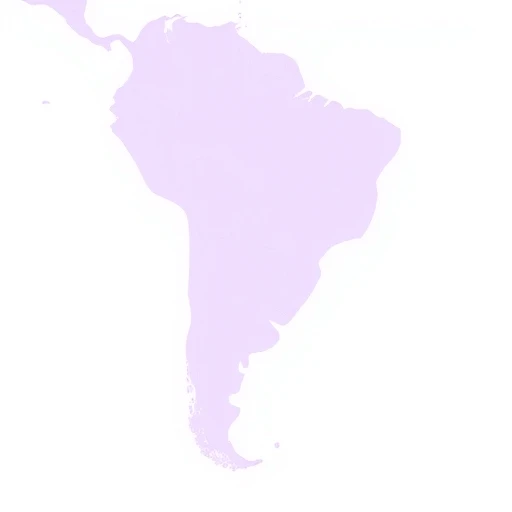
- Venezuela is a federal presidential republic consisting of twenty-three states, the Capital District, and federal dependencies. It is bordered by the Caribbean Sea and the Atlantic Ocean to the north, Guyana to the east, Brazil to the south, and Colombia to the west.
The economic stability of the region is often tied to the fluctuating oil prices in Venezuela.
Many tourists are drawn to Venezuela to witness the majestic beauty of Angel Falls in Canaima National Park.
- Economic Significance
- Historically, Venezuela has been a founding member of the Organization of the Petroleum Exporting Countries, highlighting its central role in global energy markets throughout the twentieth and twenty-first centuries.
Diplomatic relations between the United States and Venezuela have seen significant shifts over the last several decades.
The cultural influence of Venezuela is evident in the global popularity of its musicians and baseball players.
- Cultural Identity
- The term encompasses the collective identity of over twenty-eight million people, known as Venezuelans, who share a common language, Spanish, and a diverse heritage of European, Indigenous, and African roots.
Scientists are currently studying the unique flora and fauna that are endemic to the tepuis of southern Venezuela.
- Subject Position
- Venezuela offers some of the most diverse landscapes in South America, ranging from beaches to mountains.
During the nineteenth century, Venezuela was at the forefront of the South American independence movement.
The migratory patterns of birds often lead them through the wetlands of Venezuela during the winter months.
- Object of Preposition
- The international community has closely monitored the humanitarian situation within Venezuela over the past decade.
Investment in the infrastructure of Venezuela was at an all-time high during the mid-twentieth century oil boom.
The history of Venezuela is inextricably linked to the life and legacy of the Liberator, Simón Bolívar.
- Possessive Form
- Venezuela's natural beauty is unparalleled, featuring the world's highest waterfall and vast, untouched rainforests.
Many expatriates from Venezuela have settled in neighboring countries like Colombia and Brazil.
- News and Media
- Journalists use the word to report on humanitarian issues, elections, and diplomatic negotiations involving the South American nation.
Breaking news: The United Nations has released a new report on the environmental challenges facing Venezuela.
The commentator noted that several of the league's top shortstops originally hail from Venezuela.
- Academic and Scientific Discourse
- Biologists and geologists frequently refer to Venezuela when discussing the unique biodiversity of the Guiana Highlands or the tectonic activity of the Caribbean plate.
The professor explained that the Orinoco River in Venezuela is one of the longest river systems in South America.
The documentary showcased the traditional music of Venezuela, highlighting the use of the cuatro and the harp.
- International Diplomacy
- At the United Nations General Assembly, the word is used to identify the delegation and the sovereign interests of the country.
The summit concluded with a joint statement regarding the restoration of democratic institutions in Venezuela.
- Spelling Errors
- Common misspellings include 'Venezuala' and 'Venezula'. Always remember the 'e' before the 'z' and the 'e' after the 'u'.
Incorrect: I am planning a trip to Venezuala next year. Correct: I am planning a trip to Venezuela next year.
Incorrect: The Venezuela is famous for its oil. Correct: Venezuela is famous for its oil.
- Adjective vs. Noun Confusion
- Learners often use the noun 'Venezuela' when they should use the adjective 'Venezuelan'. For example, saying 'Venezuela food' instead of 'Venezuelan food'.
Incorrect: He is a Venezuela citizen. Correct: He is a Venezuelan citizen.
Incorrect: We are studying the Venezuela history. Correct: We are studying the history of Venezuela or Venezuelan history.
- Capitalization
- Always capitalize the 'V'. Writing 'venezuela' in lowercase is a grammatical error in English.
Incorrect: The capital of venezuela is Caracas. Correct: The capital of Venezuela is Caracas.
- The Bolivarian Republic of Venezuela
- The full, formal name of the country, used in legal documents, treaties, and official government communications.
The ambassador presented his credentials to the government of the Bolivarian Republic of Venezuela.
As a leading petrostate, Venezuela plays a crucial role in determining global energy policies.
- South American Nation
- A broader categorical term that places Venezuela within its continental context.
Many South American nations, including Venezuela, are working together to address regional environmental concerns.
The beauty of the landscape is undeniable; indeed, the nation of Venezuela boasts some of the world's most unique geological formations.
- Neighboring Countries
- While not synonyms, Colombia and Brazil are often mentioned alongside Venezuela due to their shared borders and regional ties.
Trade between Venezuela and its neighbor, Colombia, has a significant impact on the local economies of border towns.
How Formal Is It?
Fun Fact
Christopher Columbus was so moved by the beauty of the Venezuelan coast during his third voyage in 1498 that he referred to it as 'Tierra de Gracia' (Land of Grace), believing he had found the gates of the terrestrial paradise.
Pronunciation Guide
- Pronouncing the 'z' as an 's' (Spanish style) instead of the English 'z'.
- Misplacing the stress on the second syllable.
- Omitting the 'e' sound in the second syllable.
- Pronouncing the 'u' as 'oo' instead of 'w'.
- Ending the word with an 'er' sound instead of 'ah'.
Difficulty Rating
The word is easy to recognize but spelling can be tricky for beginners.
Requires correct capitalization and specific spelling (z instead of s).
The stress on the third syllable can be difficult for some learners.
Easily distinguishable in most accents.
What to Learn Next
Prerequisites
Learn Next
Advanced
Grammar to Know
Proper Nouns
Venezuela must always be capitalized.
Zero Article with Countries
We say 'Venezuela is beautiful,' not 'The Venezuela is beautiful.'
Possessive Proper Nouns
Venezuela's resources are vast.
Prepositions of Place
I am currently in Venezuela.
Adjective Formation
The adjective for Venezuela is Venezuelan.
Examples by Level
Venezuela is a country.
Venezuela est un pays.
Proper noun, no article.
I live in Venezuela.
J'habite au Venezuela.
Use the preposition 'in'.
Venezuela is big.
Le Venezuela est grand.
Subject of the sentence.
Is Venezuela in South America?
Le Venezuela est-il en Amérique du Sud ?
Question form.
Venezuela has oil.
Le Venezuela a du pétrole.
Third person singular verb.
I like Venezuela.
J'aime le Venezuela.
Direct object.
Venezuela is warm.
Il fait chaud au Venezuela.
Adjective following the verb 'to be'.
Go to Venezuela.
Allez au Venezuela.
Imperative form.
Venezuela has many beautiful beaches.
Le Venezuela a beaucoup de belles plages.
Noun + plural adjective.
The capital of Venezuela is Caracas.
La capitale du Venezuela est Caracas.
Possessive structure with 'of'.
Venezuela is next to Colombia.
Le Venezuela est à côté de la Colombie.
Prepositional phrase 'next to'.
Many people visit Venezuela for its nature.
Beaucoup de gens visitent le Venezuela pour sa nature.
Reasoning with 'for'.
Venezuela is famous for Angel Falls.
Le Venezuela est célèbre pour les chutes de l'Ange.
Adjective + preposition 'for'.
I want to learn about Venezuela.
Je veux en savoir plus sur le Venezuela.
Infinitive phrase.
Venezuela exports a lot of oil.
Le Venezuela exporte beaucoup de pétrole.
Transitive verb.
Have you ever been to Venezuela?
Êtes-vous déjà allé au Venezuela ?
Present perfect question.
Venezuela's landscape is incredibly diverse.
Le paysage du Venezuela est incroyablement diversifié.
Possessive 's.
The history of Venezuela is very interesting.
L'histoire du Venezuela est très intéressante.
Noun phrase as subject.
Venezuela became independent in the 19th century.
Le Venezuela est devenu indépendant au XIXe siècle.
Past simple tense.
Traveling across Venezuela can be an adventure.
Voyager à travers le Venezuela peut être une aventure.
Gerund as subject.
Venezuela is a founding member of OPEC.
Le Venezuela est un membre fondateur de l'OPEP.
Appositive phrase.
The climate in Venezuela varies by region.
Le climat au Venezuela varie selon les régions.
Prepositional phrase.
Venezuela has faced many economic challenges.
Le Venezuela a été confronté à de nombreux défis économiques.
Present perfect with 'faced'.
We studied the geography of Venezuela in school.
Nous avons étudié la géographie du Venezuela à l'école.
Direct object of the verb 'studied'.
Venezuela possesses the largest proven oil reserves in the world.
Le Venezuela possède les plus grandes réserves de pétrole prouvées au monde.
Formal verb 'possesses'.
The political situation in Venezuela is often discussed in the news.
La situation politique au Venezuela est souvent discutée dans les informations.
Passive voice.
Venezuela's cultural impact is felt throughout Latin America.
L'impact culturel du Venezuela se fait sentir dans toute l'Amérique latine.
Possessive form with 'impact'.
Many scientists travel to Venezuela to study its unique biodiversity.
De nombreux scientifiques se rendent au Venezuela pour étudier sa biodiversité unique.
Infinitive of purpose.
Venezuela has a long tradition of producing world-class baseball players.
Le Venezuela a une longue tradition de formation de joueurs de baseball de classe mondiale.
Complex noun phrase.
The Orinoco River flows through the heart of Venezuela.
L'Orénoque coule au cœur du Venezuela.
Prepositional phrase 'through the heart of'.
Venezuela's architecture reflects its colonial and modern history.
L'architecture du Venezuela reflète son histoire coloniale et moderne.
Parallel adjectives.
The government of Venezuela has implemented new trade policies.
Le gouvernement du Venezuela a mis en œuvre de nouvelles politiques commerciales.
Compound subject.
The socio-economic crisis in Venezuela has led to significant regional migration.
La crise socio-économique au Venezuela a entraîné une migration régionale importante.
Complex subject with 'socio-economic'.
Venezuela's geopolitical strategy has shifted significantly over the last decade.
La stratégie géopolitique du Venezuela a considérablement changé au cours de la dernière décennie.
Adverbial modification 'significantly'.
The biodiversity of southern Venezuela is protected within several national parks.
La biodiversité du sud du Venezuela est protégée au sein de plusieurs parcs nationaux.
Passive voice with 'is protected'.
Venezuela's membership in regional blocs has been a subject of intense debate.
L'appartenance du Venezuela aux blocs régionaux a fait l'objet d'un débat intense.
Perfect passive infinitive context.
The legal framework of Venezuela has undergone numerous revisions since 1999.
Le cadre juridique du Venezuela a subi de nombreuses révisions depuis 1999.
Formal verb 'undergone'.
Venezuela remains a pivotal player in the global energy landscape.
Le Venezuela reste un acteur pivot dans le paysage énergétique mondial.
Linking verb 'remains'.
The literary tradition in Venezuela includes many influential poets and novelists.
La tradition littéraire au Venezuela comprend de nombreux poètes et romanciers influents.
Collective noun phrase.
Understanding the history of Venezuela is essential for grasping South American politics.
Comprendre l'histoire du Venezuela est essentiel pour saisir la politique sud-américaine.
Gerund phrase as subject.
The intricate interplay between politics and oil in Venezuela defines its modern era.
L'interaction complexe entre la politique et le pétrole au Venezuela définit son ère moderne.
Complex noun phrase 'intricate interplay'.
Venezuela's sovereign debt restructuring remains a focal point for international creditors.
La restructuration de la dette souveraine du Venezuela reste un point focal pour les créanciers internationaux.
Financial terminology.
The hyperinflationary environment in Venezuela has necessitated radical fiscal measures.
L'environnement hyperinflationniste au Venezuela a nécessité des mesures budgétaires radicales.
Technical adjective 'hyperinflationary'.
Scholars often analyze Venezuela through the lens of post-colonial theory.
Les chercheurs analysent souvent le Venezuela sous l'angle de la théorie postcoloniale.
Metaphorical phrase 'through the lens of'.
The environmental degradation in parts of Venezuela is a cause for global concern.
La dégradation de l'environnement dans certaines parties du Venezuela est une source de préoccupation mondiale.
Formal noun 'degradation'.
Venezuela's diplomatic isolation has prompted it to seek new international alliances.
L'isolement diplomatique du Venezuela l'a poussé à rechercher de nouvelles alliances internationales.
Causative structure.
The resilience of the Venezuelan people in Venezuela is a testament to their cultural strength.
La résilience du peuple vénézuélien au Venezuela témoigne de sa force culturelle.
Abstract noun 'resilience'.
The constitutional crisis in Venezuela has raised fundamental questions about democratic governance.
La crise constitutionnelle au Venezuela a soulevé des questions fondamentales sur la gouvernance démocratique.
Perfect tense with 'raised'.
Synonyms
Antonyms
Common Collocations
Common Phrases
— Used to identify products that were manufactured within the country.
This high-quality chocolate was made in Venezuela.
— A playful phrase used when sending gifts or messages from the country.
I sent a postcard to my friend, signed 'From Venezuela with love'.
— Refers to the central region or the most essential part of the country's culture.
The Llanos are often called the heart of Venezuela.
— Used to describe something that happens throughout the entire country.
Protests were held across Venezuela yesterday.
— Refers to remote or interior parts of the country, like the Amazon.
They discovered a new species of frog deep in Venezuela.
— Refers to the upcoming prospects or potential of the nation.
Many young people are concerned about Venezuela's future.
— A general phrase used to praise the country's natural landscapes.
No one can deny the incredible beauty of Venezuela.
— Describes the experience of residing within the country.
Living in Venezuela requires adapting to various economic changes.
— Refers to the citizens or inhabitants of the country as a group.
The people of Venezuela are known for their hospitality.
— Refers to a journey or vacation taken to the country.
We are planning a trip to Venezuela to see the tepuis.
Often Confused With
This is a city in the Philippines, not the South American country.
This is an island nation in the South Pacific, often confused due to the similar starting letter.
This is the adjective or the demonym, while Venezuela is the noun for the country.
Idioms & Expressions
— Used metaphorically to describe a place that is rich in a specific resource, similar to how Venezuela is rich in oil.
This region is becoming the Venezuela of lithium production.
Journalistic— The literal translation of the name Venezuela, sometimes used in historical storytelling.
Vespucci saw the stilt houses and called the land Little Venice.
Historical— Refers to the ideal of a united and independent Latin America, strongly associated with Venezuela.
The leader spoke of reviving the Bolivarian dream in Venezuela.
Political— A phrase often used to describe the rapid development of Venezuela during the 20th century.
Venezuela experienced decades of oil-fueled growth.
Economic— A descriptive idiom for Venezuela due to its northern location.
Venezuela has historically served as the gateway to South America.
Geographical— An informal term used to describe Venezuela's success in international beauty pageants.
With so many winners, Venezuela is often called the Miss Factory.
Informal— Refers to the steady flow of talented players from Venezuela to the United States.
The baseball pipeline from Venezuela remains strong despite the crisis.
Sports— Often used to describe the ancient tepuis of southern Venezuela, inspired by Arthur Conan Doyle's novel.
The tepuis of Venezuela are a true Lost World of unique species.
Literary/Travel— The use of oil wealth to influence international relations, a hallmark of Venezuelan foreign policy.
Venezuela used petro-diplomacy to build alliances in the Caribbean.
Political— A nickname for Venezuela ('Tierra de Gracia') given by Christopher Columbus.
Columbus was so impressed by the beauty that he called Venezuela the land of grace.
Historical/PoeticEasily Confused
Learners often use the noun when they need the adjective.
Venezuela is the country (noun); Venezuelan is the person or thing from there (adjective).
I love Venezuela (country), and I love Venezuelan (adjective) food.
Some might use the capital city's name to refer to the whole country.
Caracas is just the capital city, while Venezuela is the entire nation.
Caracas is in Venezuela.
Neighboring countries with similar histories and flags.
They are two distinct sovereign nations with different governments.
Venezuela is to the east of Colombia.
The Italian name for Venice, which is the root of Venezuela.
Venezia is a city in Italy; Venezuela is a country in South America.
Vespucci named Venezuela after Venezia.
The name of the currency and the national hero.
Bolívar is a person or a unit of money; Venezuela is the country.
The currency of Venezuela is the Bolívar.
Sentence Patterns
[Subject] is [Adjective].
Venezuela is beautiful.
[Subject] has [Noun].
Venezuela has many mountains.
[Subject] is located in [Region].
Venezuela is located in South America.
[Subject] is known for [Gerund/Noun].
Venezuela is known for producing oil.
The [Noun] of [Subject] has [Verb].
The economy of Venezuela has faced challenges.
Given its [Noun], [Subject] remains [Adjective].
Given its vast resources, Venezuela remains a key player.
I am from [Subject].
I am from Venezuela.
Have you been to [Subject]?
Have you been to Venezuela?
Word Family
Nouns
Adjectives
Related
How to Use It
Common in news, geography, and sports contexts.
-
Using 'the' before Venezuela.
→
Venezuela is a beautiful country.
In English, we do not use the definite article 'the' before the names of most countries. You should only use 'the' if the name includes a word like 'Republic' or 'Kingdom'.
-
Spelling it as 'Venezuala'.
→
Venezuela
The correct spelling ends in '-uela', not '-uala'. This is a very common spelling error for learners who are not familiar with the word's origin.
-
Using 'Venezuela' as an adjective.
→
I love Venezuelan food.
While 'Venezuela' can sometimes be used as a noun adjunct, 'Venezuelan' is the proper adjective form to describe things or people from the country.
-
Misplacing the word stress.
→
ven-e-ZUE-la
Many learners put the stress on the second syllable (ven-E-zuela), but in English, the stress should be on the third syllable (ven-e-ZUE-la).
-
Confusing Venezuela with Colombia.
→
Venezuela and Colombia are neighbors.
Although they share a border and similar flags, they are two different countries with distinct identities. Be careful not to use the names interchangeably.
Tips
The 'Z' Factor
Always remember that in English, Venezuela is spelled with a 'z'. This is different from some other languages, but it is the standard in English-speaking countries.
No 'The' Needed
Don't say 'the Venezuela'. It sounds unnatural to native speakers. Just use the name of the country on its own in almost every situation.
Stress the 'Zue'
The most important part of the pronunciation is the third syllable. Make sure you say 'ven-e-ZUE-la' to be clearly understood.
Noun vs Adjective
Use 'Venezuela' for the place and 'Venezuelan' for the people or things. For example: 'I am from Venezuela' but 'I am Venezuelan'.
Northern Coast
Remember that Venezuela is at the very top of South America. This helps you remember it is a Caribbean country as well as a South American one.
Simón Bolívar
If you want to understand Venezuela, learn about Simón Bolívar. His name and legacy are everywhere in the country.
Oil and Energy
When you hear about Venezuela in the news, it is almost always related to oil. This is the key to understanding its global importance.
Angel Falls
Associate Venezuela with Angel Falls. It is the tallest waterfall in the world and a major symbol of the country's natural beauty.
Be Sensitive
When talking to people from Venezuela, be aware of the difficult times the country has faced recently. It's a sensitive topic for many.
Use a Map
Looking at a map while you learn about Venezuela helps you visualize its neighbors and its long coastline, making the word more memorable.
Memorize It
Mnemonic
Think of 'Venice' + 'u' + 'ela'. Venezuela is the 'Little Venice' of South America. Remember the 'z' for the 'zest' of its culture and the 'oil' that starts with 'o' (though it's not in the name, it's the country's heart).
Visual Association
Imagine a map of South America with a giant oil drop on the top coast, and a tiny gondola (from Venice) floating in a lake nearby.
Word Web
Challenge
Try to write three sentences about Venezuela using the words 'oil', 'waterfall', and 'South America' without using the word 'the' before Venezuela.
Word Origin
The name Venezuela is traditionally attributed to the Italian explorer Amerigo Vespucci, who accompanied Alonso de Ojeda on a 1499 expedition to the northwestern coast. Upon seeing the indigenous stilt houses (palafitos) built over the water in Lake Maracaibo, Vespucci was reminded of Venice, Italy. He named the region 'Veneziola', which means 'Little Venice' in Italian. The Spanish version of this name became 'Venezuela'.
Original meaning: Little Venice
Romance (Spanish from Italian)Cultural Context
When discussing Venezuela, be sensitive to the ongoing socio-economic and political challenges faced by its citizens. Avoid making light of the humanitarian situation.
In the English-speaking world, Venezuela is most commonly associated with its political and economic situation in the news, as well as its contributions to Major League Baseball.
Practice in Real Life
Real-World Contexts
Geography Class
- Where is Venezuela located?
- What are the borders of Venezuela?
- The climate of Venezuela
- The mountains in Venezuela
International News
- The situation in Venezuela
- Venezuela's oil production
- Elections in Venezuela
- Sanctions on Venezuela
Travel Planning
- Flights to Venezuela
- Visiting Venezuela
- Safety in Venezuela
- Touring Venezuela
Sports Commentary
- The player from Venezuela
- Venezuela's national team
- Baseball in Venezuela
- Representing Venezuela
Cooking/Food
- Traditional food from Venezuela
- The flavors of Venezuela
- Cooking in Venezuela
- Venezuela's famous arepas
Conversation Starters
"Have you ever considered traveling to Venezuela to see Angel Falls?"
"What do you know about the history of Venezuela and Simón Bolívar?"
"How has the oil industry shaped the economy of Venezuela over the years?"
"Have you ever tried any traditional food from Venezuela, like arepas?"
"What is the most interesting fact you have learned about Venezuela recently?"
Journal Prompts
Imagine you are exploring the tepuis in southern Venezuela. Describe what you see and feel.
Write about the importance of the Orinoco River to the people and environment of Venezuela.
Discuss how the name 'Little Venice' reflects the early history and geography of Venezuela.
If you could visit any city in Venezuela, which one would it be and why?
Reflect on the global impact of Venezuela's oil reserves on international politics.
Frequently Asked Questions
10 questionsIn English, you should just say 'Venezuela'. We do not use the definite article 'the' with most country names. The only exception is if you use the full official name, 'the Bolivarian Republic of Venezuela'. For example, 'I am going to Venezuela' is correct.
It is spelled V-E-N-E-Z-U-E-L-A. A common mistake is to spell it with an 's' instead of a 'z', or to forget the 'e' after the 'u'. Always remember it has four syllables: Ven-e-zue-la.
The capital of Venezuela is Caracas. It is the largest city in the country and serves as the center of government, culture, and economy. It is located in a valley in the northern part of the country.
The official language of Venezuela is Spanish. However, there are also many indigenous languages spoken by various ethnic groups throughout the country, such as Wayuu, Warao, and Pemon.
Venezuela is famous for having the world's largest oil reserves, the world's highest waterfall (Angel Falls), and a very successful history in international beauty pageants. It is also known for its baseball players and delicious food like arepas.
Venezuela is located on the northern coast of South America. It borders the Caribbean Sea to the north, Colombia to the west, Brazil to the south, and Guyana to the east.
The currency of Venezuela is the Bolívar (specifically the Bolívar Digital or Bolívar Soberano, depending on the current denomination). It is named after the independence hero Simón Bolívar.
Yes, Venezuela is a founding member of the Organization of the Petroleum Exporting Countries (OPEC). It has played a major role in the organization since its creation in 1960.
The name Venezuela means 'Little Venice'. It was named by explorers who saw indigenous houses built on stilts over Lake Maracaibo, which reminded them of the canals and buildings of Venice, Italy.
Historically, Simón Bolívar is the most famous person from Venezuela. In modern times, people might know the conductor Gustavo Dudamel, or baseball stars like Miguel Cabrera and Ronald Acuña Jr.
Test Yourself 200 questions
Describe the geography of Venezuela in three sentences.
Well written! Good try! Check the sample answer below.
Write a short paragraph about the importance of oil to Venezuela.
Well written! Good try! Check the sample answer below.
Explain why Venezuela is called 'Little Venice'.
Well written! Good try! Check the sample answer below.
Compare the climate of northern and southern Venezuela.
Well written! Good try! Check the sample answer below.
Write a letter to a friend describing a fictional trip to Caracas.
Well written! Good try! Check the sample answer below.
Discuss the cultural significance of baseball in Venezuela.
Well written! Good try! Check the sample answer below.
Describe the traditional food of Venezuela.
Well written! Good try! Check the sample answer below.
Explain the role of Simón Bolívar in the history of Venezuela.
Well written! Good try! Check the sample answer below.
Write about the environmental diversity found in Venezuela.
Well written! Good try! Check the sample answer below.
Discuss the impact of the Orinoco River on Venezuela's development.
Well written! Good try! Check the sample answer below.
What are some common misconceptions about Venezuela?
Well written! Good try! Check the sample answer below.
Write a summary of Venezuela's participation in OPEC.
Well written! Good try! Check the sample answer below.
Describe the beauty of Angel Falls in Venezuela.
Well written! Good try! Check the sample answer below.
How does the location of Venezuela affect its trade?
Well written! Good try! Check the sample answer below.
Write a short biography of a famous person from Venezuela.
Well written! Good try! Check the sample answer below.
Describe the flag of Venezuela and its meaning.
Well written! Good try! Check the sample answer below.
Discuss the challenges facing modern Venezuela.
Well written! Good try! Check the sample answer below.
Write a travel itinerary for a week in Venezuela.
Well written! Good try! Check the sample answer below.
How has Venezuelan music influenced other cultures?
Well written! Good try! Check the sample answer below.
Describe the stilt houses that inspired the name Venezuela.
Well written! Good try! Check the sample answer below.
Pronounce the word 'Venezuela' correctly, stressing the third syllable.
Read this aloud:
You said:
Speech recognition is not supported in your browser. Try Chrome or Edge.
Talk for one minute about why someone should visit Venezuela.
Read this aloud:
You said:
Speech recognition is not supported in your browser. Try Chrome or Edge.
Describe the flag of Venezuela in English.
Read this aloud:
You said:
Speech recognition is not supported in your browser. Try Chrome or Edge.
Explain the meaning of the name 'Venezuela' to a partner.
Read this aloud:
You said:
Speech recognition is not supported in your browser. Try Chrome or Edge.
Discuss the importance of oil to the world, using Venezuela as an example.
Read this aloud:
You said:
Speech recognition is not supported in your browser. Try Chrome or Edge.
Tell a short story about an imaginary trip to Angel Falls.
Read this aloud:
You said:
Speech recognition is not supported in your browser. Try Chrome or Edge.
Describe your favorite Venezuelan food (or one you've heard of).
Read this aloud:
You said:
Speech recognition is not supported in your browser. Try Chrome or Edge.
Give a short presentation on the life of Simón Bolívar.
Read this aloud:
You said:
Speech recognition is not supported in your browser. Try Chrome or Edge.
Discuss the geographical diversity of Venezuela.
Read this aloud:
You said:
Speech recognition is not supported in your browser. Try Chrome or Edge.
Explain the difference between 'Venezuela' and 'Venezuelan'.
Read this aloud:
You said:
Speech recognition is not supported in your browser. Try Chrome or Edge.
Debate the pros and cons of relying on a single natural resource like oil.
Read this aloud:
You said:
Speech recognition is not supported in your browser. Try Chrome or Edge.
Talk about the influence of Venezuelan baseball players in the US.
Read this aloud:
You said:
Speech recognition is not supported in your browser. Try Chrome or Edge.
Describe the climate of Venezuela to someone who has never been there.
Read this aloud:
You said:
Speech recognition is not supported in your browser. Try Chrome or Edge.
Explain the significance of the Orinoco River.
Read this aloud:
You said:
Speech recognition is not supported in your browser. Try Chrome or Edge.
Talk about the cultural melting pot that is Venezuela.
Read this aloud:
You said:
Speech recognition is not supported in your browser. Try Chrome or Edge.
Describe the skyline of Caracas based on a picture.
Read this aloud:
You said:
Speech recognition is not supported in your browser. Try Chrome or Edge.
Discuss the impact of migration from Venezuela on the region.
Read this aloud:
You said:
Speech recognition is not supported in your browser. Try Chrome or Edge.
Explain what a 'tepui' is and where they are found.
Read this aloud:
You said:
Speech recognition is not supported in your browser. Try Chrome or Edge.
Talk about the success of Venezuela in beauty pageants.
Read this aloud:
You said:
Speech recognition is not supported in your browser. Try Chrome or Edge.
Summarize the history of Venezuela in two minutes.
Read this aloud:
You said:
Speech recognition is not supported in your browser. Try Chrome or Edge.
Listen to a description of Venezuela and identify the capital city.
Listen to a weather report for Caracas and note the temperature.
Listen to a short biography of Simón Bolívar and note his birth year.
Listen to a travel guide talking about Angel Falls and note its height.
Listen to a news report about oil prices and how they affect Venezuela.
Listen to a person from Venezuela describing their favorite food.
Listen to a lecture on South American geography and identify Venezuela's neighbors.
Listen to a discussion about OPEC and identify Venezuela's role.
Listen to a song about Venezuela and identify the main theme.
Listen to a podcast about the tepuis and note one unique species mentioned.
Listen to a sports broadcast about a Venezuelan baseball player.
Listen to a description of the Venezuelan flag and identify the colors.
Listen to an interview with a Venezuelan musician.
Listen to a talk on the history of the name 'Venezuela'.
Listen to a report on environmental conservation in Venezuela.
I am going to the Venezuela next week.
The capital of venezuela is Caracas.
Venezuela have a lot of oil.
I like venezuala food.
He was born in the Venezuela.
Venezuela is a south american country.
The Angel Falls is in Venezuela.
Venezuela is next to the Colombia.
We studied the Venezuela history.
Venezuela is famous for it's oil.
/ 200 correct
Perfect score!
Summary
Venezuela is a proper noun referring to a South American country known for its oil wealth and natural beauty. For example: 'Venezuela is a founding member of OPEC and home to the world's highest waterfall.'
- Venezuela is a sovereign nation in northern South America, famous for its oil and Angel Falls.
- As a proper noun, it identifies a specific country and does not usually take an article.
- The name likely means 'Little Venice,' inspired by indigenous stilt houses on Lake Maracaibo.
- It is a key global player in energy markets and a center of South American culture.
The 'Z' Factor
Always remember that in English, Venezuela is spelled with a 'z'. This is different from some other languages, but it is the standard in English-speaking countries.
No 'The' Needed
Don't say 'the Venezuela'. It sounds unnatural to native speakers. Just use the name of the country on its own in almost every situation.
Stress the 'Zue'
The most important part of the pronunciation is the third syllable. Make sure you say 'ven-e-ZUE-la' to be clearly understood.
Noun vs Adjective
Use 'Venezuela' for the place and 'Venezuelan' for the people or things. For example: 'I am from Venezuela' but 'I am Venezuelan'.