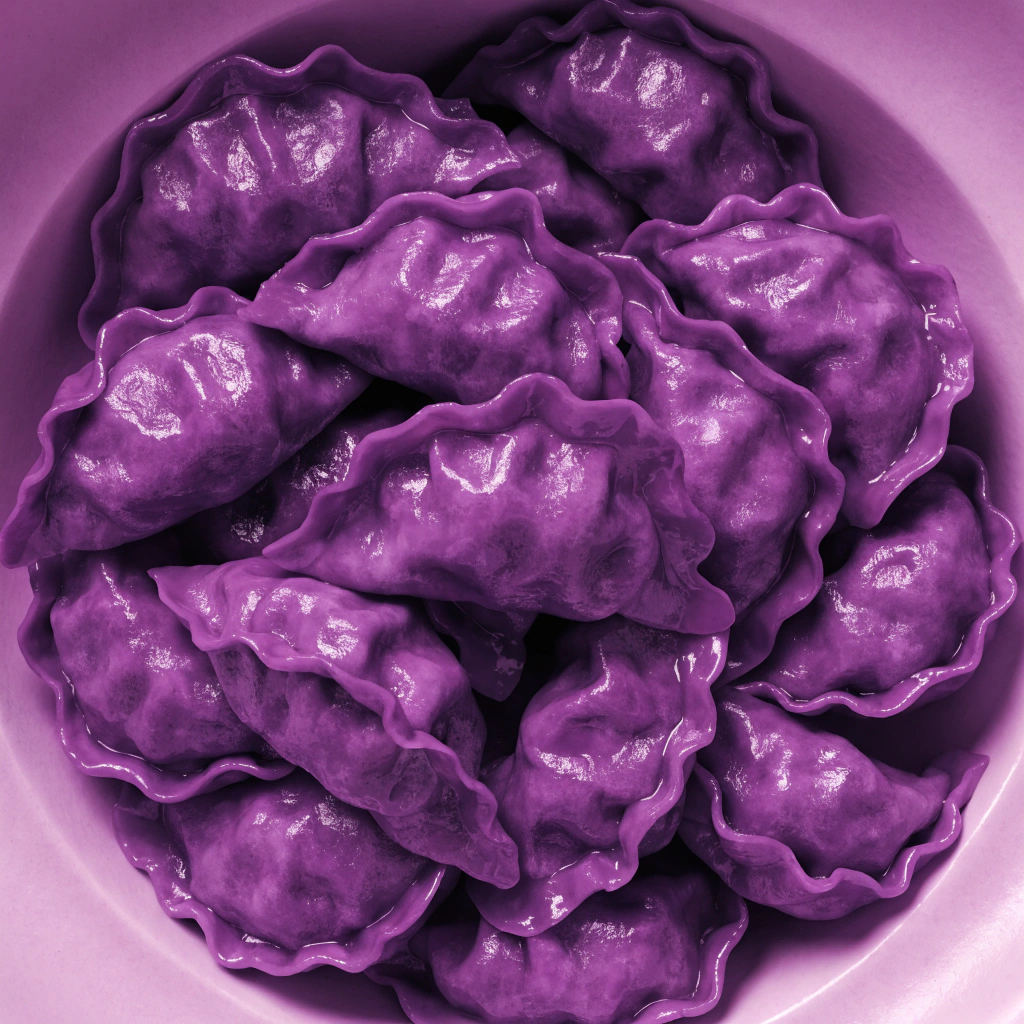
Delicious Chinese Dumplings
Chinese dumplings are called Jiaozi. They are very popular in China. People eat them for many years. They are a famous part of Chinese history.
Jiaozi are small and white. They look like ears. Inside, there is meat or vegetables. People boil them in water or fry them in a pan. They are very tasty.
Families make Jiaozi together at home. It is a special tradition for many people. They eat them during the Chinese New Year festival. Jiaozi are delicious and warm. They are the favorite food for many people in the winter.
Gramática em destaque
Padrão: Present Simple 'to be'
"They are very popular in China."
We use 'is' or 'are' to describe things. Use 'are' for plural subjects like 'they' or 'Jiaozi'.
Padrão: Present Simple (Action Verbs)
"Families make Jiaozi together."
We use the base form of the verb for plural subjects. It describes a regular habit or a fact.
Teste sua compreensão
10 perguntas · A1 Iniciante · 1 pré-visualização grátis
Teste o que aprendeu neste artigo. Responda todas as perguntas para ganhar XP!
What do Jiaozi look like?
Quer finalizar o quiz?
9 perguntas a mais estão esperando por você. Cadastre-se grátis para desbloquear o quiz completo e ganhar XP!
Cadastrar grátisJá tem conta? Entrar
Detalhamento das perguntas
What do Jiaozi look like?
Sua resposta:
Resposta correta: Ears
People eat Jiaozi during the Chinese New Year.
Sua resposta:
Resposta correta: Verdadeiro
What does 'delicious' mean?
Sua resposta:
Resposta correta: Tastes very good
People _____ Jiaozi in water.
Sua resposta:
Resposta correta: boil
The Story of Jiaozi: More Than Just a Dumpling
Jiaozi are famous Chinese dumplings. They are very important in Chinese culture. People in China have eaten them for more than 1,800 years.
A long time ago, a famous doctor named Zhang Zhongjing lived in China. During a very cold winter, many people were sick. Their ears were frozen because of the ice and snow. The doctor wanted to help them. He cooked mutton and special herbs, and then he put them inside small pieces of dough. He called them "tender ears." The people ate the hot food and felt much better.
Today, Jiaozi are a symbol of family and luck. During the Spring Festival, families meet to make dumplings together. It is a happy time because everyone helps. Some people believe that Jiaozi look like old gold coins. They think eating them brings more money in the new year.
Jiaozi are tastier than many other snacks because they are handmade. You can boil them in water or fry them in a pan. Most people eat them with soy sauce and vinegar. They are the perfect meal for a cold day.
Gramática em destaque
Padrão: Past Simple (Regular and Irregular)
"The doctor wanted to help them."
We use the Past Simple to talk about finished actions in the past. Regular verbs end in '-ed' like 'wanted', while irregular verbs like 'felt' have special forms.
Padrão: Comparatives
"Jiaozi are tastier than many other snacks because they are handmade."
We use comparatives to compare two things. For short adjectives ending in 'y', we change the 'y' to 'i' and add '-er' followed by 'than'.
Teste sua compreensão
11 perguntas · A2 Elementar · 1 pré-visualização grátis
Teste o que aprendeu neste artigo. Responda todas as perguntas para ganhar XP!
Who invented the first Jiaozi according to the story?
Quer finalizar o quiz?
10 perguntas a mais estão esperando por você. Cadastre-se grátis para desbloquear o quiz completo e ganhar XP!
Cadastrar grátisJá tem conta? Entrar
Detalhamento das perguntas
Who invented the first Jiaozi according to the story?
Sua resposta:
Resposta correta: A famous doctor
Jiaozi have been around for less than 500 years.
Sua resposta:
Resposta correta: Falso
What does 'dough' mean?
Sua resposta:
Resposta correta: A mixture of flour and water
Today, Jiaozi are a _____ of family and luck.
Sua resposta:
Resposta correta: symbol
Why did the doctor put herbs and mutton inside the dough?
Sua resposta:
Resposta correta: Because he wanted to help sick people
Jiaozi: The Heart of Chinese Traditions
Jiaozi, which are traditional Chinese dumplings, are much more than just a tasty snack. They have been a symbol of warmth and family heritage for over 1,800 years. Legend says they were invented by a famous physician named Zhang Zhongjing during the Eastern Han Dynasty. During a very cold winter, he saw many people who were suffering from frostbitten ears. To help them, he created 'tender ears,' which were small pieces of dough filled with mutton and warming herbs. This medicine was boiled and served to the poor to keep them warm.
Today, Jiaozi are especially popular in northern China. They are traditionally eaten during the Spring Festival, which is the most important holiday in the Chinese calendar. Because their shape looks like old silver money, many people believe that eating them will bring wealth and good luck in the new year. For this reason, Jiaozi have become an essential part of the midnight meal on New Year's Eve.
The process of making Jiaozi is just as important as eating them. Families usually gather together in the kitchen to prepare the dough and the fillings. This activity is seen as a way to strengthen family bonds and share stories. The dumplings are usually boiled, steamed, or fried, and they are served with a dipping sauce made of vinegar and soy sauce.
In recent years, Jiaozi have become famous all over the world. Although the recipes have changed in different countries, the heart of the tradition remains the same. Whether they are filled with meat or vegetables, these delicious dumplings continue to bring people together across different cultures.
Gramática em destaque
Padrão: Relative Clauses
"Jiaozi, which are traditional Chinese dumplings, are much more than just a tasty snack."
Relative clauses provide extra information about a noun. We use 'which' for things and 'who' for people to make sentences more descriptive.
Padrão: Passive Voice
"They are traditionally eaten during the Spring Festival."
The passive voice is used when the action is more important than the person doing it. It is formed with the verb 'to be' and the past participle.
Teste sua compreensão
11 perguntas · B1 Intermediário · 1 pré-visualização grátis
Teste o que aprendeu neste artigo. Responda todas as perguntas para ganhar XP!
Why did Zhang Zhongjing first create Jiaozi?
Quer finalizar o quiz?
10 perguntas a mais estão esperando por você. Cadastre-se grátis para desbloquear o quiz completo e ganhar XP!
Cadastrar grátisJá tem conta? Entrar
Detalhamento das perguntas
Why did Zhang Zhongjing first create Jiaozi?
Sua resposta:
Resposta correta: To treat people with frostbitten ears
Jiaozi are shaped like old silver money, which symbolizes wealth.
Sua resposta:
Resposta correta: Verdadeiro
What does 'bonds' mean in the context of family?
Sua resposta:
Resposta correta: Strong relationships
Zhang Zhongjing was a famous _____ who lived during the Eastern Han Dynasty.
Sua resposta:
Resposta correta: physician
How are Jiaozi usually cooked according to the text?
Sua resposta:
Resposta correta: By boiling, steaming, or frying
Jiaozi: The Culinary Heart of Chinese Heritage
For over eighteen centuries, the humble Jiaozi has served as a quintessential symbol of warmth and domestic heritage within Chinese culture. Legend has it that the invention of this crescent-shaped dumpling is attributed to Zhang Zhongjing, a renowned physician of the Eastern Han Dynasty. During a particularly harsh winter, Zhang reportedly observed many commoners suffering from frostbitten ears. Consequently, he developed 'tender ears'—dumplings filled with mutton and medicinal herbs—to provide both nourishment and warmth. Since its inception, Jiaozi has evolved from a medicinal remedy into a fundamental cornerstone of Chinese cuisine, particularly in the northern provinces.
Beyond its nutritional value, the preparation of Jiaozi is a deeply communal activity. During the Lunar New Year, families gather to wrap dumplings, a process that fosters intergenerational bonding. The shape of the dumpling is significant; resembling the 'yuanbao' or silver ingots used in ancient times, they are believed to bring prosperity and wealth to the household. While the traditional pork and cabbage filling remains a favorite, the versatility of Jiaozi allows for an endless array of ingredients, ranging from seafood to various vegetarian options.
The craftsmanship involved in folding the dough is considered an art form. Each fold must be meticulously executed to ensure the filling remains encased during the boiling or steaming process. Furthermore, the act of sharing a plate of Jiaozi transcends mere eating; it represents a legacy of resilience and unity. Despite the rapid modernization of Chinese society, this culinary tradition has been preserved with great pride. If Zhang Zhongjing had not sought a way to heal his community, this beloved dish might never have become the global phenomenon it is today. In contemporary times, Jiaozi continues to adapt, reflecting the changing dietary preferences of a globalized world while maintaining its ancestral soul.
Gramática em destaque
Padrão: Passive Voice
"the invention of this crescent-shaped dumpling is attributed to Zhang Zhongjing"
The passive voice is used here because the focus is on the invention itself rather than the person who believes it. It is formed using the verb 'to be' plus the past participle.
Padrão: Third Conditional
"If Zhang Zhongjing had not sought a way to heal his community, this beloved dish might never have become the global phenomenon it is today."
This structure is used to talk about imaginary situations in the past. It uses 'if' + past perfect, followed by 'might/would have' + past participle.
Padrão: Present Perfect Passive
"this culinary tradition has been preserved with great pride."
This tense emphasizes that an action started in the past and continues or has relevance to the present, focusing on the tradition being acted upon. It is formed with 'has/have been' + past participle.
Teste sua compreensão
11 perguntas · B2 Intermediário superior · 1 pré-visualização grátis
Teste o que aprendeu neste artigo. Responda todas as perguntas para ganhar XP!
According to the legend, why did Zhang Zhongjing create the first dumplings?
Quer finalizar o quiz?
10 perguntas a mais estão esperando por você. Cadastre-se grátis para desbloquear o quiz completo e ganhar XP!
Cadastrar grátisJá tem conta? Entrar
Detalhamento das perguntas
According to the legend, why did Zhang Zhongjing create the first dumplings?
Sua resposta:
Resposta correta: To treat people with frostbitten ears
Jiaozi are primarily associated with Southern Chinese cuisine rather than Northern.
Sua resposta:
Resposta correta: Falso
Which word refers to the state of being successful and wealthy?
Sua resposta:
Resposta correta: Prosperity
Making dumplings is a process that fosters intergenerational _____.
Sua resposta:
Resposta correta: bonding
What do the shapes of Jiaozi traditionally represent?
Sua resposta:
Resposta correta: Ancient silver currency
The Culinary Tapestry of Jiaozi: Heritage, Healing, and Hegemony
The enduring legacy of the Jiaozi is not merely a testament to culinary ingenuity but a profound reflection of the socio-cultural tapestry of China. For over eighteen centuries, this crescent-shaped marvel has transcended its humble origins to become a cornerstone of national identity. Legend dictates that its inception was born of necessity rather than indulgence. During the twilight of the Eastern Han Dynasty, the venerable physician Zhang Zhongjing encountered villagers suffering from frostbitten ears. His solution—an apothecary’s concoction of mutton and warming herbs encased in dough—was as much a medicinal intervention as it was a source of sustenance. Known then as 'tender ears,' these early iterations laid the foundation for what would eventually become the quintessential Chinese dumpling.
Central to the Jiaozi’s cultural hegemony is its association with the Lunar New Year. In northern China, the preparation process is a communal endeavor that reinforces kinship ties. It is within the rhythmic chopping of fillings and the synchronized pleating of wrappers that the essence of 'reunion' is truly captured. The act of consumption, typically occurring at the stroke of midnight, symbolizes the transition from the old year to the new. So evocative is this tradition that even the shape of the dumpling—resembling the 'yuanbao' or silver ingots of ancient currency—is imbued with aspirations for prosperity. This symbolic weight ensures that the Jiaozi remains an indispensable fixture of festive celebrations.
However, to view the Jiaozi solely through the lens of tradition would be to overlook its dynamic evolution. While the northern heartlands remain steadfast in their preference for boiled 'shui jiao,' the southern provinces have adapted the form to suit local palates, often favoring steamed or pan-fried varieties. This regional divergence highlights a broader discourse on culinary adaptation and the fluidity of food culture. In the modern era, the Jiaozi has faced the pressures of globalization. The proliferation of frozen, mass-produced dumplings in urban supermarkets poses a challenge to the artisanal heritage of hand-wrapping. Yet, the resilience of the dish remains unchallenged, as it continues to bridge the gap between historical reverence and contemporary lifestyle.
Had the Jiaozi remained a static relic of the past, it might have faded into obscurity during China's rapid modernization. Instead, it has morphed into a versatile canvas for contemporary gastronomic experimentation. From truffle-infused fillings in upscale Shanghai bistros to vegan alternatives in cosmopolitan hubs, the dumpling continues to reinvent itself. Ultimately, the Jiaozi represents more than just a meal; it is a vessel for history and a medium for social cohesion. The transformation of the Jiaozi from a medicinal remedy into a festive staple illustrates the power of food to define a nation's soul. Whether served in a modest rural kitchen or a high-end restaurant, its ability to evoke a sense of home remains its most potent attribute.
Gramática em destaque
Padrão: Negative Inversion
"So evocative is this tradition that even the shape of the dumpling... is imbued with aspirations for prosperity."
Inversion is used here for emphasis by placing 'So + adjective' at the beginning of the sentence, followed by the verb before the subject. This structure is common in formal writing to highlight the intensity of a quality.
Padrão: Cleft Sentences
"It is within the rhythmic chopping of fillings and the synchronized pleating of wrappers that the essence of 'reunion' is truly captured."
An 'It is... that' cleft sentence focuses on a specific part of the information (the location/process). It emphasizes the specific circumstances under which the 'reunion' is felt.
Padrão: Conditional Inversion (Third Conditional)
"Had the Jiaozi remained a static relic of the past, it might have faded into obscurity."
This replaces 'If the Jiaozi had remained...' by moving 'Had' to the front. It is a sophisticated way to express a hypothetical past situation and its potential consequence.
Teste sua compreensão
12 perguntas · C1 Avançado · 1 pré-visualização grátis
Teste o que aprendeu neste artigo. Responda todas as perguntas para ganhar XP!
According to the article, what was the primary motivation for Zhang Zhongjing's creation of the Jiaozi?
Quer finalizar o quiz?
11 perguntas a mais estão esperando por você. Cadastre-se grátis para desbloquear o quiz completo e ganhar XP!
Cadastrar grátisJá tem conta? Entrar
Detalhamento das perguntas
According to the article, what was the primary motivation for Zhang Zhongjing's creation of the Jiaozi?
Sua resposta:
Resposta correta: To provide a medicinal remedy for frostbitten ears
The article suggests that Jiaozi have remained completely unchanged in their ingredients and preparation for 1,800 years.
Sua resposta:
Resposta correta: Falso
Which word describes the rapid increase of frozen dumplings in modern supermarkets?
Sua resposta:
Resposta correta: Proliferation
What does the shape of the Jiaozi historically symbolize in Chinese culture?
Sua resposta:
Resposta correta: Ancient silver currency
The author argues that globalization has completely destroyed the traditional artisanal heritage of Jiaozi.
Sua resposta:
Resposta correta: Falso
The preparation of Jiaozi is described as a _____ endeavor that strengthens family ties.
Sua resposta:
Resposta correta: communal
The Semiotic and Gastronomic Tapestry of the Jiaozi: A Study in Cultural Perpetuity
To contemplate the Jiaozi is to engage with a culinary artifact that transcends mere sustenance, embedding itself within the very marrow of Chinese cultural identity. For over eighteen centuries, this quintessential dumpling has served as a locus of domesticity and heritage, particularly within the frost-bitten expanses of Northern China. Legend, though perhaps embellished by the passage of time, attributes its genesis to Zhang Zhongjing, a preeminent physician of the Eastern Han Dynasty. Had the winter of that era been less severe, and the ears of the populace less prone to frostbite, the culinary landscape of Northern China might have evolved along a completely disparate trajectory. Zhang’s 'tender ears,' filled with warming herbs and mutton, were initially conceived as a medicinal intervention, yet they soon metastasized into a staple of the national diet.
From an analytical perspective, the Jiaozi represents a confluence of historical continuity and symbolic resonance. During the Lunar New Year, the ritualistic preparation of these dumplings is far from a mundane domestic chore; rather, it is a performative act of ancestral veneration. It is imperative that one recognize the Jiaozi not merely as sustenance, but as a semiotic vessel. Its crescentic form, meticulously folded to resemble the 'yuanbao' or silver sycee, serves as a talismanic invocation of future prosperity. Should a family fail to observe this culinary tradition, they might be perceived as neglecting the auspicious energies required to navigate the coming year. The act of wrapping—the 'he'—is phonetically synonymous with union and harmony, thereby reinforcing the familial bond through a shared gastronomic lexicon.
Furthermore, the Jiaozi serves as a palimpsest upon which the regional nuances of China are inscribed. While the Northern hegemony over the dumpling remains undisputed, variations in pleating techniques and filling compositions reflect a complex socio-cultural tapestry. In the North, the dough is typically characterized by a robust, chewy texture, a testament to the region's wheat-centric agrarian history. Conversely, as one migrates southwards, the Jiaozi often undergoes a metamorphosis, adapting to the rice-dominant palate and incorporating more delicate, translucent wrappers. This regional dichotomy highlights the dumpling's versatility and its capacity to absorb local idiosyncrasies without relinquishing its core identity.
In contemporary discourse, some might argue that the industrialization of food production threatens the ontological status of the handmade Jiaozi. The ubiquity of frozen, mass-produced alternatives could, in theory, dilute the atavistic connection between the maker and the meal. However, such an epistemological concern overlooks the enduring resilience of the domestic ritual. The labor-intensive nature of hand-pleating remains a cherished counter-narrative to the frenetic pace of modern life. It is through this tactile engagement—the pressing of dough, the seasoning of meat, and the communal gathering around the steamer—that the Jiaozi maintains its status as an immutable pillar of Chinese heritage. Ultimately, the Jiaozi is not merely consumed; it is enacted, ensuring that the echoes of Zhang Zhongjing’s philanthropic medicine continue to resonate through the modern kitchen.
Gramática em destaque
Padrão: Third Conditional with Inversion
"Had the winter of that era been less severe, and the ears of the populace less prone to frostbite, the culinary landscape of Northern China might have evolved along a completely disparate trajectory."
This structure uses 'Had' at the beginning of the sentence instead of 'If' to create a formal, academic tone. It describes a hypothetical past situation and its potential alternative outcome.
Padrão: Subjunctive Mood with 'Imperative'
"It is imperative that one recognize the Jiaozi not merely as sustenance, but as a semiotic vessel."
The base form of the verb 'recognize' (without an 's' even for third person) is used after adjectives of urgency or importance like 'imperative' or 'essential'. This is a hallmark of formal C2 English.
Padrão: Modal Passive for Hedging
"Should a family fail to observe this culinary tradition, they might be perceived as neglecting the auspicious energies required to navigate the coming year."
The use of 'might be perceived' allows the author to make an analytical claim without stating it as an absolute, undeniable fact, which is common in scholarly writing.
Teste sua compreensão
12 perguntas · C2 Domínio · 1 pré-visualização grátis
Teste o que aprendeu neste artigo. Responda todas as perguntas para ganhar XP!
What was the primary intended purpose of the first dumplings created by Zhang Zhongjing?
Quer finalizar o quiz?
11 perguntas a mais estão esperando por você. Cadastre-se grátis para desbloquear o quiz completo e ganhar XP!
Cadastrar grátisJá tem conta? Entrar
Detalhamento das perguntas
What was the primary intended purpose of the first dumplings created by Zhang Zhongjing?
Sua resposta:
Resposta correta: A medicinal treatment for frostbite
The article suggests that the Jiaozi's shape is purely aesthetic and lacks symbolic meaning.
Sua resposta:
Resposta correta: Falso
Which word describes the Jiaozi as a 'typical example' of Chinese culture?
Sua resposta:
Resposta correta: Quintessential
The author argues that the Jiaozi acts as a _____ upon which regional differences are recorded.
Sua resposta:
Resposta correta: palimpsest
According to the text, what does the phonetic similarity of the word 'he' (wrapping) signify?
Sua resposta:
Resposta correta: Union and harmony
The text claims that industrialization has completely destroyed the traditional meaning of Jiaozi.
Sua resposta:
Resposta correta: Falso

