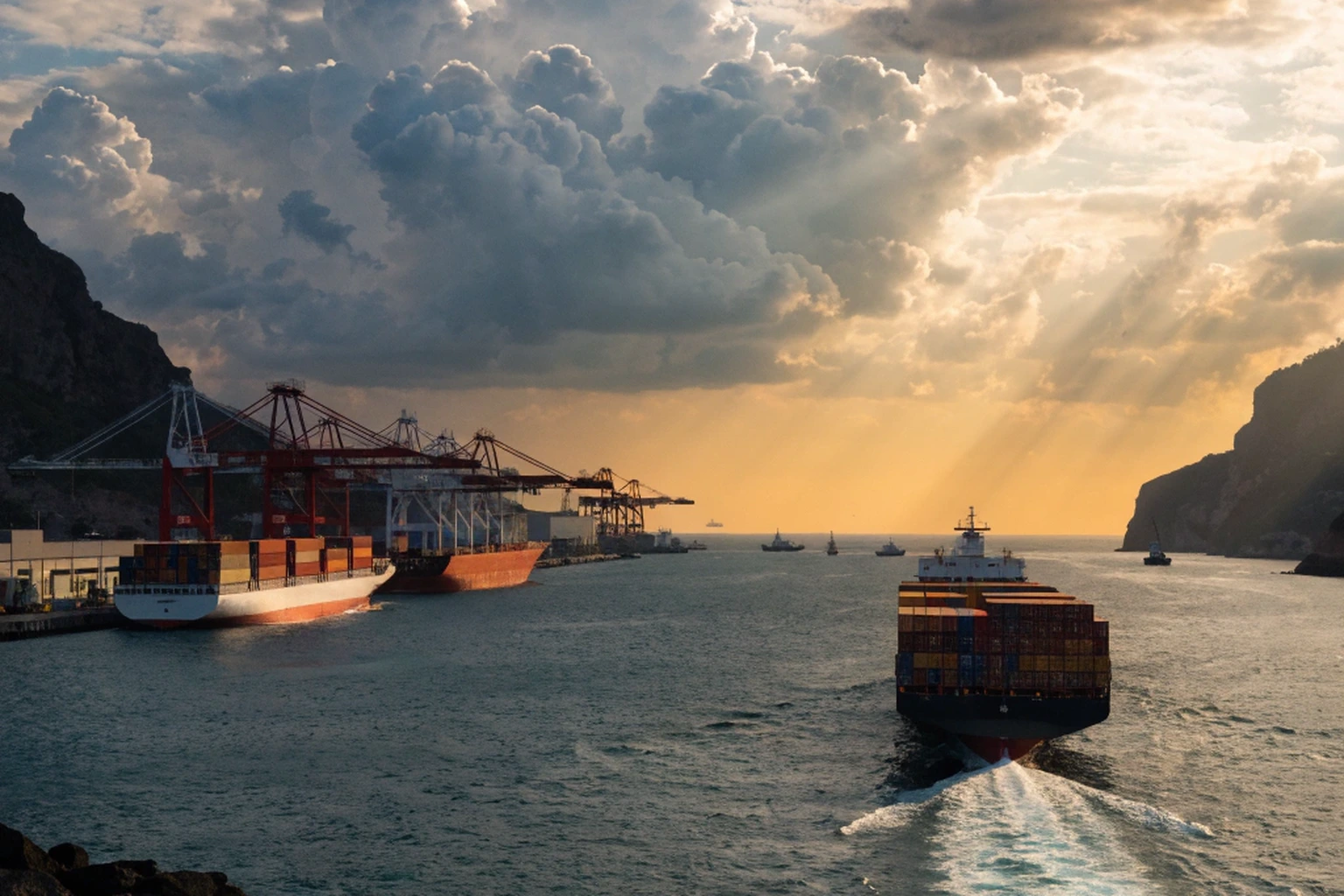
Money and Business in Oman
Oman is a good place for business. People from other countries can start companies in Oman. The government says "Welcome!" to foreign money. There are special areas called free zones. In free zones, companies do not pay tax. Duqm and Salalah are two important free zones. Oman has oil, but it also wants other businesses. The country has good roads and airports. Many people speak English in business. The Sultan wants Oman to grow. It is a safe country for investment.
Gramática em destaque
Padrão: Can / Cannot (Poder / Não poder)
"People from other countries can start companies in Oman."
Use "can" para falar sobre habilidade ou permissão. Use "cannot" (can't) para coisas que não são possíveis ou não são permitidas.
Padrão: Present Simple para Fatos
"Companies do not pay tax in free zones."
Use o presente simples com "do not" (don't) para frases negativas sobre fatos e situações regulares.
Teste sua compreensão
10 perguntas · A1 Iniciante · 1 pré-visualização grátis
Teste o que aprendeu neste artigo. Responda todas as perguntas para ganhar XP!
O que é uma "free zone" (zona livre)?
Quer finalizar o quiz?
9 perguntas a mais estão esperando por você. Cadastre-se grátis para desbloquear o quiz completo e ganhar XP!
Cadastrar grátisJá tem conta? Entrar
Detalhamento das perguntas
O que é uma "free zone" (zona livre)?
Sua resposta:
Resposta correta: Uma área especial onde as empresas não pagam impostos
Pessoas estrangeiras não podem abrir negócios em Omã.
Sua resposta:
Resposta correta: Falso
O que significa "investment"?
Sua resposta:
Resposta correta: Colocar dinheiro em algo para ganhar mais dinheiro
Duqm e Salalah são duas "free _____" importantes.
Sua resposta:
Resposta correta: zones
Why Companies Choose Oman
Many international companies are choosing to invest in Oman. There are several reasons for this. First, Oman allows 100% foreign ownership. This means a person from another country can own a company completely without an Omani partner. This was not possible before 2019.
Second, Oman has special economic zones. The most important ones are the Special Economic Zone at Duqm (SEZAD) and the Salalah Free Zone. Companies in these zones get benefits like zero corporate tax for up to 30 years, no customs duties on imports, and easy visa processes for workers.
Third, Oman's location is excellent for trade. It is close to India, East Africa, and the rest of the Gulf region. The Port of Salalah handles millions of containers every year.
The government has also made it easier to register a business. The process used to take weeks, but now it can be done in a few days through online systems. Oman wants to become one of the top 20 countries in the world for ease of doing business.
Gramática em destaque
Padrão: Passado Simples vs. Presente
"The process used to take weeks, but now it can be done in a few days."
"Used to" descreve hábitos ou situações do passado que não são mais verdadeiros. Compare com o presente simples para fatos atuais.
Padrão: Sequenciamento com Primeiro, Segundo, Terceiro
"First, Oman allows 100% foreign ownership. Second, Oman has special economic zones."
Use palavras ordinais (primeiro, segundo, terceiro) para organizar e listar vários motivos ou pontos claramente.
Teste sua compreensão
11 perguntas · A2 Elementar · 1 pré-visualização grátis
Teste o que aprendeu neste artigo. Responda todas as perguntas para ganhar XP!
O que significa 100% de propriedade estrangeira?
Quer finalizar o quiz?
10 perguntas a mais estão esperando por você. Cadastre-se grátis para desbloquear o quiz completo e ganhar XP!
Cadastrar grátisJá tem conta? Entrar
Detalhamento das perguntas
O que significa 100% de propriedade estrangeira?
Sua resposta:
Resposta correta: Você pode possuir uma empresa completamente sem um parceiro local
Empresas em zonas francas pagam imposto corporativo a partir do primeiro ano.
Sua resposta:
Resposta correta: Falso
O que são "impostos alfandegários" (customs duties)?
Sua resposta:
Resposta correta: Impostos sobre mercadorias importadas
O Porto de Salalah lida com milhões de _____ todos os anos.
Sua resposta:
Resposta correta: containers
Quando Omã permitiu 100% de propriedade estrangeira?
Sua resposta:
Resposta correta: 2019
Oman's Investment Climate and Free Zone Advantages
Oman has been working hard to create an attractive investment climate for both domestic and international businesses. The country has introduced several reforms to simplify regulations, reduce costs, and provide incentives that make it competitive in the region.
One of the most significant reforms was the Foreign Capital Investment Law of 2019, which allows foreign investors to own 100% of their businesses in Oman without needing a local partner. Before this law, foreign ownership was limited to 70% in most sectors. This change has made Oman much more appealing to international companies.
The Special Economic Zone at Duqm (SEZAD) is a flagship project that covers an area of 2,000 square kilometres — larger than many countries. It includes a deep-water port, an oil refinery, a fishing harbour, a dry dock, and a tourism zone. Companies operating in SEZAD benefit from a 30-year tax holiday, duty-free imports, and no restrictions on hiring foreign workers.
Similarly, the Salalah Free Zone offers excellent connectivity to global shipping routes. Located next to the Port of Salalah, which handles approximately 4 million containers annually, it provides a strategic gateway to markets in Asia, Africa, and the Middle East.
The Omani government has also invested heavily in digital infrastructure. The Invest Easy portal allows businesses to complete registration, licensing, and permits online. According to the World Bank, Oman improved its ranking in the Ease of Doing Business index by 12 positions between 2018 and 2022.
Despite these improvements, some challenges remain. The tax rate of 15% on corporate profits, while competitive regionally, is higher than the UAE's 0% rate for most mainland businesses. Additionally, labour market regulations require companies to hire a certain percentage of Omani nationals, which can be challenging in specialised technical fields.
Gramática em destaque
Padrão: Presente Perfeito Contínuo
"Oman has been working hard to create an attractive investment climate."
Use o presente perfeito contínuo (has/have been + -ing) para ações que começaram no passado e ainda continuam ou que pararam recentemente.
Padrão: Voz Passiva com Agente
"The Invest Easy portal allows businesses to complete registration online."
A voz ativa ("X permite que Y faça Z") é mais clara quando o agente é importante. Use a passiva quando o resultado importa mais do que quem realiza a ação.
Teste sua compreensão
11 perguntas · B1 Intermediário · 1 pré-visualização grátis
Teste o que aprendeu neste artigo. Responda todas as perguntas para ganhar XP!
Qual é o tamanho da Zona Econômica Especial em Duqm?
Quer finalizar o quiz?
10 perguntas a mais estão esperando por você. Cadastre-se grátis para desbloquear o quiz completo e ganhar XP!
Cadastrar grátisJá tem conta? Entrar
Detalhamento das perguntas
Qual é o tamanho da Zona Econômica Especial em Duqm?
Sua resposta:
Resposta correta: 2.000 km²
O que é um "incentive"?
Sua resposta:
Resposta correta: Algo que motiva uma ação específica
A alíquota do imposto corporativo em Omã é de 0%.
Sua resposta:
Resposta correta: Falso
O Porto de Salalah movimenta aproximadamente _____ milhões de contêineres anualmente.
Sua resposta:
Resposta correta: 4
O que é o portal "Invest Easy"?
Sua resposta:
Resposta correta: Uma plataforma online para registro e licenciamento de empresas
Strategic Foreign Direct Investment in Oman: Opportunities and Considerations
Oman's foreign direct investment (FDI) framework has undergone substantial modernisation in recent years, positioning the sultanate as an increasingly competitive destination within the GCC investment landscape. The reforms, anchored in the Oman Vision 2040 strategy, aim to attract $21 billion in FDI by 2030 through a combination of regulatory liberalisation, infrastructure development, and targeted sector incentives.
The cornerstone reform — the Foreign Capital Investment Law (Royal Decree 50/2019) — eliminated the requirement for local partnership in most sectors, allowing 100% foreign ownership. This single legislative change removed the most frequently cited barrier to investment, aligning Oman's legal framework with international expectations. Supplementary reforms have streamlined company incorporation to under 72 hours and introduced a one-stop-shop licensing system through the Invest Easy digital platform.
The physical infrastructure supporting investment is equally impressive. The Special Economic Zone at Duqm (SEZAD) represents a $15 billion mega-project that, upon full build-out, will constitute one of the largest integrated economic zones in the Middle East. Its deep-water port can accommodate the world's largest vessels, and its adjacency to a planned 230,000 barrel-per-day oil refinery creates compelling synergies for petrochemical, logistics, and manufacturing investors.
Salalah Free Zone leverages its position on the Arabian Sea to offer unmatched access to Indian Ocean trade corridors. With the Port of Salalah consistently ranking among the world's top 30 container ports, companies based in the zone can reach 70% of the global population within a four-hour flight radius.
However, sophisticated investors must weigh these advantages against several considerations. The 15% corporate income tax rate, while competitive with Saudi Arabia, is unfavourable relative to the UAE's mainland tax of 9%. Omanisation requirements — mandating specific percentages of national hires across industries — add to labour costs and can complicate workforce planning. Furthermore, despite improvements, the enforcement of contracts and resolution of commercial disputes can be slower than in more established markets.
Gramática em destaque
Padrão: Condicional Tipo 0/1 em Contexto Formal
"Companies based in the zone can reach 70% of the global population within a four-hour flight radius."
Na escrita formal/comercial, o sentido condicional é frequentemente expresso sem "if" — usando estruturas como "X based in Y can/will Z" para declarar capacidades como fatos.
Padrão: Orações Relativas (Restritivas)
"The reforms that eliminated the requirement for local partnership have attracted investors."
Orações relativas restritivas (sem vírgulas) especificam a qual substantivo nos referimos. Use "that" para coisas e "who" para pessoas na escrita formal.
Padrão: Orações Concessivas
"The tax rate, while competitive with Saudi Arabia, is unfavourable relative to the UAE."
"While" introduz uma oração concessiva mostrando contraste — reconhecendo um ponto positivo antes de declarar uma limitação.
Teste sua compreensão
11 perguntas · B2 Intermediário superior · 1 pré-visualização grátis
Teste o que aprendeu neste artigo. Responda todas as perguntas para ganhar XP!
Quanto IED (Investimento Estrangeiro Direto) Omã pretende atrair até 2030?
Quer finalizar o quiz?
10 perguntas a mais estão esperando por você. Cadastre-se grátis para desbloquear o quiz completo e ganhar XP!
Cadastrar grátisJá tem conta? Entrar
Detalhamento das perguntas
Quanto IED (Investimento Estrangeiro Direto) Omã pretende atrair até 2030?
Sua resposta:
Resposta correta: $21 bilhões
O que significa "synergy"?
Sua resposta:
Resposta correta: Efeito combinado maior que a soma das partes
A constituição de empresas em Omã agora leva menos de 72 horas.
Sua resposta:
Resposta correta: Verdadeiro
A alíquota do imposto de renda corporativo de Omã é de _____%.
Sua resposta:
Resposta correta: 15
O que é "Omanisation"?
Sua resposta:
Resposta correta: Um requisito para contratar porcentagens específicas de cidadãos omanenses
Oman as an FDI Destination: Regulatory Architecture and Geopolitical Positioning
The Sultanate of Oman's transformation into a credible foreign direct investment destination constitutes a masterclass in strategic regulatory reform within a geopolitically complex environment. Positioned at the mouth of the Strait of Hormuz — through which approximately 20% of global petroleum trade transits — Oman occupies a uniquely strategic location that it has leveraged not through military assertiveness but through deliberate diplomatic neutrality and commercial openness.
The regulatory architecture supporting FDI reflects a sophisticated balancing act. The Foreign Capital Investment Law of 2019 represents the apex of a decade-long liberalisation trajectory, but it is the complementary regulatory infrastructure that truly differentiates Oman's offering. The Commercial Companies Law was simultaneously reformed to eliminate minimum capital requirements for LLCs, while the Bankruptcy and Insolvency Law introduced modern restructuring mechanisms modelled on Chapter 11 proceedings. These reforms collectively signal a maturation of the legal ecosystem that transcends mere investment promotion.
The sectoral dimension of Oman's FDI strategy reveals considerable sophistication. Rather than pursuing a broad-spectrum approach, the Investment Authority has identified five priority clusters: logistics and transport, manufacturing, tourism, mining and mineral processing, and fisheries and food security. Each cluster aligns with demonstrated comparative advantages and is supported by dedicated infrastructure. The designation of Duqm as a strategic economic hub, for instance, was deliberately calibrated to create a counterweight to the UAE's established port infrastructure at Jebel Ali.
The geopolitical positioning deserves particular attention. Oman maintains diplomatic relationships with Iran, Israel, and all GCC states simultaneously — a feat unmatched in the region. This neutrality translates directly into commercial advantage: companies that cannot operate in certain GCC markets due to sanctions exposure or political complications find Oman a viable alternative base. The country's bilateral investment treaties cover over 40 nations, providing additional layers of investor protection.
Notwithstanding these considerable attractions, structural constraints warrant frank assessment. The Omani capital market lacks the depth and liquidity of Dubai or Riyadh, complicating exit strategies for private equity investors. Intellectual property protection, while legislatively adequate, suffers from enforcement gaps that may deter technology-intensive investment. The Omanisation framework, though philosophically commendable, creates practical frictions particularly in sectors requiring specialised technical expertise that the domestic labour pool cannot yet adequately supply.
Gramática em destaque
Padrão: Fronted Adverbials
"Notwithstanding these considerable attractions, structural constraints warrant frank assessment."
Fronting prepositional phrases or adverbials creates cohesion and emphasis. Common in academic register: "Notwithstanding...", "Despite...", "Given that..."
Padrão: Complex Noun Phrases
"A decade-long liberalisation trajectory"
Academic English uses heavily pre- and post-modified noun phrases. Pre-modifiers (decade-long) and post-modifiers (of the legal ecosystem) create information-dense phrases.
Padrão: Stance Markers
"The Omanisation framework, though philosophically commendable, creates practical frictions."
Evaluative adverbs (philosophically, deliberately, simultaneously) and concessive markers (though, while) show the writer's stance and intellectual nuance.
Teste sua compreensão
12 perguntas · C1 Avançado · 1 pré-visualização grátis
Teste o que aprendeu neste artigo. Responda todas as perguntas para ganhar XP!
What percentage of global petroleum trade passes through the Strait of Hormuz?
Quer finalizar o quiz?
11 perguntas a mais estão esperando por você. Cadastre-se grátis para desbloquear o quiz completo e ganhar XP!
Cadastrar grátisJá tem conta? Entrar
Detalhamento das perguntas
What percentage of global petroleum trade passes through the Strait of Hormuz?
Sua resposta:
Resposta correta: 20%
What does "bilateral" mean?
Sua resposta:
Resposta correta: Involving two parties
Oman maintains diplomatic relationships with both Iran and Israel simultaneously.
Sua resposta:
Resposta correta: Verdadeiro
Oman's bilateral investment treaties cover over _____ nations.
Sua resposta:
Resposta correta: 40
What are the five priority investment clusters?
Sua resposta:
Resposta correta: Logistics, manufacturing, tourism, mining, fisheries
What does "notwithstanding" mean?
Sua resposta:
Resposta correta: In spite of
Foreign Direct Investment in Oman: A Nuanced Assessment of Comparative Advantage and Institutional Maturity
An authoritative assessment of Oman's foreign direct investment proposition necessitates moving beyond the promotional narratives that characterise much official discourse to examine the structural underpinnings, comparative positioning, and latent risks that sophisticated investors must navigate. The sultanate's FDI framework, while genuinely impressive in its recent evolution, exists within a complex matrix of regional competition, fiscal constraints, and demographic pressures that collectively shape the investment calculus.
The regulatory reforms of 2019-2023 represent a paradigmatic shift in Oman's approach to foreign capital. The elimination of the local partnership requirement, the rationalisation of company law, and the introduction of modern insolvency mechanisms were not merely incremental improvements but constituted a wholesale reimagination of the state's relationship with international capital. However, the implementation gap between legislative intent and bureaucratic practice remains material. Anecdotal evidence from investors consistently identifies inconsistencies between federal policy pronouncements and the application of regulations at the governorate level, particularly regarding land allocation and construction permits.
The Special Economic Zone at Duqm merits granular analysis. The project's sheer ambition — transforming a fishing village into a $15 billion economic hub — is simultaneously its greatest strength and most significant vulnerability. The zone's viability rests upon the assumption of substantial demand from Asian investors, particularly Chinese state-owned enterprises under the Belt and Road Initiative. While early commitments have materialised, including a $10.7 billion Chinese-Omani industrial complex, the long-term trajectory remains contingent upon geopolitical factors substantially beyond Oman's control.
The fiscal context adds another layer of complexity. Oman's sovereign credit rating, while investment-grade, has been under periodic pressure due to the country's comparatively high debt-to-GDP ratio among GCC states. The introduction of a 5% VAT in 2021, following several years of delay, demonstrated fiscal discipline but also signalled the limits of the state's ability to offer perpetual tax holidays. Investors must therefore assess the sustainability of current incentives, recognising that the political economy of fiscal consolidation may eventually necessitate modifications to the free zone tax regime.
Perhaps the most underappreciated dimension of Oman's investment proposition is its role as a diplomatic intermediary. The sultanate's facilitation of the Iran nuclear negotiations, its back-channel communications during regional crises, and its maintenance of commercial ties across geopolitical fault lines create a unique operational environment. Companies with exposure to sanctioned markets, complex supply chains traversing political boundaries, or a need for geopolitical hedging find in Oman a jurisdiction that few competitors can replicate.
Gramática em destaque
Padrão: Subjunctive and Hypothetical Constructions
"The political economy of fiscal consolidation may eventually necessitate modifications to the free zone tax regime."
Epistemic modals (may, might, could) combined with formal verbs (necessitate, preclude) create sophisticated hypothetical statements in academic writing.
Padrão: Nominalisation Chains
"The elimination of the local partnership requirement and the rationalisation of company law constituted a wholesale reimagination."
Chains of nominalised forms (elimination, rationalisation, reimagination) create dense, formal prose typical of policy analysis and C2 academic register.
Padrão: Concessive-Adversative Structures
"While early commitments have materialised, the long-term trajectory remains contingent upon geopolitical factors."
"While X..., Y..." structures present balanced analysis. The writer acknowledges positives before introducing qualifications — essential for nuanced argumentation.
Teste sua compreensão
12 perguntas · C2 Domínio · 1 pré-visualização grátis
Teste o que aprendeu neste artigo. Responda todas as perguntas para ganhar XP!
What is the value of the Chinese-Omani industrial complex at Duqm?
Quer finalizar o quiz?
11 perguntas a mais estão esperando por você. Cadastre-se grátis para desbloquear o quiz completo e ganhar XP!
Cadastrar grátisJá tem conta? Entrar
Detalhamento das perguntas
What is the value of the Chinese-Omani industrial complex at Duqm?
Sua resposta:
Resposta correta: $10.7 billion
What does "contingent" mean?
Sua resposta:
Resposta correta: Dependent on something else
Oman facilitated the Iran nuclear negotiations.
Sua resposta:
Resposta correta: Verdadeiro
Oman introduced a _____% VAT in 2021.
Sua resposta:
Resposta correta: 5
Why is Duqm described as both a strength and vulnerability?
Sua resposta:
Resposta correta: Its viability depends on geopolitical factors beyond Oman's control
What does "paradigmatic" mean?
Sua resposta:
Resposta correta: Serving as a model of a fundamental shift

