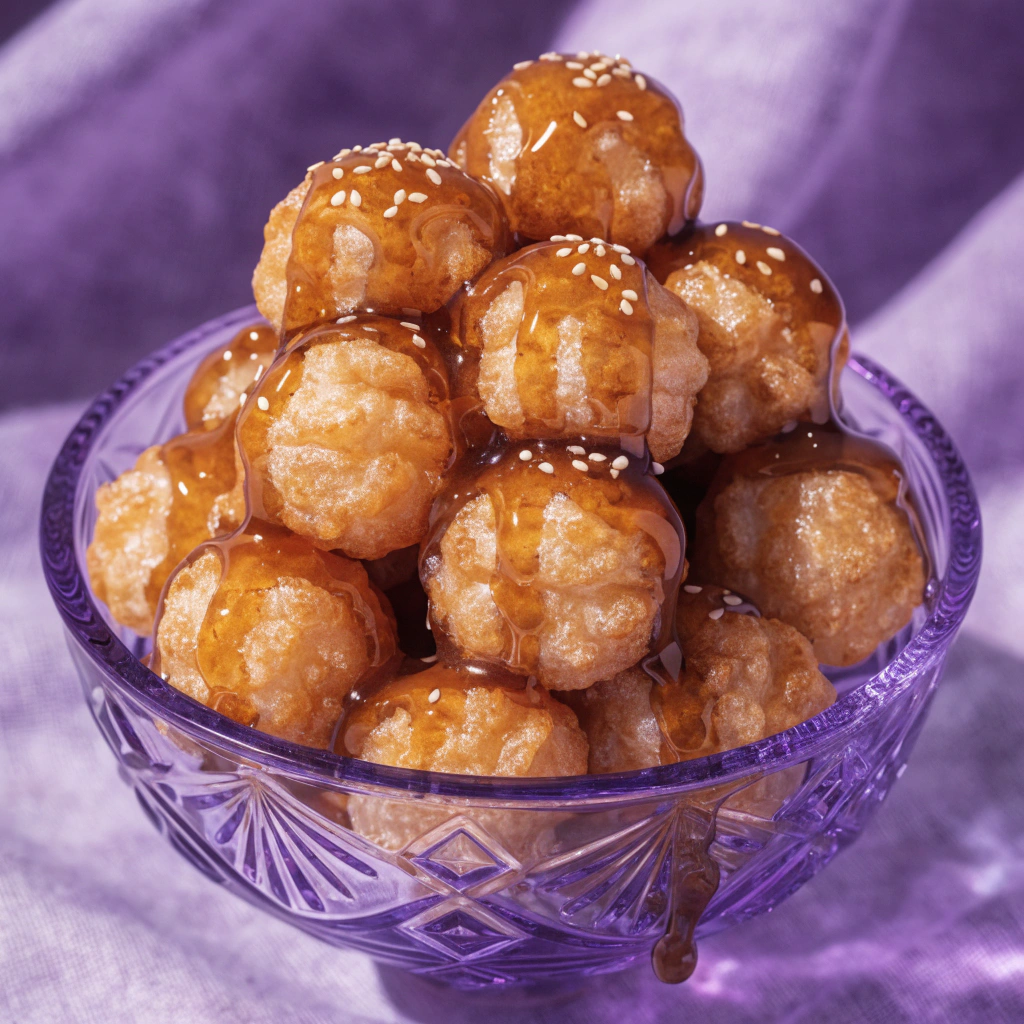
Luqaimat: Um Doce Gostoso dos Emirados Árabes Unidos
Luqaimat é um doce muito famoso nos Emirados Árabes Unidos. Ele é um favorito de muitas pessoas. Luqaimat significa 'pequenas mordidas'. São pequenas bolas de massa fritas.
Estas bolas são douradas e crocantes por fora. Por dentro, são macias e um pouco fofas. A massa tem farinha, fermento e açúcar. Às vezes, colocam um pouco de açafrão para a cor.
As pessoas comem Luqaimat com um xarope doce por cima. O xarope é feito de tâmaras. É uma sobremesa deliciosa e tradicional. Você gosta de doces? Então, você vai gostar de Luqaimat!
Gramática em destaque
Padrão: Verbo 'Ser' (Presente)
"Luqaimat é um doce muito famoso."
O verbo 'ser' é usado para descrever o que algo ou alguém 'é'. No presente, para 'ele/ela/você', usamos 'é'. Para 'eles/elas/vocês', usamos 'são'.
Padrão: Concordância de Adjetivos
"São pequenas bolas de massa fritas."
Em português, adjetivos (palavras que descrevem) precisam combinar com os substantivos (nomes) em gênero (masculino/feminino) e número (singular/plural). 'Bolas' é feminino plural, então 'pequenas' e 'fritas' também são femininos plurais.
Teste sua compreensão
10 perguntas · A1 Iniciante · 1 pré-visualização grátis
Teste o que aprendeu neste artigo. Responda todas as perguntas para ganhar XP!
O que é Luqaimat?
Quer finalizar o quiz?
9 perguntas a mais estão esperando por você. Cadastre-se grátis para desbloquear o quiz completo e ganhar XP!
Cadastrar grátisJá tem conta? Entrar
Detalhamento das perguntas
O que é Luqaimat?
Sua resposta:
Resposta correta: Um doce dos Emirados Árabes Unidos
Luqaimat é crocante por fora e macio por dentro.
Sua resposta:
Resposta correta: Verdadeiro
O que significa 'famoso'?
Sua resposta:
Resposta correta: Muito conhecido
As pessoas comem Luqaimat com um _____ doce por cima.
Sua resposta:
Resposta correta: xarope
Luqaimat: Um Doce Especial dos Emirados Árabes Unidos
Você gosta de doces? Nos Emirados Árabes Unidos, um doce muito famoso é o Luqaimat. As pessoas lá gostam muito dele! Luqaimat significa 'pequenas mordidas' e é uma comida tradicional. É uma das sobremesas mais amadas do país.
Ele é feito de uma massa frita. Por fora, é bem crocante e dourado. Mas por dentro, é macio, leve e um pouco mastigável. A massa tem ingredientes simples como farinha, fermento e açúcar. Também tem um toque de açafrão e cardamomo. Estes temperos dão um sabor especial e uma cor amarela bonita ao Luqaimat.
Depois que a massa cresce e é frita, o Luqaimat é servido quente. Antigamente, muitas famílias faziam este doce em casa para celebrações. Geralmente, as pessoas colocam um xarope doce por cima, como mel de tâmaras. É delicioso! Muitas famílias comem Luqaimat durante o Ramadã e em outras celebrações importantes. É mais que um doce; é parte da cultura e das festas. Você gostaria de provar esta delícia?
Gramática em destaque
Padrão: Verbos no Pretérito Imperfeito
"Antigamente, muitas famílias *faziam* este doce em casa para celebrações."
Usamos o pretérito imperfeito para falar de ações no passado que eram habituais ou que aconteciam por um período de tempo. Também descreve situações no passado, sem um começo ou fim definidos.
Padrão: Comparativos de Superioridade (mais... que)
"É *mais que* um doce;"
Usamos 'mais... que' para comparar duas coisas e mostrar que uma tem uma qualidade em maior grau que a outra. É uma forma simples de comparar e expressar superioridade.
Teste sua compreensão
11 perguntas · A2 Elementar · 1 pré-visualização grátis
Teste o que aprendeu neste artigo. Responda todas as perguntas para ganhar XP!
O que significa 'Luqaimat'?
Quer finalizar o quiz?
10 perguntas a mais estão esperando por você. Cadastre-se grátis para desbloquear o quiz completo e ganhar XP!
Cadastrar grátisJá tem conta? Entrar
Detalhamento das perguntas
O que significa 'Luqaimat'?
Sua resposta:
Resposta correta: Pequenas Mordidas
O Luqaimat é servido frio.
Sua resposta:
Resposta correta: Falso
O que significa 'crocante'?
Sua resposta:
Resposta correta: Que faz barulho ao morder
Luqaimat é uma comida _____ dos Emirados Árabes Unidos.
Sua resposta:
Resposta correta: tradicional
Quais temperos dão sabor e cor ao Luqaimat?
Sua resposta:
Resposta correta: Açafrão e Cardamomo
Luqaimat: The Golden Sweet of the Emirates
If you visit the United Arab Emirates, you will surely encounter a delicious dessert called Luqaimat. The name literally translates to 'small bites,' which perfectly describes these golden spheres of dough. They are arguably the most beloved sweet treat in the region and have been served at family gatherings for centuries.
The preparation of Luqaimat is an art that requires patience. The dough is made from simple ingredients like flour, yeast, and sugar. However, it is the addition of saffron and cardamom that gives the interior a beautiful yellow color and a fragrant aroma. After the dough has fermented, it is dropped into hot oil. The balls are fried until they are delightfully crunchy on the outside, while the inside remains soft and airy.
Once the Luqaimat are cooked, they are usually drizzled with date syrup, which is known locally as 'dibbs.' To finish the dish, a handful of sesame seeds is often sprinkled on top. This combination of flavors creates a unique experience that many people find addictive.
In Emirati culture, Luqaimat are more than just a snack. They are often associated with hospitality and celebration. During the holy month of Ramadan, these sweets are prepared in large quantities to be shared with neighbors and friends. Whether you are at a traditional wedding or a modern café in Dubai, you will find that Luqaimat have maintained their place as a symbol of local heritage. They represent a sweet tradition that has been passed down through generations.
Gramática em destaque
Padrão: Passive Voice
"The dough is made from simple ingredients like flour, yeast, and sugar."
The passive voice is used here because the focus is on the dough (the object) rather than the person making it. It is formed using 'to be' + the past participle.
Padrão: Relative Clauses
"The name literally translates to 'small bites,' which perfectly describes these golden spheres of dough."
A relative clause starting with 'which' is used to provide extra information about the previous part of the sentence. It helps connect ideas smoothly in B1 level writing.
Teste sua compreensão
11 perguntas · B1 Intermediário · 1 pré-visualização grátis
Teste o que aprendeu neste artigo. Responda todas as perguntas para ganhar XP!
What does the name 'Luqaimat' literally mean in English?
Quer finalizar o quiz?
10 perguntas a mais estão esperando por você. Cadastre-se grátis para desbloquear o quiz completo e ganhar XP!
Cadastrar grátisJá tem conta? Entrar
Detalhamento das perguntas
What does the name 'Luqaimat' literally mean in English?
Sua resposta:
Resposta correta: Small bites
Luqaimat are meant to be hard and crunchy on the inside.
Sua resposta:
Resposta correta: Falso
What is the meaning of the word 'fragrant'?
Sua resposta:
Resposta correta: Having a pleasant smell
After the dough has fermented, it is _____ into hot oil.
Sua resposta:
Resposta correta: dropped
What is usually sprinkled on top of Luqaimat after the syrup?
Sua resposta:
Resposta correta: Sesame seeds
The Cultural and Culinary Significance of Luqaimat in the UAE
The culinary landscape of the United Arab Emirates is a rich tapestry of tradition and modernity, yet few elements remain as indispensable as the humble Luqaimat. Literally translated as 'small bites,' these golden spheres of fried dough represent far more than a mere dessert; they are a symbol of Emirati hospitality and cultural heritage. To understand the significance of Luqaimat, one must examine both its intricate preparation and its enduring role in social gatherings.
The preparation of Luqaimat is a precise art that requires patience and a keen sense of timing. The dough, typically a mixture of flour, yeast, and sugar, is elevated by the inclusion of saffron and cardamom. These aromatic spices not only provide a fragrant scent but also imbue the interior with a characteristic golden hue. Having been left to undergo a period of fermentation, the dough develops an airy consistency. This internal lightness is crucial, as it provides a stark contrast to the crunchy exterior achieved through deep-frying. Once the spheres have been fried to perfection, they are traditionally drizzled with date syrup, known as 'dibbs,' and sprinkled with sesame seeds.
Furthermore, the social context in which Luqaimat is consumed is vital to its status. Historically, it has been a staple during the holy month of Ramadan, serving as a celebratory treat after a day of fasting. The act of sharing these 'small bites' fosters a sense of community and belonging. In contemporary society, while international cuisines have permeated the local market, the preference for traditional sweets remains steadfast. This persistence suggests that Luqaimat acts as a culinary bridge between the past and the present.
Nevertheless, the dish has not remained entirely static. Modern interpretations have emerged, with some vendors offering toppings such as chocolate or honey to appeal to a younger, more globalized demographic. Despite these modifications, the core essence of the dish remains unchanged. The versatility of Luqaimat allows it to adapt to modern tastes without sacrificing its cultural identity. In conclusion, Luqaimat serves as a testament to the UAE's ability to preserve its heritage within a rapidly evolving environment. By maintaining its place at the center of the Emirati table, it ensures that the flavors of the past continue to enrich the experiences of future generations.
Gramática em destaque
Padrão: Passive Voice (Present Simple)
"The dough, typically a mixture of flour, yeast, and sugar, is elevated by the inclusion of saffron and cardamom."
This is used to focus on the object being acted upon rather than the person doing the action. It is formed using the present tense of 'to be' plus the past participle.
Padrão: Perfect Participle Clause
"Having been left to undergo a period of fermentation, the dough develops an airy consistency."
This structure is used to show that one action was completed before another. It helps to vary sentence structure and provide more detail about the sequence of events.
Padrão: Present Perfect Passive
"Once the spheres have been fried to perfection, they are traditionally drizzled with date syrup."
This pattern combines 'have/has been' with a past participle to indicate an action that was completed at an unspecified time before now, emphasizing the state of the object.
Teste sua compreensão
11 perguntas · B2 Intermediário superior · 1 pré-visualização grátis
Teste o que aprendeu neste artigo. Responda todas as perguntas para ganhar XP!
What is the primary purpose of the article?
Quer finalizar o quiz?
10 perguntas a mais estão esperando por você. Cadastre-se grátis para desbloquear o quiz completo e ganhar XP!
Cadastrar grátisJá tem conta? Entrar
Detalhamento das perguntas
What is the primary purpose of the article?
Sua resposta:
Resposta correta: To analyze the cultural significance and preparation of Luqaimat
The text states that the crunchy exterior of Luqaimat is achieved through baking.
Sua resposta:
Resposta correta: Falso
What does 'indispensable' mean in the context of the article?
Sua resposta:
Resposta correta: Absolutely essential
Having been left to undergo a period of _____, the dough develops an airy consistency.
Sua resposta:
Resposta correta: fermentation
According to the article, why are saffron and cardamom added to the dough?
Sua resposta:
Resposta correta: To provide a golden color and fragrant scent
The Ephemeral Crunch: A Sophisticated Analysis of Luqaimat in Emirati Heritage
Rarely does a dish encapsulate the cultural trajectory of a nation as poignantly as Luqaimat does for the United Arab Emirates. Often dismissed by the casual observer as mere fried dough, these golden spheres represent a sophisticated juxtaposition of textures and aromas that underpin the Emirati culinary identity. To understand Luqaimat is to understand the evolution of a nomadic society into a global metropolis. The quintessence of the dish lies in its sensory dichotomy: a brittle, ephemeral exterior that yields to a soft, elastic core. This tactile experience is achieved through a meticulous fermentation process, where the interaction of yeast and flour is enhanced by the olfactory richness of saffron and cardamom. It is the subtle infusion of these spices that distinguishes the Emirati variant from similar regional confections, providing a golden hue that mirrors the desert sands from which the tradition emerged.
Not only do these 'small bites' serve as a caloric staple, but they also function as a social lubricant within the majlis. The communal sharing of Luqaimat, traditionally drizzled with viscous date syrup and sprinkled with sesame seeds, reinforces familial bonds and hospitality. However, the modern era has brought about the commodification of this traditional street food. In the contemporary urban landscape of Dubai and Abu Dhabi, one observes the ubiquity of Luqaimat in artisanal cafes, where traditional date syrup is often replaced by chocolate or salted caramel. This shift prompts a critical analysis of cultural preservation versus globalized adaptation. While some purists argue that such innovations dilute the dish's historical integrity, others contend that the aesthetic evolution of Luqaimat is necessary for its survival among a younger, cosmopolitan demographic. Underpinning this debate is the question of how a heritage food maintains its soul while navigating the pressures of commercialization. Despite these changes, the evocative power of the cardamom-scented steam rising from a fresh batch remains unchanged. Ultimately, Luqaimat serves as a culinary bridge, connecting the austere past of the Trucial States with the opulent present of the modern UAE, proving that even the simplest ingredients can carry the weight of a complex national narrative.
Gramática em destaque
Padrão: Negative Inversion
"Rarely does a dish encapsulate the cultural trajectory of a nation as poignantly as Luqaimat does..."
Inversion is used for emphasis by placing a negative or restrictive adverb at the start of the sentence, followed by the auxiliary verb and then the subject.
Padrão: Cleft Sentences
"It is the subtle infusion of these spices that distinguishes the Emirati variant from similar regional confections..."
Cleft sentences focus on a specific part of the information (the spices) by using the 'It is... that' structure to highlight the cause or subject.
Padrão: Nominalisation
"The communal sharing of Luqaimat... reinforces familial bonds and hospitality."
Using a noun phrase ('communal sharing') instead of a verb makes the writing more formal and academic, common in C1 level texts.
Teste sua compreensão
12 perguntas · C1 Avançado · 1 pré-visualização grátis
Teste o que aprendeu neste artigo. Responda todas as perguntas para ganhar XP!
What is the primary sensory contrast described in the article regarding Luqaimat?
Quer finalizar o quiz?
11 perguntas a mais estão esperando por você. Cadastre-se grátis para desbloquear o quiz completo e ganhar XP!
Cadastrar grátisJá tem conta? Entrar
Detalhamento das perguntas
What is the primary sensory contrast described in the article regarding Luqaimat?
Sua resposta:
Resposta correta: The brittle exterior versus the elastic core
The author suggests that the introduction of chocolate toppings is universally accepted as a positive cultural evolution.
Sua resposta:
Resposta correta: Falso
Which word is synonymous with 'the purest example'?
Sua resposta:
Resposta correta: Quintessence
The _____ of traditional street food has led to its appearance in high-end artisanal cafes.
Sua resposta:
Resposta correta: commodification
According to the text, what role does the majlis play?
Sua resposta:
Resposta correta: It is a social setting where sharing food strengthens bonds.
The golden color of Luqaimat is attributed to the use of saffron in the dough.
Sua resposta:
Resposta correta: Verdadeiro
The Semiotics of Sweetness: Luqaimat as a Cultural Bastion in the UAE
The Luqaimat, a seemingly humble spherical confection, serves as a profound semiotic anchor within the Emirati cultural landscape. To perceive it merely as a deep-fried dough ball would be to overlook the intricate interplay of history, chemistry, and communal identity it encapsulates. Its nomenclature, derived from the Arabic for 'small bites,' belies the weight of its cultural significance, acting as a vestige of a pre-oil era that continues to flourish in a hyper-modernized society.
The preparation of Luqaimat is an exercise in precision and patience, demanding a level of artisanal intuition that transcends mere following of a recipe. The dough, comprising flour, yeast, and sugar, is elevated through the infusion of saffron and cardamom—spices that serve as olfactory bridges to the region’s historical trade routes. Should the temperature of the environment fluctuate during the fermentation phase, the structural integrity of the crumb might be compromised, leading to a loss of that coveted lightness. This sensitivity to environmental variables necessitates a culinary mastery that is often passed down through generations, ensuring that the ephemeral quality of the dough remains consistent.
The frying process itself is a study in thermodynamics. As the spheres are submerged in hot oil, a rapid Maillard reaction occurs, creating a crisp, golden-brown carapace. This exterior provides a stark juxtaposition to the interior, which remains soft and slightly chewy. The viscosity of the date syrup, or 'dibs,' which is traditionally drizzled over the finished product, adds a layer of saccharine complexity. This syrup not only enhances the flavor profile but also serves as a nod to the date palm’s central role in the survival of desert-dwelling ancestors.
In the context of Emirati hospitality, the Luqaimat functions as a catalyst for social cohesion. During the holy month of Ramadan, its presence is near-ubiquitous, appearing on tables from modest households to opulent banquets. One might argue that the ritualistic consumption of these 'mouthfuls' transcends the act of eating, evolving into a performance of shared heritage. Not only does the dish satiate a gastronomic craving, but it also reinforces a sense of belonging in a rapidly changing demographic landscape. Lest the traditions of the past be obscured by the encroaching tide of globalization, the Luqaimat stands as a resilient bastion of local identity.
Furthermore, the Luqaimat offers a lens through which one can analyze the evolution of Emirati cuisine. While ostensibly a simple street food, its modern iterations—sometimes featuring chocolate or nuts—suggest a culture that is comfortable with hybridity while remaining rooted in tradition. However, the quintessence of the dish remains unchanged. The organoleptic experience of biting into a perfectly executed Luqaimat evokes a sense of nostalgia that is both personal and collective. It is a sensory manifestation of the 'Majlis' culture, where conversation and confectionery are inextricably linked.
Ultimately, the Luqaimat is more than a dessert; it is a manifestation of resilience. It is a testament to the fact that even in a world of high-speed technological advancement, the most enduring connections are often forged through the simplest of means. Whether served in a contemporary café or a traditional home, these golden spheres continue to narrate the story of a people who value the sweetness of communal life. To understand the Luqaimat is to understand the soul of the Emirates—a blend of warmth, tradition, and an unwavering commitment to hospitality.
Gramática em destaque
Padrão: Conditional Inversion with 'Should'
"Should the temperature of the environment fluctuate during the fermentation phase, the structural integrity of the crumb might be compromised..."
This formal structure replaces 'if' with 'should' and inverts the subject and verb. It is used to express a hypothetical situation with a slightly more tentative or formal tone.
Padrão: Negative Inversion for Emphasis
"Not only does the dish satiate a gastronomic craving, but it also reinforces a sense of belonging..."
When starting a sentence with a negative or restrictive expression like 'Not only,' the auxiliary verb must come before the subject. This is used to add rhetorical weight and emphasis.
Padrão: Negative Subjunctive with 'Lest'
"Lest the traditions of the past be obscured by the encroaching tide of globalization..."
The word 'lest' is followed by the subjunctive mood (the base form of the verb). It is used to express a fear or precaution against a negative outcome.
Teste sua compreensão
12 perguntas · C2 Domínio · 1 pré-visualização grátis
Teste o que aprendeu neste artigo. Responda todas as perguntas para ganhar XP!
What does the article suggest about the nomenclature 'Luqaimat'?
Quer finalizar o quiz?
11 perguntas a mais estão esperando por você. Cadastre-se grátis para desbloquear o quiz completo e ganhar XP!
Cadastrar grátisJá tem conta? Entrar
Detalhamento das perguntas
What does the article suggest about the nomenclature 'Luqaimat'?
Sua resposta:
Resposta correta: It belies the actual cultural weight and significance of the dish.
The article claims that Luqaimat is a recent invention of the post-oil era.
Sua resposta:
Resposta correta: Falso
What does 'ephemeral' mean in the context of the text?
Sua resposta:
Resposta correta: Lasting for a very short time
The _____ of the date syrup adds a layer of saccharine complexity to the dish.
Sua resposta:
Resposta correta: viscosity
Why is the fermentation phase described as requiring artisanal precision?
Sua resposta:
Resposta correta: Because environmental fluctuations can compromise the crumb's structural integrity.
The dish is near-ubiquitous on Emirati tables during the holy month of Ramadan.
Sua resposta:
Resposta correta: Verdadeiro

