cambodian 30秒了解
- Cambodian is an adjective and noun used to describe people, things, and culture from the Southeast Asian country of Cambodia.
- It is a proper adjective, meaning it must always be capitalized in English, regardless of its position in a sentence.
- While 'Khmer' refers specifically to the ethnic group and language, 'Cambodian' is the broader term for the national identity.
- The word is commonly used in travel, food, history, and international news to identify things related to Cambodia.
The word Cambodian is a versatile adjective and noun that serves as the primary identifier for anything originating from the nation of Cambodia. Located in the heart of Southeast Asia, Cambodia is a land defined by its profound history, ranging from the architectural majesty of the Khmer Empire to the resilience of its modern citizens. When we use the term Cambodian, we are often referring to the people who inhabit this land, the language they speak (though 'Khmer' is the specific name for the language), or the unique cultural artifacts they produce. It is a word that carries the weight of centuries of tradition, from the intricate movements of classical dance to the complex flavors of its national cuisine. In a global context, the term is used to distinguish the specific cultural and political identity of this nation from its neighbors, such as Thailand, Vietnam, and Laos. Understanding the word requires an appreciation for the geographic and social landscape of the region, where the Mekong River and the Tonle Sap lake have shaped the lives of the Cambodian people for generations.
- Nationality
- Refers to a person who is a citizen of Cambodia or is of Cambodian descent.
- Cultural Attribute
- Used to describe food, art, music, or traditions that are native to Cambodia.
Historically, the term has evolved alongside the nation's political shifts. Whether discussing the ancient temples of Angkor or the modern bustling streets of Phnom Penh, Cambodian remains the standard English adjective. It is essential to recognize that while 'Khmer' is often used interchangeably, Cambodian is the broader national designation. For instance, a person might be ethnically Chinese or Cham but still hold Cambodian nationality. This distinction is vital in formal diplomatic and sociological contexts. The word also appears frequently in discussions of the diaspora, as millions of people of Cambodian heritage live in countries like the United States, France, and Australia, maintaining their cultural roots through community organizations and traditional celebrations. When you use this word, you are acknowledging a specific lineage of history that includes both great triumphs and significant tragedies, all of which have forged the modern Cambodian identity.
The Cambodian government has invested heavily in the restoration of ancient heritage sites.
In everyday conversation, you might encounter the word when discussing travel plans or international cuisine. A 'Cambodian curry' or 'Cambodian silk' are common phrases that highlight the specific qualities of products from the region. The word acts as a bridge between the local identity and the global community, allowing people to categorize and appreciate the specific contributions of this Southeast Asian nation. It is also used in academic settings to describe the Cambodian economy, education system, or legal framework. Because the word is a proper adjective, it must always be capitalized in English, a rule that reflects the respect given to national identities. The phonetic structure of the word—cam-BO-di-an—is rhythmic and clear, making it easily recognizable in international discourse. By using the word correctly, speakers demonstrate an awareness of the world's diverse geopolitical landscape and the unique place that Cambodia holds within it.
We visited a Cambodian restaurant to try the famous fish amok.
- Linguistic Context
- While 'Khmer' is the language, 'Cambodian' is often used by English speakers to refer to the language colloquially.
The word also plays a role in the arts. Cambodian classical dance, known for its slow, graceful movements and elaborate costumes, is a source of great national pride. When critics describe these performances, they use the adjective to situate the art form within its specific cultural history. Similarly, in literature, a Cambodian novel might explore themes of memory, family, and the impact of the past on the present. The word is not just a label; it is an invitation to explore a rich tapestry of human experience. From the bustling markets of Siem Reap to the quiet rural villages, the Cambodian way of life is characterized by hospitality and a strong sense of community. By learning to use this word accurately, you are better equipped to engage in conversations about global cultures and the interconnectedness of our world.
Many Cambodian families celebrate the Lunar New Year with traditional rituals.
The Cambodian landscape is dominated by lush green rice paddies.
- Political Usage
- Used in international relations to describe the state, its policies, and its diplomatic missions.
Finally, the word Cambodian is essential for understanding the history of the 20th century. The Cambodian Civil War and the subsequent period under the Khmer Rouge are critical chapters in world history. When students study these events, they use the term to identify the victims, the survivors, and the political actors involved. This historical context adds a layer of depth to the word, reminding us of the strength and endurance of the Cambodian spirit. Today, as the country continues to develop and modernize, the word Cambodian is increasingly associated with innovation, tourism, and a vibrant youth culture. It is a word that is constantly being redefined by the people it describes, reflecting their aspirations and their place in the 21st century.
She is learning Cambodian history to better understand her heritage.
Using the word Cambodian correctly in a sentence requires an understanding of its grammatical function as both an adjective and a noun. As an adjective, it modifies a noun to indicate origin or relation to Cambodia. For example, in the phrase 'Cambodian architecture,' the word Cambodian specifies the style and origin of the buildings. It is placed before the noun it modifies, following the standard English word order for adjectives. When used as a noun, it refers to a person from Cambodia. For instance, 'He is a Cambodian' identifies the individual's nationality. In plural form, 'Cambodians' refers to the people of the country collectively. It is important to remember that as a proper adjective and noun, it must always be capitalized, regardless of its position in the sentence. This capitalization distinguishes it from common adjectives and signals its status as a term derived from a proper noun.
- Attributive Use
- Placed before a noun: 'The Cambodian flag features Angkor Wat.'
- Predicative Use
- Placed after a linking verb: 'The traditional music sounded distinctly Cambodian.'
In more complex sentences, Cambodian can be part of a compound subject or object. For example, 'Cambodian and Vietnamese cuisines share some similarities but have distinct differences.' Here, the adjective is used to compare two different cultural traditions. It can also be modified by adverbs to provide more specific information, such as 'The dish was authentically Cambodian,' where 'authentically' emphasizes the genuineness of the cultural representation. When writing about history or politics, the word is often paired with specific nouns to create established terms, such as 'the Cambodian government,' 'the Cambodian diaspora,' or 'Cambodian law.' These pairings help to define the scope of the discussion and ensure clarity for the reader. Using the word in various contexts—from casual conversation to academic writing—demonstrates a speaker's range and precision in English.
The Cambodian community in Long Beach is one of the largest in the United States.
Another common usage is in the context of language. While the official language is Khmer, it is not uncommon to hear people say, 'I am learning Cambodian.' While 'Khmer' is technically more accurate for the language itself, Cambodian is widely understood and accepted in informal contexts. However, in academic or linguistic studies, 'Khmer' is preferred. When describing products or exports, the word is essential: 'Cambodian rice is highly valued on the international market.' This usage highlights the economic aspect of the word, connecting the country's resources to the global economy. In every instance, the word serves to ground the subject in a specific geographic and cultural reality. By mastering the various ways to integrate Cambodian into sentences, learners can more effectively communicate about Southeast Asian culture and history.
She wore a beautiful Cambodian silk scarf to the gala.
- Comparative Use
- 'This temple is older than most other Cambodian structures.'
Furthermore, the word is often used in the possessive form when referring to something belonging to the nation or its people, though the adjective form is usually preferred. For example, 'Cambodia's history' is common, but 'Cambodian history' is equally standard and often sounds more natural as a subject of study. In creative writing, the word can evoke specific imagery: 'The Cambodian sun set over the Mekong, casting a golden glow on the water.' Here, the adjective adds a sense of place and atmosphere. Whether you are describing a person's heritage, a country's policy, or a specific type of fruit, Cambodian provides the necessary specificity. It is a fundamental building block for any discussion involving this part of the world, and its correct usage is a hallmark of clear and respectful communication.
The Cambodian climate is tropical, with distinct wet and dry seasons.
Many Cambodian artists are blending traditional techniques with modern themes.
- Collective Noun
- 'The Cambodian' can occasionally refer to the entire nation in a poetic or historical sense.
In summary, the word Cambodian is a high-frequency term in discussions of geography, culture, and history. Its placement in a sentence follows standard English rules for proper adjectives, and its meaning is consistently tied to the nation of Cambodia. By practicing its use in different grammatical structures, learners can become more confident in their ability to describe the world around them. Whether you are talking about a 'Cambodian friend,' 'Cambodian politics,' or 'Cambodian art,' the word is an essential tool for precise and effective expression. As you continue to build your vocabulary, pay attention to how this word is used in news reports, travel guides, and literature to gain a deeper understanding of its nuances and applications.
The Cambodian New Year, or Chol Chnam Thmey, is celebrated in April.
The word Cambodian is frequently heard in a variety of real-world contexts, ranging from international news broadcasts to casual conversations about travel and food. In the realm of global journalism, the word is often used when reporting on Southeast Asian politics, economic developments, or environmental issues affecting the Mekong region. News anchors might discuss 'Cambodian elections' or 'Cambodian environmental policies,' situating the country within the broader narrative of global affairs. This usage is formal and precise, emphasizing the nation's role as a sovereign state. For anyone following international news, the word is a constant presence, serving as a key identifier for one of the region's most dynamic countries. It is also common in documentaries, especially those focused on history or archaeology, where experts discuss the 'Cambodian ruins' of Angkor Wat or the 'Cambodian heritage' that is being preserved for future generations.
- Travel & Tourism
- Heard in travel vlogs, guidebooks, and at airports when discussing trips to Siem Reap or Phnom Penh.
- Culinary Arts
- Common in food shows and restaurant reviews when describing dishes like 'Cambodian fish amok'.
In the world of travel and tourism, Cambodian is a word that evokes images of ancient temples, lush landscapes, and vibrant markets. Travel influencers and guidebook writers frequently use the word to describe the unique experiences available in the country. You might hear someone say, 'The Cambodian people are incredibly welcoming,' or 'I love the Cambodian countryside.' In this context, the word is associated with discovery, adventure, and cultural exchange. It is a word that invites people to explore a part of the world that is rich in beauty and history. For travelers, the word is a gateway to a new set of experiences, from tasting street food in Phnom Penh to watching the sunrise over the spires of Angkor Wat. The word's frequent use in travel media helps to build a positive and inviting image of the country.
"The Cambodian government is working to increase sustainable tourism in rural areas," the news reporter stated.
Another common place to hear the word is in the culinary world. As Southeast Asian cuisine continues to grow in popularity globally, Cambodian food is gaining more recognition. Chefs and food critics often use the word to distinguish Cambodian flavors from those of neighboring Thailand or Vietnam. You might hear a chef explain the importance of 'kroeung,' a traditional Cambodian herb paste, or a diner praise the 'Cambodian pepper' from Kampot. In these settings, the word is synonymous with quality, tradition, and a specific palate of flavors. For food lovers, the word Cambodian represents a rich culinary heritage that is both ancient and evolving. It is a word that brings people together around a shared appreciation for good food and cultural diversity.
"I've always wanted to see the Cambodian classical dance in person," she told her friend.
- Academic Discourse
- Used in universities when studying Southeast Asian history, linguistics, or sociology.
In academic and educational settings, the word is used to categorize and study various aspects of the country. History professors might lecture on the 'Cambodian Empire,' while sociology students might research 'Cambodian migration patterns.' In these contexts, the word is used with a high degree of specificity and is often backed by rigorous research. It is a word that facilitates the exchange of knowledge and the deepening of our understanding of a complex and fascinating nation. For students, learning about Cambodian history and culture is a way to broaden their perspectives and engage with the world in a more meaningful way. The word's presence in textbooks and academic journals ensures that the story of Cambodia is told and remembered.
The professor discussed the impact of Cambodian textiles on regional trade during the 12th century.
"The Cambodian national football team has a very dedicated fan base," the commentator noted.
- Community & Identity
- Heard within diaspora communities when discussing heritage, language, and shared values.
Finally, the word is heard within the Cambodian diaspora communities around the world. In cities like Long Beach, California, or Lowell, Massachusetts, the word is a central part of the community's identity. You might hear it used in community centers, at cultural festivals, or in local businesses. In these settings, the word is a source of pride and a way to maintain a connection to one's heritage. It is a word that signifies a shared history and a common future. For members of the diaspora, being Cambodian is a multifaceted identity that encompasses both their ancestral roots and their lives in a new country. The word's frequent use in these communities helps to preserve and celebrate a culture that is both resilient and vibrant.
"We are hosting a Cambodian cultural night to share our traditions with the neighborhood," the organizer said.
One of the most frequent mistakes people make when using the word Cambodian is failing to capitalize it. In English, all proper adjectives—those derived from the names of specific places, people, or languages—must begin with a capital letter. Writing 'cambodian' with a lowercase 'c' is grammatically incorrect and can be seen as a lack of attention to detail or respect for the national identity. This rule applies regardless of where the word appears in a sentence. Whether it is at the beginning, middle, or end, the 'C' should always be capitalized. This is a common error for learners of English, especially those whose native languages have different capitalization rules. By consistently capitalizing the word, you demonstrate a strong grasp of English grammar and a respect for the cultural and national identity it represents.
- Capitalization Error
- Incorrect: 'I love cambodian food.' Correct: 'I love Cambodian food.'
- Confusing with 'Khmer'
- While often used interchangeably, 'Khmer' specifically refers to the ethnic group and language, while 'Cambodian' refers to the nationality.
Another common mistake is the confusion between Cambodian and 'Khmer.' While they are often used as synonyms, there is a subtle but important distinction. 'Khmer' refers to the predominant ethnic group in Cambodia and the official language of the country. Cambodian, on the other hand, is a broader term that refers to the nationality or anything related to the country as a whole. For example, a person who is a citizen of Cambodia but belongs to the Cham ethnic minority is Cambodian, but not ethnically Khmer. In formal writing and academic contexts, it is important to use these terms correctly to avoid overgeneralization. Using 'Khmer' when you mean 'Cambodian' (or vice versa) can sometimes lead to inaccuracies in describing the country's diverse population and culture.
It is a common mistake to use Cambodian when specifically referring to the Khmer language in a formal linguistic study.
A third mistake involves the misuse of the word as a verb or in an incorrect grammatical form. For instance, saying 'He Cambodians very well' is incorrect, as Cambodian is not a verb. Similarly, using 'Cambodia' as an adjective (e.g., 'the Cambodia food') is a common error. The correct form is 'Cambodian food.' It is essential to distinguish between the noun (the country name, Cambodia) and the adjective (the descriptor, Cambodian). This distinction is a fundamental aspect of English word families and is crucial for clear communication. Learners should practice using the adjective form to modify nouns and the noun form to refer to the country itself. This will help to avoid awkward phrasing and ensure that your sentences are grammatically sound.
Incorrect: 'The Cambodia history is very long.' Correct: 'The Cambodian history is very long.'
- Pronunciation Pitfalls
- The stress is on the second syllable: cam-BO-di-an. Misplacing the stress can make the word hard to understand.
Additionally, some people mistakenly use Cambodian to refer to things from other Southeast Asian countries. While the region shares many cultural similarities, it is important to be specific. Referring to a Thai dish as Cambodian or a Vietnamese tradition as Cambodian is inaccurate and can be seen as culturally insensitive. Taking the time to learn the specific names and origins of cultural practices is a sign of respect and intellectual curiosity. This mistake often stems from a lack of familiarity with the region's geography and history. By studying the distinct characteristics of each country, you can avoid these types of generalizations and communicate more effectively about the diverse cultures of Southeast Asia.
Always double-check the origin of a cultural practice before labeling it as Cambodian.
Mislabeling Cambodian art as 'Thai' is a common error in antique markets.
- Spelling Errors
- Common misspellings include 'Cambodien' (the French spelling) or 'Cambodion'. Stick to 'Cambodian'.
Finally, a subtle mistake is the overuse of the word in a way that feels repetitive or redundant. For example, 'The Cambodian people of Cambodia' is redundant because Cambodian already implies the connection to the country. A better phrasing would be 'The people of Cambodia' or 'The Cambodian people.' Being mindful of word choice and sentence structure can help to make your writing more concise and professional. In summary, avoiding these common mistakes—capitalization errors, confusion with 'Khmer,' grammatical misuse, and cultural generalizations—will help you use the word Cambodian with greater accuracy and confidence. As you continue to practice, you will develop a more nuanced understanding of how to use this word effectively in a variety of contexts.
Using Cambodian correctly shows your knowledge of world geography and culture.
When discussing topics related to Cambodia, it is helpful to know similar words and alternatives to Cambodian. The most significant alternative is Khmer. As mentioned previously, 'Khmer' refers to the ethnic group that makes up the majority of the population and the official language. In many contexts, especially those related to history, art, and linguistics, 'Khmer' is the more precise term. For example, 'Khmer architecture' specifically refers to the style developed during the Khmer Empire, while 'Cambodian architecture' could include modern styles as well. Understanding when to use 'Khmer' instead of Cambodian adds a layer of sophistication to your communication and shows a deeper knowledge of the country's cultural landscape. However, for general nationality and citizenship, Cambodian remains the standard and most appropriate term.
- Khmer
- Refers to the ethnic group and language. Use this for specific cultural or linguistic discussions.
- Southeast Asian
- A broader regional term. Use this when discussing Cambodia in the context of its neighbors.
Another alternative is the broader regional term Southeast Asian. While less specific than Cambodian, it is useful when discussing the country in a regional context. For instance, 'Cambodia is a Southeast Asian nation' situates the country within its geographic neighborhood. This term is often used in political and economic discussions involving organizations like ASEAN (the Association of Southeast Asian Nations). Using 'Southeast Asian' can help to provide a broader perspective and highlight the commonalities and differences between Cambodia and its neighbors. However, it should not be used as a replacement for Cambodian when specificity is required. Knowing when to zoom in with Cambodian and when to zoom out with 'Southeast Asian' is a key skill for effective communication about the region.
While Cambodian is the national identity, 'Khmer' is the heart of the cultural heritage.
In some historical contexts, you might encounter the term Indochinese. This word refers to the region of Indochina, which historically included Cambodia, Laos, and Vietnam during the period of French colonial rule. While the term is less common today and can carry colonial connotations, it is still used in historical studies and when referring to the 'Indochinese Peninsula.' When using this term, it is important to be aware of its historical weight and to use it only when appropriate for the context. In most modern discussions, Cambodian is the preferred and more respectful term. Understanding the historical context of terms like 'Indochinese' helps to provide a more complete picture of the region's past and the evolution of its national identities.
The Cambodian economy is one of the fastest-growing in Southeast Asia.
- Kampuchean
- A term derived from the local name 'Kampuchea'. It was used officially during certain political eras but is rare in modern English.
The term Kampuchean is another alternative that you might see in older texts or specific political contexts. It is derived from 'Kampuchea,' the local name for Cambodia. During the period of the Khmer Rouge (Democratic Kampuchea) and the subsequent People's Republic of Kampuchea, this term was used officially. However, in modern English, Cambodian has largely replaced it. Using 'Kampuchean' today can sometimes signal a specific political or historical focus. For most general purposes, Cambodian is the most natural and widely understood word. Being aware of these different terms and their connotations allows you to navigate the complexities of Cambodian history and identity with greater ease and accuracy.
Many Cambodian traditions have survived through centuries of change.
The Cambodian diaspora has made significant contributions to the arts in France.
- Native of Cambodia
- A more formal way to refer to a person's place of birth.
Finally, you can use descriptive phrases like native of Cambodia or from Cambodia as alternatives to the noun Cambodian. These phrases are often used in formal documents or when you want to vary your sentence structure. For example, 'She is a native of Cambodia' sounds slightly more formal than 'She is Cambodian.' These alternatives provide flexibility in your writing and speaking, allowing you to choose the term that best fits the tone and purpose of your communication. In conclusion, while Cambodian is the most common and versatile term, knowing alternatives like 'Khmer,' 'Southeast Asian,' and 'native of Cambodia' will help you to communicate with greater precision and cultural sensitivity. As you continue to explore the language, you will find many opportunities to use these words to describe the rich and diverse world of Cambodia.
The Cambodian landscape is a beautiful mix of mountains, plains, and coastlines.
How Formal Is It?
趣味小知识
The name 'Cambodia' has changed several times in the 20th century due to political shifts, but the English adjective 'Cambodian' has remained the most consistent term.
发音指南
- Stressing the first syllable: CAM-bo-di-an.
- Stressing the third syllable: cam-bo-DI-an.
- Pronouncing the 'c' as an 's' sound.
- Mispronouncing the 'o' as a short 'o' sound.
- Omitting the 'i' sound in the third syllable.
难度评级
The word is easy to recognize in text due to its capitalization.
Requires remembering the capitalization and the '-ian' suffix.
The four-syllable pronunciation requires some practice for fluency.
The word is distinct and usually easy to hear in conversation.
接下来学什么
前置知识
接下来学习
高级
需要掌握的语法
Proper Adjectives
Always capitalize 'Cambodian' because it comes from the proper noun 'Cambodia'.
Adjective Placement
Place 'Cambodian' before the noun it modifies, as in 'Cambodian silk'.
Plural Nouns for Nationalities
Use 'Cambodians' to refer to more than one person from Cambodia.
Collective Nouns
Use 'the Cambodian people' to refer to the entire nation.
Suffix '-ian'
The suffix '-ian' is common for nationalities, like 'Canadian' or 'Egyptian'.
按水平分级的例句
I like Cambodian food.
J'aime la cuisine cambodgienne.
Use a capital 'C' for Cambodian.
He is a Cambodian student.
C'est un étudiant cambodgien.
'Cambodian' describes the student.
Cambodian people are very kind.
Les Cambodgiens sont très gentils.
'Cambodian' is an adjective here.
I want to visit a Cambodian temple.
Je veux visiter un temple cambodgien.
'Cambodian' modifies 'temple'.
She speaks Cambodian.
Elle parle cambodgien.
Here, 'Cambodian' refers to the language.
This is a Cambodian flag.
C'est un drapeau cambodgien.
'Cambodian' describes the flag.
My friend is Cambodian.
Mon ami est cambodgien.
'Cambodian' is used after the verb 'is'.
We saw a Cambodian dance.
Nous avons vu une danse cambodgienne.
'Cambodian' describes the dance.
Cambodian silk is very famous.
La soie cambodgienne est très célèbre.
'Cambodian' is an adjective modifying 'silk'.
Many Cambodians live in this city.
Beaucoup de Cambodgiens vivent dans cette ville.
'Cambodians' is a plural noun.
The Cambodian climate is very hot.
Le climat cambodgien est très chaud.
'Cambodian' describes the climate.
I am reading a book about Cambodian history.
Je lis un livre sur l'histoire du Cambodge.
'Cambodian' modifies 'history'.
She wore a traditional Cambodian dress.
Elle portait une robe traditionnelle cambodgienne.
'Cambodian' describes the dress.
The Cambodian government is in Phnom Penh.
Le gouvernement cambodgien est à Phnom Penh.
'Cambodian' modifies 'government'.
We visited several Cambodian villages.
Nous avons visité plusieurs villages cambodgiens.
'Cambodian' is an adjective here.
He is learning the Cambodian language.
Il apprend la langue cambodgienne.
'Cambodian' describes the language.
The Cambodian economy is growing rapidly.
L'économie cambodgienne croît rapidement.
'Cambodian' is an attributive adjective.
Cambodian art is known for its intricate details.
L'art cambodgien est connu pour ses détails complexes.
'Cambodian' modifies 'art'.
Many Cambodian families celebrate the Lunar New Year.
De nombreuses familles cambodgiennes célèbrent le Nouvel An lunaire.
'Cambodian' is an adjective.
The Cambodian diaspora has a strong presence in France.
La diaspora cambodgienne est très présente en France.
'Cambodian' modifies 'diaspora'.
She is an expert in Cambodian textiles.
Elle est experte en textiles cambodgiens.
'Cambodian' modifies 'textiles'.
The Cambodian landscape is dominated by rice fields.
Le paysage cambodgien est dominé par les rizières.
'Cambodian' is an adjective.
We attended a Cambodian cultural performance.
Nous avons assisté à un spectacle culturel cambodgien.
'Cambodian' modifies 'performance'.
The Cambodian legal system is based on civil law.
Le système juridique cambodgien est basé sur le droit civil.
'Cambodian' modifies 'system'.
The Cambodian government has implemented new environmental regulations.
Le gouvernement cambodgien a mis en œuvre de nouvelles réglementations environnementales.
'Cambodian' is used in a formal political context.
Cambodian literature often explores themes of resilience and memory.
La littérature cambodgienne explore souvent les thèmes de la résilience et de la mémoire.
'Cambodian' modifies 'literature'.
The restoration of Cambodian heritage sites is a major priority.
La restauration des sites du patrimoine cambodgien est une priorité majeure.
'Cambodian' modifies 'heritage sites'.
Cambodian society has undergone significant changes since the 1990s.
La société cambodgienne a connu des changements importants depuis les années 1990.
'Cambodian' modifies 'society'.
He is a prominent figure in the Cambodian business community.
C'est une figure de proue de la communauté d'affaires cambodgienne.
'Cambodian' modifies 'business community'.
The Cambodian education system is being modernized.
Le système éducatif cambodgien est en cours de modernisation.
'Cambodian' modifies 'education system'.
Cambodian classical dance is a protected art form.
La danse classique cambodgienne est une forme d'art protégée.
'Cambodian' modifies 'dance'.
The Cambodian health sector is receiving international support.
Le secteur de la santé cambodgien reçoit un soutien international.
'Cambodian' modifies 'health sector'.
The Cambodian historiography of the Khmer Rouge period is complex.
L'historiographie cambodgienne de la période des Khmers rouges est complexe.
'Cambodian' is used in an academic context.
Cambodian foreign policy is increasingly focused on regional integration.
La politique étrangère cambodgienne est de plus en plus axée sur l'intégration régionale.
'Cambodian' modifies 'foreign policy'.
The Cambodian diaspora's contribution to global culture is substantial.
La contribution de la diaspora cambodgienne à la culture mondiale est substantielle.
'Cambodian' modifies 'diaspora'.
Cambodian constitutional law has evolved through several iterations.
Le droit constitutionnel cambodgien a évolué à travers plusieurs itérations.
'Cambodian' modifies 'constitutional law'.
The Cambodian experience of post-conflict reconstruction offers valuable lessons.
L'expérience cambodgienne de la reconstruction post-conflit offre des leçons précieuses.
'Cambodian' modifies 'experience'.
Cambodian urban planning faces challenges from rapid population growth.
L'urbanisme cambodgien est confronté aux défis de la croissance démographique rapide.
'Cambodian' modifies 'urban planning'.
The Cambodian judicial system is undergoing comprehensive reforms.
Le système judiciaire cambodgien fait l'objet de réformes complètes.
'Cambodian' modifies 'judicial system'.
Cambodian civil society organizations play a crucial role in development.
Les organisations de la société civile cambodgiennes jouent un rôle crucial dans le développement.
'Cambodian' modifies 'civil society organizations'.
The Cambodian state's engagement with international law is a subject of scholarly debate.
L'engagement de l'État cambodgien vis-à-vis du droit international fait l'objet d'un débat académique.
'Cambodian' modifies 'state'.
Cambodian cultural identity is inextricably linked to the legacy of Angkor.
L'identité culturelle cambodgienne est inextricablement liée à l'héritage d'Angkor.
'Cambodian' modifies 'cultural identity'.
The Cambodian socio-economic landscape is characterized by both dynamism and inequality.
Le paysage socio-économique cambodgien est caractérisé à la fois par le dynamisme et l'inégalité.
'Cambodian' modifies 'socio-economic landscape'.
Cambodian historiography must navigate the traumas of the 20th century.
L'historiographie cambodgienne doit naviguer à travers les traumatismes du XXe siècle.
'Cambodian' modifies 'historiography'.
The Cambodian diaspora serves as a vital bridge for cultural and economic exchange.
La diaspora cambodgienne sert de pont vital pour les échanges culturels et économiques.
'Cambodian' modifies 'diaspora'.
Cambodian environmental governance is critical for the future of the Mekong basin.
La gouvernance environnementale cambodgienne est cruciale pour l'avenir du bassin du Mékong.
'Cambodian' modifies 'environmental governance'.
The Cambodian political discourse is shaped by a complex interplay of internal and external factors.
Le discours politique cambodgien est façonné par une interaction complexe de facteurs internes et externes.
'Cambodian' modifies 'political discourse'.
Cambodian artistic expression continues to evolve in response to global trends.
L'expression artistique cambodgienne continue d'évoluer en réponse aux tendances mondiales.
'Cambodian' modifies 'artistic expression'.
近义词
反义词
常见搭配
常用短语
— The traditional celebration of the solar new year in Cambodia.
Cambodian New Year is celebrated in April.
— A highly stylized and traditional form of dance from Cambodia.
Cambodian classical dance is a beautiful art form.
— The period of internal conflict in Cambodia during the 1970s.
The Cambodian civil war had a profound impact on the nation.
— A person of Cambodian descent living in the United States.
He is a proud Cambodian-American.
— A famous traditional Cambodian dish made with fish and coconut milk.
You must try the Cambodian fish amok.
— A popular type of curry from Cambodia.
The Cambodian red curry is less spicy than the Thai version.
— A traditional form of puppet theater in Cambodia.
Cambodian shadow theater is a unique cultural experience.
— Rice grown in Cambodia, often known for its quality.
Cambodian rice is a major export for the country.
— The friendly and welcoming nature of Cambodian people.
We were touched by the Cambodian hospitality.
容易混淆的词
Often used interchangeably, but 'Khmer' is more specific to ethnicity and language.
A historical and political term that is less common in modern English.
A broader regional term that includes other countries besides Cambodia.
习语与表达
— Refers to the specific cultural or social practices unique to Cambodia.
That's just the Cambodian way of doing things.
Informal— Refers to the resilience and strength of the Cambodian people.
The Cambodian spirit is truly inspiring.
Neutral— Used to describe someone who deeply loves or is connected to Cambodia.
Though he lives abroad, he still has a Cambodian heart.
Poetic— Refers to the famous friendly and welcoming smile of the people.
She greeted us with a warm Cambodian smile.
Neutral— Refers to the aspirations of the Cambodian people for a better future.
The younger generation is pursuing the Cambodian dream.
Modern— Done in a way that is traditional or typical of Cambodia.
The house was built in the Cambodian style.
Neutral— The sense of pride that Cambodians feel for their country and culture.
The festival was a display of Cambodian pride.
Neutral— The cultural and historical legacy of Cambodia.
We must protect our Cambodian heritage.
Formal— The sense of belonging to the Cambodian nation and culture.
The diaspora works hard to maintain their Cambodian identity.
Academic— A person's ancestral connection to Cambodia.
She is exploring her Cambodian roots.
Informal容易混淆
Noun vs. Adjective
Cambodia is the name of the country (noun), while Cambodian is the descriptor (adjective).
I live in Cambodia. I like Cambodian food.
Ethnicity vs. Nationality
Khmer refers to the ethnic group and language, while Cambodian refers to the nationality.
He is a Cambodian citizen of Khmer ethnicity.
Neighboring country
Thai refers to Thailand, while Cambodian refers to Cambodia.
Thai food and Cambodian food are different.
Neighboring country
Vietnamese refers to Vietnam, while Cambodian refers to Cambodia.
The Cambodian and Vietnamese borders are close.
Neighboring country
Laotian refers to Laos, while Cambodian refers to Cambodia.
Cambodian and Laotian cultures share some similarities.
句型
I like Cambodian [noun].
I like Cambodian music.
She is a Cambodian [noun].
She is a Cambodian teacher.
The Cambodian [noun] is [adjective].
The Cambodian landscape is beautiful.
Many Cambodians [verb] [object].
Many Cambodians celebrate traditional festivals.
The Cambodian [noun] has [verb] [adverb].
The Cambodian economy has grown significantly.
The [noun] of the Cambodian [noun] is [adjective].
The resilience of the Cambodian people is remarkable.
He is learning [adjective] [noun].
He is learning Cambodian history.
They visited a [adjective] [noun].
They visited a Cambodian village.
词族
名词
形容词
相关
如何使用
Common in travel, news, and cultural discussions.
-
Using a lowercase 'c' for cambodian.
→
Cambodian
Proper adjectives must always be capitalized in English.
-
Saying 'the Cambodia food'.
→
the Cambodian food
Use the adjective form 'Cambodian' to modify the noun 'food'.
-
Confusing 'Cambodian' with 'Thai' or 'Vietnamese'.
→
Cambodian
Be specific about the country of origin to avoid cultural inaccuracies.
-
Using 'Cambodian' as a verb.
→
He is Cambodian.
'Cambodian' is an adjective or noun, not a verb.
-
Spelling it 'Cambodien'.
→
Cambodian
This is the French spelling. In English, use 'Cambodian'.
小贴士
Capitalization
Always capitalize the 'C' in Cambodian. It's a proper adjective and noun.
Khmer vs. Cambodian
Use 'Khmer' for the language and 'Cambodian' for the nationality to sound more professional.
Stress the Second Syllable
Remember to say cam-BO-di-an. The stress is on the 'BO'.
Respect the Identity
Using the word correctly shows respect for the Cambodian people and their heritage.
Avoid Redundancy
Instead of 'Cambodian people of Cambodia', just say 'the Cambodian people'.
Use in Context
Practice saying 'Cambodian food' or 'Cambodian history' to get used to the word.
Listen for the 'BO'
The stressed 'BO' syllable is the key to identifying the word in conversation.
Check the Suffix
It ends in '-ian', not '-ien' or '-ion'. Remember 'Cambodian'.
Proper Adjective
Remember that 'Cambodian' modifies nouns, while 'Cambodia' is the noun itself.
Expand Your Knowledge
Learning about Cambodia will help you use the word 'Cambodian' more naturally.
记住它
记忆技巧
Think of a 'CAMera' taking a 'BO' (bow) in 'DI' (the) 'AN' (ancient) temples of Cambodia. Cam-bo-di-an.
视觉联想
Imagine the three towers of Angkor Wat, which are featured on the Cambodian flag.
Word Web
挑战
Try to use the word 'Cambodian' in three different sentences today: one about food, one about a person, and one about a place.
词源
The word 'Cambodian' is derived from the country name 'Cambodia'. 'Cambodia' itself comes from the French 'Cambodge', which is a transliteration of the Khmer name 'Kampuchea'.
原始含义: Relating to the land of the descendants of Kambu, a legendary figure in Khmer mythology.
Indo-European (English word), derived from Austroasiatic (Khmer) roots.文化背景
Be mindful of the distinction between 'Cambodian' and 'Khmer' in formal or academic settings. Always capitalize the word to show respect.
In English-speaking countries, 'Cambodian' is the standard term used in news, education, and daily life.
在生活中练习
真实语境
Travel
- Cambodian visa
- Cambodian currency
- Cambodian tour guide
- Cambodian landmarks
Food
- Cambodian restaurant
- Cambodian spices
- Cambodian street food
- Cambodian recipes
History
- Cambodian Empire
- Cambodian monarchy
- Cambodian civil war
- Cambodian independence
Art
- Cambodian sculpture
- Cambodian textiles
- Cambodian music
- Cambodian dance
Politics
- Cambodian law
- Cambodian elections
- Cambodian constitution
- Cambodian diplomacy
对话开场白
"Have you ever tried Cambodian food? It's delicious!"
"I'm interested in learning more about Cambodian history."
"Do you know any Cambodian traditions for the New Year?"
"I've heard that Cambodian hospitality is legendary."
"Would you like to visit a Cambodian temple one day?"
日记主题
Write about a Cambodian dish you would like to try and why.
Describe what you know about Cambodian culture and what you want to learn.
If you visited a Cambodian city, what would you want to see first?
Reflect on the importance of preserving Cambodian heritage sites.
Write a short story about a Cambodian student studying abroad.
常见问题
10 个问题Yes, 'Cambodian' is a proper adjective derived from the name of a country, so it must always be capitalized in English. This applies to both the adjective and the noun forms. For example, 'Cambodian food' and 'He is a Cambodian'.
While often used as synonyms, 'Cambodian' refers to the nationality or anything related to the country of Cambodia. 'Khmer' refers specifically to the predominant ethnic group and the official language. In formal contexts, it is best to use 'Khmer' for the language and 'Cambodian' for the nationality.
Yes, in casual conversation, many people use 'Cambodian' to refer to the language spoken in Cambodia. However, the official and more precise name for the language is 'Khmer'. In academic or linguistic studies, 'Khmer' is always preferred.
The word is pronounced cam-BO-di-an, with the stress on the second syllable. It has four syllables. The 'a' in the first syllable is short, and the 'o' in the second syllable is a long 'oh' sound.
It can be both. As an adjective, it describes something from Cambodia (e.g., 'Cambodian silk'). As a noun, it refers to a person from Cambodia (e.g., 'She is a Cambodian').
Some famous Cambodian dishes include fish amok (a steamed fish curry), lok lak (stir-fried beef), and various types of noodle soups and curries. Cambodian food is known for its balance of sweet, salty, sour, and bitter flavors.
The Cambodian New Year is called 'Chol Chnam Thmey'. It is celebrated in April and is one of the most important holidays in the country, featuring traditional games, food, and rituals.
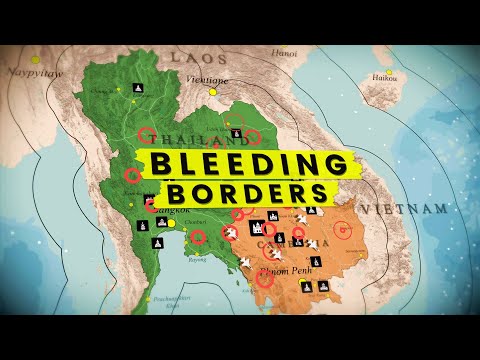
Cambodia is located in Southeast Asia. It is bordered by Thailand to the northwest, Laos to the northeast, Vietnam to the east, and the Gulf of Thailand to the southwest.
The capital and largest city of Cambodia is Phnom Penh. It is the political, economic, and cultural center of the country.
The term 'Kampuchean' was used officially in the past, but it is rare in modern English. 'Cambodian' is the standard and most widely accepted term today.
自我测试 200 个问题
Write a sentence using 'Cambodian' as an adjective to describe food.
Well written! Good try! Check the sample answer below.
Write a sentence using 'Cambodian' as a noun to refer to a person.
Well written! Good try! Check the sample answer below.
Describe a Cambodian landmark in one sentence.
Well written! Good try! Check the sample answer below.
Write a sentence about Cambodian history.
Well written! Good try! Check the sample answer below.
Use 'Cambodian' in a sentence about politics.
Well written! Good try! Check the sample answer below.
Write a sentence about the Cambodian diaspora.
Well written! Good try! Check the sample answer below.
Explain the difference between 'Cambodian' and 'Khmer' in two sentences.
Well written! Good try! Check the sample answer below.
Write a sentence about Cambodian art.
Well written! Good try! Check the sample answer below.
Use 'Cambodian' in a sentence about the environment.
Well written! Good try! Check the sample answer below.
Write a sentence about Cambodian textiles.
Well written! Good try! Check the sample answer below.
Describe a Cambodian festival.
Well written! Good try! Check the sample answer below.
Write a sentence about Cambodian education.
Well written! Good try! Check the sample answer below.
Use 'Cambodian' in a sentence about urban life.
Well written! Good try! Check the sample answer below.
Write a sentence about Cambodian resilience.
Well written! Good try! Check the sample answer below.
Use 'Cambodian' in a sentence about international relations.
Well written! Good try! Check the sample answer below.
Write a sentence about Cambodian music.
Well written! Good try! Check the sample answer below.
Describe the Cambodian landscape.
Well written! Good try! Check the sample answer below.
Write a sentence about Cambodian literature.
Well written! Good try! Check the sample answer below.
Use 'Cambodian' in a sentence about sports.
Well written! Good try! Check the sample answer below.
Write a sentence about Cambodian hospitality.
Well written! Good try! Check the sample answer below.
Describe a Cambodian dish you know.
Read this aloud:
你说的:
Speech recognition is not supported in your browser. Try Chrome or Edge.
Tell me about a Cambodian landmark.
Read this aloud:
你说的:
Speech recognition is not supported in your browser. Try Chrome or Edge.
Why is Cambodian history important?
Read this aloud:
你说的:
Speech recognition is not supported in your browser. Try Chrome or Edge.
What are some characteristics of Cambodian culture?
Read this aloud:
你说的:
Speech recognition is not supported in your browser. Try Chrome or Edge.
Discuss the importance of the Cambodian diaspora.
Read this aloud:
你说的:
Speech recognition is not supported in your browser. Try Chrome or Edge.
How has the Cambodian economy changed?
Read this aloud:
你说的:
Speech recognition is not supported in your browser. Try Chrome or Edge.
Explain the role of the Cambodian government in heritage preservation.
Read this aloud:
你说的:
Speech recognition is not supported in your browser. Try Chrome or Edge.
What are the challenges facing Cambodian urban development?
Read this aloud:
你说的:
Speech recognition is not supported in your browser. Try Chrome or Edge.
Describe the Cambodian landscape in detail.
Read this aloud:
你说的:
Speech recognition is not supported in your browser. Try Chrome or Edge.
Talk about Cambodian classical dance.
Read this aloud:
你说的:
Speech recognition is not supported in your browser. Try Chrome or Edge.
What is the significance of the Cambodian New Year?
Read this aloud:
你说的:
Speech recognition is not supported in your browser. Try Chrome or Edge.
Discuss Cambodian-American identity.
Read this aloud:
你说的:
Speech recognition is not supported in your browser. Try Chrome or Edge.
How does Cambodian literature reflect the nation's history?
Read this aloud:
你说的:
Speech recognition is not supported in your browser. Try Chrome or Edge.
What is the importance of the Mekong River to Cambodia?
Read this aloud:
你说的:
Speech recognition is not supported in your browser. Try Chrome or Edge.
Talk about Cambodian textiles and their production.
Read this aloud:
你说的:
Speech recognition is not supported in your browser. Try Chrome or Edge.
Discuss the role of Cambodian youth in modern society.
Read this aloud:
你说的:
Speech recognition is not supported in your browser. Try Chrome or Edge.
How does Cambodia interact with its neighbors in ASEAN?
Read this aloud:
你说的:
Speech recognition is not supported in your browser. Try Chrome or Edge.
What are some common misconceptions about Cambodia?
Read this aloud:
你说的:
Speech recognition is not supported in your browser. Try Chrome or Edge.
Describe the atmosphere of a Cambodian market.
Read this aloud:
你说的:
Speech recognition is not supported in your browser. Try Chrome or Edge.
Why is the Cambodian flag unique?
Read this aloud:
你说的:
Speech recognition is not supported in your browser. Try Chrome or Edge.
Listen and identify the word: 'The Cambodian people are very friendly.'
Listen and identify the word: 'I love Cambodian food.'
Listen and identify the word: 'We visited a Cambodian temple.'
Listen and identify the word: 'She is a Cambodian student.'
Listen and identify the word: 'The Cambodian government is meeting today.'
Listen and identify the word: 'Cambodian history is fascinating.'
Listen and identify the word: 'The Cambodian diaspora is large.'
Listen and identify the word: 'Cambodian silk is high quality.'
Listen and identify the word: 'Cambodian foreign policy is evolving.'
Listen and identify the word: 'The Cambodian experience is complex.'
Listen and identify the word: 'Cambodian classical dance is beautiful.'
Listen and identify the word: 'The Cambodian landscape is green.'
Listen and identify the word: 'Cambodian rice is an export.'
Listen and identify the word: 'The Cambodian New Year is in April.'
Listen and identify the word: 'She is learning Cambodian.'
/ 200 correct
Perfect score!
Summary
The word 'Cambodian' is the essential term for identifying anything related to the nation of Cambodia. For example: 'The Cambodian government is working to preserve the ancient temples of Angkor Wat.'
- Cambodian is an adjective and noun used to describe people, things, and culture from the Southeast Asian country of Cambodia.
- It is a proper adjective, meaning it must always be capitalized in English, regardless of its position in a sentence.
- While 'Khmer' refers specifically to the ethnic group and language, 'Cambodian' is the broader term for the national identity.
- The word is commonly used in travel, food, history, and international news to identify things related to Cambodia.
Capitalization
Always capitalize the 'C' in Cambodian. It's a proper adjective and noun.
Khmer vs. Cambodian
Use 'Khmer' for the language and 'Cambodian' for the nationality to sound more professional.
Stress the Second Syllable
Remember to say cam-BO-di-an. The stress is on the 'BO'.
Respect the Identity
Using the word correctly shows respect for the Cambodian people and their heritage.