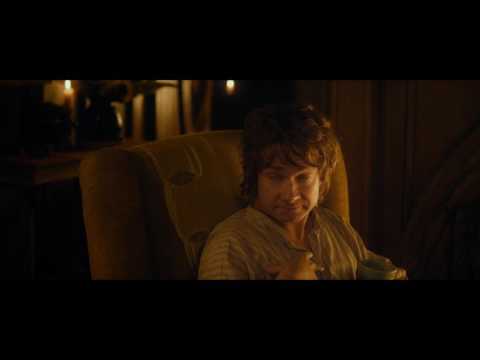
hobbit 30秒了解
- A hobbit is a small, fictional creature with hairy feet, created by J.R.R. Tolkien for his famous fantasy books like 'The Hobbit'.
- They are known for living in underground 'hobbit-holes', loving food (especially multiple breakfasts), and preferring a quiet, peaceful life at home.
- Despite their small size and lack of magic, hobbits often become unlikely heroes in epic stories, representing the power of the common person.
- The word has become a cultural icon, used to describe cozy aesthetics, small prehistoric humans, and anyone who enjoys a simple, rustic lifestyle.
The term hobbit refers to a specific race of fictional beings created by the philologist and author J.R.R. Tolkien. To understand a hobbit is to understand a very specific blend of pastoral simplicity and unexpected resilience. Physically, a hobbit is characterized by their diminutive stature, typically standing between two and four feet tall. They are often described as having slightly pointed ears, though not as pronounced as those of elves, and most distinctively, they possess tough, leathery soles on their feet covered in thick, curling hair, which negates the need for shoes. Their temperament is generally cheerful, favoring peace, quiet, and well-tilled earth over industry or adventure. When people use the word today, they are almost always referring to Tolkien's legendarium, specifically 'The Hobbit' and 'The Lord of the Rings'. However, the word has transcended literature to become a cultural shorthand for someone who enjoys the comforts of home, good food, and a lack of drama.
- Physicality
- Hobbits are short, often reaching only mid-chest height on a human, with nimble fingers and a tendency toward stoutness due to their frequent meals.
- Lifestyle
- They reside in 'smials' or hobbit-holes, which are comfortable underground dwellings with round doors and windows, emphasizing their connection to the earth.
In a modern context, calling someone a hobbit might be a playful way to describe their homebody nature. If a friend prefers staying in with a large meal and a book rather than going to a loud party, they might jokingly refer to themselves as a hobbit. In scientific circles, the term was famously applied to Homo floresiensis, a species of small archaic humans discovered in Indonesia, showcasing how deeply the word has permeated our collective consciousness. The essence of the hobbit is the celebration of the 'ordinary' life, making the word a powerful symbol for the hidden strength found in common folk. When a writer uses the word, they are invoking a sense of rustic charm, innocence, and the capacity for greatness despite a small appearance.
In a hole in the ground there lived a hobbit.
The word also carries a specific weight in fantasy literature discussions. It represents the 'everyman' perspective in a world of high magic and ancient kings. By using a hobbit as a protagonist, Tolkien allowed readers to enter a complex world through the eyes of someone who values the same things we do: breakfast, safety, and friendship. This makes the word a cornerstone of modern myth-making. It is rarely used in a purely negative sense; rather, it implies a lack of pretension. Even when describing the 'hobbit-like' features of a landscape—rolling green hills, cozy cottages—the word evokes a feeling of safety and nostalgia for a pre-industrial world.
Furthermore, the word 'hobbit' is legally protected by the Tolkien Estate in many commercial contexts, which is why other fantasy worlds (like Dungeons & Dragons) use the term 'halfling' instead. This legal distinction has made the word 'hobbit' even more iconic and specific to the works of J.R.R. Tolkien. When you hear the word, you are not just hearing a description of a creature; you are hearing a reference to a specific literary legacy that redefined the fantasy genre in the 20th century. It is a word that bridges the gap between children's fairy tales and epic adult literature, embodying the idea that even the smallest person can change the course of the future.
The hobbit settled down for his second breakfast, oblivious to the world outside.
- Cultural Impact
- The word has inspired architecture, with 'hobbit houses' being a popular style of eco-friendly, earth-sheltered homes.
Ultimately, the word 'hobbit' is a testament to the power of naming. Tolkien famously claimed the word came to him while he was grading papers, scribbling 'In a hole in the ground there lived a hobbit' on a blank leaf. From that single word, an entire mythology was born. It serves as a reminder that language is creative; a single invented noun can grow to represent an entire philosophy of life—one that prioritizes the hearth over the sword, and the garden over the machine.
Bilbo Baggins was a hobbit who never expected to see a dragon.
The hobbit's hairy feet padded softly across the stone floor.
- Etymological Note
- Tolkien later 'back-formed' the word from the Old English 'hol-bytla', meaning 'hole-builder'.
No hobbit had ever been so far from the Shire before.
Using the word hobbit correctly involves understanding its role as a count noun. You can have one hobbit, two hobbits, or a whole village of hobbits. Because the word is so closely tied to a specific literary universe, it is often used in comparative structures. For example, you might say, 'He eats like a hobbit,' implying that the person eats many meals a day or has a very hearty appetite. This metaphorical usage is common in informal English. When using the word in a sentence, it often acts as the subject of verbs related to eating, resting, or gardening, reflecting the creature's nature. Conversely, when a hobbit is placed in an adventure, the sentence often highlights the contrast between their small size and the large task at hand.
- Subjective Use
- 'The hobbit decided that an adventure was much too much trouble.'
- Possessive Use
- 'The hobbit's pantry was stocked with enough food for a year.'
In descriptive writing, 'hobbit' can be used to set a tone of rustic charm. If you describe a house as a 'hobbit-hole,' you are telling the reader that it is cozy, perhaps partially underground, and very welcoming. This is an example of the word functioning as a modifier. In more academic or literary analysis, you might discuss 'the hobbit perspective' as a way of looking at the world that values the small and the local over the grand and the global. This allows the word to move beyond a simple creature name into a conceptual framework. When constructing sentences, pay attention to the articles; because 'hobbit' starts with a consonant sound, we always use 'a' (a hobbit) rather than 'an'.
Every hobbit in the Shire knew about Bilbo's gold.
Grammatically, 'hobbit' follows standard English pluralization rules: just add an 's'. However, collective nouns like 'hobbit-kind' or 'hobbitry' are sometimes used to refer to the race as a whole. In dialogue, the word can be used as a term of address, though usually only by other characters within the fantasy setting. For instance, Gandalf might say, 'My dear hobbit,' which conveys a sense of affection and perhaps a slight patronizing tone toward their small stature. In your own writing, you can use the word to evoke specific imagery without needing to explain the creature's appearance, as the term is now part of the general lexicon of English speakers.
Another way to use 'hobbit' is in the context of archetypes. You might write, 'The protagonist is a classic hobbit figure: unassuming but brave when pushed.' This uses the word to describe a character type rather than a literal biological race. This is particularly useful in film or book reviews. Furthermore, the word can be used in compound nouns like 'hobbit-style' or 'hobbit-sized'. If you describe a meal as 'hobbit-sized,' you are ironically suggesting it is very large, because hobbits are known for eating a lot. This play on words is a common feature of modern English wordplay involving pop culture references.
The hobbit felt a sudden surge of courage in the dark cave.
- Adjectival Phrases
- 'The garden had a distinct hobbit-like quality, with its hidden paths and lush vegetables.'
Finally, consider the emotional resonance of the word. In a sentence like 'He felt like a hobbit among giants,' the word conveys a sense of vulnerability and being out of place. This usage is effective because it taps into the universal feeling of being small in a large, intimidating world. Whether you are writing a fan fiction story, a literary essay, or just chatting with friends, the word 'hobbit' provides a rich set of associations that can make your sentences more vivid and relatable. It is a word that carries its own world with it, allowing for high levels of descriptive economy.
Is there a hobbit among us who doesn't love a good party?
The hobbit's journey changed the history of Middle-earth.
- Plural Form
- 'Four hobbits set out from the Shire on a perilous quest.'
The hobbit laughed as he poured another glass of ale.
You are most likely to encounter the word hobbit in the context of popular media and entertainment. Since the release of Peter Jackson's film trilogies, the word has become a household name globally. You will hear it in movie theaters, on streaming platforms, and in discussions about cinema history. Fans of fantasy literature use the word constantly in book clubs, online forums, and at conventions like Comic-Con. In these spaces, 'hobbit' is not just a word but a point of shared identity and passion. If you are in a bookstore, you will see the word prominently displayed on the covers of Tolkien's books, which remain perennial bestsellers. It is a staple of the 'Fantasy' section, often serving as the entry point for new readers to the genre.
- Tourism
- In New Zealand, specifically at the Hobbiton Movie Set in Matamata, the word is part of the daily vocabulary for tour guides and visitors.
- Gaming
- Video games like 'The Lord of the Rings Online' or 'LEGO The Hobbit' use the word as a character class or race selection.
Beyond entertainment, you might hear the word in scientific or anthropological contexts. As mentioned previously, the discovery of Homo floresiensis led to the nickname 'the Hobbit' appearing in news headlines worldwide. Scientists used the term to quickly communicate the small size of the hominid to the public. This shows how the word has moved from fiction into a descriptive tool for the real world. In architecture and interior design, you might hear people talk about 'hobbit houses' or 'hobbit doors'. These are terms used to describe small, cozy, or earth-integrated structures. Even in the culinary world, the concept of 'second breakfast'—a famous hobbit tradition—is often referenced in cafes or by food bloggers who enjoy multiple morning meals.
'Welcome to Hobbiton,' the guide said to the excited group of tourists.
In casual conversation, the word is often used as a lighthearted metaphor. If someone is short and has a lot of hair on their feet, a close friend might tease them by calling them a hobbit. It is also used to describe someone who is very content with a simple, rural life. 'He's a bit of a hobbit; he just wants to garden and be left alone,' is a sentence you might hear in a social setting. The word carries a sense of warmth and lack of ambition that can be either endearing or slightly critical, depending on the speaker's tone. In educational settings, teachers use 'The Hobbit' to introduce students to themes of heroism, growth, and the 'hero's journey' archetype, making the word a common part of the classroom vocabulary.
Social media is another place where the word 'hobbit' thrives. On platforms like Instagram or Pinterest, the 'hobbitcore' aesthetic has become popular. This involves photos of cozy cottages, mossy forests, homemade bread, and a lifestyle focused on nature and comfort. Here, 'hobbit' is used to define a specific visual and lifestyle brand. You will also find it in memes, where hobbits' love for food (especially 'second breakfast' and 'elevenses') is a recurring joke. This digital presence ensures that the word remains relevant to younger generations who may not have even read the original books but are familiar with the cultural 'vibe' the word represents.
The scientist explained that the hobbit fossils were a major discovery.
- Internet Slang
- 'Hobbitcore' is an aesthetic centered around the peaceful, nature-loving lifestyle of hobbits.
Finally, you will hear the word in legal and business discussions regarding intellectual property. Because the word is a 'coined' term by Tolkien, its use in commercial products is strictly regulated. This makes 'hobbit' a case study in trademark law. Whether it is a debate about the 'Hobbit' movies' impact on the New Zealand economy or a discussion about the rights to the name, the word appears in serious professional contexts as well. In summary, 'hobbit' is a versatile word that you will hear in places ranging from a child's bedroom to a scientific laboratory, from a movie set to a courtroom.
'I'm having a hobbit day,' she said, meaning she was staying in her pajamas and eating all day.
The hobbit's hairy feet are his most famous feature.
- Literary Analysis
- Scholars discuss the hobbit as a subversion of the traditional epic hero.
He looked like a hobbit standing next to the tall basketball player.
One of the most frequent mistakes people make with the word hobbit is confusing them with other fantasy races, particularly dwarves. While both are short, they are very different in Tolkien's world. Dwarves are typically associated with mining, beards, and stone, whereas hobbits are associated with gardening, no beards (usually), and living in the earth. Using 'hobbit' to describe a dwarf is a major error for fans of the genre. Another common mistake is in capitalization. In general English, you might not capitalize 'hobbit' if you are using it metaphorically, but in the context of Tolkien's work, it is often capitalized as 'Hobbit' to denote the specific race, similar to how 'English' or 'French' is capitalized. Failing to capitalize it in a formal essay about the books might be seen as a lack of attention to detail.
- Confusing Races
- Mistaking a hobbit for a dwarf or a gnome. Hobbits are unique for their hairy feet and lack of beards.
- Spelling Errors
- Spelling it as 'hobit' with one 'b' is a common typo. It always has a double 'b'.
Another error involves the plural form. Some people mistakenly try to use an irregular plural like 'hobbiti' or 'hobbiten,' perhaps influenced by other fantasy languages. However, the correct plural is simply 'hobbits'. There is also a tendency to use the word 'halfling' and 'hobbit' interchangeably. While they refer to the same type of creature, 'hobbit' is the name they use for themselves, while 'halfling' is the name others (like humans) use for them. In a strict literary sense, using 'halfling' when a hobbit is speaking about their own kind would be slightly inaccurate. Furthermore, people often forget that 'The Hobbit' is the title of a book, so they might say 'I am reading hobbit' instead of 'I am reading The Hobbit'.
Incorrect: The hobit went to the mountain. (Spelling error)
In terms of pronunciation, some non-native speakers might struggle with the short 'o' sound or the final 't'. It should rhyme with 'rabbit,' not 'robot'. Another mistake is assuming that all hobbits are the same. In Tolkien's lore, there are three distinct branches: Harfoots, Stoors, and Fallohides. While this is advanced knowledge, calling a Stoor (who likes water) a typical hobbit (who usually fears it) might be a mistake in a deep-dive discussion. Additionally, some people use 'hobbit' to describe any small creature in any fantasy book, but this is technically incorrect because the word is specific to Tolkien. In other series, they are almost always called 'halflings' for legal reasons.
There is also a common misconception about their feet. People often think hobbits have giant feet. While their feet are prominent and hairy, they aren't necessarily 'giant' in proportion to their bodies—they are just very sturdy and well-padded. Describing a hobbit as having 'clown feet' would be an exaggeration. Finally, a subtle mistake is overusing the word as a synonym for 'short person' in a way that might be offensive. While usually playful, calling a person with dwarfism a 'hobbit' can be seen as insensitive or reductive, as it compares a real person's medical condition to a fictional creature. It is best to keep the term within the realm of fiction or very close, consensual friendships.
Incorrect: He is a hobbit because he has a long beard. (Hobbits rarely have beards)
- Grammar Trap
- Using 'an hobbit' instead of 'a hobbit'. The 'h' is not silent.
Lastly, don't forget the 'the'. When referring to Bilbo Baggins's story, it is 'The Hobbit'. When referring to the people, it is 'the hobbits'. Leaving out the definite article can make the sentence sound ungrammatical. For example, 'Hobbit went to the store' is incorrect, whereas 'The hobbit went to the store' is correct. By avoiding these common pitfalls, you can use the word with the precision of a true scholar of Middle-earth.
Incorrect: I saw many hobbit in the movie. (Needs plural 's')
Correct: The hobbit's favorite food is mushrooms.
- Contextual Error
- Using 'hobbit' in a sci-fi setting where it doesn't belong.
The hobbit didn't like the look of the dark forest.
When looking for alternatives to the word hobbit, the most direct synonym is halfling. This term is used within Tolkien's own books by other races to describe hobbits, and it has since become the standard term in the broader fantasy genre. If you are writing a story and want to avoid the trademarked word 'hobbit,' 'halfling' is your best choice. It literally refers to them being half the height of a normal human. Another similar word is gnome, though in modern fantasy, gnomes are often more mechanical or magical than the earthy, simple hobbit. In older folklore, however, gnomes and hobbits share the trait of being small, earth-dwelling beings. Dwarf is often mentioned alongside hobbit, but as discussed, they have very different cultural and physical characteristics.
- Halfling
- The most common alternative, used in Dungeons & Dragons and other fantasy settings. It emphasizes their size.
- Perian
- The Sindarin (Elvish) word for hobbit, often used in more formal or poetic contexts within Tolkien's lore.
If you are looking for words that describe the nature of a hobbit rather than the race itself, you might use homebody or epicure. A 'homebody' is someone who loves staying at home, much like a hobbit loves their hole. An 'epicure' is someone who takes great pleasure in food and drink, which is a defining trait of hobbit culture. You could also use the word rustic to describe their lifestyle. A 'rustic' person is someone from the countryside who is simple and unsophisticated. In a more whimsical sense, you might use sprite or brownie (from British folklore), though these usually imply a more magical or mischievous nature than the sturdy, practical hobbit.
The halfling crept through the shadows, much like a hobbit would.
In terms of size-related synonyms, words like midget or dwarf (in a medical sense) should be avoided as they are often offensive or clinically specific. Instead, words like diminutive or petite can be used to describe someone small in a more neutral or positive way. However, none of these words capture the full cultural package that 'hobbit' does. When you say 'hobbit,' you aren't just saying 'small person'; you are saying 'small person who loves peace, gardens, and six meals a day.' This is why 'hobbit' is so hard to replace with a single word. It is a 'thick' concept that contains a lot of information.
Comparing hobbits to other fictional races can also be helpful. For example, the Kender from the Dragonlance series are similar in size but much more mischievous and prone to 'borrowing' things. The Gully Dwarves are also small but are depicted as much less intelligent and clean than hobbits. By looking at these alternatives, we can see that the hobbit is unique in its combination of being very 'human' and 'ordinary' while still being a distinct fantasy race. The word puck or hobgoblin might seem related due to the 'hob-' prefix, but 'hobgoblin' usually refers to a much more menacing creature, and 'puck' is a specific character from Shakespeare and folklore.
He lived a rustic life, reminiscent of a hobbit in the Shire.
- Comparison: Hobbit vs. Gnome
- Hobbits are more grounded and domestic; gnomes are often more eccentric and magical.
Finally, if you are translating the concept into other languages, you might find words like petit peuple (French for 'little people') or trasgo (Spanish, though often more like a goblin). However, in almost every language, the word 'hobbit' is simply borrowed directly because of its global fame. It is a unique contribution to the English language that has become a universal term. Whether you use 'halfling' for legal safety or 'homebody' for metaphorical flair, the 'hobbit' remains the gold standard for describing a small, comfort-loving hero.
The homebody preferred his armchair to the mountain peaks.
The hobbit was a true epicure, enjoying seven meals a day.
- Comparison: Hobbit vs. Brownie
- Brownies are helpful house-spirits; hobbits are a biological race with their own society.
A hobbit is never late, nor is he early; he arrives precisely when he means to.
How Formal Is It?
趣味小知识
Tolkien later 'discovered' that the word could be a descendant of the hypothetical Old English word 'hol-bytla', which means 'hole-builder'. This was a way to give the word a history within the fictional world.
发音指南
- Pronouncing it as 'ho-bit' with a long 'o'.
- Making the 'h' silent like in 'hour'.
- Pronouncing the 'i' like 'ee' (hob-beet).
- Swallowing the final 't'.
- Adding an extra syllable (hob-bi-it).
难度评级
The word is very common in popular culture and easy to recognize in text.
Requires correct spelling (double 'b') and understanding of capitalization rules.
Pronunciation is straightforward once the short 'o' is mastered.
Easily distinguishable in speech due to its unique phonetic structure.
接下来学什么
前置知识
接下来学习
高级
需要掌握的语法
Capitalization of Fictional Races
In the essay, I wrote 'The Hobbit' with a capital H because it refers to the race.
Compound Adjectives with Nouns
The 'hobbit-sized' door was perfect for the children.
Possessive S with Singular Nouns
The hobbit's ring was very heavy.
Using 'A' vs 'An' with 'H'
It is 'a hobbit' because the 'h' is pronounced.
Collective Nouns for Groups
The 'hobbitry' of the Shire were all gathered for the party.
按水平分级的例句
The hobbit lives in a small house.
Le hobbit vit dans une petite maison.
Subject-verb agreement: 'lives' matches 'The hobbit'.
A hobbit has hairy feet.
Un hobbit a des pieds poilus.
Use 'a' before 'hobbit' because it starts with a consonant.
The hobbit is very short.
Le hobbit est très petit.
Adjective 'short' describes the noun 'hobbit'.
I like the hobbit story.
J'aime l'histoire du hobbit.
'Hobbit' acts as a modifier for 'story'.
The hobbit eats bread.
Le hobbit mange du pain.
Simple present tense for a general fact.
Is he a hobbit?
Est-ce un hobbit ?
Question form using 'is' and 'a'.
Two hobbits are in the garden.
Deux hobbits sont dans le jardin.
Plural 'hobbits' with plural verb 'are'.
The hobbit has a green door.
Le hobbit a une porte verte.
Possessive 'has' shows the hobbit owns the door.
The hobbit invited his friends for tea.
Le hobbit a invité ses amis pour le thé.
Past tense 'invited' used for a completed action.
Most hobbits do not like adventures.
La plupart des hobbits n'aiment pas les aventures.
Negative form 'do not like' for plural subjects.
He is wearing a hobbit costume.
Il porte un costume de hobbit.
Present continuous 'is wearing' for a current state.
The hobbit-hole was very warm and cozy.
Le trou de hobbit était très chaud et douillet.
Compound noun 'hobbit-hole' used as a subject.
A hobbit can run very quietly.
Un hobbit peut courir très silencieusement.
Modal 'can' followed by the base verb 'run'.
The hobbit's feet are very strong.
Les pieds du hobbit sont très forts.
Possessive 's' indicates the feet belong to the hobbit.
I want to live like a hobbit.
Je veux vivre comme un hobbit.
Prepositional phrase 'like a hobbit' for comparison.
The movie shows many different hobbits.
Le film montre beaucoup de hobbits différents.
Adjective 'different' modifies the plural noun 'hobbits'.
The hobbit felt a sense of dread as he entered the dark cave.
Le hobbit a ressenti un sentiment d'effroi en entrant dans la grotte sombre.
Use of 'as' to show two actions happening at the same time.
Bilbo was a typical hobbit who enjoyed his pipe and his garden.
Bilbo était un hobbit typique qui appréciait sa pipe et son jardin.
Relative clause 'who enjoyed...' provides more info about Bilbo.
Even though he was a hobbit, he showed great courage.
Même s'il était un hobbit, il a fait preuve d'un grand courage.
Concession clause 'Even though...' shows a contrast.
The culture of the hobbit is centered around food and family.
La culture du hobbit est centrée sur la nourriture et la famille.
Passive voice 'is centered' focuses on the culture.
Scientists discovered a new species they nicknamed 'the hobbit'.
Des scientifiques ont découvert une nouvelle espèce qu'ils ont surnommée 'le hobbit'.
Past simple 'discovered' and 'nicknamed' for historical events.
The hobbit's journey took him far beyond the borders of the Shire.
Le voyage du hobbit l'a emmené bien au-delà des frontières de la Comté.
Prepositional phrase 'beyond the borders' indicates location.
You can't expect a hobbit to be interested in gold and jewels.
On ne peut pas s'attendre à ce qu'un hobbit s'intéresse à l'or et aux bijoux.
Infinitive 'to be interested' after the verb 'expect'.
The village was full of small, hobbit-sized houses.
Le village était plein de petites maisons de la taille d'un hobbit.
Hyphenated adjective 'hobbit-sized' describes the houses.
The author used the hobbit as a symbol of pastoral innocence.
L'auteur a utilisé le hobbit comme symbole de l'innocence pastorale.
Noun 'symbol' followed by the preposition 'of'.
Despite their small size, hobbits possess a remarkable resilience.
Malgré leur petite taille, les hobbits possèdent une résilience remarquable.
Preposition 'Despite' followed by a noun phrase.
The term 'hobbit' has been trademarked by the Tolkien Estate.
Le terme 'hobbit' a été déposé par la succession Tolkien.
Present perfect passive 'has been trademarked'.
In the novel, the hobbit's perspective provides much-needed comic relief.
Dans le roman, la perspective du hobbit apporte un soulagement comique bien nécessaire.
Possessive 'hobbit's' modifying the noun 'perspective'.
He described the architecture as being 'very hobbit-like' in its coziness.
Il a décrit l'architecture comme étant 'très typée hobbit' dans son aspect douillet.
Gerund 'being' used after the preposition 'as'.
Hobbits are often underestimated by the more powerful races of Middle-earth.
Les hobbits sont souvent sous-estimés par les races plus puissantes de la Terre du Milieu.
Adverb 'often' placed before the main verb in a passive construction.
The hobbit's refusal to give up was the key to their success.
Le refus du hobbit d'abandonner a été la clé de leur succès.
Noun 'refusal' followed by an infinitive 'to give up'.
The story explores what happens when a hobbit is forced out of his comfort zone.
L'histoire explore ce qui se passe lorsqu'un hobbit est forcé de sortir de sa zone de confort.
Passive voice 'is forced' in a subordinate clause.
Tolkien's hobbit serves as a bridge between the reader and the high-fantasy world.
Le hobbit de Tolkien sert de pont entre le lecteur et le monde de la 'high fantasy'.
Metaphorical use of 'bridge' to describe a literary function.
The philological origins of the word 'hobbit' are rooted in Old English.
Les origines philologiques du mot 'hobbit' sont enracinées dans le vieil anglais.
Adjective 'philological' describing the noun 'origins'.
The hobbit's lack of ambition is precisely what makes him immune to the Ring's power.
Le manque d'ambition du hobbit est précisément ce qui l'immunise contre le pouvoir de l'Anneau.
Cleft sentence 'What makes him... is...' for emphasis.
Critics argue that the hobbit represents the idealized English yeomanry.
Les critiques soutiennent que le hobbit représente la paysannerie anglaise idéalisée.
That-clause used to report an argument or opinion.
The discovery of the 'hobbit' hominid challenged our understanding of human evolution.
La découverte de l'hominidé 'hobbit' a remis en question notre compréhension de l'évolution humaine.
Use of quotes around 'hobbit' to indicate a nickname.
The hobbit's domesticity is a stark contrast to the epic grandeur of the Elves.
La domesticité du hobbit contraste fortement avec la grandeur épique des Elfes.
Noun 'domesticity' used to describe a lifestyle trait.
Few literary creations have achieved the same level of cultural ubiquity as the hobbit.
Peu de créations littéraires ont atteint le même niveau d'ubiquité culturelle que le hobbit.
Negative quantifier 'Few' used with a plural noun.
The hobbit's journey is a classic example of the 'there and back again' narrative structure.
Le voyage du hobbit est un exemple classique de la structure narrative 'aller et retour'.
Appositive phrase 'there and back again' describing the structure.
The hobbit's ontological status within Middle-earth is that of a marginalized yet pivotal race.
Le statut ontologique du hobbit au sein de la Terre du Milieu est celui d'une race marginalisée mais pivotale.
Academic adjective 'ontological' relating to the nature of being.
Tolkien's sub-creation of the hobbit reflects a nostalgic yearning for a pre-industrial agrarian society.
La sous-création du hobbit par Tolkien reflète un désir nostalgique d'une société agraire pré-industrielle.
Compound noun 'sub-creation'—a term coined by Tolkien himself.
The hobbit serves as a subversive element, undermining the traditional tropes of the warrior-hero.
Le hobbit sert d'élément subversif, sapant les tropes traditionnels du héros guerrier.
Present participle phrase 'undermining...' showing the effect of the action.
The lexical evolution of 'hobbit' from a private neologism to a scientific label is a fascinating study in linguistics.
L'évolution lexicale de 'hobbit', d'un néologisme privé à une étiquette scientifique, est une étude fascinante en linguistique.
Parallel structure 'from... to...' used for evolution.
The hobbit's inherent 'ordinariness' is the very quality that enables their extraordinary heroism.
L' 'ordinarité' inhérente du hobbit est la qualité même qui permet leur héroïsme extraordinaire.
Use of 'the very' for emphasis on a specific noun.
Scholars often analyze the hobbit through the lens of 20th-century trauma and the desire for domestic security.
Les chercheurs analysent souvent le hobbit à travers le prisme du traumatisme du XXe siècle et du désir de sécurité domestique.
Metaphorical 'lens' used for analytical perspective.
The hobbit's resistance to the corruptive influence of power is a central theme in Tolkien's moral philosophy.
La résistance du hobbit à l'influence corruptrice du pouvoir est un thème central de la philosophie morale de Tolkien.
Adjective 'corruptive' modifying 'influence'.
By centering the narrative on a hobbit, Tolkien redefines the scale of epic literature.
En centrant le récit sur un hobbit, Tolkien redéfinit l'échelle de la littérature épique.
Gerund phrase 'By centering...' showing the means of an action.
常见搭配
常用短语
— The famous opening line of J.R.R. Tolkien's book.
The teacher began the lesson with: 'In a hole in the ground there lived a hobbit.'
— Eating many meals or a very large amount of food.
After the hike, I was eating like a hobbit.
— A life of simple pleasures, comfort, and no stress.
I'm retiring to the country to live a hobbit's life.
— A meal eaten shortly after the first breakfast, popularized by hobbits.
Is it time for second breakfast yet?
— Lacking the practical, down-to-earth wisdom hobbits are known for.
Going out in this storm shows you have no hobbit-sense.
— A style of decor that is cozy, rustic, and earth-toned.
Her apartment has a real hobbit-hole aesthetic.
— Being very proud of one's home, garden, or family heritage.
He was as proud as a hobbit of his prize-winning pumpkins.
— Feeling small or out of place in a world of powerful people.
At the tech conference, the small startup felt like a hobbit among giants.
— Doing things in a traditional, slow, and careful manner.
We do things the hobbit way here: no machines, just hands.
— A play on a famous Tolkien quote, suggesting hobbits usually don't wander.
He's traveling the world, but not all who wander are hobbits.
容易混淆的词
Dwarves are bearded, live in stone, and mine; hobbits are clean-shaven, live in earth, and garden.
Gnomes are often magical or mechanical; hobbits are very down-to-earth and non-magical.
Elves are tall, immortal, and elegant; hobbits are short, mortal, and rustic.
习语与表达
— To be a hobbit, or metaphorically, to be sturdy and earthy.
You'd need to have hairy feet to walk that path without shoes.
informal/playful— To live in a very cozy, perhaps cluttered or small, home.
Since he moved to the basement, he's basically living in a hobbit-hole.
informal— A short break for light refreshment taken at about eleven o'clock in the morning.
Stop working, it's time for elevenses!
British/Tolkien-inspired— Often used ironically by hobbit fans to mean doing something slightly outside one's routine.
I'm going to the new grocery store across town—I'm going on an adventure!
informal— A very large appetite despite a small physical size.
That kid has a hobbit-sized appetite; he's already finished his third burger.
informal— Feeling a strong desire to return home to comfort and safety.
After a week in the city, the Shire is calling me back.
informal— To suddenly leave on a trip or do something unexpected and brave.
He just quit his job and moved to Italy; he really pulled a Bilbo.
slang— A phrase used to express a desire for a quiet, boring day.
I'm staying on the couch. No adventures today, thank you.
informal— Describing something very tough or durable.
This steak is as thick as a hobbit's sole.
informal/humorous— A very warm, food-filled, and hospitable greeting.
We received a true hobbit's welcome at their farmhouse.
neutral容易混淆
They refer to the same creature.
'Hobbit' is the internal name used by the race; 'Halfling' is the name used by others and is also the generic term used in non-Tolkien fantasy.
In D&D, you play as a halfling, but in Tolkien, you are a hobbit.
Both are small and from folklore/myth.
Leprechauns are magical Irish spirits associated with gold; hobbits are a biological race with a specific lifestyle.
The leprechaun hid his gold, while the hobbit hid his second breakfast.
Both are small fantasy creatures.
Goblins are typically evil, ugly, and aggressive; hobbits are kind, pleasant, and peaceful.
The hobbit was terrified when he saw the goblin.
Both are from the same fantasy world.
Trolls are massive, stupid, and turn to stone in sunlight; hobbits are tiny, clever, and love the sun.
The hobbit had to trick the trolls to survive.
Both are small and live near humans.
Brownies are invisible house-spirits that do chores; hobbits are visible, physical beings with their own society.
A brownie might clean your house, but a hobbit would just eat your food.
句型
The [noun] is [adjective].
The hobbit is small.
The [noun] has [noun].
The hobbit has hairy feet.
Even though [clause], the [noun] [verb].
Even though he was scared, the hobbit stayed.
The [noun] is known for [gerund].
The hobbit is known for eating many meals.
It is the [noun]'s [noun] that [verb].
It is the hobbit's resilience that saves the day.
Centering the [noun] on [noun] allows for [noun].
Centering the story on a hobbit allows for a domestic perspective.
I wish I were a [noun].
I wish I were a hobbit living in the Shire.
The more [adjective] the [noun], the more [adjective].
The more hobbit-like the house, the more I like it.
词族
名词
形容词
相关
如何使用
Common in pop culture, literature, and specific scientific/tourism contexts.
-
hobit
→
hobbit
The word requires a double 'b' to maintain its correct spelling and pronunciation.
-
an hobbit
→
a hobbit
The 'h' is not silent, so the indefinite article 'a' must be used.
-
hobbitses
→
hobbits
'Hobbitses' is a mistake made by the character Gollum; the correct plural is 'hobbits'.
-
Calling a dwarf a hobbit.
→
Calling a dwarf a dwarf.
Dwarves and hobbits are different races with different characteristics (beards vs. hairy feet).
-
I am reading hobbit.
→
I am reading The Hobbit.
When referring to the book, you must use the definite article and italics/capitalization.
小贴士
Double the B
Always remember that 'hobbit' has two 'b's. Think of it as having two 'b's for 'big breakfast'.
Watch the Movies
Watching 'The Lord of the Rings' is the fastest way to understand the visual and social world of a hobbit.
A, not An
Even though 'h' can sometimes be silent, in 'hobbit' it is fully pronounced, so use 'a hobbit'.
Learn 'Halfling'
If you play games like Dungeons & Dragons, 'halfling' is the word you will use instead of 'hobbit'.
Second Breakfast
Use the phrase 'second breakfast' to sound like a true hobbit expert in casual conversation.
Cozy Adjectives
When describing a hobbit, use words like 'stout', 'merry', 'rustic', and 'domestic'.
Hole-Builder
Remember the Old English 'hol-bytla' to understand why they live in holes.
Rhyme with Rabbit
If you forget how to say it, just remember it rhymes with 'rabbit'.
Be Careful with Comparisons
Only call a friend a hobbit if you know they like the books, as some might take it as a comment on their height.
Read the Prologue
The prologue of 'The Lord of the Rings' gives the most detailed description of hobbits ever written.
记住它
记忆技巧
Think of a 'Habit' (hobbit) of living in a 'Hole'. Hobbits have a habit of staying in their holes.
视觉联想
Imagine a round green door in a hill with a pair of very hairy feet sticking out of the bottom.
Word Web
挑战
Try to describe your perfect 'hobbit day' using the word at least five times in a paragraph.
词源
The word was invented by J.R.R. Tolkien around 1930. He famously wrote the first sentence of 'The Hobbit' on a blank exam paper he was marking. While he initially thought it was a completely original invention, he later explored its potential roots in Old English.
原始含义: A small, hole-dwelling creature.
Invented English (Neologism).文化背景
Avoid using the term to describe people with dwarfism unless you are certain it is taken as a joke, as it can be offensive.
The word is deeply tied to British rural identity and the concept of 'the comforts of home'.
在生活中练习
真实语境
Discussing Literature
- The hobbit's journey
- Tolkien's creation
- A classic protagonist
- The theme of the ordinary hero
Casual Conversation
- I'm a bit of a hobbit
- Second breakfast time
- Cozy like a hobbit-hole
- Hairy feet joke
Movies and Media
- The Hobbit trilogy
- Casting the hobbits
- Special effects for size
- Hobbiton movie set
Science and History
- The Flores hobbit
- Small-bodied hominids
- Island dwarfism
- The nickname 'hobbit'
Home and Garden
- Hobbit-style house
- Earth-sheltered living
- A hobbit's garden
- Rustic interior design
对话开场白
"If you were a hobbit, what would your favorite meal of the day be?"
"Do you think you would enjoy living in a hobbit-hole, or would it be too small?"
"Which hobbit from the Lord of the Rings do you relate to the most?"
"Why do you think the word 'hobbit' has become so famous all over the world?"
"If you had to go on an adventure like a hobbit, what one thing would you bring from home?"
日记主题
Describe a 'hobbit day' in your life. What would you eat, and how would you spend your time in the garden?
Write about a time you felt like a 'hobbit among giants'. How did you handle the situation?
Do you believe that 'ordinary' people like hobbits can really change the world? Why or why not?
If you were designing a modern hobbit-hole, what features would it have to make it cozy but functional?
Reflect on the idea of 'second breakfast'. How would your daily routine change if you ate like a hobbit?
常见问题
10 个问题No, hobbits are fictional creatures created by J.R.R. Tolkien. However, a small species of ancient humans, Homo floresiensis, was nicknamed 'the hobbit' after its discovery.
In Tolkien's world, the hair and leathery soles are a natural adaptation that allows them to walk quietly and comfortably without shoes.
A hobbit-hole, or 'smial', is a comfortable underground home with round doors and windows, built into the side of a hill.
Traditionally, hobbits eat six or seven meals a day: breakfast, second breakfast, elevenses, luncheon, afternoon tea, dinner, and supper.
Legally, the word 'hobbit' is trademarked. Most authors use the term 'halfling' to avoid legal issues with the Tolkien Estate.
The Shire is the peaceful, rural homeland of the hobbits in Middle-earth, known for its green hills and farming.
Hobbits do not have magic in the way wizards do, but they are naturally very good at disappearing quietly when they don't want to be seen.
Bilbo Baggins and his nephew Frodo Baggins are the most famous hobbits, known for their roles in 'The Hobbit' and 'The Lord of the Rings'.
Tolkien suggested that hobbits are a distant branch of the human race, which is why they are more similar to us than elves or dwarves.
Hobbitcore is an internet aesthetic inspired by the cozy, nature-focused lifestyle of hobbits, featuring gardening, baking, and rustic fashion.
自我测试 180 个问题
Describe a hobbit's house in three sentences.
Well written! Good try! Check the sample answer below.
What are three physical characteristics of a hobbit?
Well written! Good try! Check the sample answer below.
Explain why hobbits are called 'unlikely heroes'.
Well written! Good try! Check the sample answer below.
Write a short dialogue between two hobbits about 'second breakfast'.
Well written! Good try! Check the sample answer below.
How has the word 'hobbit' moved from literature into science?
Well written! Good try! Check the sample answer below.
Describe the 'hobbitcore' aesthetic.
Well written! Good try! Check the sample answer below.
Discuss the philological origin of the word 'hobbit'.
Well written! Good try! Check the sample answer below.
Compare and contrast hobbits and dwarves.
Well written! Good try! Check the sample answer below.
What does the Shire represent in Tolkien's work?
Well written! Good try! Check the sample answer below.
Write a paragraph using 'hobbit' metaphorically to describe a person.
Well written! Good try! Check the sample answer below.
Why is the word 'hobbit' capitalized in some contexts and not others?
Well written! Good try! Check the sample answer below.
Describe the importance of food in hobbit culture.
Well written! Good try! Check the sample answer below.
What are the legal implications of using the word 'hobbit'?
Well written! Good try! Check the sample answer below.
How does the 'hobbit' perspective change the tone of an epic story?
Well written! Good try! Check the sample answer below.
Write a short poem about a hobbit.
Well written! Good try! Check the sample answer below.
Explain the term 'hobbitry'.
Well written! Good try! Check the sample answer below.
Describe the physical adaptation of a hobbit's feet.
Well written! Good try! Check the sample answer below.
What is the significance of the 'round door' in hobbit architecture?
Well written! Good try! Check the sample answer below.
Discuss the theme of 'there and back again' in relation to hobbits.
Well written! Good try! Check the sample answer below.
How do hobbits view 'Big Folk'?
Well written! Good try! Check the sample answer below.
Tell a friend about what a hobbit is in your own words.
Read this aloud:
你说的:
Speech recognition is not supported in your browser. Try Chrome or Edge.
Describe your ideal 'hobbit-hole' to a group.
Read this aloud:
你说的:
Speech recognition is not supported in your browser. Try Chrome or Edge.
Explain why someone might call themselves a 'hobbit' today.
Read this aloud:
你说的:
Speech recognition is not supported in your browser. Try Chrome or Edge.
Discuss the differences between a hobbit and a human.
Read this aloud:
你说的:
Speech recognition is not supported in your browser. Try Chrome or Edge.
Talk about the 'second breakfast' concept and if you think it's a good idea.
Read this aloud:
你说的:
Speech recognition is not supported in your browser. Try Chrome or Edge.
Explain the significance of the 'hobbit' nickname in science.
Read this aloud:
你说的:
Speech recognition is not supported in your browser. Try Chrome or Edge.
Discuss the 'hero's journey' of a hobbit like Bilbo or Frodo.
Read this aloud:
你说的:
Speech recognition is not supported in your browser. Try Chrome or Edge.
How does the 'hobbitcore' aesthetic reflect modern society's desires?
Read this aloud:
你说的:
Speech recognition is not supported in your browser. Try Chrome or Edge.
Discuss the legal protection of the word 'hobbit'.
Read this aloud:
你说的:
Speech recognition is not supported in your browser. Try Chrome or Edge.
What would a 'hobbit-style' vacation look like?
Read this aloud:
你说的:
Speech recognition is not supported in your browser. Try Chrome or Edge.
Explain the phrase 'In a hole in the ground there lived a hobbit.'
Read this aloud:
你说的:
Speech recognition is not supported in your browser. Try Chrome or Edge.
Do you think hobbits are a good role model for people today?
Read this aloud:
你说的:
Speech recognition is not supported in your browser. Try Chrome or Edge.
Describe the Shire using as many 'hobbit' related words as possible.
Read this aloud:
你说的:
Speech recognition is not supported in your browser. Try Chrome or Edge.
How would you translate the concept of a 'hobbit' into your native culture?
Read this aloud:
你说的:
Speech recognition is not supported in your browser. Try Chrome or Edge.
What is the most 'hobbit-like' thing you have ever done?
Read this aloud:
你说的:
Speech recognition is not supported in your browser. Try Chrome or Edge.
Discuss the physical challenges of being a hobbit in a world built for 'Big Folk'.
Read this aloud:
你说的:
Speech recognition is not supported in your browser. Try Chrome or Edge.
Why do you think Tolkien gave hobbits hairy feet?
Read this aloud:
你说的:
Speech recognition is not supported in your browser. Try Chrome or Edge.
Talk about the importance of the 'hobbit' in the history of fantasy movies.
Read this aloud:
你说的:
Speech recognition is not supported in your browser. Try Chrome or Edge.
Explain the difference between a 'Baggins' and a 'Tuk' hobbit.
Read this aloud:
你说的:
Speech recognition is not supported in your browser. Try Chrome or Edge.
If you could ask a hobbit one question, what would it be?
Read this aloud:
你说的:
Speech recognition is not supported in your browser. Try Chrome or Edge.
Listen to the description: 'He was a small fellow, barely three feet tall, with a round belly and feet covered in brown woolly hair.' Who is being described?
Listen to the dialogue: 'Would you like some tea?' 'Yes, and perhaps a bit of seed cake? It is nearly time for elevenses.' What kind of character is speaking?
Listen to the news report: 'Scientists on the island of Flores have found remains of a species so small they've dubbed it the hobbit.' What is the scientific name of this species?
Listen to the instruction: 'To draw a hobbit, start with a short, stout body and make sure the feet are large and hairy.' What are the two main physical traits mentioned?
Listen to the book review: 'The hobbit's journey is a masterpiece of character development, showing how a homebody becomes a hero.' What is the main theme mentioned?
Listen to the travel guide: 'Welcome to the Shire. Please watch your head as you enter the hobbit-holes, as the ceilings are quite low.' What is the warning for visitors?
Listen to the lecture: 'Tolkien's use of the hobbit as a focalizer allows for a domestic perspective on epic events.' What term is used for the hobbit's role?
Listen to the recipe: 'For a true hobbit breakfast, you'll need eggs, bacon, sausages, and at least three types of bread.' How many types of bread are needed?
Listen to the movie trivia: 'The actors playing the hobbits had to spend hours every morning having prosthetic hairy feet glued on.' What did the actors have to wear?
Listen to the legal notice: 'The word hobbit is a registered trademark of the Tolkien Estate.' Who owns the trademark?
Listen to the description: 'The door was perfectly round, painted green, with a shiny yellow brass knob in the exact middle.' What is being described?
Listen to the character's complaint: 'I've had no second breakfast, no elevenses, and I'm starting to think this adventure was a bad idea!' What is the character upset about?
Listen to the definition: 'Hobbitry is the collective name for the habits and social life of hobbits.' What does hobbitry refer to?
Listen to the environmental talk: 'Hobbit-style houses are becoming popular because they are energy-efficient and blend into the landscape.' Why are they popular?
Listen to the poem: 'Small and stout, with feet of hair, he lives a life without a care.' What two physical traits are mentioned?
/ 180 correct
Perfect score!
Summary
The word 'hobbit' describes a small, comfort-loving fictional race that embodies the strength of ordinary people. Example: 'He felt like a hobbit in the big city, longing for his quiet garden and a warm meal.'
- A hobbit is a small, fictional creature with hairy feet, created by J.R.R. Tolkien for his famous fantasy books like 'The Hobbit'.
- They are known for living in underground 'hobbit-holes', loving food (especially multiple breakfasts), and preferring a quiet, peaceful life at home.
- Despite their small size and lack of magic, hobbits often become unlikely heroes in epic stories, representing the power of the common person.
- The word has become a cultural icon, used to describe cozy aesthetics, small prehistoric humans, and anyone who enjoys a simple, rustic lifestyle.
Double the B
Always remember that 'hobbit' has two 'b's. Think of it as having two 'b's for 'big breakfast'.
Watch the Movies
Watching 'The Lord of the Rings' is the fastest way to understand the visual and social world of a hobbit.
A, not An
Even though 'h' can sometimes be silent, in 'hobbit' it is fully pronounced, so use 'a hobbit'.
Learn 'Halfling'
If you play games like Dungeons & Dragons, 'halfling' is the word you will use instead of 'hobbit'.