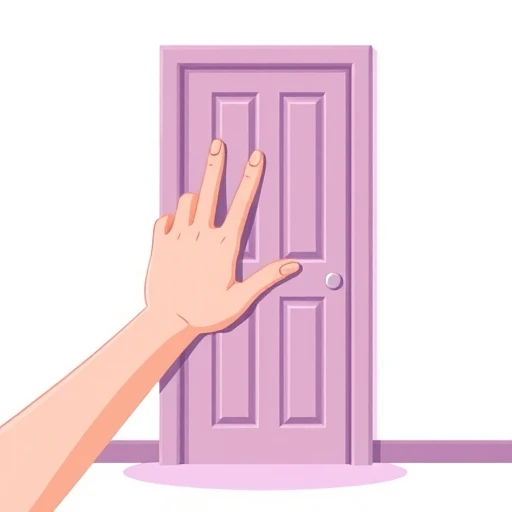
knocks 30秒了解
- Knocks is the third-person singular verb form of 'knock,' used for he, she, or it in the present tense to describe hitting a surface.
- As a plural noun, knocks refers to multiple sounds produced by striking a hard object, such as a door or a mechanical part.
- The word is frequently used in automotive contexts to describe abnormal engine noises caused by improper fuel combustion or timing issues.
- Knocks appears in many common English idioms and phrasal verbs, such as 'opportunity knocks' or 'knocks off work,' adding to its versatility.
The word knocks is a versatile English term that functions primarily as either the third-person singular present form of the verb 'to knock' or as the plural form of the noun 'knock.' At its most fundamental level, it refers to the act of striking a hard surface, typically with the knuckles or a hard object, to produce a sound. This action is most commonly associated with seeking entry to a building or a room, serving as a polite social signal that someone is outside and wishes to be acknowledged. In the realm of physics and acoustics, knocks represent discrete percussive events where kinetic energy is converted into sound waves through the impact of two solid bodies. Beyond the simple act of hitting a door, the word extends into the mechanical world. In automotive engineering, when an engine knocks, it refers to an abnormal sound caused by the premature combustion of the fuel-air mixture in the cylinder, often known as detonation or 'pinging.' This mechanical usage is critical for mechanics and car enthusiasts to understand, as it often signals a potential problem with the vehicle's timing or fuel quality. Furthermore, the term is used metaphorically in various contexts. For instance, when we say 'opportunity knocks,' we are personifying the abstract concept of a favorable set of circumstances that presents itself to an individual, suggesting that the chance for success is actively seeking their attention. The sound of knocks can also carry significant emotional weight in literature and film, often used to build suspense or signal a turning point in a narrative. Whether it is the rhythmic tapping of a woodpecker against a tree or the heavy thud of a bailiff at the door, the word encapsulates a wide range of auditory and physical experiences. In daily conversation, people use this word to describe routine actions, such as when a delivery person knocks on the door to drop off a package, or when a student knocks on a professor's office door during office hours. The word is deeply embedded in the social fabric of many cultures, where the number and intensity of knocks can convey different levels of urgency or familiarity. For example, a series of light, rapid knocks might suggest a friend's arrival, while loud, authoritative knocks might indicate an official presence. Understanding the nuances of this word requires recognizing its dual role as an action and a result, a verb and a noun, and its transition from a physical strike to a metaphorical invitation.
- Social Etiquette
- In many Western cultures, the standard practice is to provide three distinct knocks when arriving at a closed door, allowing a brief pause for the occupant to respond before repeating the action.
The postman always knocks twice before leaving the parcel on the porch.
- Mechanical Diagnosis
- If your car engine knocks while you are driving uphill, it might be an indication that you need to use a higher octane fuel to prevent pre-ignition.
She knocks on the wood for good luck whenever she mentions her future plans.
- Metaphorical Usage
- The phrase 'opportunity knocks' implies that life will present you with chances, but you must be ready to open the door and take them.
He heard several loud knocks coming from the attic, which made him feel quite uneasy.
The boxer knocks his opponent down with a powerful right hook in the fourth round.
When the wind blows hard, the loose shutter knocks against the side of the house all night long.
Using the word knocks correctly requires an understanding of its grammatical function as either a verb or a noun. When used as a verb, it is the third-person singular present tense form. This means it follows subjects like 'he,' 'she,' 'it,' or any singular noun. For example, 'The neighbor knocks on our door every Sunday morning to borrow the newspaper.' In this sentence, 'neighbor' is the singular subject, and knocks is the action they perform. It is essential to remember that in the present simple tense, we add an 's' to the base verb 'knock' for these specific subjects. If the subject were plural, such as 'The neighbors,' the verb would change to 'knock.' As a noun, knocks is the plural form of 'knock,' referring to more than one instance of the sound or the act. An example would be, 'I heard four distinct knocks before I decided to answer the door.' Here, knocks is the object of the verb 'heard' and is modified by the number 'four.' The word can also be used in phrasal verbs, which are combinations of a verb and a preposition or adverb that create a new meaning. One common phrasal verb is 'knocks down,' which can mean to demolish a building or to hit someone so they fall. For instance, 'The construction crew knocks down the old warehouse to make room for new apartments.' Another is 'knocks out,' often used in sports like boxing to describe a competitor being rendered unconscious or unable to continue. 'The champion knocks out his challenger in the first minute of the fight.' In a more informal or metaphorical sense, 'knocks out' can also mean to complete something quickly or to impress someone greatly. 'She knocks out her homework in record time every evening.' Additionally, 'knocks off' can mean to stop working or to reduce a price. 'The manager usually knocks off work at five o'clock.' Understanding these variations is key to using the word naturally in both written and spoken English. When writing, ensure that the subject and verb agree in number. When speaking, pay attention to the final 's' sound, which is pronounced as a /s/ because it follows the voiceless /k/ sound. This subtle phonetic detail helps in being understood clearly by native speakers. Whether you are describing a physical action, a mechanical sound, or a metaphorical event, knocks provides a specific and evocative way to communicate impact and sound.
- Subject-Verb Agreement
- Always use knocks with singular subjects in the present tense: 'He knocks,' 'She knocks,' 'It knocks,' 'The boy knocks.'
The detective knocks on the suspect's door, hoping for a quick answer.
- Plural Noun Usage
- When referring to multiple sounds, use the plural noun: 'The mysterious knocks continued throughout the night, keeping everyone awake.'
Every time the engine knocks, the driver feels a surge of anxiety about the repair costs.
- Phrasal Verb: Knocks Over
- To cause something to fall: 'The clumsy cat often knocks over the vase while chasing a fly.'
The salesperson knocks ten percent off the price if you pay in cash today.
She knocks on the window to get her brother's attention from the garden.
The sudden knocks at the gate startled the sleeping guard.
The word knocks is ubiquitous in daily life, appearing in a variety of settings from domestic environments to professional and technical fields. In a residential context, you will most frequently hear it when someone arrives at a home. Parents might tell their children, 'If someone knocks, don't open the door until you know who it is.' In literature and storytelling, knocks are often used as a narrative device to introduce a new character or create a sense of foreboding. Think of the famous opening of a mystery novel where a series of sharp knocks echoes through a silent house at midnight. In the workplace, particularly in office settings, the word is used to describe the common courtesy of announcing one's presence. A manager might say, 'My door is always open, but please give a few knocks first so I’m not startled.' In the automotive industry, the term is essential for diagnosing engine health. A mechanic might explain to a customer, 'The sound you're hearing is what we call engine knocks, which usually means the fuel is igniting at the wrong time.' This technical usage is also common in DIY car repair videos and automotive forums. In sports, especially baseball or boxing, knocks is used to describe hits or blows. A sports commentator might shout, 'He knocks it out of the park!' to describe a home run, or 'The fighter knocks his opponent to the canvas.' In the world of business and economics, the word can appear in phrases like 'taking the hard knocks,' which refers to learning through difficult experiences or failures. You might hear a successful entrepreneur say in an interview, 'I took my fair share of knocks before I finally made it.' In pop culture, the word appears in song lyrics and movie titles, often symbolizing opportunity or a call to action. For example, the famous line 'Opportunity knocks' is a staple of motivational speeches and self-help books. In social media and online reviews, you might see users writing about products that 'knock the competition out of the water,' meaning they are significantly better. Even in the natural world, the word is used to describe the behavior of certain animals, like the woodpecker that knocks on tree trunks to find insects. By paying attention to these different contexts, you can see how knocks functions as a bridge between physical sound and abstract concepts of impact, opportunity, and challenge. Whether it's the literal sound of knuckles on wood or the metaphorical impact of a difficult life lesson, the word is a powerful tool for describing the many ways we interact with the world around us.
- Daily Life
- You'll hear this word every time a delivery person arrives or when a colleague wants to enter your office space.
The teacher knocks on the desk to get the students' attention during a loud classroom session.
- Automotive Context
- Mechanics use the term to describe specific engine noises that indicate timing or fuel issues.
When the radiator knocks in the middle of the night, it can be quite a frightening sound for a new homeowner.
He knocks the dust off his boots before stepping onto the clean carpet.
The rhythm of the knocks seemed to match the beat of the music playing inside.
Every time she knocks, her dog starts barking excitedly at the front door.
One of the most frequent mistakes learners make with the word knocks is failing to apply the correct subject-verb agreement in the present simple tense. It is common to hear students say 'He knock on the door' instead of the correct 'He knocks on the door.' This error often stems from the learner's native language not having a similar conjugation for the third-person singular. Another common error involves the confusion between the verb and the noun form. For instance, a learner might say 'I heard a knocks,' which is incorrect because 'a' is a singular article and should be followed by the singular noun 'knock.' The correct plural usage would be 'I heard some knocks' or 'I heard two knocks.' Spelling is another area where mistakes occur, particularly with the silent 'k' at the beginning of the word. Some might mistakenly write 'nocks,' which is actually a different word referring to the notches at the end of an arrow. It is crucial to remember that 'knock' and knocks always start with a silent 'k.' Additionally, learners sometimes struggle with the pronunciation of the final 's.' Because the word ends in the voiceless /k/ sound, the 's' should also be voiceless, sounding like /s/ rather than the voiced /z/ sound found in words like 'dogs.' Mispronouncing this can lead to a lack of clarity in speech. In terms of usage, some learners might use knocks when they should use a more specific word like 'taps' or 'bangs.' While knocks is a general term, 'taps' implies a lighter, gentler sound, and 'bangs' implies a much louder, more forceful impact. Using the wrong word can change the tone of the sentence significantly. For example, 'He knocks on the door' is neutral, but 'He bangs on the door' suggests anger or urgency. Furthermore, there is often confusion with phrasal verbs. A learner might say 'He knocks the door' when they mean 'He knocks on the door.' In English, we usually knock *on* something to produce a sound, whereas 'knocking something' might imply hitting it over or damaging it. Finally, in the context of idioms, learners might misremember the exact phrasing. For example, instead of 'opportunity knocks,' someone might say 'opportunity is knocking,' which is grammatically correct but less common as a fixed proverb. By being mindful of these common pitfalls—subject-verb agreement, noun-verb distinction, silent letters, pronunciation, and specific word choice—learners can use knocks with greater accuracy and confidence in their communication.
- Subject-Verb Agreement Error
- Incorrect: 'She knock on the window.' Correct: 'She knocks on the window.'
It is a mistake to say 'I heard many knock' when you should say 'I heard many knocks.'
- Spelling Confusion
- Do not confuse 'knocks' with 'nocks' (parts of an arrow). Always include the silent 'k'.
He knocks the glass over by accident, spilling water everywhere.
The engine knocks loudly, which is a sign that it needs immediate attention from a professional.
She knocks on the door three times, as is her usual habit.
The wind knocks the dead branches from the trees during the storm.
While knocks is a very common and useful word, there are several synonyms and alternatives that can provide more specific meaning depending on the context. One such word is 'taps.' To tap is to strike something lightly and often repeatedly. For example, 'She taps on the window to get my attention.' This suggests a much gentler action than 'knocks.' Another alternative is 'raps.' A rap is a quick, sharp knock. You might hear this in a more formal or literary context, such as 'The judge raps his gavel on the bench.' For a much louder and more forceful sound, you might use 'bangs' or 'thumps.' 'He bangs on the door in a panic' conveys a sense of urgency or anger that knocks does not. 'Thumps' often refers to a dull, heavy sound, like someone hitting a wall with their fist. In the context of hitting or striking something to move it, you might use 'strikes' or 'hits.' 'The clock strikes twelve' is a classic example of this usage. In the mechanical sense of engine knocks, a mechanic might also use the term 'pings' or 'detonations.' 'The engine pings under load' is a common way to describe the same phenomenon. When knocks is used as a noun to mean criticisms, alternatives could include 'blows,' 'setbacks,' or 'critiques.' 'He took some heavy blows to his reputation' uses a similar metaphorical structure. In phrasal verbs, 'knocks down' can be replaced by 'demolishes,' 'levels,' or 'topples.' 'The storm topples the old oak tree' provides a more descriptive image than 'knocks down.' 'Knocks out' can be replaced by 'stuns,' 'incapacitates,' or in a positive sense, 'impresses.' 'Her performance stuns the audience' is a more formal way of saying she knocks them out. Choosing the right alternative depends on the intensity of the sound, the force of the action, and the formality of the situation. By expanding your vocabulary to include these similar words, you can describe events with much greater precision and emotional resonance. Whether you want to convey the gentle tapping of rain on a roof or the violent banging of a shutter in a storm, having a range of synonyms at your disposal will make your English much more expressive and nuanced.
- Knocks vs. Taps
- Knocks is standard and firm; taps is light and gentle.
Instead of saying 'he knocks,' you could say 'he raps' for a sharper, quicker sound.
- Knocks vs. Bangs
- Knocks is polite; bangs is loud, forceful, and often suggests anger.
The engine pings when it is under too much stress, similar to how it knocks.
She strikes the match against the box, a different kind of impact than when she knocks on wood.
The carpenter hammers the nail, which is a much more repetitive and forceful action than when he knocks on a door.
The rain pats against the windowpane, a softer alternative to the sound of knocks.
How Formal Is It?
趣味小知识
The silent 'k' in 'knocks' was actually pronounced in Old English. Over hundreds of years, the 'k' sound was gradually dropped in speech, but the spelling remained, leaving us with the silent 'k' we have today.
发音指南
- Pronouncing the initial 'k' (it must be silent).
- Pronouncing the final 's' as a voiced /z/ (it should be a voiceless /s/).
- Using a long 'o' sound like in 'no' (it should be a short 'o' or 'ah').
- Confusing the vowel sound with 'nicks' or 'necks'.
- Dropping the 's' when it is needed for the third-person singular.
难度评级
The word is easy to recognize but the silent 'k' can be tricky for beginners.
Learners often forget the silent 'k' or the 's' for third-person singular.
Pronunciation is straightforward once the silent 'k' is mastered.
The sound is distinct, though it can be confused with 'nocks' or 'knox'.
接下来学什么
前置知识
接下来学习
高级
需要掌握的语法
Third-Person Singular -s
He knocks (not He knock).
Plural Nouns
Two knocks (not Two knock).
Silent Letters
The 'k' in knocks is never pronounced.
Phrasal Verbs
Knocks off, knocks out, knocks down.
Preposition Usage
Knocks *on* the door, knocks *at* the gate.
按水平分级的例句
He knocks on the door.
Il frappe à la porte.
Third-person singular 's' added to 'knock'.
She knocks every morning.
Elle frappe chaque matin.
Present simple tense for a routine action.
The boy knocks on the window.
Le garçon frappe à la fenêtre.
Singular subject 'the boy' takes 'knocks'.
A man knocks at the gate.
Un homme frappe au portail.
The preposition 'at' is often used with 'knocks' for gates or entrances.
Who knocks so loudly?
Qui frappe si fort ?
Interrogative sentence using 'who' as the subject.
The teacher knocks on the desk.
Le professeur frappe sur le bureau.
The preposition 'on' indicates the surface being struck.
It knocks when I move it.
Ça cogne quand je le déplace.
The pronoun 'it' refers to an object making a sound.
He knocks three times.
Il frappe trois fois.
Using a number to specify the frequency of the action.
I heard two loud knocks.
J'ai entendu deux grands coups.
Here 'knocks' is a plural noun.
The wind knocks the tree over.
Le vent renverse l'arbre.
Phrasal verb 'knocks over' meaning to cause to fall.
She knocks the glass off the table.
Elle fait tomber le verre de la table.
Phrasal verb 'knocks off' meaning to push something from a surface.
The engine knocks when it is hot.
Le moteur cogne quand il est chaud.
Technical use of 'knocks' for mechanical sounds.
He knocks on wood for luck.
Il touche du bois pour avoir de la chance.
Common idiomatic expression for avoiding bad luck.
The cat knocks the vase down.
Le chat renverse le vase.
Phrasal verb 'knocks down' meaning to make something fall.
Every time he knocks, the dog barks.
Chaque fois qu'il frappe, le chien aboie.
Conditional relationship between two actions.
The postman knocks twice.
Le facteur frappe deux fois.
A classic cultural reference to mail delivery.
Opportunity knocks but once.
L'occasion ne se présente qu'une fois.
Proverbial use of 'knocks' as a metaphor for opportunity.
He knocks off work at five.
Il finit le travail à cinq heures.
Informal phrasal verb 'knocks off' meaning to finish working.
The boxer knocks out his opponent.
Le boxeur met son adversaire K.O.
Phrasal verb 'knocks out' meaning to render unconscious.
She knocks ten dollars off the price.
Elle réduit le prix de dix dollars.
Phrasal verb 'knocks off' meaning to reduce an amount.
The engine knocks due to low fuel quality.
Le moteur cogne à cause de la mauvaise qualité du carburant.
More technical explanation of the mechanical term.
He knocks the competition out of the park.
Il surpasse largement la concurrence.
Idiomatic expression meaning to do something exceptionally well.
The mysterious knocks frightened the children.
Les coups mystérieux ont effrayé les enfants.
Using 'knocks' as a plural noun to create atmosphere.
She knocks out a draft in an hour.
Elle pond un brouillon en une heure.
Informal use of 'knocks out' meaning to produce something quickly.
The economy knocks the small businesses back.
L'économie freine les petites entreprises.
Metaphorical use of 'knocks back' meaning to hinder progress.
He knocks the idea on the head immediately.
Il rejette l'idée immédiatement.
Idiom 'knock on the head' meaning to stop or reject something.
The news knocks him for six.
La nouvelle l'a complètement bouleversé.
British idiom meaning to surprise or upset someone greatly.
She knocks about with a rough crowd.
Elle traîne avec des gens peu fréquentables.
Informal phrasal verb 'knocks about' meaning to spend time with.
The car knocks when accelerating uphill.
La voiture cogne lors de l'accélération en côte.
Specific technical context for the mechanical term.
He knocks the ball into the far corner.
Il envoie la balle dans le coin opposé.
Using 'knocks' to describe a precise strike in sports.
The company takes some hard knocks during the recession.
L'entreprise subit des coups durs pendant la récession.
Noun 'knocks' used to mean setbacks or difficulties.
She knocks together a meal from leftovers.
Elle prépare un repas à la va-vite avec des restes.
Phrasal verb 'knocks together' meaning to make something quickly.
The rhythm of the knocks was almost musical.
Le rythme des coups était presque musical.
Using 'knocks' as a plural noun in a descriptive, literary way.
He knocks the argument down with cold logic.
Il démonte l'argument avec une logique implacable.
Metaphorical use of 'knocks down' in the context of debate.
The engine knocks were indicative of pre-ignition.
Les cognements du moteur étaient révélateurs d'un auto-allumage.
Technical plural noun used in a formal diagnosis.
She knocks the socks off the interviewers.
Elle a complètement bluffé les recruteurs.
Idiom 'knock the socks off' meaning to impress greatly.
The wind knocks the last leaves from the boughs.
Le vent arrache les dernières feuilles des branches.
Poetic use of 'knocks' to describe a natural process.
He knocks back a stiff drink after the long day.
Il siffle un verre d'alcool fort après cette longue journée.
Informal phrasal verb 'knocks back' meaning to drink quickly.
The proposal knocks the entire project out of alignment.
La proposition déséquilibre l'ensemble du projet.
Metaphorical use of 'knocks out of alignment'.
She knocks on the door of fame for years.
Elle frappe à la porte de la gloire pendant des années.
Metaphorical use of 'knocking on the door' of an abstract state.
The repetitive knocks served as a haunting refrain.
Les coups répétitifs servaient de refrain obsédant.
Highly literary use of 'knocks' as a noun.
He knocks the very foundations of the theory.
Il ébranle les fondements mêmes de la théorie.
Metaphorical use of 'knocks' to mean challenging or weakening.
The engine knocks with a persistence that defied repair.
Le moteur cognait avec une persistance qui défiait toute réparation.
Using 'knocks' as a verb in a complex, descriptive sentence.
She knocks the cynicism out of him with her kindness.
Elle le guérit de son cynisme par sa gentillesse.
Abstract use of 'knocks out' to describe emotional change.
The knocks of fate are often silent until they fall.
Les coups du destin sont souvent silencieux jusqu'à ce qu'ils tombent.
Philosophical personification using 'knocks'.
He knocks the gavel, sealing the defendant's fate.
Il frappe du marteau, scellant le sort de l'accusé.
Formal use of 'knocks' in a legal setting.
The wind knocks the breath from his lungs.
Le vent lui coupe le souffle.
Idiomatic use of 'knocks the breath from'.
She knocks the concept into a more workable shape.
Elle façonne le concept pour le rendre plus exploitable.
Metaphorical use of 'knocks into shape'.
近义词
反义词
常见搭配
常用短语
— An action performed to avoid bad luck after making a positive statement. It is a very common superstition in English-speaking countries.
I haven't been sick all year, knocks on wood!
— A saying that means a chance for success has arrived. It suggests that one should be alert to new possibilities.
Opportunity knocks, so make sure you have your resume ready.
— An informal way to say someone has finished their working day. It is often used in casual conversation with colleagues.
He knocks off work early on Fridays to beat the traffic.
— To complete a piece of work quickly and efficiently. It implies a high level of productivity.
She knocks out the report in just under two hours.
— To experience and endure difficult times or criticisms. It suggests resilience in the face of adversity.
He has taken some hard knocks in his career, but he never gives up.
— To do something exceptionally well or to achieve a great success. This phrase originates from baseball.
Her presentation was amazing; she really knocks it out of the park.
— To make someone think more clearly or act more reasonably, often through a firm intervention. It is usually metaphorical.
I hope this experience knocks some sense into him.
— A British idiom meaning to completely surprise, shock, or overwhelm someone. It comes from the sport of cricket.
The sudden loss of his job knocks him for six.
— To stop or prevent something from happening, or to reject an idea. It is often used in a decisive context.
The manager knocks the proposal on the head before it can even start.
— To spend time socially with a particular person or group. It is a very informal expression.
He knocks around with some old school friends on the weekends.
容易混淆的词
Nocks refers to the notches on an arrow, while knocks refers to hitting a surface.
Knox is a proper name (like Fort Knox), whereas knocks is a verb or plural noun.
Knock is the base form or plural verb, while knocks is the third-person singular or plural noun.
习语与表达
— You only get one chance to do something important, so you must take it when it comes. It emphasizes the rarity of great chances.
Don't hesitate to take that job offer; opportunity knocks but once.
proverbial— To impress someone very much or to be much better than something else. It is used to describe excellence.
The new graphics card knocks the socks off the previous model.
informal— To touch something made of wood to prevent bad luck. It is often said as a verbal formula even if no wood is present.
We should arrive on time, knocks on wood.
common/superstitious— To shock or upset someone very much. This is primarily used in British and Australian English.
The news of the accident really knocks her for six.
informal/regional— To put an end to something or to stop doing something. It is a way of saying 'enough is enough.'
We need to knock this rumor on the head before it spreads further.
informal— To learn through difficult experiences and failures. It implies that these challenges build character.
Life in the city knocks the innocence out of you, but you learn to take the hard knocks.
neutral— To make something or someone better or more organized through hard work or discipline.
The new coach knocks the team into shape within a few weeks.
informal— To be much better than someone or something else. It is a more colorful way of saying 'surpass.'
This homemade pie knocks the spots off the store-bought ones.
informal— An expression used to wish someone good luck, especially before a performance or presentation. It means 'do a great job.'
You've practiced hard for this audition; now go out there and knock 'em dead!
informal— To be close to death or in a very dangerous situation. It is also the title of a famous song.
After the accident, he was truly knocking on heaven's door for a while.
literary/informal容易混淆
Both involve hitting a surface.
Taps are much lighter and gentler than knocks. Knocks are usually firmer and louder.
She taps the glass, but he knocks the door.
Both involve hitting a surface to make noise.
Bangs are much louder and more violent than knocks. Knocks are the standard polite way to seek entry.
He knocks politely, but his angry brother bangs on the door.
Both mean to hit a surface sharply.
Raps are often quicker and more authoritative than general knocks. Raps is also a genre of music.
The officer raps on the window with his flashlight.
Both describe a sound from hitting something.
Thumps are heavy and dull, often made by something soft or a large fist. Knocks are sharper.
The falling box thumps on the floor, but the visitor knocks on the door.
Both mean to hit something.
Strikes is more formal and can refer to a wider variety of impacts, like a clock or a match.
The lightning strikes the tree, and the man knocks on the door.
句型
Subject + knocks.
He knocks.
Subject + knocks + on + the door.
She knocks on the door.
I heard + number + knocks.
I heard three knocks.
Subject + knocks + object + over.
The dog knocks the lamp over.
Opportunity + knocks.
Opportunity knocks for everyone.
Subject + knocks + off + work.
He knocks off work at six.
Subject + knocks + the competition.
This product knocks the competition.
The + adjective + knocks + verb.
The rhythmic knocks continued.
词族
名词
动词
形容词
相关
如何使用
Very common in both spoken and written English.
-
He knock on the door.
→
He knocks on the door.
In the present simple tense, the third-person singular (he, she, it) requires an 's' at the end of the verb.
-
I heard a knocks.
→
I heard a knock. / I heard some knocks.
The article 'a' is singular and cannot be used with the plural noun 'knocks'.
-
He is knocks on the door.
→
He is knocking on the door. / He knocks on the door.
You cannot use the present simple form 'knocks' with the auxiliary verb 'is'. Use the present continuous 'knocking' or the simple present 'knocks'.
-
The car nocks.
→
The car knocks.
The word must be spelled with a silent 'k' at the beginning. 'Nocks' is a different word related to arrows.
-
She knocks the door.
→
She knocks on the door.
In English, we usually knock *on* a surface to produce a sound. 'Knocking the door' might imply hitting it in a different way.
小贴士
Subject-Verb Agreement
Always remember to add the 's' when the subject is he, she, or it. This is one of the most common mistakes for English learners.
Silent K
The 'K' is completely silent. Practice saying 'nocks' to get the sound right. Don't let the spelling confuse your tongue!
Phrasal Verbs
Learn the phrasal verbs like 'knocks off' and 'knocks out' as they are very common in daily conversation and have different meanings than the base verb.
Knock on Wood
Use the phrase 'knocks on wood' when you talk about your good luck. It makes you sound much more like a native speaker.
Descriptive Verbs
In your writing, use 'knocks' to create a specific sound. If the sound is different, consider using 'taps', 'bangs', or 'thumps' for better precision.
Context Clues
When you hear 'knocks', look at the context. Is it a person at a door, a car engine, or someone talking about a great opportunity?
Silent Letters
Remember that many English words starting with 'KN' have a silent 'K'. Group 'knocks' with 'know', 'knee', and 'knife' in your mind.
Politeness
In English-speaking countries, knocking is the polite way to ask for entry. Mentioning that someone 'knocks' often implies they are being respectful.
Engine Health
If you are interested in cars, learn 'engine knocks'. it is a vital term for describing a specific type of mechanical problem.
Opportunity
Memorize the phrase 'Opportunity knocks but once'. It is a classic piece of wisdom that you can use in many different situations.
记住它
记忆技巧
Think of the 'K' as a silent Knight who Knocks on the door. You don't hear the Knight (the K), but you hear the Knock!
视觉联想
Imagine a giant wooden door with a large brass knocker. Every time it hits the door, you see the word 'KNOCKS' appear in the air like a comic book sound effect.
Word Web
挑战
Try to use the word 'knocks' in three different ways today: as a verb for a person, as a noun for a sound, and in an idiom like 'knocks on wood'.
词源
The word 'knocks' comes from the Middle English 'knoken,' which is derived from the Old English 'cnocian.' It is of Germanic origin and is likely imitative of the sound made by striking a hard surface. This type of word is known as an onomatopoeia, where the word itself sounds like the action it describes.
原始含义: To strike, hit, or beat with a hard object or the knuckles.
Germanic文化背景
Be aware that in some contexts, 'knocks' can be slang for criticisms, so use it carefully in professional evaluations.
Knocking is the standard way to announce yourself. Not knocking before entering a private space is considered very rude.
在生活中练习
真实语境
At Home
- Someone knocks at the door.
- He knocks on the window.
- I heard some knocks.
- Don't open if someone knocks.
At Work
- She knocks before entering.
- He knocks off at five.
- Knocks out a report.
- Give a few knocks first.
With a Car
- The engine knocks.
- Hear engine knocks.
- Knocks under the hood.
- Why it knocks.
In Sports
- Knocks him out.
- Knocks it out of the park.
- Knocks the ball away.
- Taking the knocks.
General Success
- Opportunity knocks.
- Knocks the competition.
- Knocks the socks off.
- Knocks into shape.
对话开场白
"What do you do when someone knocks on your door late at night?"
"Have you ever heard your car engine make strange knocks?"
"Do you believe in the superstition where one knocks on wood for luck?"
"How do you feel when opportunity knocks but you aren't ready?"
"What time does your best friend usually knocks off work?"
日记主题
Describe a time when a series of knocks changed your day completely.
Write about a goal you have and how you will be ready when opportunity knocks.
Discuss a situation where you had to take some hard knocks to learn a lesson.
Imagine a mystery story that begins with three slow knocks on a basement door.
Reflect on the importance of the phrase 'knocks on wood' in your own culture.
常见问题
10 个问题Yes, in modern English, the 'k' at the beginning of 'knocks' is always silent. You should start the pronunciation with the 'n' sound. This is a common feature in words starting with 'kn', such as 'knee', 'knife', and 'know'.
Yes, 'knocks' can be a plural noun. It refers to the sounds made when someone hits a surface. For example, 'I heard three loud knocks.' It can also refer to mechanical sounds in an engine.
Use 'knocks' for the third-person singular present tense (he, she, it, or a singular noun like 'the man'). Use 'knock' for all other subjects (I, you, we, they) or as the base form of the verb. For example, 'He knocks' but 'They knock'.
Engine knocks, also known as pinging or detonation, occur when the fuel-air mixture in a car's engine ignites prematurely. This creates a metallic knocking sound and can damage the engine if not fixed. It is a common technical term used by mechanics.
This is a common idiom meaning that a chance for success or a good possibility has presented itself. It suggests that you should be ready to take advantage of the situation when it arises. It is often used in motivational contexts.
The word 'knocks' itself is neutral and can be used in any context. However, some phrasal verbs like 'knocks off work' or idioms like 'knocks 'em dead' are informal. Technical uses like 'engine knocks' are more formal or specialized.
It is a superstitious action or phrase used to avoid 'tempting fate' after saying something positive. People believe that by knocking on wood, they can prevent bad luck from ruining their good fortune. It is very common in English-speaking cultures.
Yes, informally, particularly in British English, 'knocks' can refer to criticisms or setbacks. For example, 'The new movie has taken some hard knocks from the critics.' This usage treats the criticism as a physical blow.
A 'knock' is usually a firm strike with the knuckles intended to be heard through a door. A 'tap' is a much lighter, gentler strike, often made with the fingertips. Tapping is less formal and quieter than knocking.
The plural of the noun 'knock' is spelled 'knocks'. You simply add an 's' to the end of the singular noun. The spelling remains the same whether it is the plural noun or the third-person singular verb.
自我测试 191 个问题
Write a sentence using 'knocks' as a verb for a person.
Well written! Good try! Check the sample answer below.
Write a sentence using 'knocks' as a plural noun.
Well written! Good try! Check the sample answer below.
Write a sentence using the idiom 'opportunity knocks'.
Well written! Good try! Check the sample answer below.
Write a sentence about a car using the word 'knocks'.
Well written! Good try! Check the sample answer below.
Write a sentence using the phrasal verb 'knocks off work'.
Well written! Good try! Check the sample answer below.
Write a sentence using the phrase 'knocks on wood'.
Well written! Good try! Check the sample answer below.
Write a sentence using 'knocks' to describe a sports action.
Well written! Good try! Check the sample answer below.
Write a sentence using 'knocks' as a metaphorical setback.
Well written! Good try! Check the sample answer below.
Write a sentence using 'knocks out' to mean completing a task.
Well written! Good try! Check the sample answer below.
Write a sentence using 'knocks' in a formal context.
Well written! Good try! Check the sample answer below.
Describe a sound using the word 'knocks'.
Well written! Good try! Check the sample answer below.
Write a sentence about a storm using 'knocks'.
Well written! Good try! Check the sample answer below.
Write a sentence using 'knocks' to mean impressive.
Well written! Good try! Check the sample answer below.
Write a sentence using 'knocks' to mean stopping something.
Well written! Good try! Check the sample answer below.
Write a sentence using 'knocks' to mean social time.
Well written! Good try! Check the sample answer below.
Write a sentence using 'knocks' in a legal setting.
Well written! Good try! Check the sample answer below.
Write a sentence using 'knocks' to describe a cat's action.
Well written! Good try! Check the sample answer below.
Write a sentence using 'knocks' to mean reducing a price.
Well written! Good try! Check the sample answer below.
Write a sentence using 'knocks' in a mystery story.
Well written! Good try! Check the sample answer below.
Write a sentence using 'knocks' to mean drinking quickly.
Well written! Good try! Check the sample answer below.
Pronounce the word 'knocks' clearly. Remember the silent 'k'.
Read this aloud:
你说的:
Speech recognition is not supported in your browser. Try Chrome or Edge.
Explain the meaning of 'opportunity knocks' in your own words.
Read this aloud:
你说的:
Speech recognition is not supported in your browser. Try Chrome or Edge.
Describe a situation where you would 'knock on wood'.
Read this aloud:
你说的:
Speech recognition is not supported in your browser. Try Chrome or Edge.
Tell a short story about someone who knocks on a door at night.
Read this aloud:
你说的:
Speech recognition is not supported in your browser. Try Chrome or Edge.
What time do you usually knock off work or school?
Read this aloud:
你说的:
Speech recognition is not supported in your browser. Try Chrome or Edge.
Have you ever heard an engine knock? Describe the sound.
Read this aloud:
你说的:
Speech recognition is not supported in your browser. Try Chrome or Edge.
How do you feel when someone knocks on your door unexpectedly?
Read this aloud:
你说的:
Speech recognition is not supported in your browser. Try Chrome or Edge.
Explain the idiom 'knocks the socks off'.
Read this aloud:
你说的:
Speech recognition is not supported in your browser. Try Chrome or Edge.
Use 'knocks' in a sentence about a cat.
Read this aloud:
你说的:
Speech recognition is not supported in your browser. Try Chrome or Edge.
What are some synonyms for 'knocks'?
Read this aloud:
你说的:
Speech recognition is not supported in your browser. Try Chrome or Edge.
Explain 'knocks for six' to a friend.
Read this aloud:
你说的:
Speech recognition is not supported in your browser. Try Chrome or Edge.
How many knocks do you usually give when you visit a friend?
Read this aloud:
你说的:
Speech recognition is not supported in your browser. Try Chrome or Edge.
Describe a time you 'knocked out' a task quickly.
Read this aloud:
你说的:
Speech recognition is not supported in your browser. Try Chrome or Edge.
What does 'knocks around with' mean?
Read this aloud:
你说的:
Speech recognition is not supported in your browser. Try Chrome or Edge.
Use 'knocks' in a sentence about the wind.
Read this aloud:
你说的:
Speech recognition is not supported in your browser. Try Chrome or Edge.
Explain 'knocks on the head'.
Read this aloud:
你说的:
Speech recognition is not supported in your browser. Try Chrome or Edge.
Why is the 'k' silent in 'knocks'?
Read this aloud:
你说的:
Speech recognition is not supported in your browser. Try Chrome or Edge.
Describe a 'knockout' performance you've seen.
Read this aloud:
你说的:
Speech recognition is not supported in your browser. Try Chrome or Edge.
What is the difference between 'knocks' and 'taps'?
Read this aloud:
你说的:
Speech recognition is not supported in your browser. Try Chrome or Edge.
Use 'knocks' in a sentence about a teacher.
Read this aloud:
你说的:
Speech recognition is not supported in your browser. Try Chrome or Edge.
Listen to the sentence: 'He knocks on the door three times.' How many times does he knock?
Listen to the sentence: 'The engine knocks when I accelerate.' When does the engine knock?
Listen to the sentence: 'She knocks off work at six.' What time does she finish?
Listen to the sentence: 'Opportunity knocks for those who are prepared.' Who does opportunity knock for?
Listen to the sentence: 'He knocks on wood for luck.' Why does he knock?
Listen to the sentence: 'The cat knocks over the vase.' What did the cat do?
Listen to the sentence: 'I heard several knocks at the window.' What was heard?
Listen to the sentence: 'The boxer knocks out his opponent.' What happened in the fight?
Listen to the sentence: 'She knocks the price down.' What happened to the price?
Listen to the sentence: 'The news knocks him for six.' How did he react?
Listen to the sentence: 'He knocks around with his friends.' What is he doing?
Listen to the sentence: 'The wind knocks the door open.' What opened the door?
Listen to the sentence: 'She knocks out the work quickly.' How was the work done?
Listen to the sentence: 'The radiator knocks at night.' When does it knock?
Listen to the sentence: 'He knocks the dust off.' What is he removing?
/ 191 correct
Perfect score!
Summary
The word 'knocks' is a dual-purpose term functioning as a singular verb and a plural noun. It primarily describes the act or sound of striking a surface to attract attention, but it also has critical technical and metaphorical applications in daily English.
- Knocks is the third-person singular verb form of 'knock,' used for he, she, or it in the present tense to describe hitting a surface.
- As a plural noun, knocks refers to multiple sounds produced by striking a hard object, such as a door or a mechanical part.
- The word is frequently used in automotive contexts to describe abnormal engine noises caused by improper fuel combustion or timing issues.
- Knocks appears in many common English idioms and phrasal verbs, such as 'opportunity knocks' or 'knocks off work,' adding to its versatility.
Subject-Verb Agreement
Always remember to add the 's' when the subject is he, she, or it. This is one of the most common mistakes for English learners.
Silent K
The 'K' is completely silent. Practice saying 'nocks' to get the sound right. Don't let the spelling confuse your tongue!
Phrasal Verbs
Learn the phrasal verbs like 'knocks off' and 'knocks out' as they are very common in daily conversation and have different meanings than the base verb.
Knock on Wood
Use the phrase 'knocks on wood' when you talk about your good luck. It makes you sound much more like a native speaker.