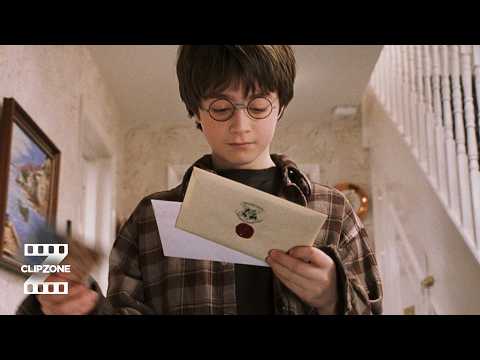
muggle 30秒了解
- A slang term originating from Harry Potter, used to describe people who lack magical abilities or specialized knowledge in a specific field.
- Commonly used in tech, gaming, and geocaching communities to distinguish between 'insiders' (experts) and 'outsiders' (laypeople).
- Functions as both a noun and an adjective, often appearing in phrases like 'tech muggle' or 'muggle world' to denote ordinariness.
- While informal and playful, it should be used carefully to avoid sounding elitist or confusing those unfamiliar with the pop-culture reference.
The word muggle is a fascinating example of how literature can fundamentally alter the English lexicon. Originally coined by J.K. Rowling for the Harry Potter series, it describes a person who lacks magical abilities. However, in the decades since the books' release, the term has transcended its fictional origins to become a versatile piece of modern slang. In contemporary usage, a muggle is anyone who is an 'outsider' to a specific, often highly technical or niche, community. If you are a professional software engineer, you might refer to your non-technical friends as muggles when they ask why you can't just 'fix the internet.' If you are a dedicated geocacher, people who walk past hidden caches without knowing they exist are muggles. The term carries a lighthearted, slightly exclusionary tone, suggesting that the speaker belongs to a 'secret' or 'special' group that possesses knowledge or skills the muggle does not.
- Core Definition
- A person who is not conversant with a particular activity or skill; a non-specialist or an outsider to a specific subculture.
To a seasoned Bitcoin investor, anyone who doesn't understand blockchain technology is essentially a financial muggle.
The beauty of the word lies in its ability to create an instant 'us vs. them' dynamic without being overtly insulting. It implies a lack of awareness rather than a lack of intelligence. When a knitter refers to someone who doesn't know the difference between a purl and a knit stitch as a muggle, they are acknowledging a shared secret language among crafters. It is frequently used in the tech industry, gaming communities, and specialized hobbyist groups like birdwatchers or wine connoisseurs. In these contexts, being a muggle simply means you haven't been 'initiated' into the complexities of that world yet.
- Cultural Origin
- First appeared in 'Harry Potter and the Philosopher's Stone' (1997) to describe the non-wizarding population.
I tried explaining the rules of Dungeons & Dragons to my parents, but they looked at me like the total muggles they are.
It is important to note that while the word is widely understood by younger generations and those familiar with pop culture, older generations or those who haven't engaged with the Harry Potter franchise might find it confusing. However, its inclusion in the Oxford English Dictionary in 2003 cemented its status as a legitimate English word. It serves as a linguistic bridge between fantasy and reality, allowing people to categorize the 'uninitiated' in a way that feels modern and slightly whimsical. Whether you are talking about 'tech muggles' or 'fitness muggles,' the word effectively communicates a gap in specialized knowledge.
- Modern Usage
- Often used as a prefix or adjective (e.g., 'muggle-born' or 'muggle world') to describe things that are ordinary or mainstream.
The conference was great, but it was hard to return to the muggle world where nobody cares about quantum physics.
Don't let the muggles see you hiding the container, or they might think you're doing something suspicious.
She’s a brilliant artist, but a total muggle when it comes to using a spreadsheet.
Using the word muggle correctly requires an understanding of the social context. It is almost exclusively used in informal or semi-formal settings. You wouldn't use it in a legal document or a formal scientific paper, but you might use it in a blog post, a casual office conversation, or on social media. The most common grammatical structure is using it as a noun to label a person or a group. For example, 'The muggles in marketing don't understand how the API works.' Here, it functions as a shorthand for 'people who lack technical expertise in this specific area.'
- As a Noun
- Refers to a person. Example: 'He is such a muggle; he doesn't even know what a GPU is.'
I felt like a muggle at the chess tournament, surrounded by grandmasters.
Another popular way to use the word is as an attributive noun (functioning like an adjective) to describe things associated with the 'uninitiated' world. Phrases like 'muggle world,' 'muggle job,' or 'muggle clothes' are common among people who have intense, immersive hobbies. A professional cosplayer might refer to their everyday attire as 'muggle clothes.' This usage emphasizes the contrast between the 'magical' or 'exciting' world of the hobby and the 'ordinary' or 'boring' world of everyone else.
- As an Adjective
- Describes things that are non-specialized. Example: 'I need to change out of my costume and into some muggle attire.'
After the weekend-long gaming marathon, going back to my muggle job on Monday was a shock.
You can also use 'muggle' in a self-deprecating way. If you are in a room full of experts and you don't understand the topic, saying 'I'm a bit of a muggle when it comes to astrophysics' is a charming way to admit your ignorance. It softens the admission and often makes the experts more willing to explain things in simpler terms. It’s a way of saying, 'I’m not part of your world, but I’m interested.'
- Self-Deprecation
- Using the term to describe one's own lack of knowledge. Example: 'Forgive my muggle questions, but how does this engine actually work?'
Don't mind me, I'm just a muggle trying to understand this complex legal jargon.
The hackerspace was full of brilliant minds, making me feel like the only muggle in the room.
Is there a muggle-friendly version of this manual?
While the word muggle originated in children's literature, its current 'natural habitat' is the internet and specialized communities. You are most likely to hear it in places where people gather to celebrate a specific passion. At a comic book convention, a 'muggle' is someone who isn't wearing a costume or doesn't know the backstory of obscure characters. In the world of Geocaching—a real-world, outdoor treasure hunting game using GPS-enabled devices—the word is so common that it has been turned into a verb. 'Muggling' occurs when a non-player accidentally finds or disturbs a hidden cache. Geocachers often speak of 'muggle awareness,' which is the skill of hiding a cache so that 'muggles' don't find it.
- Geocaching Context
- A non-player who might interfere with a cache. Example: 'Wait for the muggles to leave before you grab the container.'
The park was full of muggles today, so we couldn't find the hidden treasure.
In the tech industry, 'muggle' is often used by developers and IT professionals to describe their clients or end-users who struggle with basic computer tasks. It’s a way for tech-savvy individuals to bond over the frustrations of explaining complex systems to those who don't have a technical background. You might hear a programmer say, 'I had to explain the database structure to a room full of muggles.' While this can sometimes border on being condescending, it is usually meant as a lighthearted way to describe the communication gap between experts and laypeople.
- Tech Industry
- A non-technical person. Example: 'We need to make the user interface simple enough for a muggle to use.'
The IT department often uses muggle-speak when talking to the accounting team.
Beyond tech and geocaching, you'll find the word in various subcultures like the 'EDC' (Everyday Carry) community, where people obsess over the tools they carry in their pockets, or the 'mechanical keyboard' community. In these spaces, a muggle is anyone who uses a standard, off-the-shelf product without understanding the 'superior' alternatives. It is also used in the 'Burning Man' community and other transformative festivals to describe people who are still living in the 'default world' and haven't experienced the festival's unique culture. In all these cases, 'muggle' serves as a marker of identity and belonging.
- Subculture Identity
- A person who doesn't belong to the subculture. Example: 'He's a muggle; he thinks a pen is just a pen.'
To a professional chef, anyone who uses pre-ground pepper is a culinary muggle.
The magician performed a trick that left the muggles in the audience completely baffled.
One of the most common mistakes when using muggle is failing to judge the audience's familiarity with the term. Because it is a slang word derived from a specific book series, using it around people who haven't read Harry Potter or aren't active in internet subcultures can lead to confusion. They might think you are using a derogatory term or simply making up nonsense. Always ensure your audience is 'in on the joke' before using it. Another mistake is using it in a way that sounds genuinely elitist or mean-spirited. While the word is meant to be playful, calling someone a muggle to make them feel stupid or inferior can come across as arrogant. The goal is usually to highlight a difference in *knowledge*, not a difference in *worth*.
- Mistake: Elitism
- Using the word to belittle someone. Correction: Use it playfully or self-deprecatingly instead.
Instead of saying 'You're just a muggle,' try 'This might sound like magic if you're not into coding.'
A grammatical mistake often seen is using 'muggle' as a verb without context. While 'muggling' is a recognized verb in the Geocaching community, it isn't a standard verb in general English. If you say, 'I'm going to muggle this project,' people will have no idea what you mean. In most contexts, 'muggle' should remain a noun or an adjective. Furthermore, avoid using it in formal writing. A cover letter or a business proposal is not the place for pop-culture slang. Using 'muggle' in these situations can make you appear unprofessional or immature.
- Mistake: Wrong Register
- Using 'muggle' in a formal report. Correction: Use 'layperson' or 'general public'.
The CEO didn't appreciate being called a muggle during the board meeting.
Finally, be careful not to confuse 'muggle' with other similar-sounding words like 'muddle' (to confuse) or 'mugger' (someone who robs people). These words have vastly different meanings and using them interchangeably can lead to serious misunderstandings. 'Muggle' is specifically about a lack of specialized knowledge or belonging. If you use it to mean 'a person who is confused,' you are technically using it incorrectly, although the two concepts often overlap in practice.
- Mistake: Confusion with 'Muddle'
- 'Muddle' is a verb meaning to mix up; 'muggle' is a noun for a non-expert.
Don't muddle the two terms; one is about magic, the other is about confusion.
I accidentally called my boss a muggle when I meant to say he was a novice at coding.
If you find that muggle is too informal or too tied to Harry Potter for your current situation, there are several alternatives you can use. The most direct and formal equivalent is layperson. This term is widely used in law, medicine, and science to describe someone who does not have professional training in a specific subject. Another good alternative is outsider, which emphasizes the lack of membership in a group rather than a lack of skill. If you want to focus on a lack of experience, novice or beginner are excellent choices.
- Layperson vs. Muggle
- 'Layperson' is formal and professional; 'muggle' is informal and playful. Use 'layperson' in academic or business contexts.
The doctor explained the surgery in terms a layperson could understand.
In tech circles, you might hear the term normie. This is internet slang for a person who follows mainstream trends and lacks specialized knowledge of 'internet culture' or niche hobbies. While 'normie' and 'muggle' are similar, 'normie' often has a more negative, dismissive connotation. It implies that the person is boring or unoriginal. 'Muggle,' by contrast, usually just implies that the person is 'un-magical' or uninitiated in a specific craft. Another tech-specific term is noob (or newbie), which refers specifically to a beginner in a game or a technical field.
- Normie vs. Muggle
- 'Normie' is often used pejoratively to mean 'mainstream'; 'muggle' is used to mean 'uninitiated'.
He's such a normie; he only listens to top 40 radio and doesn't know any indie bands.
For a more classic feel, you could use uninitiated. This word suggests that there is a secret or sacred knowledge that the person has not yet received. It fits well in contexts involving complex rituals, deep history, or exclusive clubs. Finally, civilian is sometimes used by people in high-stress or specialized professions (like the military, police, or even high-level chefs) to describe anyone who is not part of their world. Using 'civilian' emphasizes the intense, 'battle-hardened' nature of the speaker's group.
- Uninitiated vs. Muggle
- 'Uninitiated' sounds more serious and mysterious; 'muggle' sounds more modern and pop-culture-oriented.
The details of the ceremony are kept hidden from the uninitiated.
To the civilian eye, this looks like a pile of junk, but to a mechanic, it's a goldmine of parts.
How Formal Is It?
趣味小知识
Before Harry Potter, 'muggle' was a 1920s jazz slang term for a marijuana cigarette, though Rowling was unaware of this when she coined her version. It was also a surname in some parts of England.
发音指南
- Pronouncing the 'g' as a 'j' (mu-jle).
- Over-emphasizing the 'e' at the end.
- Confusing it with 'muddle'.
- Pronouncing it like 'mug-lee'.
- Failing to stress the first syllable.
难度评级
Easy to recognize in text due to its unique spelling and frequent use in pop culture.
Requires understanding of informal registers to use correctly without sounding unprofessional.
Simple pronunciation, but requires cultural context to land the joke.
Common in podcasts and casual speech; usually clear from context.
接下来学什么
前置知识
接下来学习
高级
需要掌握的语法
Countable Nouns
One muggle, two muggles.
Attributive Nouns
Muggle world (muggle acts like an adjective).
Compound Adjectives
Muggle-friendly (requires a hyphen).
Similes
He felt like a muggle.
Negative Imperatives
Don't be a muggle.
按水平分级的例句
He is a muggle; he has no magic.
Él es un muggle; no tiene magia.
Muggle is a noun here.
Are you a wizard or a muggle?
¿Eres un mago o un muggle?
Question form using 'or'.
The muggle lives in a normal house.
El muggle vive en una casa normal.
Definite article 'the' used with muggle.
I saw three muggles today.
Vi a tres muggles hoy.
Plural form: muggles.
Muggles cannot see the magic castle.
Los muggles no pueden ver el castillo mágico.
Modal verb 'cannot' used with muggle.
My dad is a muggle.
Mi papá es un muggle.
Possessive adjective 'my' used.
This book is for muggles.
Este libro es para muggles.
Preposition 'for' followed by the plural noun.
Don't be a muggle!
¡No seas un muggle!
Imperative negative form.
I'm a muggle when it comes to sports.
Soy un muggle en lo que respecta a los deportes.
Idiomatic use: 'a muggle when it comes to...'
The tech muggles don't know how to use the app.
Los muggles tecnológicos no saben cómo usar la aplicación.
Compound noun: 'tech muggles'.
She wears muggle clothes to work.
Ella usa ropa muggle para ir al trabajo.
Muggle used as an adjective modifying 'clothes'.
He felt like a muggle at the science fair.
Se sintió como un muggle en la feria de ciencias.
Simile: 'felt like a muggle'.
The muggle world is very different from ours.
El mundo muggle es muy diferente al nuestro.
Adjectival use: 'muggle world'.
Can you explain this to a muggle like me?
¿Puedes explicarle esto a un muggle como yo?
Self-deprecating usage.
They are just muggles; they won't understand.
Solo son muggles; no entenderán.
Use of 'just' to emphasize outsider status.
Is he a muggle or a gamer?
¿Es un muggle o un jugador?
Contrastive question.
We need to hide the geocache from the muggles.
Necesitamos esconder el geocaché de los muggles.
Specific subculture usage (Geocaching).
I'm a total muggle when it comes to cooking.
Soy un muggle total cuando se trata de cocinar.
Intensifier 'total' used with muggle.
The manual was written for muggles, so it's easy to read.
El manual fue escrito para muggles, así que es fácil de leer.
Passive voice: 'was written'.
She’s a muggle-born who became a great coder.
Ella es una nacida de muggles que se convirtió en una gran programadora.
Compound adjective: 'muggle-born'.
Don't let the muggles get you down.
No dejes que los muggles te desanimen.
Common idiomatic expression.
The shop sells muggle-friendly board games.
La tienda vende juegos de mesa aptos para muggles.
Compound adjective: 'muggle-friendly'.
I spent the weekend in the muggle world.
Pasé el fin de semana en el mundo muggle.
Metaphorical use for 'ordinary life'.
He’s a muggle, but he’s trying to learn.
Es un muggle, pero está intentando aprender.
Concessive clause with 'but'.
The project was accidentally muggled by a passerby.
El proyecto fue arruinado accidentalmente por un transeúnte.
Verb form 'muggled' (Geocaching slang).
He tried to explain quantum physics to a room of muggles.
Intentó explicar la física cuántica a una sala llena de muggles.
Collective noun phrase: 'room of muggles'.
The conference was a great escape from the muggle world.
La conferencia fue un gran escape del mundo muggle.
Muggle as a descriptor for 'mainstream society'.
I felt like a muggle trying to navigate the dark web.
Me sentí como un muggle intentando navegar por la web oscura.
Participial phrase: 'trying to navigate'.
Her muggle job pays the bills, but her heart is in art.
Su trabajo muggle paga las cuentas, pero su corazón está en el arte.
Contrast between 'muggle' (ordinary) and 'passion'.
We need to avoid muggle-heavy areas for our shoot.
Necesitamos evitar las zonas con muchos muggles para nuestro rodaje.
Compound adjective: 'muggle-heavy'.
Is there a muggle-proof way to lock this?
¿Hay alguna forma a prueba de muggles de cerrar esto?
Suffix '-proof' added to muggle.
The hackerspace is strictly no-muggles allowed.
El espacio de hackers tiene estrictamente prohibida la entrada a muggles.
The term 'muggle' has been appropriated by various subcultures.
El término 'muggle' ha sido apropiado por varias subculturas.
Passive voice with 'has been appropriated'.
To the uninitiated muggle, the ritual seemed bizarre.
Para el muggle no iniciado, el ritual parecía extraño.
Double descriptor: 'uninitiated muggle'.
He maintains a muggle persona to blend into society.
Mantiene una personalidad muggle para mezclarse en la sociedad.
Noun as adjective: 'muggle persona'.
The software's complexity is baffling to the average muggle.
La complejidad del software es desconcertante para el muggle promedio.
Possessive 'software's' and adjective 'average'.
The transition from the festival back to muggle life is jarring.
La transición del festival de vuelta a la vida muggle es chocante.
Gerund 'transitioning' implied.
She writes for a muggle audience, avoiding technical jargon.
Ella escribe para una audiencia muggle, evitando la jerga técnica.
Present participle phrase: 'avoiding technical jargon'.
The cache was compromised after being muggled by teenagers.
El caché se vio comprometido después de ser 'muggled' por adolescentes.
Verb form 'muggled' in a passive construction.
It’s a classic muggle mistake to underestimate the complexity of the task.
Es un error clásico de muggle subestimar la complejidad de la tarea.
Attributive noun usage.
The linguistic drift of 'muggle' reflects the pervasive influence of pop culture.
La deriva lingüística de 'muggle' refleja la influencia generalizada de la cultura pop.
Abstract noun phrase: 'linguistic drift'.
He operates in a sphere far removed from the mundane concerns of muggles.
Opera en una esfera muy alejada de las preocupaciones mundanas de los muggles.
Prepositional phrase: 'far removed from'.
The dichotomy between the 'enlightened' and the muggles is a common trope.
La dicotomía entre los 'iluminados' y los muggles es un tropo común.
Noun 'dichotomy' used to describe social structure.
Her disdain for the 'muggle' perspective was evident in her critique.
Su desdén por la perspectiva 'muggle' era evidente en su crítica.
Possessive 'muggle' perspective.
The term serves as a convenient, if somewhat reductive, label for the uninitiated.
El término sirve como una etiqueta conveniente, aunque algo reductiva, para los no iniciados.
Parenthetical expression: 'if somewhat reductive'.
Navigating the muggle world requires a certain degree of performative normalcy.
Navegar por el mundo muggle requiere un cierto grado de normalidad performativa.
Gerund subject: 'Navigating'.
The cache's location was chosen specifically to minimize muggle interference.
La ubicación del caché fue elegida específicamente para minimizar la interferencia de los muggles.
Noun-noun compound: 'muggle interference'.
To label him a muggle would be to ignore his burgeoning interest in the craft.
Etiquetarlo como muggle sería ignorar su creciente interés en el oficio.
Infinitive phrase as subject.
常见搭配
常用短语
— Don't let ordinary or negative people discourage you. It's a popular motivational phrase.
Keep practicing your art; don't let the muggles get you down.
— Returning to ordinary, everyday life after an exciting event. Often used after vacations or conventions.
Vacation is over; it's time to go back to the muggle world.
— A way to admit you have no skill in a specific area. It is self-deprecating.
I'm a muggle at fixing cars, so I'll call a mechanic.
— Embracing one's status as an outsider or someone from a non-specialized background. Usually a playful reference.
I didn't grow up with computers, so I'm muggle-born and proud.
— Referring to mainstream society or non-specialized environments. Used to contrast with a niche group.
In the muggle world, people usually wear suits to these meetings.
— A simplified version of something complex. Often used for instructions or explanations.
Is there a muggle-friendly version of this legal contract?
— Being seen by an outsider while doing something secret or niche. Very common in Geocaching.
I was about to find the cache, but I was spotted by a muggle.
— Ordinary, everyday clothing as opposed to a costume or uniform. Used in cosplay or role-playing.
He looked strange in his muggle attire after the play.
— A group of people who don't understand a specific topic. Often used by experts.
I tried to explain the bug, but I was talking to a room full of muggles.
— To make something so simple or secure that a non-expert cannot break or misunderstand it.
We need to muggle-proof the website's navigation.
容易混淆的词
Muddle is a verb meaning to confuse; muggle is a noun for a non-expert.
A mugger is a criminal who robs people; a muggle is just an ordinary person.
Muggins is an old British term for a fool or someone who is always taken advantage of.
习语与表达
— Someone who comes from a non-specialized background but has gained expertise. Derived from the books.
He's a muggle-born coder who taught himself everything.
Informal— When something (usually a geocache) is stolen or damaged by a non-participant. Specific to geocaching.
The cache was muggled within a week of being placed.
Slang— Something that is likely to attract the attention of non-experts, often in a negative way.
Leaving that shiny box in the park is just muggle-bait.
Informal— The opposite of muggle-born; someone whose family has always been in the field. Used jokingly.
His father and grandfather were doctors, so he's a medical pure-blood.
Informal— The inability to see something obvious to an expert or enthusiast.
You missed the clue because you still have muggle-eyes.
Informal— Seeing the world in a boring, ordinary way without noticing the 'magic' or details.
Try to look past your muggle-vision and see the potential here.
Informal— Simplified language used to explain complex topics to non-experts.
Can you say that again in muggle-speak?
Informal— The difficulties faced by ordinary people that experts find easy or trivial.
Watching him try to open the terminal was a classic muggle-struggle.
Informal— A place where only experts or enthusiasts are allowed.
The server room is a muggle-free zone.
Informal— A conventional or unimaginative way of thinking.
Break out of that muggle-mindset and think outside the box.
Informal容易混淆
Both mean a non-expert.
Layperson is formal and used in professional fields; muggle is informal and pop-culture based.
The doctor spoke to the layperson; the gamer spoke to the muggle.
Both refer to 'ordinary' people.
Normie is often an insult about being mainstream; muggle is usually about lacking a specific skill.
He's a normie who likes pop music; he's a muggle who can't code.
Both describe someone without skill.
A novice is a beginner who is learning; a muggle is someone who is completely outside the group.
The novice practiced the guitar; the muggle didn't even know what a guitar was.
Both describe someone not in a group.
Outsider is a general term; muggle specifically implies a lack of 'magic' or specialized knowledge.
As an outsider, she felt lonely; as a muggle, she felt confused by the tech talk.
Both distinguish between 'us' and 'them'.
Civilian is used by military/police/emergency services; muggle is used by hobbyists/fans.
The soldier helped the civilian; the wizard helped the muggle.
句型
I am a muggle.
I am a muggle.
He is a [topic] muggle.
He is a tech muggle.
I'm a muggle when it comes to [noun].
I'm a muggle when it comes to cooking.
Don't let the muggles [verb].
Don't let the muggles see you.
The [noun] is baffling to the average muggle.
The code is baffling to the average muggle.
To label [someone] a muggle would be [adjective].
To label him a muggle would be reductive.
It's a [adjective] muggle [noun].
It's a boring muggle job.
Is there a muggle-friendly [noun]?
Is there a muggle-friendly manual?
词族
名词
动词
形容词
相关
如何使用
Common in pop culture and specific hobbies.
-
Using 'muggle' in a formal business email.
→
Using 'layperson' or 'non-expert'.
Muggle is too informal for professional communication and might not be understood by everyone.
-
Pronouncing it as 'mu-jle'.
→
Pronouncing it as 'mug-ul'.
The 'g' is hard, like in 'game' or 'go'.
-
Calling someone a muggle to be mean.
→
Using it playfully or to describe a lack of specific skill.
The word should be used to highlight a difference in knowledge, not to insult someone's worth.
-
Confusing 'muggle' with 'muddle'.
→
Using 'muddle' for confusion and 'muggle' for a person.
They sound similar but have completely different meanings and grammatical roles.
-
Using 'muggling' as a general verb for 'confusing'.
→
Using 'muggling' only in the context of Geocaching.
Outside of Geocaching, 'muggle' is almost always a noun or an adjective.
小贴士
Know Your Audience
Before using 'muggle', make sure the person you are talking to knows Harry Potter or is familiar with internet slang. Otherwise, they might be confused.
Keep it Playful
The word 'muggle' works best when it's used in a lighthearted way. Avoid using it to genuinely belittle someone's intelligence.
Use it on Yourself
Calling yourself a 'muggle' is a great way to admit you don't know something without sounding embarrassed. 'I'm a total muggle at math!'
Avoid in Formal Writing
Never use 'muggle' in a cover letter, academic essay, or formal report. Stick to 'layperson' or 'non-specialist' in these cases.
Geocaching Context
If you start Geocaching, remember that 'muggles' are your biggest challenge. Practice 'muggle awareness' to keep the game fun.
Countable Noun
Remember that 'muggle' is a countable noun. You can have one muggle or many muggles. Don't forget the 's' for the plural!
As a Descriptor
You can use 'muggle' as an adjective to describe ordinary things, like 'muggle clothes' or 'muggle life'. This creates a fun contrast.
Simplifying Tech
When explaining tech to non-experts, you can call it 'muggle-speak'. It helps set a relaxed tone for the explanation.
Use Alternatives
If you feel you are using 'muggle' too much, try 'outsider' or 'novice' to keep your vocabulary varied and interesting.
Respect the Origin
Understanding that the word comes from Harry Potter helps you use it in the right spirit—one of wonder and hidden worlds.
记住它
记忆技巧
Think of a 'Mug' (a fool) who is 'Struggle'-ing to understand something. Mug + Struggle = Muggle.
视觉联想
Imagine a person holding a plain white coffee mug, standing in a room full of wizards with glowing wands. The person with the mug is the muggle.
Word Web
挑战
Try to use the word 'muggle' in a sentence today to describe a skill you don't have. For example: 'I'm a muggle when it comes to [your weakness].'
词源
The word was coined by British author J.K. Rowling for her 1997 novel 'Harry Potter and the Philosopher's Stone'. She stated that she wanted a word that sounded 'cuddly' but also slightly foolish. She likely derived it from the English word 'mug', which is slang for a fool or someone who is easily fooled.
原始含义: A person who lacks magical abilities and was not born into a magical family.
English (Modern Neologism)文化背景
Generally harmless, but can be perceived as condescending if used to mock someone's lack of intelligence rather than their lack of specific knowledge.
Very common in the UK, USA, Canada, and Australia among Millennials and Gen Z.
在生活中练习
真实语境
Technology
- Tech muggle
- Muggle-friendly UI
- Explain in muggle-speak
- A room of muggles
Geocaching
- Muggle awareness
- Muggled cache
- Avoid the muggles
- Spotted by a muggle
Hobbies (e.g., Gaming, Knitting)
- Muggle world
- Muggle clothes
- I'm a muggle at this
- Muggle-born enthusiast
Social Gatherings
- Don't be a muggle
- Muggle-proof the party
- Back to the muggle world
- Muggle struggles
Self-Deprecation
- Total muggle
- Forgive my muggle questions
- Muggle like me
- A bit of a muggle
对话开场白
"Are you a Harry Potter fan, or are you a total muggle?"
"I'm such a muggle when it comes to technology; can you help me with this app?"
"Have you ever felt like a muggle in a room full of experts?"
"What's one hobby where you are definitely not a muggle?"
"Do you think 'muggle' is a mean word, or is it just funny?"
日记主题
Describe a time you felt like a muggle. What was the situation and how did you feel?
If you could teach a 'muggle' one thing about your favorite hobby, what would it be?
Write about the 'muggle world' vs. your 'inner world'. How are they different?
Do you think slang words like 'muggle' make the English language better or worse? Why?
Imagine a world where muggles are the ones with special powers. What would that look like?
常见问题
10 个问题Yes, it was added to the Oxford English Dictionary in 2003. While it started as a fictional term, it is now a recognized English word used to describe a person who lacks a particular skill or knowledge.
Only in very casual workplaces or with close colleagues who understand the reference. In formal business meetings or documents, it is better to use 'layperson' or 'non-expert' to remain professional.
It can be, but it is usually meant to be playful or self-deprecating. However, if you use it to make someone feel stupid, it can be seen as elitist. Always consider your tone and the person you are talking to.
A 'tech muggle' is someone who has very little knowledge about computers, software, or technology. It is a common term used by IT professionals and developers to describe their non-technical clients.
It was invented by J.K. Rowling for the Harry Potter books. She wanted a word that sounded a bit silly and suggested someone who was 'un-magical'.
In Geocaching, a muggle is any person who is not part of the game. You have to hide your activities from muggles so they don't find and remove the hidden treasures (caches).
The plural is 'muggles'. For example: 'The park was full of muggles today.'
In the Geocaching community, people use 'muggled' as a verb to mean a cache was found or destroyed by a non-player. In general English, it is almost always a noun.
In the books, it means a wizard born to non-magical parents. In slang, it can mean someone who became an expert in a field despite not having a background or family history in it.
Common synonyms include layperson, non-expert, outsider, novice, and beginner. The best choice depends on how formal you want to be.
自我测试 200 个问题
Write a sentence using 'muggle' to describe your lack of skill in a hobby.
Well written! Good try! Check the sample answer below.
Explain the difference between a 'muggle' and an 'expert' in your own words.
Well written! Good try! Check the sample answer below.
Write a short dialogue between a 'tech muggle' and an IT professional.
Well written! Good try! Check the sample answer below.
Describe what 'muggle clothes' might look like to a professional cosplayer.
Well written! Good try! Check the sample answer below.
Use the word 'muggle' as an adjective in a sentence about your daily life.
Well written! Good try! Check the sample answer below.
Why is 'muggle' a popular word in subcultures? Give two reasons.
Well written! Good try! Check the sample answer below.
Write a sentence using the phrase 'Don't let the muggles get you down'.
Well written! Good try! Check the sample answer below.
How would you explain the word 'muggle' to someone who has never heard of Harry Potter?
Well written! Good try! Check the sample answer below.
Write a sentence using 'muggle-born' in a non-magical context.
Well written! Good try! Check the sample answer below.
Create a 'muggle-friendly' instruction for a simple task like making tea.
Well written! Good try! Check the sample answer below.
Describe a 'muggle-free zone' you would like to create.
Well written! Good try! Check the sample answer below.
Write a sentence using 'muggled' as a verb.
Well written! Good try! Check the sample answer below.
What are the risks of using the word 'muggle' in a professional setting?
Well written! Good try! Check the sample answer below.
Write a sentence about returning to the 'muggle world' after a vacation.
Well written! Good try! Check the sample answer below.
Use 'muggle-speak' in a sentence about explaining a complex topic.
Well written! Good try! Check the sample answer below.
Describe a person who is a 'muggle' at technology but an 'expert' at something else.
Well written! Good try! Check the sample answer below.
Write a sentence using 'muggle-proof' to describe a new invention.
Well written! Good try! Check the sample answer below.
How does the word 'muggle' help create a group identity?
Well written! Good try! Check the sample answer below.
Write a sentence using 'muggle' to describe a group of people.
Well written! Good try! Check the sample answer below.
Is 'muggle' a useful word? Why or why not?
Well written! Good try! Check the sample answer below.
Pronounce the word 'muggle' clearly.
Read this aloud:
你说的:
Speech recognition is not supported in your browser. Try Chrome or Edge.
Say: 'I'm a total muggle when it comes to technology.'
Read this aloud:
你说的:
Speech recognition is not supported in your browser. Try Chrome or Edge.
Explain to a partner what a 'muggle' is in Geocaching.
Read this aloud:
你说的:
Speech recognition is not supported in your browser. Try Chrome or Edge.
Tell a story about a time you felt like a muggle.
Read this aloud:
你说的:
Speech recognition is not supported in your browser. Try Chrome or Edge.
Discuss whether using the word 'muggle' is elitist.
Read this aloud:
你说的:
Speech recognition is not supported in your browser. Try Chrome or Edge.
Say: 'Don't let the muggles get you down.'
Read this aloud:
你说的:
Speech recognition is not supported in your browser. Try Chrome or Edge.
Explain the origin of the word 'muggle' to a friend.
Read this aloud:
你说的:
Speech recognition is not supported in your browser. Try Chrome or Edge.
Roleplay a conversation where you use 'muggle-speak' to explain something.
Read this aloud:
你说的:
Speech recognition is not supported in your browser. Try Chrome or Edge.
Describe your 'muggle job' or 'muggle life' vs. your hobbies.
Read this aloud:
你说的:
Speech recognition is not supported in your browser. Try Chrome or Edge.
Give a short presentation on pop-culture words in English.
Read this aloud:
你说的:
Speech recognition is not supported in your browser. Try Chrome or Edge.
Say: 'The cache was muggled by a passerby.'
Read this aloud:
你说的:
Speech recognition is not supported in your browser. Try Chrome or Edge.
Ask a question using the word 'muggle-friendly'.
Read this aloud:
你说的:
Speech recognition is not supported in your browser. Try Chrome or Edge.
Compare the words 'muggle' and 'layperson' in speech.
Read this aloud:
你说的:
Speech recognition is not supported in your browser. Try Chrome or Edge.
Say: 'I'm a muggle at [your least favorite subject].'
Read this aloud:
你说的:
Speech recognition is not supported in your browser. Try Chrome or Edge.
Discuss the pros and cons of using slang at work.
Read this aloud:
你说的:
Speech recognition is not supported in your browser. Try Chrome or Edge.
Say: 'Is there a muggle-proof way to do this?'
Read this aloud:
你说的:
Speech recognition is not supported in your browser. Try Chrome or Edge.
Describe a 'muggle-born' expert you know.
Read this aloud:
你说的:
Speech recognition is not supported in your browser. Try Chrome or Edge.
Explain why Harry Potter fans use the word 'muggle'.
Read this aloud:
你说的:
Speech recognition is not supported in your browser. Try Chrome or Edge.
Say: 'Back to the muggle world we go!'
Read this aloud:
你说的:
Speech recognition is not supported in your browser. Try Chrome or Edge.
Summarize the different meanings of 'muggle'.
Read this aloud:
你说的:
Speech recognition is not supported in your browser. Try Chrome or Edge.
Listen to the sentence: 'He's a tech muggle.' What does it mean?
Listen to the sentence: 'The cache was muggled.' What happened?
Listen to the sentence: 'Don't let the muggles get you down.' Is this advice?
Listen to the sentence: 'I'm a muggle at math.' Is the speaker good at math?
Listen to the sentence: 'We need muggle-speak.' What kind of language is needed?
Listen to the sentence: 'The muggle world is boring.' How does the speaker feel?
Listen to the sentence: 'She's muggle-born.' What does this refer to?
Listen to the sentence: 'Is it muggle-proof?' What is the concern?
Listen to the sentence: 'Spotted by a muggle!' What happened in the game?
Listen to the sentence: 'He has muggle-vision.' What does he lack?
Listen to the sentence: 'The park is muggle-heavy.' Should we go there?
Listen to the sentence: 'I felt like a muggle.' How did the speaker feel?
Listen to the sentence: 'Muggle attire is required.' What should you wear?
Listen to the sentence: 'He's a muggle-born genius.' Is he an expert?
Listen to the sentence: 'The manual is for muggles.' Is it easy?
He is a mugglies.
The singular form is 'muggle'.
I'm a muggle on technology.
The common pattern is 'a muggle when it comes to...'.
Don't muddle the muggles.
'Muddle' means to confuse; 'muggle' is a person.
She is a muggle born.
Compound adjectives usually require a hyphen.
The cache was muggle.
Use the past participle 'muggled' as a verb/adjective.
I have a muggle job in the muggles world.
When used as an adjective, it is usually singular: 'muggle world'.
He is muggle.
Countable nouns need an article.
The manual is muggle friendly.
Needs a hyphen for the compound adjective.
I'm a muggle at the cooking.
No article needed before the gerund 'cooking'.
The muggles doesn't know.
Plural subject needs 'don't'.
/ 200 correct
Perfect score!
Summary
The word 'muggle' is a versatile tool for identifying non-experts or outsiders. For example, 'I'm a total muggle when it comes to gardening' is a friendly way to admit you have no knowledge of plants.
- A slang term originating from Harry Potter, used to describe people who lack magical abilities or specialized knowledge in a specific field.
- Commonly used in tech, gaming, and geocaching communities to distinguish between 'insiders' (experts) and 'outsiders' (laypeople).
- Functions as both a noun and an adjective, often appearing in phrases like 'tech muggle' or 'muggle world' to denote ordinariness.
- While informal and playful, it should be used carefully to avoid sounding elitist or confusing those unfamiliar with the pop-culture reference.
Know Your Audience
Before using 'muggle', make sure the person you are talking to knows Harry Potter or is familiar with internet slang. Otherwise, they might be confused.
Keep it Playful
The word 'muggle' works best when it's used in a lighthearted way. Avoid using it to genuinely belittle someone's intelligence.
Use it on Yourself
Calling yourself a 'muggle' is a great way to admit you don't know something without sounding embarrassed. 'I'm a total muggle at math!'
Avoid in Formal Writing
Never use 'muggle' in a cover letter, academic essay, or formal report. Stick to 'layperson' or 'non-specialist' in these cases.