sergeant 30秒了解
- A sergeant is a middle-ranking non-commissioned officer in military and police organizations, responsible for leading small units and maintaining discipline.
- The rank sits between lower enlisted personnel (like privates) and higher-ranking commissioned officers (like lieutenants), acting as a vital leadership bridge.
- Sergeants are primarily involved in the hands-on training, welfare, and tactical supervision of their subordinates in various operational environments.
- The term is also used as a formal title (e.g., Sergeant Smith) and appears in specialized roles like Drill Sergeant or Sergeant-at-Arms.
The term sergeant represents a pivotal rank within structured hierarchical organizations, most notably the military and law enforcement agencies. At its core, a sergeant is a non-commissioned officer (NCO) who serves as the essential bridge between the high-level strategic planning of commissioned officers and the practical, boots-on-the-ground execution performed by lower-ranking personnel. This role is not merely about holding a title; it is about the exercise of immediate authority, the mentorship of subordinates, and the maintenance of discipline and standards within a small unit, such as a squad or a section. In the military context, a sergeant is often the first level of leadership that a private interacts with daily. They are responsible for the welfare, training, and tactical proficiency of their soldiers. In a police force, a sergeant typically oversees a group of officers or a specific shift, ensuring that departmental policies are followed and providing guidance during active investigations or emergency responses. The word carries a weight of experience; one does not simply become a sergeant through entry-level appointment but through demonstrated competence, time in service, and leadership potential.
- Military Context
- In the army, a sergeant is the backbone of the unit, responsible for the individual training and personal development of soldiers.
The sergeant inspected the barracks to ensure every bed was made to regulation standards.
Beyond the literal rank, the term is used in various specialized roles. For instance, a 'Drill Sergeant' is a specific type of instructor tasked with the rigorous transformation of civilians into soldiers during basic training. This usage highlights the sergeant's role as a disciplinarian and teacher. In the legal and parliamentary world, the 'Serjeant-at-Arms' (a variant spelling) is an official responsible for maintaining order within a legislative body, showing that the concept of a sergeant as a guardian of order extends into the halls of government. Historically, the word derives from the Latin 'serviens', meaning 'one who serves'. This etymology is crucial because it underscores that while a sergeant has authority over others, their primary duty is one of service—to their superiors, to their subordinates, and to the institution they represent. People use this word when discussing organizational structure, reporting on crime (e.g., 'Sergeant Miller of the local precinct'), or narrating historical battles where the leadership of NCOs often turned the tide of conflict.
- Law Enforcement Context
- A police sergeant acts as a first-line supervisor, reviewing reports and managing the activities of patrol officers.
After the incident, the sergeant debriefed the team to discuss what could be improved.
In popular culture, the 'sergeant' is a recurring archetype. Think of the grizzled veteran who has seen it all and guides the young protagonist, or the stern but fair mentor. This cultural footprint makes the word recognizable even to those with no personal connection to the military or police. It evokes images of three-stripe chevrons on a sleeve, a commanding voice on a parade ground, and a steady hand in a crisis. Whether in the Royal Air Force, the New York Police Department, or a fictional space marine corps, the sergeant remains the quintessential middle-manager of the tactical world, balancing the demands of those above with the realities of those below. The word is also used metaphorically to describe anyone who takes a commanding, disciplined, or supervisory role in a group, even in informal settings like a sports team or a corporate project.
The desk sergeant processed the paperwork for the new recruits with practiced efficiency.
- Symbolism
- The sergeant's stripes are a universal symbol of earned authority and technical expertise.
He was finally promoted to sergeant after five years of exemplary service in the infantry.
The sergeant major is the highest non-commissioned rank, advising the commander on all enlisted matters.
Using the word sergeant correctly involves understanding its grammatical role as a count noun and its social role as a title. When used as a common noun, it follows standard rules: 'A sergeant walked into the room' or 'The sergeants are meeting today.' However, when used as a title before a name, it is capitalized: 'Sergeant Johnson reported for duty.' It is important to note that 'sergeant' can be both a generic term for several ranks (like Staff Sergeant or Sergeant First Class) and a specific rank itself. In writing, you should be careful with the spelling, as the 'ea' in the first syllable is a common source of errors. It is pronounced 'SAR-jent', which often leads learners to mistakenly spell it with an 'a' in the first syllable.
- Direct Address
- When speaking directly to the person, use the title alone or with their name.
'Excuse me, sergeant, do you have the coordinates for the next objective?'
In complex sentences, 'sergeant' often acts as the subject that performs actions of commanding, instructing, or supervising. It can also be the object of a preposition, such as 'reporting to the sergeant'. Because the rank implies a relationship, it is frequently paired with possessives or phrases indicating the unit they lead: 'the squad's sergeant' or 'the sergeant of the third platoon'. In police reporting, the word is often used to establish the authority behind a statement: 'According to Sergeant Davis, the suspect was apprehended without incident.' This usage lends a sense of officiality and reliability to the information being conveyed. You might also see it used in the plural to describe a group of NCOs: 'The sergeants' mess is where the non-commissioned officers eat.'
- Descriptive Usage
- Use 'sergeant' to describe the role or status of a character in a narrative.
The battle-hardened sergeant looked over the map with a grim expression.
Furthermore, the word can be modified by adjectives to provide more detail about the person's character or experience: 'a veteran sergeant', 'a newly promoted sergeant', or 'a strict sergeant'. In technical or military writing, you will often see abbreviations like 'Sgt.' or 'SGT', but in general prose, the full word is preferred. When discussing the rank structure, you might compare a sergeant to other ranks: 'The sergeant is senior to a corporal but junior to a lieutenant.' This placement helps define the scope of their responsibilities. In some contexts, the word is used in compound nouns like 'sergeant-at-arms' or 'supply sergeant', which specify the particular function the individual performs within the organization. Each of these variations follows the same basic grammatical rules but adds a layer of functional specificity.
As a sergeant first class, he was responsible for the logistics of the entire company.
- Professional Titles
- When referring to someone by their official title in a report or article.
Police Sergeant Sarah Jenkins was awarded a medal for bravery.
The sergeant's primary duty is to lead by example in every situation.
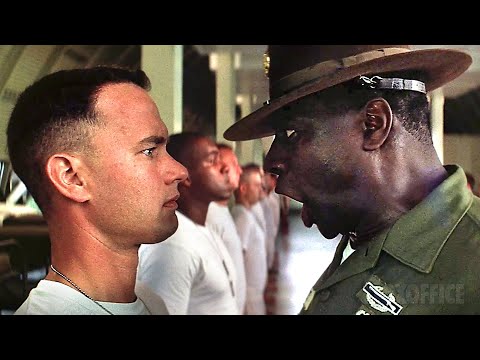
You will encounter the word sergeant in a variety of real-world and media environments. The most common place is in news broadcasts, particularly those covering local crime or military operations. News anchors often cite a 'police sergeant' when providing official details about an investigation or a public safety announcement. This usage reinforces the sergeant's role as a spokesperson and a reliable source of information. In the realm of entertainment, military movies and television dramas are saturated with the word. From the iconic, shouting drill sergeants in films like 'Full Metal Jacket' to the weary, experienced sergeants in 'Band of Brothers', the rank is used to ground the story in a sense of realism and hierarchy. These depictions often emphasize the sergeant's dual role as both a tough leader and a protective figure for their troops.
- News Media
- Used to identify law enforcement officials giving statements to the press.
'We are currently following several leads,' the sergeant told the gathered reporters.
In everyday life, if you live in a town with a police station or near a military base, you might hear the word in casual conversation or see it on signage. A 'Desk Sergeant' is often the first person a citizen interacts with when entering a police precinct to file a report. In schools or community organizations with a paramilitary structure, such as the Boy Scouts or JROTC programs, the rank of sergeant is used to denote student leadership. Furthermore, in the United Kingdom and some Commonwealth countries, the 'Serjeant-at-Arms' is a high-profile figure seen during the opening of Parliament, carrying the ceremonial mace. This provides a very different, more ceremonial context for the word, linking it to centuries of tradition and the physical protection of the legislature. You might also hear it in historical documentaries discussing the evolution of warfare, where the role of the 'sergeant' as a professional soldier was a major development in the Middle Ages.
- Entertainment
- Commonly featured in police procedurals and war-themed video games or movies.
In the movie, the sergeant led his squad through a dangerous urban environment.
Music also features the word, most famously in the Beatles' album 'Sgt. Pepper's Lonely Hearts Club Band'. Here, the word is used to create a fictional persona, playing with the idea of a military band leader. This shows how the word has permeated even the most creative and non-military aspects of culture. In literature, sergeants often serve as characters who represent the voice of experience or the reality of the front lines, contrasting with the sometimes idealistic or detached views of higher-ranking officers. Whether you are reading a detective novel, watching a documentary on the Civil War, or listening to a podcast about modern policing, the word 'sergeant' serves as a consistent marker of authority, responsibility, and the practical management of people and tasks. It is a word that bridges the gap between the abstract concept of 'the law' or 'the army' and the actual human beings who carry out those functions.
The sergeant's voice boomed across the parade ground, commanding instant attention.
- Legal/Official
- Found in official transcripts and legal documents identifying law enforcement personnel.
The witness identified Sergeant Thompson as the officer who first arrived at the scene.
The sergeant at the front desk helped the woman find the correct form to fill out.
The most frequent mistake associated with the word sergeant is its spelling. Because the pronunciation is 'SAR-jent', many people naturally want to spell it 'sargent' or 'sarjeant'. However, the standard English spelling is 'sergeant', with an 'e' in the first syllable and an 'ea' in the second. This discrepancy between phonetics and orthography is a classic challenge for English learners and native speakers alike. Another common error is confusing the rank of sergeant with other similar-sounding or adjacent ranks. For example, some might confuse it with 'servant' due to their shared etymological root, though their modern meanings are entirely different. In a military context, people often misidentify the specific level of a sergeant, failing to distinguish between a 'Sergeant', a 'Staff Sergeant', and a 'Sergeant First Class', all of which have different responsibilities and seniority.
- Spelling Error
- Incorrect: 'Sargent'. Correct: 'Sergeant'.
The student lost points on the essay for spelling sergeant as 'sargent'.
A conceptual mistake often made is assuming that a sergeant is a 'commissioned officer'. In reality, a sergeant is a 'non-commissioned officer' (NCO). This is a vital distinction in military and police hierarchies. Commissioned officers (like Lieutenants, Captains, and Colonels) derive their authority from a formal commission (usually from a head of state), whereas NCOs like sergeants earn their authority through promotion from the lower enlisted ranks. Confusing these two categories can lead to misunderstandings about how orders are given and who reports to whom. Additionally, in some countries, the police rank of sergeant is higher than in others, leading to confusion when comparing international law enforcement structures. For instance, a sergeant in the UK might have different levels of responsibility compared to a sergeant in a small US town.
- Rank Confusion
- Mistaking a sergeant for a commissioned officer or a lower-ranking corporal.
It is incorrect to call a sergeant 'Sir' in many military traditions; 'Sir' is reserved for commissioned officers.
In terms of usage, a common mistake is failing to capitalize the word when it is used as a title. Just as you would capitalize 'President Biden' or 'Doctor Smith', you must capitalize 'Sergeant Garcia'. However, when referring to the rank in general ('He is a sergeant'), it should remain lowercase. Another subtle error involves the plural possessive. If you are talking about a room belonging to multiple sergeants, it is 'the sergeants' room' (apostrophe after the s). If it belongs to one sergeant, it is 'the sergeant's room' (apostrophe before the s). Misplacing this apostrophe is a common grammatical slip. Finally, avoid using the word 'sergeant' as a verb. While you might say someone 'is acting like a sergeant', you cannot say they 'sergeanted the group'. Instead, use verbs like 'commanded', 'led', or 'supervised'.
The sergeants' meeting was held in the main briefing room at 0800 hours.
- Capitalization
- Failing to capitalize the word when used as a proper title before a name.
I need to speak with Sergeant Williams about the patrol schedule.
The sergeant gave the order to advance, and the squad moved forward.
When exploring words similar to sergeant, it is helpful to look at other ranks and leadership titles. The most direct comparisons are found within the military and police hierarchies. A 'corporal' is often the rank immediately below sergeant; while both are NCOs, a corporal typically has less experience and leads a smaller group. On the other side, a 'lieutenant' is a commissioned officer rank above sergeant. While a sergeant manages the daily tasks and personnel, a lieutenant is more involved in the planning and overall management of a larger unit. Understanding these distinctions is key to using the terminology accurately. Other related terms include 'officer', which is a broad term that can apply to anyone in a position of authority, and 'commander', which usually refers to someone in charge of a much larger entity, like a battalion or a precinct.
- Sergeant vs. Corporal
- A sergeant has more seniority and responsibility than a corporal, often overseeing multiple corporals.
The sergeant assigned the corporal to lead the reconnaissance team.
In non-military contexts, you might use words like 'supervisor', 'foreman', or 'team leader' as alternatives. A 'supervisor' in a corporate setting performs many of the same functions as a sergeant: they oversee the work of others, ensure rules are followed, and act as a link between management and staff. A 'foreman' is a specific type of supervisor often found in construction or manufacturing. While these words lack the specific military connotations of 'sergeant', they capture the essence of the role. In a more informal or sports-related context, 'captain' or 'coach' might be used, though these roles often involve different types of authority. The term 'NCO' (Non-Commissioned Officer) is the technical category that includes sergeants and is often used in formal military writing to refer to this entire tier of leadership.
- Sergeant vs. Lieutenant
- A lieutenant is a commissioned officer who outranks a sergeant and focuses on broader tactical goals.
The lieutenant gave the mission briefing, and the sergeant ensured the troops had the necessary gear.
Another interesting alternative is 'constable', which in some police forces is the entry-level rank below sergeant. In the UK, the phrase 'Police Sergeant' is often used to distinguish the rank from military counterparts. For those interested in historical terms, 'man-at-arms' or 'squire' might be distantly related in terms of being professional soldiers, but they don't carry the same specific supervisory meaning. When writing, choosing the right alternative depends on the level of formality and the specific organization you are describing. If you want to emphasize the sergeant's role as a teacher, you might use 'instructor'. If you want to emphasize their role as a disciplinarian, 'taskmaster' could be a more colorful (though perhaps slightly negative) choice. Ultimately, 'sergeant' is a highly specific term that is best used when you want to evoke the particular culture and hierarchy of the military or police.
The supply sergeant managed the distribution of rations and ammunition to the front lines.
- Sergeant vs. Officer
- While a sergeant is an officer (non-commissioned), the term 'officer' is often used generically for all police personnel.
The patrol sergeant supervised the officers during the large-scale public event.
The sergeant major's experience was invaluable to the young colonel in charge of the regiment.
How Formal Is It?
趣味小知识
In the Middle Ages, a 'sergeant' was a type of servant or an attendant to a knight, but the role eventually evolved into a professional soldier of a specific rank.
发音指南
- Pronouncing it as 'ser-GE-ant' (three syllables).
- Using a hard 'g' sound as in 'goat'.
- Over-emphasizing the 'e' in the second syllable.
- Pronouncing the 't' too harshly in casual speech.
- Confusing the first vowel with 'sir' instead of 'sar'.
难度评级
Easy to recognize in context, but spelling can be tricky.
The unusual spelling 'ea' makes it harder to write correctly.
Pronunciation is straightforward once you know it's 'sar'.
Can be confused with other words if spoken very quickly.
接下来学什么
前置知识
接下来学习
高级
需要掌握的语法
Capitalization of Titles
Use 'Sergeant Miller' but 'the sergeant'.
Possessive Nouns
The sergeant's hat (one), the sergeants' hats (many).
Compound Nouns
'Drill sergeant' functions as a single unit of meaning.
Appositives
John Smith, a sergeant in the army, spoke to us.
Countable Noun Usage
Always use an article or plural form: 'A sergeant' or 'Sergeants'.
按水平分级的例句
The sergeant is a leader.
El sargento es un líder.
Simple subject-verb-complement structure.
He is a police sergeant.
Él es un sargento de policía.
Use of 'a' before the noun.
The sergeant says 'Stop!'
El sargento dice '¡Alto!'
Present simple tense.
I see the sergeant.
Veo al sargento.
Direct object.
The sergeant has three stripes.
El sargento tiene tres rayas.
Possessive 'has'.
Is he a sergeant?
¿Es él un sargento?
Interrogative form.
The sergeant is tall.
El sargento es alto.
Adjective use.
Thank you, sergeant.
Gracias, sargento.
Direct address.
Sergeant Smith is very strict.
El sargento Smith es muy estricto.
Capitalization of title with name.
The sergeant helps the new soldiers.
El sargento ayuda a los nuevos soldados.
Present simple for habitual action.
We must listen to the sergeant.
Debemos escuchar al sargento.
Modal verb 'must'.
The sergeant lives in the barracks.
El sargento vive en el cuartel.
Prepositional phrase 'in the barracks'.
She became a sergeant last year.
Ella se convirtió en sargento el año pasado.
Past simple tense.
The sergeant checked our uniforms.
El sargento revisó nuestros uniformes.
Past simple with possessive 'our'.
There are two sergeants in the room.
Hay dos sargentos en la habitación.
Plural form 'sergeants'.
The sergeant gave us a map.
El sargento nos dio un mapa.
Indirect object 'us'.
The sergeant was responsible for training the recruits.
El sargento era responsable de entrenar a los reclutas.
Adjective phrase 'responsible for'.
After five years, he was promoted to the rank of sergeant.
Después de cinco años, fue ascendido al rango de sargento.
Passive voice 'was promoted'.
The police sergeant arrived at the scene quickly.
El sargento de policía llegó al lugar rápidamente.
Adverb 'quickly' modifying the verb.
I spoke to the desk sergeant about the lost wallet.
Hablé con el sargento de guardia sobre la billetera perdida.
Compound noun 'desk sergeant'.
The sergeant ordered the squad to march toward the hills.
El sargento ordenó al escuadrón marchar hacia las colinas.
Verb + object + infinitive pattern.
A sergeant's job involves a lot of paperwork.
El trabajo de un sargento implica mucho papeleo.
Possessive form 'sergeant's'.
The drill sergeant shouted commands at the trainees.
El sargento instructor gritó órdenes a los aprendices.
Specific type 'drill sergeant'.
He is a highly respected sergeant in the local force.
Es un sargento muy respetado en la fuerza local.
Participle adjective 'respected'.
The sergeant acted as a liaison between the captain and the troops.
El sargento actuó como enlace entre el capitán y las tropas.
Noun phrase 'liaison between'.
Despite the danger, the sergeant remained calm and focused.
A pesar del peligro, el sargento se mantuvo tranquilo y concentrado.
Concessive clause with 'despite'.
The sergeant major is the most senior non-commissioned officer.
El sargento mayor es el suboficial de mayor rango.
Superlative 'most senior'.
She was the first woman to be appointed as a flight sergeant in her unit.
Fue la primera mujer en ser nombrada sargento de vuelo en su unidad.
Infinitive of purpose/result.
The sergeant's experience was evident in the way he handled the crisis.
La experiencia del sargento era evidente en la forma en que manejó la crisis.
Noun clause 'the way he handled'.
Many sergeants find it challenging to balance discipline with empathy.
A muchos sargentos les resulta difícil equilibrar la disciplina con la empatía.
Dummy object 'it' with adjective and infinitive.
The sergeant briefed the team on the new safety protocols.
El sargento informó al equipo sobre los nuevos protocolos de seguridad.
Verb 'briefed' with preposition 'on'.
He was addressed as 'Sergeant' by everyone in the precinct.
Todos en el precinto se dirigían a él como 'Sargento'.
Passive voice 'was addressed'.
The sergeant's leadership was instrumental in the success of the mission.
El liderazgo del sargento fue fundamental para el éxito de la misión.
Adjective 'instrumental' for high-level description.
As a seasoned sergeant, he possessed an intuitive understanding of his men's morale.
Como sargento experimentado, poseía una comprensión intuitiva de la moral de sus hombres.
Participial phrase 'As a seasoned sergeant'.
The role of the sergeant has evolved significantly since the 18th century.
El papel del sargento ha evolucionado significativamente desde el siglo XVIII.
Present perfect with adverbial modification.
The sergeant at arms maintained decorum during the heated parliamentary debate.
El sargento de armas mantuvo el decoro durante el acalorado debate parlamentario.
Formal vocabulary like 'decorum'.
The sergeant's testimony was crucial to the prosecution's case.
El testimonio del sargento fue crucial para el caso de la fiscalía.
Possessive noun as subject.
He transitioned from a technical specialist to a sergeant, embracing the new leadership responsibilities.
Pasó de ser un especialista técnico a sargento, asumiendo las nuevas responsabilidades de liderazgo.
Gerund phrase 'embracing the new...'.
The sergeant's ability to remain stoic under pressure inspired his subordinates.
La capacidad del sargento para permanecer estoico bajo presión inspiró a sus subordinados.
Infinitive phrase modifying 'ability'.
In the absence of the lieutenant, the sergeant assumed command of the platoon.
En ausencia del teniente, el sargento asumió el mando del pelotón.
Prepositional phrase 'In the absence of'.
The sergeant functions as the quintessential conduit between strategic intent and tactical execution.
El sargento funciona como el conducto esencial entre la intención estratégica y la ejecución táctica.
Use of high-level academic vocabulary.
One might argue that the sergeant's role is the most critical in maintaining the institutional integrity of the force.
Se podría argumentar que el papel del sargento es el más crítico para mantener la integridad institucional de la fuerza.
Subjunctive/modal 'One might argue'.
The sergeant's stripes are not merely a badge of rank but a testament to years of accumulated operational wisdom.
Las rayas del sargento no son simplemente una insignia de rango, sino un testimonio de años de sabiduría operativa acumulada.
Correlative conjunction 'not merely... but'.
The sergeant deftly navigated the complex interpersonal dynamics within the squad.
El sargento navegó hábilmente las complejas dinámicas interpersonales dentro del escuadrón.
Adverbial placement for nuance.
Historical analysis reveals the sergeant as a key figure in the professionalization of modern standing armies.
El análisis histórico revela al sargento como una figura clave en la profesionalización de los ejércitos permanentes modernos.
Complex subject with 'reveals... as'.
The sergeant's authority is derived from a unique blend of formal rank and earned respect.
La autoridad del sargento se deriva de una combinación única de rango formal y respeto ganado.
Passive construction with 'is derived from'.
He embodied the archetypal sergeant, possessing both a gruff exterior and a profound commitment to his troops.
Encarnaba al sargento arquetípico, poseyendo tanto un exterior brusco como un profundo compromiso con sus tropas.
Appositive phrase 'possessing both...'.
The sergeant's meticulous attention to detail ensured that no logistical oversight compromised the operation.
La meticulosa atención al detalle del sargento aseguró que ningún descuido logístico comprometiera la operación.
Complex sentence with a 'that' clause.
常见搭配
常用短语
— A standard, respectful affirmative response to an order.
'Yes, Sergeant! We will finish the task immediately.'
— The chevron insignia worn on the sleeve to indicate rank.
He proudly wore his new sergeant's stripes.
— The act of giving information or presenting oneself to the supervisor.
The new officers are reporting to the sergeant this morning.
— Being led or supervised by a specific sergeant.
The squad performed well under the sergeant's command.
— A dining or social area specifically for NCOs.
Dinner will be served in the sergeant's mess at seven.
— Using the rank as a formal way to speak to the person.
You should always address him as Sergeant, not by his first name.
— A sergeant with a long history of experience and service.
The veteran sergeant knew exactly how to handle the situation.
— The NCO responsible for the security detail during a shift.
The sergeant of the guard inspected the perimeter.
— The advancement in rank from corporal or lower.
Her promotion to sergeant was celebrated by the whole team.
— The specific instructions given by the NCO.
We followed the sergeant's orders without question.
容易混淆的词
This is a common misspelling or a surname, not the rank.
Shares an etymological root but has a completely different modern meaning.
Sounds slightly similar but refers to a medical doctor.
习语与表达
— To give orders in a very loud, aggressive, and demanding way.
The manager started barking like a drill sergeant when the deadline approached.
Informal— Behaving in an overbearing, bossy, or excessively disciplined manner.
His sergeant-majorish attitude made him unpopular with the staff.
Informal/British— An old slang term for the first sergeant or most senior NCO.
Go talk to the top kick if you want your leave approved.
Slang/Military— A play on 'three strikes and you're out', referring to reaching the rank of sergeant.
He finally got his three stripes and you're in the leadership circle now.
Informal— Metaphor for having authority or rank.
He's got the stripes on the arm, so you'd better listen.
Informal— A common description of the NCO/sergeant corps.
They say the sergeants are the backbone of the army.
Formal/Military— To use one's higher position (like a sergeant) to get what one wants.
The sergeant pulled rank to get the best bunk in the barracks.
Informal— Being completely under the influence or control of a sergeant.
That recruit is definitely in the sergeant's pocket.
Slang— The ideal behavior of a sergeant, showing others what to do by doing it first.
As a sergeant, he always made sure to lead from the front.
Formal/Military容易混淆
Both are NCO ranks.
A sergeant is higher than a corporal and has more responsibility.
The corporal reports to the sergeant.
Both are leadership roles.
A lieutenant is a commissioned officer, while a sergeant is an NCO.
The sergeant carries out the lieutenant's orders.
Sergeants are often called 'officers' in the police.
In the military, 'officer' usually means commissioned officer, excluding sergeants.
All sergeants are NCOs, but not all officers are sergeants.
It's the same word with a different spelling.
This spelling is used in specific British legal and ceremonial contexts.
The Serjeant-at-Arms entered the room.
Both are high-level law enforcement or military terms.
A marshal is usually a much higher or specialized rank than a sergeant.
The US Marshal coordinated with the local sergeant.
句型
The sergeant is [adjective].
The sergeant is brave.
Sergeant [Name] [verb]s.
Sergeant Jones walks.
The sergeant [verb]ed the [noun] to [infinitive].
The sergeant ordered the men to wait.
Being a sergeant requires [noun].
Being a sergeant requires great patience.
The sergeant, [participial phrase], [verb]ed.
The sergeant, sensing the danger, called for backup.
It was the sergeant who [verb]ed.
It was the sergeant who saved the day.
The [adjective] role of the sergeant is [noun].
The pivotal role of the sergeant is personnel management.
Rarely does a sergeant [verb].
Rarely does a sergeant ignore a direct order.
词族
名词
形容词
相关
如何使用
Common in news, fiction, and professional military/police contexts.
-
Spelling it as 'sargent'.
→
sergeant
The 'e' in the first syllable and 'ea' in the second are the standard spelling.
-
Calling a sergeant 'Sir'.
→
Sergeant
In many military traditions, 'Sir' is only for commissioned officers.
-
Not capitalizing the title before a name.
→
Sergeant Smith
Titles used as proper nouns must be capitalized.
-
Confusing sergeant with lieutenant.
→
Use sergeant for NCOs and lieutenant for commissioned officers.
They are different levels of the hierarchy with different types of authority.
-
Using 'sergeant' as a verb.
→
supervised / led
'Sergeant' is a noun and a title, not an action word.
小贴士
The 'EA' Rule
Always remember that 'sergeant' has an 'e' then an 'a'. Think of 'Each Army' to remember the E and A.
Capitalize Titles
When using 'Sergeant' as a name, like Sergeant Jones, always use a capital S. It shows respect for the rank.
Police vs. Military
Remember that the role is similar in both, but the specific duties and culture can be very different.
The 'SAR' Sound
Don't be fooled by the 'e' at the start. It sounds like 'car' with an 's'—SAR-jent.
Countable Noun
Treat 'sergeant' like 'teacher'. You need an 'a' or 'the' before it if it's singular.
Learn the Family
Knowing 'Staff Sergeant' and 'Sergeant Major' helps you understand the whole hierarchy better.
Addressing Authority
In a professional setting, always use the full rank until told otherwise.
Avoid Verbing
Don't say 'he sergeanted the group'. Use 'he led' or 'he supervised' instead.
Identify the Tone
Sergeants in media often have a specific, authoritative way of speaking. Use this to identify the character.
International Ranks
Be aware that the rank of sergeant might mean something slightly different in different countries' armies.
记住它
记忆技巧
Think of a 'SER-geant' as someone who 'SER-ves' the 'GE-neral' and 'ANT-icipates' the needs of the troops.
视觉联想
Imagine three bright yellow V-shaped stripes (chevrons) on a dark green sleeve. Those stripes are the 'V' for the 'Voice' of authority.
Word Web
挑战
Try to write a short paragraph about a police sergeant solving a mystery, using the word 'sergeant' at least three times.
词源
The word 'sergeant' comes from the Old French 'sergent', which in turn is derived from the Latin 'serviens'.
原始含义: In Latin, 'serviens' meant 'serving' or 'one who serves'.
It belongs to the Romance family of words that entered English after the Norman Conquest.文化背景
Be aware that in some contexts, the 'drill sergeant' persona can be seen as intimidating or aggressive.
In the US and UK, sergeants are highly respected as the 'backbone' of the services.
在生活中练习
真实语境
Military Base
- Reporting to the sergeant
- Sergeant's inspection
- Drill sergeant's commands
- Sergeant of the guard
Police Station
- Talk to the desk sergeant
- The patrol sergeant's shift
- Sergeant's investigation report
- Promoted to police sergeant
News Report
- According to the sergeant
- A sergeant at the scene
- The sergeant's statement
- Sergeant [Name] confirmed
War Movie
- Yes, Sergeant!
- The sergeant led the charge
- A battle-hardened sergeant
- The sergeant's sacrifice
Parliament/Court
- The sergeant-at-arms
- Order in the court, sergeant
- The sergeant's testimony
- Ceremonial sergeant
对话开场白
"Have you ever met a real sergeant in the military or police?"
"What do you think are the most important qualities for a sergeant to have?"
"In movies, why is the drill sergeant always depicted as being so loud?"
"If you were a sergeant, would you be a strict leader or a kind one?"
"How does the rank of sergeant differ from a regular officer in your country?"
日记主题
Imagine you are a sergeant leading a squad on a difficult mission. Describe your day and the decisions you have to make.
Write about a time you had to be a 'sergeant' in your own life, taking charge of a situation and leading others.
Discuss the importance of middle-management roles like the sergeant in large organizations.
Compare the role of a police sergeant with that of a military sergeant. What are the similarities and differences?
Reflect on a famous sergeant from history or fiction. What made them a memorable leader?
常见问题
10 个问题No, a captain is a commissioned officer and is much higher in rank than a sergeant. In the military hierarchy, sergeants report to lieutenants, who report to captains. Therefore, a captain has significantly more authority and responsibility than a sergeant.
The correct spelling is S-E-R-G-E-A-N-T. It is a common mistake to spell it 'sargent' because of how it is pronounced, but the 'e' and 'a' are essential for the standard English spelling. Always remember the 'ea' in the second syllable.
A police sergeant is a first-line supervisor. They manage a team of patrol officers, review their reports, provide guidance at crime scenes, and ensure that departmental policies are followed. They are the link between the officers on the street and the higher-ranking lieutenants and captains.
The V-shaped stripes are called chevrons. In most military and police forces, three chevrons indicate the rank of sergeant. These insignia are worn on the sleeves of the uniform to clearly show the person's rank to others.
In the US Army and many other military traditions, you do not call a sergeant 'Sir' or 'Ma'am'. Those terms are reserved for commissioned officers. Instead, you address them by their rank: 'Yes, Sergeant' or 'Sergeant Smith'.
A Drill Sergeant is a specially trained NCO responsible for training new recruits in basic military skills and discipline. They are famous for their loud voices and strict adherence to regulations, as their job is to turn civilians into soldiers.
It typically takes several years of service. A person must first serve as a private and then a corporal, demonstrating leadership skills and technical knowledge. Promotions are based on performance, time in service, and often passing specific exams or boards.
A Sergeant Major is one of the highest non-commissioned ranks. They serve as the senior enlisted advisor to high-ranking commanders, such as a battalion or brigade commander. They focus on the welfare and morale of all enlisted personnel in their unit.
In a formal or professional setting, 'sarge' is generally considered too informal and potentially disrespectful. It is best to use the full word 'Sergeant'. However, in casual conversation among peers or in fictional dialogue, 'sarge' is very common.
A Sergeant-at-Arms is an official appointed by a legislative body (like a parliament or congress) to maintain order during meetings. They may also perform ceremonial duties, such as carrying a mace, and are responsible for the security of the building.
自我测试 180 个问题
Write a sentence using 'Sergeant' as a title for a police officer.
Well written! Good try! Check the sample answer below.
Describe the role of a drill sergeant in your own words.
Well written! Good try! Check the sample answer below.
Write a short dialogue between a sergeant and a private.
Well written! Good try! Check the sample answer below.
Explain why sergeants are called the 'backbone' of the military.
Well written! Good try! Check the sample answer below.
Use the word 'sergeant' in a sentence about a promotion.
Well written! Good try! Check the sample answer below.
Write a sentence using the plural form 'sergeants'.
Well written! Good try! Check the sample answer below.
Describe a sergeant's uniform using the word 'stripes'.
Well written! Good try! Check the sample answer below.
Write a sentence about a 'desk sergeant' at a police station.
Well written! Good try! Check the sample answer below.
Use 'sergeant' in a sentence that shows their authority.
Well written! Good try! Check the sample answer below.
Write a sentence about a 'supply sergeant'.
Well written! Good try! Check the sample answer below.
Describe a 'veteran sergeant' in one sentence.
Well written! Good try! Check the sample answer below.
Use the word 'sergeant' in a metaphorical way.
Well written! Good try! Check the sample answer below.
Write a sentence about a 'sergeant major'.
Well written! Good try! Check the sample answer below.
Use 'sergeant' in a sentence about a news report.
Well written! Good try! Check the sample answer below.
Write a sentence about a 'sergeant-at-arms'.
Well written! Good try! Check the sample answer below.
Use the word 'sergeant' in a sentence about a training exercise.
Well written! Good try! Check the sample answer below.
Write a sentence about a 'flight sergeant'.
Well written! Good try! Check the sample answer below.
Use 'sergeant' in a sentence about a historical battle.
Well written! Good try! Check the sample answer below.
Write a sentence about a 'staff sergeant'.
Well written! Good try! Check the sample answer below.
Use 'sergeant' in a sentence about a formal ceremony.
Well written! Good try! Check the sample answer below.
Pronounce the word 'sergeant' correctly, focusing on the first syllable.
Read this aloud:
你说的:
Speech recognition is not supported in your browser. Try Chrome or Edge.
Roleplay: You are a sergeant giving a simple order to a soldier.
Read this aloud:
你说的:
Speech recognition is not supported in your browser. Try Chrome or Edge.
Explain the difference between a sergeant and a private.
Read this aloud:
你说的:
Speech recognition is not supported in your browser. Try Chrome or Edge.
Describe a sergeant's stripes to someone who hasn't seen them.
Read this aloud:
你说的:
Speech recognition is not supported in your browser. Try Chrome or Edge.
Tell a short story about a brave sergeant.
Read this aloud:
你说的:
Speech recognition is not supported in your browser. Try Chrome or Edge.
Discuss why a sergeant needs to be a good leader.
Read this aloud:
你说的:
Speech recognition is not supported in your browser. Try Chrome or Edge.
How would you address a sergeant if you were in the military?
Read this aloud:
你说的:
Speech recognition is not supported in your browser. Try Chrome or Edge.
What is a 'desk sergeant' and what do they do?
Read this aloud:
你说的:
Speech recognition is not supported in your browser. Try Chrome or Edge.
Why is the spelling of 'sergeant' difficult for some people?
Read this aloud:
你说的:
Speech recognition is not supported in your browser. Try Chrome or Edge.
Describe the role of a 'drill sergeant' in a movie.
Read this aloud:
你说的:
Speech recognition is not supported in your browser. Try Chrome or Edge.
What are some common compound words using 'sergeant'?
Read this aloud:
你说的:
Speech recognition is not supported in your browser. Try Chrome or Edge.
How does a sergeant help a lieutenant?
Read this aloud:
你说的:
Speech recognition is not supported in your browser. Try Chrome or Edge.
What does 'sergeant-at-arms' mean in a ceremonial context?
Read this aloud:
你说的:
Speech recognition is not supported in your browser. Try Chrome or Edge.
Can you use 'sergeant' in a sentence about a promotion?
Read this aloud:
你说的:
Speech recognition is not supported in your browser. Try Chrome or Edge.
What is the plural of sergeant and how do you pronounce it?
Read this aloud:
你说的:
Speech recognition is not supported in your browser. Try Chrome or Edge.
Explain the phrase 'the backbone of the army'.
Read this aloud:
你说的:
Speech recognition is not supported in your browser. Try Chrome or Edge.
What is a 'supply sergeant' responsible for?
Read this aloud:
你说的:
Speech recognition is not supported in your browser. Try Chrome or Edge.
Roleplay: You are a police sergeant talking to a reporter.
Read this aloud:
你说的:
Speech recognition is not supported in your browser. Try Chrome or Edge.
What is the informal way to say 'sergeant'?
Read this aloud:
你说的:
Speech recognition is not supported in your browser. Try Chrome or Edge.
How would you describe a sergeant's voice?
Read this aloud:
你说的:
Speech recognition is not supported in your browser. Try Chrome or Edge.
Listen to the sentence: 'The sergeant is in the office.' What is the sergeant doing?
Listen to the sentence: 'Sergeant Miller gave the order.' Who gave the order?
Listen to the sentence: 'He was promoted to sergeant.' What happened to him?
Listen to the sentence: 'The drill sergeant is very strict.' What is the drill sergeant like?
Listen to the sentence: 'Talk to the desk sergeant.' Who should you talk to?
Listen to the sentence: 'The sergeant's stripes are new.' What is new?
Listen to the sentence: 'The sergeant major is coming.' Who is coming?
Listen to the sentence: 'The sergeant led the squad.' What did the sergeant do?
Listen to the sentence: 'Yes, Sergeant, I understand.' Who is the person talking to?
Listen to the sentence: 'The sergeant checked the gear.' What did the sergeant check?
Listen to the sentence: 'The sergeant's voice was loud.' What was loud?
Listen to the sentence: 'She is a police sergeant.' What is her job?
Listen to the sentence: 'The sergeant at arms is here.' Who is here?
Listen to the sentence: 'The sergeant briefed the team.' What did the sergeant do?
Listen to the sentence: 'The sergeant's orders were clear.' What were clear?
/ 180 correct
Perfect score!
Summary
A sergeant is the essential 'middle manager' of the military and police, focusing on the practical leadership and daily management of personnel. For example, 'The sergeant ensured that every soldier in the squad was prepared for the upcoming mission.'
- A sergeant is a middle-ranking non-commissioned officer in military and police organizations, responsible for leading small units and maintaining discipline.
- The rank sits between lower enlisted personnel (like privates) and higher-ranking commissioned officers (like lieutenants), acting as a vital leadership bridge.
- Sergeants are primarily involved in the hands-on training, welfare, and tactical supervision of their subordinates in various operational environments.
- The term is also used as a formal title (e.g., Sergeant Smith) and appears in specialized roles like Drill Sergeant or Sergeant-at-Arms.
The 'EA' Rule
Always remember that 'sergeant' has an 'e' then an 'a'. Think of 'Each Army' to remember the E and A.
Capitalize Titles
When using 'Sergeant' as a name, like Sergeant Jones, always use a capital S. It shows respect for the rank.
Police vs. Military
Remember that the role is similar in both, but the specific duties and culture can be very different.
The 'SAR' Sound
Don't be fooled by the 'e' at the start. It sounds like 'car' with an 's'—SAR-jent.