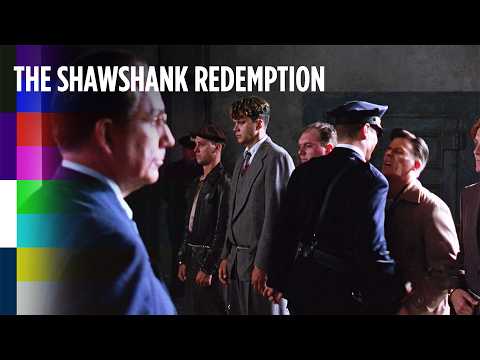
shawshank 30秒了解
- Shawshank is a fictional prison that symbolizes the triumph of hope over long-term suffering and systemic oppression.
- It originated in a Stephen King novella and became a global cultural icon through the 1994 film 'The Shawshank Redemption.'
- The term is used metaphorically to describe patient, long-term efforts to escape a difficult situation or achieve a comeback.
- It is deeply associated with themes of friendship, institutionalization, and the idea that 'hope is a good thing.'
The term 'Shawshank' primarily serves as a proper noun referring to the Shawshank State Penitentiary, a fictional prison located in Maine, created by the prolific American author Stephen King. While it originated in literature, specifically in the 1982 novella 'Rita Hayworth and Shawshank Redemption,' the word has transcended its literary roots to become a massive cultural touchstone through the 1994 film adaptation directed by Frank Darabont. In contemporary English, 'Shawshank' is frequently used as a referential adjective or a metaphorical noun to describe situations involving long-term confinement, the slow and meticulous process of achieving freedom, or the profound resilience of the human spirit under oppressive conditions. When someone mentions 'Shawshank,' they are rarely just talking about a building; they are invoking a narrative of patience, friendship, and the idea that 'hope is a good thing, maybe the best of things.' It is used in casual conversation to describe a difficult job one finally quit ('I finally Shawshanked my way out of that office') or in academic discussions regarding the philosophy of institutionalization. The word carries a heavy weight of emotional gravitas, suggesting that even in the darkest, most restrictive environments, the human mind can remain free. It is a symbol of the 'long game'—the strategy of enduring hardship for years to eventually reach a state of grace or liberation. Understanding 'Shawshank' requires an appreciation for the contrast between the cold, grey walls of a prison and the bright, blue Pacific Ocean of Zihuatanejo, representing the ultimate goal of any struggle.
- Literal Meaning
- A fictional state prison in Maine where the characters Andy Dufresne and Ellis 'Red' Redding spend decades.
After working at the same monotonous accounting firm for twenty years, he felt like he was finally digging his tunnel out of Shawshank.
- Metaphorical Usage
- A situation characterized by endurance, institutionalization, or a miraculous escape from systemic oppression.
The cultural footprint of Shawshank is so large that it is often cited in discussions about the 'greatest movies of all time,' consistently ranking at the top of lists like the IMDb Top 250. This popularity has cemented the word in the English lexicon as a shorthand for 'redemption.' When people use the word, they often evoke specific imagery: a man standing in the rain with his arms outstretched, a small rock hammer hidden inside a Bible, or the concept of 'getting busy living or getting busy dying.' This binary choice—to succumb to one's environment or to strive for something better—is the core essence of what the word Shawshank represents in modern discourse. It is also used to discuss the psychological effects of being 'institutionalized,' where a person becomes so dependent on a restrictive system that they no longer know how to function in the outside world. This adds a layer of tragic complexity to the word, making it more than just a story of a prison break; it is a study of the human psyche's adaptability and its potential for both total surrender and total defiance. In political or social justice contexts, Shawshank might be invoked to criticize the harshness of the penal system or to celebrate the exoneration of the wrongfully accused, mirroring the journey of the story's protagonist, Andy Dufresne.
The documentary highlighted the stories of men who had spent decades in a Shawshank-like facility before DNA evidence proved their innocence.
- Cultural Symbolism
- Represents the ultimate triumph of hope and the importance of maintaining one's inner identity despite external pressures.
His journey from poverty to a successful CEO was described by many as a modern-day Shawshank redemption story.
The old library felt like Shawshank—quiet, dusty, and filled with people who had been there for what seemed like an eternity.
She kept a small picture of the beach in her cubicle, her own little piece of Zihuatanejo to keep her sane in the Shawshank of corporate life.
Using 'Shawshank' in a sentence requires an understanding of its dual nature as both a specific place and a broader metaphor. When used as a proper noun, it should be capitalized, referring directly to the prison or the film. However, it is increasingly used as an adjective to modify nouns like 'redemption,' 'escape,' or 'experience.' For instance, saying 'This is my Shawshank redemption' implies a personal comeback after a long period of failure or suffering. It is important to ensure the audience is familiar with the cultural reference, as the word's power relies entirely on the shared understanding of the story's themes. You might use it to describe a physical location that feels oppressive and outdated, or to describe a psychological state of feeling trapped. In more creative writing, 'Shawshank' can be used to evoke a specific mood—one of somber reflection mixed with a flickering light of possibility. It is often paired with verbs like 'endure,' 'escape,' 'survive,' or 'transcend.' The word functions best when the context involves a significant passage of time; a quick escape isn't a 'Shawshank' escape—a 'Shawshank' escape takes twenty years and a lot of patience. It is also common to see it in the phrase 'the Shawshank of [something],' such as 'the Shawshank of high school' or 'the Shawshank of a bad marriage,' indicating a place where one feels confined but is planning an eventual departure. When using it as a verb, though less common and more slangy ('He Shawshanked out of there'), it specifically implies a clever, stealthy, and well-planned exit from a difficult situation. The versatility of the word allows it to be used in both serious and humorous contexts, depending on the stakes of the situation being described.
- As a Proper Noun
- Directly referring to the prison: 'The guards at Shawshank were known for their brutality.'
To many film critics, Shawshank is the quintessential American story of resilience.
- As an Adjective
- Modifying a situation: 'The athlete's return from a career-ending injury was a true Shawshank moment.'
Furthermore, the word can be used to discuss the concept of friendship in adversity. One might say, 'He's the Red to my Andy,' referencing the two main characters of Shawshank, which implies a deep, loyal bond formed in a difficult environment. This usage expands the word's utility from just 'escape' to 'companionship.' In professional settings, a manager might use the term to describe a long-term project that requires immense patience: 'This merger is going to be our Shawshank; we need to keep our heads down and work the plan for the next five years.' In this sense, it becomes a metaphor for strategic endurance. It is also useful in discussing social issues, such as the need for prison reform, where 'Shawshank' serves as the archetype of the 'old-school' punitive system that focuses on punishment rather than rehabilitation. By using the word, a speaker can instantly evoke a specific aesthetic—the clanging of iron bars, the grey uniforms, and the oppressive silence of a cell block. It is a powerful linguistic tool for creating vivid imagery and emotional resonance in both spoken and written English. Whether you are writing a movie review, a personal essay, or just chatting with friends about a difficult experience, 'Shawshank' provides a rich, multi-layered reference point that communicates volumes with just two syllables.
The political prisoner's release after thirty years was hailed as a Shawshank victory for human rights.
- Comparative Usage
- Comparing a real place to the fictional one: 'The local jail was no Shawshank, but it was still a grim place to spend a night.'
The software developer spent years fixing the legacy code, a task he jokingly called his Shawshank project.
Finding that lost document in the basement archives felt like finding the secret tunnel in Shawshank.
Even in the Shawshank of his despair, he never lost his sense of humor.
You will encounter the word 'Shawshank' in a surprisingly wide variety of contexts, ranging from high-brow film criticism to casual water-cooler talk. In the world of cinema, it is a ubiquitous reference. Film historians and critics use it as a benchmark for successful storytelling, often discussing 'the Shawshank effect'—how a movie can fail at the box office but become a beloved classic through television broadcasts and home media. If you are watching a movie review on YouTube or reading an article in 'The Hollywood Reporter,' you are likely to hear 'Shawshank' mentioned as a gold standard for emotional payoffs. Beyond the film industry, the word has migrated into the realm of news and journalism. When a long-term prisoner is exonerated or when a person makes a daring and unlikely escape from a difficult situation, headlines often use 'Shawshank' to provide immediate context for the reader. For example, a news story about a man who spent 20 years in prison for a crime he didn't commit might be titled 'A Real-Life Shawshank Redemption.' In the legal profession, lawyers and judges might use the term metaphorically to describe the harshness of certain correctional facilities or the systemic failures of the justice system. In the workplace, 'Shawshank' is a common piece of office slang. It is used to describe a job that feels like a life sentence, or the feeling of finally leaving a company after many years. You might hear a colleague say, 'I'm finally getting my Shawshank redemption next Friday,' meaning they are retiring or moving to a better job. It is also a popular reference in pop culture at large, appearing in sitcoms like 'The Office,' 'Family Guy,' and 'Brooklyn Nine-Nine,' where characters often make jokes about the movie's plot or its famous lines. This widespread usage means that even people who haven't seen the movie are often familiar with the word and its general meaning. It has become a part of the collective consciousness, a shorthand for the struggle between the individual and the institution. You might also hear it in motivational speeches, where the story of Andy Dufresne is used as an allegory for perseverance and the power of the mind. Speakers use 'Shawshank' to inspire audiences to 'crawl through five hundred yards of foulness' to reach their own personal freedom. Finally, in the travel industry, the Ohio State Reformatory has become a major tourist destination, often marketed as 'The Shawshank Prison,' where fans can take tours and see the actual filming locations. This physical manifestation of the word further solidifies its place in the real world, bridging the gap between fiction and reality.
- Media & Journalism
- Used in headlines to describe exonerations or escapes: 'The Shawshank Escape of the 21st Century.'
The podcast host compared the protagonist's struggle to the years spent in Shawshank.
- Pop Culture
- Referenced in TV shows and comedies to evoke themes of prison life or dramatic escapes.
During the trial, the lawyer argued that the defendant's time in jail was a Shawshank-level injustice.
The sports commentator described the team's comeback as a Shawshank miracle.
I felt like I was in Shawshank while waiting for my flight during the 12-hour layover.
One of the most common mistakes people make with the word 'Shawshank' is assuming it is a real historical prison. While it is based on the general atmosphere of mid-20th-century American penitentiaries, Shawshank is entirely a creation of Stephen King's imagination. Using it in a formal historical essay as a real location would be a factual error. Another mistake is overusing the term for minor inconveniences. While it is fine to use it jokingly, calling a ten-minute wait at the DMV 'my Shawshank' can come across as hyperbolic or trivializing to the actual themes of the story, which involve decades of suffering and systemic abuse. It is best reserved for situations that involve a significant, long-term struggle. Additionally, people often confuse the title of the movie, 'The Shawshank Redemption,' with the name of the prison itself. While the prison is Shawshank, the 'Redemption' part refers to the character arc of the protagonists. Using 'The Shawshank' to refer to the movie is common but slightly informal; usually, it is better to say 'the movie Shawshank' or use the full title. In terms of spelling, 'Shawshank' is often misspelled as 'Shawsank' or 'Shawshank,' though the latter is correct. The 'w' after the 'a' is essential. Another nuanced mistake is failing to recognize the difference between 'escaping' and 'redemption.' An escape is just leaving; redemption involves a spiritual or moral reclaiming of one's life. If you use 'Shawshank' to describe a situation where someone just got lucky and avoided trouble, you are missing the 'redemption' aspect that the word usually implies. It is also important not to confuse 'Shawshank' with other famous fictional prisons like 'Alcatraz' (which is real but often fictionalized) or 'Arkham Asylum.' Each has its own specific connotations—Alcatraz implies 'inescapable,' Arkham implies 'insanity,' and Shawshank implies 'hope and perseverance.' Using the wrong one can muddy your metaphor. Finally, some learners might use 'Shawshank' as a verb ('I will Shawshank this') without providing enough context. Because it is not a standard dictionary verb, it requires a clear comparison to the movie's plot for the listener to understand that you mean 'I will patiently and secretly work toward my goal until I succeed.'
- Factual Error
- Mistaking Shawshank for a real prison in a non-fictional context.
Incorrect: 'The 1950s were a tough time for inmates at the real Shawshank prison.'
- Hyperbole Mistake
- Using the term for very short or minor problems, which dilutes its meaning.
Correct: 'After years of fighting the wrongful conviction, his release was a true Shawshank moment.'
Incorrect: 'I forgot my keys, it was like being in Shawshank for five minutes.'
Correct: 'The long-term project felt like Shawshank, but the final result was worth the wait.'
When looking for words similar to 'Shawshank,' you have to consider the specific aspect of the word you are trying to replicate. If you are focusing on the 'prison' aspect, words like 'penitentiary,' 'dungeon,' 'purgatory,' or 'stronghold' might work, though they lack the specific cultural weight of Shawshank. 'Purgatory' is a particularly good alternative when you want to describe a state of suffering and waiting that eventually leads to something better. If you are focusing on the 'escape' aspect, 'Houdini' is the most common alternative, though it implies a magical or quick disappearance rather than the slow, grinding effort of Shawshank. For the 'redemption' aspect, you might use 'atonement,' 'reclamation,' or 'salvation.' If you want to describe someone who has been in a system for a long time, 'institutionalized' is the technical term that Shawshank popularized in the public consciousness. In a more modern or tech-oriented context, you might use 'walled garden' to describe a restrictive system, though this is much less dramatic. Another interesting comparison is with 'The Count of Monte Cristo,' which is the classic literary predecessor to Shawshank. You might say a situation is 'Dantès-esque' (referring to Edmond Dantès) to imply a long-term imprisonment followed by a calculated revenge or return. However, 'Shawshank' is generally more focused on hope and friendship than revenge. For a more gritty or hopeless feeling, 'Gulag' or 'Bastille' could be used, but these carry much darker historical and political connotations. 'Shawshank' remains unique because it balances the horror of imprisonment with the beauty of the human spirit. When choosing an alternative, consider whether you want to emphasize the walls (the prison), the time (the endurance), or the result (the redemption). None of these words perfectly capture the specific blend of 1940s Americana, Stephen King's storytelling, and the cinematic triumph that 'Shawshank' evokes, which is why the word remains so popular in English today.
- Shawshank vs. Purgatory
- Shawshank implies a physical and systemic struggle with a clear human antagonist; Purgatory is more spiritual and passive.
While the office felt like a purgatory, his plan to leave was pure Shawshank.
- Shawshank vs. Houdini
- Shawshank is about the long game and patience; Houdini is about the immediate and spectacular escape.
His reclamation of his reputation after the scandal was a long, Shawshank-style journey.
The penitentiary was cold, but the Shawshank spirit of the inmates kept them going.
She didn't want a Houdini act; she wanted a Shawshank resolution that fixed the root of the problem.
How Formal Is It?
趣味小知识
The movie 'The Shawshank Redemption' was actually a box office disappointment when it first came out, but it became a massive hit after being released on VHS and shown repeatedly on cable TV.
发音指南
- Pronouncing the 'w' as a 'v' (common for some non-native speakers).
- Putting the stress on the second syllable (shaw-SHANK).
- Omitting the 'k' at the end (shaw-shan).
- Pronouncing 'shank' like 'shonk'.
- Making the 'aw' sound too short.
难度评级
Easy to read as a proper noun, but requires cultural context to understand metaphors.
Spelling 'Shawshank' correctly and using it metaphorically takes some practice.
Pronunciation is straightforward once the 'aw' and 'ank' sounds are mastered.
Very easy to recognize in speech due to its distinct percussive sound.
接下来学什么
前置知识
接下来学习
高级
需要掌握的语法
Proper Nouns as Adjectives
Using 'Shawshank' to describe a 'redemption' or an 'escape'.
The Use of 'Like' in Similes
This office is like Shawshank.
Compound Adjectives with '-esque'
The prison conditions were Shawshank-esque.
Noun Adjuncts
The Shawshank prison (where 'Shawshank' modifies 'prison').
Possessive Proper Nouns
Shawshank's legacy continues to grow.
按水平分级的例句
I saw the movie Shawshank on TV last night.
Vi la película Shawshank en la televisión anoche.
Proper noun used as the name of a movie.
Shawshank is a very famous prison in a story.
Shawshank es una prisión muy famosa en una historia.
Subject of the sentence.
He wants to leave Shawshank and be free.
Él quiere dejar Shawshank y ser libre.
Object of the verb 'leave'.
The movie Shawshank is about hope.
La película Shawshank trata sobre la esperanza.
Used as a noun adjunct.
My friend likes the movie Shawshank very much.
A mi amigo le gusta mucho la película Shawshank.
Direct object.
Shawshank has many tall walls.
Shawshank tiene muchos muros altos.
Singular noun.
The man in Shawshank is a good person.
El hombre en Shawshank es una buena persona.
Prepositional phrase 'in Shawshank'.
Is Shawshank a real place?
¿Es Shawshank un lugar real?
Interrogative sentence.
He felt like he was in Shawshank during the long exam.
Se sintió como si estuviera en Shawshank durante el largo examen.
Metaphorical use in a simile.
The story of Shawshank is very sad but also happy.
La historia de Shawshank es muy triste pero también feliz.
Possessive-like structure using 'of'.
Many people visit the place where they filmed Shawshank.
Mucha gente visita el lugar donde filmaron Shawshank.
Proper noun referring to the film.
Andy spent many years inside Shawshank.
Andy pasó muchos años dentro de Shawshank.
Adverbial of place.
He finally got his Shawshank redemption when he found a new job.
Finalmente obtuvo su redención de Shawshank cuando encontró un nuevo trabajo.
Adjectival use modifying 'redemption'.
The guards at Shawshank were not very nice.
Los guardias de Shawshank no eran muy amables.
Prepositional phrase.
I have the Shawshank DVD at home.
Tengo el DVD de Shawshank en casa.
Noun adjunct.
Shawshank teaches us to never give up.
Shawshank nos enseña a nunca rendirnos.
Personification of the story/movie.
The documentary explored the lives of people in Shawshank-like conditions.
El documental exploró las vidas de personas en condiciones similares a las de Shawshank.
Compound adjective with '-like'.
After decades of service, his retirement felt like a Shawshank escape.
Después de décadas de servicio, su jubilación se sintió como un escape de Shawshank.
Metaphorical noun phrase.
The film Shawshank Redemption is often cited as a masterpiece of storytelling.
La película Shawshank Redemption es a menudo citada como una obra maestra de la narración.
Full title used as a noun.
He managed to Shawshank his way out of the failing company before it went bankrupt.
Logró salir de la empresa que fracasaba al estilo Shawshank antes de que quebrara.
Slang verb usage.
The concept of institutionalization is a major theme in Shawshank.
El concepto de institucionalización es un tema principal en Shawshank.
Referential noun.
She kept a small rock hammer as a tribute to the movie Shawshank.
Ella guardaba un pequeño martillo de roca como tributo a la película Shawshank.
Appositive phrase.
The legal team worked for years to achieve a Shawshank-style exoneration for their client.
El equipo legal trabajó durante años para lograr una exoneración al estilo Shawshank para su cliente.
Compound adjective.
Even in the darkest times, he remembered the lessons from Shawshank.
Incluso en los tiempos más oscuros, recordaba las lecciones de Shawshank.
Referential noun.
The protagonist's journey is a classic example of a Shawshank narrative arc.
El viaje del protagonista es un ejemplo clásico de un arco narrativo de Shawshank.
Attributive noun.
Critics argue that the enduring popularity of Shawshank lies in its universal themes of hope.
Los críticos argumentan que la popularidad duradera de Shawshank radica en sus temas universales de esperanza.
Proper noun as subject.
The prison reform advocate used Shawshank as a metaphor for the failures of the system.
El defensor de la reforma penitenciaria usó Shawshank como una metáfora de los fallos del sistema.
Metaphorical object.
His meticulous planning for the product launch was described as 'pure Shawshank'.
Su meticulosa planificación para el lanzamiento del producto fue descrita como 'puro Shawshank'.
Predicative adjective phrase.
The relationship between the two lead characters in Shawshank is a testament to human loyalty.
La relación entre los dos personajes principales en Shawshank es un testimonio de la lealtad humana.
Prepositional phrase.
She felt institutionalized, much like the characters in Shawshank, after twenty years in the same role.
Se sentía institucionalizada, al igual que los personajes de Shawshank, después de veinte años en el mismo puesto.
Comparative phrase.
The ending of Shawshank provides one of the most cathartic moments in cinema history.
El final de Shawshank proporciona uno de los momentos más catárticos en la historia del cine.
Possessive noun.
He jokingly referred to the basement archives as the 'Shawshank wing' of the library.
Se refirió en broma a los archivos del sótano como el 'ala Shawshank' de la biblioteca.
Noun adjunct.
The author utilizes Shawshank as a microcosm of societal oppression and the resilience of the individual.
El autor utiliza Shawshank como un microcosmos de la opresión social y la resiliencia del individuo.
Noun as a symbolic object.
The legal battle was a grueling, Shawshank-esque ordeal that lasted over two decades.
La batalla legal fue una prueba agotadora, al estilo Shawshank, que duró más de dos décadas.
Adjective with '-esque' suffix.
In his memoir, he reflects on the 'Shawshank moments' that defined his time in captivity.
En sus memorias, reflexiona sobre los 'momentos Shawshank' que definieron su tiempo en cautiverio.
Attributive noun in a plural phrase.
The philosophical debate in Shawshank regarding the nature of hope remains highly relevant today.
El debate filosófico en Shawshank sobre la naturaleza de la esperanza sigue siendo muy relevante hoy en día.
Prepositional phrase indicating context.
The cinematography in Shawshank uses lighting to symbolize the protagonist's internal state.
La cinematografía en Shawshank utiliza la iluminación para simbolizar el estado interno del protagonista.
Proper noun as location of action.
He described the corporate culture as a 'velvet Shawshank'—comfortable but ultimately restrictive.
Describió la cultura corporativa como un 'Shawshank de terciopelo': cómodo pero finalmente restrictivo.
Metaphorical noun phrase.
The public's fascination with Shawshank suggests a deep-seated desire for justice and redemption.
La fascinación del público por Shawshank sugiere un deseo profundamente arraigado de justicia y redención.
Object of a preposition.
The actor's performance brought a profound sense of humanity to the grim setting of Shawshank.
La actuación del actor aportó un profundo sentido de humanidad al sombrío entorno de Shawshank.
Possessive-like object.
The film transcends its genre, positioning Shawshank as an existential purgatory where the soul is either forged or broken.
La película trasciende su género, posicionando a Shawshank como un purgatorio existencial donde el alma se forja o se rompe.
Noun as a philosophical construct.
To invoke Shawshank in a political context is to appeal to the universal human yearning for liberation from systemic inertia.
Invocar a Shawshank en un contexto político es apelar al anhelo humano universal de liberación de la inercia sistémica.
Infinitive phrase object.
The narrative's power lies in its ability to render the mundane details of Shawshank life as significant milestones of resistance.
El poder de la narrativa radica en su capacidad para presentar los detalles mundanos de la vida en Shawshank como hitos significativos de resistencia.
Attributive noun.
The dichotomy between the 'institutionalized' mind and the 'free' mind is the central tension of the Shawshank mythos.
La dicotomía entre la mente 'institucionalizada' y la mente 'libre' es la tensión central del mito de Shawshank.
Noun adjunct in a complex phrase.
Scholars often compare the structural integrity of Shawshank's plot to the very walls of the prison it depicts.
Los académicos a menudo comparan la integridad estructural de la trama de Shawshank con los mismos muros de la prisión que representa.
Possessive noun.
The 'Shawshank effect' in broadcasting history illustrates the transformative power of repeated cultural exposure.
El 'efecto Shawshank' en la historia de la radiodifusión ilustra el poder transformador de la exposición cultural repetida.
Proper noun as part of a technical term.
His eventual success was not a stroke of luck but a Shawshank-level feat of endurance and strategic foresight.
Su éxito final no fue un golpe de suerte sino una hazaña de resistencia y previsión estratégica al nivel de Shawshank.
Compound adjective.
The enduring legacy of Shawshank serves as a poignant reminder that the mind can remain unconfined even in the most draconian circumstances.
El legado perdurable de Shawshank sirve como un recordatorio conmovedor de que la mente puede permanecer sin confines incluso en las circunstancias más draconianas.
Proper noun as subject of a clause.
常见搭配
常用短语
— A famous line from the movie Shawshank, meaning you must choose to actively pursue life or succumb to despair.
Faced with a difficult diagnosis, he decided to get busy living.
— The central philosophy of the Shawshank story, suggesting that hope is essential for survival.
Even in the worst economy, remember that hope is a good thing.
— Refers to someone who has been in a system so long they cannot function outside of it.
After 40 years in the army, he felt like an institutionalized man.
— A poignant reference to a character in Shawshank who struggled with freedom.
The graffiti on the wall simply said 'Brooks was here,' a nod to the film.
— Refers to the difficult and unpleasant path one must sometimes take to reach freedom.
To get this deal done, we'll have to crawl through a river of filth.
— The Mexican beach town that represents the ultimate goal or paradise in Shawshank.
We all need our own Zihuatanejo to look forward to.
— The core message that anyone can find a way to make things right.
The program's goal is to show that redemption is possible for everyone.
— When a movie becomes a classic through word-of-mouth and TV rather than box office success.
The cult classic experienced a Shawshank effect over the years.
— A happy, cathartic ending where the protagonist finally achieves freedom.
The novel concludes with a perfect Shawshank ending.
— A reference to the network of people who help each other inside a difficult system.
They were known as the 'Friends of Red' in the local community.
容易混淆的词
Alcatraz is a real prison and implies 'inescapable,' whereas Shawshank is fictional and implies 'hope and redemption.'
Another real famous prison, but lacks the specific 'hope' metaphor of Shawshank.
Refers to a quick, magical escape, while Shawshank refers to a long, patient one.
习语与表达
— Doing a massive task through tiny, persistent, and secret steps over a long time.
Building this business from scratch felt like digging a tunnel with a rock hammer.
informal— Emerging from a terrible or corrupt situation with one's integrity and freedom intact.
Despite the scandal, he came out clean on the other side.
neutral— Refers to a person whose spirit is too strong or talented to be restricted by a system.
She was a bird that wasn't meant to be caged, so she left the corporate world.
literary— Using the rules of an institution to one's own advantage, as Andy did in Shawshank.
He spent years working the system to get the funding he needed.
neutral— Finding your personal place of peace and freedom after a long struggle.
He finally found his Zihuatanejo in a small cabin in the woods.
informal— A strategy that requires years of patience to see results.
Investing in these stocks is a Shawshank-style long-term play.
business— The psychological feeling of being trapped even when physically free.
He was out of prison, but he was still behind the bars of his mind.
literary— A secret way out or a hidden flaw in a system.
We found a hole in the wall of the competitor's strategy.
informal— Sacrificing immediate comfort for a much larger future goal.
She's playing the long game, just like in Shawshank.
neutral— A symbol of something dangerous or liberating hidden in plain sight.
His humor was the rock hammer in the Bible of his serious demeanor.
metaphorical容易混淆
Often used together as 'Shawshank Redemption.'
Shawshank is the place; redemption is the act of being saved or making up for a mistake. You can have redemption without Shawshank, but the movie title links them.
He sought redemption for his past crimes.
A key theme in the Shawshank story.
Institutionalized is a psychological state of being dependent on a system; Shawshank is the fictional setting where this happens.
The long-term patient became institutionalized.
Andy's goal in Shawshank.
Exoneration is the legal act of being found innocent; Shawshank is the prison where an innocent man might wait for it.
The DNA evidence led to his full exoneration.
Shawshank is a 'State Penitentiary.'
Penitentiary is a general noun for a prison; Shawshank is a specific proper noun for one fictional prison.
He was sent to the state penitentiary.
The people who live in Shawshank.
Inmate is the person; Shawshank is the place.
The inmate had a secret plan.
句型
I like [Movie Name].
I like Shawshank.
It feels like [Place].
It feels like Shawshank.
After [Time], he finally [Action] like in Shawshank.
After ten years, he finally quit like in Shawshank.
The [Noun] was a true Shawshank [Noun].
The victory was a true Shawshank redemption.
To describe it as [Adjective] would be a Shawshank [Noun].
To describe it as difficult would be a Shawshank understatement.
The dichotomy of [Concept] is perfectly encapsulated in Shawshank.
The dichotomy of hope and despair is perfectly encapsulated in Shawshank.
He [Verb] his way out of [Place] Shawshank-style.
He worked his way out of the debt Shawshank-style.
It was the [Noun] that Shawshank warned us about.
It was the institutionalization that Shawshank warned us about.
词族
名词
动词
形容词
相关
如何使用
High in cultural and film-related contexts; medium in general metaphorical use.
-
Calling it 'The Shawshank' instead of 'Shawshank' or 'The Shawshank Redemption'.
→
I'm watching Shawshank.
While people will understand you, 'The Shawshank' sounds slightly unnatural. Use the name alone or the full title.
-
Spelling it 'Shawsank'.
→
Shawshank
The 'h' after the 's' in the second syllable is often forgotten by learners.
-
Using it for a quick escape.
→
He pulled a Houdini.
Shawshank implies a very long, slow process. If someone leaves a room quickly, 'Houdini' is the better reference.
-
Thinking it's a real prison in Maine.
→
The fictional Shawshank prison...
Always remember it's a fictional creation of Stephen King to avoid factual errors in formal writing.
-
Confusing it with 'The Rock' (Alcatraz).
→
Shawshank is about hope; Alcatraz is about being inescapable.
These are two different prison archetypes in American culture. Don't swap them.
小贴士
Capitalization
Always capitalize Shawshank because it is a proper noun. Even when using it as an adjective (e.g., Shawshank-style), keep the 'S' capitalized.
Know the Plot
To use the word effectively, you should at least know the basic plot of the movie: an innocent man escapes a prison after 20 years of patient digging.
Scale of Struggle
Only use 'Shawshank' for significant struggles. Using it for a 5-minute traffic jam makes the metaphor too weak.
Friendship Theme
Remember that Shawshank is as much about friendship as it is about escape. You can use it to describe a bond formed in tough times.
Related Terms
Learn the word 'redemption' alongside 'Shawshank' to fully understand the cultural reference.
Clear Ending
Make sure to pronounce the 'k' at the end of Shawshank clearly so it doesn't sound like 'Shawshan'.
Creative Writing
In stories, use 'Shawshank' to instantly set a mood of gritty realism mixed with a small spark of hope.
Universal Appeal
Don't be afraid to use this reference with English speakers from any country; it is globally recognized.
Joking Use
It's common to joke about 'digging a tunnel' when you are bored at work; this is a direct Shawshank reference.
Sociological Use
In essays, use Shawshank to discuss the psychological effects of confinement and the concept of 'institutionalization'.
记住它
记忆技巧
Think of 'Shaw' (like a saw cutting through bars) and 'Shank' (a slang word for a prison knife). It's the place where you use a saw to get out of the shank-filled prison.
视觉联想
Imagine a man standing in the rain with his arms wide open, celebrating his freedom after years of being trapped in a grey stone building.
Word Web
挑战
Try to use 'Shawshank' in a sentence today to describe a long-term project or a difficult situation you are currently handling with patience.
词源
The name was coined by Stephen King for his 1982 novella. It is a fictional name, likely chosen for its harsh, percussive sound which fits the atmosphere of a prison.
原始含义: A fictional place name in the state of Maine.
English (Proper Noun)文化背景
While the movie is beloved, be careful using the term in contexts of actual modern-day incarceration, as real prison experiences are often much more traumatic and less 'redemptive' than the fictional story.
It is considered one of the most 'rewatchable' movies in history, making the word a household name.
在生活中练习
真实语境
Film Discussions
- Is Shawshank the best movie ever?
- The ending of Shawshank was so emotional.
- I love the narration in Shawshank.
- Shawshank is a classic.
Workplace/Career
- I'm planning my Shawshank escape.
- This project feels like Shawshank.
- He's been here since the Shawshank days.
- It's a Shawshank redemption for his career.
Social Justice/Law
- It's a real-life Shawshank story.
- The conditions were Shawshank-esque.
- He was exonerated after a Shawshank-long wait.
- We need to reform the Shawshanks of today.
Personal Resilience
- Keep your Shawshank hope alive.
- I'm digging my way out, Shawshank-style.
- It was my Shawshank moment.
- Don't get institutionalized.
Travel/Tourism
- Are we visiting the Shawshank prison?
- I want to see the Shawshank tree.
- The Shawshank trail is in Ohio.
- Let's take the Shawshank tour.
对话开场白
"Have you ever seen the movie 'The Shawshank Redemption'? It's often called the best film ever made."
"If you were stuck in a place like Shawshank, what would be the one thing that kept you going?"
"Do you think 'hope is a good thing,' or can it be dangerous like Red said in Shawshank?"
"What's your personal 'Zihuatanejo'—the place you dream of going to when things get tough?"
"Have you ever had a 'Shawshank moment' where you finally succeeded after a very long struggle?"
日记主题
Reflect on a time when you felt 'institutionalized' by a school, job, or routine. How did you maintain your sense of self?
Write about a 'Shawshank redemption' in your own life. What did you have to overcome to find your freedom?
If you had to spend 20 years waiting for something, what would it be, and how would you stay patient?
Analyze the friendship between Andy and Red. Why is that kind of loyalty so rare and valuable?
Describe your ideal 'Zihuatanejo.' What does freedom and peace look like to you?
常见问题
10 个问题No, Shawshank is a fictional prison created by author Stephen King. However, the movie was filmed at the Ohio State Reformatory, which you can visit.
It means a situation where someone who has been struggling or failing for a long time finally achieves a great success or 'redeems' themselves.
It refers to the spiritual and physical 'redemption' of the characters Andy and Red as they find hope and freedom despite being in the Shawshank prison.
In very informal slang, yes. 'To Shawshank' something means to patiently and secretly work your way out of a difficult situation over a long period.
No, it is used as a metaphor for any restrictive environment, like a bad job, a difficult school, or a long-term personal struggle.
Stephen King wrote the novella 'Rita Hayworth and Shawshank Redemption,' which was published in his 1982 collection 'Different Seasons.'
It is a term used in the film industry to describe a movie that becomes a massive success on television and home video after failing at the box office.
It means becoming so used to the rules and life of an institution (like a prison) that you can no longer survive or be happy in the free world.
It is both. The prison itself is negative (oppressive), but the name 'Shawshank' usually evokes positive themes of hope and friendship.
In Stephen King's fictional universe, Shawshank State Penitentiary is located in the state of Maine, USA.
自我测试 200 个问题
Describe a time you felt trapped in a situation. How did you maintain your hope?
Well written! Good try! Check the sample answer below.
Write a short review of a movie that you think is as good as Shawshank.
Well written! Good try! Check the sample answer below.
Explain the concept of 'institutionalization' in your own words.
Well written! Good try! Check the sample answer below.
If you were Andy, what would you have done differently in Shawshank?
Well written! Good try! Check the sample answer below.
Write a letter from Red to Andy after he arrives in Zihuatanejo.
Well written! Good try! Check the sample answer below.
How does the setting of a prison help tell a story about freedom?
Well written! Good try! Check the sample answer below.
Discuss the importance of friendship in the movie Shawshank.
Well written! Good try! Check the sample answer below.
Compare the character of the Warden with the character of Andy.
Well written! Good try! Check the sample answer below.
What does 'redemption' mean to you in the context of this story?
Well written! Good try! Check the sample answer below.
Describe the 'Shawshank effect' and why it happens to some movies.
Well written! Good try! Check the sample answer below.
Write a dialogue between two coworkers who feel like they are in 'Shawshank'.
Well written! Good try! Check the sample answer below.
How can hope be 'a dangerous thing' as Red said?
Well written! Good try! Check the sample answer below.
What is the significance of the rock hammer in the story?
Well written! Good try! Check the sample answer below.
Explain why Shawshank is such a popular cultural reference in English.
Well written! Good try! Check the sample answer below.
Describe your own personal 'Zihuatanejo'.
Well written! Good try! Check the sample answer below.
Analyze the role of music in the movie Shawshank.
Well written! Good try! Check the sample answer below.
How does the passage of time affect the characters in Shawshank?
Well written! Good try! Check the sample answer below.
What would a 'Shawshank redemption' look like in a modern corporate setting?
Well written! Good try! Check the sample answer below.
Is justice always served in the end of the story? Why or why not?
Well written! Good try! Check the sample answer below.
Write a summary of the novella 'Rita Hayworth and Shawshank Redemption'.
Well written! Good try! Check the sample answer below.
Explain the plot of Shawshank to a friend who hasn't seen it.
Read this aloud:
你说的:
Speech recognition is not supported in your browser. Try Chrome or Edge.
Discuss whether you agree with Red or Andy about hope.
Read this aloud:
你说的:
Speech recognition is not supported in your browser. Try Chrome or Edge.
Describe a place that feels like 'Shawshank' to you and explain why.
Read this aloud:
你说的:
Speech recognition is not supported in your browser. Try Chrome or Edge.
Talk about the importance of having a 'Zihuatanejo' in your life.
Read this aloud:
你说的:
Speech recognition is not supported in your browser. Try Chrome or Edge.
Explain why 'The Shawshank Redemption' is so popular after all these years.
Read this aloud:
你说的:
Speech recognition is not supported in your browser. Try Chrome or Edge.
Role-play a conversation between Andy and Red on their first day in prison.
Read this aloud:
你说的:
Speech recognition is not supported in your browser. Try Chrome or Edge.
Give a short speech about the power of perseverance using Shawshank as an example.
Read this aloud:
你说的:
Speech recognition is not supported in your browser. Try Chrome or Edge.
Describe the character of Brooks and why his story is so sad.
Read this aloud:
你说的:
Speech recognition is not supported in your browser. Try Chrome or Edge.
Discuss the role of the Warden as a villain in the story.
Read this aloud:
你说的:
Speech recognition is not supported in your browser. Try Chrome or Edge.
Talk about a 'Shawshank redemption' moment in sports or history.
Read this aloud:
你说的:
Speech recognition is not supported in your browser. Try Chrome or Edge.
Explain the difference between 'escaping' and 'redemption'.
Read this aloud:
你说的:
Speech recognition is not supported in your browser. Try Chrome or Edge.
Describe the most iconic scene from the movie and why it is so famous.
Read this aloud:
你说的:
Speech recognition is not supported in your browser. Try Chrome or Edge.
How would the story change if it were set in a modern prison with technology?
Read this aloud:
你说的:
Speech recognition is not supported in your browser. Try Chrome or Edge.
Discuss the theme of 'time' in the movie.
Read this aloud:
你说的:
Speech recognition is not supported in your browser. Try Chrome or Edge.
Talk about how Andy used his skills as a banker to survive Shawshank.
Read this aloud:
你说的:
Speech recognition is not supported in your browser. Try Chrome or Edge.
Explain the quote 'Get busy living, or get busy dying' in your own words.
Read this aloud:
你说的:
Speech recognition is not supported in your browser. Try Chrome or Edge.
Discuss the impact of the movie's soundtrack on its emotional power.
Read this aloud:
你说的:
Speech recognition is not supported in your browser. Try Chrome or Edge.
Describe the feeling of the ending of the movie.
Read this aloud:
你说的:
Speech recognition is not supported in your browser. Try Chrome or Edge.
Talk about why Red was 'the only guilty man in Shawshank'.
Read this aloud:
你说的:
Speech recognition is not supported in your browser. Try Chrome or Edge.
Explain why people visit the filming location in Ohio.
Read this aloud:
你说的:
Speech recognition is not supported in your browser. Try Chrome or Edge.
Listen to a clip of Red's narration. What is his tone of voice?
Listen to the sound of the prison doors closing. How does it make you feel?
Listen to Andy's speech about hope. What words does he emphasize?
Listen to a podcast about 'The Shawshank Redemption'. What are the three main points?
Listen to the opera music Andy played. Why do you think he chose it?
Listen to a news report about a real-life 'Shawshank escape'. How is it similar to the movie?
Listen to an interview with Morgan Freeman about playing Red. What did he like about the role?
Listen to the warden's instructions to the new inmates. What is his priority?
Listen to the sound of the rain in the escape scene. What does it symbolize?
Listen to a discussion about Stephen King's writing style. How does he describe Shawshank?
Listen to the characters talking about Zihuatanejo. How do they pronounce it?
Listen to the parole board's questions to Red. How does he answer them differently over time?
Listen to the description of the rock hammer. Why is it so small?
Listen to the sound of the library being built. What does it suggest about the inmates' lives?
Listen to a critic's review of the movie. Does he think it's overrated?
/ 200 correct
Perfect score!
Summary
Shawshank is the ultimate metaphor for the 'long game' of life; it teaches that through patience, integrity, and unwavering hope, one can transcend even the most restrictive and unjust environments to find true redemption.
- Shawshank is a fictional prison that symbolizes the triumph of hope over long-term suffering and systemic oppression.
- It originated in a Stephen King novella and became a global cultural icon through the 1994 film 'The Shawshank Redemption.'
- The term is used metaphorically to describe patient, long-term efforts to escape a difficult situation or achieve a comeback.
- It is deeply associated with themes of friendship, institutionalization, and the idea that 'hope is a good thing.'
Capitalization
Always capitalize Shawshank because it is a proper noun. Even when using it as an adjective (e.g., Shawshank-style), keep the 'S' capitalized.
Know the Plot
To use the word effectively, you should at least know the basic plot of the movie: an innocent man escapes a prison after 20 years of patient digging.
Scale of Struggle
Only use 'Shawshank' for significant struggles. Using it for a 5-minute traffic jam makes the metaphor too weak.
Friendship Theme
Remember that Shawshank is as much about friendship as it is about escape. You can use it to describe a bond formed in tough times.