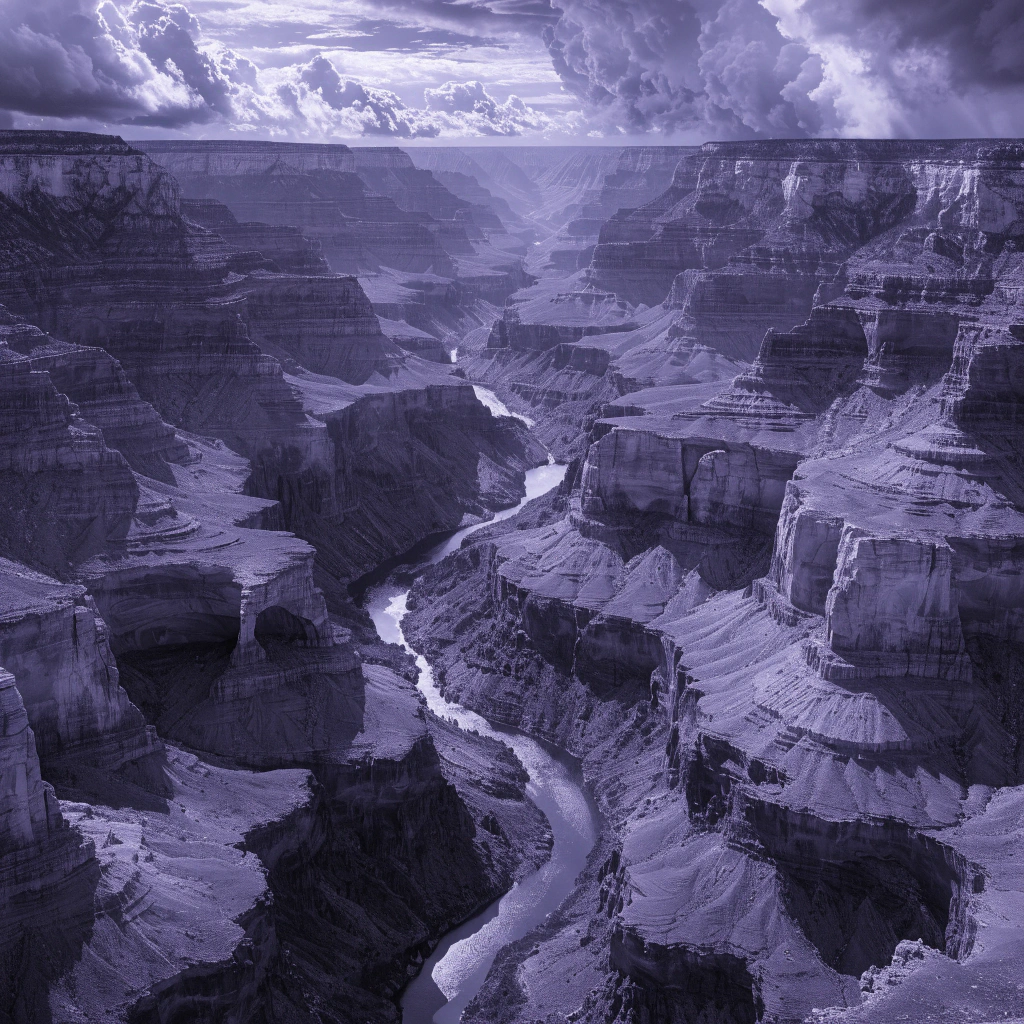
وادي جراند كانيون: مكان جميل في أمريكا
«جراند كانيون» مكان كبير وجميل في الولايات المتحدة الأمريكية. هو وادٍ عميق جداً وبه صخور كثيرة. هذه الصخور لها ألوان مختلفة: أحمر، برتقالي، وأصفر. نهر كولورادو يجري في قاع الوادي. النهر صنع هذا الوادي على مدى سنوات طويلة جداً. الناس من كل مكان في العالم يزورون جراند كانيون. هم يحبون رؤية المناظر الطبيعية الرائعة. يمكنهم المشي على حافة الوادي أو ركوب الخيل. الجو هناك غالباً ما يكون مشمساً. جراند كانيون مكان مدهش للجميع.
تسليط الضوء على القواعد
نمط: الصفة والموصوف (Noun-Adjective Agreement)
"«جراند كانيون» مكان كبير وجميل."
في اللغة العربية، الصفة (الكلمة التي تصف) تأتي بعد الموصوف (الكلمة الموصوفة). الصفة تتبع الموصوف في النوع (مذكر أو مؤنث) والعدد (مفرد أو جمع). هنا، «مكان» مذكر مفرد، و«كبير» و«جميل» مذكر مفرد.
نمط: الفعل المضارع للمفرد الغائب (Present Tense for Third Person Singular)
"نهر كولورادو يجري في قاع الوادي."
الفعل المضارع يدل على حدث يحدث الآن أو بانتظام. عندما نتحدث عن شيء مفرد وغائب (هو)، فإن الفعل المضارع يبدأ بحرف الياء. «يجري» يعني «هو يجري».
اختبر فهمك
10 أسئلة · A1 مبتدئ · معاينة مجانية واحدة
اختبر ما تعلمته من هذا المقال. أجب على جميع الأسئلة لكسب نقاط خبرة!
أين يوجد وادي جراند كانيون؟
هل تريد إنهاء الاختبار؟
9 أسئلة أخرى بانتظارك. سجّل مجاناً لفتح الاختبار الكامل وكسب نقاط خبرة!
سجل مجاناًلديك حساب بالفعل؟ دخول
تفصيل الأسئلة
أين يوجد وادي جراند كانيون؟
إجابتك:
الإجابة الصحيحة: في الولايات المتحدة الأمريكية
صخور جراند كانيون لها ألوان مختلفة.
إجابتك:
الإجابة الصحيحة: صحيح
ماذا تعني كلمة «مكان»؟
إجابتك:
الإجابة الصحيحة: موقع أو منطقة
نهر كولورادو _____ في قاع الوادي.
إجابتك:
الإجابة الصحيحة: يجري
وادي جراند كانيون: عجيبة طبيعية في أمريكا
وادي جراند كانيون هو مكان طبيعي مشهور جداً وجميل في الولايات المتحدة الأمريكية. هو موجود في ولاية أريزونا، في صحراء شمال الولاية. هذا الوادي كبير جداً وعميق جداً، والكثير من الناس من جميع أنحاء العالم يزورونه كل عام لمشاهدة جماله.
شكّل نهر كولورادو هذا الوادي العظيم على مدى ملايين السنين الطويلة. الماء حفر الصخور ببطء وقوة، وصنع هذا المنظر المذهل. لذلك، نرى الآن طبقات كثيرة من الصخور بألوان مختلفة مثل الأحمر والأصفر والبني. هذه الطبقات تظهر لنا تاريخ الأرض القديم جداً. طول الوادي حوالي 446 كيلومتراً وعمقه أكثر من 1.8 كيلومتر في بعض الأماكن.
جراند كانيون ليس فقط كبيراً، بل هو أيضاً منظر طبيعي رائع ومميز. الناس يحبون رؤية ألوان الصخور المتغيرة مع ضوء الشمس في الصباح والمساء. إنه مكان مهم جداً لدراسة الجيولوجيا والطبيعة. الزوار يستمتعون بالمشي على حواف الوادي والتصوير هناك. هو واحد من أجمل الأماكن الطبيعية في العالم كله.
تسليط الضوء على القواعد
نمط: الفعل الماضي (Past Simple)
"شكّل نهر كولورادو هذا الوادي العظيم على مدى ملايين السنين الطويلة."
الفعل الماضي هو فعل حدث وانتهى في الزمن الماضي. نستخدمه لنتحدث عن أحداث كاملة ومكتملة. مثلاً، كلمة "شكّل" تعني أن فعل التشكيل حدث وانتهى في الماضي.
نمط: اسم التفضيل (Comparative/Superlative)
"هو واحد من أجمل الأماكن الطبيعية في العالم كله."
اسم التفضيل نستخدمه للمقارنة بين شيئين أو أكثر، أو لوصف الأفضل أو الأجمل من بين مجموعة. يبدأ غالباً بحرف "أَ" مثل "أجمل" (أكثر جمالاً) أو "أكبر" (أكثر كبراً).
اختبر فهمك
11 أسئلة · A2 ابتدائي · معاينة مجانية واحدة
اختبر ما تعلمته من هذا المقال. أجب على جميع الأسئلة لكسب نقاط خبرة!
أين يقع وادي جراند كانيون؟
هل تريد إنهاء الاختبار؟
10 أسئلة أخرى بانتظارك. سجّل مجاناً لفتح الاختبار الكامل وكسب نقاط خبرة!
سجل مجاناًلديك حساب بالفعل؟ دخول
تفصيل الأسئلة
أين يقع وادي جراند كانيون؟
إجابتك:
الإجابة الصحيحة: في ولاية أريزونا
طول وادي جراند كانيون أكثر من 500 كيلومتر.
إجابتك:
الإجابة الصحيحة: خطأ
ما معنى كلمة "نهر"؟
إجابتك:
الإجابة الصحيحة: مجرى ماء كبير
شكّل _____ كولورادو هذا الوادي العظيم.
إجابتك:
الإجابة الصحيحة: نهر
ماذا يحب الناس أن يروا في جراند كانيون؟
إجابتك:
الإجابة الصحيحة: ألوان الصخور المتغيرة
الوادي الكبير: تحفة طبيعية في قلب أريزونا
يُعتبر الوادي الكبير (جراند كانيون) في الولايات المتحدة الأمريكية واحدة من أروع العجائب الطبيعية على كوكب الأرض. يقع هذا الوادي المذهل في صحراء أريزونا الشمالية، وقد نُحِت على مدى ما لا يقل عن ستة ملايين سنة بفعل التدفق المستمر لنهر كولورادو القوي. إنه ليس مجرد منظر طبيعي خلاب، بل هو سجل حي لتاريخ الأرض.
يتميز الوادي الكبير بأبعاده الهائلة التي تجعله معلماً جيولوجياً فريداً ومدهشاً؛ فهو يمتد لمسافة تصل إلى 446 كيلومتراً (277 ميلاً)، ويبلغ عرضه في بعض الأماكن 29 كيلومتراً (18 ميلاً)، بينما يصل عمقه إلى أكثر من 1.6 كيلومتر (ميل واحد). هذه الأبعاد تجعله واحداً من أكبر الأودية وأكثرها إثارة للإعجاب في العالم، وقد أدهش زواره من كل مكان.
ما يجعله مميزاً حقاً هو الطبقات الصخرية الملونة الظاهرة على جانبيه، والتي تتكون من الحجر الجيري والرملي والصخر الزيتي. هذه الطبقات ليست مجرد منظر جميل، بل هي سجل عمودي لتاريخ القشرة الأرضية، حيث تعرضت لتغيرات جيولوجية كبيرة عبر العصور. لقد استُخدم هذا المكان كمنزل للعديد من القبائل الأمريكية الأصلية لآلاف السنين، وقد تم اكتشاف العديد من آثارهم التاريخية هناك.
لقد أصبح الوادي الكبير رمزاً للجمال الطبيعي الهائل وقوة الطبيعة التي يمكن أن تشكل المناظر الطبيعية. إنه مكان يستحق الزيارة لاكتشاف عظمة خلق الله وجمال الكوكب، وقد زاره ملايين السياح من جميع أنحاء العالم للاستمتاع بمناظره الخلابة وغروب الشمس الساحر. إنه حقاً تحفة طبيعية لا تُنسى تترك انطباعاً عميقاً في كل من يراها.
تسليط الضوء على القواعد
نمط: الفعل المبني للمجهول (Passive Voice)
"يُعتبر الوادي الكبير (جراند كانيون) في الولايات المتحدة الأمريكية واحدة من أروع العجائب الطبيعية على كوكب الأرض."
يستخدم الفعل المبني للمجهول عندما لا يكون الفاعل معروفاً أو عندما لا يكون مهماً. في اللغة العربية، يتم تغيير شكل الفعل الماضي والمضارع ليشير إلى أن الفعل وقع على المفعول به، الذي يصبح نائب فاعل.
نمط: الاسم الموصول (Relative Clause)
"الطبقات الصخرية الملونة الظاهرة على جانبيه، والتي تتكون من الحجر الجيري والرملي والصخر الزيتي."
الاسم الموصول (مثل الذي، التي، اللذان، اللتان، الذين، اللاتي) يربط جملتين ويصف اسماً سابقاً. يساعد على إضافة معلومات إضافية حول الاسم الذي سبقه دون تكراره، ويجب أن يطابقه في الجنس والعدد.
اختبر فهمك
11 أسئلة · B1 متوسط · معاينة مجانية واحدة
اختبر ما تعلمته من هذا المقال. أجب على جميع الأسئلة لكسب نقاط خبرة!
أين يقع الوادي الكبير؟
هل تريد إنهاء الاختبار؟
10 أسئلة أخرى بانتظارك. سجّل مجاناً لفتح الاختبار الكامل وكسب نقاط خبرة!
سجل مجاناًلديك حساب بالفعل؟ دخول
تفصيل الأسئلة
أين يقع الوادي الكبير؟
إجابتك:
الإجابة الصحيحة: في ولاية أريزونا
نُحِت الوادي الكبير بفعل الرياح فقط.
إجابتك:
الإجابة الصحيحة: خطأ
ما معنى كلمة 'مذهل'؟
إجابتك:
الإجابة الصحيحة: شيء يسبب الدهشة والإعجاب الكبير
يُعتبر الوادي الكبير من أروع ال______ الطبيعية على كوكب الأرض.
إجابتك:
الإجابة الصحيحة: العجائب
نُحِت الوادي الكبير بفعل التدفق المستمر لنهر ______.
إجابتك:
الإجابة الصحيحة: كولورادو
The Grand Canyon: A Geological Masterpiece and Cultural Icon
Nestled in the high desert of northern Arizona, the Grand Canyon National Park stands as a testament to the sheer power of natural forces. Often cited as one of the seven natural wonders of the world, this immense chasm was carved over millions of years by the relentless flow of the Colorado River. While it is primarily celebrated for its breathtaking vistas, the canyon serves as a vertical timeline of the Earth's history, revealing nearly two billion years of geological evolution through its exposed layers of ancient rock.
Despite its arid appearance, the canyon supports a surprisingly diverse ecosystem. From the scorching depths of the inner gorge to the lush forests of the North Rim, various species have adapted to the unique microclimates found within. However, the park is not merely a biological or geological marvel; it is also a site of profound cultural significance. For centuries, indigenous tribes have inhabited the region, considering the canyon a sacred landscape. Their enduring connection to the land provides a vital perspective on human interaction with nature.
In the modern era, the Grand Canyon faces a delicate balancing act. As millions of tourists flock to its overlooks annually, the National Park Service must manage the environmental impact of such high-volume visitation. Issues such as water scarcity, noise pollution from air tours, and the preservation of historical artifacts are constantly being addressed. Furthermore, if the current trends of climate change continue, the region's fragile water resources could be significantly compromised.
Moreover, the canyon has long been a subject of scientific inquiry. Geologists continue to debate the exact age of the canyon's formation, with some arguing that parts of it are much older than the generally accepted six million years. Such academic discourse highlights the ongoing fascination with this natural wonder. To visit the Grand Canyon is to confront the vastness of time and the intricate beauty of our planet. Ultimately, it remains an indispensable resource for both education and inspiration, necessitating our collective commitment to its preservation for future generations.
تسليط الضوء على القواعد
نمط: Passive Voice (Past Simple)
"this immense chasm was carved over millions of years by the relentless flow of the Colorado River."
The passive voice is used here because the focus is on the canyon (the object) rather than the river (the agent). It is formed using the verb 'to be' plus the past participle.
نمط: Present Perfect Simple
"indigenous tribes have inhabited the region, considering the canyon a sacred landscape."
This tense connects the past to the present, indicating that the tribes began living there in the past and still do. It is formed using 'have/has' + past participle.
نمط: First Conditional
"if the current trends of climate change continue, the region's fragile water resources could be significantly compromised."
This structure is used to talk about possible future events and their results. It uses 'if' + present simple, followed by a modal verb like 'could' or 'will'.
اختبر فهمك
11 أسئلة · B2 فوق المتوسط · معاينة مجانية واحدة
اختبر ما تعلمته من هذا المقال. أجب على جميع الأسئلة لكسب نقاط خبرة!
What primary geological force is responsible for creating the Grand Canyon?
هل تريد إنهاء الاختبار؟
10 أسئلة أخرى بانتظارك. سجّل مجاناً لفتح الاختبار الكامل وكسب نقاط خبرة!
سجل مجاناًلديك حساب بالفعل؟ دخول
تفصيل الأسئلة
What primary geological force is responsible for creating the Grand Canyon?
إجابتك:
الإجابة الصحيحة: The Colorado River
The Grand Canyon contains rock layers that represent nearly two billion years of Earth's history.
إجابتك:
الإجابة الصحيحة: صحيح
What does the word 'arid' mean in the context of the article?
إجابتك:
الإجابة الصحيحة: Very dry
For centuries, indigenous tribes have considered the canyon a _____ landscape.
إجابتك:
الإجابة الصحيحة: sacred
What is one of the modern challenges mentioned regarding park management?
إجابتك:
الإجابة الصحيحة: High-volume visitation and tourism
The Stratified Silence: A Geological and Existential Inquiry into the Grand Canyon
It is within the stratified rock of the Grand Canyon that the Earth’s autobiography is most eloquently written. Located in the high desert of northern Arizona, this immense chasm is not merely a scenic vista but a vertical timeline of the Earth's crust. The persistent incision of the Colorado River, which has flowed for at least six million years, has exposed layers of limestone, sandstone, and shale that date back nearly two billion years. Seldom does a landscape provide such an unfiltered glimpse into the primordial history of our planet, offering a visceral reminder of the transience of human existence in the face of geological time.
The sheer scale of the canyon—stretching 277 miles in length and reaching depths of over a mile—defies easy categorisation. From a scientific perspective, the canyon is a masterclass in erosion and plate tectonics. The uplift of the Colorado Plateau, combined with the relentless energy of the river, created the perfect conditions for this deep carving. However, the aesthetic and existential impact is perhaps even more profound. The juxtaposition of the ancient, immovable stone against the ephemeral shifts in light and shadow at sunset creates a visual spectacle that has captivated explorers and indigenous populations for millennia. For the Hopi and Navajo nations, the canyon is not a mere geological curiosity but a sacred space imbued with ancestral significance.
Yet, the commercialisation of this natural wonder presents a profound quandary for those tasked with its stewardship. As tourism numbers swell, the dichotomy between ensuring accessibility and maintaining ecological integrity becomes increasingly stark. Anthropogenic influences, ranging from air pollution affecting visibility to the depletion of water resources, threaten the delicate balance of the canyon’s ecosystems. Critical analysis of current management strategies suggests that while tourism provides essential funding for conservation, the resultant footprint may be undermining the very environment it seeks to celebrate.
Furthermore, the discourse surrounding the Grand Canyon often oscillates between romanticism and pragmatism. While poets and painters attempt to capture its 'sublime' nature, urban planners and environmentalists must grapple with the logistical reality of millions of annual visitors. The nominalisation of geological processes into a 'tourist attraction' risks stripping the site of its raw, chaotic power. Ultimately, the Grand Canyon serves as a mirror; it reflects our capacity for awe, our desire to document the infinite, and our ongoing struggle to coexist with a world that operates on a timescale far beyond our own comprehension.
تسليط الضوء على القواعد
نمط: Cleft Sentences
"It is within the stratified rock of the Grand Canyon that the Earth’s autobiography is most eloquently written."
This structure uses 'It is... that' to emphasize the location (the stratified rock) as the most important part of the information. It adds a sophisticated, literary tone to the writing.
نمط: Inversion
"Seldom does a landscape provide such an unfiltered glimpse into the primordial history of our planet."
Negative or restrictive adverbs like 'seldom' are placed at the beginning for emphasis, followed by the auxiliary verb and then the subject. This is common in formal C1-level academic and descriptive prose.
نمط: Nominalisation
"The commercialisation of this natural wonder presents a profound quandary for those tasked with its stewardship."
The verb 'commercialise' is turned into the noun 'commercialisation'. This allows the writer to discuss complex concepts as abstract objects, making the text more concise and academic.
اختبر فهمك
12 أسئلة · C1 متقدم · معاينة مجانية واحدة
اختبر ما تعلمته من هذا المقال. أجب على جميع الأسئلة لكسب نقاط خبرة!
What is the primary tension discussed in the third paragraph?
هل تريد إنهاء الاختبار؟
11 أسئلة أخرى بانتظارك. سجّل مجاناً لفتح الاختبار الكامل وكسب نقاط خبرة!
سجل مجاناًلديك حساب بالفعل؟ دخول
تفصيل الأسئلة
What is the primary tension discussed in the third paragraph?
إجابتك:
الإجابة الصحيحة: The conflict between tourist access and environmental preservation.
The article suggests that the Grand Canyon's rock layers represent nearly two billion years of history.
إجابتك:
الإجابة الصحيحة: صحيح
What does 'ephemeral' mean in the context of the article?
إجابتك:
الإجابة الصحيحة: Brief and fleeting.
The _____ of geological processes into a 'tourist attraction' might diminish its raw power.
إجابتك:
الإجابة الصحيحة: nominalisation
According to the text, how do the Hopi and Navajo view the Grand Canyon?
إجابتك:
الإجابة الصحيحة: As a sacred ancestral space.
Tourism provides no benefits to the canyon, only ecological damage.
إجابتك:
الإجابة الصحيحة: خطأ
The Grand Canyon: A Vertical Chronicle of Deep Time and Geomorphological Sublimity
The Grand Canyon of Arizona is not merely a topographical incision in the Earth’s crust; it is an ontological challenge to our perception of time and space. As a profound testament to the relentless, erosive power of the Colorado River, the canyon serves as a vertical chronicle of geological epochs, revealing secrets hidden for aeons. To gaze upon its vast, polychromatic vistas is to confront the terrifyingly brief nature of human existence against the backdrop of deep time. Were one to traverse the depth of the canyon, one would essentially be descending through billions of years of petrological history, encountering the Great Unconformity—a temporal lacuna where hundreds of millions of years of rock are conspicuously absent, lost to the vagaries of erosion or tectonic shifts.
The canyon’s formation, while ostensibly simple in its fluvial mechanism, remains a subject of intense academic debate within the geomorphological community. Scholars posit that the modern canyon took shape approximately five to six million years ago, yet this assertion is frequently tempered by the existence of paleocanyons that may significantly predate this era. Such hedging is necessary, for the stratigraphy of the region is as complex as it is ancient. The Vishnu Basement Rocks, comprising the oldest layers at the canyon’s floor, date back nearly two billion years, providing a stark juxtaposition with the relatively youthful Kaibab Limestone crowning the rim. This verticality allows for a unique cross-section of the Earth's crust, offering a visual representation of the Proterozoic and Paleozoic eras that is virtually unparalleled elsewhere on the globe.
Beyond its geological significance, the Grand Canyon represents a confluence of diverse ecosystems, acting as a biological refuge for a plethora of species. From the arid, desert scrub of the inner canyon to the subalpine forests of the North Rim, the park encompasses a myriad of life zones. This biodiversity is maintained through a delicate equilibrium, one increasingly threatened by anthropogenic factors such as water diversion, pollution, and climate-induced shifts in precipitation patterns. It is imperative that conservation efforts be bolstered lest this ecological treasure succumb to the pressures of modernity. The introduction of invasive species and the alteration of the river’s temperature by upstream dams have already fundamentally shifted the riparian habitat, necessitating a paradigm shift in how we approach environmental stewardship in such a fragile landscape.
Furthermore, the human narrative of the canyon is inextricably linked to the indigenous peoples who have inhabited the region for millennia. For tribes such as the Havasupai, Hopi, and Navajo, the canyon is not a "wilderness" to be conquered or a mere aesthetic object, but a sacred ancestral home imbued with spiritual significance. Their stewardship reflects a symbiotic relationship with the land, a stark contrast to the early European explorers who perceived the chasm as an insurmountable obstacle or a resource to be exploited. The tension between preservation, cultural recognition, and mass tourism today echoes these historical shifts in perception. It is argued that any comprehensive understanding of the canyon must integrate these indigenous perspectives, moving beyond a purely Eurocentric scientific framework.
In conclusion, the Grand Canyon serves as a monumental memento mori, reminding us of the ephemeral nature of our species and the enduring legacy of the natural world. Its sheer scale and complexity defy linguistic encapsulation, rendering the philosophical concept of the 'sublime' tangible. Whether viewed through the lens of geomorphology, ecology, or cultural history, the canyon remains an unparalleled laboratory of the natural world. It demands not only our intellectual curiosity but also a profound respect for the processes that shape our planet. As we stand on the precipice of an uncertain environmental future, the canyon stands as a silent witness to the passage of time, urging us to consider our role in the grander tapestry of Earth's history.
تسليط الضوء على القواعد
نمط: The Subjunctive Mood
"It is imperative that conservation efforts be bolstered..."
The subjunctive mood is used in 'that' clauses following verbs or adjectives of necessity or urgency. In this structure, the base form of the verb (be) is used regardless of the subject.
نمط: Inverted Conditional (Second Conditional)
"Were one to traverse the depth of the canyon..."
This is a formal alternative to 'If one were to traverse'. Inverting the subject and the verb 'were' makes the sentence more literary and academic in tone.
نمط: Academic Hedging
"Scholars posit that the modern canyon took shape approximately five to six million years ago, yet this assertion is frequently tempered by the existence of paleocanyons that may significantly predate this era."
Hedging involves using cautious language (e.g., 'posit', 'tempered by', 'may') to avoid making over-generalized or absolute claims, which is essential in scholarly writing.
اختبر فهمك
12 أسئلة · C2 إتقان · معاينة مجانية واحدة
اختبر ما تعلمته من هذا المقال. أجب على جميع الأسئلة لكسب نقاط خبرة!
What does the author suggest the Grand Canyon challenges in humans?
هل تريد إنهاء الاختبار؟
11 أسئلة أخرى بانتظارك. سجّل مجاناً لفتح الاختبار الكامل وكسب نقاط خبرة!
سجل مجاناًلديك حساب بالفعل؟ دخول
تفصيل الأسئلة
What does the author suggest the Grand Canyon challenges in humans?
إجابتك:
الإجابة الصحيحة: Our perception of time and space
The 'Great Unconformity' refers to a section of rock where millions of years of history are missing.
إجابتك:
الإجابة الصحيحة: صحيح
What does 'anthropogenic' mean in the context of the article?
إجابتك:
الإجابة الصحيحة: Caused by human activity
It is _____ that conservation efforts be bolstered to protect the ecosystem.
إجابتك:
الإجابة الصحيحة: imperative
How do indigenous perspectives on the canyon differ from early European explorers?
إجابتك:
الإجابة الصحيحة: Indigenous people viewed it as a sacred home, while Europeans saw it as an obstacle.
The oldest rocks in the canyon are located at the top of the rim.
إجابتك:
الإجابة الصحيحة: خطأ

