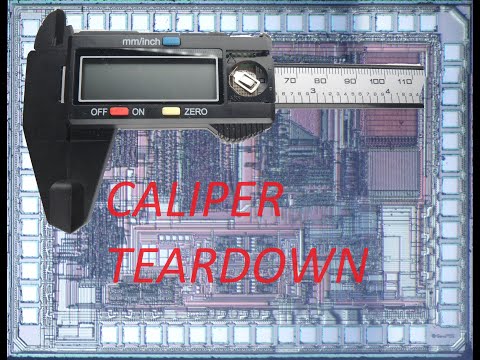
caliper في 30 ثانية
- A caliper is a precision tool with two adjustable jaws used to measure the thickness, diameter, or depth of an object with high accuracy.
- In the automotive world, a caliper is the part of a disc brake system that squeezes the brake pads against the spinning rotor.
- Medical professionals use specialized skinfold calipers to measure body fat by pinching specific areas of the skin to estimate total body composition.
- Whether digital, dial, or Vernier, calipers are essential instruments in engineering, woodworking, and science for ensuring parts fit together perfectly.
The term caliper refers to a sophisticated and highly precise measuring instrument used primarily in engineering, woodworking, metalworking, and medicine. At its core, a caliper is designed to measure the distance between two opposing sides of an object. Unlike a standard ruler, which requires the user to eye the alignment of the object against a scale, a caliper uses two adjustable jaws or legs that physically contact the object, providing a much higher degree of accuracy. This physical contact eliminates the 'parallax error' often associated with visual measurements. In the modern world, you will encounter three main types: the Vernier caliper, the dial caliper, and the digital caliper. Each serves the same fundamental purpose but offers different ways of reading the measurement. Beyond the handheld tool, the word also refers to a critical component of a vehicle's disc brake system. In this context, the brake caliper houses the brake pads and pistons, acting like a clamp that squeezes the pads against the rotor to slow the vehicle down through friction. Furthermore, in medical and fitness contexts, skinfold calipers are used to measure subcutaneous fat by pinching specific areas of the body, allowing professionals to estimate total body fat percentage. Whether you are a machinist checking the diameter of a steel rod to within a thousandth of an inch, a mechanic replacing worn-out brake components, or a researcher measuring the thickness of a fossil, the caliper is an indispensable tool for quantifying the physical world with exactness.
- Mechanical Engineering
- Used to measure the internal and external diameters of pipes, the depth of holes, and the thickness of plates with precision up to 0.01mm.
The machinist carefully adjusted the caliper to ensure the engine piston met the required specifications.
The history of the caliper is quite fascinating, dating back to ancient times. The earliest known caliper was found in the Greek Giglio wreck near the Italian coast, dating to the 6th century BC. This wooden piece already featured a fixed and a movable jaw, demonstrating that the need for precise measurement is as old as civilization itself. During the Renaissance, calipers became more refined, often used by artists and architects to maintain proportions in their work. The invention of the Vernier scale by Pierre Vernier in 1631 revolutionized the tool, allowing for measurements far more precise than the human eye could discern on a standard scale. This innovation paved the way for the Industrial Revolution, where interchangeable parts became a necessity. Without the ability to measure components with a caliper to ensure they were identical, mass production would have been impossible. Today, the digital caliper has largely replaced the Vernier and dial versions in many workshops because it provides an instant, easy-to-read LCD output and can switch between metric and imperial units at the touch of a button. However, many purists and professionals still prefer the dial caliper because it does not require batteries and provides a tactile 'feel' for the measurement that digital screens cannot replicate.
Before starting the brake job, the mechanic checked the caliper for any signs of fluid leakage.
- Automotive Context
- The part of a disc brake system that holds the brake pads and moves them against the rotor.
In the medical field, the caliper takes on a different form. The skinfold caliper is a specialized tool used by nutritionists and sports scientists. It works by measuring the thickness of a fold of skin along with its underlying layer of fat at specific locations on the body, such as the triceps, suprailiac, and thigh. These measurements are then plugged into mathematical formulas to estimate the person's body fat percentage. While not as accurate as a DEXA scan or hydrostatic weighing, it is a portable and cost-effective method for tracking progress over time. In a completely different scientific realm, archaeologists use calipers to measure artifacts, such as the thickness of pottery shards or the length of ancient tools. This data helps them categorize items and understand the manufacturing techniques of past cultures. Even in the world of jewelry, calipers are used to measure the diameter of gemstones and the thickness of ring bands. The versatility of the caliper is truly remarkable; it is a tool that spans across almost every technical and scientific discipline, proving that precision is a universal language.
Using a skinfold caliper, the trainer estimated the athlete's body fat percentage to be twelve percent.
The jeweler used a small brass caliper to measure the width of the diamond setting.
- Scientific Research
- Used by biologists to measure the growth of specimens, such as the diameter of a tree trunk or the length of a shell.
The biologist recorded the caliper measurements of the tortoise's shell to track its growth rate over the year.
Using the word caliper correctly requires an understanding of its dual identity as both a singular and plural noun. In its most common usage as a tool, it is often referred to in the plural form, 'calipers,' much like 'scissors' or 'glasses.' For example, you might say, 'Hand me those calipers,' even if you are referring to a single instrument. However, in technical writing and when referring to the automotive component, the singular form 'caliper' is standard. For instance, 'The front-left brake caliper is sticking.' Understanding this distinction is the first step toward using the word naturally in professional and casual settings. When describing the action of using the tool, you typically use verbs like 'measure,' 'check,' 'verify,' or 'gauge.' You don't 'caliper' something (though it is occasionally used as a verb in very niche circles); instead, you 'take a measurement with a caliper.' This nuance ensures that your speech sounds technically accurate and polished.
- As a Tool (Plural Preference)
- 'I need to buy a new pair of calipers for my woodworking project.' (Similar to 'a pair of pliers').
The engineer used the caliper to verify that the bolt was exactly ten millimeters thick.
In the automotive world, the sentence structure usually focuses on the function or condition of the part. You might hear a mechanic say, 'The caliper piston is seized,' or 'We need to bleed the air out of the caliper.' Here, 'caliper' acts as a noun adjunct, modifying the noun that follows it (piston, housing, assembly). When discussing the tool's precision, you often use adjectives like 'digital,' 'Vernier,' 'dial,' 'outside,' or 'inside.' For example, 'An outside caliper is necessary to measure the exterior diameter of this pipe.' Using these descriptors shows a deeper knowledge of the tool's variety. Furthermore, when talking about the results of a measurement, you might say, 'The caliper reading indicates a deviation of 0.05 inches.' This phrasing is common in quality control and manufacturing reports. It's also important to note that 'caliper' can be used metaphorically in very rare cases to describe something that measures or evaluates, though this is not standard English and should be avoided in most contexts.
After the race, the technicians inspected the brake caliper for heat damage.
- In Quality Control
- 'The technician recorded the caliper measurements in the quality log to ensure compliance with ISO standards.'
When writing about medical applications, the phrasing is quite specific. You 'perform a skinfold test using calipers' or 'take caliper measurements at three sites.' The focus is on the methodology. For instance, 'To ensure reliability, the same practitioner should use the caliper for all subsequent tests.' In this context, the word is almost always plural. If you are discussing the history of measurement, you might use the word in a more descriptive sense: 'The introduction of the sliding caliper allowed for a new era of precision in clockmaking.' Here, the word 'sliding' describes the mechanical action of the tool. Whether you are writing a technical manual, a medical report, or a DIY blog post, using 'caliper' with the correct accompanying verbs and adjectives will make your writing more authoritative and clear. Remember to match the level of technicality to your audience; a mechanic knows what a 'floating caliper' is, but a general reader might just need to know it's a 'brake part.'
The student struggled to read the fine lines on the Vernier caliper during the physics lab.
The carpenter reached for his caliper to check the thickness of the oak plank.
- In Medical Reports
- 'Caliper measurements were taken at the triceps, subscapular, and suprailiac sites to estimate body composition.'
The engineer noted that the caliper was out of calibration and needed to be sent for repair.
The word caliper is most frequently heard in environments where precision and physical maintenance are paramount. If you spend any time in a machine shop or a manufacturing plant, 'caliper' will be part of the daily vocabulary. Machinists use them constantly to check the dimensions of parts they are turning on a lathe or milling. You'll hear phrases like, 'Did you check that with the calipers?' or 'The digital caliper is on the workbench.' In these settings, the word is synonymous with accuracy and quality control. Similarly, in the automotive industry, you will hear the word 'caliper' every single day in repair shops. Mechanics discuss brake calipers as a standard part of brake service. You might hear a service advisor tell a customer, 'Your brake pads are fine, but the caliper is sticking and needs to be replaced.' In this context, the word is associated with safety and vehicle maintenance. It's a 'blue-collar' word that carries a lot of technical weight.
- The Auto Shop
- Mechanics often use the word when explaining brake problems to customers, focusing on the 'clamping' action of the part.
'We need to replace the rear caliper because the piston seal has failed,' the mechanic explained.
Another common place to hear the word is in a gym or a nutritionist's office. When someone is undergoing a body composition assessment, the professional might say, 'I'm going to use these calipers to take a few skinfold measurements.' Here, the word is linked to health, fitness, and data tracking. It can sometimes be a word that causes slight anxiety for clients, as it involves the physical pinching of skin, but it is respected as a standard scientific method. In educational settings, particularly in high school physics or university engineering labs, students hear the word 'caliper' when learning about significant figures and measurement error. Instructors will emphasize the importance of reading the Vernier scale correctly. You'll also hear the word in hobbyist communities—woodworkers, 3D printing enthusiasts, and reloaders (people who make their own ammunition) all rely on calipers to ensure their projects fit together perfectly. In a 3D printing forum, you might see a post saying, 'Use your calipers to measure the filament diameter before you start the print.'
The nutritionist took the caliper from the drawer to begin the body fat assessment.
- The Engineering Lab
- Professors use the word when teaching students about the 'tolerance' of mechanical parts.
You might also encounter the word in more specialized fields like archaeology or paleontology. When a researcher finds a bone or a tool, the first thing they do is take its dimensions with a caliper. In a documentary, you might hear a scientist say, 'The caliper measurements of this skull suggest it belongs to a previously unknown species.' This usage highlights the tool's role in formal scientific inquiry. Even in the arts, specifically in sculpture and pottery, calipers are used to ensure symmetry and proportion. A sculptor might use a large pair of wooden calipers to transfer measurements from a small model to a life-sized statue. In all these diverse fields, the word 'caliper' signals a move from estimation to exactness. It is a word that commands respect because it implies that the person using it cares about the fine details. Whether it's the roar of a garage or the quiet of a museum lab, 'caliper' is the word of choice for those who need to know exactly how big or small something is.
'Pass me the digital caliper; I need to check the thickness of this pottery shard,' the archaeologist said.
The 3D printing enthusiast used a caliper to calibrate the printer's extruder steps.
- The Sculpture Studio
- Artists use calipers to ensure that both sides of a face or body are perfectly symmetrical in their work.
The sculptor used a large wooden caliper to check the width of the statue's shoulders.
One of the most frequent mistakes people make with the word caliper is confusing it with a 'micrometer.' While both are precision measuring tools, they operate differently and offer different levels of accuracy. A caliper is more versatile, capable of measuring inside, outside, and depth dimensions, but it is generally accurate to about 0.01mm or 0.001 inches. A micrometer, on the other hand, is a screw-based tool that is much more precise (often to 0.001mm) but is limited to measuring only one type of dimension (usually outside thickness). Using the word 'caliper' when you actually mean 'micrometer' can lead to confusion in a high-precision engineering environment. Another common error is the spelling; in American English, it is 'caliper,' but in British English, it is often 'calliper.' While both are technically correct depending on where you are, using the 'll' version in a US-based technical report might be flagged as a typo. It is best to stick to the regional standard of your audience.
- Caliper vs. Micrometer
- A caliper is for general precision (0.01mm), while a micrometer is for extreme precision (0.001mm).
Don't call it a caliper if it's a micrometer; the machinist will think you don't know your tools!
In the automotive context, a common mistake is referring to the 'brake caliper' as the 'brake pad' or the 'brake rotor.' While they are all part of the same system, they are distinct components. The caliper is the housing that holds the pads; the pads are the sacrificial material that wears down, and the rotor is the metal disc that spins with the wheel. If you tell a mechanic your 'caliper is worn out' when you actually just need new pads, you might get a much higher repair estimate than necessary, as replacing a caliper is a significantly more expensive and labor-intensive job. Additionally, people often fail to use the plural 'calipers' when referring to the tool. While 'caliper' is acceptable, 'a pair of calipers' is the more traditional and natural phrasing in English. Just as you wouldn't say 'I need a scissor,' saying 'I need a caliper' can sound slightly 'off' to a native speaker, although it is becoming more common in modern technical settings.
The novice mechanic mistakenly ordered a new caliper when only the brake pads needed replacement.
- Grammatical Number
- Remember: 'The calipers are on the table' (plural verb) is usually better than 'The caliper is on the table.'
A more technical mistake involves the use of digital calipers. Many users forget to 'zero' the tool before taking a measurement. If the jaws are not completely closed and the 'zero' button pressed, every subsequent measurement will be incorrect by the amount of the initial gap. This is a procedural error that can lead to significant manufacturing defects. Furthermore, people sometimes use calipers as a substitute for a wrench or a scribe. Using the sharp jaws of a caliper to mark metal or to tighten a small nut will damage the precision-ground surfaces of the tool, rendering it useless for accurate measurement. A caliper is a delicate instrument, not a multi-tool. Finally, in the medical field, using the wrong type of caliper for skinfold testing (like using a cheap plastic one instead of a calibrated Harpenden caliper) can lead to wildly inaccurate body fat estimates. Precision requires the right tool for the specific job, and calling any measuring device a 'caliper' is a broad stroke that lacks professional accuracy.
He ruined his expensive Mitutoyo caliper by using the tips to scratch a line on the steel plate.
The student forgot to zero the digital caliper, resulting in a series of faulty data points.
- Misuse as a Scribe
- Never use the sharp points of a caliper to mark or scratch surfaces; this dulls the measuring edge.
Always ensure the caliper is clean; even a speck of dust between the jaws can throw off your measurement.
When looking for alternatives to the word caliper, it is essential to consider the specific context, as the word covers both a tool and a mechanical part. If you are talking about measurement, the most common 'cousin' of the caliper is the micrometer. As discussed, a micrometer is more precise but less versatile. Another related tool is the divider. While they look similar, dividers have two sharp points and are used for transferring distances or scribing circles, rather than reading a measurement off a scale. A gauge (or gage) is another broad term often used in place of caliper. For example, a 'feeler gauge' measures small gaps, and a 'depth gauge' measures the depth of a hole. While a caliper can do some of these things, a dedicated gauge is often used for repetitive tasks in manufacturing. In a more general sense, you might use words like ruler, yardstick, or tape measure, but these lack the precision implied by 'caliper.'
- Caliper vs. Divider
- Calipers measure and provide a value; dividers transfer a distance from one place to another without a scale.
For this task, a micrometer is a better choice than a caliper because we need sub-micron accuracy.
In the automotive realm, there aren't many direct synonyms for a 'brake caliper' because it is a very specific part. However, you might hear it referred to as part of the braking assembly or the clamp. In high-performance contexts, you might hear about 'fixed calipers' versus 'floating calipers.' If you are looking for a more descriptive term, you could call it the 'hydraulic actuator' of the brake system, though this is overly formal and rarely used outside of engineering textbooks. In the medical field, 'skinfold calipers' are sometimes simply called fat testers or body fat pincers in informal settings, but 'caliper' remains the professional standard. When discussing the 'thickness' of something, you might use the word caliber. While 'caliper' and 'caliber' are etymologically related, 'caliber' usually refers to the internal diameter of a gun barrel or the quality of someone's character, whereas 'caliper' is the tool used to measure that diameter. Confusing the two is a common linguistic slip-up.
The carpenter used a marking gauge instead of a caliper to layout the joinery.
- Caliper vs. Caliber
- Caliper is the tool; Caliber is the measurement or quality (e.g., 'a 50-caliber rifle' or 'a person of high caliber').
If you are in a situation where you need to measure something but don't have a caliper, you might use a sliding T-bevel (for angles) or a combination square. These are common in woodworking but don't offer the same 'squeeze' measurement that a caliper provides. In the world of digital design and 3D modeling, there are 'virtual calipers'—software tools that allow you to measure the distance between two points on a 3D model. While not physical tools, they perform the exact same logical function. Finally, in the context of leg braces (an older usage of the word), a 'caliper' is a type of orthosis or brace. You might see this in historical medical texts or when discussing treatments for polio. In modern medicine, 'brace' or 'orthotic' has largely replaced this usage. Choosing the right word—whether it's micrometer, gauge, or caliper—shows that you understand the nuances of the task at hand and the tools required to complete it with professional precision.
The doctor recommended a custom caliper to help the patient walk after the injury.
The engineer preferred the dial caliper over the digital one for its reliability in cold weather.
- Measuring Tape
- A measuring tape is for long distances (meters/feet); a caliper is for small, precise distances (millimeters/inches).
The machinist used a thread gauge to check the screw, but used a caliper for the overall length.
How Formal Is It?
حقيقة ممتعة
The earliest known caliper was found in a Greek shipwreck from the 6th century BC, showing that humans have valued precision for over 2,500 years.
دليل النطق
- Pronouncing it like 'cal-EYE-per'
- Confusing it with 'caliber'
- Adding an extra 'i' like 'calipier'
- Swapping the 'l' and 'p' sounds
- Mumbling the middle 'i' sound
مستوى الصعوبة
Common in technical texts but rare in general fiction.
Requires knowledge of technical contexts to use naturally.
Easy to pronounce but specific to certain hobbies or jobs.
Clear pronunciation, but can be confused with 'caliber'.
ماذا تتعلّم بعد ذلك
المتطلبات الأساسية
تعلّم لاحقاً
متقدم
قواعد يجب معرفتها
Plural nouns for single items
Just like 'scissors', we often say 'a pair of calipers'.
Noun adjuncts
In 'brake caliper', 'brake' describes the type of caliper.
Passive voice in technical writing
The measurement was taken with a digital caliper.
Zero-conditional for instructions
If you use a digital caliper, always zero it first.
Adverbs of manner
Measure the object carefully with the caliper.
أمثلة حسب المستوى
I use a caliper to measure the ball.
J'utilise un pied à coulisse pour mesurer la balle.
Simple present tense with a direct object.
The caliper is made of metal.
Le pied à coulisse est en métal.
Subject + is + adjective phrase.
Can you see the numbers on the caliper?
Peux-tu voir les chiffres sur le pied à coulisse ?
Interrogative sentence with 'can'.
A caliper is better than a ruler for this.
Un pied à coulisse est meilleur qu'une règle pour cela.
Comparative structure.
He has a new digital caliper.
Il a un nouveau pied à coulisse numérique.
Adjective 'digital' modifies the noun.
Put the caliper back in the box.
Remets le pied à coulisse dans la boîte.
Imperative sentence.
The caliper measures the width.
Le pied à coulisse mesure la largeur.
Third person singular verb ending in -s.
This caliper is very small.
Ce pied à coulisse est très petit.
Demonstrative adjective 'this'.
The mechanic is checking the brake caliper.
Le mécanicien vérifie l'étrier de frein.
Present continuous tense.
You need a pair of calipers for your project.
Tu as besoin d'une paire de pieds à coulisse pour ton projet.
Using 'a pair of' with the plural form.
The caliper showed that the pipe was 2cm wide.
Le pied à coulisse a montré que le tuyau faisait 2 cm de large.
Past simple tense.
She used a skinfold caliper to measure her progress.
Elle a utilisé une pince à plis cutanés pour mesurer ses progrès.
Compound noun 'skinfold caliper'.
Don't drop the caliper, or it might break.
Ne fais pas tomber le pied à coulisse, sinon il pourrait se casser.
Negative imperative and conditional 'might'.
Is this a Vernier caliper or a dial one?
Est-ce un pied à coulisse Vernier ou à cadran ?
Alternative question.
The caliper's jaws are very sharp.
Les mâchoires du pied à coulisse sont très tranchantes.
Possessive form with 's.
I bought these calipers at the hardware store.
J'ai acheté ces pieds à coulisse au magasin de bricolage.
Demonstrative plural 'these'.
The engineer verified the diameter using a digital caliper.
L'ingénieur a vérifié le diamètre à l'aide d'un pied à coulisse numérique.
Using a participle phrase 'using a digital caliper'.
A sticking brake caliper can cause the car to pull to one side.
Un étrier de frein grippé peut faire dévier la voiture d'un côté.
Gerund 'sticking' as an adjective.
Please record the caliper reading in your notebook.
Veuillez noter la lecture du pied à coulisse dans votre carnet.
Polite imperative.
The thickness of the metal plate was measured with a caliper.
L'épaisseur de la plaque métallique a été mesurée avec un pied à coulisse.
Passive voice.
He adjusted the caliper until it fit snugly around the cylinder.
Il a ajusté le pied à coulisse jusqu'à ce qu'il s'adapte parfaitement autour du cylindre.
Subordinate clause starting with 'until'.
Calipers are essential for anyone working with precision parts.
Les pieds à coulisse sont essentiels pour quiconque travaille avec des pièces de précision.
Plural subject with a generalizing 'anyone'.
The internal caliper is used to measure the inside of the tube.
Le pied à coulisse d'intérieur est utilisé pour mesurer l'intérieur du tube.
Specific technical term 'internal caliper'.
Before you start, make sure the caliper is zeroed correctly.
Avant de commencer, assurez-vous que le pied à coulisse est correctement mis à zéro.
Complex sentence with an introductory clause.
The technician noticed that the caliper housing was cracked.
Le technicien a remarqué que le boîtier de l'étrier était fissuré.
Noun + noun compound 'caliper housing'.
Using a caliper eliminates the errors associated with standard rulers.
L'utilisation d'un pied à coulisse élimine les erreurs associées aux règles standard.
Gerund phrase as the subject.
The caliper's precision is vital for the success of the assembly.
La précision du pied à coulisse est vitale pour le succès de l'assemblage.
Abstract noun 'precision' as the focus.
We need to bleed the brakes to remove air from the caliper.
Nous devons purger les freins pour éliminer l'air de l'étrier.
Infinitive of purpose 'to remove'.
The researcher used a caliper to document the fossil's dimensions.
Le chercheur a utilisé un pied à coulisse pour documenter les dimensions du fossile.
Past simple with a specific professional context.
A dial caliper provides a visual representation of the measurement.
Un pied à coulisse à cadran fournit une représentation visuelle de la mesure.
Descriptive sentence with technical detail.
The caliper measurements were consistent across all ten samples.
Les mesures au pied à coulisse étaient cohérentes sur les dix échantillons.
Adjective 'consistent' used in a scientific context.
Ensure the caliper is held perpendicular to the object being measured.
Assurez-vous que le pied à coulisse est tenu perpendiculairement à l'objet mesuré.
Passive voice within an imperative structure.
The caliper's resolution allows for measurements down to ten microns.
La résolution du pied à coulisse permet des mesures allant jusqu'à dix microns.
Technical noun 'resolution'.
Thermal expansion can significantly affect caliper readings in extreme temperatures.
La dilatation thermique peut affecter considérablement les lectures du pied à coulisse à des températures extrêmes.
Modal verb 'can' expressing possibility.
The floating caliper design is common in most modern passenger vehicles.
La conception de l'étrier flottant est courante dans la plupart des véhicules de tourisme modernes.
Compound adjective 'floating caliper'.
The archaeologist meticulously recorded each caliper measurement in the field log.
L'archéologue a méticuleusement noté chaque mesure au pied à coulisse dans le journal de bord.
Adverb 'meticulously' modifying the verb.
Calibration of the caliper is required annually to maintain quality standards.
L'étalonnage du pied à coulisse est requis chaque année pour maintenir les normes de qualité.
Passive voice with an adverb of frequency.
The caliper's jaws must be perfectly parallel to ensure an accurate reading.
Les mâchoires du pied à coulisse doivent être parfaitement parallèles pour garantir une lecture précise.
Modal 'must' expressing necessity.
A high-quality caliper is an investment that will last a lifetime if maintained.
Un pied à coulisse de haute qualité est un investissement qui durera toute une vie s'il est entretenu.
Conditional 'if' clause.
The discrepancy was attributed to a faulty caliper used during the initial phase.
L'écart a été attribué à un pied à coulisse défectueux utilisé lors de la phase initiale.
Passive voice 'was attributed to'.
The machinist's reliance on the caliper underscored the importance of manual precision.
La dépendance du machiniste à l'égard du pied à coulisse a souligné l'importance de la précision manuelle.
Abstract subject 'reliance' and verb 'underscored'.
Advancements in digital caliper technology have integrated wireless data transmission.
Les progrès de la technologie des pieds à coulisse numériques ont intégré la transmission de données sans fil.
Present perfect tense with complex subject.
The caliper-like grip of the robotic arm allowed for delicate handling of the specimens.
La prise de type pied à coulisse du bras robotisé permettait une manipulation délicate des spécimens.
Simile-like adjective 'caliper-like'.
He spoke with a caliper-like precision, measuring every word before it left his mouth.
Il parlait avec une précision de pied à coulisse, mesurant chaque mot avant qu'il ne sorte de sa bouche.
Metaphorical usage of the word.
The structural integrity of the caliper is paramount in high-performance racing applications.
L'intégrité structurelle de l'étrier est primordiale dans les applications de course de haute performance.
Formal academic tone.
The study utilized skinfold calipers to assess the correlation between adiposity and metabolic health.
L'étude a utilisé des pinces à plis cutanés pour évaluer la corrélation entre l'adiposité et la santé métabolique.
Academic vocabulary like 'utilized' and 'correlation'.
The artisan's use of a brass caliper added a touch of historical authenticity to the workshop.
L'utilisation par l'artisan d'un pied à coulisse en laiton a ajouté une touche d'authenticité historique à l'atelier.
Complex possessive structure.
The caliper's role in the industrialization of the 19th century cannot be overstated.
Le rôle du pied à coulisse dans l'industrialisation du XIXe siècle ne saurait être surestimé.
Passive modal 'cannot be overstated'.
تلازمات شائعة
العبارات الشائعة
— The standard way to refer to the tool, even if it is one item.
Hand me that pair of calipers from the drawer.
— To reset a digital caliper so it reads 0.00 when closed.
Always zero the caliper before you start measuring.
— Doing something with extreme accuracy and care.
She planned the event with caliper-like precision.
— A common car problem where the brake caliper does not release.
A stuck caliper can cause your brakes to overheat.
— Using the smaller jaws of a caliper to measure a hole.
The caliper is great for taking an inside measurement of the pipe.
— Using the tail of the caliper to measure how deep a hole is.
The caliper's depth gauge showed the hole was 10mm deep.
— The part of the caliper that moves to touch the object.
The sliding jaw should move smoothly along the beam.
— The small screw used to hold the caliper in place.
Tighten the locking screw to save the measurement.
— A method of estimating body fat percentage.
The athlete underwent a caliper body fat test yesterday.
— The part of the caliper that does not move.
Hold the fixed jaw against the side of the object.
يُخلط عادةً مع
Caliber is the measurement; caliper is the tool used to take it.
A micrometer is more precise but less versatile than a caliper.
Dividers mark distances; calipers measure them.
تعبيرات اصطلاحية
— A common proverb in woodworking that implies using tools like calipers carefully.
I used my calipers to measure twice, cut once, and the joint fit perfectly.
informal— Extremely precise, often implying the use of a caliper.
The parts were matched to the millimeter.
neutral— To argue about very small, unimportant details (like a caliper measurement).
Let's not split hairs over a 0.01mm difference.
informal— Completely accurate.
The measurement was dead on according to the digital caliper.
informal— Meeting the required specifications for size.
The caliper showed the part was within tolerance.
technical— To make small adjustments for better accuracy.
He used the caliper to fine-tune the machine's settings.
neutral— A sarcastic way to say something is not precise enough (the opposite of caliper work).
That measurement isn't perfect, but it's close enough for government work.
slang— A general principle (the opposite of a precise caliper measurement).
As a rule of thumb, use a caliper for anything under an inch.
informalسهل الخلط
They sound almost identical.
Caliber refers to the size of a gun's bore or the quality of a person. Caliper is the physical tool.
The caliber of the rifle is .22, which I measured with my caliper.
Singular vs plural usage.
The tool is often called 'calipers' (plural), while the brake part is usually 'caliper' (singular).
I used my calipers to check the brake caliper.
Both are precision tools.
Calipers are for general use (inside/outside/depth); micrometers are for extreme outside precision.
Use the caliper for the pipe, but the micrometer for the shim.
Both measure things.
A gauge is often a fixed size (like a go/no-go gauge); a caliper is adjustable.
The feeler gauge checks the gap, but the caliper checks the thickness.
They look similar.
A compass draws circles; a caliper measures diameters.
Use the compass for the drawing and the caliper for the physical part.
أنماط الجُمل
I have a [tool].
I have a caliper.
Use the [tool] to [verb].
Use the caliper to measure the pipe.
The [part] is [adjective].
The brake caliper is rusty.
By using a [tool], you can [verb].
By using a caliper, you can get an exact measurement.
The [noun] of the [tool] allows for [noun].
The resolution of the caliper allows for extreme precision.
The [noun] was contingent upon [noun].
The assembly's success was contingent upon caliper accuracy.
Make sure to [verb] the [tool].
Make sure to zero the caliper.
The [noun] was measured at [number].
The thickness was measured at 5mm with a caliper.
عائلة الكلمة
الأسماء
الأفعال
الصفات
مرتبط
كيفية الاستخدام
Common in technical, automotive, and medical fields; rare in everyday conversation.
-
Using a caliper as a wrench.
→
Use a wrench for nuts and a caliper for measuring.
Using a caliper to tighten things will bend the jaws and ruin the precision.
-
Forgetting to zero the digital display.
→
Close jaws and press 'Zero' before every session.
If you don't zero it, your measurements will be offset by whatever the last reading was.
-
Confusing 'caliper' with 'caliber'.
→
Use 'caliper' for the tool and 'caliber' for the size/quality.
They sound the same but have different meanings and spellings.
-
Measuring at an angle.
→
Keep the jaws perpendicular to the object.
Measuring at an angle creates a 'cosine error,' making the object seem larger than it is.
-
Thinking a brake caliper is the same as a brake pad.
→
The caliper holds the pads.
Replacing a caliper is much more expensive than just replacing pads; don't confuse the two when talking to a mechanic.
نصائح
Zero Every Time
Always close the jaws and press the zero button on a digital caliper before you start. Even a tiny bit of dust can make your measurement wrong by 0.1mm.
Keep it Clean
Wipe the jaws of your caliper with a clean cloth before measuring. A single hair or a drop of oil between the jaw and the object will change the result.
Light Pressure
Don't squeeze the caliper too hard. The metal can actually flex slightly, which will give you a smaller reading than the object actually is. Use a light, consistent touch.
Leave a Gap
When you put your caliper away, leave the jaws open just a tiny bit. If the temperature changes, the metal will expand and contract. If the jaws are locked tight, it can damage the internal gears.
Not a Tool for Prying
Never use the sharp tips of your caliper to pry things open or to scratch marks into metal. This will dull the edges and make the tool inaccurate for measuring.
Check the Seals
If you are working on a brake caliper, always check the rubber seals for cracks. A leaking caliper can lead to brake failure, which is very dangerous.
Practice Reading Verniers
If you have a Vernier caliper, practice measuring things you already know the size of (like a coin) to make sure you are reading the scale correctly.
Buy Quality
For calipers, you get what you pay for. A cheap $10 caliper will lose its accuracy quickly. If you plan to use it often, spend a bit more on a stainless steel version.
Be Consistent
When using skinfold calipers, always take measurements on the same side of the body (usually the right side) to keep your data consistent over time.
Parallel is Key
Make sure the jaws of the caliper are perfectly parallel to the object. If you hold the tool at an angle, the measurement will be larger than the actual size.
احفظها
وسيلة تذكّر
Think of a 'CALiper' as a tool that 'CALculates' the 'PERfect' size.
ربط بصري
Imagine a crab's claw (the jaws) gently pinching a pearl to see how big it is.
Word Web
تحدٍّ
Try to find three things in your house that are exactly the same thickness using a caliper.
أصل الكلمة
The word 'caliper' is a corruption of 'caliber,' which entered English in the late 16th century. It originally referred to the internal diameter of a gun barrel.
المعنى الأصلي: A tool for measuring the caliber of a gun.
It traces back to the French 'calibre' and possibly further back to the Arabic 'qalib,' meaning a 'mold' or 'form' for casting metal.السياق الثقافي
Be careful when using skinfold calipers in a medical context, as it involves physical contact and can be sensitive for people with body image concerns.
Commonly found in every 'Dad's toolbox' or professional garage across the US, UK, and Australia.
تدرّب في الحياة الواقعية
سياقات واقعية
Auto Repair
- bleed the caliper
- seized caliper
- caliper pins
- brake caliper bracket
Engineering
- digital caliper reading
- within tolerance
- zero the tool
- outside diameter
Fitness
- skinfold test
- body fat percentage
- caliper sites
- pinch the skin
Woodworking
- check the thickness
- transfer the measurement
- fit the joint
- marking gauge
Science Lab
- record the data
- measurement error
- significant figures
- Vernier scale
بدايات محادثة
"Have you ever used a digital caliper for a DIY project?"
"Do you know how a brake caliper actually stops a car?"
"What is the most precise tool you have ever used in your life?"
"Would you trust a skinfold caliper test for your body fat percentage?"
"Why do you think engineers prefer calipers over regular rulers?"
مواضيع للكتابة اليومية
Describe a time when you needed to measure something very accurately. What tool did you use?
If you were an engineer, what is the first thing you would measure with a brand-new caliper?
Research the difference between a Vernier and a digital caliper. Which one would you prefer and why?
Write a short story about a person who finds a mysterious golden caliper in an ancient ruin.
Explain how the invention of precision tools like the caliper changed the way we build things.
الأسئلة الشائعة
10 أسئلةA caliper is used to measure the physical dimensions of an object, such as its thickness, width, or depth, with very high precision. It is common in engineering, woodworking, and car repair. For example, you might use it to see if a bolt is the right size for a hole.
To read a Vernier caliper, you first look at the main scale to see where the zero mark of the Vernier scale sits. Then, you find the line on the Vernier scale that perfectly aligns with a line on the main scale. You add these two numbers together to get your final, precise measurement.
A brake caliper is a part of a car's disc brake system. It acts like a clamp that holds the brake pads. When you step on the brake pedal, the caliper squeezes the pads against the rotor (the spinning disc on the wheel) to slow the car down using friction.
Both are used! When referring to the measuring tool, it is often called 'a pair of calipers' (plural), similar to 'scissors'. However, when referring to the car part or in technical engineering contexts, the singular 'caliper' is more common. Both are generally understood.
A digital caliper is better because it eliminates 'parallax error'—the mistake you make when looking at a ruler from an angle. It also has a much higher resolution, often showing measurements down to 0.01mm, which is impossible to see on a standard ruler.
Zeroing a digital caliper means pressing a button while the jaws are completely closed so the screen reads 0.00. This ensures that your measurement starts from exactly zero, which is necessary for an accurate reading. You should do this every time you turn the tool on.
Yes, but you need a specific type called a 'skinfold caliper.' You use it to pinch a fold of skin and fat at certain points on your body. These measurements are then used in a formula to estimate your total body fat percentage.
Keep them clean and dry. Wipe the measuring surfaces with a soft cloth after use. Don't drop them, as this can ruin their accuracy. For digital ones, remove the battery if you won't use them for a long time to prevent leaking.
Outside calipers have jaws that curve inward to wrap around an object (like a rod). Inside calipers have legs that point outward to measure the width of a hole or the space between two surfaces. Most modern sliding calipers can do both.
Plastic calipers are okay for basic DIY projects or crafts, but they are not accurate enough for professional engineering or automotive work. Metal calipers (usually stainless steel) are much more stable and provide much more reliable measurements.
اختبر نفسك 200 أسئلة
Explain how to use a digital caliper in three steps.
Well written! Good try! Check the sample answer below.
Describe the difference between a brake caliper and a measuring caliper.
Well written! Good try! Check the sample answer below.
Write a short paragraph about why precision is important in engineering.
Well written! Good try! Check the sample answer below.
Compare and contrast a Vernier caliper and a digital caliper.
Well written! Good try! Check the sample answer below.
Discuss the historical significance of the caliper in the Industrial Revolution.
Well written! Good try! Check the sample answer below.
Write a dialogue between a mechanic and a customer about a stuck brake caliper.
Well written! Good try! Check the sample answer below.
Explain why 'zeroing' a caliper is necessary for accurate data.
Well written! Good try! Check the sample answer below.
Describe the physical appearance of a dial caliper.
Well written! Good try! Check the sample answer below.
How would you use a caliper in a woodworking project?
Well written! Good try! Check the sample answer below.
Discuss the limitations of using skinfold calipers for body fat estimation.
Well written! Good try! Check the sample answer below.
Write a technical specification for a high-precision digital caliper.
Well written! Good try! Check the sample answer below.
Explain the concept of 'parallax error' and how a caliper avoids it.
Well written! Good try! Check the sample answer below.
Describe the maintenance routine for a set of professional calipers.
Well written! Good try! Check the sample answer below.
Write a short story about a student's first time using a Vernier caliper in a lab.
Well written! Good try! Check the sample answer below.
Explain the etymology of the word 'caliper'.
Well written! Good try! Check the sample answer below.
How does a brake caliper function within a hydraulic system?
Well written! Good try! Check the sample answer below.
What are the advantages of using stainless steel for measuring tools?
Well written! Good try! Check the sample answer below.
Describe the difference between internal and external measurements.
Well written! Good try! Check the sample answer below.
Write a review for a digital caliper you recently 'purchased'.
Well written! Good try! Check the sample answer below.
Discuss the role of calipers in modern quality control processes.
Well written! Good try! Check the sample answer below.
Describe a caliper to someone who has never seen one.
Read this aloud:
قلت:
Speech recognition is not supported in your browser. Try Chrome or Edge.
Explain why you might choose a digital caliper over a Vernier one.
Read this aloud:
قلت:
Speech recognition is not supported in your browser. Try Chrome or Edge.
Tell a story about a time you fixed something using a caliper.
Read this aloud:
قلت:
Speech recognition is not supported in your browser. Try Chrome or Edge.
Argue for the importance of high-quality tools in a professional workshop.
Read this aloud:
قلت:
Speech recognition is not supported in your browser. Try Chrome or Edge.
Discuss the impact of precision measurement on the history of technology.
Read this aloud:
قلت:
Speech recognition is not supported in your browser. Try Chrome or Edge.
Explain the process of taking a skinfold measurement to a client.
Read this aloud:
قلت:
Speech recognition is not supported in your browser. Try Chrome or Edge.
Describe the symptoms of a failing brake caliper in a car.
Read this aloud:
قلت:
Speech recognition is not supported in your browser. Try Chrome or Edge.
How would you teach a student to read a Vernier scale?
Read this aloud:
قلت:
Speech recognition is not supported in your browser. Try Chrome or Edge.
What are the pros and cons of digital vs. analog measuring tools?
Read this aloud:
قلت:
Speech recognition is not supported in your browser. Try Chrome or Edge.
Describe the feeling of using a high-quality precision instrument.
Read this aloud:
قلت:
Speech recognition is not supported in your browser. Try Chrome or Edge.
Why is 'zeroing' a tool so important in science?
Read this aloud:
قلت:
Speech recognition is not supported in your browser. Try Chrome or Edge.
Discuss the relationship between 'caliper' and 'caliber'.
Read this aloud:
قلت:
Speech recognition is not supported in your browser. Try Chrome or Edge.
How do you maintain a caliper to ensure it lasts a long time?
Read this aloud:
قلت:
Speech recognition is not supported in your browser. Try Chrome or Edge.
What other tools are often used alongside a caliper?
Read this aloud:
قلت:
Speech recognition is not supported in your browser. Try Chrome or Edge.
Explain the concept of 'tolerance' in manufacturing.
Read this aloud:
قلت:
Speech recognition is not supported in your browser. Try Chrome or Edge.
Describe the different types of measurements a caliper can take.
Read this aloud:
قلت:
Speech recognition is not supported in your browser. Try Chrome or Edge.
Why is stainless steel a good material for calipers?
Read this aloud:
قلت:
Speech recognition is not supported in your browser. Try Chrome or Edge.
Talk about a hobby where a caliper is an essential tool.
Read this aloud:
قلت:
Speech recognition is not supported in your browser. Try Chrome or Edge.
How has digital technology changed the way we measure things?
Read this aloud:
قلت:
Speech recognition is not supported in your browser. Try Chrome or Edge.
What would happen if we didn't have precise measuring tools?
Read this aloud:
قلت:
Speech recognition is not supported in your browser. Try Chrome or Edge.
Listen to the description: 'It has two jaws, a sliding scale, and a depth rod.' What is it?
Listen to the mechanic: 'The piston in the front-right caliper is stuck.' What part is broken?
Listen to the instructions: 'First, close the jaws. Then, press the zero button.' What tool is being used?
Listen to the scientist: 'The caliper reading indicates a deviation of 0.05mm.' What is the deviation?
Listen to the history lecture: 'The earliest caliper was found in a 6th-century BC shipwreck.' How old is the tool?
Listen to the fitness coach: 'We'll use these calipers for a three-site skinfold test.' What is the test for?
Listen to the engineer: 'This Vernier caliper has a resolution of 0.02 millimeters.' What is the resolution?
Listen to the warning: 'Don't use the caliper tips to scratch the metal.' What should you avoid?
Listen to the car review: 'The new model features six-piston calipers for better braking.' How many pistons are there?
Listen to the lab tech: 'Check the calibration date on the caliper case.' What should you check?
Listen to the definition: 'A precision instrument for measuring internal or external dimensions.' What is being defined?
Listen to the problem: 'The caliper is reading 0.03 even when closed.' What needs to be done?
Listen to the comparison: 'While a ruler is fine for rough work, a caliper is needed for precision.' When is a caliper needed?
Listen to the anatomy lecture: 'The doctor used a caliper to measure the bone's width.' What was measured?
Listen to the workshop tip: 'Store your calipers with a small gap between the jaws.' How should they be stored?
/ 200 correct
Perfect score!
Summary
The caliper is the ultimate tool for precision; whether you are measuring a tiny engine part or maintaining your car's brakes, it ensures that every millimeter counts. For example, a machinist uses a caliper to ensure a bolt is exactly 10.05mm.
- A caliper is a precision tool with two adjustable jaws used to measure the thickness, diameter, or depth of an object with high accuracy.
- In the automotive world, a caliper is the part of a disc brake system that squeezes the brake pads against the spinning rotor.
- Medical professionals use specialized skinfold calipers to measure body fat by pinching specific areas of the skin to estimate total body composition.
- Whether digital, dial, or Vernier, calipers are essential instruments in engineering, woodworking, and science for ensuring parts fit together perfectly.
Zero Every Time
Always close the jaws and press the zero button on a digital caliper before you start. Even a tiny bit of dust can make your measurement wrong by 0.1mm.
Keep it Clean
Wipe the jaws of your caliper with a clean cloth before measuring. A single hair or a drop of oil between the jaw and the object will change the result.
Light Pressure
Don't squeeze the caliper too hard. The metal can actually flex slightly, which will give you a smaller reading than the object actually is. Use a light, consistent touch.
Leave a Gap
When you put your caliper away, leave the jaws open just a tiny bit. If the temperature changes, the metal will expand and contract. If the jaws are locked tight, it can damage the internal gears.