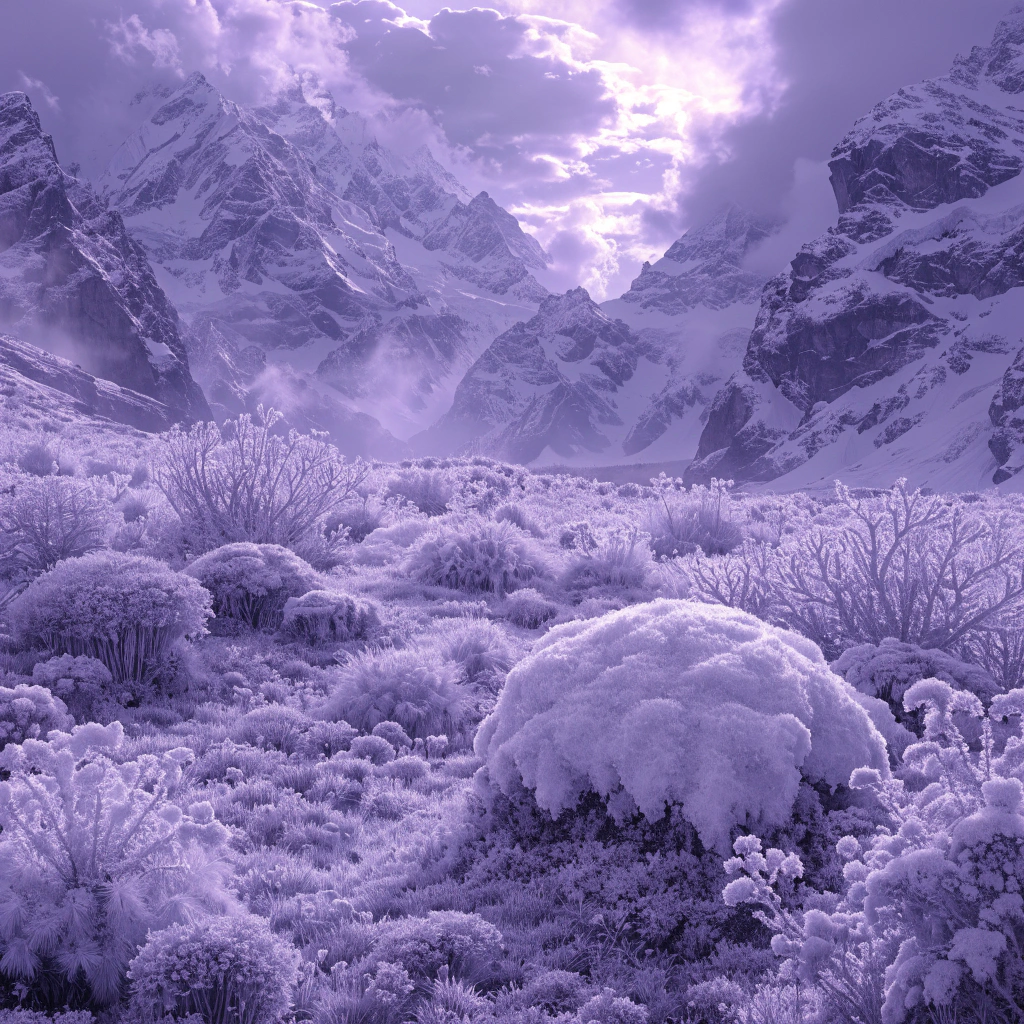
The Beautiful Valley of Flowers
The Valley of Flowers is a beautiful place in India. It is high in the mountains. This park is very famous around the world. It is a special place for nature and animals.
In the summer, many different flowers grow here. You can see red, yellow, and blue flowers. The valley is very colorful and bright. It looks like a beautiful dream. Many people visit the park every year to take photos.
The park is very big. You can walk on the small paths. You can see big mountains and green grass. It is a quiet and happy place for everyone.
Grammatik-Spotlight
Muster: Present Simple 'Be'
"The Valley of Flowers is a beautiful place in India."
We use 'is' to describe a single place or thing. It helps us talk about facts and descriptions in the present.
Muster: Modal Verb 'Can'
"You can see red, yellow, and blue flowers."
We use 'can' to talk about what is possible. After 'can', we always use the base form of the verb without 'to'.
Teste dein Verständnis
10 Fragen · A1 Anfänger · 1 kostenlose Vorschau
Teste, was du aus diesem Artikel gelernt hast. Beantworte alle Fragen und sammle XP!
Where is the Valley of Flowers?
Möchtest du das Quiz beenden?
9 weitere Fragen warten auf dich. Registriere dich kostenlos, um das vollständige Quiz freizuschalten und XP zu sammeln!
Kostenlos registrierenHast du schon ein Konto? Anmelden
Gut gemacht!
Weiter üben!
Bereits abgeschlossen — keine zusätzlichen XP
Registriere dich, um XP zu verdienenFragenübersicht
Where is the Valley of Flowers?
Deine Antwort:
Richtige Antwort: India
The flowers grow in the winter.
Deine Antwort:
Richtige Antwort: Falsch
What is a 'park'?
Deine Antwort:
Richtige Antwort: A large area of grass and trees
The valley is very _____ and bright.
Deine Antwort:
Richtige Antwort: colorful
Das Tal der Blumen: Ein magischer Ort im Himalaya
Der Nationalpark 'Tal der Blumen' liegt hoch im Himalaya-Gebirge in Indien. Es ist ein magischer Ort, der wie ein Märchen aussieht. Das Tal ist etwa 87 Quadratkilometer groß. Es gibt dort hunderte verschiedene Blumenarten. Seit 1982 gehört der Park zum UNESCO-Weltnaturerbe.
Ein englischer Bergsteiger namens Frank S. Smythe fand das Tal im Jahr 1931. Er war auf dem Rückweg von einer Bergtour und sah plötzlich das bunte Meer aus Blumen. Er war so begeistert, dass er ein Buch darüber schrieb.
Im Park leben auch seltene Tiere, wie zum Beispiel der Schneeleopard oder der Braunbär. Besucher können das Tal nur zwischen Juni und Oktober besuchen. Im Winter liegt dort zu viel Schnee. Die Wanderung ist ein bisschen anstrengend, aber die Aussicht ist viel schöner als an anderen Orten. Viele Menschen kommen dorthin, weil sie die Ruhe und die Natur lieben.
Grammatik-Spotlight
Muster: Der Komparativ
"Die Aussicht ist viel schöner als an anderen Orten."
Man benutzt den Komparativ, um zwei Dinge zu vergleichen. Wir hängen meistens '-er' an das Adjektiv und benutzen danach das Wort 'als'.
Muster: Kausalsätze mit 'weil'
"Viele Menschen kommen dorthin, weil sie die Ruhe und die Natur lieben."
Das Wort 'weil' erklärt einen Grund oder eine Ursache. In einem Nebensatz mit 'weil' steht das konjugierte Verb immer ganz am Ende.
Teste dein Verständnis
11 Fragen · A2 Grundkenntnisse · 1 kostenlose Vorschau
Teste, was du aus diesem Artikel gelernt hast. Beantworte alle Fragen und sammle XP!
Wo liegt der Nationalpark 'Tal der Blumen'?
Möchtest du das Quiz beenden?
10 weitere Fragen warten auf dich. Registriere dich kostenlos, um das vollständige Quiz freizuschalten und XP zu sammeln!
Kostenlos registrierenHast du schon ein Konto? Anmelden
Gut gemacht!
Weiter üben!
Bereits abgeschlossen — keine zusätzlichen XP
Registriere dich, um XP zu verdienenFragenübersicht
Wo liegt der Nationalpark 'Tal der Blumen'?
Deine Antwort:
Richtige Antwort: Im Himalaya-Gebirge in Indien
Der Park gehört seit 1982 zum UNESCO-Weltnaturerbe.
Deine Antwort:
Richtige Antwort: Richtig
Was bedeutet das Wort 'selten'?
Deine Antwort:
Richtige Antwort: Nicht oft
Im Winter liegt dort zu viel _____.
Deine Antwort:
Richtige Antwort: Schnee
Wer fand das Tal im Jahr 1931?
Deine Antwort:
Richtige Antwort: Ein englischer Bergsteiger
Das Tal der Blumen: Ein verstecktes Paradies im Himalaya
Der Nationalpark „Tal der Blumen“ befindet sich in den hohen Regionen des Garhwal-Himalayas im indischen Bundesstaat Uttarakhand. Dieses lebendige alpine Wiesengebiet erstreckt sich über eine Fläche von 87 Quadratkilometern und ist offiziell als UNESCO-Weltnaturerbe anerkannt worden. Wegen seiner außergewöhnlichen Artenvielfalt und der atemberaubenden Schönheit wird das Tal oft mit einer Szene aus einem Märchen verglichen. Es ist ein Ort, der durch seine Stille und Farben besticht.
Die internationale Bekanntheit des Tals begann im Jahr 1931, als der britische Bergsteiger Frank S. Smythe es zufällig entdeckte. Er war gerade auf dem Rückweg von einer anstrengenden Expedition zum Berg Kamet, als er die unglaubliche Pracht der Blumen sah. Seit dieser Zeit sind viele Reisende und Botaniker hierhergekommen, um die seltene Flora zu bewundern. In dem Park wachsen Hunderte von verschiedenen Blumenarten, wie zum Beispiel Orchideen, Mohnblumen und wunderschöne Lilien.
Neben den Pflanzen bietet der Park auch einen wichtigen Lebensraum für gefährdete Tiere. Dazu gehören der seltene Schneeleopard, der Moschushirsch und der asiatische Schwarzbär. Da das Tal auf einer extremen Höhe von über 3.000 Metern liegt, ist es nur in den warmen Sommermonaten von Juni bis Oktober für Besucher geöffnet. Die beste Zeit für einen Besuch ist zwischen Juli und September, wenn der Monsunregen die Blumen zum Blühen bringt.
Besucher müssen eine Wanderung von etwa 17 Kilometern unternehmen, um das Herz des Tals zu erreichen. Obwohl der Weg körperlich fordernd sein kann, wird die Mühe durch die Aussicht auf die schneebedeckten Gipfel und die bunten Teppiche aus Blumen belohnt. Das Tal der Blumen ist ein Ort, der geschützt werden muss, damit auch zukünftige Generationen diese natürliche Pracht erleben können.
Grammatik-Spotlight
Muster: Passiv im Perfekt
"...und ist offiziell als UNESCO-Weltnaturerbe anerkannt worden."
Das Passiv im Perfekt wird mit dem Hilfsverb 'sein', dem Partizip II des Verbs und 'worden' gebildet. Man benutzt es, wenn das Ergebnis einer Handlung wichtiger ist als die Person, die es getan hat.
Muster: Relativsätze im Nominativ
"Das Tal der Blumen ist ein Ort, der geschützt werden muss..."
Ein Relativsatz gibt zusätzliche Informationen über ein Nomen. Das Relativpronomen 'der' bezieht sich hier auf 'der Ort' und leitet den Nebensatz ein, in dem das Verb am Ende steht.
Teste dein Verständnis
11 Fragen · B1 Mittelstufe · 1 kostenlose Vorschau
Teste, was du aus diesem Artikel gelernt hast. Beantworte alle Fragen und sammle XP!
In welchem Gebirge liegt der Nationalpark?
Möchtest du das Quiz beenden?
10 weitere Fragen warten auf dich. Registriere dich kostenlos, um das vollständige Quiz freizuschalten und XP zu sammeln!
Kostenlos registrierenHast du schon ein Konto? Anmelden
Gut gemacht!
Weiter üben!
Bereits abgeschlossen — keine zusätzlichen XP
Registriere dich, um XP zu verdienenFragenübersicht
In welchem Gebirge liegt der Nationalpark?
Deine Antwort:
Richtige Antwort: Im Himalaya
Frank S. Smythe entdeckte das Tal im Jahr 1931 mit Absicht während einer geplanten Suche.
Deine Antwort:
Richtige Antwort: Falsch
Was bedeutet das Wort 'anstrengend'?
Deine Antwort:
Richtige Antwort: Viel Kraft und Mühe kostend
Da das Tal sehr hoch liegt, ist es nur im _____ für Besucher geöffnet.
Deine Antwort:
Richtige Antwort: Sommer
Was hilft den Blumen im Tal beim Blühen?
Deine Antwort:
Richtige Antwort: Der Monsunregen
Ein botanisches Paradies im Himalaya: Der Nationalpark Tal der Blumen
Eingebettet in die entlegenen Hochgebirgsregionen des Garhwal-Himalayas im indischen Bundesstaat Uttarakhand liegt ein Ort, der wie aus einem Märchen entsprungen scheint: der Nationalpark Tal der Blumen. Auf einer Fläche von etwa 87 Quadratkilometern erstreckt sich diese lebendige alpine Wiese, die aufgrund ihrer außergewöhnlichen biologischen Vielfalt und ihrer atemberaubenden landschaftlichen Schönheit von der UNESCO zum Weltnaturerbe erklärt wurde. Die Bedeutung dieses Gebiets liegt nicht nur in seiner Ästhetik, sondern vor allem in seinem Beitrag zum Erhalt seltener Pflanzenarten.
Die internationale Aufmerksamkeit wurde erstmals im Jahr 1931 auf das Tal gelenkt, als der britische Bergsteiger Frank S. Smythe es rein zufällig entdeckte. Während er von einer anspruchsvollen Expedition zum Berg Kamet zurückkehrte, verirrte er sich im dichten Nebel und stieß unverhofft auf dieses botanische Wunderland. Smythe war von der schieren Farbenpracht derart beeindruckt, dass er dem Ort seinen heute weltweit bekannten Namen gab. Vor dieser Entdeckung war die Existenz des Tals lediglich den einheimischen Hirten bekannt, die das Gebiet jedoch aufgrund lokaler Mythen eher mieden.
Die Flora des Parks ist bemerkenswert, da sie eine Vielzahl von endemischen Blumenarten beherbergt, die in dieser Form nirgendwo sonst auf der Welt gedeihen. Von zarten Orchideen über Primeln bis hin zum legendären blauen Mohn verwandelt sich die Landschaft insbesondere während der Monsunzeit in ein schillerndes Meer aus Blüten. Diese ökologische Nische dient zudem als Rückzugsort für gefährdete Tierarten wie den Schneeleoparden, den Braunbären und das Blauschaf. Es ist ein komplexes Ökosystem, dessen Schutz für die globale Biodiversität von essenzieller Bedeutung ist.
Für Wanderer und Naturliebhaber stellt der Besuch des Tals jedoch eine logistische Herausforderung dar. Da der Park aufgrund der klimatischen Bedingungen nur während der Sommermonate von Juni bis Oktober zugänglich ist, muss jede Reise präzise geplant werden. Der mühsame Aufstieg von Govindghat aus erfordert eine beträchtliche körperliche Ausdauer, da man Höhenlagen zwischen 3.300 und 3.700 Metern überwindet. Doch die Anstrengung wird durch den Anblick einer völlig unberührten Natur belohnt, in der die Zeit stillzustehen scheint.
Heutzutage wird intensiv daran gearbeitet, den Naturschutz mit dem sanften Tourismus in Einklang zu bringen. Durch streng regulierte Richtlinien wird versucht, die Auswirkungen des menschlichen Eingriffs zu minimieren, damit diese fragile Pracht auch für zukünftige Generationen erhalten bleibt. Wer das Tal der Blumen besucht, verlässt es meist mit einem geschärften Bewusstsein für die Zerbrechlichkeit unserer natürlichen Welt.
Grammatik-Spotlight
Muster: Passiv mit Modalverben
"Durch streng regulierte Richtlinien wird versucht, die Auswirkungen des menschlichen Eingriffs zu minimieren."
Im B2-Niveau wird das Passiv oft genutzt, um Prozesse zu beschreiben. In Kombination mit 'versuchen' oder Modalverben betont es die Handlung statt des Akteurs.
Muster: Relativsätze im Genitiv
"Es ist ein komplexes Ökosystem, dessen Schutz für die globale Biodiversität von essenzieller Bedeutung ist."
Das Relativpronomen 'dessen' bezieht sich auf das neutrale Substantiv 'Ökosystem'. Es zeigt einen Besitz oder eine Zugehörigkeit an und ist typisch für den gehobenen schriftlichen Stil.
Muster: Partizipialattribute
"Eingebettet in die entlegenen Hochgebirgsregionen... liegt ein Ort..."
Das Partizip II ('eingebettet') wird hier als Adjektiv verwendet, um zusätzliche Informationen über das Subjekt ('ein Ort') kompakt an den Satzanfang zu stellen.
Teste dein Verständnis
11 Fragen · B2 Obere Mittelstufe · 1 kostenlose Vorschau
Teste, was du aus diesem Artikel gelernt hast. Beantworte alle Fragen und sammle XP!
Wer machte das Tal der Blumen international bekannt?
Möchtest du das Quiz beenden?
10 weitere Fragen warten auf dich. Registriere dich kostenlos, um das vollständige Quiz freizuschalten und XP zu sammeln!
Kostenlos registrierenHast du schon ein Konto? Anmelden
Gut gemacht!
Weiter üben!
Bereits abgeschlossen — keine zusätzlichen XP
Registriere dich, um XP zu verdienenFragenübersicht
Wer machte das Tal der Blumen international bekannt?
Deine Antwort:
Richtige Antwort: Frank S. Smythe
Das Tal der Blumen ist das ganze Jahr über für Touristen geöffnet.
Deine Antwort:
Richtige Antwort: Falsch
Was bedeutet das Wort 'unberührt' im Kontext des Artikels?
Deine Antwort:
Richtige Antwort: Dass die Natur in ihrem Originalzustand ist.
Der Nationalpark wurde von der UNESCO zum _____ erklärt.
Deine Antwort:
Richtige Antwort: Weltnaturerbe
Welche Tierart wird als Bewohner des Parks genannt?
Deine Antwort:
Richtige Antwort: Der Schneeleopard
Ephemeral Splendour: The Ecological Paradox of the Valley of Flowers
Nestled within the rugged contours of the Garhwal Himalayas, the Valley of Flowers National Park represents far more than a mere geographical anomaly; it is a profound testament to the resilience of alpine ecosystems. Seldom does one encounter a landscape where the intersection of ancient myth and empirical botany is so inextricably linked. It was the serendipitous discovery by the British mountaineer Frank S. Smythe in 1931 that catapulted this secluded meadow into the global consciousness, yet the valley had long been entrenched in local folklore as the ethereal abode of deities. What distinguishes this UNESCO World Heritage site is its staggering floral diversity, a kaleidoscope of over 500 species that flourish in a fleeting window of opportunity.
The brief monsoon season triggers an explosion of colour, a phenomenon so profound that it defies conventional description. Not only does the valley host endemic flora like the elusive Himalayan Blue Poppy, but it also serves as a critical corridor for endangered fauna, including the snow leopard and the Asiatic black bear. The juxtaposition of delicate, vibrant blossoms against the stark, glaciated backdrop of the high Himalayas creates a visual dissonance that is as haunting as it is beautiful. This ephemeral splendour, however, is predicated on a highly specific set of climatic conditions, making the ecosystem particularly susceptible to the vagaries of climate change.
The management of such a fragile environment necessitates a nuanced approach to conservation. It is the inherent isolation of the valley that has historically shielded it from the deleterious effects of anthropogenic encroachment. However, the burgeoning interest in ecotourism presents a paradoxical challenge for park authorities. While tourism undoubtedly fosters environmental awareness and provides economic incentives for local communities, the physical footprint of visitors threatens the very ecological equilibrium they come to admire. The nominalisation of these ecological threats—such as the 'fragmentation' of habitats or the 'degradation' of soil quality—allows for a more clinical analysis of the systemic risks involved.
Little did the early explorers realise that their initial footsteps would pave the way for a complex global debate on sustainable preservation. Never before has the need for stringent regulations and controlled access been more pressing than in the current era of mass travel. Only through a synthesis of indigenous knowledge and modern scientific rigour can the long-term integrity of this botanical sanctuary be maintained. It is this delicate balance between human appreciation and environmental protection that will ultimately define the valley’s future. To witness the valley in full bloom is to experience a moment of sublime natural harmony, yet one must acknowledge the precariousness of its existence. The preservation of the Valley of Flowers is not merely a regional priority but a global imperative, representing our broader commitment to safeguarding the planet's most unique and vulnerable biological treasures.
Grammatik-Spotlight
Muster: Negative Inversion
"Seldom does one encounter a landscape where the intersection of ancient myth and empirical botany is so inextricably linked."
Inversion is used after negative or restrictive adverbs (like 'seldom', 'never', 'little') at the start of a sentence for emphasis. The auxiliary verb 'does' moves before the subject 'one'.
Muster: Cleft Sentences
"It was the serendipitous discovery by the British mountaineer Frank S. Smythe in 1931 that catapulted this secluded meadow into the global consciousness."
Cleft sentences (It + be + subject + that/who) are used to focus on a specific piece of information. Here, it emphasizes the 'discovery' as the specific event that caused the change.
Muster: Nominalisation
"The nominalisation of these ecological threats—such as the 'fragmentation' of habitats or the 'degradation' of soil quality—allows for a more clinical analysis."
Nominalisation involves turning verbs or adjectives into nouns (e.g., 'fragment' to 'fragmentation'). This is a hallmark of C1 academic writing to create a more objective and formal tone.
Teste dein Verständnis
12 Fragen · C1 Fortgeschritten · 1 kostenlose Vorschau
Teste, was du aus diesem Artikel gelernt hast. Beantworte alle Fragen und sammle XP!
What primary factor brought the Valley of Flowers to international attention?
Möchtest du das Quiz beenden?
11 weitere Fragen warten auf dich. Registriere dich kostenlos, um das vollständige Quiz freizuschalten und XP zu sammeln!
Kostenlos registrierenHast du schon ein Konto? Anmelden
Gut gemacht!
Weiter üben!
Bereits abgeschlossen — keine zusätzlichen XP
Registriere dich, um XP zu verdienenFragenübersicht
What primary factor brought the Valley of Flowers to international attention?
Deine Antwort:
Richtige Antwort: A serendipitous discovery by a British mountaineer
The valley features more than 500 different species of flowers.
Deine Antwort:
Richtige Antwort: Richtig
What does the word 'ephemeral' suggest about the valley's beauty?
Deine Antwort:
Richtige Antwort: It is short-lived and fleeting
The physical footprint of visitors threatens the ecological _____ they come to admire.
Deine Antwort:
Richtige Antwort: equilibrium
According to the article, why is ecotourism considered 'paradoxical'?
Deine Antwort:
Richtige Antwort: Because it promotes awareness while simultaneously causing physical damage
The author argues that modern scientific rigor should replace indigenous knowledge entirely.
Deine Antwort:
Richtige Antwort: Falsch
The Epistemological and Ecological Dimensions of the Valley of Flowers: A Himalayan Sanctum
The Valley of Flowers National Park, an ethereal enclave sequestered within the formidable topographical folds of the Garhwal Himalayas, represents a quintessential study in botanical sublimity. Its serendipitous discovery by the British mountaineer Frank S. Smythe in 1931—an inadvertent detour during a descent from Mt. Kamet—catapulted this alpine meadow into the global consciousness. While the nomenclature suggests a mere aesthetic indulgence, the valley functions as a critical locus for endemic biodiversity, housing a myriad of species that have adapted to the rigorous climatic exigencies of high-altitude ecosystems. Situated in the state of Uttarakhand, this UNESCO World Heritage Site occupies a transitional zone between the Zanskar and Great Himalaya ranges, providing a unique biotic bridge for diverse flora and fauna.
One might posit that the valley’s allure lies not merely in its chromatic vibrancy but in its ephemeral nature. The blossoming period, primarily during the monsoon months, is a fleeting spectacle, a transient defiance against the perennial snows. Be it through the lens of botany or the gaze of the aesthetician, the valley demands a multifaceted interpretation. It is imperative that the scholarly community recognize the anthropogenic pressures that now encroach upon this sanctuary. Should the current trajectories of climatic flux persist, the delicate equilibrium of this biotic sanctuary may be irrevocably compromised. The proliferation of invasive species and the shifting patterns of glacial meltwater present a conundrum for conservationists who seek to preserve the integrity of the Nanda Devi Biosphere Reserve, of which the valley is a constituent part.
Furthermore, the valley serves as a profound intersection where the empirical rigour of ecology meets the transcendental aspirations of the human spirit. The presence of the rare blue poppy (Meconopsis aculeata) and the elusive snow leopard underscores the park's significance as a genetic reservoir. However, the academic discourse surrounding the park often hedges on the feasibility of sustainable tourism. While the economic benefits to local communities are non-negligible, the inadvertent degradation of soil quality and the disruption of pollinator pathways necessitate a more nuanced management strategy. To maintain the valley’s pristine state, a rigorous adherence to ecological protocols is required. Ultimately, the Valley of Flowers is not merely a geographic location but a testament to the resilience of nature in the face of both geological time and contemporary human intervention. It remains a site of profound intellectual inquiry, inviting us to contemplate the fragility of our planet’s most sequestered wonders.
Grammatik-Spotlight
Muster: Inverted Conditional with 'Should'
"Should the current trajectories of climatic flux persist, the delicate equilibrium of this biotic sanctuary may be irrevocably compromised."
This structure replaces 'If' with 'Should' and moves the auxiliary verb to the start of the sentence for a more formal, academic tone. It is used to express a hypothetical situation in the future.
Muster: Subjunctive Mood after 'Imperative'
"It is imperative that the scholarly community recognize the anthropogenic pressures that now encroach upon this sanctuary."
The subjunctive mood is used here after an adjective of necessity (imperative). The verb 'recognize' remains in its base form, regardless of the subject.
Muster: Concessive 'Be it...'
"Be it through the lens of botany or the gaze of the aesthetician, the valley demands a multifaceted interpretation."
This is a formal way of saying 'Whether it is...'. It is used to show that a statement is true regardless of which of the two or more possibilities is considered.
Teste dein Verständnis
12 Fragen · C2 Meisterschaft · 1 kostenlose Vorschau
Teste, was du aus diesem Artikel gelernt hast. Beantworte alle Fragen und sammle XP!
How was the Valley of Flowers initially brought to international attention?
Möchtest du das Quiz beenden?
11 weitere Fragen warten auf dich. Registriere dich kostenlos, um das vollständige Quiz freizuschalten und XP zu sammeln!
Kostenlos registrierenHast du schon ein Konto? Anmelden
Gut gemacht!
Weiter üben!
Bereits abgeschlossen — keine zusätzlichen XP
Registriere dich, um XP zu verdienenFragenübersicht
How was the Valley of Flowers initially brought to international attention?
Deine Antwort:
Richtige Antwort: Via a serendipitous discovery by a British mountaineer
The valley is considered a 'biotic bridge' between the Zanskar and Great Himalaya ranges.
Deine Antwort:
Richtige Antwort: Richtig
What does the word 'ephemeral' imply about the valley's flowers?
Deine Antwort:
Richtige Antwort: They bloom for a very short duration
The author notes that the valley's equilibrium may be irrevocably _____ if climate patterns continue to change.
Deine Antwort:
Richtige Antwort: compromised
What conundrum do conservationists face regarding the park?
Deine Antwort:
Richtige Antwort: Balancing economic benefits of tourism with ecological preservation
The article suggests that the valley's significance is purely aesthetic and lacks empirical scientific value.
Deine Antwort:
Richtige Antwort: Falsch

