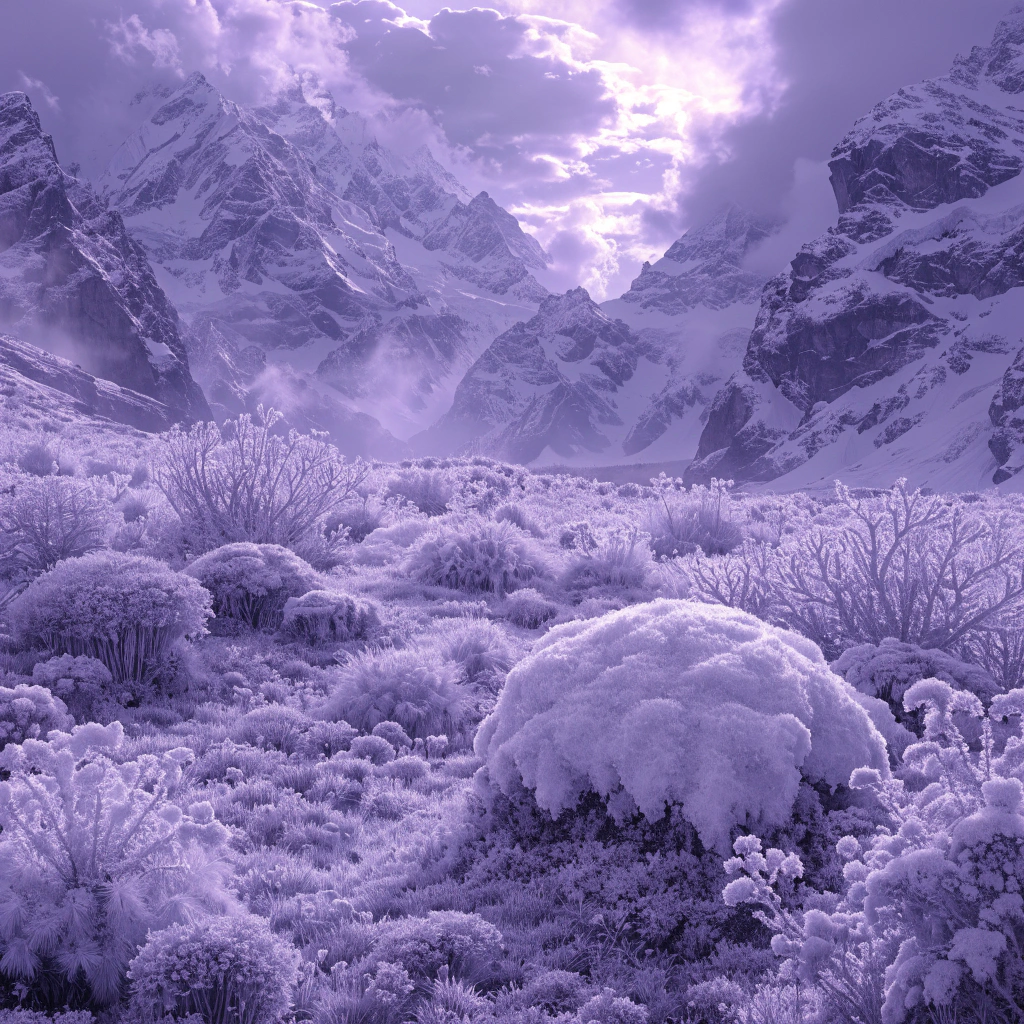
The Beautiful Valley of Flowers
The Valley of Flowers is a beautiful place in India. It is high in the mountains. This park is very famous around the world. It is a special place for nature and animals.
In the summer, many different flowers grow here. You can see red, yellow, and blue flowers. The valley is very colorful and bright. It looks like a beautiful dream. Many people visit the park every year to take photos.
The park is very big. You can walk on the small paths. You can see big mountains and green grass. It is a quiet and happy place for everyone.
Point grammaire
Structure: Present Simple 'Be'
"The Valley of Flowers is a beautiful place in India."
We use 'is' to describe a single place or thing. It helps us talk about facts and descriptions in the present.
Structure: Modal Verb 'Can'
"You can see red, yellow, and blue flowers."
We use 'can' to talk about what is possible. After 'can', we always use the base form of the verb without 'to'.
Teste ta compréhension
10 questions · A1 Débutant · 1 aperçu gratuit
Teste ce que tu as appris dans cet article. Réponds à toutes les questions pour gagner des XP !
Where is the Valley of Flowers?
Tu veux terminer le quiz ?
9 questions supplémentaires t'attendent. Inscris-toi gratuitement pour débloquer le quiz complet et gagner des XP !
S'inscrire gratuitementTu as dj un compte ? Connexion
Bien joué !
Continue à pratiquer !
Déjà terminé — pas de XP supplémentaire
Inscris-toi pour gagner des XPDétail des questions
Where is the Valley of Flowers?
Ta réponse:
Bonne réponse: India
The flowers grow in the winter.
Ta réponse:
Bonne réponse: Faux
What is a 'park'?
Ta réponse:
Bonne réponse: A large area of grass and trees
The valley is very _____ and bright.
Ta réponse:
Bonne réponse: colorful
The Beautiful Valley of Flowers
The Valley of Flowers is a beautiful national park in India. It is high in the Himalayan mountains. This place is famous because it has thousands of colorful flowers. In 1931, a British man named Frank S. Smythe found this valley. He was a mountaineer. He saw many different plants and thought the place was like a fairytale.
The park is very large and covers 87 square kilometers. It is more beautiful than many other places in the world. Visitors can see rare animals here, like the snow leopard and the brown bear. However, the park is only open from June to October. In winter, there is too much snow, so the flowers cannot grow.
UNESCO says this valley is a World Heritage Site. This means it is a special place that we must protect. Many people walk for hours to reach the valley because the view is amazing. It is one of the most famous natural wonders in India.
Point grammaire
Structure: Past Simple
"In 1931, a British man named Frank S. Smythe found this valley."
We use the past simple to talk about finished actions in the past. For 'find', the irregular past form is 'found'.
Structure: Comparatives
"It is more beautiful than many other places in the world."
We use 'more + adjective + than' for long adjectives like 'beautiful' to compare two things.
Teste ta compréhension
11 questions · A2 mentaire · 1 aperçu gratuit
Teste ce que tu as appris dans cet article. Réponds à toutes les questions pour gagner des XP !
Where is the Valley of Flowers located?
Tu veux terminer le quiz ?
10 questions supplémentaires t'attendent. Inscris-toi gratuitement pour débloquer le quiz complet et gagner des XP !
S'inscrire gratuitementTu as dj un compte ? Connexion
Bien joué !
Continue à pratiquer !
Déjà terminé — pas de XP supplémentaire
Inscris-toi pour gagner des XPDétail des questions
Where is the Valley of Flowers located?
Ta réponse:
Bonne réponse: In India
Frank S. Smythe found the valley in 1931.
Ta réponse:
Bonne réponse: Vrai
What does 'rare' mean?
Ta réponse:
Bonne réponse: Not seen very often
The snow leopard is a _____ animal found in the park.
Ta réponse:
Bonne réponse: rare
Why is the park closed in winter?
Ta réponse:
Bonne réponse: Because there is too much snow
A Fairytale in the Himalayas: The Valley of Flowers
The Valley of Flowers National Park is a hidden paradise that is located high in the Garhwal Himalayas of India. This beautiful area, which covers about 87 square kilometers, has been famous since 1931. It was discovered by Frank S. Smythe, a British mountaineer who stumbled upon the valley while he was returning from a climbing expedition. Since then, the valley has been recognized as a UNESCO World Heritage Site because of its rare plants and exceptional biodiversity.
The park is known for its incredible meadows which are covered with hundreds of species of wild flowers. Visitors have described the experience as walking through a colorful dream. Because the weather is very cold for most of the year, the valley is only open to the public from June to October. During these months, the snow melts and the flowers bloom in bright shades of pink, yellow, and blue. Many rare medicinal plants have also been found here by scientists over the years.
This natural wonder has been protected by the government for many years to keep it clean and wild. It is a home for endangered animals like the snow leopard and the Asiatic black bear. Travelers who enjoy hiking will find the journey challenging but rewarding. To reach the valley, people must walk a long path through the mountains, but the view at the top is definitely worth the effort.
In conclusion, the Valley of Flowers is a perfect destination for those who love nature and adventure. It is a place where biodiversity is celebrated and the beauty of the earth is seen in its purest form. If you are looking for a peaceful escape, this Himalayan treasure is waiting to be explored.
Point grammaire
Structure: Passive Voice
"The park is known for its incredible meadows which are covered with hundreds of species of wild flowers."
The passive voice is used here because the focus is on the park and the meadows rather than who knows or covers them. It is formed using the verb 'to be' and the past participle.
Structure: Relative Clauses
"It was discovered by Frank S. Smythe, a British mountaineer who stumbled upon the valley..."
Relative clauses provide extra information about a person or thing. Here, 'who' introduces a clause that explains something specific about the mountaineer.
Teste ta compréhension
11 questions · B1 Intermédiaire · 1 aperçu gratuit
Teste ce que tu as appris dans cet article. Réponds à toutes les questions pour gagner des XP !
Who was the person that brought international attention to the valley in 1931?
Tu veux terminer le quiz ?
10 questions supplémentaires t'attendent. Inscris-toi gratuitement pour débloquer le quiz complet et gagner des XP !
S'inscrire gratuitementTu as dj un compte ? Connexion
Bien joué !
Continue à pratiquer !
Déjà terminé — pas de XP supplémentaire
Inscris-toi pour gagner des XPDétail des questions
Who was the person that brought international attention to the valley in 1931?
Ta réponse:
Bonne réponse: Frank S. Smythe
The Valley of Flowers is open to tourists all year round.
Ta réponse:
Bonne réponse: Faux
What does the word 'biodiversity' refer to?
Ta réponse:
Bonne réponse: The variety of life in an area
The valley is a home for _____ animals like the snow leopard.
Ta réponse:
Bonne réponse: endangered
Why is the valley only open from June to October?
Ta réponse:
Bonne réponse: Because the weather is too cold and snowy the rest of the year
Nature’s Hidden Sanctuary: The Enigma of the Valley of Flowers
Nestled within the high-altitude reaches of the Garhwal Himalayas in Uttarakhand, India, the Valley of Flowers National Park represents a natural marvel that appears almost mythical in its beauty. Spanning approximately 87 square kilometers, this vibrant alpine meadow is recognized as a UNESCO World Heritage Site, primarily due to its exceptional biodiversity and breathtaking scenic grandeur. Although local inhabitants had been aware of its splendor for generations, the valley was only introduced to the global stage in 1931. It was during this period that British mountaineer Frank S. Smythe accidentally stumbled upon the region while returning from a successful expedition to Mount Kamet. Overwhelmed by the sight, he later authored a book that brought international fame to this 'botanical paradise.'
The park is globally renowned for its diverse flora, featuring hundreds of species of endemic wildflowers, such as orchids, poppies, and primulas, which transform the landscape into a vivid mosaic of colors during the monsoon months. Consequently, the area has become a critical site for botanical research and environmental education. Beyond its floral wealth, the valley provides a vital sanctuary for several endangered animal species, including the elusive snow leopard, the musk deer, and the Asiatic black bear. However, the ecosystem is incredibly fragile; therefore, conservation efforts are considered paramount to protect the environment from the potential negative impacts of climate change and unregulated human activity.
Accessing this remote paradise requires a significant degree of physical exertion. Travelers must navigate a demanding trek through steep, rocky terrain, as the valley is situated at an elevation ranging from 3,352 to 3,658 meters above sea level. Due to the extreme weather conditions and heavy snowfall in the winter, the park remains closed for the majority of the year, opening its gates to the public only from June until October. Despite the physical challenges associated with the journey, the experience is frequently described as spiritually rejuvenating by those who make the pilgrimage.
Furthermore, the valley is deeply steeped in local folklore, with numerous legends suggesting that it is inhabited by fairies who protect the blossoms. This fascinating blend of natural science and cultural mythology adds to the site's unique allure. In conclusion, the Valley of Flowers is not merely a destination for adventurous trekkers, but a vital ecological treasure that necessitates rigorous ongoing preservation. It serves as a poignant reminder of the delicate harmony that must be maintained between human curiosity and the protection of our planet's most vulnerable and pristine landscapes.
Point grammaire
Structure: The Passive Voice
"the valley was only introduced to the global stage in 1931."
Formed with 'be' + past participle, the passive voice is used here to emphasize the event and the valley rather than identifying the specific person who introduced it.
Structure: Relative Clauses
"wildflowers... which transform the landscape into a vivid mosaic of colors"
A non-defining relative clause starting with 'which' is used to provide additional, descriptive information about the flowers mentioned previously.
Structure: Past Participle Phrases
"Overwhelmed by the sight, he later authored a book"
This phrase acts as an adjective describing 'he' (Frank S. Smythe). It allows the writer to express a cause or state of mind concisely at the beginning of a sentence.
Teste ta compréhension
11 questions · B2 Intermédiaire supérieur · 1 aperçu gratuit
Teste ce que tu as appris dans cet article. Réponds à toutes les questions pour gagner des XP !
What is the primary reason the Valley of Flowers was designated as a UNESCO World Heritage Site?
Tu veux terminer le quiz ?
10 questions supplémentaires t'attendent. Inscris-toi gratuitement pour débloquer le quiz complet et gagner des XP !
S'inscrire gratuitementTu as dj un compte ? Connexion
Bien joué !
Continue à pratiquer !
Déjà terminé — pas de XP supplémentaire
Inscris-toi pour gagner des XPDétail des questions
What is the primary reason the Valley of Flowers was designated as a UNESCO World Heritage Site?
Ta réponse:
Bonne réponse: Its exceptional biodiversity and scenic beauty
The valley was completely unknown to any human beings before Frank S. Smythe arrived in 1931.
Ta réponse:
Bonne réponse: Faux
What does the word 'paramount' mean in the context of the article?
Ta réponse:
Bonne réponse: Extremely important
The valley is situated at an _____ ranging from 3,352 to 3,658 meters.
Ta réponse:
Bonne réponse: elevation
Which animal is specifically mentioned as being 'elusive' in the text?
Ta réponse:
Bonne réponse: The snow leopard
Ephemeral Splendour: The Ecological Paradox of the Valley of Flowers
Nestled within the rugged contours of the Garhwal Himalayas, the Valley of Flowers National Park represents far more than a mere geographical anomaly; it is a profound testament to the resilience of alpine ecosystems. Seldom does one encounter a landscape where the intersection of ancient myth and empirical botany is so inextricably linked. It was the serendipitous discovery by the British mountaineer Frank S. Smythe in 1931 that catapulted this secluded meadow into the global consciousness, yet the valley had long been entrenched in local folklore as the ethereal abode of deities. What distinguishes this UNESCO World Heritage site is its staggering floral diversity, a kaleidoscope of over 500 species that flourish in a fleeting window of opportunity.
The brief monsoon season triggers an explosion of colour, a phenomenon so profound that it defies conventional description. Not only does the valley host endemic flora like the elusive Himalayan Blue Poppy, but it also serves as a critical corridor for endangered fauna, including the snow leopard and the Asiatic black bear. The juxtaposition of delicate, vibrant blossoms against the stark, glaciated backdrop of the high Himalayas creates a visual dissonance that is as haunting as it is beautiful. This ephemeral splendour, however, is predicated on a highly specific set of climatic conditions, making the ecosystem particularly susceptible to the vagaries of climate change.
The management of such a fragile environment necessitates a nuanced approach to conservation. It is the inherent isolation of the valley that has historically shielded it from the deleterious effects of anthropogenic encroachment. However, the burgeoning interest in ecotourism presents a paradoxical challenge for park authorities. While tourism undoubtedly fosters environmental awareness and provides economic incentives for local communities, the physical footprint of visitors threatens the very ecological equilibrium they come to admire. The nominalisation of these ecological threats—such as the 'fragmentation' of habitats or the 'degradation' of soil quality—allows for a more clinical analysis of the systemic risks involved.
Little did the early explorers realise that their initial footsteps would pave the way for a complex global debate on sustainable preservation. Never before has the need for stringent regulations and controlled access been more pressing than in the current era of mass travel. Only through a synthesis of indigenous knowledge and modern scientific rigour can the long-term integrity of this botanical sanctuary be maintained. It is this delicate balance between human appreciation and environmental protection that will ultimately define the valley’s future. To witness the valley in full bloom is to experience a moment of sublime natural harmony, yet one must acknowledge the precariousness of its existence. The preservation of the Valley of Flowers is not merely a regional priority but a global imperative, representing our broader commitment to safeguarding the planet's most unique and vulnerable biological treasures.
Point grammaire
Structure: Negative Inversion
"Seldom does one encounter a landscape where the intersection of ancient myth and empirical botany is so inextricably linked."
Inversion is used after negative or restrictive adverbs (like 'seldom', 'never', 'little') at the start of a sentence for emphasis. The auxiliary verb 'does' moves before the subject 'one'.
Structure: Cleft Sentences
"It was the serendipitous discovery by the British mountaineer Frank S. Smythe in 1931 that catapulted this secluded meadow into the global consciousness."
Cleft sentences (It + be + subject + that/who) are used to focus on a specific piece of information. Here, it emphasizes the 'discovery' as the specific event that caused the change.
Structure: Nominalisation
"The nominalisation of these ecological threats—such as the 'fragmentation' of habitats or the 'degradation' of soil quality—allows for a more clinical analysis."
Nominalisation involves turning verbs or adjectives into nouns (e.g., 'fragment' to 'fragmentation'). This is a hallmark of C1 academic writing to create a more objective and formal tone.
Teste ta compréhension
12 questions · C1 Avancé · 1 aperçu gratuit
Teste ce que tu as appris dans cet article. Réponds à toutes les questions pour gagner des XP !
What primary factor brought the Valley of Flowers to international attention?
Tu veux terminer le quiz ?
11 questions supplémentaires t'attendent. Inscris-toi gratuitement pour débloquer le quiz complet et gagner des XP !
S'inscrire gratuitementTu as dj un compte ? Connexion
Bien joué !
Continue à pratiquer !
Déjà terminé — pas de XP supplémentaire
Inscris-toi pour gagner des XPDétail des questions
What primary factor brought the Valley of Flowers to international attention?
Ta réponse:
Bonne réponse: A serendipitous discovery by a British mountaineer
The valley features more than 500 different species of flowers.
Ta réponse:
Bonne réponse: Vrai
What does the word 'ephemeral' suggest about the valley's beauty?
Ta réponse:
Bonne réponse: It is short-lived and fleeting
The physical footprint of visitors threatens the ecological _____ they come to admire.
Ta réponse:
Bonne réponse: equilibrium
According to the article, why is ecotourism considered 'paradoxical'?
Ta réponse:
Bonne réponse: Because it promotes awareness while simultaneously causing physical damage
The author argues that modern scientific rigor should replace indigenous knowledge entirely.
Ta réponse:
Bonne réponse: Faux
The Epistemological and Ecological Dimensions of the Valley of Flowers: A Himalayan Sanctum
The Valley of Flowers National Park, an ethereal enclave sequestered within the formidable topographical folds of the Garhwal Himalayas, represents a quintessential study in botanical sublimity. Its serendipitous discovery by the British mountaineer Frank S. Smythe in 1931—an inadvertent detour during a descent from Mt. Kamet—catapulted this alpine meadow into the global consciousness. While the nomenclature suggests a mere aesthetic indulgence, the valley functions as a critical locus for endemic biodiversity, housing a myriad of species that have adapted to the rigorous climatic exigencies of high-altitude ecosystems. Situated in the state of Uttarakhand, this UNESCO World Heritage Site occupies a transitional zone between the Zanskar and Great Himalaya ranges, providing a unique biotic bridge for diverse flora and fauna.
One might posit that the valley’s allure lies not merely in its chromatic vibrancy but in its ephemeral nature. The blossoming period, primarily during the monsoon months, is a fleeting spectacle, a transient defiance against the perennial snows. Be it through the lens of botany or the gaze of the aesthetician, the valley demands a multifaceted interpretation. It is imperative that the scholarly community recognize the anthropogenic pressures that now encroach upon this sanctuary. Should the current trajectories of climatic flux persist, the delicate equilibrium of this biotic sanctuary may be irrevocably compromised. The proliferation of invasive species and the shifting patterns of glacial meltwater present a conundrum for conservationists who seek to preserve the integrity of the Nanda Devi Biosphere Reserve, of which the valley is a constituent part.
Furthermore, the valley serves as a profound intersection where the empirical rigour of ecology meets the transcendental aspirations of the human spirit. The presence of the rare blue poppy (Meconopsis aculeata) and the elusive snow leopard underscores the park's significance as a genetic reservoir. However, the academic discourse surrounding the park often hedges on the feasibility of sustainable tourism. While the economic benefits to local communities are non-negligible, the inadvertent degradation of soil quality and the disruption of pollinator pathways necessitate a more nuanced management strategy. To maintain the valley’s pristine state, a rigorous adherence to ecological protocols is required. Ultimately, the Valley of Flowers is not merely a geographic location but a testament to the resilience of nature in the face of both geological time and contemporary human intervention. It remains a site of profound intellectual inquiry, inviting us to contemplate the fragility of our planet’s most sequestered wonders.
Point grammaire
Structure: Inverted Conditional with 'Should'
"Should the current trajectories of climatic flux persist, the delicate equilibrium of this biotic sanctuary may be irrevocably compromised."
This structure replaces 'If' with 'Should' and moves the auxiliary verb to the start of the sentence for a more formal, academic tone. It is used to express a hypothetical situation in the future.
Structure: Subjunctive Mood after 'Imperative'
"It is imperative that the scholarly community recognize the anthropogenic pressures that now encroach upon this sanctuary."
The subjunctive mood is used here after an adjective of necessity (imperative). The verb 'recognize' remains in its base form, regardless of the subject.
Structure: Concessive 'Be it...'
"Be it through the lens of botany or the gaze of the aesthetician, the valley demands a multifaceted interpretation."
This is a formal way of saying 'Whether it is...'. It is used to show that a statement is true regardless of which of the two or more possibilities is considered.
Teste ta compréhension
12 questions · C2 Maîtrise · 1 aperçu gratuit
Teste ce que tu as appris dans cet article. Réponds à toutes les questions pour gagner des XP !
How was the Valley of Flowers initially brought to international attention?
Tu veux terminer le quiz ?
11 questions supplémentaires t'attendent. Inscris-toi gratuitement pour débloquer le quiz complet et gagner des XP !
S'inscrire gratuitementTu as dj un compte ? Connexion
Bien joué !
Continue à pratiquer !
Déjà terminé — pas de XP supplémentaire
Inscris-toi pour gagner des XPDétail des questions
How was the Valley of Flowers initially brought to international attention?
Ta réponse:
Bonne réponse: Via a serendipitous discovery by a British mountaineer
The valley is considered a 'biotic bridge' between the Zanskar and Great Himalaya ranges.
Ta réponse:
Bonne réponse: Vrai
What does the word 'ephemeral' imply about the valley's flowers?
Ta réponse:
Bonne réponse: They bloom for a very short duration
The author notes that the valley's equilibrium may be irrevocably _____ if climate patterns continue to change.
Ta réponse:
Bonne réponse: compromised
What conundrum do conservationists face regarding the park?
Ta réponse:
Bonne réponse: Balancing economic benefits of tourism with ecological preservation
The article suggests that the valley's significance is purely aesthetic and lacks empirical scientific value.
Ta réponse:
Bonne réponse: Faux

