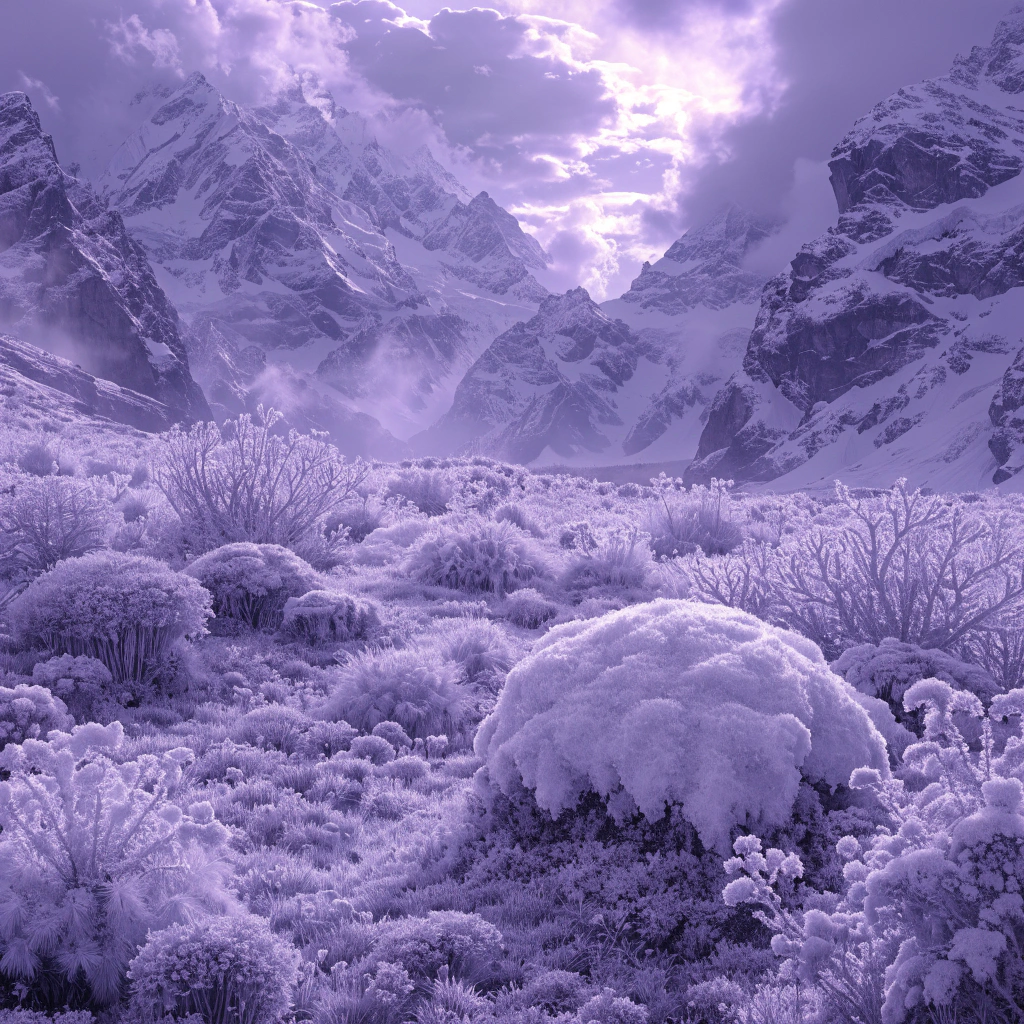
The Beautiful Valley of Flowers
The Valley of Flowers is a beautiful place in India. It is high in the mountains. This park is very famous around the world. It is a special place for nature and animals.
In the summer, many different flowers grow here. You can see red, yellow, and blue flowers. The valley is very colorful and bright. It looks like a beautiful dream. Many people visit the park every year to take photos.
The park is very big. You can walk on the small paths. You can see big mountains and green grass. It is a quiet and happy place for everyone.
نکته دستوری
الگو: Present Simple 'Be'
"The Valley of Flowers is a beautiful place in India."
We use 'is' to describe a single place or thing. It helps us talk about facts and descriptions in the present.
الگو: Modal Verb 'Can'
"You can see red, yellow, and blue flowers."
We use 'can' to talk about what is possible. After 'can', we always use the base form of the verb without 'to'.
درک خود را بسنجید
10 سوال · A1 مبتدی · 1 پیشنمایش رایگان
آنچه از این مقاله آموختید را بسنجید. به همه سؤالات پاسخ دهید و XP کسب کنید!
Where is the Valley of Flowers?
آیا میخواهید آزمون را تمام کنید؟
9 سؤال دیگر منتظر شماست. ثبتنام رایگان کنید تا آزمون کامل را باز کنید و XP کسب کنید!
ثبتنام رایگانقبلاً ثبتنام کردی؟ ورود
جزئیات سؤالات
Where is the Valley of Flowers?
پاسخ شما:
پاسخ درست: India
The flowers grow in the winter.
پاسخ شما:
پاسخ درست: نادرست
What is a 'park'?
پاسخ شما:
پاسخ درست: A large area of grass and trees
The valley is very _____ and bright.
پاسخ شما:
پاسخ درست: colorful
پارک ملی دره گلها: یک بهشت زیبا در هند
در کوههای بلند هیمالیا در ایالت اوتاراکند هند، یک جای بسیار زیبا هست. اسم این مکان "پارک ملی دره گلها" است. این پارک مثل یک صحنه از داستانهای پریان است و پر از گلهای رنگارنگ و طبیعت دلنشین است. این پارک حدود ۸۷ کیلومتر مربع وسعت دارد. سازمان یونسکو این پارک را به عنوان یک "میراث جهانی" مهم انتخاب کرده است. دلیل این انتخاب، تنوع زیستی خاص و گلهای زیبای آن است که در هیچ جای دیگری پیدا نمیشوند. مردم زیادی هر سال برای دیدن این زیبایی شگفتانگیز به اینجا میآیند. اینجا آرامش زیادی دارد و برای پیادهروی عالی است. در سال ۱۹۳۱، یک کوهنورد بریتانیایی به نام فرانک اس. اسمایت این دره را پیدا کرد. او وقتی از کوه برمیگشت، این مکان را دید و از زیبایی آن شگفتزده شد. از آن زمان، دره گلها در جهان معروف شد و توجه بسیاری را به خود جلب کرد.
نکته دستوری
الگو: فعل ماضی ساده (The Simple Past Tense)
"او وقتی از کوه برمیگشت، این مکان شگفتانگیز را **دید**."
ما از فعل ماضی ساده برای صحبت کردن درباره کارهایی استفاده میکنیم که در گذشته شروع شدند و تمام شدند. این فعل نشان میدهد که یک کار در زمان گذشته اتفاق افتاده است.
الگو: استفاده از "است" و "هست" (Using "ast" and "hast")
"اسم این مکان "پارک ملی دره گلها" **است**. و یک جای بسیار زیبا **هست**."
"است" را برای معرفی یا توصیف یک چیز یا فرد به کار میبریم، مثل "این کتاب خوب است". "هست" را برای گفتن اینکه چیزی یا کسی در جایی وجود دارد، استفاده میکنیم، مثل "اینجا یک کتاب هست".
درک خود را بسنجید
11 سوال · A2 مقدماتی · 1 پیشنمایش رایگان
آنچه از این مقاله آموختید را بسنجید. به همه سؤالات پاسخ دهید و XP کسب کنید!
درباره پارک ملی دره گلها، کدام جمله درست است؟
آیا میخواهید آزمون را تمام کنید؟
10 سؤال دیگر منتظر شماست. ثبتنام رایگان کنید تا آزمون کامل را باز کنید و XP کسب کنید!
ثبتنام رایگانقبلاً ثبتنام کردی؟ ورود
جزئیات سؤالات
درباره پارک ملی دره گلها، کدام جمله درست است؟
پاسخ شما:
پاسخ درست: این پارک پر از گلهای رنگارنگ است.
پارک ملی دره گلها در قاره اروپا قرار دارد.
پاسخ شما:
پاسخ درست: نادرست
معنی کلمه "کوهنورد" چیست؟
پاسخ شما:
پاسخ درست: کسی که به کوه میرود.
سازمان _________ این پارک را به عنوان یک میراث جهانی انتخاب کرده است.
پاسخ شما:
پاسخ درست: یونسکو
چه کسی در سال ۱۹۳۱ دره گلها را پیدا کرد؟
پاسخ شما:
پاسخ درست: یک کوهنورد بریتانیایی
دره گلها: گنجینهای طبیعی در هیمالیا
در شمال هندوستان، در ایالت اوتاراکند، گنجینهای طبیعی و شگفتانگیز پنهان شده است که به آن "دره گلها" میگویند. این پارک ملی که بخشی از رشتهکوههای هیمالیا است، بیش از ۸۷ کیلومتر مربع وسعت دارد و به خاطر زیبایی بینظیر و تنوع زیستی فوقالعادهاش در جهان شناخته شده است. این مکان مانند یک صحنه از داستانهای پریان است و هر ساله هزاران گردشگر را به خود جذب میکند.
در سال ۱۹۳۱، یک کوهنورد بریتانیایی به نام فرانک اس. اسمایت، به طور اتفاقی این دره را کشف کرد. او در حال بازگشت از یک سفر کوهنوردی بود که با این بهشت طبیعی روبرو شد. پس از کشف او، این دره به سرعت شهرت جهانی پیدا کرد و نامش بر سر زبانها افتاد. اکنون، این پارک به عنوان یکی از مهمترین مناطق حفاظتشده طبیعی هند محسوب میشود.
دره گلها به دلیل وجود انواع بسیار زیادی از گلهای آلپی نادر و زیبا مشهور است. گفته میشود که بیش از ۶۰۰ گونه مختلف گل در این دره رشد میکنند، از جمله ارکیدهها، گلهای خشخاش و گلهای آفتابگردان وحشی. این گلها در فصل تابستان، به خصوص از ماه ژوئیه تا سپتامبر، تمام دره را با رنگهای خیرهکننده خود میپوشانند و منظرهای فراموشنشدنی ایجاد میکنند. علاوه بر گلها، حیوانات نادری مانند خرس سیاه آسیایی، پلنگ برفی و آهوی مشک نیز در این پارک زندگی میکنند. این منطقه یک زیستگاه مهم برای بسیاری از گونههای در معرض خطر است.
این پارک ملی در سال ۱۹۸۲ به عنوان یک میراث جهانی یونسکو ثبت شده است. هدف از این ثبت، حفاظت از اکوسیستم منحصر به فرد و گونههای گیاهی و جانوری در معرض خطر آن است. دسترسی به این دره فقط در چند ماه از سال امکانپذیر است، زیرا در بقیه فصول، برف سنگین مسیرها را مسدود میکند. بازدید از دره گلها تجربهای بینظیر برای دوستداران طبیعت و عکاسان است که میخواهند زیباییهای بکر هیمالیا را از نزدیک ببینند و از آرامش آن لذت ببرند. این دره واقعاً یکی از عجایب طبیعی جهان است که باید برای نسلهای آینده حفظ شود.
نکته دستوری
الگو: فعل مجهول (Passive Voice)
"این پارک ملی در سال ۱۹۸۲ به عنوان یک میراث جهانی یونسکو ثبت شده است."
برای نشان دادن عملی که فاعل آن مشخص نیست یا اهمیت کمتری دارد، از فعل مجهول استفاده میکنیم. این ساختار با استفاده از مصدر "شدن" و اسم مفعول (صفت مفعولی) فعل اصلی ساخته میشود. این جمله نشان میدهد که پارک توسط شخص یا نهادی "ثبت شده" است، بدون اینکه فاعل را مشخص کند.
الگو: جملات موصولی با "که" (Relative Clauses with "ke")
"این پارک ملی که بخشی از رشتهکوههای هیمالیا است، بیش از ۸۷ کیلومتر مربع وسعت دارد."
از "که" برای اضافه کردن اطلاعات بیشتر در مورد یک اسم یا عبارت قبلی استفاده میشود. این جملات به ما کمک میکنند تا توضیحات دقیقتری ارائه دهیم و جملات پیچیدهتری بسازیم. در اینجا، "که بخشی از رشتهکوههای هیمالیا است" اطلاعاتی اضافی درباره "این پارک ملی" میدهد.
درک خود را بسنجید
11 سوال · B1 متوسط · 1 پیشنمایش رایگان
آنچه از این مقاله آموختید را بسنجید. به همه سؤالات پاسخ دهید و XP کسب کنید!
دره گلها در کدام کشور قرار دارد؟
آیا میخواهید آزمون را تمام کنید؟
10 سؤال دیگر منتظر شماست. ثبتنام رایگان کنید تا آزمون کامل را باز کنید و XP کسب کنید!
ثبتنام رایگانقبلاً ثبتنام کردی؟ ورود
جزئیات سؤالات
دره گلها در کدام کشور قرار دارد؟
پاسخ شما:
پاسخ درست: هند
این پارک ملی در تمام طول سال برای بازدیدکنندگان باز است.
پاسخ شما:
پاسخ درست: نادرست
معنی کلمه "تنوع زیستی" چیست؟
پاسخ شما:
پاسخ درست: انواع مختلف حیوانات و گیاهان
فرانک اس. اسمایت یک _____ بریتانیایی بود.
پاسخ شما:
پاسخ درست: کوهنورد
چند گونه گل مختلف در دره گلها رشد میکند؟
پاسخ شما:
پاسخ درست: بیش از ۶۰۰
Nature’s Hidden Sanctuary: The Enigma of the Valley of Flowers
Nestled within the high-altitude reaches of the Garhwal Himalayas in Uttarakhand, India, the Valley of Flowers National Park represents a natural marvel that appears almost mythical in its beauty. Spanning approximately 87 square kilometers, this vibrant alpine meadow is recognized as a UNESCO World Heritage Site, primarily due to its exceptional biodiversity and breathtaking scenic grandeur. Although local inhabitants had been aware of its splendor for generations, the valley was only introduced to the global stage in 1931. It was during this period that British mountaineer Frank S. Smythe accidentally stumbled upon the region while returning from a successful expedition to Mount Kamet. Overwhelmed by the sight, he later authored a book that brought international fame to this 'botanical paradise.'
The park is globally renowned for its diverse flora, featuring hundreds of species of endemic wildflowers, such as orchids, poppies, and primulas, which transform the landscape into a vivid mosaic of colors during the monsoon months. Consequently, the area has become a critical site for botanical research and environmental education. Beyond its floral wealth, the valley provides a vital sanctuary for several endangered animal species, including the elusive snow leopard, the musk deer, and the Asiatic black bear. However, the ecosystem is incredibly fragile; therefore, conservation efforts are considered paramount to protect the environment from the potential negative impacts of climate change and unregulated human activity.
Accessing this remote paradise requires a significant degree of physical exertion. Travelers must navigate a demanding trek through steep, rocky terrain, as the valley is situated at an elevation ranging from 3,352 to 3,658 meters above sea level. Due to the extreme weather conditions and heavy snowfall in the winter, the park remains closed for the majority of the year, opening its gates to the public only from June until October. Despite the physical challenges associated with the journey, the experience is frequently described as spiritually rejuvenating by those who make the pilgrimage.
Furthermore, the valley is deeply steeped in local folklore, with numerous legends suggesting that it is inhabited by fairies who protect the blossoms. This fascinating blend of natural science and cultural mythology adds to the site's unique allure. In conclusion, the Valley of Flowers is not merely a destination for adventurous trekkers, but a vital ecological treasure that necessitates rigorous ongoing preservation. It serves as a poignant reminder of the delicate harmony that must be maintained between human curiosity and the protection of our planet's most vulnerable and pristine landscapes.
نکته دستوری
الگو: The Passive Voice
"the valley was only introduced to the global stage in 1931."
Formed with 'be' + past participle, the passive voice is used here to emphasize the event and the valley rather than identifying the specific person who introduced it.
الگو: Relative Clauses
"wildflowers... which transform the landscape into a vivid mosaic of colors"
A non-defining relative clause starting with 'which' is used to provide additional, descriptive information about the flowers mentioned previously.
الگو: Past Participle Phrases
"Overwhelmed by the sight, he later authored a book"
This phrase acts as an adjective describing 'he' (Frank S. Smythe). It allows the writer to express a cause or state of mind concisely at the beginning of a sentence.
درک خود را بسنجید
11 سوال · B2 بالاتر از متوسط · 1 پیشنمایش رایگان
آنچه از این مقاله آموختید را بسنجید. به همه سؤالات پاسخ دهید و XP کسب کنید!
What is the primary reason the Valley of Flowers was designated as a UNESCO World Heritage Site?
آیا میخواهید آزمون را تمام کنید؟
10 سؤال دیگر منتظر شماست. ثبتنام رایگان کنید تا آزمون کامل را باز کنید و XP کسب کنید!
ثبتنام رایگانقبلاً ثبتنام کردی؟ ورود
جزئیات سؤالات
What is the primary reason the Valley of Flowers was designated as a UNESCO World Heritage Site?
پاسخ شما:
پاسخ درست: Its exceptional biodiversity and scenic beauty
The valley was completely unknown to any human beings before Frank S. Smythe arrived in 1931.
پاسخ شما:
پاسخ درست: نادرست
What does the word 'paramount' mean in the context of the article?
پاسخ شما:
پاسخ درست: Extremely important
The valley is situated at an _____ ranging from 3,352 to 3,658 meters.
پاسخ شما:
پاسخ درست: elevation
Which animal is specifically mentioned as being 'elusive' in the text?
پاسخ شما:
پاسخ درست: The snow leopard
Ephemeral Splendour: The Ecological Paradox of the Valley of Flowers
Nestled within the rugged contours of the Garhwal Himalayas, the Valley of Flowers National Park represents far more than a mere geographical anomaly; it is a profound testament to the resilience of alpine ecosystems. Seldom does one encounter a landscape where the intersection of ancient myth and empirical botany is so inextricably linked. It was the serendipitous discovery by the British mountaineer Frank S. Smythe in 1931 that catapulted this secluded meadow into the global consciousness, yet the valley had long been entrenched in local folklore as the ethereal abode of deities. What distinguishes this UNESCO World Heritage site is its staggering floral diversity, a kaleidoscope of over 500 species that flourish in a fleeting window of opportunity.
The brief monsoon season triggers an explosion of colour, a phenomenon so profound that it defies conventional description. Not only does the valley host endemic flora like the elusive Himalayan Blue Poppy, but it also serves as a critical corridor for endangered fauna, including the snow leopard and the Asiatic black bear. The juxtaposition of delicate, vibrant blossoms against the stark, glaciated backdrop of the high Himalayas creates a visual dissonance that is as haunting as it is beautiful. This ephemeral splendour, however, is predicated on a highly specific set of climatic conditions, making the ecosystem particularly susceptible to the vagaries of climate change.
The management of such a fragile environment necessitates a nuanced approach to conservation. It is the inherent isolation of the valley that has historically shielded it from the deleterious effects of anthropogenic encroachment. However, the burgeoning interest in ecotourism presents a paradoxical challenge for park authorities. While tourism undoubtedly fosters environmental awareness and provides economic incentives for local communities, the physical footprint of visitors threatens the very ecological equilibrium they come to admire. The nominalisation of these ecological threats—such as the 'fragmentation' of habitats or the 'degradation' of soil quality—allows for a more clinical analysis of the systemic risks involved.
Little did the early explorers realise that their initial footsteps would pave the way for a complex global debate on sustainable preservation. Never before has the need for stringent regulations and controlled access been more pressing than in the current era of mass travel. Only through a synthesis of indigenous knowledge and modern scientific rigour can the long-term integrity of this botanical sanctuary be maintained. It is this delicate balance between human appreciation and environmental protection that will ultimately define the valley’s future. To witness the valley in full bloom is to experience a moment of sublime natural harmony, yet one must acknowledge the precariousness of its existence. The preservation of the Valley of Flowers is not merely a regional priority but a global imperative, representing our broader commitment to safeguarding the planet's most unique and vulnerable biological treasures.
نکته دستوری
الگو: Negative Inversion
"Seldom does one encounter a landscape where the intersection of ancient myth and empirical botany is so inextricably linked."
Inversion is used after negative or restrictive adverbs (like 'seldom', 'never', 'little') at the start of a sentence for emphasis. The auxiliary verb 'does' moves before the subject 'one'.
الگو: Cleft Sentences
"It was the serendipitous discovery by the British mountaineer Frank S. Smythe in 1931 that catapulted this secluded meadow into the global consciousness."
Cleft sentences (It + be + subject + that/who) are used to focus on a specific piece of information. Here, it emphasizes the 'discovery' as the specific event that caused the change.
الگو: Nominalisation
"The nominalisation of these ecological threats—such as the 'fragmentation' of habitats or the 'degradation' of soil quality—allows for a more clinical analysis."
Nominalisation involves turning verbs or adjectives into nouns (e.g., 'fragment' to 'fragmentation'). This is a hallmark of C1 academic writing to create a more objective and formal tone.
درک خود را بسنجید
12 سوال · C1 پیشرفته · 1 پیشنمایش رایگان
آنچه از این مقاله آموختید را بسنجید. به همه سؤالات پاسخ دهید و XP کسب کنید!
What primary factor brought the Valley of Flowers to international attention?
آیا میخواهید آزمون را تمام کنید؟
11 سؤال دیگر منتظر شماست. ثبتنام رایگان کنید تا آزمون کامل را باز کنید و XP کسب کنید!
ثبتنام رایگانقبلاً ثبتنام کردی؟ ورود
جزئیات سؤالات
What primary factor brought the Valley of Flowers to international attention?
پاسخ شما:
پاسخ درست: A serendipitous discovery by a British mountaineer
The valley features more than 500 different species of flowers.
پاسخ شما:
پاسخ درست: درست
What does the word 'ephemeral' suggest about the valley's beauty?
پاسخ شما:
پاسخ درست: It is short-lived and fleeting
The physical footprint of visitors threatens the ecological _____ they come to admire.
پاسخ شما:
پاسخ درست: equilibrium
According to the article, why is ecotourism considered 'paradoxical'?
پاسخ شما:
پاسخ درست: Because it promotes awareness while simultaneously causing physical damage
The author argues that modern scientific rigor should replace indigenous knowledge entirely.
پاسخ شما:
پاسخ درست: نادرست
The Epistemological and Ecological Dimensions of the Valley of Flowers: A Himalayan Sanctum
The Valley of Flowers National Park, an ethereal enclave sequestered within the formidable topographical folds of the Garhwal Himalayas, represents a quintessential study in botanical sublimity. Its serendipitous discovery by the British mountaineer Frank S. Smythe in 1931—an inadvertent detour during a descent from Mt. Kamet—catapulted this alpine meadow into the global consciousness. While the nomenclature suggests a mere aesthetic indulgence, the valley functions as a critical locus for endemic biodiversity, housing a myriad of species that have adapted to the rigorous climatic exigencies of high-altitude ecosystems. Situated in the state of Uttarakhand, this UNESCO World Heritage Site occupies a transitional zone between the Zanskar and Great Himalaya ranges, providing a unique biotic bridge for diverse flora and fauna.
One might posit that the valley’s allure lies not merely in its chromatic vibrancy but in its ephemeral nature. The blossoming period, primarily during the monsoon months, is a fleeting spectacle, a transient defiance against the perennial snows. Be it through the lens of botany or the gaze of the aesthetician, the valley demands a multifaceted interpretation. It is imperative that the scholarly community recognize the anthropogenic pressures that now encroach upon this sanctuary. Should the current trajectories of climatic flux persist, the delicate equilibrium of this biotic sanctuary may be irrevocably compromised. The proliferation of invasive species and the shifting patterns of glacial meltwater present a conundrum for conservationists who seek to preserve the integrity of the Nanda Devi Biosphere Reserve, of which the valley is a constituent part.
Furthermore, the valley serves as a profound intersection where the empirical rigour of ecology meets the transcendental aspirations of the human spirit. The presence of the rare blue poppy (Meconopsis aculeata) and the elusive snow leopard underscores the park's significance as a genetic reservoir. However, the academic discourse surrounding the park often hedges on the feasibility of sustainable tourism. While the economic benefits to local communities are non-negligible, the inadvertent degradation of soil quality and the disruption of pollinator pathways necessitate a more nuanced management strategy. To maintain the valley’s pristine state, a rigorous adherence to ecological protocols is required. Ultimately, the Valley of Flowers is not merely a geographic location but a testament to the resilience of nature in the face of both geological time and contemporary human intervention. It remains a site of profound intellectual inquiry, inviting us to contemplate the fragility of our planet’s most sequestered wonders.
نکته دستوری
الگو: Inverted Conditional with 'Should'
"Should the current trajectories of climatic flux persist, the delicate equilibrium of this biotic sanctuary may be irrevocably compromised."
This structure replaces 'If' with 'Should' and moves the auxiliary verb to the start of the sentence for a more formal, academic tone. It is used to express a hypothetical situation in the future.
الگو: Subjunctive Mood after 'Imperative'
"It is imperative that the scholarly community recognize the anthropogenic pressures that now encroach upon this sanctuary."
The subjunctive mood is used here after an adjective of necessity (imperative). The verb 'recognize' remains in its base form, regardless of the subject.
الگو: Concessive 'Be it...'
"Be it through the lens of botany or the gaze of the aesthetician, the valley demands a multifaceted interpretation."
This is a formal way of saying 'Whether it is...'. It is used to show that a statement is true regardless of which of the two or more possibilities is considered.
درک خود را بسنجید
12 سوال · C2 تسلط · 1 پیشنمایش رایگان
آنچه از این مقاله آموختید را بسنجید. به همه سؤالات پاسخ دهید و XP کسب کنید!
How was the Valley of Flowers initially brought to international attention?
آیا میخواهید آزمون را تمام کنید؟
11 سؤال دیگر منتظر شماست. ثبتنام رایگان کنید تا آزمون کامل را باز کنید و XP کسب کنید!
ثبتنام رایگانقبلاً ثبتنام کردی؟ ورود
جزئیات سؤالات
How was the Valley of Flowers initially brought to international attention?
پاسخ شما:
پاسخ درست: Via a serendipitous discovery by a British mountaineer
The valley is considered a 'biotic bridge' between the Zanskar and Great Himalaya ranges.
پاسخ شما:
پاسخ درست: درست
What does the word 'ephemeral' imply about the valley's flowers?
پاسخ شما:
پاسخ درست: They bloom for a very short duration
The author notes that the valley's equilibrium may be irrevocably _____ if climate patterns continue to change.
پاسخ شما:
پاسخ درست: compromised
What conundrum do conservationists face regarding the park?
پاسخ شما:
پاسخ درست: Balancing economic benefits of tourism with ecological preservation
The article suggests that the valley's significance is purely aesthetic and lacks empirical scientific value.
پاسخ شما:
پاسخ درست: نادرست

