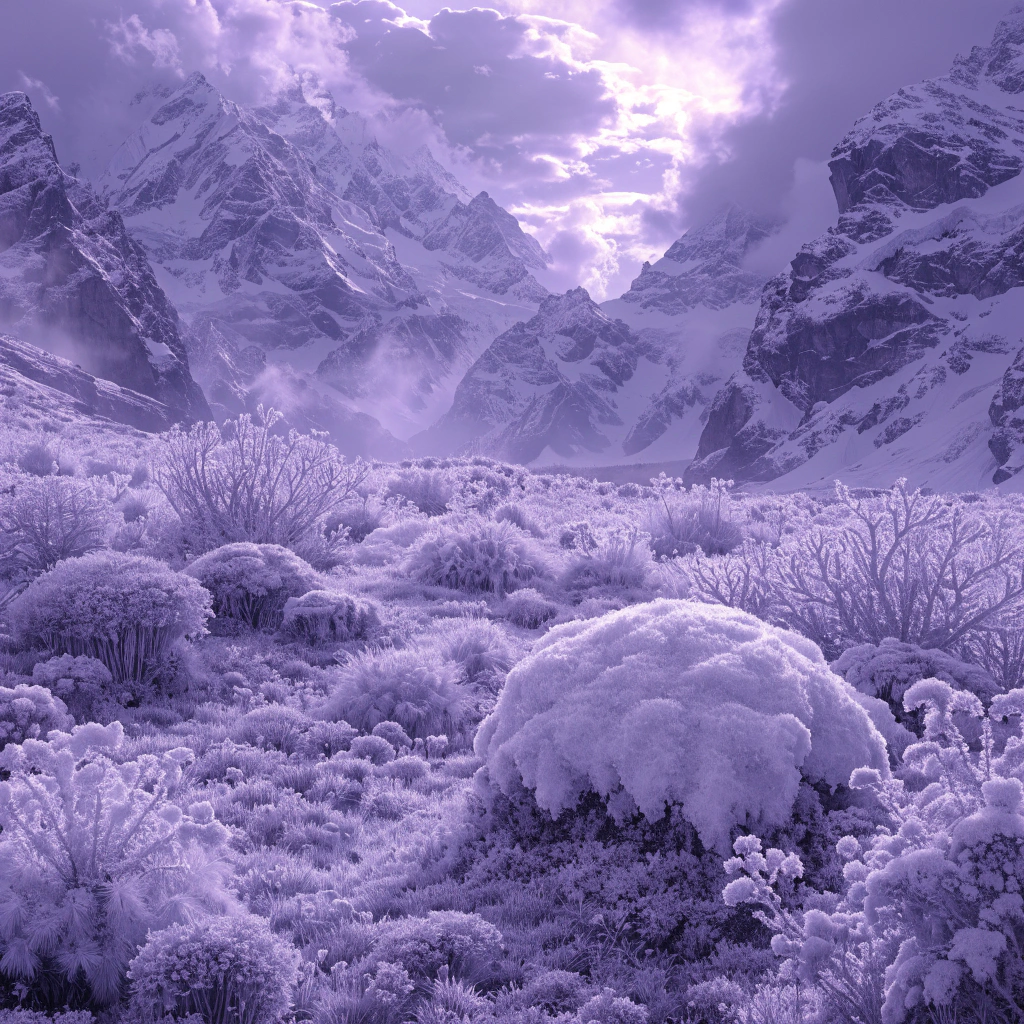
The Beautiful Valley of Flowers
The Valley of Flowers is a beautiful place in India. It is high in the mountains. This park is very famous around the world. It is a special place for nature and animals.
In the summer, many different flowers grow here. You can see red, yellow, and blue flowers. The valley is very colorful and bright. It looks like a beautiful dream. Many people visit the park every year to take photos.
The park is very big. You can walk on the small paths. You can see big mountains and green grass. It is a quiet and happy place for everyone.
Gramática em destaque
Padrão: Present Simple 'Be'
"The Valley of Flowers is a beautiful place in India."
We use 'is' to describe a single place or thing. It helps us talk about facts and descriptions in the present.
Padrão: Modal Verb 'Can'
"You can see red, yellow, and blue flowers."
We use 'can' to talk about what is possible. After 'can', we always use the base form of the verb without 'to'.
Teste sua compreensão
10 perguntas · A1 Iniciante · 1 pré-visualização grátis
Teste o que aprendeu neste artigo. Responda todas as perguntas para ganhar XP!
Where is the Valley of Flowers?
Quer finalizar o quiz?
9 perguntas a mais estão esperando por você. Cadastre-se grátis para desbloquear o quiz completo e ganhar XP!
Cadastrar grátisJá tem conta? Entrar
Detalhamento das perguntas
Where is the Valley of Flowers?
Sua resposta:
Resposta correta: India
The flowers grow in the winter.
Sua resposta:
Resposta correta: Falso
What is a 'park'?
Sua resposta:
Resposta correta: A large area of grass and trees
The valley is very _____ and bright.
Sua resposta:
Resposta correta: colorful
The Beautiful Valley of Flowers
The Valley of Flowers is a beautiful national park in India. It is high in the Himalayan mountains. This place is famous because it has thousands of colorful flowers. In 1931, a British man named Frank S. Smythe found this valley. He was a mountaineer. He saw many different plants and thought the place was like a fairytale.
The park is very large and covers 87 square kilometers. It is more beautiful than many other places in the world. Visitors can see rare animals here, like the snow leopard and the brown bear. However, the park is only open from June to October. In winter, there is too much snow, so the flowers cannot grow.
UNESCO says this valley is a World Heritage Site. This means it is a special place that we must protect. Many people walk for hours to reach the valley because the view is amazing. It is one of the most famous natural wonders in India.
Gramática em destaque
Padrão: Past Simple
"In 1931, a British man named Frank S. Smythe found this valley."
We use the past simple to talk about finished actions in the past. For 'find', the irregular past form is 'found'.
Padrão: Comparatives
"It is more beautiful than many other places in the world."
We use 'more + adjective + than' for long adjectives like 'beautiful' to compare two things.
Teste sua compreensão
11 perguntas · A2 Elementar · 1 pré-visualização grátis
Teste o que aprendeu neste artigo. Responda todas as perguntas para ganhar XP!
Where is the Valley of Flowers located?
Quer finalizar o quiz?
10 perguntas a mais estão esperando por você. Cadastre-se grátis para desbloquear o quiz completo e ganhar XP!
Cadastrar grátisJá tem conta? Entrar
Detalhamento das perguntas
Where is the Valley of Flowers located?
Sua resposta:
Resposta correta: In India
Frank S. Smythe found the valley in 1931.
Sua resposta:
Resposta correta: Verdadeiro
What does 'rare' mean?
Sua resposta:
Resposta correta: Not seen very often
The snow leopard is a _____ animal found in the park.
Sua resposta:
Resposta correta: rare
Why is the park closed in winter?
Sua resposta:
Resposta correta: Because there is too much snow
A Fairytale in the Himalayas: The Valley of Flowers
The Valley of Flowers National Park is a hidden paradise that is located high in the Garhwal Himalayas of India. This beautiful area, which covers about 87 square kilometers, has been famous since 1931. It was discovered by Frank S. Smythe, a British mountaineer who stumbled upon the valley while he was returning from a climbing expedition. Since then, the valley has been recognized as a UNESCO World Heritage Site because of its rare plants and exceptional biodiversity.
The park is known for its incredible meadows which are covered with hundreds of species of wild flowers. Visitors have described the experience as walking through a colorful dream. Because the weather is very cold for most of the year, the valley is only open to the public from June to October. During these months, the snow melts and the flowers bloom in bright shades of pink, yellow, and blue. Many rare medicinal plants have also been found here by scientists over the years.
This natural wonder has been protected by the government for many years to keep it clean and wild. It is a home for endangered animals like the snow leopard and the Asiatic black bear. Travelers who enjoy hiking will find the journey challenging but rewarding. To reach the valley, people must walk a long path through the mountains, but the view at the top is definitely worth the effort.
In conclusion, the Valley of Flowers is a perfect destination for those who love nature and adventure. It is a place where biodiversity is celebrated and the beauty of the earth is seen in its purest form. If you are looking for a peaceful escape, this Himalayan treasure is waiting to be explored.
Gramática em destaque
Padrão: Passive Voice
"The park is known for its incredible meadows which are covered with hundreds of species of wild flowers."
The passive voice is used here because the focus is on the park and the meadows rather than who knows or covers them. It is formed using the verb 'to be' and the past participle.
Padrão: Relative Clauses
"It was discovered by Frank S. Smythe, a British mountaineer who stumbled upon the valley..."
Relative clauses provide extra information about a person or thing. Here, 'who' introduces a clause that explains something specific about the mountaineer.
Teste sua compreensão
11 perguntas · B1 Intermediário · 1 pré-visualização grátis
Teste o que aprendeu neste artigo. Responda todas as perguntas para ganhar XP!
Who was the person that brought international attention to the valley in 1931?
Quer finalizar o quiz?
10 perguntas a mais estão esperando por você. Cadastre-se grátis para desbloquear o quiz completo e ganhar XP!
Cadastrar grátisJá tem conta? Entrar
Detalhamento das perguntas
Who was the person that brought international attention to the valley in 1931?
Sua resposta:
Resposta correta: Frank S. Smythe
The Valley of Flowers is open to tourists all year round.
Sua resposta:
Resposta correta: Falso
What does the word 'biodiversity' refer to?
Sua resposta:
Resposta correta: The variety of life in an area
The valley is a home for _____ animals like the snow leopard.
Sua resposta:
Resposta correta: endangered
Why is the valley only open from June to October?
Sua resposta:
Resposta correta: Because the weather is too cold and snowy the rest of the year
Nature’s Hidden Sanctuary: The Enigma of the Valley of Flowers
Nestled within the high-altitude reaches of the Garhwal Himalayas in Uttarakhand, India, the Valley of Flowers National Park represents a natural marvel that appears almost mythical in its beauty. Spanning approximately 87 square kilometers, this vibrant alpine meadow is recognized as a UNESCO World Heritage Site, primarily due to its exceptional biodiversity and breathtaking scenic grandeur. Although local inhabitants had been aware of its splendor for generations, the valley was only introduced to the global stage in 1931. It was during this period that British mountaineer Frank S. Smythe accidentally stumbled upon the region while returning from a successful expedition to Mount Kamet. Overwhelmed by the sight, he later authored a book that brought international fame to this 'botanical paradise.'
The park is globally renowned for its diverse flora, featuring hundreds of species of endemic wildflowers, such as orchids, poppies, and primulas, which transform the landscape into a vivid mosaic of colors during the monsoon months. Consequently, the area has become a critical site for botanical research and environmental education. Beyond its floral wealth, the valley provides a vital sanctuary for several endangered animal species, including the elusive snow leopard, the musk deer, and the Asiatic black bear. However, the ecosystem is incredibly fragile; therefore, conservation efforts are considered paramount to protect the environment from the potential negative impacts of climate change and unregulated human activity.
Accessing this remote paradise requires a significant degree of physical exertion. Travelers must navigate a demanding trek through steep, rocky terrain, as the valley is situated at an elevation ranging from 3,352 to 3,658 meters above sea level. Due to the extreme weather conditions and heavy snowfall in the winter, the park remains closed for the majority of the year, opening its gates to the public only from June until October. Despite the physical challenges associated with the journey, the experience is frequently described as spiritually rejuvenating by those who make the pilgrimage.
Furthermore, the valley is deeply steeped in local folklore, with numerous legends suggesting that it is inhabited by fairies who protect the blossoms. This fascinating blend of natural science and cultural mythology adds to the site's unique allure. In conclusion, the Valley of Flowers is not merely a destination for adventurous trekkers, but a vital ecological treasure that necessitates rigorous ongoing preservation. It serves as a poignant reminder of the delicate harmony that must be maintained between human curiosity and the protection of our planet's most vulnerable and pristine landscapes.
Gramática em destaque
Padrão: The Passive Voice
"the valley was only introduced to the global stage in 1931."
Formed with 'be' + past participle, the passive voice is used here to emphasize the event and the valley rather than identifying the specific person who introduced it.
Padrão: Relative Clauses
"wildflowers... which transform the landscape into a vivid mosaic of colors"
A non-defining relative clause starting with 'which' is used to provide additional, descriptive information about the flowers mentioned previously.
Padrão: Past Participle Phrases
"Overwhelmed by the sight, he later authored a book"
This phrase acts as an adjective describing 'he' (Frank S. Smythe). It allows the writer to express a cause or state of mind concisely at the beginning of a sentence.
Teste sua compreensão
11 perguntas · B2 Intermediário superior · 1 pré-visualização grátis
Teste o que aprendeu neste artigo. Responda todas as perguntas para ganhar XP!
What is the primary reason the Valley of Flowers was designated as a UNESCO World Heritage Site?
Quer finalizar o quiz?
10 perguntas a mais estão esperando por você. Cadastre-se grátis para desbloquear o quiz completo e ganhar XP!
Cadastrar grátisJá tem conta? Entrar
Detalhamento das perguntas
What is the primary reason the Valley of Flowers was designated as a UNESCO World Heritage Site?
Sua resposta:
Resposta correta: Its exceptional biodiversity and scenic beauty
The valley was completely unknown to any human beings before Frank S. Smythe arrived in 1931.
Sua resposta:
Resposta correta: Falso
What does the word 'paramount' mean in the context of the article?
Sua resposta:
Resposta correta: Extremely important
The valley is situated at an _____ ranging from 3,352 to 3,658 meters.
Sua resposta:
Resposta correta: elevation
Which animal is specifically mentioned as being 'elusive' in the text?
Sua resposta:
Resposta correta: The snow leopard
Vale das Flores: Um Santuário Himalaio de Beleza Incomparável
Aninhado nas elevadas altitudes dos Himalaias de Garhwal, no estado indiano de Uttarakhand, o Parque Nacional Vale das Flores é, sem sombra de dúvida, uma maravilha natural que se assemelha a uma cena de conto de fadas. Estendendo-se por mais de 87 quilômetros quadrados, este vibrante prado alpino é um Sítio do Patrimônio Mundial da UNESCO, reconhecido por sua biodiversidade excepcional e pela beleza cênica de tirar o fôlego. O que torna o parque tão especial é, de fato, a sua flora exuberante e variada, com milhares de espécies de flores desabrochando em um espetáculo cromático que se altera com as estações.
A redescoberta do vale por Frank S. Smythe, um montanhista britânico, em 1931, ao retornar de uma expedição ao Monte Kamet, foi o que catapultou este local paradisíaco para o cenário internacional. Smythe, embasbacado pela profusão de cores e formas, batizou-o de "Vale das Flores", uma denominação que, por sua singeleza, capta perfeitamente a essência do lugar. Antes disso, o vale era conhecido apenas por pastores locais e por comunidades indígenas, que o consideravam um domínio de fadas e divindades, envolto em mistério e lendas.
A sua designação como Parque Nacional em 1982, e posteriormente como Sítio do Patrimônio Mundial em 2005, consolidou a proteção deste ecossistema frágil. Contudo, a conservação é um desafio contínuo, dada a crescente pressão turística e as mudanças climáticas. O parque abriga não apenas uma miríade de flores, mas também uma fauna diversificada, incluindo espécies raras e ameaçadas como o leopardo-das-neves, o urso-negro-asiático e o cervo-almiscarado. A presença dessas espécies sublinha a importância do vale como um refúgio vital para a vida selvagem do Himalaia.
É a interação complexa entre a topografia, o clima e a geologia que moldou a singularidade biológica do Vale das Flores. As monções de verão trazem consigo uma explosão de vida, transformando o vale em um tapete multicolorido, enquanto o inverno o cobre com um manto de neve, preparando o solo para o próximo ciclo de floração. A visitação é permitida apenas durante os meses mais quentes, de junho a outubro, período em que os visitantes podem testemunhar a magnificência da natureza em seu auge. É imprescindível, para quem se aventura por lá, respeitar as normas de conservação para garantir a perpetuação de sua beleza.
A experiência de percorrer as trilhas do Vale das Flores é mais do que um simples passeio turístico; é uma imersão em um ambiente de profunda serenidade e esplendor botânico. A ausência de assentamentos humanos permanentes no vale contribui para a manutenção de seu estado quase intocado. O que se espera de cada visitante é uma reverência à natureza e um compromisso com a sua preservação. Em suma, o Vale das Flores é um testemunho vívido da resiliência e da beleza intrínseca do mundo natural, um tesouro que exige a nossa atenção e cuidado contínuos para as gerações vindouras.
Gramática em destaque
Padrão: Estrutura de Cleft Sentence (O que... é)
"O que torna o parque tão especial é, de fato, a sua flora exuberante e variada..."
Esta estrutura é usada para enfatizar uma parte específica da frase. 'O que' serve como sujeito e o verbo 'ser' introduz a informação que está sendo destacada, dando um foco maior à 'flora exuberante' neste caso.
Padrão: Nominalização
"A redescoberta do vale por Frank S. Smythe, um montanhista britânico, em 1931..."
A nominalização transforma um verbo ou adjetivo em um substantivo, tornando a frase mais formal e concisa. Em vez de 'Quando Frank S. Smythe redescobriu o vale', usa-se 'A redescoberta', que comprime a ideia de ação em um único termo substantivo.
Padrão: Inversão da Ordem Sintática para Ênfase
"É imprescindível, para quem se aventura por lá, respeitar as normas de conservação..."
Esta construção inverte a ordem comum sujeito-verbo-complemento para dar destaque a uma informação, neste caso, a importância de respeitar as normas. O uso do 'É' inicial seguido da informação principal cria um tom mais enfático e formal.
Teste sua compreensão
12 perguntas · C1 Avançado · 1 pré-visualização grátis
Teste o que aprendeu neste artigo. Responda todas as perguntas para ganhar XP!
Qual é a principal razão pela qual o Vale das Flores é um Sítio do Patrimônio Mundial da UNESCO?
Quer finalizar o quiz?
11 perguntas a mais estão esperando por você. Cadastre-se grátis para desbloquear o quiz completo e ganhar XP!
Cadastrar grátisJá tem conta? Entrar
Detalhamento das perguntas
Qual é a principal razão pela qual o Vale das Flores é um Sítio do Patrimônio Mundial da UNESCO?
Sua resposta:
Resposta correta: Pela sua biodiversidade excepcional e beleza cênica.
O Vale das Flores é acessível a visitantes durante todo o ano.
Sua resposta:
Resposta correta: Falso
Qual é o significado da palavra 'embasbacado' no contexto do artigo?
Sua resposta:
Resposta correta: Extremamente admirado ou espantado.
A _____ do vale por Frank S. Smythe em 1931 o catapultou para o cenário internacional.
Sua resposta:
Resposta correta: redescoberta
Antes da redescoberta por Smythe, quem conhecia o Vale das Flores?
Sua resposta:
Resposta correta: Pastores locais e comunidades indígenas.
A ausência de assentamentos humanos permanentes no vale contribui para a manutenção de seu estado quase intocado.
Sua resposta:
Resposta correta: Verdadeiro
The Epistemological and Ecological Dimensions of the Valley of Flowers: A Himalayan Sanctum
The Valley of Flowers National Park, an ethereal enclave sequestered within the formidable topographical folds of the Garhwal Himalayas, represents a quintessential study in botanical sublimity. Its serendipitous discovery by the British mountaineer Frank S. Smythe in 1931—an inadvertent detour during a descent from Mt. Kamet—catapulted this alpine meadow into the global consciousness. While the nomenclature suggests a mere aesthetic indulgence, the valley functions as a critical locus for endemic biodiversity, housing a myriad of species that have adapted to the rigorous climatic exigencies of high-altitude ecosystems. Situated in the state of Uttarakhand, this UNESCO World Heritage Site occupies a transitional zone between the Zanskar and Great Himalaya ranges, providing a unique biotic bridge for diverse flora and fauna.
One might posit that the valley’s allure lies not merely in its chromatic vibrancy but in its ephemeral nature. The blossoming period, primarily during the monsoon months, is a fleeting spectacle, a transient defiance against the perennial snows. Be it through the lens of botany or the gaze of the aesthetician, the valley demands a multifaceted interpretation. It is imperative that the scholarly community recognize the anthropogenic pressures that now encroach upon this sanctuary. Should the current trajectories of climatic flux persist, the delicate equilibrium of this biotic sanctuary may be irrevocably compromised. The proliferation of invasive species and the shifting patterns of glacial meltwater present a conundrum for conservationists who seek to preserve the integrity of the Nanda Devi Biosphere Reserve, of which the valley is a constituent part.
Furthermore, the valley serves as a profound intersection where the empirical rigour of ecology meets the transcendental aspirations of the human spirit. The presence of the rare blue poppy (Meconopsis aculeata) and the elusive snow leopard underscores the park's significance as a genetic reservoir. However, the academic discourse surrounding the park often hedges on the feasibility of sustainable tourism. While the economic benefits to local communities are non-negligible, the inadvertent degradation of soil quality and the disruption of pollinator pathways necessitate a more nuanced management strategy. To maintain the valley’s pristine state, a rigorous adherence to ecological protocols is required. Ultimately, the Valley of Flowers is not merely a geographic location but a testament to the resilience of nature in the face of both geological time and contemporary human intervention. It remains a site of profound intellectual inquiry, inviting us to contemplate the fragility of our planet’s most sequestered wonders.
Gramática em destaque
Padrão: Inverted Conditional with 'Should'
"Should the current trajectories of climatic flux persist, the delicate equilibrium of this biotic sanctuary may be irrevocably compromised."
This structure replaces 'If' with 'Should' and moves the auxiliary verb to the start of the sentence for a more formal, academic tone. It is used to express a hypothetical situation in the future.
Padrão: Subjunctive Mood after 'Imperative'
"It is imperative that the scholarly community recognize the anthropogenic pressures that now encroach upon this sanctuary."
The subjunctive mood is used here after an adjective of necessity (imperative). The verb 'recognize' remains in its base form, regardless of the subject.
Padrão: Concessive 'Be it...'
"Be it through the lens of botany or the gaze of the aesthetician, the valley demands a multifaceted interpretation."
This is a formal way of saying 'Whether it is...'. It is used to show that a statement is true regardless of which of the two or more possibilities is considered.
Teste sua compreensão
12 perguntas · C2 Domínio · 1 pré-visualização grátis
Teste o que aprendeu neste artigo. Responda todas as perguntas para ganhar XP!
How was the Valley of Flowers initially brought to international attention?
Quer finalizar o quiz?
11 perguntas a mais estão esperando por você. Cadastre-se grátis para desbloquear o quiz completo e ganhar XP!
Cadastrar grátisJá tem conta? Entrar
Detalhamento das perguntas
How was the Valley of Flowers initially brought to international attention?
Sua resposta:
Resposta correta: Via a serendipitous discovery by a British mountaineer
The valley is considered a 'biotic bridge' between the Zanskar and Great Himalaya ranges.
Sua resposta:
Resposta correta: Verdadeiro
What does the word 'ephemeral' imply about the valley's flowers?
Sua resposta:
Resposta correta: They bloom for a very short duration
The author notes that the valley's equilibrium may be irrevocably _____ if climate patterns continue to change.
Sua resposta:
Resposta correta: compromised
What conundrum do conservationists face regarding the park?
Sua resposta:
Resposta correta: Balancing economic benefits of tourism with ecological preservation
The article suggests that the valley's significance is purely aesthetic and lacks empirical scientific value.
Sua resposta:
Resposta correta: Falso

