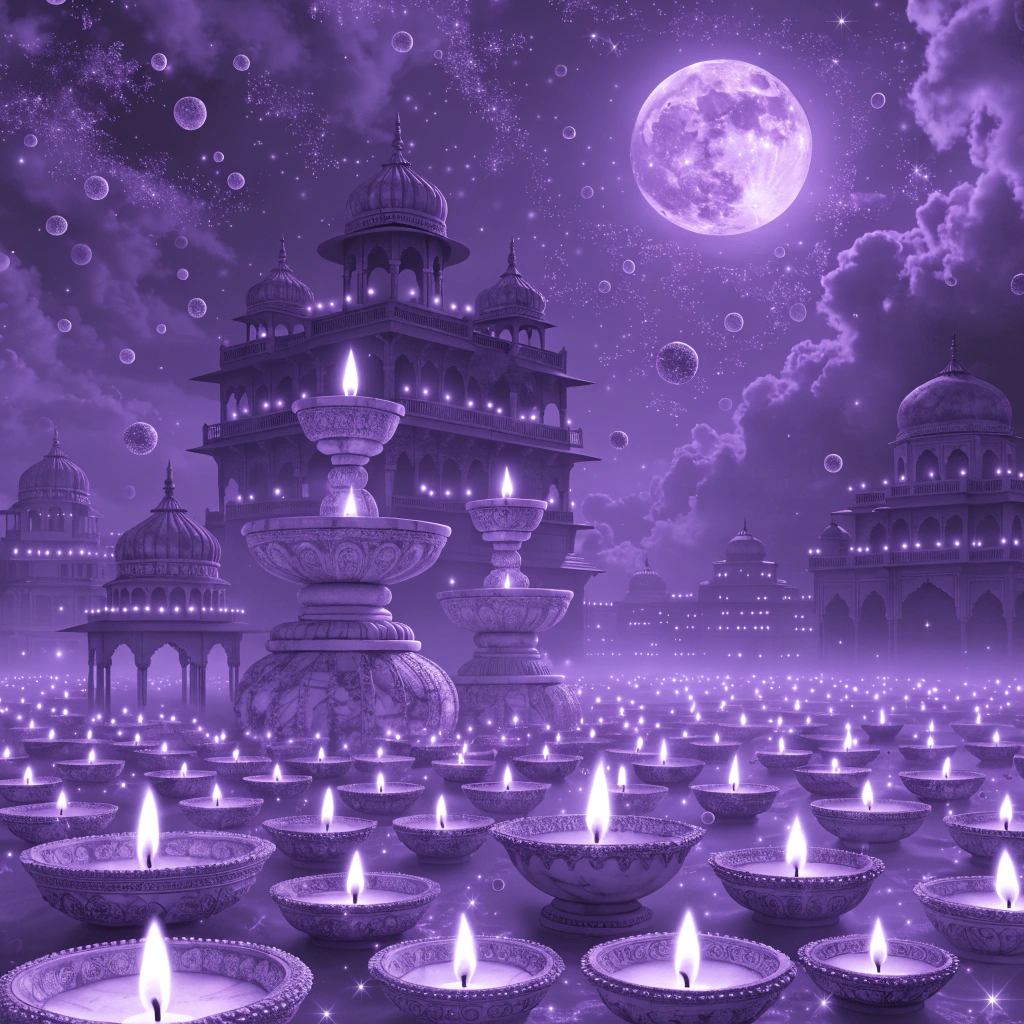
Diwali: The Festival of Lights
Diwali is a very big festival in India. People call it the 'Festival of Lights'. It is a very happy time for families.
People clean their houses before the festival. They buy new clothes and gifts. At night, they light many small lamps. These lamps are 'diyas'. The lights show that good is better than bad.
Families meet and eat special sweets. Children play and watch fireworks in the sky. It is a beautiful celebration. Everyone smiles and says 'Happy Diwali'.
نکته دستوری
الگو: Present Simple: To Be
"Diwali is a very big festival in India."
We use 'is' with singular subjects like Diwali to state facts. The structure is Subject + is + Adjective/Noun.
الگو: Present Simple: Plural Verbs
"Families meet and eat special sweets."
When the subject is plural (Families), we use the base form of the verb (meet, eat). We do not add 's' to the verb.
درک خود را بسنجید
10 سوال · A1 مبتدی · 1 پیشنمایش رایگان
آنچه از این مقاله آموختید را بسنجید. به همه سؤالات پاسخ دهید و XP کسب کنید!
Where is Diwali a very big festival?
آیا میخواهید آزمون را تمام کنید؟
9 سؤال دیگر منتظر شماست. ثبتنام رایگان کنید تا آزمون کامل را باز کنید و XP کسب کنید!
ثبتنام رایگانقبلاً ثبتنام کردی؟ ورود
جزئیات سؤالات
Where is Diwali a very big festival?
پاسخ شما:
پاسخ درست: India
People clean their houses before the festival.
پاسخ شما:
پاسخ درست: درست
What is a 'gift'?
پاسخ شما:
پاسخ درست: Something you give to a person
Families meet and eat special _____.
پاسخ شما:
پاسخ درست: sweets
Diwali: The Festival of Lights
Diwali is the most important festival in India. People call it the 'Festival of Lights' because it shows the victory of light over darkness. It is a happy time for everyone. The story of Diwali is very old. Many people believe it started when Lord Rama returned to his city, Ayodhya. He lived in the forest for fourteen years. When he came back, the people were very happy. They lit thousands of small oil lamps called 'diyas' to show him the way. These lamps were brighter than the moon. Today, families celebrate Diwali for five days. They clean their houses and decorate them with flowers. They also wear beautiful new clothes and visit their relatives. Children love this festival because they can watch fireworks in the sky. People also share delicious sweets with their neighbors. Diwali is a special time because it brings people together.
نکته دستوری
الگو: Past Simple
"He lived in the forest for fourteen years."
We use the past simple to talk about finished actions in the past. Regular verbs end in -ed, like 'lived', while irregular verbs change form, like 'lit'.
الگو: Comparatives
"These lamps were brighter than the moon."
We use comparatives to compare two things. For short adjectives, we add -er + 'than'.
درک خود را بسنجید
11 سوال · A2 مقدماتی · 1 پیشنمایش رایگان
آنچه از این مقاله آموختید را بسنجید. به همه سؤالات پاسخ دهید و XP کسب کنید!
Why is Diwali called the 'Festival of Lights'?
آیا میخواهید آزمون را تمام کنید؟
10 سؤال دیگر منتظر شماست. ثبتنام رایگان کنید تا آزمون کامل را باز کنید و XP کسب کنید!
ثبتنام رایگانقبلاً ثبتنام کردی؟ ورود
جزئیات سؤالات
Why is Diwali called the 'Festival of Lights'?
پاسخ شما:
پاسخ درست: Because it shows light winning over darkness
Diwali is celebrated for five days.
پاسخ شما:
پاسخ درست: درست
What does 'relatives' mean?
پاسخ شما:
پاسخ درست: Members of your family
People lit small oil _____ called diyas.
پاسخ شما:
پاسخ درست: lamps
Who returned to the city of Ayodhya?
پاسخ شما:
پاسخ درست: Lord Rama
Diwali: The Beautiful Festival of Lights
Diwali, which is also known as Deepavali, is the most famous festival in India. It is celebrated by millions of people every year. This "Festival of Lights" symbolizes the spiritual victory of light over darkness and good over evil. For many people in Northern India, the festival celebrates the return of Lord Rama to the city of Ayodhya. According to the story, he had lived in exile for fourteen years before he finally returned home. To welcome him, the citizens lit thousands of small oil lamps called "diyas."
Today, this tradition has continued, and homes are still decorated with beautiful lights and colorful patterns on the floor. In Southern India, the meaning is slightly different. People celebrate the day that Lord Krishna defeated a demon named Narakasura. Although the stories vary across the country, the message of hope remains the same.
Preparation for the festival usually starts weeks in advance. Houses are cleaned thoroughly, and new clothes are bought for the occasion. Families also prepare delicious sweets and snacks to share with their neighbors. On the night of Diwali, the sky is filled with fireworks that create a magical atmosphere. In recent years, many people have started to celebrate in more eco-friendly ways to protect the environment. However, the core values of family and joy have not changed. Diwali is a time when people forget their differences and come together to share happiness. It is truly a unique experience that has captured the hearts of people all over the world.
نکته دستوری
الگو: Passive Voice
"Houses are cleaned thoroughly, and new clothes are bought for the occasion."
The passive voice is used here because the action (cleaning and buying) is more important than who is doing it. It is formed using 'to be' + the past participle.
الگو: Relative Clauses
"Diwali, which is also known as Deepavali, is the most famous festival in India."
The relative clause 'which is also known as Deepavali' provides extra information about the subject. We use 'which' for things and 'who' for people.
درک خود را بسنجید
11 سوال · B1 متوسط · 1 پیشنمایش رایگان
آنچه از این مقاله آموختید را بسنجید. به همه سؤالات پاسخ دهید و XP کسب کنید!
What is the main theme of the Diwali festival?
آیا میخواهید آزمون را تمام کنید؟
10 سؤال دیگر منتظر شماست. ثبتنام رایگان کنید تا آزمون کامل را باز کنید و XP کسب کنید!
ثبتنام رایگانقبلاً ثبتنام کردی؟ ورود
جزئیات سؤالات
What is the main theme of the Diwali festival?
پاسخ شما:
پاسخ درست: The victory of light over darkness
Diwali is only celebrated in Northern India.
پاسخ شما:
پاسخ درست: نادرست
What does 'decorated' mean in the context of the article?
پاسخ شما:
پاسخ درست: To make something look beautiful with lights or patterns
Houses are cleaned _____ before the festival begins.
پاسخ شما:
پاسخ درست: thoroughly
Why did the citizens of Ayodhya light diyas?
پاسخ شما:
پاسخ درست: To welcome Lord Rama home
The Radiance of Diwali: A Cultural and Spiritual Synthesis
Diwali, also known as Deepavali, stands as India’s most profound cultural manifestation, transcending religious boundaries to unite a diverse nation. Frequently referred to as the 'Festival of Lights,' its core essence lies in the symbolic triumph of light over darkness and knowledge over ignorance. For many in Northern India, the festival commemorates the historical return of Lord Rama to Ayodhya after a fourteen-year period of exile. To mark this joyous occasion, citizens had illuminated the city with thousands of oil lamps, or 'diyas,' a tradition that persists in contemporary celebrations.
However, the significance of Diwali is not monolithic; it varies across different regions of the subcontinent. In Southern India, for instance, the festivities primarily celebrate Lord Krishna’s victory over the demon Narakasura. Despite these regional variations, the underlying theme remains a synthesis of spiritual renewal and social harmony. Families engage in meticulous cleaning rituals, believing that such preparations invite prosperity into their homes. The atmosphere is further enriched by vibrant 'rangoli' patterns created on floors, which serve as a welcoming gesture to deities and guests alike. Furthermore, the festival acts as a catalyst for economic activity, as markets become saturated with shoppers seeking new attire and gifts.
In recent years, the celebration has undergone a significant transformation due to increasing environmental awareness. While traditional firecrackers were once the hallmark of the festival, there is a growing trend toward 'green' celebrations. This shift reflects the resilience of Indian culture, which manages to preserve ancient traditions while adapting to modern ecological challenges. Consequently, public discourse now frequently evaluates the balance between cultural heritage and environmental responsibility. This economic surge highlights the festival's role in modern Indian society as a bridge between tradition and commerce.
Ultimately, Diwali serves as a reminder of the enduring human spirit. It is a time for reflection, where individuals evaluate their past actions and set intentions for the future. Through the exchange of sweets and the lighting of lamps, the festival fosters a sense of communal belonging. Whether celebrated through quiet prayer or grand public displays, Diwali remains a testament to the power of hope and the collective pursuit of a brighter, more enlightened society.
نکته دستوری
الگو: Past Perfect Tense
"To mark this joyous occasion, citizens had illuminated the city with thousands of oil lamps."
The past perfect (had + past participle) is used to describe an action that was completed before another point or action in the past. In this context, it emphasizes the historical preparation before the celebration became an established tradition.
الگو: Passive Voice
"The atmosphere is further enriched by vibrant 'rangoli' patterns created on floors."
The passive voice is formed using 'to be' + past participle. It is used here to shift the focus from the person creating the patterns to the atmosphere itself and the visual effect.
الگو: Relative Clauses with 'Which'
"This shift reflects the resilience of Indian culture, which manages to preserve ancient traditions while adapting to modern ecological challenges."
A non-defining relative clause provides extra information about the noun preceding it. It is separated by a comma and adds a layer of analysis to the description of Indian culture.
درک خود را بسنجید
11 سوال · B2 بالاتر از متوسط · 1 پیشنمایش رایگان
آنچه از این مقاله آموختید را بسنجید. به همه سؤالات پاسخ دهید و XP کسب کنید!
What is the primary spiritual theme of Diwali mentioned in the text?
آیا میخواهید آزمون را تمام کنید؟
10 سؤال دیگر منتظر شماست. ثبتنام رایگان کنید تا آزمون کامل را باز کنید و XP کسب کنید!
ثبتنام رایگانقبلاً ثبتنام کردی؟ ورود
جزئیات سؤالات
What is the primary spiritual theme of Diwali mentioned in the text?
پاسخ شما:
پاسخ درست: The triumph of light over darkness
Diwali is celebrated for the exact same mythological reasons across all regions of India.
پاسخ شما:
پاسخ درست: نادرست
Which word describes a combination of different ideas or traditions?
پاسخ شما:
پاسخ درست: Synthesis
In Northern India, the festival marks Lord Rama's return after fourteen years of _____.
پاسخ شما:
پاسخ درست: exile
How has environmental awareness changed modern Diwali celebrations?
پاسخ شما:
پاسخ درست: There is a growing trend toward using 'green' firecrackers.
The Luminescent Tapestry: Deciphering the Socio-Cultural Fabric of Diwali
Seldom does a festival encapsulate the multifaceted nature of Indian identity as profoundly as Diwali. Known colloquially as the 'Festival of Lights,' this annual observance is far more than a mere spectacle of illumination; it represents a complex confluence of mythological narratives, regional diversities, and burgeoning modern challenges. At its core, the festival commemorates the spiritual victory of light over darkness and knowledge over ignorance, yet the ways in which this transcendence is articulated vary significantly across the subcontinent.
In Northern India, the prevailing narrative focuses on the return of Lord Rama to Ayodhya after fourteen years of exile. The historical resonance of this event is underscored by the lighting of 'diyas,' or oil lamps, which originally served to guide his path home. However, it is the symbolic return of dharma, or righteous order, that remains the quintessential element of the celebration. Conversely, in Southern India, the emphasis shifts toward the victory of Lord Krishna over the demon Narakasura. This regional dichotomy highlights the pluralistic nature of Indian spirituality, where disparate stories converge upon a singular theme of moral triumph.
It is this juxtaposition of ancient tradition and contemporary reality that invites critical analysis. In recent decades, the proliferation of ostentatious displays has sparked a national debate regarding the commercialization of sacred spaces. What was once a modest exchange of sweets has transformed into a burgeoning consumerist phenomenon. Furthermore, the deleterious effects of firecrackers on urban air quality have necessitated a re-evaluation of how tradition is performed. Never has the tension between religious expression and environmental stewardship been more palpable than during the post-Diwali smog that often blankets major metropolitan areas.
Despite these controversies, the resilience of the festival’s underlying philosophy is undeniable. The illumination of homes is not merely an aesthetic choice but a nominalisation of the internal struggle for self-improvement. By cleansing their living spaces and inviting Lakshmi, the goddess of prosperity, practitioners engage in a ritualistic renewal that transcends material wealth. Ultimately, Diwali serves as a temporal bridge, connecting the ancestral past with a rapidly evolving future, reminding the observer that even in an era of globalization, the pursuit of inner light remains a universal imperative.
نکته دستوری
الگو: Negative Inversion
"Seldom does a festival encapsulate the multifaceted nature of Indian identity as profoundly as Diwali."
Inversion is used for emphasis by placing a negative or restrictive adverb at the beginning of the sentence, followed by the auxiliary verb and then the subject.
الگو: Cleft Sentences
"It is this juxtaposition of ancient tradition and contemporary reality that invites critical analysis."
Cleft sentences focus on a specific part of the information by using 'It is/was... that...' to highlight the subject or cause.
الگو: Nominalisation
"The illumination of homes is not merely an aesthetic choice but a nominalisation of the internal struggle for self-improvement."
Nominalisation involves turning verbs or adjectives into nouns (e.g., 'illuminate' to 'illumination') to create a more formal, academic, and dense writing style.
درک خود را بسنجید
12 سوال · C1 پیشرفته · 1 پیشنمایش رایگان
آنچه از این مقاله آموختید را بسنجید. به همه سؤالات پاسخ دهید و XP کسب کنید!
What does the author suggest about the regional differences in Diwali celebrations?
آیا میخواهید آزمون را تمام کنید؟
11 سؤال دیگر منتظر شماست. ثبتنام رایگان کنید تا آزمون کامل را باز کنید و XP کسب کنید!
ثبتنام رایگانقبلاً ثبتنام کردی؟ ورود
جزئیات سؤالات
What does the author suggest about the regional differences in Diwali celebrations?
پاسخ شما:
پاسخ درست: They demonstrate how different narratives can support a shared moral theme.
The article argues that the commercialization of Diwali has completely erased its spiritual meaning.
پاسخ شما:
پاسخ درست: نادرست
Which word describes something that is harmful or damaging?
پاسخ شما:
پاسخ درست: Deleterious
The author notes that the environmental impact of the festival is most _____ during the post-celebration smog.
پاسخ شما:
پاسخ درست: palpable
According to the text, what does the lighting of 'diyas' symbolize in the Northern tradition?
پاسخ شما:
پاسخ درست: The path for Lord Rama's return to his kingdom.
The text uses 'nominalisation' to describe the symbolic meaning of cleaning and lighting homes.
پاسخ شما:
پاسخ درست: درست
The Luminous Tapestry: Ontological and Socio-Political Dimensions of Diwali in the Subcontinental Consciousness
To analyze Diwali through a purely celebratory lens is to overlook the profound epistemological foundations that underpin this subcontinental phenomenon. Often reduced to the 'Festival of Lights' in global discourse, Diwali, or Deepavali, represents a sophisticated juxtaposition of mythological narratives, ethical imperatives, and social cohesion. At its core, the festival serves as a transcendental bridge between the temporal and the divine, manifesting as a collective affirmation of 'Dharma'—the cosmic order. This is not merely a period of merriment but a time of rigorous spiritual accounting, where the individual reflects upon their alignment with the universal truth.
Were one to scrutinize the diverse regional iterations of the festival, a fascinating dichotomy would emerge, revealing the pluralistic nature of Indian thought. In the northern plains, the narrative is predominantly focused on the return of Lord Rama to Ayodhya after fourteen years of exile. This homecoming, illuminated by the citizens' 'diyas', is not merely a historical commemoration but a quintessential symbol of the restoration of righteous governance and the triumph of the solar lineage. Conversely, in the southern reaches of India, the emphasis shifts toward the destruction of the demon Narakasura by Lord Krishna, a narrative that emphasizes the eradication of ego and the liberation of the soul. This regional variance underscores the multifaceted nature of Indian spirituality, where local traditions and pan-Indian myths exist in a state of harmonious confluence, rather than competition.
Not only does the festival facilitate spiritual introspection, but it also functions as a powerful socio-economic catalyst that permeates every stratum of society. The exchange of gifts and the meticulous cleansing of the domestic sphere are idiosyncratic practices that reinforce communal bonds and stimulate the commercial ecosystem. It is through these tangible acts of generosity and renewal that the abstract concepts of the festival are grounded in everyday reality. However, the modern celebration is not without its controversies and internal tensions. The paradigm shift toward environmental consciousness has sparked a rigorous debate regarding the use of pyrotechnics. Scholarly analysis suggests that the excessive use of firecrackers has led to a deleterious impact on urban air quality, prompting many to advocate for a 'green Diwali'. It is perhaps through this tension between tradition and ecological responsibility that the festival’s contemporary relevance is most keenly felt.
Furthermore, the ontological significance of light cannot be overstated in this context. In the Upanishadic tradition, light represents knowledge (Vidya), while darkness symbolizes ignorance (Avidya). Thus, the lighting of the lamp is a performative act of seeking enlightenment and the dispersal of the shadows of the mind. It is through this ritualistic illumination that the individual psyche attempts to transcend the mundane vestiges of existence. The 'diya', in its simplicity, becomes a vessel for the transcendental, representing the soul’s yearning for the infinite. Despite the encroaching tides of secularization and the pressures of globalization, the spiritual core of Diwali remains remarkably resilient, adapting to new contexts without losing its essential character.
In the contemporary era, the diaspora has played a crucial role in internationalizing the festival, leading to a confluence of cultures that transcends geographical boundaries. From the streets of Leicester to the suburbs of New Jersey, Diwali has become a global signifier of cultural identity and pluralism. This global expansion, however, necessitates a careful examination of how the festival’s meaning is translated across different cultural grammars. It is imperative that we recognize the multifaceted nature of this celebration, lest we oversimplify its cultural significance into a mere spectacle of lights. In conclusion, Diwali is a complex cultural artifact that defies reductive explanations. It remains a quintessential manifestation of the subcontinental spirit, inviting observers and participants alike to contemplate the eternal dance between the shadows of the world and the light of consciousness.
نکته دستوری
الگو: Subjunctive Mood
"Were one to scrutinize the diverse regional iterations of the festival, a fascinating dichotomy would emerge."
This structure uses 'were' to express a hypothetical condition in a formal manner. It omits 'if' and inverts the verb and subject for rhetorical effect.
الگو: Inversion with Negative Adverbials
"Not only does the festival facilitate spiritual introspection, but it also functions as a powerful socio-economic catalyst."
When a sentence starts with 'Not only', the auxiliary verb 'does' precedes the subject 'the festival'. This is common in formal C2 writing to add emphasis.
الگو: Cleft Sentences
"It is through this ritualistic illumination that the individual psyche attempts to transcend the mundane vestiges of existence."
A cleft sentence uses 'It is... that...' to focus the reader's attention on a specific prepositional phrase, highlighting the method of action.
درک خود را بسنجید
12 سوال · C2 تسلط · 1 پیشنمایش رایگان
آنچه از این مقاله آموختید را بسنجید. به همه سؤالات پاسخ دهید و XP کسب کنید!
What does the northern Indian narrative of Diwali primarily celebrate?
آیا میخواهید آزمون را تمام کنید؟
11 سؤال دیگر منتظر شماست. ثبتنام رایگان کنید تا آزمون کامل را باز کنید و XP کسب کنید!
ثبتنام رایگانقبلاً ثبتنام کردی؟ ورود
جزئیات سؤالات
What does the northern Indian narrative of Diwali primarily celebrate?
پاسخ شما:
پاسخ درست: The return of Lord Rama to Ayodhya
The author suggests that the modern environmental debate over fireworks reflects the festival's contemporary relevance.
پاسخ شما:
پاسخ درست: درست
Which word refers to a division between two opposed things?
پاسخ شما:
پاسخ درست: Dichotomy
The modern shift toward environmental consciousness is described as a _____ shift.
پاسخ شما:
پاسخ درست: paradigm
In the Upanishadic tradition, what does light symbolize?
پاسخ شما:
پاسخ درست: Knowledge
The article argues that Diwali is a simple festival that can be easily explained by its title as the 'Festival of Lights'.
پاسخ شما:
پاسخ درست: نادرست

