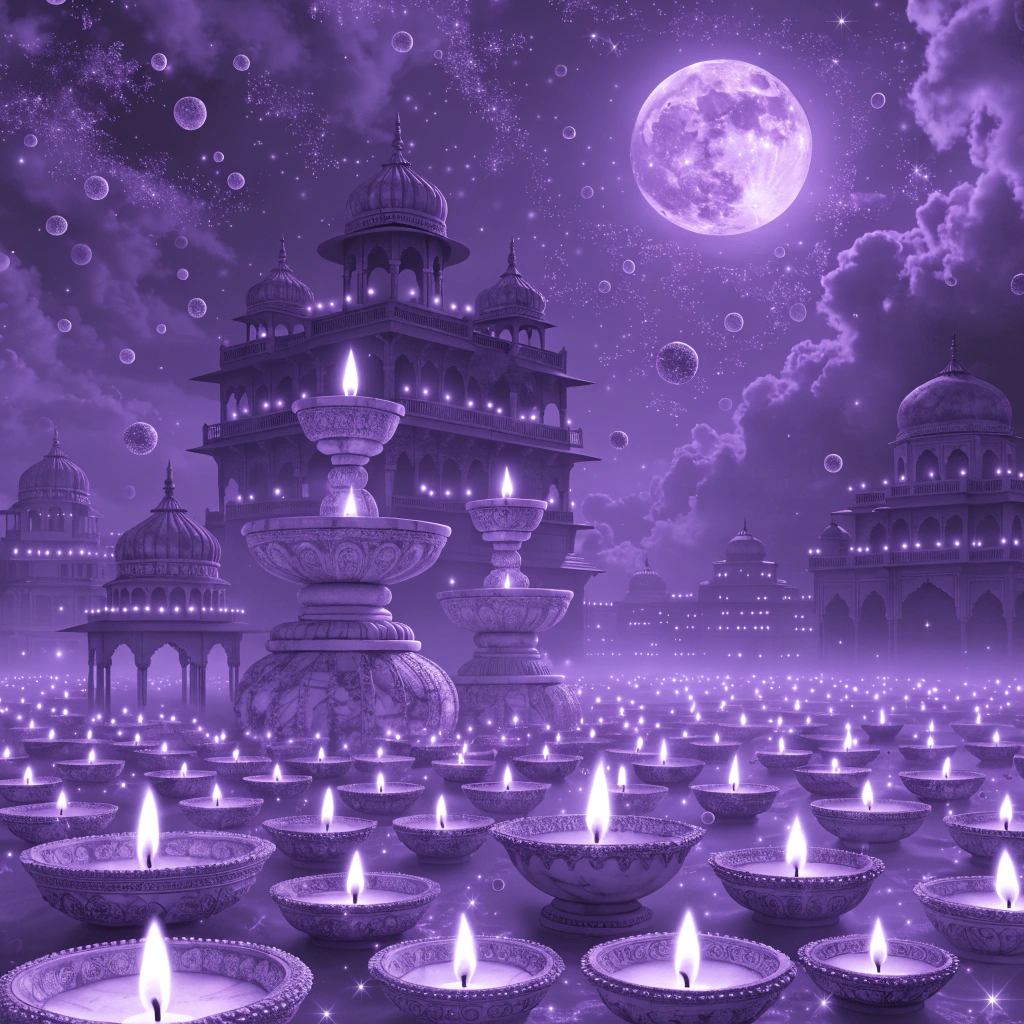
인도의 빛의 축제, 디왈리
인도에는 큰 축제가 있습니다. 이름은 '디왈리'입니다. 이것은 '빛의 축제'입니다. 사람들은 집 앞에 작은 등불을 둡니다. 밤에 집이 아주 밝고 예쁩니다. 등불은 어둠을 이깁니다.
가족들이 모두 모입니다. 맛있는 인도 음식을 요리합니다. 친구들에게 달콤한 과자를 선물합니다. 사람들은 새 옷을 입습니다. 모두 즐겁게 웃습니다. 디왈리는 정말 행복한 날입니다.
문법 스포트라이트
패턴: -습니다/입니다
"이름은 '디왈리'입니다."
격식 있는 자리에서 문장을 끝낼 때 사용합니다. 명사 뒤에는 '입니다'를 쓰고 동사나 형용사 뒤에는 '-습니다'를 씁니다.
패턴: -에
"인도에는 큰 축제가 있습니다."
장소를 나타내는 명사 뒤에 붙여서 사용합니다. 어떤 것이 있는 위치를 말할 때 씁니다.
이해도를 테스트하세요
10 질문 · A1 초급 · 무료 미리보기 1회
이 기사에서 배운 내용을 테스트하세요. 모든 질문에 답하여 XP를 획득하세요!
디왈리는 무슨 축제입니까?
문제별 결과
디왈리는 무슨 축제입니까?
내 답변:
정답: 빛의 축제
사람들은 밤에 집 앞에 등불을 둡니다.
내 답변:
정답: 참
'선물'은 무엇입니까?
내 답변:
정답: 다른 사람에게 주는 물건
사람들은 디왈리에 새 ____을 입습니다.
내 답변:
정답: 옷
Diwali: The Festival of Lights
Diwali is the most important festival in India. People call it the 'Festival of Lights' because it shows the victory of light over darkness. It is a happy time for everyone. The story of Diwali is very old. Many people believe it started when Lord Rama returned to his city, Ayodhya. He lived in the forest for fourteen years. When he came back, the people were very happy. They lit thousands of small oil lamps called 'diyas' to show him the way. These lamps were brighter than the moon. Today, families celebrate Diwali for five days. They clean their houses and decorate them with flowers. They also wear beautiful new clothes and visit their relatives. Children love this festival because they can watch fireworks in the sky. People also share delicious sweets with their neighbors. Diwali is a special time because it brings people together.
문법 스포트라이트
패턴: Past Simple
"He lived in the forest for fourteen years."
We use the past simple to talk about finished actions in the past. Regular verbs end in -ed, like 'lived', while irregular verbs change form, like 'lit'.
패턴: Comparatives
"These lamps were brighter than the moon."
We use comparatives to compare two things. For short adjectives, we add -er + 'than'.
이해도를 테스트하세요
11 질문 · A2 초등급 · 무료 미리보기 1회
이 기사에서 배운 내용을 테스트하세요. 모든 질문에 답하여 XP를 획득하세요!
Why is Diwali called the 'Festival of Lights'?
문제별 결과
Why is Diwali called the 'Festival of Lights'?
내 답변:
정답: Because it shows light winning over darkness
Diwali is celebrated for five days.
내 답변:
정답: 참
What does 'relatives' mean?
내 답변:
정답: Members of your family
People lit small oil _____ called diyas.
내 답변:
정답: lamps
Who returned to the city of Ayodhya?
내 답변:
정답: Lord Rama
인도의 가장 큰 축제, 디왈리: 빛으로 물드는 밤
인도에는 수많은 축제가 있지만, 그중에서도 가장 중요하고 화려한 축제는 단연 '디왈리'입니다. '빛의 축제'라고도 불리는 디왈리는 매년 가을에 열리며, 인도 전역의 사람들은 이 시기를 손꼽아 기다립니다. 이 축제는 단순히 노는 날이 아니라, 어둠을 이긴 빛의 승리, 즉 악을 이긴 선의 승리를 상징하는 깊은 의미를 담고 있습니다.
디왈리의 유래에는 여러 가지 이야기가 전해집니다. 가장 유명한 이야기는 고대 서사시 '라마야나'의 주인공인 라마 왕에 관한 것입니다. 라마 왕은 나쁜 왕을 물리치고 14년 동안의 긴 유배 생활을 마친 뒤 자신의 고향인 아요디아로 돌아왔습니다. 이때 마을 사람들은 돌아온 왕을 환영하기 위해 수천 개의 작은 진흙 등불인 '디야'를 켜서 길을 밝게 비추었습니다. 이 전통이 오늘날까지 이어져 사람들은 집과 사원을 등불로 화려하게 장식하게 되었습니다.
인도 남부 지역에서는 조금 다른 의미로 이 축제를 기념합니다. 그곳에서는 크리슈나 신이 세상을 괴롭히던 괴물 '나라카수라'를 물리친 날을 축하하기 위해 디왈리를 보냅니다. 지역마다 이야기는 조금씩 다르지만, 모두가 공통적으로 정의의 승리를 기뻐한다는 점은 같습니다.
축제 기간 동안 사람들은 집을 깨끗하게 청소하고, 가족들과 모여 맛있는 전통 음식을 나누어 먹습니다. 또한 서로 선물을 주고받으며 행복한 한 해를 보내기를 기원합니다. 밤이 되면 하늘은 화려한 불꽃놀이로 가득 차고, 거리는 반짝이는 전구와 등불로 물듭니다. 이 아름다운 풍경은 디왈리가 왜 전 세계 사람들에게 사랑받는 축제인지를 잘 보여줍니다.
문법 스포트라이트
패턴: -게 되다
"사람들은 집과 사원을 등불로 화려하게 장식하게 되었습니다."
어떤 상황의 변화나 결과로 그렇게 되었음을 나타냅니다. 자신의 의지보다는 외부의 영향이나 상황에 의해 변화가 일어났을 때 자주 사용합니다.
패턴: -기 위해(서)
"나라카수라를 물리친 날을 축하하기 위해 디왈리를 보냅니다."
어떤 행동을 하는 목적이나 의도를 나타낼 때 사용합니다. 동사의 어간 뒤에 붙어 목적을 설명하는 문장을 만듭니다.
이해도를 테스트하세요
11 질문 · B1 중급 · 무료 미리보기 1회
이 기사에서 배운 내용을 테스트하세요. 모든 질문에 답하여 XP를 획득하세요!
디왈리의 또 다른 이름은 무엇입니까?
문제별 결과
디왈리의 또 다른 이름은 무엇입니까?
내 답변:
정답: 빛의 축제
디왈리는 악을 이긴 선의 승리를 상징합니다.
내 답변:
정답: 참
'화려하다'의 알맞은 뜻은 무엇입니까?
내 답변:
정답: 눈에 띄게 아름답고 빛나다
사람들은 돌아온 라마 왕을 환영하기 위해 진흙 _____를 켰습니다.
내 답변:
정답: 등불
인도 남부에서는 어떤 신의 승리를 기념합니까?
내 답변:
정답: 크리슈나 신
The Radiance of Diwali: A Cultural and Spiritual Synthesis
Diwali, also known as Deepavali, stands as India’s most profound cultural manifestation, transcending religious boundaries to unite a diverse nation. Frequently referred to as the 'Festival of Lights,' its core essence lies in the symbolic triumph of light over darkness and knowledge over ignorance. For many in Northern India, the festival commemorates the historical return of Lord Rama to Ayodhya after a fourteen-year period of exile. To mark this joyous occasion, citizens had illuminated the city with thousands of oil lamps, or 'diyas,' a tradition that persists in contemporary celebrations.
However, the significance of Diwali is not monolithic; it varies across different regions of the subcontinent. In Southern India, for instance, the festivities primarily celebrate Lord Krishna’s victory over the demon Narakasura. Despite these regional variations, the underlying theme remains a synthesis of spiritual renewal and social harmony. Families engage in meticulous cleaning rituals, believing that such preparations invite prosperity into their homes. The atmosphere is further enriched by vibrant 'rangoli' patterns created on floors, which serve as a welcoming gesture to deities and guests alike. Furthermore, the festival acts as a catalyst for economic activity, as markets become saturated with shoppers seeking new attire and gifts.
In recent years, the celebration has undergone a significant transformation due to increasing environmental awareness. While traditional firecrackers were once the hallmark of the festival, there is a growing trend toward 'green' celebrations. This shift reflects the resilience of Indian culture, which manages to preserve ancient traditions while adapting to modern ecological challenges. Consequently, public discourse now frequently evaluates the balance between cultural heritage and environmental responsibility. This economic surge highlights the festival's role in modern Indian society as a bridge between tradition and commerce.
Ultimately, Diwali serves as a reminder of the enduring human spirit. It is a time for reflection, where individuals evaluate their past actions and set intentions for the future. Through the exchange of sweets and the lighting of lamps, the festival fosters a sense of communal belonging. Whether celebrated through quiet prayer or grand public displays, Diwali remains a testament to the power of hope and the collective pursuit of a brighter, more enlightened society.
문법 스포트라이트
패턴: Past Perfect Tense
"To mark this joyous occasion, citizens had illuminated the city with thousands of oil lamps."
The past perfect (had + past participle) is used to describe an action that was completed before another point or action in the past. In this context, it emphasizes the historical preparation before the celebration became an established tradition.
패턴: Passive Voice
"The atmosphere is further enriched by vibrant 'rangoli' patterns created on floors."
The passive voice is formed using 'to be' + past participle. It is used here to shift the focus from the person creating the patterns to the atmosphere itself and the visual effect.
패턴: Relative Clauses with 'Which'
"This shift reflects the resilience of Indian culture, which manages to preserve ancient traditions while adapting to modern ecological challenges."
A non-defining relative clause provides extra information about the noun preceding it. It is separated by a comma and adds a layer of analysis to the description of Indian culture.
이해도를 테스트하세요
11 질문 · B2 중상급 · 무료 미리보기 1회
이 기사에서 배운 내용을 테스트하세요. 모든 질문에 답하여 XP를 획득하세요!
What is the primary spiritual theme of Diwali mentioned in the text?
문제별 결과
What is the primary spiritual theme of Diwali mentioned in the text?
내 답변:
정답: The triumph of light over darkness
Diwali is celebrated for the exact same mythological reasons across all regions of India.
내 답변:
정답: 거짓
Which word describes a combination of different ideas or traditions?
내 답변:
정답: Synthesis
In Northern India, the festival marks Lord Rama's return after fourteen years of _____.
내 답변:
정답: exile
How has environmental awareness changed modern Diwali celebrations?
내 답변:
정답: There is a growing trend toward using 'green' firecrackers.
인도 디왈리 축제의 다층적 함의와 현대적 변용: 빛의 승리가 지닌 보편적 가치
인도의 '빛의 축제'로 알려진 디왈리(Diwali)는 단순한 종교적 기념일을 넘어, 인도 문화의 정수와 철학적 깊이를 대변하는 상징적 사건이다. 매년 가을, 인도 전역은 수만 개의 등불로 물들며 어둠을 몰아내는 빛의 향연을 펼친다. 이러한 디왈리의 연원은 지역적 전승에 따라 궤를 달리하지만, 그 기저에 흐르는 정신적 맥락은 선의 승리와 내면의 정화라는 보편적 가치에 맞닿아 있다.
북인도에서는 고대 서사시 '라마야나'의 주인공 라마 왕자가 악의 화신 라바나를 물리치고 14년간의 유배 생활을 마친 뒤 고향 아요디아로 귀환한 날을 기리는 데 초점을 맞춘다. 당시 백성들이 그의 귀환을 환영하며 길목마다 밝힌 점토 등잔 '디야(diya)'는 오늘날 디왈리의 시각적 상징이 되었다. 반면 남인도에서는 크리슈나 신이 폭정을 일삼던 악마 나라카수라를 처단함으로써 민중을 구원한 날을 축하한다. 이처럼 지역마다 전승되는 서사는 상이할지언정 그 기저에 흐르는 정신적 맥락은 궤를 같이하며, 각기 다른 서사를 통해 동일한 도덕적 승리를 강조하고 있다.
사회 경제적 관점에서 볼 때, 디왈리는 공동체의 결속력을 다지는 심리적 기제로 작용한다. 사람들은 집을 단장하고 새 옷을 입으며 친지들과 선물을 교환하는데, 이는 단순한 소비 행위를 넘어 사회적 자본을 축적하고 유대감을 강화하는 과정이다. 특히 바닥에 화려한 문양을 그리는 '랑골리(Rangoli)'는 손님을 환영하고 행운을 불러들이는 예술적 표현으로, 인도인들의 미적 감각과 정성이 집약된 문화적 유산이라 할 수 있다. 또한 부의 여신 락슈미를 기리는 의식은 물질적 번영에 대한 염원을 담고 있으며, 이는 인도의 상업 공동체에서 한 해의 경제적 시작을 알리는 중요한 기점으로 인식되기도 한다.
그러나 현대 사회에서 디왈리는 환경 보호라는 시대적 과제와 충돌하며 새로운 담론을 형성하고 있다. 축제의 정점인 화려한 불꽃놀이가 심각한 대기 오염과 소음 공해를 유발한다는 비판이 제기됨에 따라, 전통의 보존과 생태적 책임 사이의 팽팽한 긴장이 존재한다. 최근 '친환경 디왈리'를 표방하며 불꽃놀이를 자제하고 친환경 소재를 사용하려는 움직임은, 전통이 고착된 과거의 산물이 아니라 시대의 요구에 발맞추어 끊임없이 재해석되는 역동적인 실체임을 보여주는 사례이다.
더불어 글로벌화된 세계에서 디왈리는 인도 디아스포라를 매개로 전 세계로 확산되며 타 문화권과의 소통을 도모하는 문화적 창구 역할을 수행하고 있다. 이는 인도인들에게 정체성을 확인시켜 주는 정신적 지주인 동시에, 세계인들에게는 인도의 정신적 층위를 이해하게 하는 통로가 된다. 결론적으로 디왈리는 인간 내면의 무지를 타파하고 지혜의 빛을 밝히려는 끊임없는 성찰의 과정임에 다름 아니다. 물질적 풍요와 정신적 고양을 동시에 추구하는 이 축제는 앞으로도 인류의 보편적 가치를 환기하는 핵심적인 축으로 기능할 것이다.
문법 스포트라이트
패턴: -ㄹ지언정
"지역마다 전승되는 서사는 상이할지언정 그 기저에 흐르는 정신적 맥락은 궤를 같이한다."
앞의 사실을 인정하지만, 그것이 뒤의 내용에 영향을 주지 않거나 대조적인 상황을 강조할 때 사용하는 양보의 연결 어미입니다.
패턴: -ㄴ/은/는 바와 같이
"인도의 광활한 지리적, 문화적 다양성을 반영하는 바와 같이, 각기 다른 서사를 통해 동일한 도덕적 승리를 강조하고 있다."
앞에서 말한 내용과 같이 함을 나타내며, 주로 격식적인 상황에서 논리적 근거를 제시할 때 사용합니다.
패턴: -임에 다름 아니다
"결국 디왈리는 인간 내면의 무지를 타파하고 지혜의 빛을 밝히려는 끊임없는 성찰의 과정임에 다름 아니다."
어떤 사실이 '바로 그것이다' 혹은 '그것과 마찬가지다'라는 강한 단정을 나타내는 표현입니다.
이해도를 테스트하세요
12 질문 · C1 고급 · 무료 미리보기 1회
이 기사에서 배운 내용을 테스트하세요. 모든 질문에 답하여 XP를 획득하세요!
본문에서 언급된 디왈리의 핵심적인 정신적 가치는 무엇입니까?
문제별 결과
본문에서 언급된 디왈리의 핵심적인 정신적 가치는 무엇입니까?
내 답변:
정답: 선의 승리와 내면의 정화
남인도에서는 라마 왕자의 귀환을 기념하기 위해 디왈리를 축제한다.
내 답변:
정답: 거짓
'담론'의 의미로 가장 적절한 것은 무엇입니까?
내 답변:
정답: 특정 주제에 대한 논의나 이론
디왈리는 인도 _____를 매개로 전 세계로 확산되고 있다.
내 답변:
정답: 디아스포라
최근 디왈리 축제와 관련하여 제기된 주요 비판은 무엇입니까?
내 답변:
정답: 불꽃놀이로 인한 환경 오염
디왈리 기간에 그리는 '랑골리'는 손님을 환영하는 의미를 담고 있다.
내 답변:
정답: 참
The Luminous Tapestry: Ontological and Socio-Political Dimensions of Diwali in the Subcontinental Consciousness
To analyze Diwali through a purely celebratory lens is to overlook the profound epistemological foundations that underpin this subcontinental phenomenon. Often reduced to the 'Festival of Lights' in global discourse, Diwali, or Deepavali, represents a sophisticated juxtaposition of mythological narratives, ethical imperatives, and social cohesion. At its core, the festival serves as a transcendental bridge between the temporal and the divine, manifesting as a collective affirmation of 'Dharma'—the cosmic order. This is not merely a period of merriment but a time of rigorous spiritual accounting, where the individual reflects upon their alignment with the universal truth.
Were one to scrutinize the diverse regional iterations of the festival, a fascinating dichotomy would emerge, revealing the pluralistic nature of Indian thought. In the northern plains, the narrative is predominantly focused on the return of Lord Rama to Ayodhya after fourteen years of exile. This homecoming, illuminated by the citizens' 'diyas', is not merely a historical commemoration but a quintessential symbol of the restoration of righteous governance and the triumph of the solar lineage. Conversely, in the southern reaches of India, the emphasis shifts toward the destruction of the demon Narakasura by Lord Krishna, a narrative that emphasizes the eradication of ego and the liberation of the soul. This regional variance underscores the multifaceted nature of Indian spirituality, where local traditions and pan-Indian myths exist in a state of harmonious confluence, rather than competition.
Not only does the festival facilitate spiritual introspection, but it also functions as a powerful socio-economic catalyst that permeates every stratum of society. The exchange of gifts and the meticulous cleansing of the domestic sphere are idiosyncratic practices that reinforce communal bonds and stimulate the commercial ecosystem. It is through these tangible acts of generosity and renewal that the abstract concepts of the festival are grounded in everyday reality. However, the modern celebration is not without its controversies and internal tensions. The paradigm shift toward environmental consciousness has sparked a rigorous debate regarding the use of pyrotechnics. Scholarly analysis suggests that the excessive use of firecrackers has led to a deleterious impact on urban air quality, prompting many to advocate for a 'green Diwali'. It is perhaps through this tension between tradition and ecological responsibility that the festival’s contemporary relevance is most keenly felt.
Furthermore, the ontological significance of light cannot be overstated in this context. In the Upanishadic tradition, light represents knowledge (Vidya), while darkness symbolizes ignorance (Avidya). Thus, the lighting of the lamp is a performative act of seeking enlightenment and the dispersal of the shadows of the mind. It is through this ritualistic illumination that the individual psyche attempts to transcend the mundane vestiges of existence. The 'diya', in its simplicity, becomes a vessel for the transcendental, representing the soul’s yearning for the infinite. Despite the encroaching tides of secularization and the pressures of globalization, the spiritual core of Diwali remains remarkably resilient, adapting to new contexts without losing its essential character.
In the contemporary era, the diaspora has played a crucial role in internationalizing the festival, leading to a confluence of cultures that transcends geographical boundaries. From the streets of Leicester to the suburbs of New Jersey, Diwali has become a global signifier of cultural identity and pluralism. This global expansion, however, necessitates a careful examination of how the festival’s meaning is translated across different cultural grammars. It is imperative that we recognize the multifaceted nature of this celebration, lest we oversimplify its cultural significance into a mere spectacle of lights. In conclusion, Diwali is a complex cultural artifact that defies reductive explanations. It remains a quintessential manifestation of the subcontinental spirit, inviting observers and participants alike to contemplate the eternal dance between the shadows of the world and the light of consciousness.
문법 스포트라이트
패턴: Subjunctive Mood
"Were one to scrutinize the diverse regional iterations of the festival, a fascinating dichotomy would emerge."
This structure uses 'were' to express a hypothetical condition in a formal manner. It omits 'if' and inverts the verb and subject for rhetorical effect.
패턴: Inversion with Negative Adverbials
"Not only does the festival facilitate spiritual introspection, but it also functions as a powerful socio-economic catalyst."
When a sentence starts with 'Not only', the auxiliary verb 'does' precedes the subject 'the festival'. This is common in formal C2 writing to add emphasis.
패턴: Cleft Sentences
"It is through this ritualistic illumination that the individual psyche attempts to transcend the mundane vestiges of existence."
A cleft sentence uses 'It is... that...' to focus the reader's attention on a specific prepositional phrase, highlighting the method of action.
이해도를 테스트하세요
12 질문 · C2 마스터 · 무료 미리보기 1회
이 기사에서 배운 내용을 테스트하세요. 모든 질문에 답하여 XP를 획득하세요!
What does the northern Indian narrative of Diwali primarily celebrate?
문제별 결과
What does the northern Indian narrative of Diwali primarily celebrate?
내 답변:
정답: The return of Lord Rama to Ayodhya
The author suggests that the modern environmental debate over fireworks reflects the festival's contemporary relevance.
내 답변:
정답: 참
Which word refers to a division between two opposed things?
내 답변:
정답: Dichotomy
The modern shift toward environmental consciousness is described as a _____ shift.
내 답변:
정답: paradigm
In the Upanishadic tradition, what does light symbolize?
내 답변:
정답: Knowledge
The article argues that Diwali is a simple festival that can be easily explained by its title as the 'Festival of Lights'.
내 답변:
정답: 거짓

